Archive for ‘Chinese President Xi Jinping’

30/08/2019

Xi, Duterte meet on pushing forward ties

CHINA-BEIJING-XI JINPING-PHILIPPINE PRESIDENT-MEETING (CN)

Chinese President Xi Jinping meets with Philippine President Rodrigo Duterte at the Diaoyutai State Guesthouse in Beijing, capital of China, Aug. 29, 2019. (Xinhua/Pang Xinglei)

BEIJING, Aug. 29 (Xinhua) — Chinese President Xi Jinping on Thursday met with Philippine President Rodrigo Duterte at the Diaoyutai State Guesthouse in Beijing, and the two leaders expressed their readiness to push forward ties.

“Under the two sides’ joint efforts, bilateral ties smoothly realized taking an upturn and scoring consolidation and uplift, and continuously achieved tangible outcomes, during President Duterte’s administration over the past three years,” said Xi, expressing welcome for Duterte’s visit.

“At present, the international and regional situations are undergoing profound and complex changes. However, peace, development, cooperation and mutual benefit are still an irresistible trend of the times,” said Xi.

Xi said he is willing to work with Duterte to continue to grasp the trend of the times from a strategic and long-term perspective, leading the sound development of bilateral ties. “This will not only benefit the two countries and their peoples, but will also add positive energy to regional peace and stability.”

Xi said it is necessary to continue to promote the synergy between the Belt and Road Initiative and the Philippine “Build, Build, Build” program, and implement major cooperative projects in such areas as infrastructure construction, industrial parks, telecommunications and energy.

“China is willing to import more high-quality fruits and agricultural products from the Philippines, and will send experts to the Philippines to teach agricultural and fishery technology,” said Xi.

On issues such as human rights, China will continue to firmly support the Philippines’ efforts to safeguard national sovereignty and resist external interference, said the Chinese president.

On the South China Sea issue, Xi said China and the Philippines have been maintaining effective communication.

He said the two sides should set aside disputes, eliminate external interference, and concentrate on conducting cooperation, making pragmatic efforts and seeking development.

Xi said “as long as the two sides handle the South China Sea issue properly, the atmosphere of bilateral ties will be sound, the foundation of the relationship will be stable, and regional peace and stability will have an important guarantee.”

Both sides can take a “bigger step” in the joint development of offshore oil and gas, said Xi.

“The Code of Conduct (COC) in the South China Sea is a pioneering undertaking in establishing rules and regulations in the South China Sea, and China and the Philippines should be committed to promoting the adoption of the COC at an early date,” said Xi, stressing an early adoption will demonstrate the firm position and positive stance of China and the Philippines to jointly safeguard the long-term stability of the region.

Duterte expressed congratulations on the 70th anniversary of the founding of the People’s Republic of China, saying that China’s successful development experience is worth learning from.

“I cherish the close friendship with President Xi,” he said, adding that China means a lot to the Philippines and developing bilateral ties is a project lasting for generations.

He pledged to meet with Xi frequently, strengthen communication, and jointly promote the sound development of the two countries’ ties so as to achieve win-win benefits.

Duterte expressed his hope that China will continue to help the Philippines in economic development and infrastructure construction, and thanked China for support in his country’s human rights cause, post-quake reconstruction, and anti-terrorism and anti-narcotics endeavors.

Facts have proven that China is a sincere friend to the Philippines, he said, adding that the Philippines fully respects China’s laws and the right to maintain law-based governance on the Hong Kong issue, he said.

Duterte expressed his view that the path to peacefully resolving the South China Sea disputes is through cooperation, rather than confrontation.

Maintaining friendly cooperation as well as peace and stability is in the interests of all the parties in the region, he said, while pledging to speed up joint maritime oil and gas exploration with China.

As the country coordinator for China-ASEAN relations, the Philippines is committed to advancing an early adoption of the Code of Conduct (COC) in the South China Sea with relevant parties, Duterte said.

After the meeting, the two heads of state witnessed a ceremony for the exchange of bilateral cooperation deals.

The two sides also announced the setting up of an intergovernmental joint steering committee and a working group between relevant enterprises on oil and gas cooperation so as to promote substantial progress in the joint exploration of oil and gas.

Duterte is on a visit to China from Aug. 28 to Sept. 1, at the invitation of Xi. He will also attend the opening ceremony of the 2019 International Basketball Federation (FIBA) World Cup in Beijing.Source: Xinhua

24/08/2019

China-Northeast Asia Expo opens in NE China

CHINA-JILIN-HU CHUNHUA-CHINA-NORTHEAST ASIA EXPO-XI JINPING'S CONGRATULATORY LETTER (CN)

Chinese Vice Premier Hu Chunhua (2nd R, front), also a member of the Political Bureau of the Communist Party of China Central Committee, inspects an exhibition area during the 12th China-Northeast Asia Expo held in Changchun, northeast China’s Jilin Province, Aug. 23, 2019. The 12th China-Northeast Asia Expo and the 10th High-level Forum on Northeast Asia Cooperation opened Friday in Changchun, capital city of northeast China’s Jilin Province. Hu attended the opening ceremony and read the congratulatory letter of Chinese President Xi Jinping. (Xinhua/Xu Chang)

CHANGCHUN, Aug. 23 (Xinhua) — The 12th China-Northeast Asia Expo and the 10th High-level Forum on Northeast Asia Cooperation opened Friday in Changchun, capital city of northeast China’s Jilin Province.

Vice Premier Hu Chunhua attended the opening ceremony and read the congratulatory letter of Chinese President Xi Jinping.

Hu, also a member of the Political Bureau of the Communist Party of China (CPC) Central Committee, said that the letter highly affirmed the development vitality of Northeast Asia, and pointed out major Belt and Road opportunities for expanding and deepening regional cooperation.

Northeast Asia is one of the most dynamic and potential regions in Asia and even in the world, which brings favorable conditions and rare opportunities for strengthening regional cooperation, Hu said.

China is ready to work with other Northeast Asian countries to further expand trade and investment, deepen industrial chain cooperation, and raise the level of infrastructural connectivity, he said.

“A more open and prosperous China will surely create more business opportunities for enterprises in northeast Asia and the world at large. We expect more cooperation to be achieved at the expo, which is a platform for in-depth communication and exchanges,” he said.

Source: Xinhua

24/08/2019

Xi urges Chinese air force to enhance capability to win

CHINA-GANSU-XI JINPING-AIR FORCE-INSPECTION (CN)

Chinese President Xi Jinping, also general secretary of the Communist Party of China Central Committee and chairman of the Central Military Commission, inspects an air force base in northwest China’s Gansu Province, Aug. 22. 2019. (Xinhua/Li Gang)

LANZHOU, Aug. 23 (Xinhua) — Chinese President Xi Jinping has called on the air force to enhance its capability to win and greet the 70th anniversary of the founding of the People’s Republic of China (PRC) with great achievements.

Xi, also general secretary of the Communist Party of China Central Committee and chairman of the Central Military Commission, made the remarks Thursday when inspecting an air force base in northwest China’s Gansu Province.

At the combat command center, Xi used a tele-conferencing facility to inspect the troops including personnel at a radar station on a plateau over 3,600 meters above sea level and a transport and rescue regiment.

After listening to the work report of the base, Xi stressed the great significance of carrying out the Party education campaign themed “staying true to our founding mission” as the nation marks the 70th anniversary of the founding of the PRC.

Demanding a stronger sense of responsibility, Xi asked for persistent efforts in improving military preparedness to ensure that the air force can fight and emerge victorious when called upon.

The combat forces and support forces should be developed through military training under real combat conditions and joint operations, Xi said.

He also stressed the need to govern the military with strict discipline in every respect and make sure that the armed forces are highly centralized, unified, pure and solid, and that they stay secure and stable.

Source: Xinhua

22/08/2019

Xi inspects village, afforestation area in NW China

CHINA-GANSU-WUWEI-XI JINPING-INSPECTION (CN)

Chinese President Xi Jinping, also general secretary of the Communist Party of China Central Committee and chairman of the Central Military Commission, inspects the Babusha Forest Farm, an afforestation program in a desert area of Gansu, where he learns about the latest developments in desertification control and environmental protection, in Gulang County of Wuwei City, northwest China’s Gansu Province, Aug. 21, 2019. (Xinhua/Xie Huanchi)

LANZHOU, Aug. 21 (Xinhua) — Xi Jinping, general secretary of the Communist Party of China Central Committee, visited a rural community and an afforestation area in northwest China’s Gansu Province Wednesday.

Xi visited a new community in Gulang County, which is home to rural residents relocated out of ecological concerns, and inquired about their livelihoods and progress on poverty relief.

He also inspected an afforestation program in a desert area of Gansu, where he learned about the latest developments in desertification control and environmental protection.

Source: Xinhua

22/08/2019

Xi makes inspection tour in Lanzhou, Gansu

CHINA-GANSU-LANZHOU-XI JINPING-INSPECTION (CN)

Chinese President Xi Jinping, also general secretary of the Communist Party of China Central Committee and chairman of the Central Military Commission, visits a Yellow River management point to learn about the management, protection and flood control project construction of the Yellow River in Lanzhou, northwest China’s Gansu Province, Aug. 21, 2019. (Xinhua/Wang Ye)

Source: Xinhua

21/08/2019

Xi visits Jiayu Pass in Gansu

CHINA-GANSU-XI JINPING-INSPECTION (CN)

Chinese President Xi Jinping, also general secretary of the Communist Party of China Central Committee and chairman of the Central Military Commission, visits the Jiayu Pass, a famed part of the Great Wall in Jiayuguan City, during his inspection tour of northwest China’s Gansu Province, Aug. 20, 2019. Xi also listened to an introduction to the historical and cultural background of the Great Wall and the passes in the Hexi Corridor, part of the ancient Silk Road in northwest China. (Xinhua/Ju Peng)

Source: Xinhua

20/08/2019

Xi visits cultural heritage site in Gansu

CHINA-GANSU-XI JINPING-INSPECTION (CN)

Chinese President Xi Jinping, also general secretary of the Communist Party of China (CPC) Central Committee and chairman of the Central Military Commission, visits the Mogao Grottoes in Dunhuang, a key cultural heritage site under state-level protection, during his inspection tour of northwest China’s Gansu Province, Aug. 19, 2019. Xi inspected the work of cultural relics protection and study, as well as efforts to promote China’s great history and fine culture. (Xinhua/Xie Huanchi)

LANZHOU, Aug. 19 (Xinhua) — Xi Jinping, general secretary of the Communist Party of China Central Committee, on Monday visited the Mogao Grottoes in Dunhuang, a key cultural heritage site under state-level protection, during his inspection tour of northwest China’s Gansu Province.

Xi inspected the work of cultural relics protection and study, as well as efforts to promote China’s great history and fine culture.

Source: Xinhua

18/08/2019

Japan seeks to counter China in Africa with alternative ‘high-quality’ development

  • Beijing will be watching as leaders of African nations and international organisations gather for development summit in Yokohama later this month
  • Tokyo is expected to use the conference to articulate how its approach to aid and infrastructure is different from Chinese projects
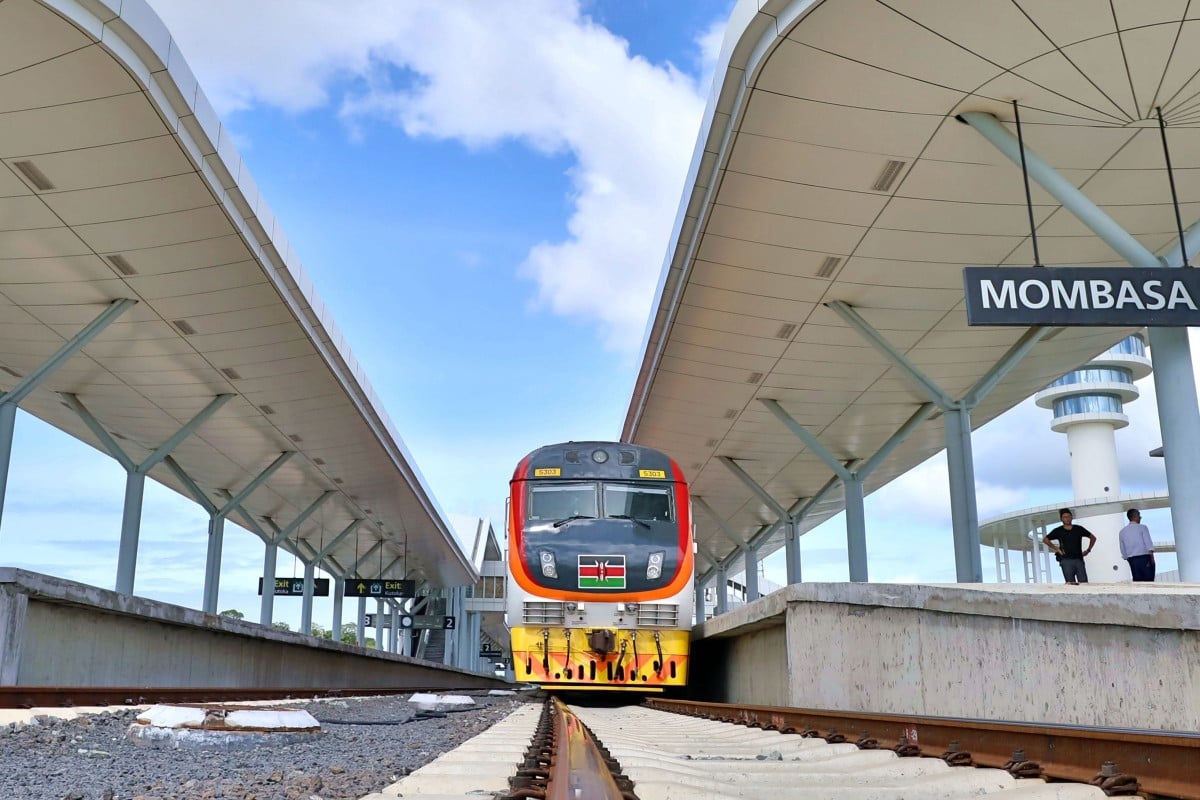
The Mombasa-Nairobi Standard Guage Railway, funded by China, opened in 2017. Japan has criticised Chinese lending practices in Africa. Photo: Xinhua
The Mombasa-Nairobi Standard Gauge Railway, funded by China, opened in 2017. Japan has criticised Chinese lending practices in Africa. Photo: Xinhua
The long rivalry between China and Japan is again playing out in Africa, with Tokyo planning to pour more aid into the continent and invest in infrastructure projects there.
Beijing – which has for decades funnelled money into the continent – will be watching as the leaders of 54 African countries and international organisations descend on Yokohama later this month for the seventh Tokyo International Conference on African Development (TICAD).

Japan reportedly plans to pledge more than 300 billion yen (US$2.83 billion) in aid to Africa during the conference. While that might not be enough to alarm China – which in recent years has been on a spending spree in the continent – it will be paying close attention.

Japan has in the past used the meetings to criticise Chinese lending practices in Africa, saying it was worried about the “unrealistic” level of debt incurred by African countries – concerns that China has dismissed.
This year, analysts expect Tokyo will use the conference to articulate how its approach to African development is substantively different from that of the Chinese.

“So, look for the words ‘quality’, ‘transparency’ and ‘sustainability’ to be used a lot throughout the event,” said Eric Olander, managing editor of the non-partisan China Africa Project.

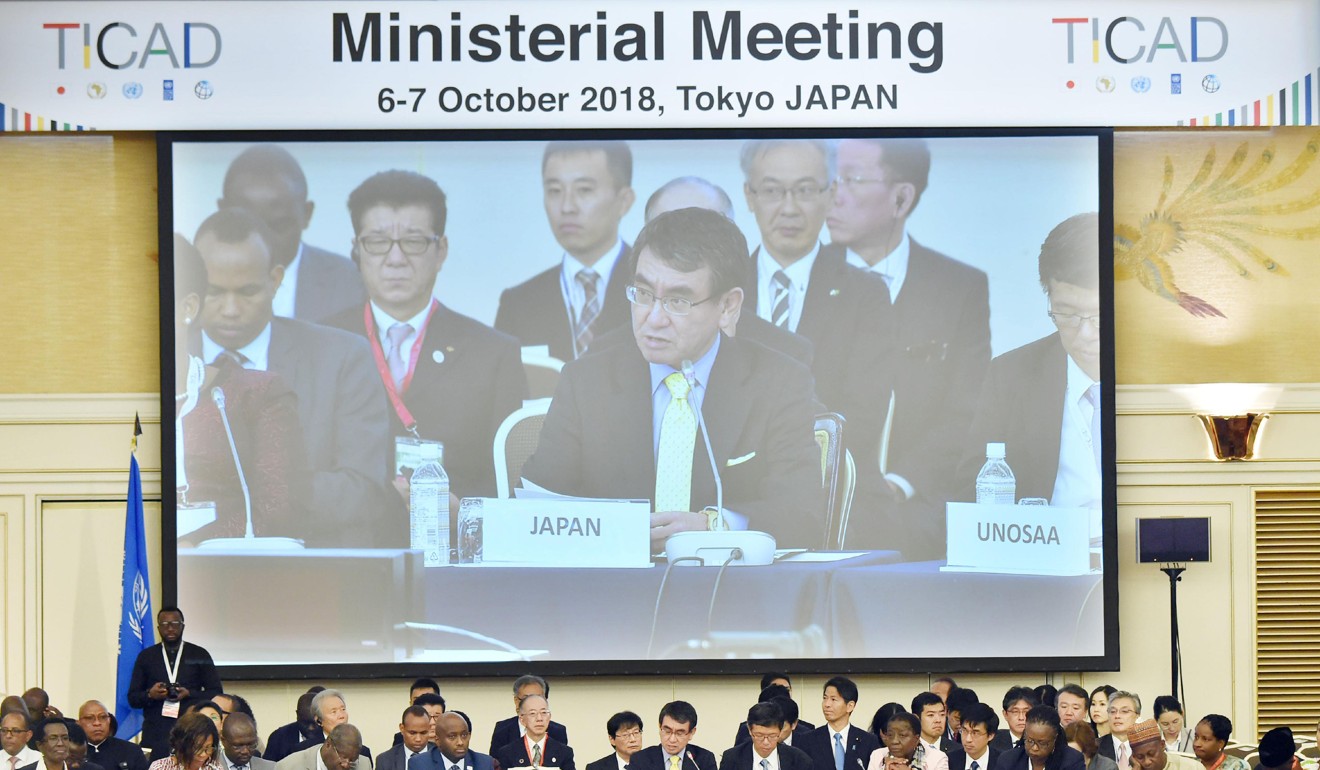
Japanese Foreign Minister Taro Kono gives a speech at the TICAD in Tokyo in October. Japan will reportedly pledge US$2.83 billion in aid to Africa this year. Photo: The Yomiuri Shimbun

Olander said Japan often sought to position its aid and development programmes as an alternative to China’s by emphasising more transparency in loan deals, higher-quality infrastructure projects and avoiding saddling countries with too much debt.

“In some ways, the Japanese position is very similar to that of the US where they express many of the same criticisms of China’s engagement strategy in Africa,” Olander said.

But the rivalry between China and Japan had little to do with Africa, according to Seifudein Adem, a professor at Doshisha University in Kyoto, Japan.

“It is a spillover effect of their contest for supremacy in East Asia,” said Adem, who is from Ethiopia.

“Japan’s trade with Africa, compared to China’s trade with Africa, is not only relatively small but it is even shrinking. It is a result of the acceleration of China’s engagement with Africa.”

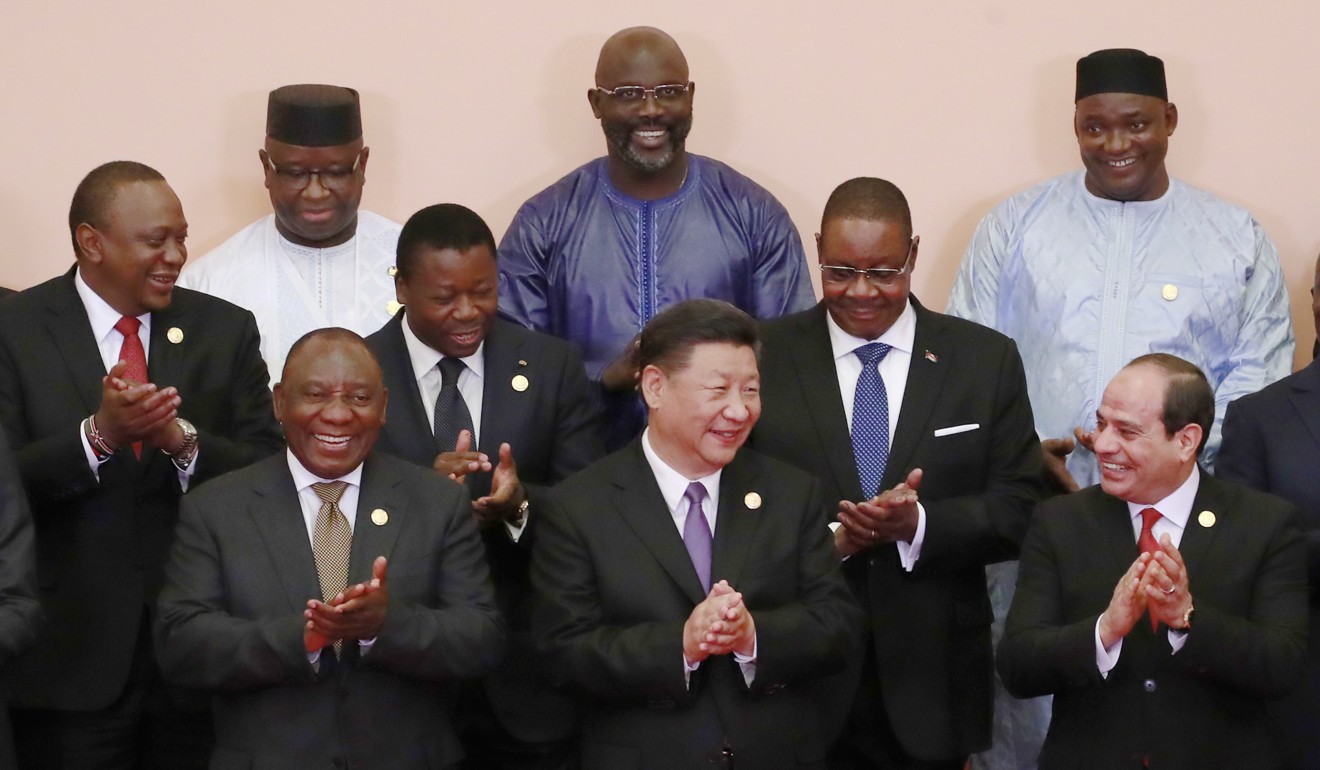
Chinese President Xi Jinping attends a group photo session with African leaders during the Forum on China-Africa Cooperation in Beijing last year. Photo: AP

Japan launched the TICAD in 1993, to revive interest in the continent and find raw materials for its industries and markets for products. About a decade later, China began holding a rival event, the Forum on China-Africa Cooperation.

It is at heart an ideological rivalry unfolding on the continent, according to Martin Rupiya, head of innovation and training at the African Centre for the Constructive Resolution of Disputes in Durban, South Africa.

“China cast Japan as its former colonial interloper – and not necessarily master – until about 1949. Thereafter, China’s Mao [Zedong] developed close relations, mostly liberation linkages with several African nationalist movements,” Rupiya said.

Beijing had continued to invoke those traditional and historical ties, which Japan did not have, he said.

“Furthermore, Japan does not command the type of resources – call it largesse – that China has and occasionally makes available to Africa,” Rupiya said.

Although both Asian giants have made inroads in Africa, the scale is vastly different.

While Japan turned inward as it sought to rebuild its struggling economy amid a slowdown, China was ramping up trade with African countries at a time of rapid growth on the continent.

That saw trade between China and Africa growing twentyfold in the last two decades. The value of their trade reached US$204.2 billion last year, up 20 per cent from 2017, according to Chinese customs data. Exports from Africa to China stood at US$99 billion last year, the highest level since the 1990s. Meanwhile, through its Belt and Road Initiative that aims to revive the Silk Road to connect Asia with Europe and Africa, China is funding and building Kenya’s Standard Gauge Railway and the Addis Ababa-Djibouti Railway. Beijing is also building major infrastructure projects in Zambia, Angola and Nigeria.

Japan’s trade with Africa is just a small fraction of Africa’s trade with China. In 2017, Japan’s exports to the continent totalled US$7.8 billion, while imports were US$8.7 billion, according to trade data compiled by the Massachusetts Institute of Technology.

How speaking with one voice could help Africa get a better deal from China

But Japan now appears eager to get back in the game and expand its presence in Africa, and analysts say this year’s TICAD will be critical – both in terms of the amount of money Tokyo commits to African development and how it positions itself as an alternative to the Chinese model.

Ryo Hinata-Yamaguchi, a visiting professor at Pusan National University in South Korea, said the continent was “economically vital to Japan, both in trade and investments”.

“Moreover, Japan has established some strong links with African states through foreign aid,” Hinata-Yamaguchi said.

“Japan’s move is driven by both economic and political interests. Economically, Japan needs to secure and maintain its presence in, and linkages with, the African states while opening new markets and opportunities,” he said.

To counter China’s belt and road strategy, Japan has launched the Asia-Africa Growth Corridor project, an economic cooperation deal, with India and African countries.

Tokyo meanwhile pledged about US$30 billion in public-private development assistance to Africa over three years at the 2016 TICAD, in Nairobi. But China offered to double that amount last year, during its Forum on China-Africa Cooperation in Beijing.

Still, Japan continues to push forward infrastructure projects on the continent. It is building the Mombasa Port on the Kenyan coast, while Ngong Road, a major artery in Nairobi, is being converted into a dual carriageway with a grant from Tokyo.

Japan is also funding the construction of the Kampala Metropolitan transmission line, which draws power from Karuma dam in Uganda. In Tanzania, it provided funding for the Tanzania-Zambia Railway Authority (Tazara) flyover. And through the Japan International Cooperation Agency, Tokyo also helps African countries improve their rice yields using Japanese technology.

There are nearly 1,000 Japanese companies – including carmakers like Nissan and Toyota – operating in Africa, but that is just one-tenth the number of Chinese businesses on the continent.

Are Chinese loans putting Africa on the debt-trap express?

Olander said Japan’s construction companies were among the best in the world, albeit not necessarily the cheapest, and that Tokyo was pushing its message about “high-quality” construction.

XN Iraki, an associate professor at the University of Nairobi School of Business, said Japan wanted to change its approach to Africa on trade, which had long been dominated by cars and electronics.

“[It has] no big deals like China’s Standard Gauge Railway. But after China’s entry with a bang – including teaching Mandarin through Confucius Institutes – Japan has realised its market was under threat and hence the importance of the TICAD, which should remind us that Japan is also there.”

Source: SCMP

08/08/2019

Xi sends condolences to Egyptian president over terrorist attack in Cairo

BEIJING, Aug. 7 (Xinhua) — Chinese President Xi Jinping on Tuesday sent a message of condolences to his Egyptian counterpart, Abdel-Fattah al-Sisi, over a recent terrorist attack in Cairo.

In his message, Xi said he was shocked to learn about the grave terrorist attack in the capital, which resulted in major casualties.

On behalf of the Chinese government and people, and also in his own name, Xi expressed deep condolences over the victims, conveyed heartfelt sympathy to the injured and the bereaved families, and wished the injured a speedy recovery.

The Chinese president noted that China firmly opposes terrorism in all its forms and strongly condemns the terrorist attack, saying that China staunchly supports Egypt’s efforts in maintaining its security and stability and fighting terrorism.

Source: Xinhua

01/08/2019

Chinese, Colombian presidents pledge to promote ties

CHINA-BEIJING-XI JINPING-COLOMBIAN PRESIDENT-TALKS (CN)

Chinese President Xi Jinping (R) holds talks with visiting Colombian President Ivan Duque Marquez at the Great Hall of the People in Beijing, capital of China, July 31, 2019. (Xinhua/Li Xueren)

BEIJING, July 31 (Xinhua) — Chinese President Xi Jinping and visiting Colombian President Ivan Duque Marquez on Wednesday pledged to promote bilateral relations to new heights.

The year 2020 marks the 40th anniversary of the establishment of diplomatic ties between China and the Latin American country.

During their talks at the Great Hall of the People in Beijing, Xi said Duque’s father, as a member of the then Colombian government, firmly supported the decision to forge diplomatic ties 40 years ago and witnessed the birth of the bilateral relationship.

“The relay baton of China-Colombia bilateral ties is passed to us now,” Xi told the Colombian president.

“I highly appreciate your visit to China, which shows that you are committed to enhancing the traditional friendship and mutually beneficial cooperation between China and Colombia,” said Xi.

Xi called on both countries to intensify high-level exchanges and exchanges of governance experience, deepen mutual political trust, mutual understanding and mutual support.

China will continue to support Colombia in promoting the peace process and post-conflict reconstruction, said Xi.

He also encouraged both countries to further explore potential for pragmatic cooperation, consolidate cooperation in traditional areas and expand to new areas.

China welcomes Colombia to take part in the Belt and Road construction so as to realize the alignment of development strategies of both sides, Xi said, calling on the two to enhance people-to-people exchanges, jointly safeguard the existing international system with the United Nations at its core, promote the reform of global governance mechanisms and make more efforts to help the economic globalization process become more open, inclusive and balanced, and develop towards win-win results.

Xi called Latin American and Carribean countries “a force to be reckoned with in the international arena” as they boast huge potential and broad prospects.

He said China has always respected the rights of Latin American people to choose a development path of their own, supported Latin America in speeding up its integration process and backed the proper handling of the Venezuela issue via dialogue and consultation.

China stands ready to continue to play a role in encouraging dialogue and talks and would like to maintain contacts with Colombia, Xi said.

He added that China is willing to strengthen the building of the Forum of China and Community of Latin American and Carribean States.

Duque offered his congratulations for the 70th anniversary of the founding of the People’s Republic of China.

He said he admired Xi’s outstanding leadership and prominent international influence and would like to learn from China’s governance experience.

Duque said as the two countries will embrace the 40th anniversary of forging diplomatic ties in February 2020, he hoped to further step up bilateral ties and expand cooperation in areas including economy and trade, energy, infrastructure construction, connectivity, the digital economy and creative industries.

Colombia welcomes investment from Chinese enterprises, said Duque, adding that he believed every bilateral project would help support the peace process of Colombia and the country’s economic and social development.

Hailing the significance of the Belt and Road construction to world connectivity and international cooperation, Duque said Colombia will take an active part in the initiative.

Colombia attaches great importance to China’s role in international and regional affairs and is willing to contribute to the development of Latin America-China ties, Duque said.

After the talks, the two presidents witnessed the signing of 12 bilateral agreements in areas including judicial cooperation, trade, agriculture, education and customs.

Duque is paying the state visit at the invitation of Xi from July 28 to 31. This is his first state visit to China. Before his arrival in Beijing, he visited the city of Shanghai, an economic hub in eastern China.

Source: Xinhua

Law of Unintended Consequences

continuously updated blog about China & India

ChiaHou's Book Reviews

continuously updated blog about China & India

What's wrong with the world; and its economy

continuously updated blog about China & India