Chindia Alert: You’ll be Living in their World Very Soon
aims to alert you to the threats and opportunities that China and India present. China and India require serious attention; case of ‘hidden dragon and crouching tiger’.
Without this attention, governments, businesses and, indeed, individuals may find themselves at a great disadvantage sooner rather than later.
The POSTs (front webpages) are mainly 'cuttings' from reliable sources, updated continuously.
The PAGEs (see Tabs, above) attempt to make the information more meaningful by putting some structure to the information we have researched and assembled since 2006.
LUCKNOW (Reuters) – U.S. President Donald Trump vowed to “drain the swamp” of lobbyists and elites in Washington D.C. Now, one Indian city is racing to clean up a stagnant river as he prepares to visit.
Trump arrives in India on Feb. 24 on a maiden two-day trip that aims to repair bilateral relations hurt by a trade spat.
He plans to visit the western city of Ahmedabad and India’s capital New Delhi, as well as Agra, where he will view the famed monument to love, the Taj Mahal, at sunset.
In the city, authorities are on a clean-up drive, including the polluted waters of the Yamuna river, that backs on to the monument complex.
Jal Singh Meena, an officer with the Agra Ganga Nahar, the government body that manages the canal network that feeds into the Yamuna in Agra, said on Thursday an additional 17 million litres of water are being released from three locks in the week preceding Trump’s visit on Monday- more than double the usual amount.
The extra flow had been ordered “to keep it clean and remove the foul smell,” he told Reuters.
On Thursday, workers scrubbed walls and fountains at the monument, commissioned in 1632 by Mughal emperor Shah Jahan in memory of his late wife Mumtaz, TV channels showed.
India’s best-known attraction, the Taj Mahal is visited by nearly seven million tourists a year, according to official data, but has been blighted by overcrowding and pollution.
Along with polluted water, authorities are battling some of the world’s filthiest air that stains the white marble of the monument, and increasingly aggressive troops of monkeys that have been known to attack visitors.
District authorities have denied local media reports they have relocated some of the more troublesome primates for the visit, and that a bridge on a proposed route taken by Trump will be unable to bear the weight of his armour-plated limousine known as “The Beast”.
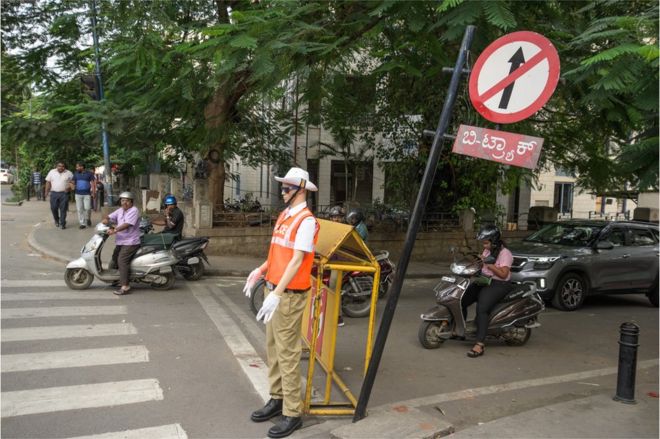
Image copyright ASIF SAUDImage caption The mannequins have been installed at major traffic crossings
One of India’s most gridlocked cities has come up with an unconventional solution to rein in errant drivers.
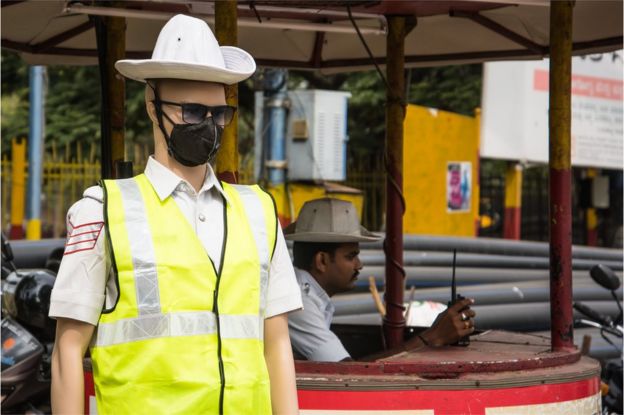
Mannequins dressed up as traffic police have been placed on roads in the southern city of Bangalore.
Dressed in police caps, white shirts and brown trousers, and wearing sunglasses, the mannequins are now on duty at congested junctions.
It’s hoped drivers will mistake them for real police and think twice about breaking the rules of the road.
Home to India’s IT industry, Bangalore has eight million registered vehicles on its streets. This number is expected to grow to more than 10 million by 2022.
At 18.7 km/h (11.61 mph) traffic speeds in the city are the second slowest in the country after Mumbai (18.5 km/h), according to a study by an office commute platform, MovinSync Technology Solutions. Cameras at traffic junctions have recorded more than 20,000 traffic violations every day.
But commuters have mixed feelings on whether mannequins can actually step in to help their real police counterparts.
Some feel they do.
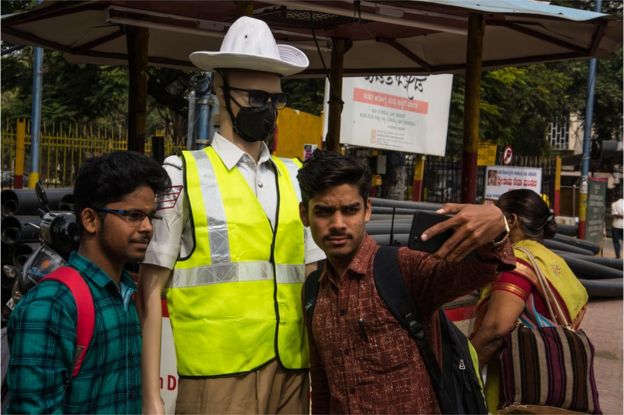
“They look good. It is only when you look closely that you feel it is not a real police constable. So it is making people wear their helmets at traffic junctions and drive their two-wheelers,” says Gautam T, a college student.
Gautam and his college mate Talah Fazal had taken a selfie with one of the mannequins placed in the southern part of the city.
Image copyright ASIF SAUD
Similarly, Saravana – who goes by a single name – and drives a three-wheeled auto-rickshaw, had parked his vehicle near a no-parking sign board right next to a mannequin in the central business district. But he said: “It makes you not jump the traffic signal.”
On Twitter, the tone has been largely one of amusement and derision.
Saleela Kappan, a public relations professional, said she found the concept “ridiculous”.
“These mannequins look too fit and fair compared to our Indian policemen to be posted on the road. I don’t think it will serve any purpose because people violate traffic rules even when policemen themselves are present at these junctions.”
Image copyright ASIF SAUD
BR Ravikante Gowda, a senior traffic police officer in Bangalore, explaining the reasoning behind this initiatives said: “The idea of placing these mannequins at a different location every day is because people behave differently when there is a policeman present at the junction. When he is not there, their behaviour is different.”
A constable, who did not want to be named, said that police also confuse drivers by mixing things up.
“It’s been a couple of weeks since we got them here. There is some hesitancy in jumping the traffic lights. They are confused when we replace the mannequin daily with one of our colleagues.”
A child makes a snowman at the Palace Museum in Beijing, capital of China, Nov. 30, 2019. Beijing saw a snowfall Friday night. (Xinhua/Meng Dingbo)
BEIJING, Nov. 30 (Xinhua) — Beijing on Saturday was covered in white after experiencing the first snow this winter, which experts said was timely after a much-delayed snowfall in last year’s droughty winter.
The snow, which began Friday evening, reached the level of a blizzard in the outlying districts of Yanqing and Changping. In the city proper, the average precipitation was 3.1 millimeters, said the Beijing Meteorological Service.
“The first snowfall in Beijing this winter was most timely. Records show since 1961, Beijing’s average first winter snowfall happened exactly on Nov. 29,” said Guo Jinlan, a chief forecaster with the service.
The city’s first snow last winter did not fall until February this year.
Experts expect the snow to reduce the risks of wildfire and clean the air in Beijing, whose air pollution usually deteriorates in the winter season.
The city has issued an alert for icy roads and advised citizens to beware of health problems during the low temperature and windy weather after the snow.
Hong Kong’s rule of law has been pushed to the “brink of total collapse” after more than five months of protests, police have warned.
The warning came as protesters clashed with police across the city on Tuesday.
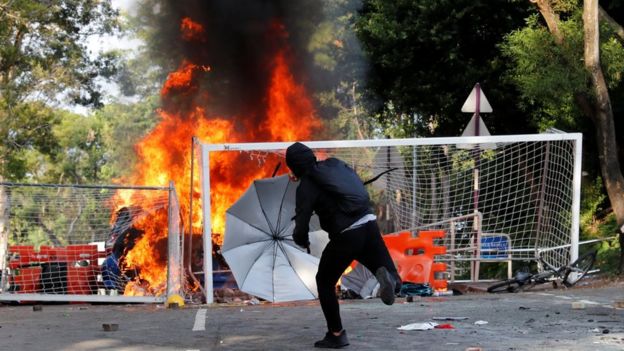
At the Chinese University of Hong Kong, police fired tear gas and rubber bullets at protesters who built barricades on the campus.
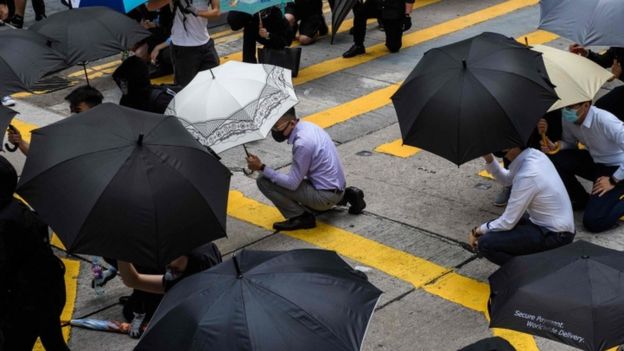
Earlier in the day, around 1,000 protesters rallied in central Hong Kong during the lunch hour blocking roads
Protesters, wearing office clothes, were seen chanting: “Fight for freedom, stand with Hong Kong!”
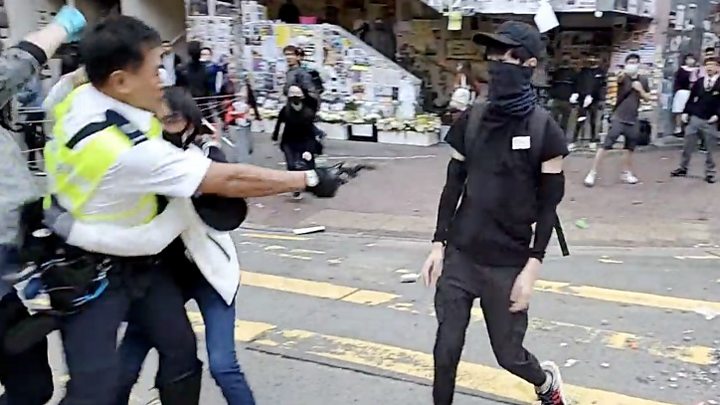
The demonstrations come just a day after the territory saw a marked escalation in violence, with police shooting one activist in the torso. A pro-Beijing supporter was set on fire by anti-government protesters.
The protests started in June against a now-withdrawn plan to allow extradition to mainland China, but have since morphed into wider demonstrations, with activists demanding greater democracy and police accountability in Hong Kong.
On Tuesday afternoon, police spokesman Kong Wing-cheung hit out at the protesters, saying they had “countless examples of rioters using random and indiscriminate violence against innocent” people.
“Hong Kong’s rule of law has been pushed to the brink of total collapse as masked rioters recklessly escalate their violence under the hope that they can get away with it,” he told reporters, adding that Monday’s attack on the pro-Beijing supporter was being investigated as attempted murder.
Image copyright AFPImage caption Protesters and office workers were seen blocking roads in Hong Kong’s financial district
Speaking at the same conference, Supt Li Kwai-wah defended the officer’s decision to shoot the protester on Monday.
“We found out that our colleague did not only face threat from one person, instead it was a group of people with an organised plan attempting to steal the gun,” he said.
“In a situation like this, we believe our police are reacting according to the guideline, to protect themselves as well as the people around them.”
Both the protester and the pro-Beijing supporter remain in hospital, with the latter in a critical condition.
What happened on Tuesday?
Clashes erupted at the Chinese University of Hong Kong, with police firing tear gas to disperse students, while at City University there was a standoff between students and riot police which continued into the evening.
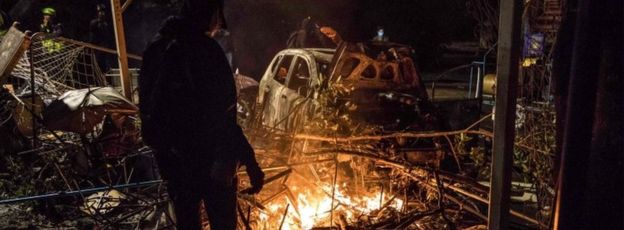
Police continued to use tear gas to try to disperse the protesters who responded with bricks and petrol bombs. Hundreds of protesters remain at the Chinese University of Hong Kong.
Image copyright REUTERSImage caption Students at Hong Kong’s Chinese University fought with police throughout the day
Students built roadblocks on streets in and around City University campus to stop police from entering. At one stage, a van used as part of a street barricade was set on fire.
Students at Hong Kong Polytechnic also tried to disrupt traffic near their campus.
In the morning, suspended railway services and road closures had already led to long traffic jams in the early rush hour. At noon, protesters moved into the city’s central business district for a flash mob protest.
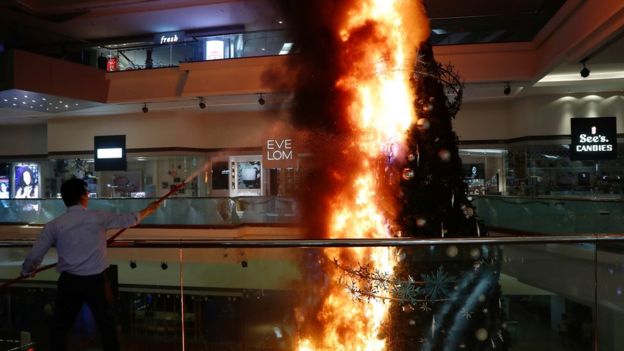
Image copyright REUTERSImage caption At Festival Walk shopping mall, a Christmas tree was set on fire
Protests continued to intensify throughout the day. A Christmas tree inside Festival Walk shopping mall was set on fire by protesters while others were seen smashing a glass railing with hammers.
Train stations were closed across the city.
Media caption This Hong Kong protester’s shooting was livestreamed on Facebook
Eight universities have announced they will suspend classes on Wednesday.
Monday’s protests saw 260 people arrested bringing the number to more than 3,000 since the protests began in June.
Students swear they will not surrender
Grace Tsoi, BBC World Service, at the Chinese University of Hong Kong
Image copyright AFPImage caption Hundreds of protesters remain at the university
The ground was strewn with bricks. The air was filled with the smell of tear gas. Fire was raging on campus. Hundreds of protesters, most of them clad in black, formed human chains to pass bricks and petrol bombs to the front line.
One of the best universities in Hong Kong has turned into a battlefield after another day of intense clashes between students, who have been at the forefront of anti-government protests, and police.
The Chinese University students have been putting up resistance since the morning. On Monday, police seemed to change strategy by deploying forces to campuses. Students told me they should not be allowed there.
The university’s management has tried to deescalate the situation. Vice-chancellor Rocky Tuan was also tear gassed as he was negotiating with police.
Dozens of students have been injured, including at least one hit in the eye by a projectile. The night is young and students swear they will not surrender.
US billionaire says it will take time to solve problems like air pollution but China is taking action
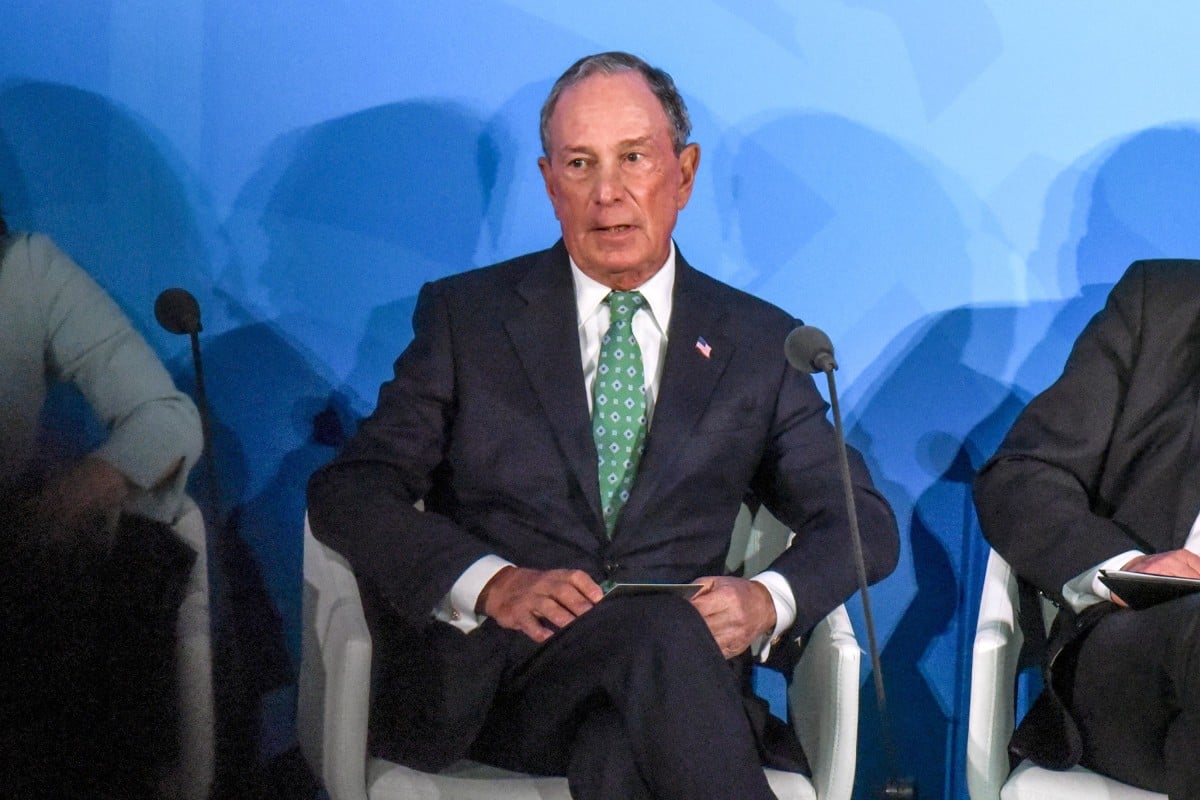
Billionaire Michael Bloomberg says it will take time for China to resolve problems like air pollution. Photo: AFP
US billionaire Michael Bloomberg has spoken out in support of Chinese President Xi Jinping, saying Xi is “not a dictator” and the Communist Party “listens to the public” on issues like air pollution.
Bloomberg made the comments in an interview on the weekend with Margaret Hoover, host of PBS’ Firing Line public affairs show, ahead of November’s Bloomberg New Economy Forum in Beijing, an event designed to rival the World Economic Forum in Davos.
When asked whether China could be a good partner in the fight against climate change, Bloomberg said “China is doing a lot”.
“Yes, they are still building a bunch of coal-fired power plants. Yes, they are [burning coal]. But they are now moving plants away from the cities. The Communist Party wants to stay in power in China and they listen to the public,” he said.
“When the public says ‘I can’t breathe the air’, Xi Jinping is not a dictator. He has to satisfy his constituents, or he’s not going to survive … The trouble is you can’t overnight move cement plants and power plants just outside the city that are polluting the air and you have to have their product. So some of it takes time.”
China prepares for next round of nationwide inspections in ‘war on pollution’
Hoover countered, saying China was not a democracy and Xi was not answerable to voters.
“He doesn’t have a vote, he doesn’t have a democracy. He [isn’t held] accountable by voters. Is the check on him just a revolution?” she said.
“You’re not going to have a revolution. No government survives without the will of the majority of its people,” Bloomberg said. “He has to deliver services.”
Hoover then said: “I’m looking at people in Hong Kong who are protesting and wondering whether the Chinese government cares what they have to say.”
Bloomberg said that in government – “even governments that aren’t what we could call a democracy” – there were many stakeholders with vested interests and “they have an impact”.
Smog in northern China rises in first four months of 2019 as anti-pollution drive loses ‘momentum’
Bloomberg’s comments come seven years after his news service published an investigative story about the finances of the extended family of Xi, then vice-president.
The story was published at a sensitive time, with China holding a once-a-decade leadership transition that saw Xi become president.
China banned the use of Bloomberg financial data tracking terminals but the company’s relations warmed gradually after three years.
In August 2015, Bloomberg was given a high-profile reception by then vice-premier Zhang Gaoli. He also published an opinion piece in party mouthpiece People’s Daily.
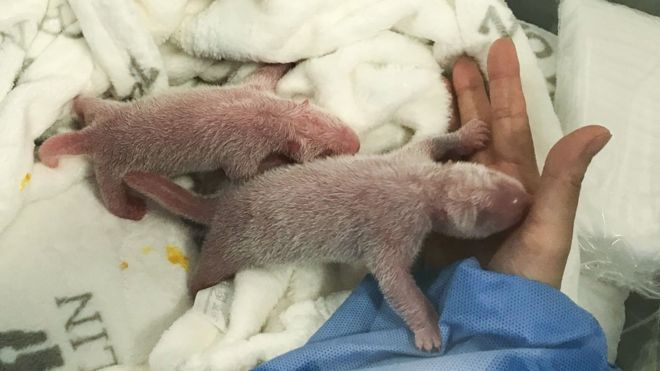
Image copyright AFPImage caption Meet Hong and Kong?
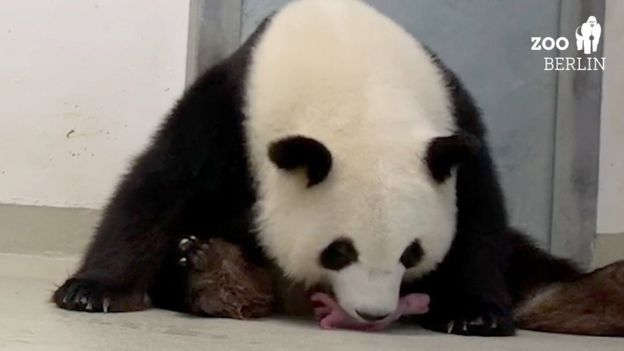
Two newborn panda cubs at Berlin Zoo have been unexpectedly caught up in Hong Kong’s political unrest, after German newspapers started a campaign to name them “Hong” and “Kong”.
One of Berlin’s leading papers, Der Tagesspiegel, asked its readers to come up with name suggestions.
Top of the poll: “Hong” and “Kong”.
One reader wrote in to say they should be named “in solidarity with a city fighting for survival”.
Other suggested names included “Joshua Wong Chi-fung” and “Agnes Chow Ting” – after two prominent Hong Kong democracy activists.
Loaning pandas to zoos around the world is part of China’s soft diplomacy, aimed at winning hearts and minds abroad.
As the cubs will have to be returned to China in two to four years, the paper suggested that naming them after the activists might even be a sneaky way of keeping them in Germany.
The poll is in no way binding or even related to the zoo – but it was soon picked up by Germany’s leading tabloid, Bild, which issued a passionate call “to politicise” the naming of the little pandas.
“Bild is choosing to call the panda cubs Hong and Kong because it’s China’s brutal politics that lies behind these panda babies,” the paper wrote on Thursday.
“Bild is demanding of the German government that it reacts in a political way to the birth of these small bears.”
As German Chancellor Angela Merkel is currently on a visit to China, Bild said she could even relay the news to President Xi Jinping in person.
Image copyright EPAImage caption Mother panda Meng Meng has been on loan to Germany since 2017
Hong Kong activists had already called on Ms Merkel to raise their cause during her talks in Beijing.
In an earlier interview with Bild, activist Joshua Wong had suggested the zoo should name the animals “Freedom” and “Democracy”.
The German media’s foray into panda PR came as Hong Kong’s government launched a series of full-page adverts in international newspapers, designed to reassure investors that the city is still open for business.
The ads, which will run in leading papers around the world, say the government is determined to achieve a “peaceful, rational and reasonable resolution” to present political tensions.
When Kazakh actress Reyizha Alimjan arrived in Shanghai last month wearing jeans and a camisole it reignited a long-running debate over who gets a say on how Chinese women should dress
Fashion choices that would be regarded as unremarkable in Europe or North America are often seen as outrageous in the world’s most populous nation
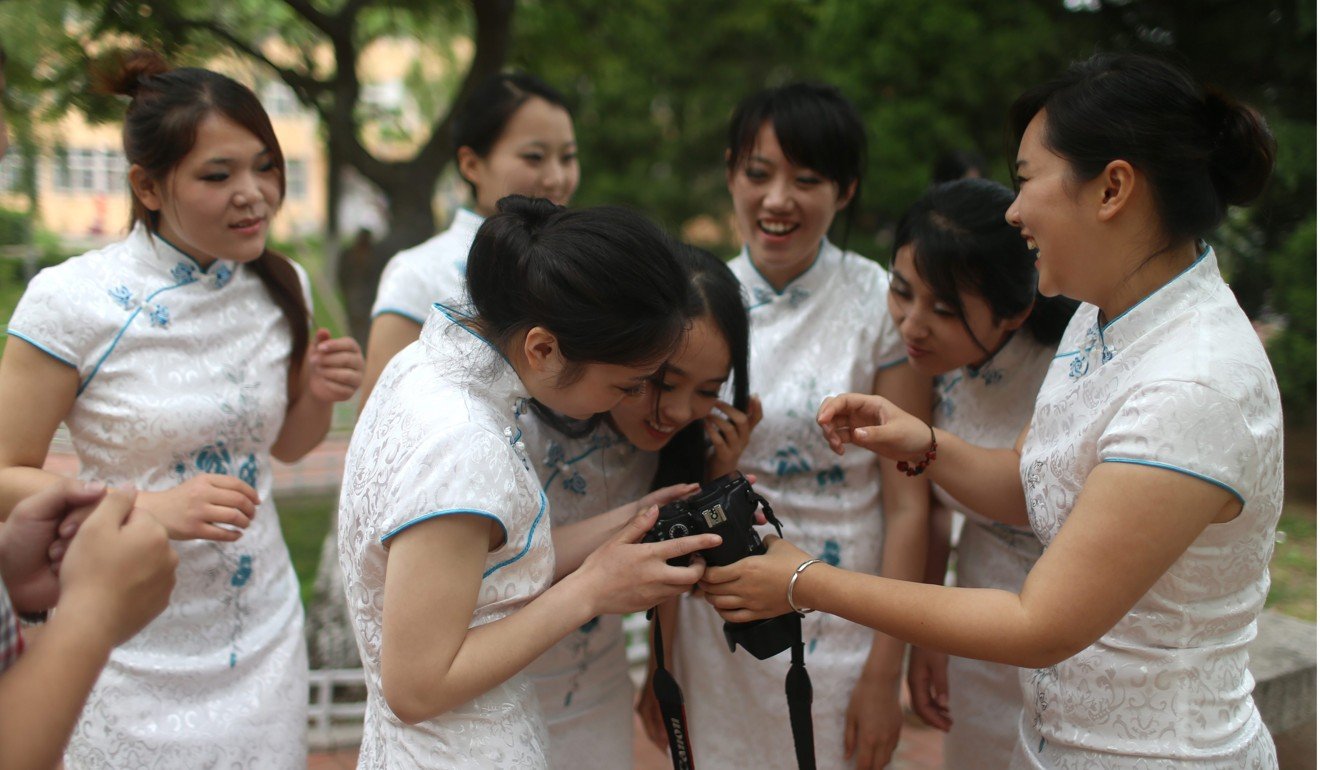
Kazakh actress Reyizha Alimjan’s fashion choices sparked a social media storm in China last month. Photo: Weibo
When Li Xiang broke up with her boyfriend over a selfie she posted on social media, it was not just about a woman letting a man know he wasn’t entitled to tell her how to dress in public, but a matter of personal freedom, social norms and cultural tradition.
A few weeks ago, the 24-year-old media worker from Shanghai shared a photo on WeChat that showed her posing at her bedroom door in a camisole and mini shorts. Her boyfriend said it made him very “uncomfortable”, and they quarrelled.
“‘Look how scantily clad you are, and [if] that is not enough, you shared it online,’ he said,” Li recalled.
“I got mad when he said, ‘You should go and ask other men if they’d like their girlfriends to dress like that’, as if he should decide what I wear – as if I were his appendage,” she said, referring to the archaic notion that a woman is secondary to a man in their relationship.
What clothes Chinese women should or should not wear has been the subject of intense online debate in recent weeks. Photo: EPA
Their argument was not unusual in China, especially over the past month when the online world became embroiled in a war of words about women’s freedom to dress as they please.
The controversy erupted when an article defending Reyizha Alimjan – the Kazakh actress criticised for showing too much flesh when she arrived at an airport in Shanghai in late July wearing jeans and a camisole – appeared on a WeChat movie review account called Staff of the 3rd Hall on August 12.
Reyizha Alimjan was criticised for her outfit on Chinese social media. Photo: Weibo
While that perspective was supported by many women online, others disagreed and said that society was open and tolerant but that people had the right to disagree.
By coincidence, a poll about women wearing camisoles in public was launched on August 10 by a WeChat account called Cicada Creativity. About 70 per cent of the nearly 14,000 respondents said they did not dare to do so.
More than 40 per cent avoided doing so for reasons such as thinking they were “not thin enough”, but a quarter said they said no because either their boyfriends disapproved or would not allow it, or they feared they would be harassed.
Chinese women spurn Victoria’s Secret for home-grown lingerie brands
Joy Lin, a feminist from Shanghai, said the debate was so fierce because it was not just about dress.
“It’s more about people’s judgment about one’s character and morals behind what she wears,” Lin said. “If you wear revealing clothes, they would say you are asking for harassment. If you show a little skin, you are frigid. And if you are casual, they call you ‘dama’ [Chinese slang, often derogatory, for middle-aged and elderly women].”
Some women say they are often judged by the clothes they wear. Photo: AP
In her experience, Lin said that if she appeared on the streets of Shanghai – the most cosmopolitan city in China – without a bra, there would be judgmental looks from passers-by before she had walked 10 metres (33 feet).
In contrast, she did just that in Paris in July, and, “no one stared at me or came near me at all”.
“Usually, when it comes to comments about what we wear, they’re not about whether the dress matches the hairstyle or things like that, but about our bodies, whether we’re slim or not and stuff like that,” she said. “Some [comments] can be very malicious and insulting.”
#MeToo rally accuses Hong Kong police of sexual violence against protesters
While shaming women for their clothing choices has been an issue for many years, it reached peak public awareness in China after the #MeToo movement took off in the US.
The social media campaign went viral in 2017 when dozens of women accused American film producer Harvey Weinstein of sexual assaults over a period of nearly 30 years.
The #MeToo movement took off in the US in 2017 after dozens of women accused film producer Harvey Weinstein of sexual assault. Photo: Shutterstock
Lu Peng, a researcher from the Shanghai Academy of Social Sciences, said the online debate helped encapsulate conflicts between a growing desire for freedom, gender norms and generations of tradition.
“There will hardly be a consensus on such a question about whether women have the freedom to dress,” he said. “But if this discussion can make people realise that men, not just women, also face restrictions in dressing, then it’s bringing progress.”
The simplest example was to dress for the occasion, which applies to both sexes.
“We have never been free in dressing. We’re only free within a certain extent … About what to wear in public, I don’t think we should emphasise freedom only and ignore the local culture and society,” Lu said.
Keeping a low profile has long been part of the Chinese philosophy. Photo: Xinhua
In China, there is no law banning states of dress or undress in public, nor do the Han people, who make up most of the population, have religious beliefs that restrict their mode of dress. But keeping a low profile and avoiding unwanted attention has long been part of the Chinese philosophy.
“My father will also ask me not to be ‘overexposed’, because he believes it’s increasing the risk of being harassed,” Li, the Shanghai media worker, said.
“They think they mean well, but I just want to be myself. I’m not breaking any law. I want to make my own contribution in changing this culture,” she said.








 CHINDIA ALERT: You'll be living in their world, very soon