Archive for ‘Communist Party’

25/01/2020

China virus toll hits 41; Australia reports first four cases

BEIJING (Reuters) – The death toll from China’s coronavirus outbreak jumped on Saturday to 41 as the Lunar New Year got off to a gloomy start, with Hong Kong declaring a virus emergency, scrapping celebrations, and restricting links to mainland China.

Australia on Saturday confirmed its first four cases, Malaysia confirmed three and France reported Europe’s first cases on Friday, as health authorities around the world scrambled to prevent a pandemic.

Hong Kong leader Carrie Lam on Saturday declared a virus emergency in the Asian financial hub, with five confirmed cases, immediately halting official visits to mainland China and scrapping official Lunar New Year celebrations.

Inbound and outbound flights and high speed rail trips between Hong Kong and Wuhan, the epicentre of the outbreak, would be halted, and schools, now on Lunar New Year holidays, would remain shut until Feb. 17. The territory was also treating 122 people suspected of having the disease.

The death toll in China rose to 41 on Saturday from 26 a day earlier and more than 1,300 people have been infected globally with a virus traced to a seafood market in the central city of Wuhan that was illegally selling wildlife.

Hu Yinghai, deputy director-general of the Civil Affairs Department in Hubei province, where Wuhan is located, made an appeal on Saturday for masks and protective suits. Hospitals in the city have made similar pleas.

“We are steadily pushing forward the disease control and prevention … But right now we are facing an extremely severe public health crisis,” he told a news briefing.

Vehicles carrying emergency supplies and medical staff for Wuhan would be exempted from tolls and given traffic priority, China’s transportation ministry said on Saturday.

Wuhan said it would ban non-essential vehicles from its downtown starting Sunday to control the spread of the virus, further paralysing a city of 11 million that has been on virtual lockdown since Thursday, with nearly all flights cancelled and checkpoints blocking the main roads leading out of town.

Authorities have since imposed transport restrictions on nearly all of Hubei province, which has a population of 59 million.

In Australia, three men, aged 53, 43 and 35 in New South Wales were in stable condition after they were confirmed to have the virus after returning from Wuhan earlier this month.

A Chinese national in his 50s, who had been in Wuhan, was also in stable condition in a Melbourne hospital after arriving from China on Jan. 19, Victoria Health officials said.

State-run China Global Television Network reported in a tweet on Saturday that a doctor who had been treating patients in Wuhan, 62-year-old Liang Wudong, had died from the virus.

Police officers stand guard in front of the closed gate of Lama Temple where a notice saying that the temple is closed for the safety concern following the outbreak of a new coronavirus is seen, in Beijing, China January 25, 2020. REUTERS/Carlos Garcia Rawlins

It was not immediately clear if his death was already counted in the official toll of 41, of which 39 were in the central province of Hubei, where Wuhan is located.

U.S. coffee chain Starbucks said on Saturday that it was closing all its outlets in Hubei province for the week-long Lunar New Year holiday, following a similar move by McDonald’s in five Hubei cities.

PROTECTIVE SUITS

In Beijing on Saturday, workers in white protective suits checked temperatures of passengers entering the subway at the central railway station, while some train services in eastern China’s Yangtze River Delta region were suspended, the local railway operator said.

The number of confirmed cases in China stands at 1,287. The virus has also been detected in Thailand, Vietnam, Singapore, Japan, South Korea, Taiwan, Nepal, and the United States.

The U.S. Centers for Disease Control and Prevention said on Friday it had 63 patients under investigation, with two confirmed cases. While China has called for transparency in managing the crisis, after cover-up of the 2002/2003 Severe Acute Respiratory Syndrome spread, officials in Wuhan have come in for criticism over their handling of the current outbreak.

In rare public dissent, a senior journalist at a Hubei provincial newspaper run by the ruling Communist Party on Friday called for a “immediate” change of leadership in Wuhan on the Twitter-like Weibo. The post was later removed.

REINFORCEMENTS TO WUHAN

The World Health Organization (WHO) declared the new coronavirus an “emergency in China” this week but stopped short of declaring it of international concern.

Human-to-human transmission has been observed in the virus.

China’s National Health Commission said it had formed six medical teams totalling 1,230 medical staff to help Wuhan.

Hubei province, where authorities are rushing to build a 1,000 bed hospital in six days to treat patients, announced on Saturday that there were 658 patients affected by the virus in treatment, 57 of whom were critically ill.

The newly-identified coronavirus has created alarm because there are still many unknowns surrounding it, such as how dangerous it is and how easily it spreads between people. It can cause pneumonia, which has been deadly in some cases.

Symptoms include fever, difficulty breathing and coughing. Most of the fatalities have been in elderly patients, many with pre-existing conditions, the WHO said.

NEW YEAR DISRUPTIONS

Airports around the world have stepped up screening of passengers from China, though some health officials and experts have questioned the effectiveness of such screenings.

There are fears the transmission could accelerate as hundreds of millions of Chinese travel during the week-long Lunar New Year holiday, which began on Saturday, although many have cancelled their plans, with airlines and railways in China providing free refunds.

The virus outbreak and efforts to contain it have put a dampener on what is ordinarily a festive time of year.

Sanya, a popular resort destination on the southern Chinese island of Hainan, announced that it was shutting all tourist sites, while the island’s capital city, Haikou, said visitors from Wuhan would be placed under 14-day quarantine in a hotel.

Shanghai Disneyland was closed from Saturday. The theme park has a 100,000 daily capacity and sold out during last year’s Lunar New Year holiday.

Beijing’s Lama Temple, where people traditionally make offerings for the new year, has also closed, as have some other temples.

Source: Reuters
20/01/2020

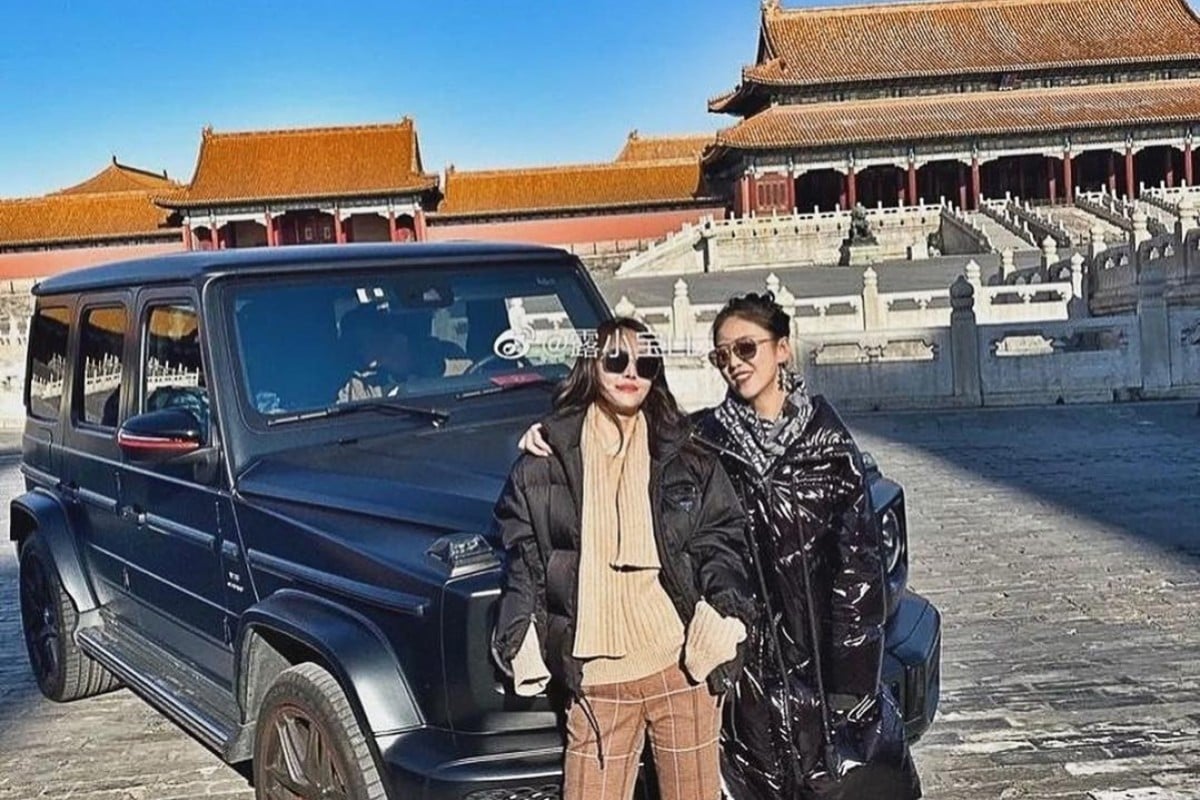
Calls for an investigation after woman drove into Beijing’s Forbidden City

  • Furious internet users have been digging for information on her background as they push for an explanation, while state media urges probe
  • ‘Lu Xiaobao’, who posted pictures of her and a friend with her car at the site, claims to be the wealthy granddaughter-in-law of a revolutionary hero
Pictures of the women posing in front of a car in the Forbidden City went viral. Photo: Weibo
A Chinese woman who drove her luxury SUV into Beijing’s Forbidden City
and posted pictures online has prompted a public search for information about her, while state media called for the case to be investigated.
The photos – showing two women standing in front of a Mercedes-Benz G-Wagen parked in the World Heritage Site, which banned vehicles in 2013 – were posted on microblog site Weibo on Friday under the name “LuxiaobaoLL”. It was captioned: “As it is closed on Monday, [we] avoided tourists and enjoyed the palace.” The post went viral and drew tens of thousands of comments.
The Palace Museum, which runs the 600-year-old landmark, later apologised, confirming that a car had been allowed to enter the complex on Monday last week when it was closed to the public.
It did not identify the pair, but said it would “stop it from happening again”.
Lu Xiaobao claims she is married to the grandson of revolutionary hero He Changgong. Photo: Weibo
Social media user Lu Xiaobao, who posted the photos of herself and a friend, has claimed to be the wealthy granddaughter-in-law of a Chinese revolutionary hero, and that her fortune includes a house in Los Angeles worth more than US$11 million.
Lu herself and the family she says she married into have so far remained silent, and the claims could not be independently verified. But irate social media users have been digging online for information on her background as they push for an official explanation.

Some are concerned that flouting the car ban risked damaging the Ming dynasty complex, and the incident has also reinforced a widespread perception that certain people are granted privileges denied to ordinary Chinese because of their family connections.

Lucky Air passenger who threw ‘good luck’ coins at plane ordered to pay airline US$17,200

3 Jan 2020

Social media users seized on one of Lu’s Instagram posts featuring a house she claims to have bought in 2018. The property is apparently owned by Wang Zhijie, wife of Liu Zhongtian, the billionaire founder of aluminium products maker China Zhongwang, raising suspicion that Lu could be connected to the family.

But the company denied there was any link with the woman in a statement issued on Sunday. “Mr Liu himself doesn’t know Luxiaobao LL or her relatives directly,” it said.

State media has also weighed in on the case, with People’s Daily, the Communist Party mouthpiece, running a scathing commentary on Saturday calling for a thorough investigation by the Palace Museum.

“People are distressed because our national heritage and culture – which we treasure – has been damaged,” the commentary read. “People are furious because there are still people trying to challenge the consensus that the 600-year-old Forbidden City is no longer a private property for feudal privilege.”

The history of the Forbidden City: a visual explainer Hu Xijin, editor-in-chief of state-run tabloid Global Times, also called for a better explanation of the incident.

The woman has claimed that she is married to He Gang, the grandson of He Changgong, who joined the party in 1922, a year after it was established, and played an important role in its early development.

But Hu wrote on Weibo that if the woman’s claim was true, her background was “not so eminent” since He Changgong had not taken any important positions after the founding of the People’s Republic in 1949.

The Palace Museum banned vehicles from the Forbidden City in 2013 to protect the complex. The ban has been strictly enforced, including when former French president Francois Hollande visited that year and had to leave his car outside and walk into the palace.

Source: SCMP
20/01/2020

China confirms spread of new virus as cases surge

BEIJING (Reuters) – An outbreak of a new coronavirus in China has spread to more cities, Chinese authorities said on Monday, as the number of patients tripled and a third person died, stoking concerns about containment of the illness.

The Daxing health commission in the capital Beijing said it had confirmed two cases of coronavirus, while the southern Guangdong province’s health commission confirmed one case in Shenzhen. They mark the first cases in China beyond the central city of Wuhan where the virus first emerged.

The Wuhan Municipal Health Commission said 136 new cases of pneumonia caused by the coronavirus strain had been found in the city over the weekend, adding to 62 already known cases. A third death occurred on Saturday, the authority said in a statement.

This brings the total number of known cases worldwide to more than 200, underscoring the challenge for health authorities seeking to contain the outbreak. South Korea on Monday reported its first confirmed case of the coronavirus, a 35-year-old female Chinese national who had travelled from Wuhan, the fourth patient to be reported outside China.

Hundreds of millions of Chinese tourists will be traveling domestically and abroad during the Lunar New Year holiday period that starts later this week.

A report by London Imperial College’s MRC Centre for Global Infectious Disease Analysis estimated that by Jan. 12 there were 1,723 cases in Wuhan City with onset of related symptoms. Chinese health authorities have not commented directly on the report.

CONTAINMENT EFFORTS

Authorities around the globe, including in the United States and many Asian countries, have stepped up screening of travellers from Wuhan. Last week, two cases were reported in Thailand and one in Japan. All three involved people from Wuhan or who recently visited the city.

The virus belongs to the same family of coronaviruses as Severe Acute Respiratory Syndrome (SARS), which killed nearly 800 people globally during a 2002/03 outbreak that also started in China.

Its symptoms include fever and difficulty in breathing, which are similar to many other respiratory diseases and pose complications for screening efforts.

China’s National Health Commission said on Sunday it will step up prevention efforts, but acknowledged it still doesn’t know the source of the virus.

Shares in pharmaceutical firms and mask makers in China surged Monday because of the outbreak.

The outbreak was one of the top trending topics on Chinese social media platform Weibo, where many users expressed concerns about their safety.

“Who knows how many people who have been to Wuhan may be unaware that they have already been infected?,” one user said.

China’s Global Times, published by the ruling Communist Party’s official People’s Daily newspaper, said in an editorial the government needs to disclose all information and not repeat the mistakes made with SARS. Chinese officials covered up the SARS outbreak for weeks before a growing death toll and rumours forced it to reveal the epidemic.

“Concealment would be a serious blow to the government’s credibility and might trigger greater social panic,” the editorial said.

Source: Reuters

16/11/2019

China’s PLA soldiers help clean up Hong Kong streets as protesters leave campuses

HONG KONG (Reuters) – China’s People’s Liberation Army (PLA) soldiers in shorts and t-shirts made a surprising appearance in some Hong Kong streets on Saturday, briefly helping residents clean up debris after anti-government protests blocked roads, witnesses said.

The presence of PLA troops on the streets, even to help clean up roads near their base, could stoke further controversy over the Chinese-ruled territory’s autonomous status.

Hong Kong has been rocked by more than five months of demonstrations by protesters angry at perceived Communist Party meddling in the former British colony, which was guaranteed its freedoms when it returned to Chinese rule in 1997.

Beijing denies interfering and has blamed the unrest on foreign influences.

Clashes between protesters and police have become increasingly violent. China has warned that any attempt at independence for Hong Kong will be crushed, but troops have remained inside their base.

Saturday’s clean up followed some of the worst violence seen this year, after a police operation against protesters at the Chinese University of Hong Kong on Tuesday.

The authorities have since largely stayed away from at least five university campuses that had been barricaded by thousands of students and activists who stockpiled petrol bombs, catapults, bows and arrows and other weapons.

Many protesters appeared to have left the campuses by late Saturday, though some remained behind to man makeshift barricades. Hong Kong’s Cross-Harbour Tunnel was still blocked by protesters occupying Polytechnic University.

Earlier, hundreds of pro-China demonstrators gathered by the city’s legislature and police headquarters, waving Chinese and Hong Kong flags. Some held up posters reading “Police we stand with you”, while others chanted “Support the police”.

Pro-China protests have so far attracted much smaller numbers than those angry at Beijing.

RARE TROOP PRESENCE

By late afternoon, the PLA soldiers had left the streets outside Baptist University, beside their barracks in leafy Kowloon Tong.

Chinese troops have appeared on local streets only once since the 1997 handover, to help with cleanup operations after a typhoon in late 2018. It was not immediately clear how many were involved on Saturday.

Calls to the PLA Hong Kong garrison office and a media liaison officer went unanswered.

Demosistō, a pro-democracy organisation, said Saturday’s cleanup operation could set a “grave precedent” if the city’s government invites the military to deal with internal problems.

In August, Beijing moved thousands of troops across the border into Hong Kong in what state news agency Xinhua described as a routine “rotation”.

Foreign envoys and security analysts estimate up to 12,000 troops are now based across Hong Kong — more than double the usual garrison number.

Standing beside a black flag with the slogan “Liberate Hong Kong, Revolution of our Times,” James Wong, 23, was among a handful of protesters still manning a bridge at Baptist University.

“We didn’t want to confront the people and the PLA troops directly,” he told Reuters. “We are not directly against the PLA, but rather the government. But the PLA should not leave their base because this is Hong Kong territory.”

Wong said even after the campus fortifications have been dismantled “Hong Kong will keep resisting until the government responds to our demands”.

Hundreds of residents moved in to help clear barricaded roads near several universities.

Clashes on Saturday saw at least one petrol bomb thrown before anti-government protesters at the campuses retreated. No soldiers appeared to have been involved in the confrontations.

“We just want our lives to continue,” said one resident who was helping clear streets near HKU. “There are many elderly who need to go the hospital and children who need to go to school. I am very sad to see what is happening in my community.”

PRO-POLICE DEMONSTRATION

Saturday’s rally to denounce the anti-government violence drew a mix of young and elderly.

“From the bottom of our hearts, we believe it is the correct thing to support the police in fighting the rioters for Hong Kong citizens,” said a 49-year-old housewife surnamed Kong.

“A lot of people keep silent, afraid of the rioters. It’s time for all the people who are silent to step up and say that’s enough.”

A 70-year-old street cleaner died on Thursday after being hit on the head by one of several bricks police said had been thrown by “masked rioters”. On Monday, police blamed a “rioter” for dousing a man in petrol and setting him on fire. The victim is in critical condition.

On the same day, police shot a protester in the abdomen. He was in a stable condition.

Many pro-police protesters laid white flowers outside the government office to pay their respects to the cleaner. Others applauded and cheered the police, some bowing and giving thumbs up as they walked past riot police on duty.

Authorities said on Saturday that a highway blocked by anti-government protesters on Friday had reopened after being cleared of debris and petrol bombs.

Train services suspended earlier in the week were gradually resuming, metro operator MTR Corp (0066.HK) said.

Source: Reuters

18/10/2019

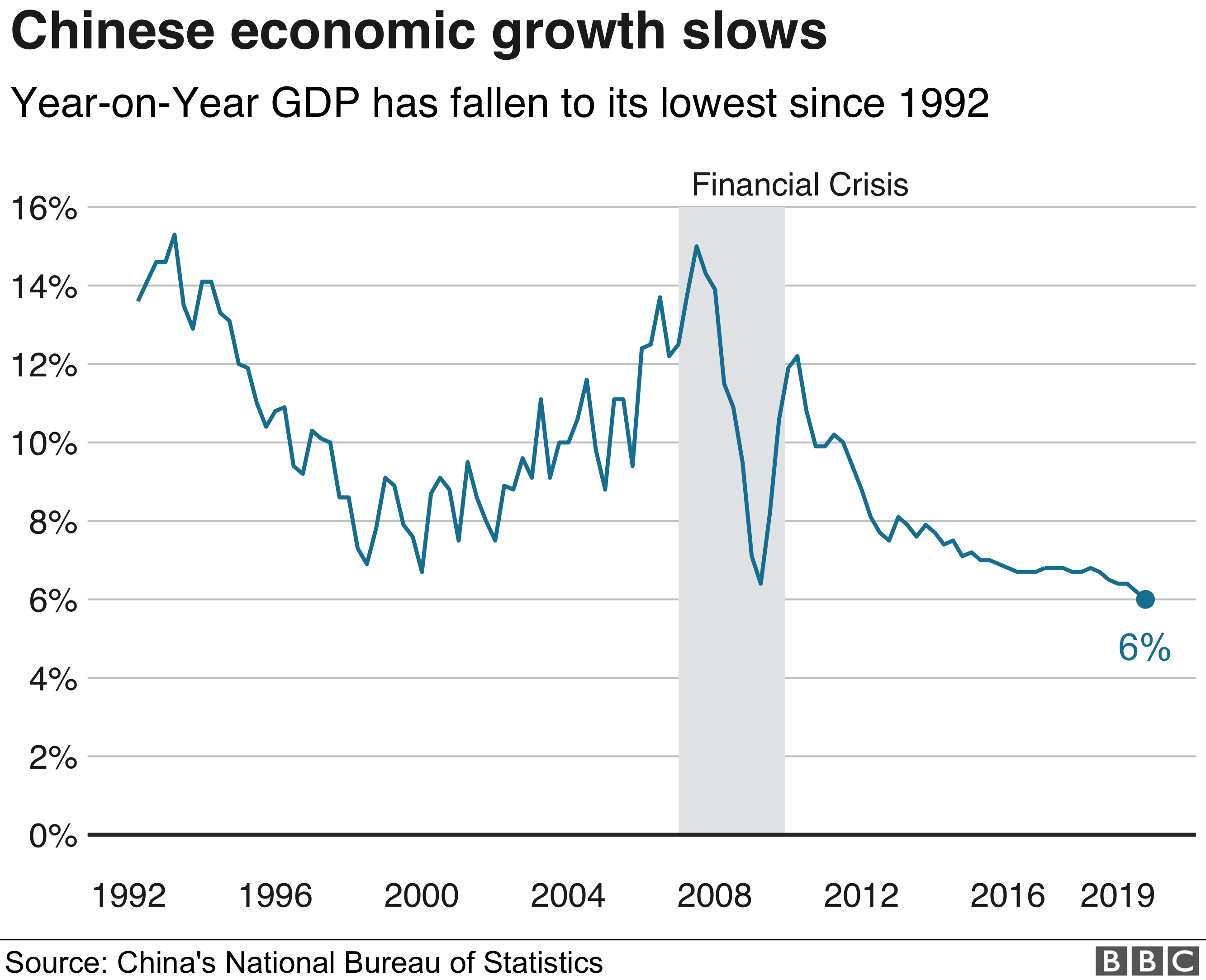
China economy: Third quarter growth misses expectations

China’s economy grew at a slower pace than expected in the third quarter as it struggled with a US-led trade war and softer domestic demand.

In the three months to September, the economy expanded 6% from a year earlier, official figures showed.

The result fell just short of expectations for 6.1% growth for the period.

The slowdown comes despite government efforts to support the economy, including measures such as tax cuts.

The latest figures mark a further loss of momentum in the world’s second largest economy, which had already seen growth languishing at its slowest pace in around three decades.

The rate remained within the government’s target range for annual growth of between 6% and 6.5%.

The strength of the Chinese economy is closely watched as slowing growth can have far-reaching consequences for the global economy.

The country has become a key engine of growth in recent decades. Its healthy demand for a range of products, from commodities to machinery, has supported growth around the world.

Some analysts worry that a sharp slowdown in China could hurt an already sluggish world economy and increase the risk of a recession.

Chart on China GDP

Julian Evans-Pritchard, senior China economist at Capital Economics, said pressure on the Chinese economy “should intensify in the coming months”.

He said more intervention by policymakers to support the economy was likely “but it will take time for this to put a floor beneath economic growth”.

What challenges does China face?

China has been fighting a trade war with the US for the past year, which has created uncertainty for businesses and consumers.

At the same time, it faces domestic challenges including a swine fever outbreak that has fuelled inflation and hit consumer spending.

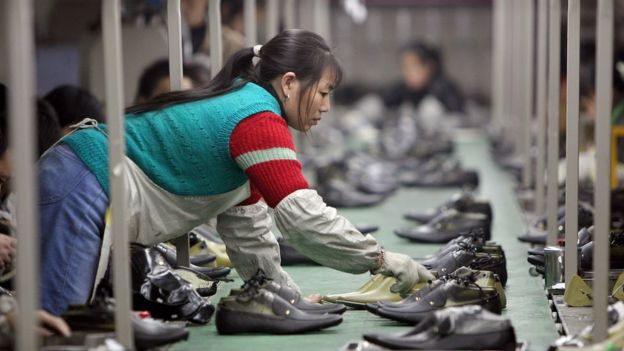
A woman works in a shoe factory in ChinaImage copyright GETTY IMAGES
Image caption China accounted for 16% of global gross domestic product in 2018, according to the McKinsey Global Institute

This week the International Monetary Fund trimmed its 2019 growth forecast for China to 6.1% from 6.2% due to the long-running trade dispute and slowing domestic demand.

But there have been some signs of progress toward resolving the trade battle, with the US and China reaching a “phase one deal” earlier this month.

The government has sought to help the economy through tax cuts and by taking measures to boost liquidity in the financial system.

Still, some analysts say the government has become more cautious in providing stimulus amid growing concerns about China’s rising debt pile.

Presentational grey line
Analysis box by Karishma Vaswani, Asia business correspondent

Any analysis of China’s economic data has to come with a caveat: Many economists believe the actual figures are much lower than what we are told, but it’s the trajectory of growth and signalling from the government that you should pay attention to.

The fact that the growth figures have come in below market expectations indicate that China’s economy is hurting more than many thought.

There were signs from China that these numbers were going to be worrying. Earlier this week, Premier Li Keqiang made the unusual move to warn local officials that they must do “everything” to make sure they hit growth targets for this year.

China’s economy is being hit on three fronts: The US-led trade war, slowing demand at home and rising domestic challenges including the outbreak of swine fever that has dealt a huge blow to its pork farmers. It’s also pushed up prices for consumers.

China’s slowdown is nothing new. But these challenges pose new headaches for policymakers who are trying to manage the slowdown. The country’s political stability depends on economic security – and over the last forty years, that’s what the Communist Party has delivered. They’re under pressure to keep that contract.

Source: The BBC

17/10/2019

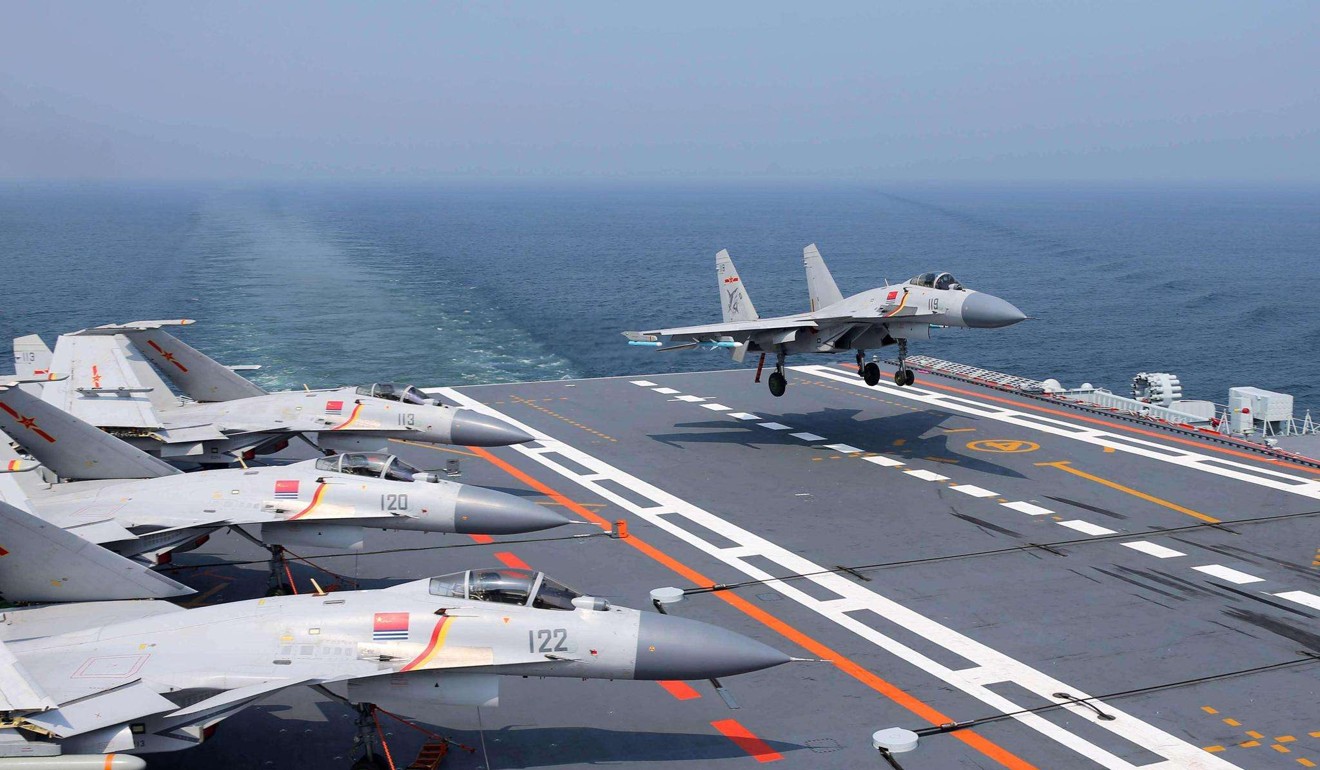
China’s Type 001A aircraft carrier sets off on latest sea trial as navy prepares to commission ship ‘within months’

  • Country’s first home-grown carrier may soon be ready for service but observers warn a few glitches may still need to be ironed out
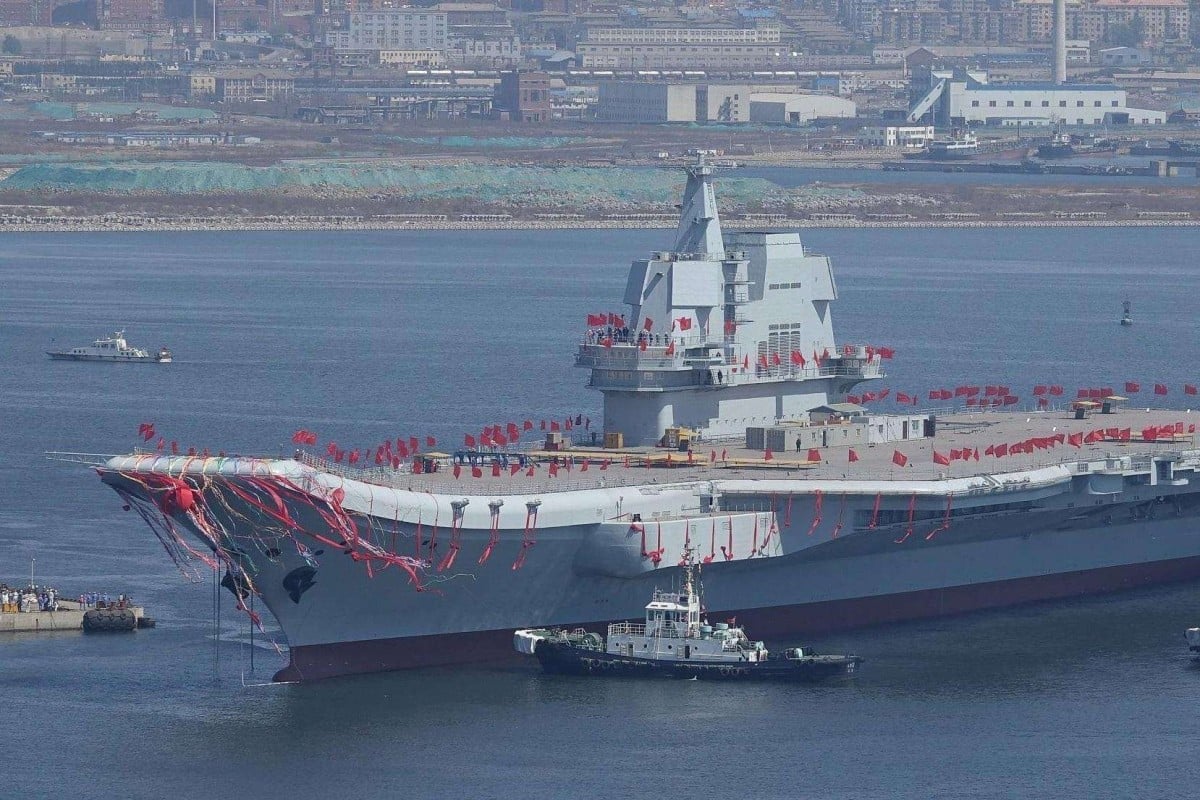
The Type 001A will be China’s second carrier and the first home-grown one. Photo:ifeng

China’s first home-grown aircraft carrier, Type 001A, will be commissioned within months, according to military observers.

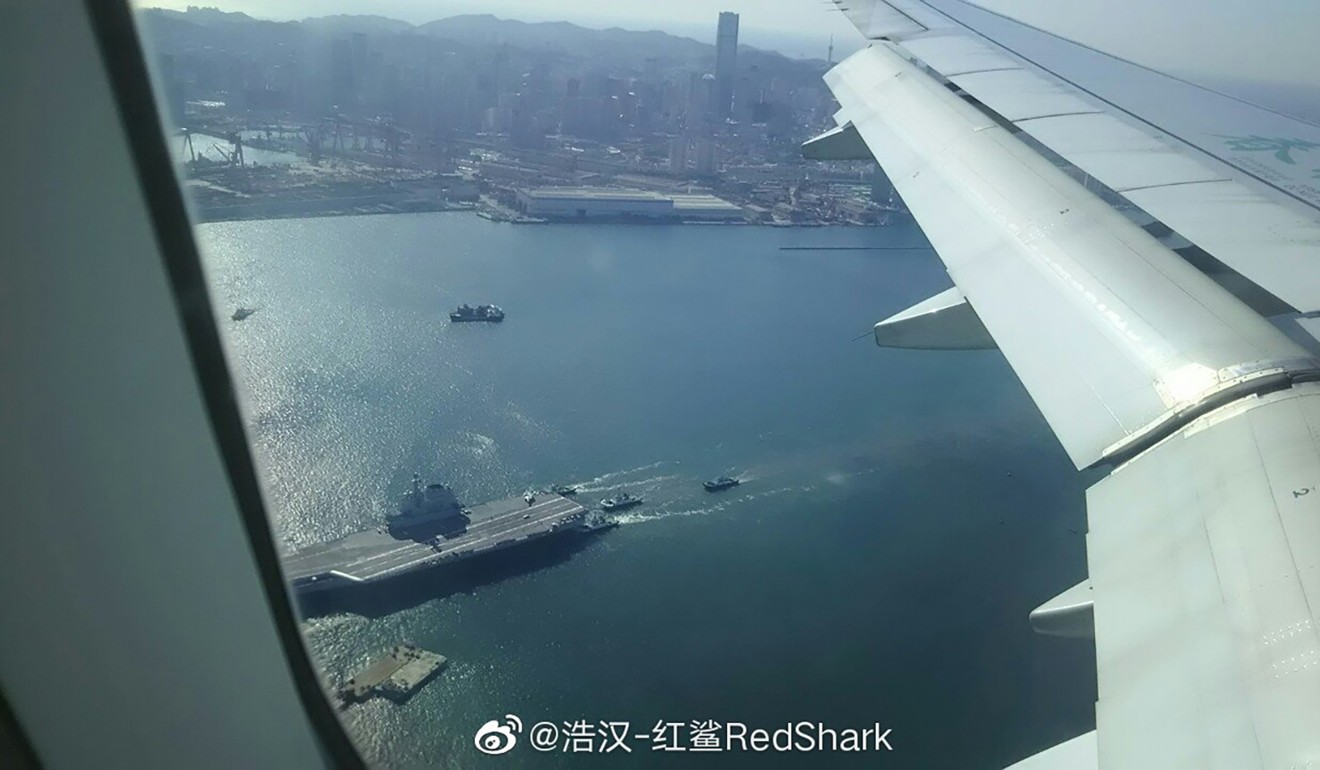
The ship appeared to have set off on its eighth sea trial on Tuesday after photographs taken by a plane flying over a restricted area showed a carrier, with a warplane on deck, leaving the Dalian Shipyard, where the carrier is being built.

The timing coincided with a notice issued by China’s Maritime Safety Administration, saying an area of the Bohai Sea, near the yard would be cordoned off for military activities.

While the commissioning would mark an advance in China’s naval capacity, some analysts noted that the trial phase was taking longer than expected.

A photo shows a carrier leaving the Dalian shipyard on Tuesday. Photo: Weibo

Global Times, a tabloid affiliated to Communist Party mouthpiece People’s Daily, quoted naval observer Li Jie as saying that the Type 001A was likely to be undertaking its eighth sea trial after solving problems discovered in the previous trials.

In August the Type 001A identified technical problems that required immediate attention
during its seventh trial, a fairly common occurrence in the processes.

Zhou Chenming, a Beijing based military expert, said that the Type 001A’s commissioning had already been postponed and the major problem now was a lack of shipborne aircraft and problems with the flight control system.

Zhou said the control system worked with J-15 fighters, which will be the primary jets used on the ship, but “is not yet compatible with other aircraft, which hinders the aircraft carrier’s final commissioning”.

Once commissioned, the ship will join the country’s first carrier, the Liaoning, at sea, boosting the country’s naval capacity.

Collin Koh, a research fellow at the Institute of Defence and Strategic Studies from Singapore’s Nanyang Technological University, said: “With two aircraft carriers, the PLA Navy will have greater chances to hone its carrier capabilities – conducting more missions, training, and all of these contributing to the accumulation of expertise and know-how.

“This means qualitatively improving [its] carrier capability, including human capital.

“For long-term strategic significance, it means an expanding power projection capability of the PLAN that allows it to promote presence in regions where Beijing asserts national interests.”

Once ready the ship will carry 32 J-15 fighters. Photo:ifeng

The Type 001A’s trial phase has taken longer than some military observers had expected. The aircraft carrier set out for its first sea trial in May 2018, some 17 months ago.

By comparison, the Liaoning, a former Soviet Kuznetsov-class vessel underwent 10 sea trials over a 13-month period before it was commissioned.

The Type 001A is a modified version of the design that features upgraded radar and bridge systems and will carry 36 J-15s compared with the Liaoning’s capacity of 24
.

The ship also features a ski-jump deck for take-offs, has a displacement of 70,000 tonnes and will be able to carry a total of 40 aircraft.

Source: SCMP

02/10/2019

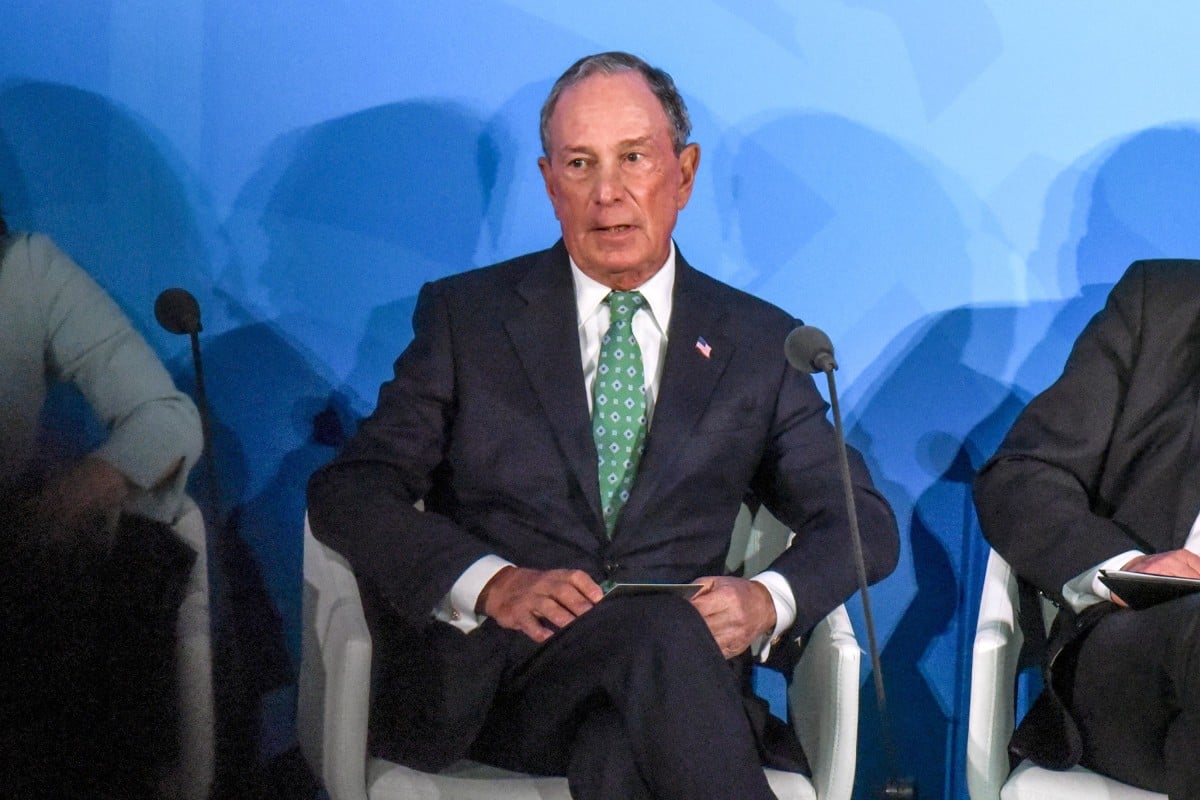
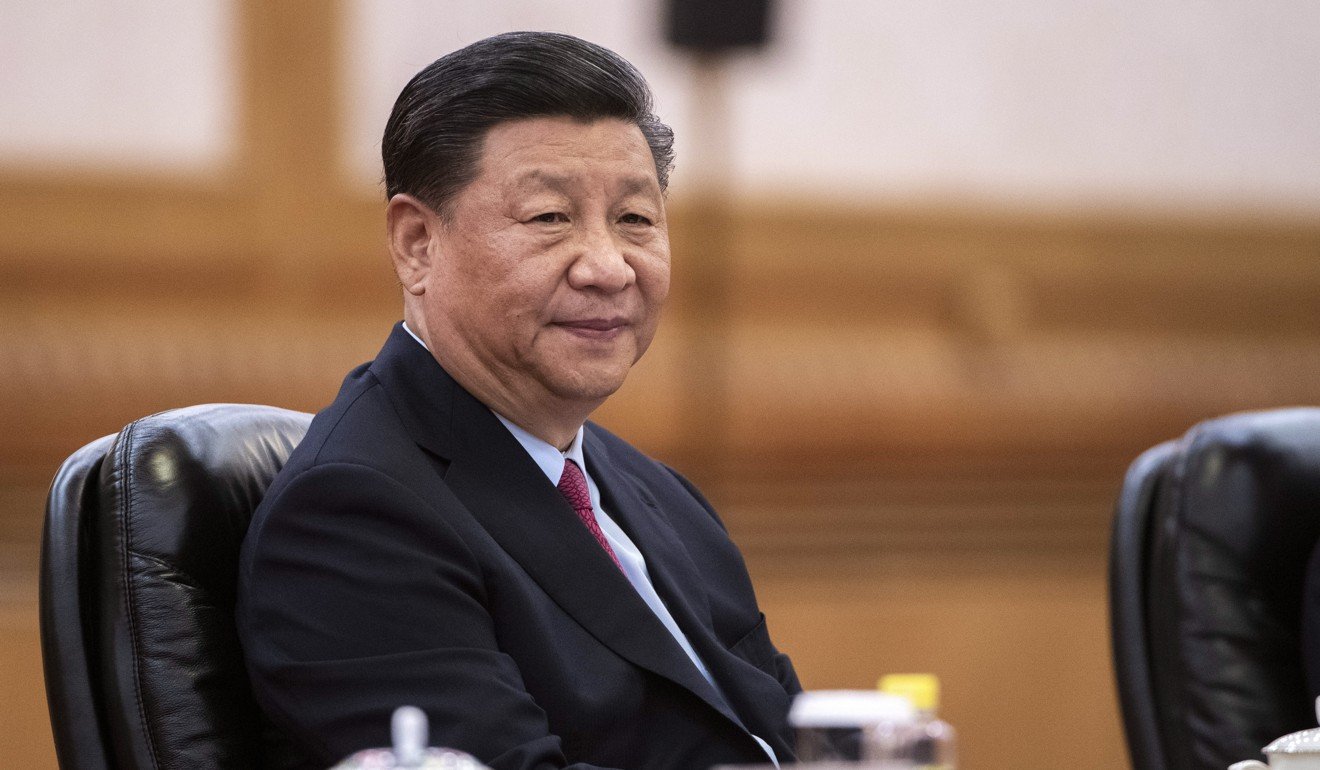
Xi Jinping ‘no dictator’, American businessman Michael Bloomberg says

  • US billionaire says it will take time to solve problems like air pollution but China is taking action
Billionaire Michael Bloomberg says it will take time for China to resolve problems like air pollution. Photo: AFP

US billionaire Michael Bloomberg has spoken out in support of Chinese President Xi Jinping, saying Xi is “not a dictator” and the Communist Party “listens to the public” on issues like air pollution.

Bloomberg made the comments in an interview on the weekend with Margaret Hoover, host of PBS’ Firing Line public affairs show, ahead of November’s Bloomberg New Economy Forum in Beijing, an event designed to rival the World Economic Forum in Davos.

When asked whether China could be a good partner in the fight against climate change, Bloomberg said “China is doing a lot”.

“Yes, they are still building a bunch of coal-fired power plants. Yes, they are [burning coal]. But they are now moving plants away from the cities. The Communist Party wants to stay in power in China and they listen to the public,” he said.

“When the public says ‘I can’t breathe the air’, Xi Jinping is not a dictator. He has to satisfy his constituents, or he’s not going to survive … The trouble is you can’t overnight move cement plants and power plants just outside the city that are polluting the air and you have to have their product. So some of it takes time.”
China prepares for next round of nationwide inspections in ‘war on pollution’

Hoover countered, saying China was not a democracy and Xi was not answerable to voters.

“He doesn’t have a vote, he doesn’t have a democracy. He [isn’t held] accountable by voters. Is the check on him just a revolution?” she said.

“You’re not going to have a revolution. No government survives without the will of the majority of its people,” Bloomberg said. “He has to deliver services.”

Hoover then said: “I’m looking at people in Hong Kong who are protesting and wondering whether the Chinese government cares what they have to say.”

Bloomberg said that in government – “even governments that aren’t what we could call a democracy” – there were many stakeholders with vested interests and “they have an impact”.

Smog in northern China rises in first four months of 2019 as anti-pollution drive loses ‘momentum’

Bloomberg’s comments come seven years after his news service published an investigative story about the finances of the extended family of Xi, then vice-president.

The story was published at a sensitive time, with China holding a once-a-decade leadership transition that saw Xi become president.

China banned the use of Bloomberg financial data tracking terminals but the company’s relations warmed gradually after three years.

In August 2015, Bloomberg was given a high-profile reception by then vice-premier Zhang Gaoli. He also published an opinion piece in party mouthpiece People’s Daily.

Beijing lifted the ban on Bloomberg in 2016.

Source: SCMP

04/07/2019

China to Britain: Keep your ‘colonial’ hands off Hong Kong

BEIJING/LONDON (Reuters) – China told Britain to keep its hands off Hong Kong on Wednesday while London called for Beijing to honour the agreements made when the city was handed over in 1997, escalating a diplomatic spat over the former British colony.

Beijing denounced British Foreign Secretary Jeremy Hunt as “shameless” and said it had made a diplomatic complaint to London after he warned of consequences if China neglected its commitments to guarantee basic freedoms.

“In the minds of some people, they regard Hong Kong as still under British rule. They forget … that Hong Kong has now returned to the embrace of the Motherland,” China’s ambassador to London, Liu Xiaoming, said.

“I tell them: hands off Hong Kong and show respect. This colonial mindset is still haunting the minds of some officials or politicians,” Liu told reporters.

The growing war of words between China and Britain follows mass protests in Hong Kong against a now suspended bill that would allow extradition to mainland China.

Hundreds of protesters in the former British colony besieged and broke into the legislature on Monday after a demonstration marking the anniversary of return to Chinese rule.

China called the violence an “undisguised challenge” to the “one country, two systems” model under which Hong Kong has been ruled for 22 years.

On Tuesday, Hunt warned of consequences if China did not abide by the Sino-British Joint Declaration in 1984 on the terms of the return of Hong Kong, which allows freedoms not enjoyed in mainland China, including the right to protest.

“We can make it clear we stand behind the people of Hong Kong in defence of the freedoms that we negotiated for them when we agreed to the handover in 1997 and we can remind everyone that we expect all countries to honour their international obligations,” Hunt told Reuters.

Hunt is one of two contenders vying to replace Theresa May as British prime minister and his rival Boris Johnson told Reuters on Wednesday that he also backed the people of Hong Kong “every inch of the way”.

The comments clearly irked Beijing. China’s London envoy scolded Britain and said meddling in Hong Kong would cause a “problem in the relationship” between them.

“The UK government chose to stand on the wrong side: it has made inappropriate remarks not only to interfere in internal affairs of Hong Kong but also to back up the violent law-breakers,” Liu said.

‘SHAMELESS’

Earlier, Foreign Ministry spokesman Geng Shuang chided Hunt, saying that only after Hong Kong’s return to China did its people get an “unprecedented” guarantee about democracy and freedom.

“To say that the freedoms of Hong Kong residents is something Britain strived for is simply shameless,” he told a news briefing. “I would like to ask Mr. Hunt, during the British colonial era in Hong Kong, was there any democracy to speak of? Hong Kongers didn’t even have the right to protest.”

China had lodged “stern representations” with Britain both in Beijing and London about Hunt’s remarks, he added.

Britain said it had summoned Liu to the foreign office following his “unacceptable” comments, a government source said.

“Message to Chinese govt: good relations between countries are based on mutual respect and honouring the legally binding agreements between them,” Hunt said on Twitter after Liu’s media briefing.

“That is the best way to preserve the great relationship between the UK and China.”

RESETTING TIES

The turbulence in Hong Kong was triggered by an extradition bill opponents say will undermine Hong Kong’s much-cherished rule of law and give Beijing powers to prosecute activists in mainland courts, which are controlled by the Communist Party.

Hong Kong’s Beijing-backed leader Carrie Lam had strongly promoted the bill, but suspended it on June 15 in the face of public protests against it. Critics have called on her to officially kill the bill, but she has resisted.

Britain and China had been seeking to reset ties after a row over the disputed South China Sea last year, with Chinese Vice Premier Hu Chunhua visiting London last month to oversee the start of a link between its stock exchange and that of Shanghai.

Confrontation and lawlessness in Hong Kong could damage its reputation as an international business hub and seriously hurt its economy, China’s top newspaper, the People’s Daily, said in an editorial.

“It will not only serve no purpose, but will also severely hinder economic and social development,” the ruling Communist Party’s official paper said, denouncing what it called artificially created division and opposition.

China has blamed Western countries, particularly the United States and Britain, for offering succour to the protests.

In an editorial, the official China Daily, an English-language newspaper Beijing often uses to send its message to the world, condemned “outside agitations”.

“What has also been notable is the hypocrisy of some Western governments – the United States and United Kingdom most prominently – which have called for a stop to the violence, as if they have had nothing to do with it,” the paper said.

“But, looking back at the whole protest saga, they have been deeply involved in fuelling it since its inception.”

Source: Reuters

30/06/2019

No joy for corrupt officials as China announces amnesty to mark nation’s 70th anniversary

  • Veterans of Sino-Japanese war – which ended 74 years ago – among those likely to be set free, state media says
  • Nine categories of convicts will be pardoned, but actual numbers will not be disclosed until cases have been reviewed by the courts
China’s amnesty will be no benefit to people like Bo Xilai, the former Chongqing party boss who was sentenced to life imprisonment for corruption in 2013. Photo: AFP
There will be no pardons for people jailed under President Xi Jinping’s sweeping anti-corruption campaign, Chinese state media said late Saturday after Beijing announced a prisoner amnesty as part of its celebrations for the 70th anniversary of the founding of the People’s Republic of China, which falls on October 1.
While the report did not give any indication of how many people would be set free – the cases must first be reviewed by the courts – it said the amnesties would be granted to those who fell into one of nine categories.
These include convicts aged 75 and above who are suffering from a physical disability, people who fought in the Sino-Japanese war – which ended in 1945 – or in the Chinese civil war, which ended in 1949 and led to the creation of modern-day China.

Other categories include prisoners sentenced as minors to terms of not more than three years, and those who were convicted of a crime while acting in self-defence and, again, sentenced to a maximum of three years.

The Communist Party declared a “crushing victory” in Xi’s war on corruption. Photo: EPA-EFE

Anyone convicted of a serious or violent crime, including murder, rape, kidnapping, corruption, arson and drug trafficking is ineligible for the amnesty, the report said. This group also encompasses those who refused to confess to their crimes or show remorse, and anyone deemed still a threat to society.

The amnesty is the second of Xi’s presidency and ninth in the country’s history. The previous seven were all during Mao Zedong’s leadership.

China considers prisoner amnesty for 70th anniversary
In 2015, about

31,000 convicts were pardoned

to commemorate the 70th anniversary of the end of the Sino-Japanese war, which also marked the end of World War II. Though, as will be the case this time around, none of them were serving prison terms for corruption.

A spokesperson for the National People’s Congress, which approved the amnesty, was quoted by Xinhua as saying that Beijing hoped the pardons would have a positive political, legal and social impact.

“Considering the fight against corruption remains a challenge, and in order to maintain the pressure of the crackdown, it would be inappropriate to grant amnesties to corruption convicts,” the spokesperson said.

In December, the Communist Party declared a “crushing victory” in Xi’s war on corruption, which since 2012 has seen more than 1.3 million party officials – from powerful “tigers” to low-ranking “flies” – rounded up and convicted.

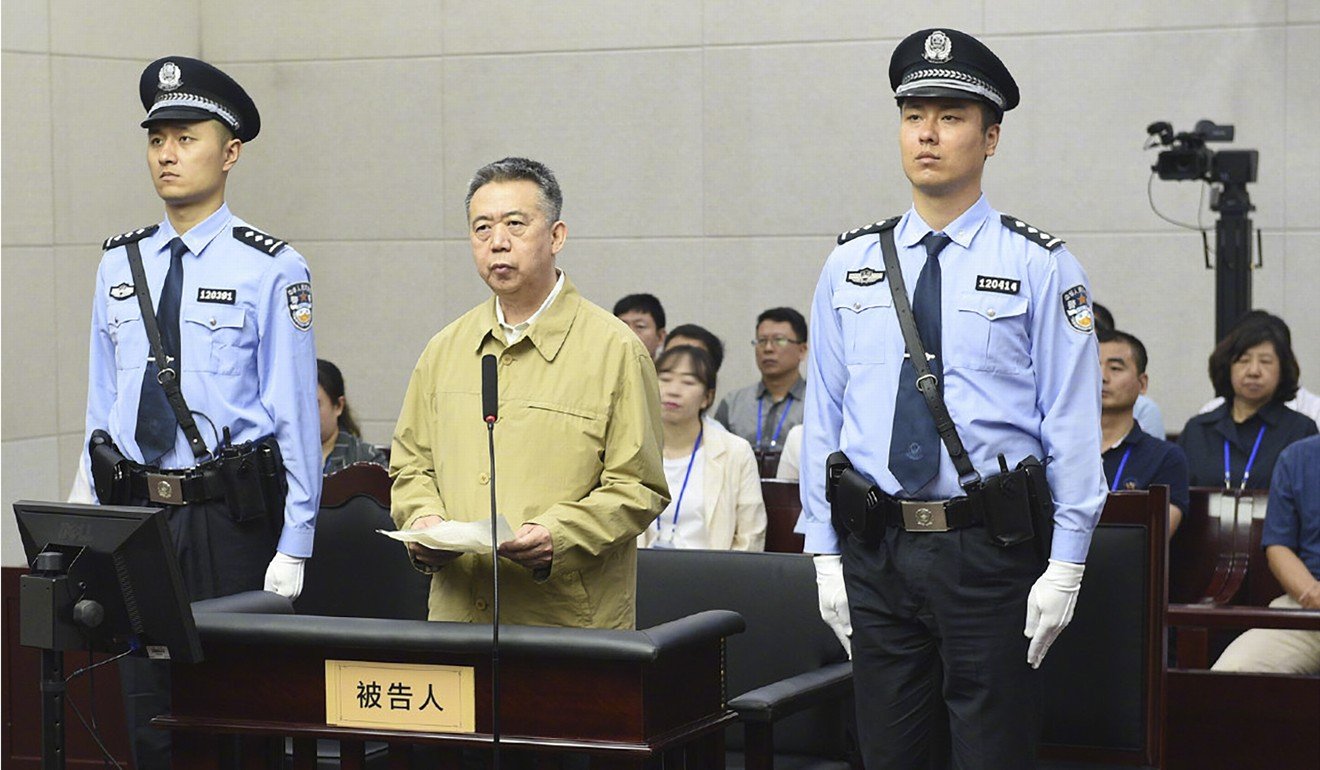
Meng Hongwei, the former president of Interpol, pleaded guilty earlier this month to taking bribes totalling more than US$2 million.
Among the most high profile officials to have been snared are former Politburo Standing Committee member and domestic security tsar

Zhou Yongkang

, former Politburo member

Sun Zhengcai

, and former vice-chairman of the Central Military Commission

Guo Boxiong

.

Former Politburo member and Chongqing party boss 
Bo Xilai

, who was detained just months before Xi rose to power in 2012, is also serving a life sentence for taking millions of US dollars in bribes.

Meng Hongwei

, the former president of Interpol, looks set to become the latest senior official to join the convicts’ club after pleading guilty in court earlier this month to taking bribes totalling more than 14 million yuan (US$2 million).

Source: SCMP
13/06/2019

From cosplay to cause play: why the Communist Party supports a revival in traditional Chinese clothing

  • Han costumes are enjoying a renaissance across China, buoyed by a call to nationalism backed by President Xi Jinping
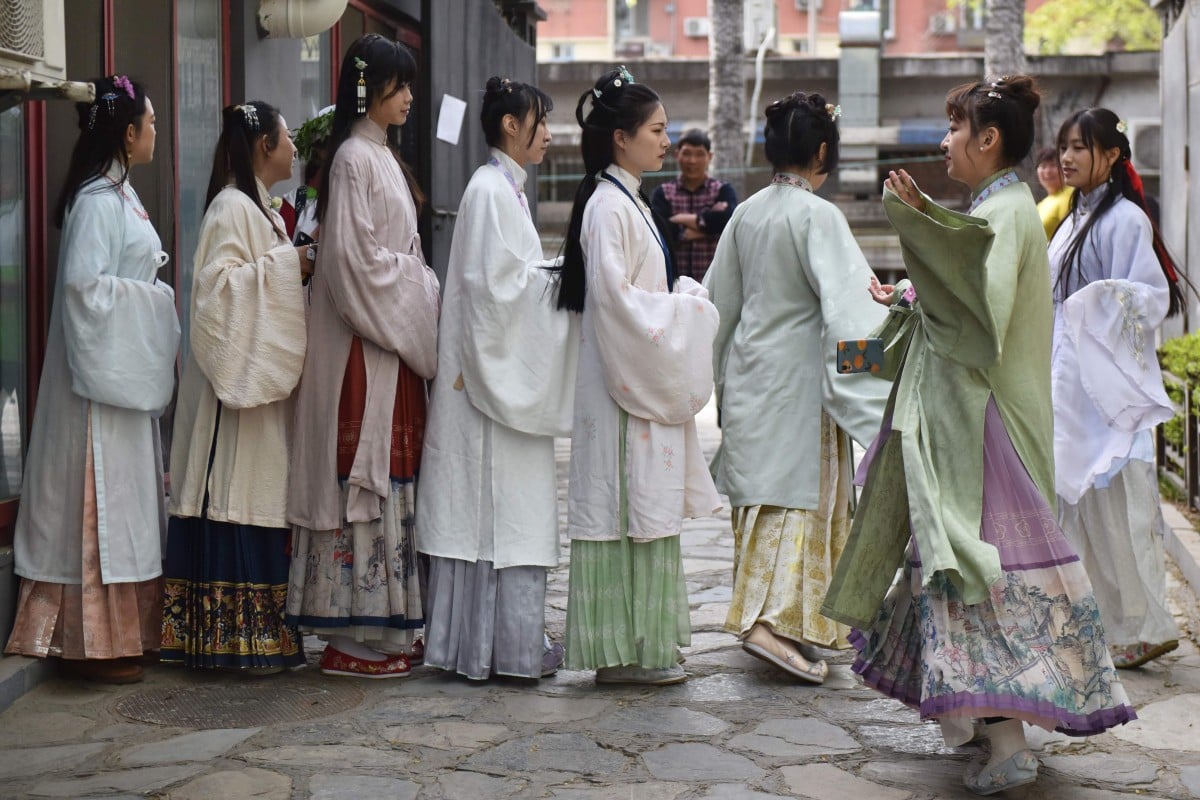
Women wear Han-style clothing in Beijing as part of April’s Traditional Chinese Costume Day celebration. Photo: AFP
Dressed in a flowing robe adorned with beaded floral embroidery from a bygone era, stylist Xiao Hang looks like she emerged from a time machine as she strides across the bustling Beijing metro, attracting curious glances and questions.
While China embraced Western fashion as its economy boomed in recent decades, now a growing number of young people like Xiao look to the past for their sartorial choices and have adopted hanfu, or Han clothing.
The costumes of the Han ethnic majority are enjoying a renaissance in part because the government is promoting traditional culture in an effort to boost patriotism and national identity.

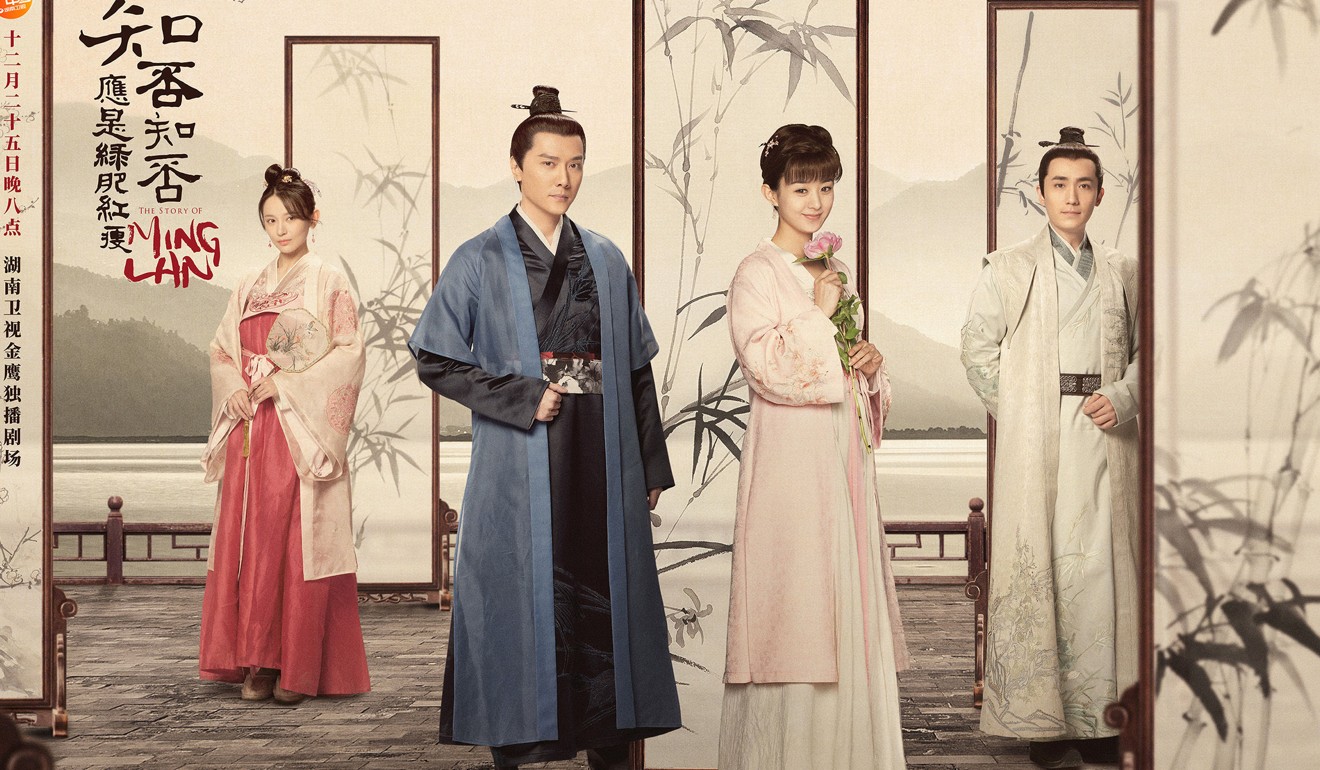
Like the film, television and comic book productions that have inspired cosplay fans in the West, period dramas on Chinese TV have contributed to the surge in interest in traditional clothing. The Story of Minglan, a series set during the Song dynasty, attracted more than 400 million viewers over three days when it was first shown this year.

The success of television drama The Story Of Minglan this year reflects China’s interest in its Han heritage. Photo: Baidu

While each Han-dominated dynasty had its own style, hanfu outfits were generally characterised by loose, flowing robes with sleeves that reached the knees.

“When we were little, we would drape sheets and duvets around ourselves to pretend we were wearing beautiful clothes,” Xiao said.

Once a worker at a state-owned machine manufacturing company, Xiao now runs her own hanfu business, where she dresses customers for photo shoots and plans hanfu-style weddings.

The Hanfu fashion revival: ancient Chinese dress finds a new following

In modern China, the hanfu community includes history enthusiasts and anime fans, students and young professionals.

Yang Jiaming, a high school pupil in Beijing, wears his outfit under his school uniform.

“Two-thirds of my wardrobe are hanfu,” he said, decked out in a Tang-style beige gown and black boots, adding that his classmates and teachers were supportive of his fashion choices.

A government-supported revival in Chinese culture has energised the hanfu community. Since he entered office in 2012, President Xi Jinping has supported the promotion of a Han-centric vision of Chinese heritage.

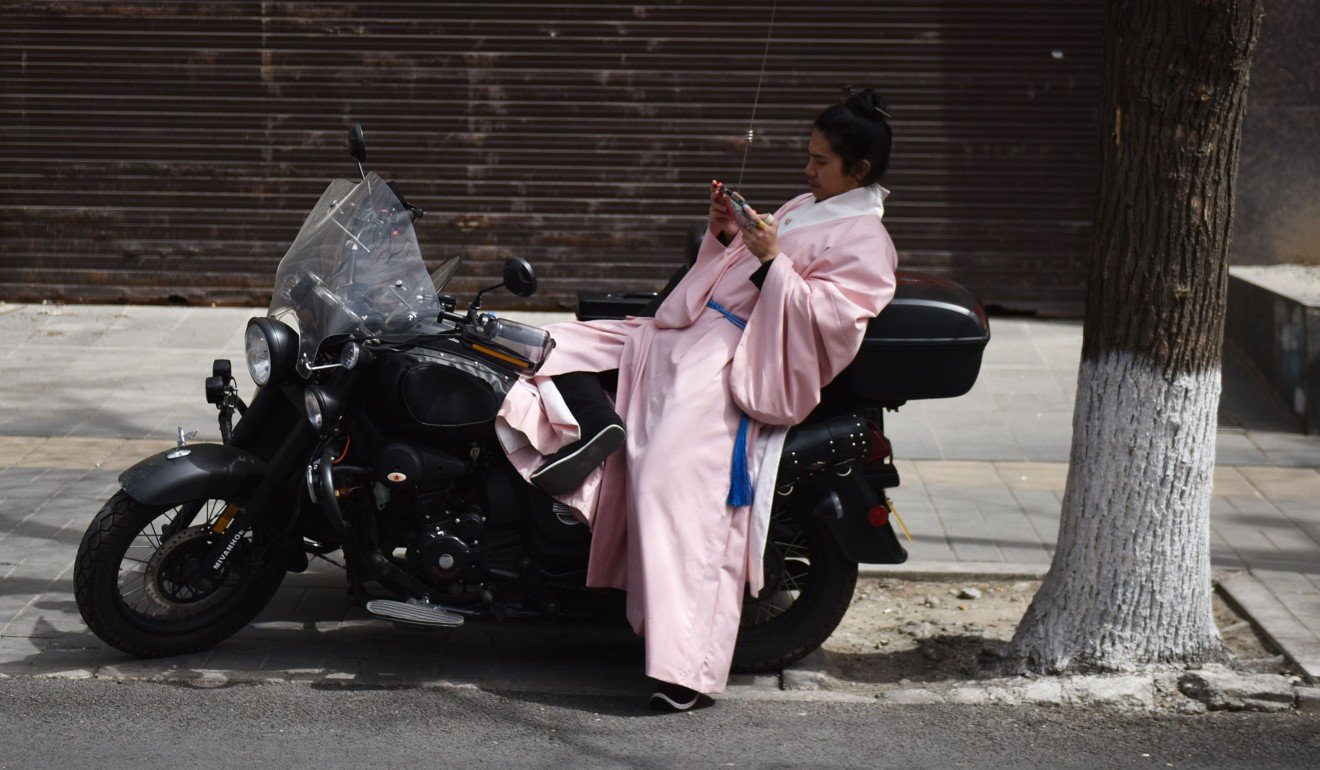
Fans of traditional Chinese clothing dare to mix old and new, and hanfu is not the preserve of women. Photo: AFP

In April, the Communist Youth League of China launched a two-day conference celebrating traditional Chinese garb, which included hanfu and took in Traditional Chinese Costume Day.

A live broadcast of the event drew about 20 million viewers, alongside an outpouring of emotions.

“Chinese people have abandoned their own culture and chosen Western culture. The red marriage gown has now become a wedding dress,” wrote a user of Bilibili, a video-streaming platform popular among young anime, comic and gaming fans in China.

Clothes were the “foundation of culture”, said Jiang Xue, who is part of Beijing-based hanfu club Mowutianxia, which has received funding from the Communist Youth League.

“If we as a people and as a country do not even understand our traditional clothing or do not wear them, how can we talk about other essential parts of our culture?” she said.

Forget K-pop and US missiles, Korea is back in fashion with China thanks to live-stream shopping

The style has not yet gained mainstream acceptance in China.

In March, two students in Shijiazhuang Medical College, in northern Hebei province, were reportedly threatened with expulsion for wearing the outfits to class.

Others said they were put off by the reaction they got while wearing hanfu in public.

“I used to be very embarrassed to wear [hanfu] out,” screenwriter Cheng Xia said.

The 37-year-old said she overcame her reservations after going out dressed in a full outfit last year.

Meanwhile, the movement to revive Han ethnic clothing has prompted questions about nationalism and Han-ethnocentrism – a sensitive issue in China, where the government is wary of conflict between ethnic groups.

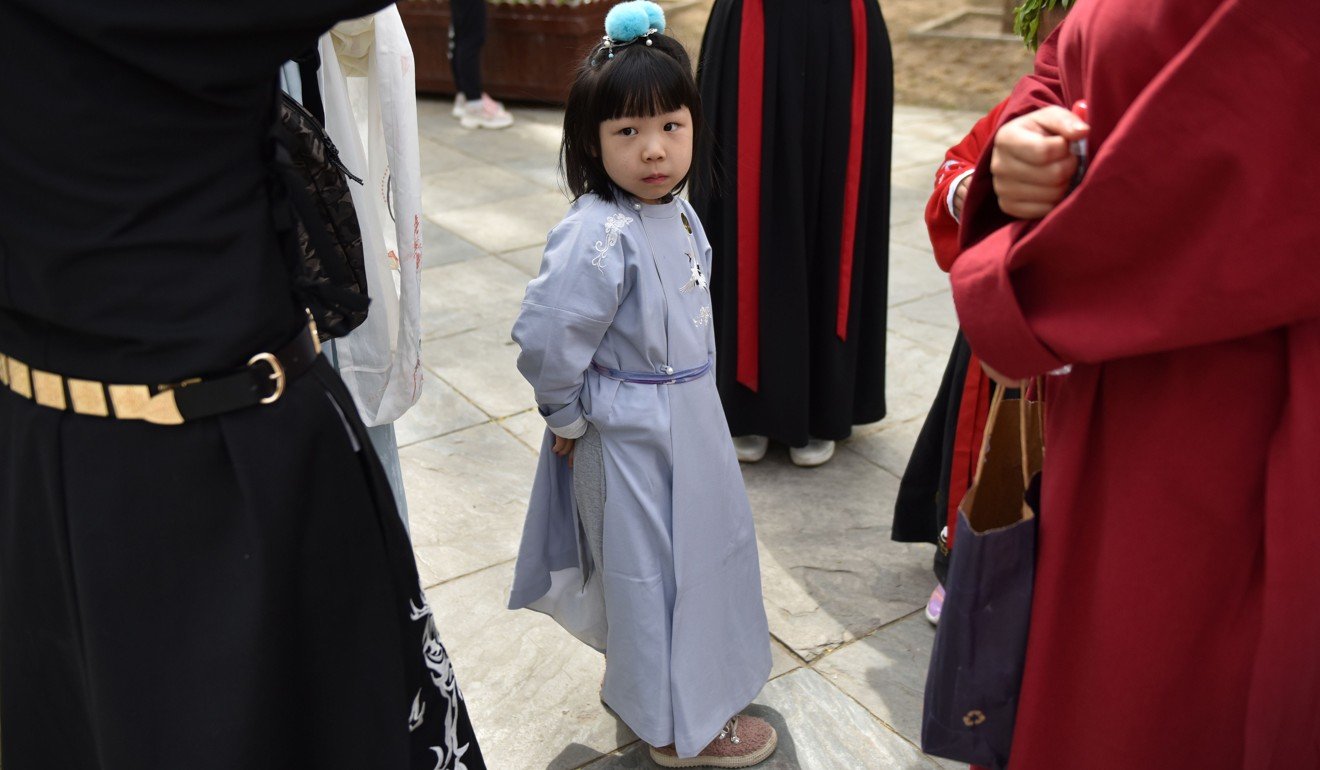
High school pupils and young children are drawn to China’s hanfu trend. Photo: AFP

For instance, within the hanfu community there is long-running opposition towards the qipao, the high-collared, figure-hugging garment that was once a staple of women’s wardrobes.

Known as cheongsam in Cantonese, the qipao – meaning “Qi robe” – began as a long, loose dress worn by the Manchu, or Qi people, who ruled China from the 17th century until the early 1900s.

Its popularity took off in 1920s Shanghai, when it was refashioned into a fitted must-have, favoured by actresses and intellectuals as a symbol of femininity and refinement.

“Some people … think that the cheongsam was inspired by the Qing dynasty, which is not enough to represent China. There are nationalist undertones in this issue,” Chinese culture scholar Gong Pengcheng said.

Master of a dying art: traditional dressmaker recalls golden era of cheongsam in Hong Kong

“It is a good trend to explore traditional culture and clothing culture … There are many things we can talk about, and we need not shrink to nationalist confrontation.”

Yang, the high school pupil, was more upbeat. He said: “At the very least, we can wear our own traditional clothes, just like the ethnic minorities.”

Source: SCMP

Law of Unintended Consequences

continuously updated blog about China & India

ChiaHou's Book Reviews

continuously updated blog about China & India

What's wrong with the world; and its economy

continuously updated blog about China & India