07/04/2020
- Buying and paying for meals and supplies online was already second nature for many Chinese before the Covid-19 lockdown
- The supply and delivery networks that were already in place were able to work with the authorities in cities like Wuhan
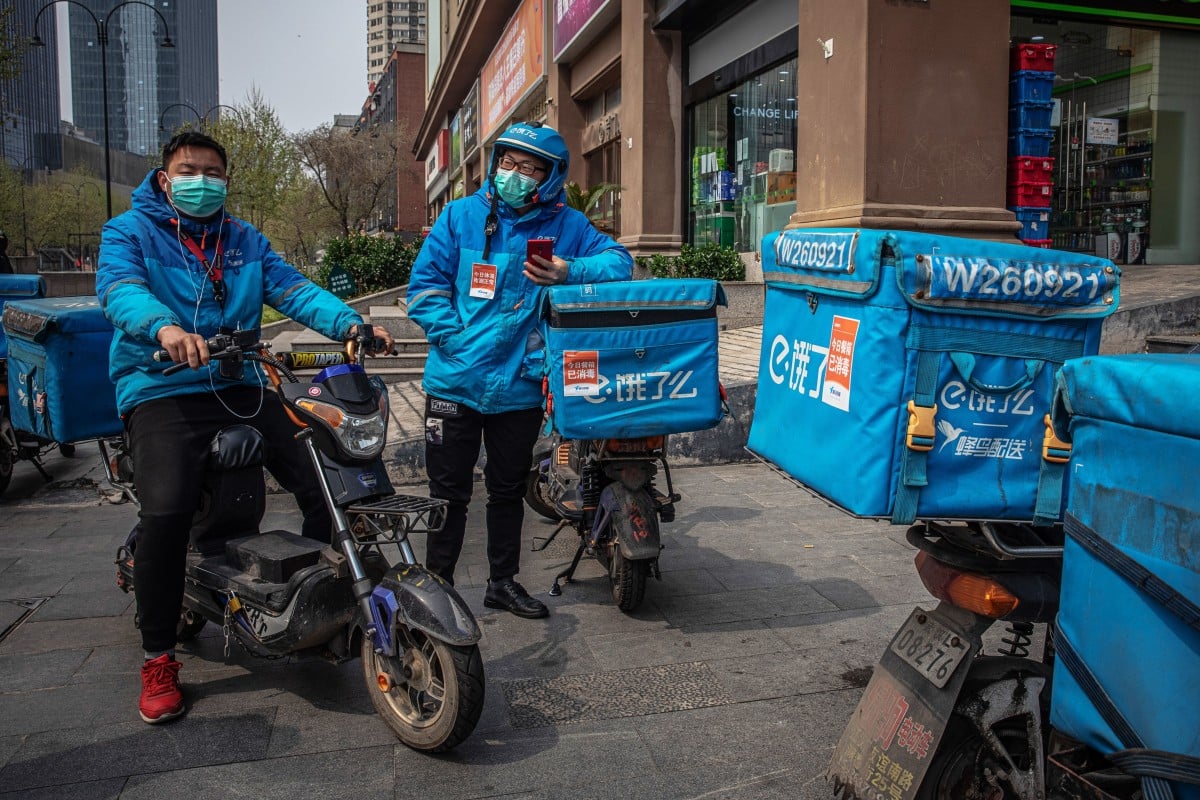
China’s established home delivery system played an important role in getting food and other necessities to residents during the Wuhan lockdown. Photo: EPA-EFE
When Liu Yilin, a retired middle schoolteacher in Wuhan, first heard rumours of a
spreading in the central Chinese city he started to stock up on supplies such as rice, oil, noodles and dried pork and fish.
These preparations spared the 66-year-old from some of the early panic when
and shoppers flooded to the markets and malls to snap up supplies.
But as time went on and with residents banned from leaving their homes, he became increasingly concerned about getting hold of fresh supplies of vegetables, fruit and meat until the nation’s vast network of delivery drivers came to the rescue.
“It was such a relief that several necessity purchasing groups organised by community workers and volunteers suddenly emerged on WeChat [a leading social media app] days after the lockdown,” Liu said. “China’s powerful home delivery service makes life much easier at a time of crisis.”
Hu Xingdou, a Beijing-based independent political economist said: “Home delivery played a very important role amid the coronavirus outbreak. To some extent, it prevented people from starving especially in cases when local governments took extreme measures to isolate people.”
According to Liu, people in Wuhan during the lockdown had to stay within their residential communities, with community workers guarding the exits.
Human contact was limited to the internet. Residents placed orders online with farmers, small merchants or supermarkets to buy daily necessities, and community workers helped distribute the goods from deliverymen.
Every morning, Liu passed a piece of paper with his name, phone number and order number to a community worker who would collect the items from a courier at the gate of the residential area.
Thanks to a high population density in urban areas, affluent labour force and people’s openness to digital life, China has built a well-developed home delivery network.
Extensive funding from technology companies has been invested in hardware infrastructure, software to improve logistics and big data and cloud computing to help predict consumers’ behaviour.
Mark Greeven, professor of innovation and strategy at IMD Business School in Lausanne, Switzerland, said: “Whether it is delivery of products, air parcels or fresh food or even medicine or materials for medical use, China has a very well developed system. Much better developed than I think almost any other places in the world.
“Well before the crisis, China had started to embrace digital technology in daily life whether it is in consumption, business, government and smart cities and use of third party payments. All of these things have been in place for a long time and the crisis tested its agility and capability to deal with peak demand.”
China’s e-commerce giants help revive sales of farm goods from Hubei
According to e-commerce giant
JD.com, demands for e-commerce and delivery services spiked during the outbreak of Covid-19, the illness caused by the new coronavirus.
It sold around 220 million items between January 20 and February 28, mainly grains and dairy products with the value of beef orders trebling and chicken deliveries quadrupling compared with a year ago.
Tang Yishen, head of JD Fresh, its fresh foods subsidiary, said: “The surge of online demand for fresh merchandise shows the pandemic helped e-commerce providers further penetrate into the life of customers. It also helped upstream farm producers to know and trust us.”
Meituan Dianping, a leading e-commerce platform, said its grocery retail service Meituan Instashopping reported a 400 per cent growth in sales from a year ago in February from local supermarkets.
The most popular items ordered between January 26 and February 8 were face masks, disinfectant, tangerines, packed fresh-cut fruits and potatoes.
The food delivery service Ele.me said that, between January 21 and February 8, deliveries of frozen food surged more than 600 per cent year on year, followed by a nearly 500 per cent growth in delivery of pet-care products. Fresh food deliveries rose by 181 per cent while drink and snack deliveries climbed by 101 per cent and 82 per cent, respectively. Ele.me is owned by Alibaba, the parent company of the South China Morning Post.
Chinese hotpot restaurant chain adapts as coronavirus fears push communal meals off the menu
E-commerce providers used the opportunity to show goodwill and improve their relationship with customers and partners, analysts say.
Sofya Bakhta, marketing strategy analyst at the Shanghai-based Daxue Consulting, said the food delivery sector had made significant headway in reducing physical contact during the outbreak.
Delivery staff left orders in front of buildings, in lifts or temporary shelters as instructed by the clients as most properties no longer allowed them inside.
Some companies also adopted more hi-tech strategies.
In Beijing, Meituan used self-driving vehicles to deliver meals to contactless pickup stations. It also offered cardboard boxes to be used as shields aimed at preventing the spread of droplets among its clients while they ate in their workplaces. In Shanghai, Ele.me employed delivery drones to serve people under quarantine in the most affected regions.
Some companies even “shared” employees to meet the growing labour demand in the food delivery industry that could not be satisfied with their ordinary workforce, Bakhta said.
More employees from restaurants, general retail and other service businesses were “loaned” to food delivery companies, which faced manpower shortages during the outbreak, according to Sandy Shen, senior research director at global consultancy Gartner.
“These arrangements not only ensured the continuity of the delivery service but also helped businesses to retain employees during the shutdown,” she said.
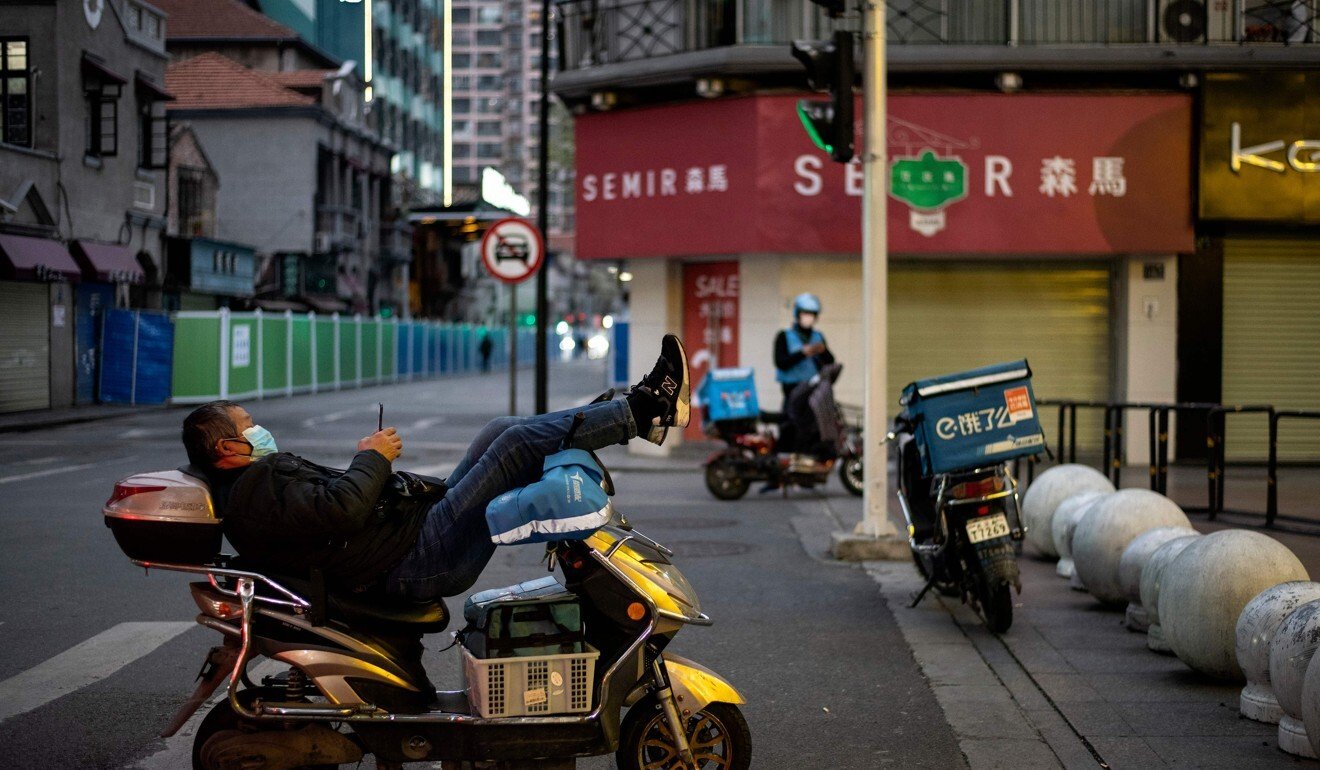
A delivery man takes a break between orders in Wuhan, central China, during the lockdown. Photo: AFP
Mo Xinsheng became one such “on-loan” worker after customers stopped coming to the Beijing restaurant where he worked as a kitchen assistant.
“I wanted to earn some money and meanwhile help people who are trapped at home,” said Mo, who was hired as a delivery man.
But before he could start work he had to go through lengthy health checks before he was allowed into residential compounds.
He also had to work long hours battling the wind and cold of a Beijing winter and carrying heavy loads.
“I work about 10 hours every day just to earn several thousand yuan [several hundred US dollars] a month,” he said.
“Sometimes I almost couldn’t breathe while my hands were fully loaded with packages of rice, oil and other things.
“But I know I’m doing an important job, especially at a time of crisis,” Mo said, “It was not until then that I realised people have become so reliant on the home delivery system.”
Woman uses remote control car to buy steamed buns amid coronavirus outbreak in China
The delivery system has been improved by an effective combination of private sector innovation and public sector coordination, said Li Chen, assistant professor at the Centre for China Studies at Chinese University of Hong Kong.
“[In China,] government units and the Communist Party grass roots organisations have maintained fairly strong mobilisation capabilities to cope with emergencies, which has worked well in the crisis,” he said.
However, Liu, the Wuhan resident, said prices had gone up and vegetables were three times more expensive than they had been over Lunar New Year in 2019.
“There were few varieties that we could choose from, apart from potatoes, cabbage and carrots,” he said.
“But I’m not complaining. It’s good we can still get fresh vegetables at a difficult time. Isn’t it? After all, we are just ordinary people,” he said.
Source: SCMP
Posted in air parcels, Alibaba, army, banned, beef orders, Buying and paying, cabbage, came to the rescue, cardboard boxes, carrots, Centre for China Studies, chicken deliveries, China’s, Chinese University of Hong Kong, community workers, complaining, contactless pickup stations, coronavirus, coronavirus outbreak, Country, COVID-19, Covid-19 lockdown, dairy products, Daxue Consulting, deliver meals, delivery drivers, delivery drones, disinfectant, dried pork, drivers, droplets, E-commerce, e-commerce giant, e-commerce giants, face masks, farmers, Fish, flooded, food delivery, fresh food, fresh merchandise, fresh supplies, fresh-cut fruits, frozen food, fruit, Gartner, global consultancy, grains, hardware infrastructure, home delivery system, hotpot, Human contact, IMD Business School, Internet, isolate, JD Fresh, JD.com, keep, Lausanne, local governments, lockdown, lunar new year, malls, markets, materials, meals and supplies, Meat, medical use, medicine, name, new coronavirus, noodles, Oil, order number, ordinary, outbreak, packed, pandemic, pet-care products, phone number, potatoes, products, purchasing groups, quadrupling, quarantine, resident, residential communities, residents, restaurant chain, Rice, Shanghai, shields, shoppers, small merchants, social media app, software, south china morning post, starving, steamed buns, supermarkets, supplies, supply and delivery networks, Switzerland, tangerines, trebling, Uncategorized, vast network, vegetables, volunteers, WeChat, winter, Wuhan |
Leave a Comment »
03/04/2020
- ‘As two of the great countries on Earth, cooperation between China and the US could, and should, be used to bring a more positive outcome for all humankind,’ academics say
- ‘Political bickering does nothing to contribute to the healthy development of Sino-US relations, nor will it help the people of the world to rationally and accurately understand and cope with the pandemic,’ they say
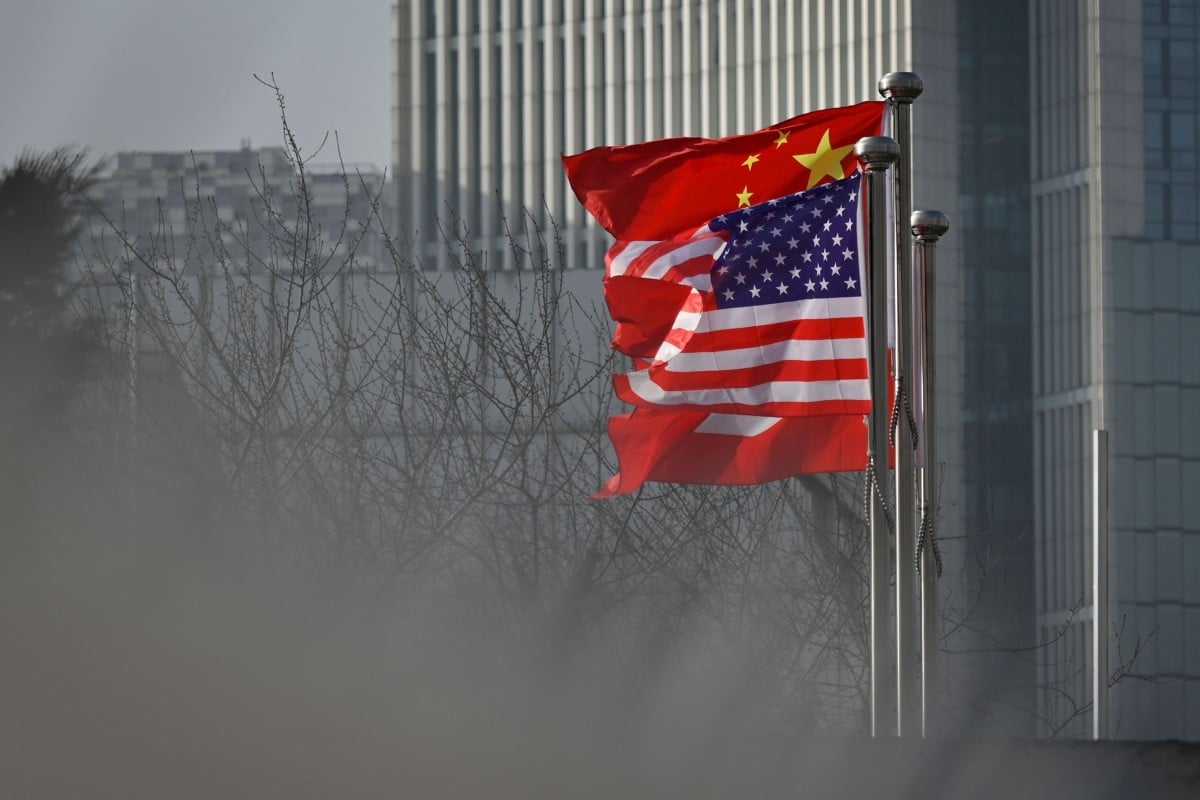
Chinese academics have urged nations to cooperate to find a solution to the global public health crisis. Photo: AFP
A group of 100 Chinese scholars has signed an open letter calling on the
and China to put an end to their political blame game and work together to fight the
.
The signatories, who include former diplomats and academics from various fields, including political science, international relations and sociology, said that while the origins of the coronavirus remained unknown, hurling accusations achieved nothing but hurt.
Nations should stop “complaining, finger-pointing and blaming one another” and instead cooperate to find a solution to the global public health crisis, they said.
“Political bickering does nothing to contribute to the healthy development of Sino-US relations, nor will it help the people of the world to rationally and accurately understand and cope with the pandemic,” the scholars said in the letter published on Thursday in online news magazine The Diplomat.
“As two of the great countries on Earth, cooperation between China and the US could, and should, be used to bring a more positive outcome for all humankind,” it said.
The scholars also urged the two sides to put aside their bickering over where and how the disease originated.
“At this stage of the pandemic, the exact source and origin of Covid-19 remain undetermined, but these questions are unimportant and finger-pointing is demeaning and hurtful to everyone,” they said.
US and Chinese officials have sparred for weeks over the origins of the coronavirus, which was first detected in the central Chinese city of
Wuhan but has since spread around the world, infecting more than 1 million people and killing close to 53,000.
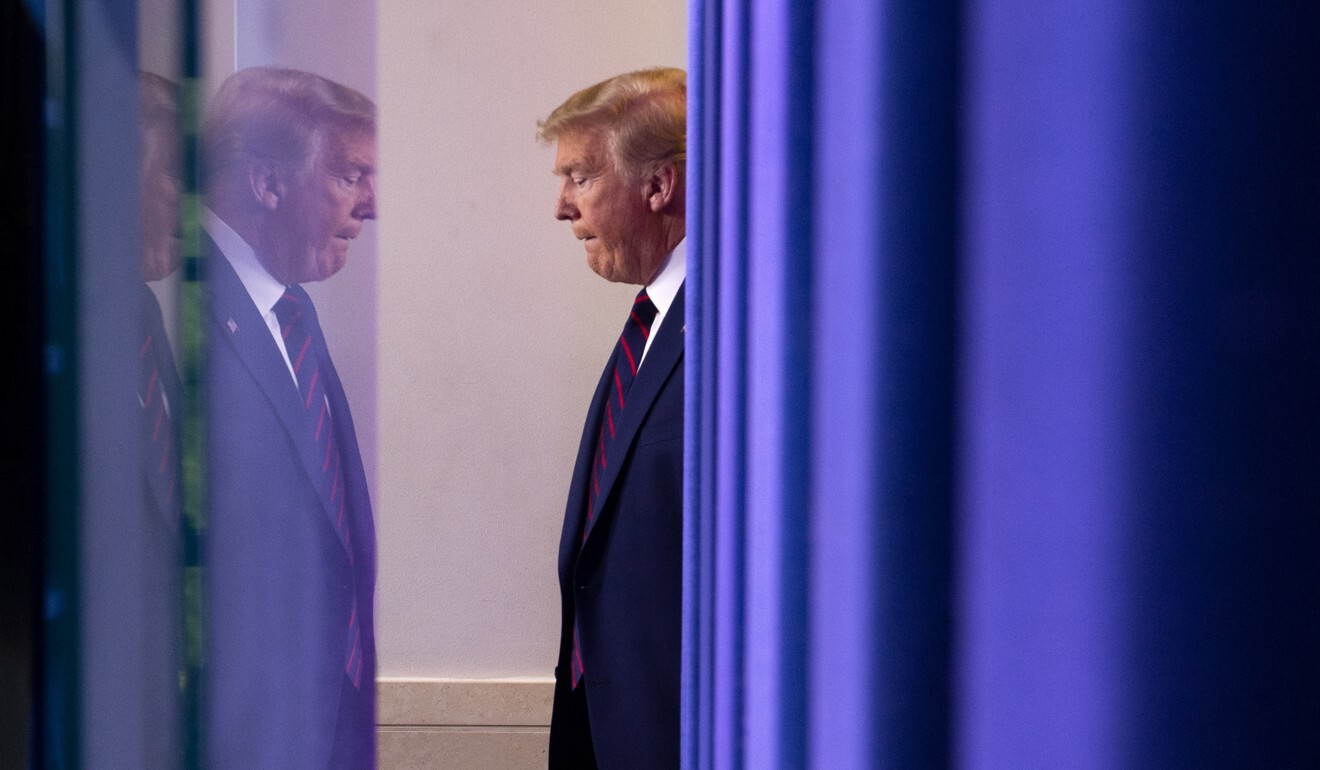
Donald Trump has repeatedly referred to the pathogen as the “Chinese virus”. Photo: Bloomberg
US President Donald Trump has repeatedly referred to the pathogen as the “Chinese virus”, while other US politicians have said it was created in a Chinese laboratory. For China’s part, foreign ministry spokesman Zhao Lijian suggested the coronavirus
might have been carried into the country by US soldiers.
China’s ambassador to the US
Cui Tiankai said in an interview on American television last month that speculating about the origin of the virus was “harmful”, but the finger-pointing on both sides has plunged relations between the two countries to a new low.
The open letter was the idea of Wang Wen, executive dean of the Chongyang Institute for Financial Studies at Renmin University in Beijing, who said its aim was not only to show the willingness of China’s intellectual elite to promote solidarity and reduce tensions, but to make clear that the priority right now was saving lives.
“We did not criticise anyone in the letter, or mention any names. We did not want to fuel the current disputes and confrontations,” he said.
“Most Chinese intellectuals are peaceful, rational and constructive, and thankfully we quickly reached consensus on the content of the letter.”
China to stage day of mourning for thousands killed by Covid-19
The scholars said that after months of battling the coronavirus and seeing the situation at home improve, China now wanted to share its experience and knowledge with other countries as they seek to contain its spread.
“Chinese people have made unimaginable efforts and sacrifices to achieve hard-won results,” Wang said.
“We are grateful for the support of the international community, including donations from American friends, during the most critical stage of the fight … and we are willing to share our experiences with other countries and provide all available assistance to them.”
Wu Sike, a former Chinese special envoy to the Middle East, was among the signatories to the open letter. Photo: Xinhua
Among the other signatories were Wu Sike, a senior fellow at the Chongyang Institute for Financial Studies and former special envoy to the Middle East, and Wang Yiwei, an international relations professor at Renmin University, who described the Covid-19 pandemic as a “global issue that overrides geopolitics concerns”.
Chinese President Xi Jinping and Trump agreed in a telephone call last week to work together to contain the spread of Covid-19, but critics have questioned how long their cordiality can last against a backdrop of rising China-US tensions over trade, the media and regional security.
Source: SCMP
Posted in Academics, “Chinese virus”, Beijing, blaming, China-US tensions, China’s ambassador to the US, Chinese academics, Chinese President Xi Jinping, Chinese special envoy to the Middle East, come together, complaining, cooperation, coronavirus, COVID-19, Covid-19 pandemic, Earth, finger-pointing, former diplomats, global, great countries on Earth, humankind, international relations,, nations, open letter, origins, pandemics, Political bickering, political blame game, political science, positive outcome, public health crisis, regional security, Renmin University, signatories, Sino-US relations, sociology, The Diplomat, Uncategorized, United States, urges, US President Donald Trump, US soldiers, Washington, Wuhan |
Leave a Comment »
05/12/2018
NEW DELHI (Reuters) – Two men accused of trying to molest a 20-year-old woman in northern India set her on fire two days later after she lodged a complaint with police, authorities and her family said.
Women in India have struggled to secure prosecution for sexual attacks in the face of widespread police indifference, rights activists say.
The woman was in a field near her home in the Sitapur district of Uttar Pradesh state when the men, both neighbours and known to her family, accosted her and tried to drag her away, her brother Vinod Kumar told Reuters.
She bit their hands and managed to break free and escape, and her father filed a complaint with police same day, he said. When no action resulted, the family lodged a second complaint.
“We waited for the police to come for inquiries the entire day but no one came,” Vinod said.
The next day, the two men returned to the field where she was working, doused her with kerosene and set her on fire, Regional police superintendent Prabhakar Chaudhary told Reuters. She suffered burns to 40 percent of her body and was hospitalised.
Chaudhary said her suspected attackers were arrested and three policemen suspended for dereliction of duties.
After a gruesome gang rape of a young woman in 2012, India launched fast-track courts and a tougher rape law that included the death penalty. But crime statistics indicate sexual assault on women have risen, not fallen, since then.
Even if cases are registered, crime statistics show that police files remain open for about a third of all rapes that were investigated for each year between 2012 and 2016.
Rights groups have accused Indian police of bowing to pressure from local politicians to bury investigations. In some cases investigations of sexual assault have evaporated out of sheer police apathy, activists say.
Editing by Sanjeev Miglani and Mark Heinrich
Posted in assault, complaining, India alert, set on fire, Uncategorized |
Leave a Comment »





 CHINDIA ALERT: You'll be living in their world, very soon