Chindia Alert: You’ll be Living in their World Very Soon
aims to alert you to the threats and opportunities that China and India present. China and India require serious attention; case of ‘hidden dragon and crouching tiger’.
Without this attention, governments, businesses and, indeed, individuals may find themselves at a great disadvantage sooner rather than later.
The POSTs (front webpages) are mainly 'cuttings' from reliable sources, updated continuously.
The PAGEs (see Tabs, above) attempt to make the information more meaningful by putting some structure to the information we have researched and assembled since 2006.
Image copyright AFPImage caption Beijing’s proposed security law has sparked protests in Hong Kong
Seven former UK foreign secretaries have urged Boris Johnson to form a global alliance to coordinate the response to the China-Hong Kong crisis.
China is facing mounting criticism over a planned security law for Hong Kong which would make it a crime to undermine Beijing’s authority.
Foreign Secretary Dominic Raab said the UK would not turn a blind eye.
Hong Kong was handed back to China from British control in 1997 but under a unique agreement.
The former British colony enjoys some freedoms not seen in mainland China – and these are set out in a mini-constitution called the Basic Law.
But there are fears the proposed law, which has sparked a mass of anti-mainland protests in Hong Kong, could compromise some of the freedoms guaranteed by the Basic Law.
In their letter to the prime minister, the cross-party group of former cabinet ministers says the UK government must be seen to lead the international response, as many countries take their cue from Britain over its former colony.
Jeremy Hunt, David Miliband, Jack Straw, William Hague, Malcolm Rifkind, David Owen and Margaret Beckett all expressed their concern at what they call China’s “flagrant breach” of Sino-British agreements by imposing tough national security laws on Hong Kong.
They urged Mr Johnson to set up an “international contact group” of allies to coordinate any joint action, similar to that set up in 1994 to try to end the conflict in the former Yugoslavia.
A Downing Street spokesman insisted the government was already playing a leading role with international partners in urging China to think again.
Mr Raab said the new security legislation “very clearly violates” the autonomy that is guaranteed under Chinese law as well as that in the 1997 agreement.
He confirmed the UK will allow those who hold British National (Overseas) passports to come to the UK and apply to study and work for an extendable 12-month period.
This will in turn “provide a path to citizenship”, he told the BBC’s Andrew Marr Show on Sunday.
Mr Raab said up to three million people registered as a British national (overseas) in Hong Kong could be eligible for UK citizenship if China presses ahead with the law.
Meanwhile, the chairman of Commons foreign affairs committee, Tom Tugendhat, said the government must realise that China has a “very, very authoritarian system of government” and should rethink the partnership between the two.
Global retailers are facing scrutiny over cotton supplies sourced from Xinjiang, a Chinese region plagued by allegations of human rights abuses.
China is one of the world’s top cotton producers and most of its crop is grown in Xinjiang.
Rights groups say Xinjiang’s Uighur minority are being persecuted and recruited for forced labour.
Many brands are thought to indirectly source cotton products from the Xinjiang region in China’s far west.
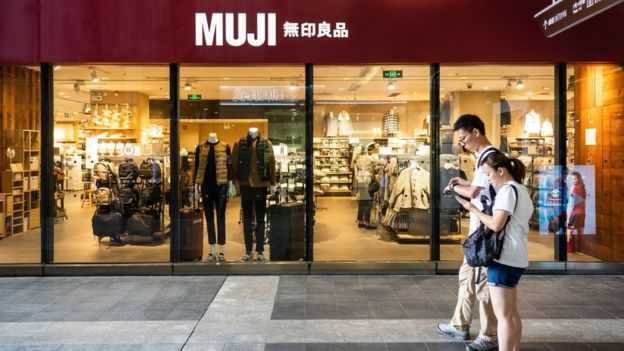
Japanese retailers Muji and Uniqlo attracted attention recently after a report highlighted the brands used the Xinjiang-origin of their cotton as a selling point in advertisements.
“You can’t be sure that you don’t have coerced labour in your supply chain if you do cotton business in China,” said Nathan Ruser, researcher at the Australian Strategic Policy Institute.
“Xinjiang labour and what is almost certainly coerced labour is very deeply entrenched into the supply chain that exists in Xinjiang.”
What is happening in Xinjiang?
UN experts and human rights groups say China is holding more than a million Uighurs and other ethnic minorities in vast detention camps.
Rights groups also say people in camps are made to learn Mandarin Chinese, swear loyalty to President Xi Jinping, and criticise or renounce their faith.
China says those people are attending “vocational training centres” which are giving them jobs and helping them integrate into Chinese society, in the name of preventing terrorism.
What is produced in Xinjiang?
The Xinjiang region is a key hub of Chinese cotton production.
Last year, 84% of Chinese cotton came from Xinjiang, the report said.
That has raised concerns over whether forced labour has been used in the production of cotton from the region.
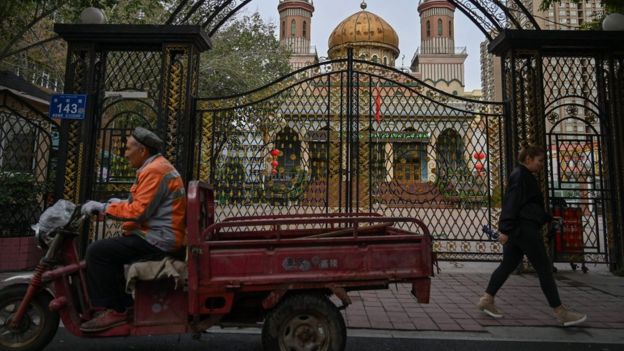
Image copyright GETTY IMAGESImage caption The Uighurs are mostly Muslims, and number about 11 million in China’s Xinjiang region
Nury Turkel, chairman of the Uighur Human Rights Project in Washington, said the Uighurs were being “detained and tormented” and “swept into a vast system of forced labor” in Xinjiang.
In testimony to US congress, he said it was becoming “increasingly hard to ignore the fact” that the goods manufactured in the region have “a high likelihood” of being produced with forced labour.
Which brands use Xinjiang cotton?
Amy Lehr, director of CSIS Human Rights Initiative, said in many cases Western companies aren’t buying directly from factories in Xinjiang.
“Rather, the products may go through several stages of transformation after leaving Xinjiang before they are sent to large Western brands,” she said.
Some, like Muji, are very open about sourcing material from Xinjiang.
“Uniqlo does not have any production partners located in the Xinjiang region. Moreover, Uniqlo production partners must commit to our strict company code of conduct.
“To the best of our knowledge, this means our cotton comes only from ethical sources,” the spokesperson told the BBC.
Many of the companies looked into the allegations, including those without clear links to the Huafu mill.
In a statement to the BBC, Adidas said: “While we do not have a contractual relationship with Huafu Fashion Co., or any direct leverage with this business entity or its subsidiary, we are currently investigating these claims.”
“We advised our material suppliers to place no orders with Huafu until we have completed those investigations,” the Adidas spokesperson said.
Esprit, which also does not source cotton directly from Xinjiang, said it had made several inquiries earlier this year.
“We concluded that a very small amount of cotton from a Huafu factory in Xinjiang was used in a limited number of Esprit garments,” the firm said in a statement.
The company has instructed all suppliers to not source Huafu yarn from Aksu, the statement said.
H&M said it does not have “a direct or indirect business relationship” with any garment manufacturer in the Xinjiang region.
“We have an indirect business relationship with Huafu’s spinning unit in Shanyu, which is not located in the Xinjiang region, and according to our data, the vast majority of the yarn used for our garment manufacturing comes from this spinning unit,” a spokesperson for H&M said.
“Since we have an indirect business relationship with the yarn supplier Huafu, we also asked for access to their spinning facilities in Aksu. Our investigations showed no evidence of forced labor.”
Chinese government advisers say Beijing has not reached direct intervention point but that could change if the violence continues
Military action would trigger international backlash, observers say, as US expresses concern over reported paramilitary movements and ‘erosion of Hong Kong’s autonomy’
Footage of trucks from the paramilitary People’s Armed Police in Shenzhen has circulated online. Photo: Handout
The unrest in Hong Kong does not yet warrant direct intervention by Beijing despite hardening public sentiment and calls for tougher action in mainland China, according to Chinese government advisers.
Shi Yinhong, an international relations expert at Renmin University and an adviser to the State Council – China’s cabinet – said China would risk damaging its ties with the United States and other major foreign powers, upsetting its own development and losing Hong Kong’s special status if it took the matter directly into its hands.
“I don’t think we need to use troops. Hong Kong police will gradually escalate their action and they haven’t exhausted their means,” Shi said, expressing a view shared by other mainland government advisers and academics.
But he warned that if the violence and chaos continued, it “won’t be too far away from reaching that point”.
A US State Department spokeswoman said the United States was “deeply concerned” about reports of paramilitary movements along the Hong Kong border and reiterated a US call for all sides to refrain from violence.
She said it was important for the Hong Kong government to respect “freedoms of speech and peaceful assembly” and for Beijing to adhere to its commitments to allow a high degree of autonomy for Hong Kong.
She said the protests reflected “broad and legitimate concerns about the erosion of Hong Kong’s autonomy”.
“The continued erosion of Hong Kong’s autonomy puts at risk its long-established special status in international affairs,” she said.
brought the city’s air traffic to a halt and triggered a huge backlash on the mainland
, where the public feel they have been wrongly targeted by the increasingly violent protesters. Many demanded the central government take action to end the chaos.
The tension deepened after US President Donald Trump, citing intelligence sources,
to the border with Hong Kong. Trump described the situation in the city as “tricky” and called on all sides to remain “calm and safe”.
Footage of trucks from the paramilitary People’s Armed Police rolling into Shenzhen began circulating online on Saturday.
Beijing ‘unlikely to intervene’ in Hong Kong as pressure mounts on police
But Shi and others said direct intervention would be too costly to China and would only be used when all other methods had been exhausted.
“As the trade war with the US goes on, Hong Kong’s importance to our financial system is getting bigger,” Shi said. “If Beijing intervenes with too much assertiveness, the US might revoke the preferential status of Hong Kong.”
He was referring to the US’ 1992 Hong Kong Policy Act which gives the city a special status. In June, American lawmakers introduced a bipartisan bill requiring the US government to examine Hong Kong’s autonomy annually to decide whether to extend the arrangement.
Losing that status could cripple the operations of many businesses based in Hong Kong, said Shen Dingli, a Shanghai-based international affairs expert.
A satellite image appears to show a close-up of Chinese military vehicles at Shenzhen Bay Sports Centre in Shenzhen. Photo: Maxar Technologies
Wang Yong, another specialist on international political economy with Peking University, agreed.
“There would be a lot of opposition from interest groups in the US. Hong Kong is the bridgehead for many multinational corporations and investors from Wall Street to get into the Chinese market,” said Wang, who also teaches at an academy affiliated with China’s Ministry of Foreign Affairs.
“Hong Kong and the Chinese government will need to handle this with extra care, so as not to give any ammunition to hawks in the United States.
“If Hong Kong is not handled properly, it could add tensions to the bilateral ties and ruin any prospect of a trade deal.”
China rejects requests for US warships to visit Hong Kong amid protests Pang Zhongying, an international relations specialist at Ocean University of China in Qingdao, said direct intervention could also damage China’s ties with other countries.
“The whole world is watching. Beijing has exercised restraint for two months and still hasn’t taken any clear action because this is not an easy choice,” said Pang, who is also a member of the Beijing-based Pangoal Institution, a think tank that advises several ministerial offices.
While some observers said Beijing was under political pressure to end the protests in Hong Kong before October 1 – the 70th anniversary of the founding of the People’s Republic, Shi said the central government would not lose patience so easily.
“National Day [on October 1] is an important time, but the Chinese government is not naive to believe there has to be peace under all heaven then,” he said.
“It’s only a bit more than a month from now, we can almost say for sure the trade war will still be on by then and a major turning point in Hong Kong is not likely to happen. But the celebration must go on.”


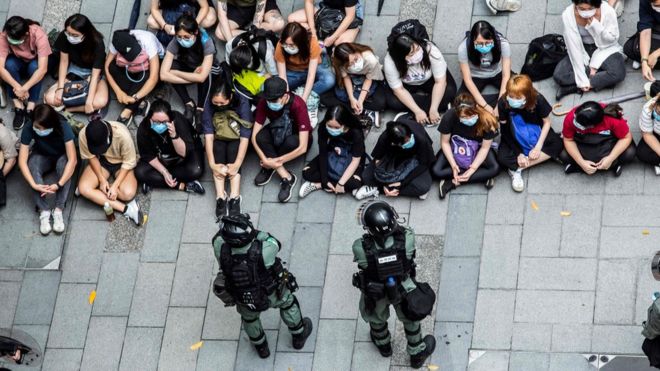 Image copyright AFP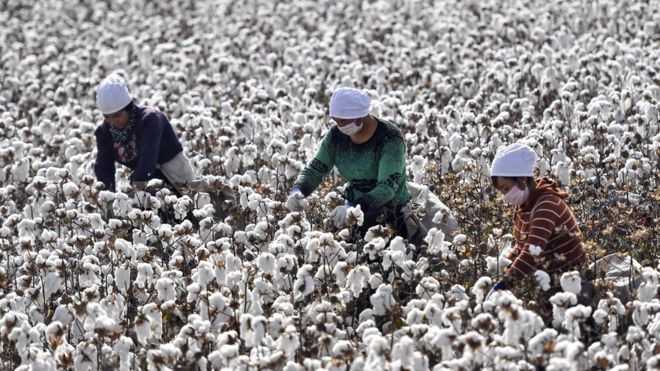


 CHINDIA ALERT: You'll be living in their world, very soon