Archive for ‘concessions’

14/04/2020

Chinese oil survey ship returns to disputed waters off Vietnam amid coronavirus pandemic

  • Vietnamese ships spent months last year shadowing the Haiyang Dizhi 8 as it surveyed the resource-rich waters within Vietnam’s exclusive economic zone
  • Its return follows charges laid by the US that China is ‘exploiting the distraction’ and vulnerability caused by the pandemic
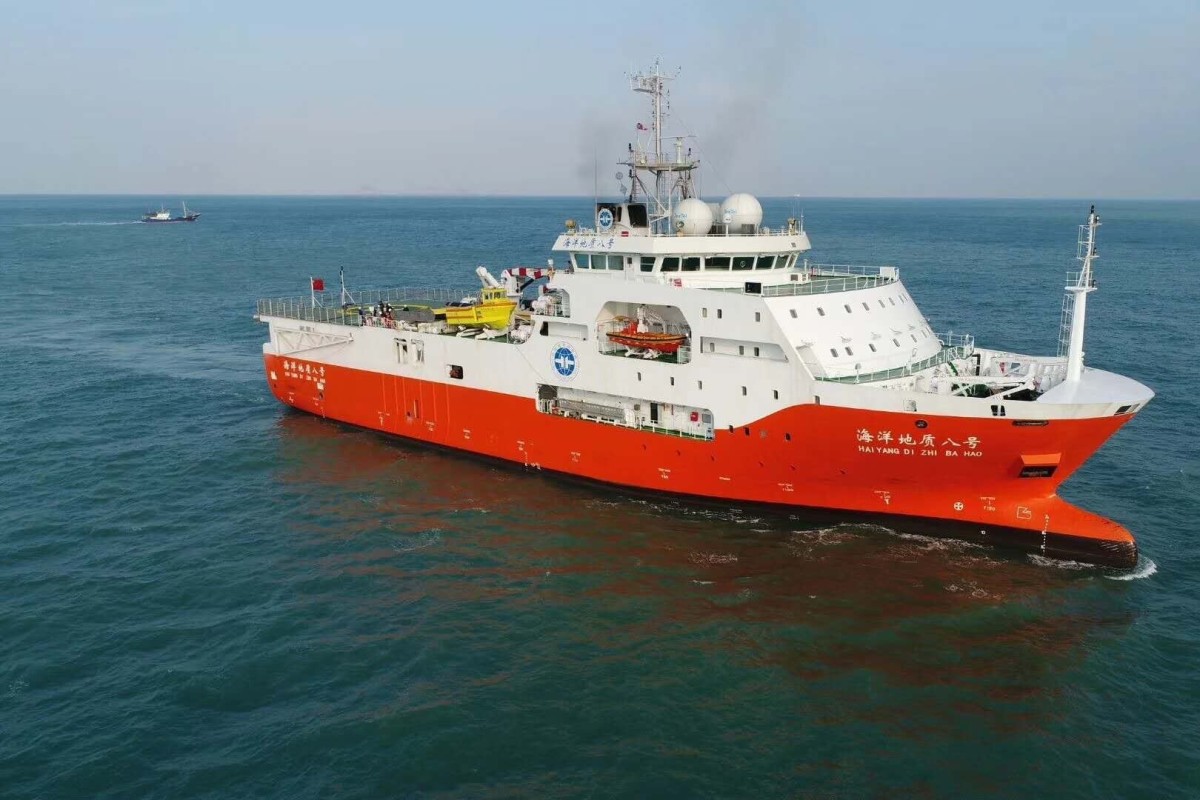
The Haiyang Dizhi 8 at sea. Photo: Weibo
A Chinese ship embroiled in a stand-off with Vietnamese vessels last year
has returned to waters near Vietnam as the United States accused China
of pushing its presence in the South China Sea while other claimants are pre-occupied with the coronavirus.
Vietnamese vessels last year spent months shadowing the Chinese Haiyang Dizhi 8 survey vessel in resource-rich waters that are a potential global flashpoint as the 
US

challenges China’s sweeping maritime claims.

China and Vietnam ‘likely to clash again’ as they build maritime militias
12 Apr 2020
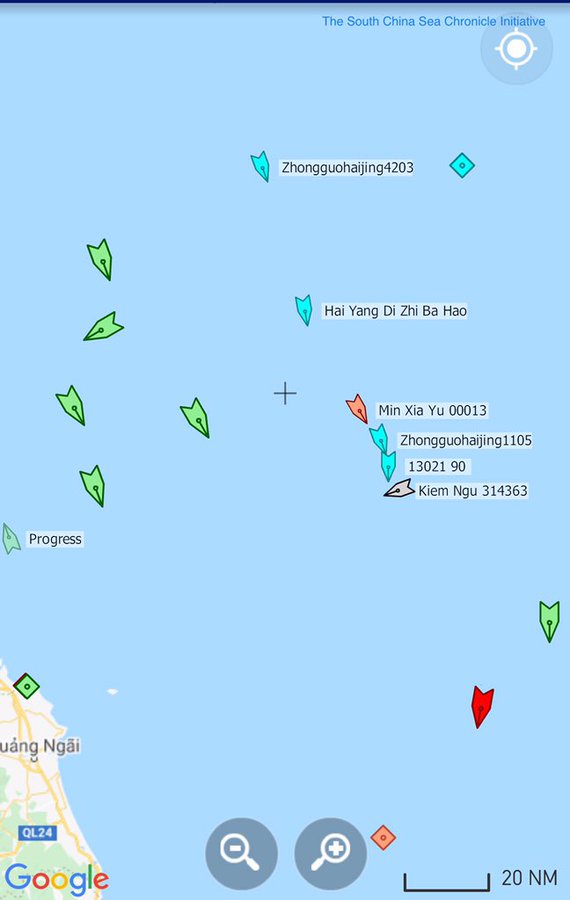
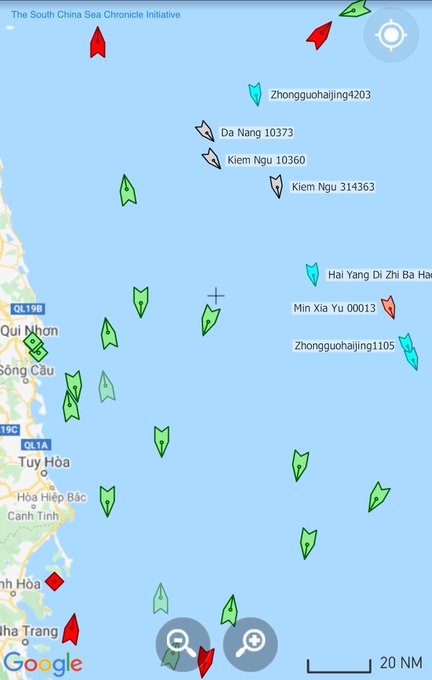
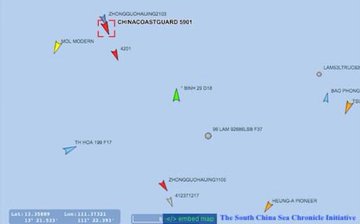
On Tuesday, the ship, which is used for offshore seismic surveys, appeared again 158km off Vietnam’s coast, within its exclusive economic zone (EEZ), flanked by at least one Chinese coastguard vessel, according to data from Marine Traffic, a website that tracks shipping.

At least three Vietnamese vessels were moving with the Chinese ship, according to data issued by the Marine Traffic site.

The presence of the Haiyang Dizhi 8 in Vietnam’s EEZ comes towards the scheduled end of a 15-day nationwide lockdown in Vietnam aimed at curbing the spread of the coronavirus.

It also follows

the sinking of a Vietnamese fishing boat near islands in the disputed waters this month

, an act that drew a protest from Vietnam and accusations that China had violated its sovereignty and threatened the lives of its fishermen.

The US, which last month sent an aircraft carrier to the central Vietnamese port of Da Nang, said it was “seriously concerned” about China’s reported sinking of the vessel.

“We call on the PRC to remain focused on supporting international efforts to combat the global pandemic, and to stop exploiting the distraction or vulnerability of other states to expand its unlawful claims in the South China Sea,” the US State Department said in a statement, referring to China.

Vietnam pulls DreamWorks’ ‘Abominable’ over South China Sea map
The Philippines

, which also has disputed claims in the South China Sea, has raised its concerns too.

On Saturday, the Global Times, published by the official People’s Daily newspaper of China’s ruling Communist Party, said Vietnam had used the fishing boat incident to distract from its “ineptitude” in handling the coronavirus.

Vietnam’s Ministry of Foreign Affairs did not immediately respond to a request for comment.

Helped by a mass quarantine and aggressive contact-tracing, Vietnam has recorded 265 cases of the novel coronavirus and no deaths. Nearly 122,000 coronavirus tests have been carried out in Vietnam.

Coronavirus: what’s behind Vietnam’s containment success?
14 Apr 2020

China and Vietnam have for years been at loggerheads over the potentially energy-rich waters, called the East Sea by Vietnam.

China’s U-shaped “nine-dash line” on its maps marks a vast expanse of the waters that it claims, including large parts of Vietnam’s continental shelf where it has awarded oil concessions. 

Malaysia

and Brunei claim some of the waters that China claims to the south.
During the stand-off last year, at least one Chinese coastguard vessel spent weeks in waters close to an oil rig in a Vietnamese oil block, operated by Russia’s Rosneft, while the Haihyang Dizhi 8 conducted suspected oil exploration surveys in large expanses of Vietnam’s EEZ.
“The deployment of the vessel is Beijing’s move to once again baselessly assert its sovereignty in the South China Sea,” said Ha Hoang Hop, at the Singapore-based ISEAS-Yusof Ishak Institute.
“China is using the coronavirus distraction to increase its assertiveness in the South China Sea, at a time when the US and Europe are struggling to cope with the new coronavirus.”
Source: SCMP
04/06/2019

Tiananmen Square: What happened in the protests of 1989?

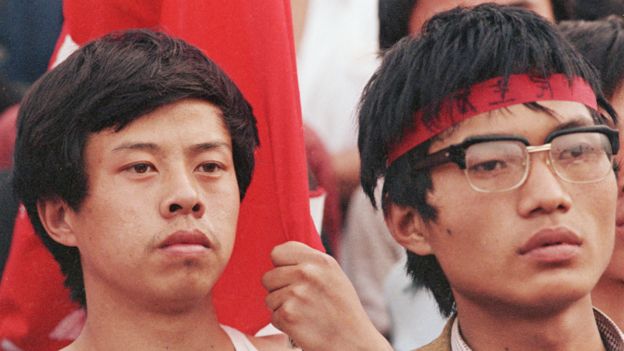
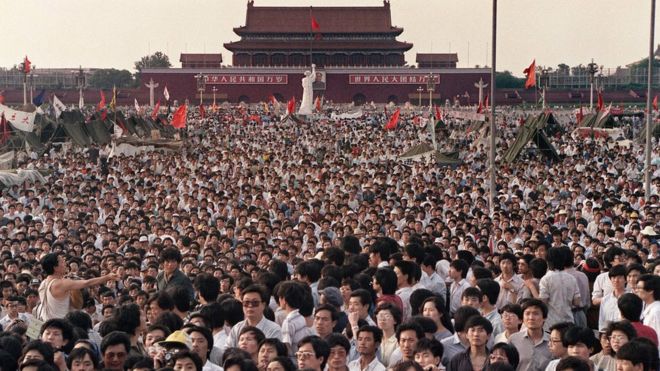
File photo of protestersImage copyright AFP
Image caption By early June 1989, huge numbers had gathered in Tiananmen Square

Thirty years ago, Beijing’s Tiananmen Square became the focus for large-scale protests, which were crushed by China’s Communist rulers.

The events produced one of the most iconic photos of the 20th Century – a lone protester standing in front of a line of army tanks.

What led up to the events?

In the 1980s, China was going through huge changes.

The ruling Communist Party began to allow some private companies and foreign investment.

Leader Deng Xiaoping hoped to boost the economy and raise living standards.

However, the move brought with it corruption, while at the same time raising hopes for greater political openness.

Protesters in Tiananmen SquareImage copyright GETTY IMAGES
Image caption Protesters in Tiananmen Square, 1989

The Communist Party was divided between those urging more rapid change and hardliners wanting to maintain strict state control.

In the mid-1980s, student-led protests started.

Those taking part included people who had lived abroad and been exposed to new ideas and higher standards of living.

How did the protests grow?

In spring 1989, the protests grew, with demands for greater political freedom.

Protesters were spurred on by the death of a leading politician, Hu Yaobang, who had overseen some of the economic and political changes.

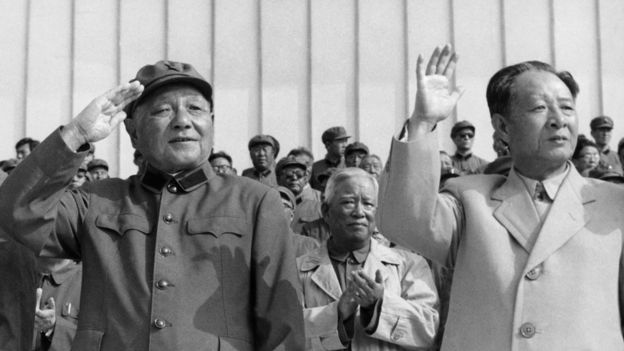
Archive picture of Deng and HuImage copyrigh AFP
Image caption Deng Xiaoping (left) with Hu Yaobang

He had been pushed out of a top position in the party by political opponents two years earlier.

Tens of thousands gathered on the day of Hu’s funeral, in April, calling for greater freedom of speech and less censorship.

In the following weeks, protesters gathered in Tiananmen Square, with numbers estimated to be up to one million at their largest.

The square is one of Beijing’s most famous landmarks.

It is near the tomb of Mao Zedong, the founder of modern China, and the Great Hall of the People, used for Communist Party meetings.

What was the government’s response?

At first, the government took no direct action against the protesters.

Party officials disagreed on how to respond, some backing concessions, others wanting to take a harder line.

The hardliners won the debate, and in the last two weeks of May, martial law was declared in Beijing.

On 3 to 4 June, troops began to move towards Tiananmen Square, opening fire, crushing and arresting protesters to regain control of the area.

Who was Tank Man?

On 5 June, a man faced down a line of tanks heading away from the square.

He was carrying two shopping bags and was filmed walking to block the tanks from moving past.

"Tank Man" in BeijingImage copyright GETTY IMAGES

He was pulled away by two men.

It’s not known what happened to him but he’s become the defining image of the protests.

How many people died in the protests?

No-one knows for sure how many people were killed.

At the end of June 1989, the Chinese government said 200 civilians and several dozen security personnel had died.

Other estimates have ranged from hundreds to many thousands.

In 2017, newly released UK documents revealed that a diplomatic cable from then British Ambassador to China, Sir Alan Donald, had said that 10,000 had died.

Do people in China know what happened?

Discussion of the events that took place in Tiananmen Square is highly sensitive in China.

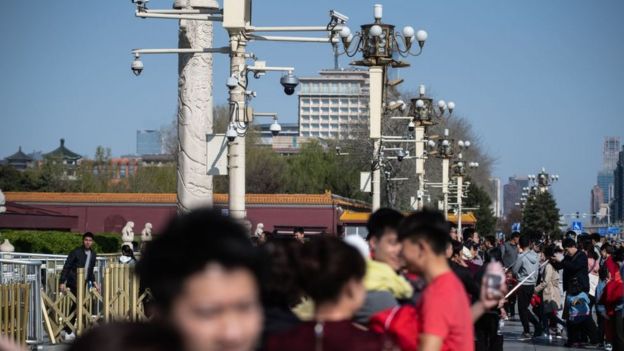
View of Tiananmen SquareImage copyright GETTY IMAGES
Image caption Tiananmen Square now – full of tourists and surveillance cameras

Posts relating to the massacres are regularly removed from the internet, tightly controlled by the government.

So, for a younger generation who didn’t live through the protests, there is little awareness about what happened.

Source: The BBC

Law of Unintended Consequences

continuously updated blog about China & India

ChiaHou's Book Reviews

continuously updated blog about China & India

What's wrong with the world; and its economy

continuously updated blog about China & India