Archive for ‘consulates’

29/05/2020

Covid-19 plunges Indians’ study abroad dreams into turmoil

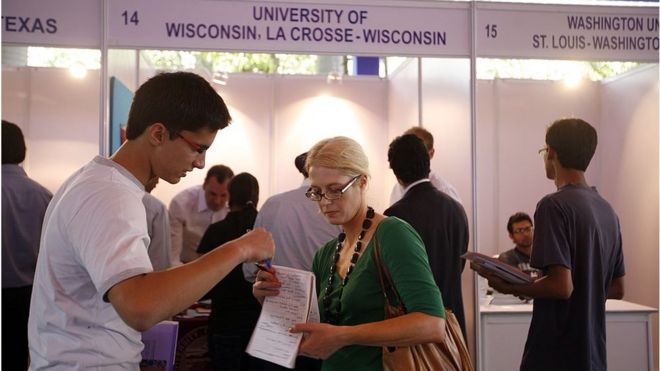
Representatives of 17 American educational institutions participate in a U.S. University Fair Organized by the United States-India Educational Foundation (USIEF)Image copyright GETTY IMAGES
Image caption International students are uncertain of the future in the wake of Covid-19

Two years ago, 29-year-old Raunaq Singh started working towards his dream of pursuing an MBA from one of the world’s top business schools.

In January 2020, he was waitlisted by UC Berkeley’s Haas School of Business in California, and was asked to send more information to bolster his case for admission.

“So, I quit my stable job of five years and started working with a mental wellness start-up as a consultant,” Mr Singh says.

“I’m on a major pay cut because the purpose of joining this company wasn’t to earn money, but to add value to my application.”

Fortunately, he was accepted at Berkeley, and was due to start his course in September.

But then the world changed as Covid-19 spread, plunging the immediate future into uncertainty.

Mr Singh is one of hundreds of thousands of Indian students who were planning to study abroad. But now they are not quite sure what will happen given international travel restrictions, new social distancing norms and the sheer uncertainty of what the next few months will bring.

After China, India sends more students abroad to study than any other country – more than one million Indians were pursuing higher education programs overseas as of July 2019, according to India’s foreign ministry.
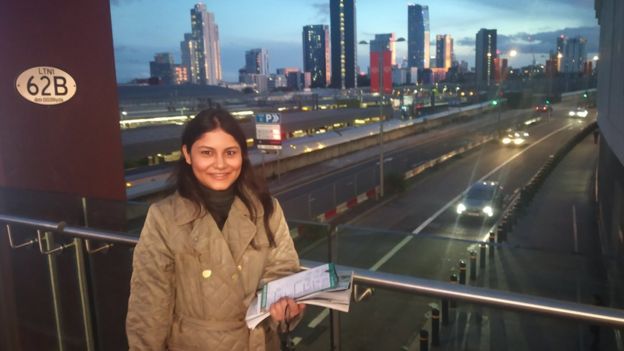
Meehika BarukaImage copyright MEEHIKA BARUA
Image caption Ms Barua is one of the hundreds of thousands of Indians who wants to study abroad

Every year, in June and July, students flood visa centres and consulates to start the paperwork to travel and study abroad. But things look different this year.

“There’s a lot of stress and anxiety and tension at this time but not enough clarity,” says Meehika Barua, 23, who wants to study journalism in the UK.

“We don’t know when international travel restrictions will be lifted or whether we’d be able to get our visas in time. We may also have to take classes online.”

Some universities across the UK and the US are giving international students the option to defer their courses to the next semester or year, while others have mandated online classes until the situation improves.

The University of Cambridge recently announced that lectures will be online only until next year. Others, like Greenwich University, will have a mix of online and face-to-face approaches while its international students can defer to the next semester.

“It feels a little unfair, especially after spending a year-and-half to get admission in one of these schools,” Mr Singh says. “Now, a part of the experience is compromised.”

Like him, many others are disappointed at the prospect of virtual classes.
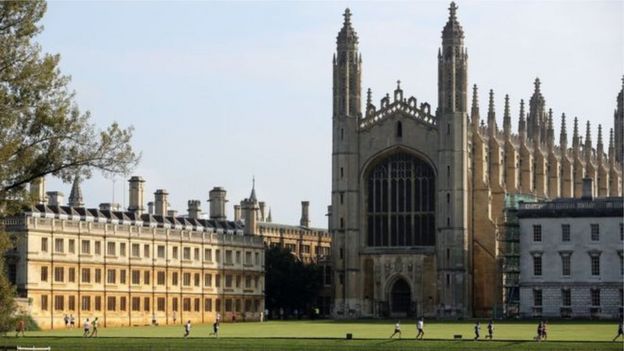
Cambridge UniversityImage copyright PA MEDIA
Image caption Cambridge University has announced that all lectures will be online

“The main reason we apply to these universities is to be able to get the experience of studying on campus or because we want to work in these countries. We want to absorb the culture there,” Ms Barua says.

Studying abroad is also expensive. Many US and UK universities charge international students a higher fee. And then there’s the additional cost of applications or standardised tests.

Virtual classes mean they don’t have to pay for a visa, air tickets or living expenses. But many students are hesitant about spending their savings or borrowing money to pay for attending college in their living room.

Even if, months later, the situation improves to some extent, and students could travel abroad and enrol on campus, they say that brings its own challenges.

For one, Mr Singh points out, there is the steep cost of healthcare, and questions over access to it, as countries like the US are experiencing a deluge of infections and deaths.
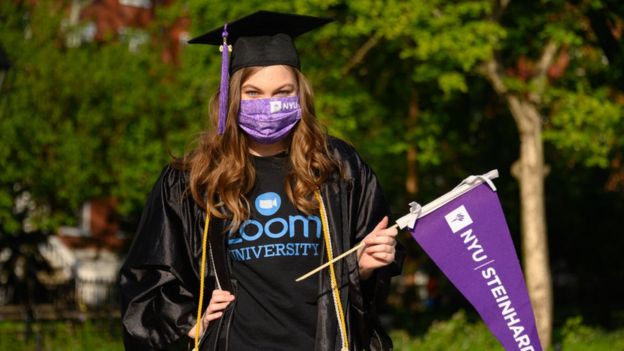
A student wears a protective face mask, graduation cap and graduation gown in Washington Square Park during the coronavirus pandemic on May 15, 2020Image copyright GETTY IMAGES
Image caption Students are also unsure of finding jobs overseas after graduation

And then there are the dimming job prospects. The pandemic has squeezed the global economy, so employers are less likely to hire, or sponsor visas for foreign workers.

“For international students, the roller coaster has been more intense because there is increased uncertainty about their ability to get jobs in the US after graduation, and for some, in their ability to get to the US at all,” says Taya Carothers, who works in Northwestern University’s international student office.

The idea of returning to India with an expensive degree and the looming unemployment is scaring students – especially since for many of them, the decision to study abroad is tied to a desire to find a well-paying job there.

“The risk we take when we leave our home country and move to another country – that risk has increased manifold,” Mr Singh adds.

The current crisis – and its economic impact – has affected the decision of nearly half the Indians who wanted to study abroad, according to a recent report by the QS, a global education network.

Experts say universities are in a tough spot too.

International students add as much as $45bn (£37bn) a year to the American economy. In the UK, universities receive almost £7bn in fees from overseas students. So their finances will take a hit if too many foreign students rethink going abroad.

And logistics will also pose a challenge – colleges have to enforce social distancing across campuses, including dormitories, and accommodate students from multiple time zones in virtual classes.

“Regardless of how good your technology is, you’re still going to face problems like internet issues,” says Sadiq Basha, who heads a study abroad consultancy.

He adds that there might be a knee-jerk reaction as a large number of international students consider deferring their admission to 2021. But he’s positive that “in the long term, the ambitions of Indian students are not going to go down.”

Mr Singh is still waiting to see how things will unfold in the next few months, but he’s almost certain he will enrol and start his first semester of the two-year program online.

“Since I’ve been preparing for over a year now, I think mentally I’m already there,” he says.

Source: The BBC

01/02/2020

Britain pulls embassy staff, families from China as coronavirus spread

  • The decision, which follows a similar move by the US this week, came as the death toll from the outbreak soared to 259
  • Health officials on Friday confirmed the first cases in the UK after two people tested positive for the virus
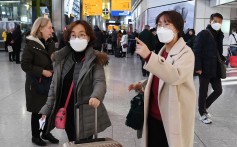
A coach carrying British nationals evacuated from Wuhan arrives at the Arrowe Park Hospital in Wirral, near Liverpool in northwest England. Photo: AFP
Britain on Saturday said it was temporarily withdrawing some staff and their families from its diplomatic sites in China, as Beijing struggles to contain the nationwide new

coronavirus

epidemic.

The decision, which follows a similar move by the United States this week, came as the death toll from the outbreak soared to 259 and the total number of cases neared 12,000 within China.
The Sars-like virus has also begun to spread around the world, with more than 100 infections reported in more than 20 countries.

“We are committed to ensuring the safety and well-being of our staff and their families,” a spokesman for the British Foreign Office said.

“We are therefore temporarily withdrawing some UK staff, and their dependents from our embassy and consulates in China.”

He added that Britain’s ambassador in Beijing and staff needed to continue critical work will remain, and that British nationals in China would still have access to constant consular assistance.

The US, which on Friday temporarily banned the entry of foreign nationals, who had travelled to China over the past two weeks, has also made similar changes.

Two people in UK test positive for coronavirus

31 Jan 2020

On Wednesday, it authorised the departure of non-emergency government employees and their family members from its offices in Beijing, Chengdu, Guangzhou, Shanghai, and Shenyang.

And on Friday, it ordered all relatives of staff members under the age of 21 to leave China immediately.

A spokesman for the US Embassy in Beijing said it made the decision “out of an abundance of caution related to logistical disruptions stemming from restricted transportation and overwhelmed hospitals related to the novel coronavirus”.

Coronavirus outbreak: global businesses shut down operations in China
British health officials on Friday confirmed the first cases in the UK, after two members of the same family tested positive for the virus.

One of the two individuals is a student at the University of York, a university spokesman said on Saturday.

Also on Friday, 83 British citizens returned on a UK government-chartered flight from Wuhan, the Chinese city at the centre of the epidemic.

They were immediately taken to a hospital in northwest England for a two-week quarantine.

Source: SCMP

19/05/2019

Shanghai Bund’s historic buildings saved from demolition … for now

  • Experts win reprieve for two out of three heritage houses but fear their success is only temporary
  • Authorities plan public cultural facilities for the site
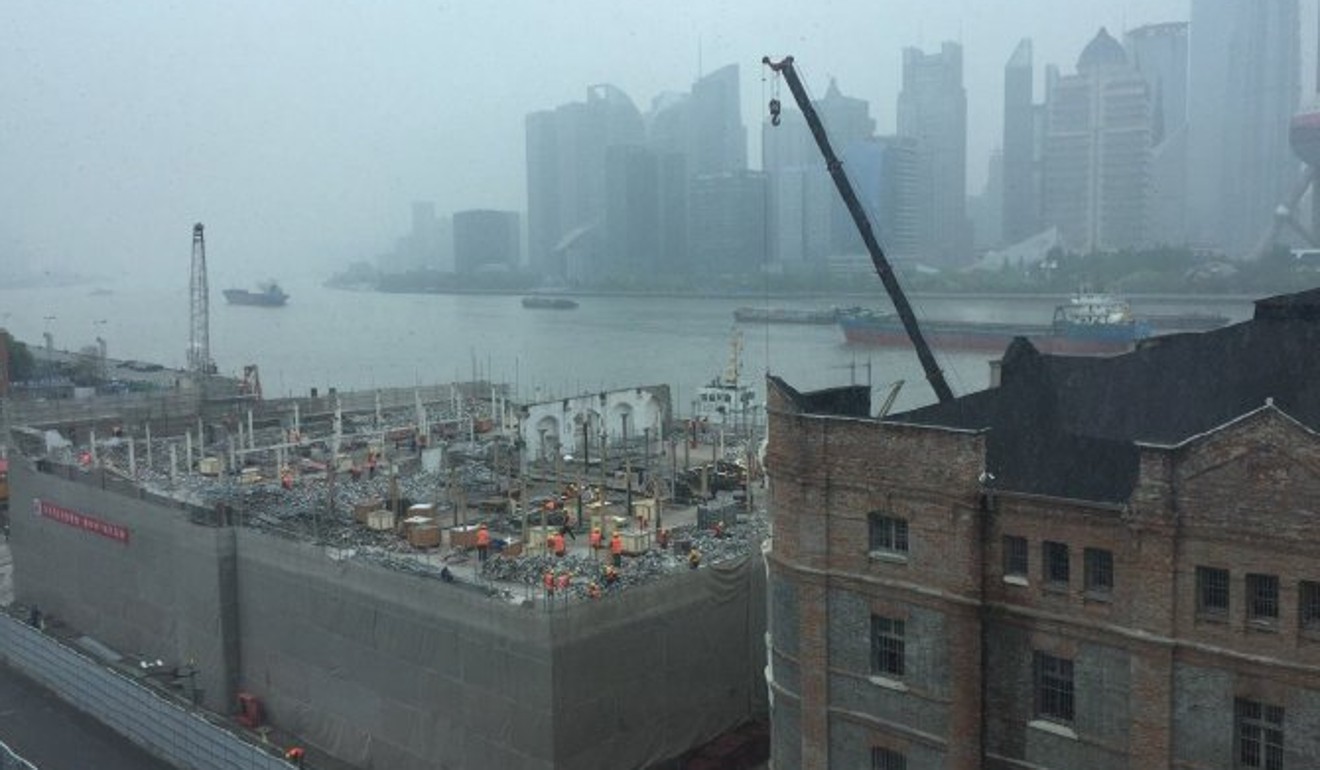
The historic buildings on Shanghai’s Bund in the 1930s. One of the three structures has already been demolished but authorities have temporarily suspended plans to knock down the other two. Photo: Handout
Two historic buildings on Shanghai’s famous Bund have temporarily escaped demolition after a group of experts appealed to the government to conserve the heritage sites, but the intervention was too late to save a third.
About 15 architecture, history and culture experts based in Shanghai banded together to write an article on social media app WeChat last month, calling on the city’s government to “protect the city’s memories” by preserving three houses on Huangpu Road.
A few days after the article was published one of the buildings was demolished as part of a plan to build public cultural facilities on the site. But authorities suspended work on the other two and are considering removing only the interior structure while preserving the external walls, according to the group.
The houses, which date back to 1902, witnessed the city’s boom in the first half of the 20th century when it became one of the world’s most important, and famous, ports, the experts said.
The demolition project on The Bund, Shanghai has been suspended, but not before one of the three historic buildings was demolished. Photo: Urban China magazine

All three of the properties originally belonged to Japanese shipping company Nippon Yusen Kaisha Group and were later used as storage facilities for Japan’s military forces during the second world war, according to Yu Hai, a sociologist from Shanghai’s Fudan University.

“These buildings, along with the nearby Yangzijiang port on the Huangpu River, represented Shanghai’s wharf culture and port culture,” Yu said. “They are historically significant as they witnessed Shanghai grow prosperous through shipping and trade industries about a century ago.”

Although the two remaining buildings are safe for now, the experts argue their interiors are also worth preserving.

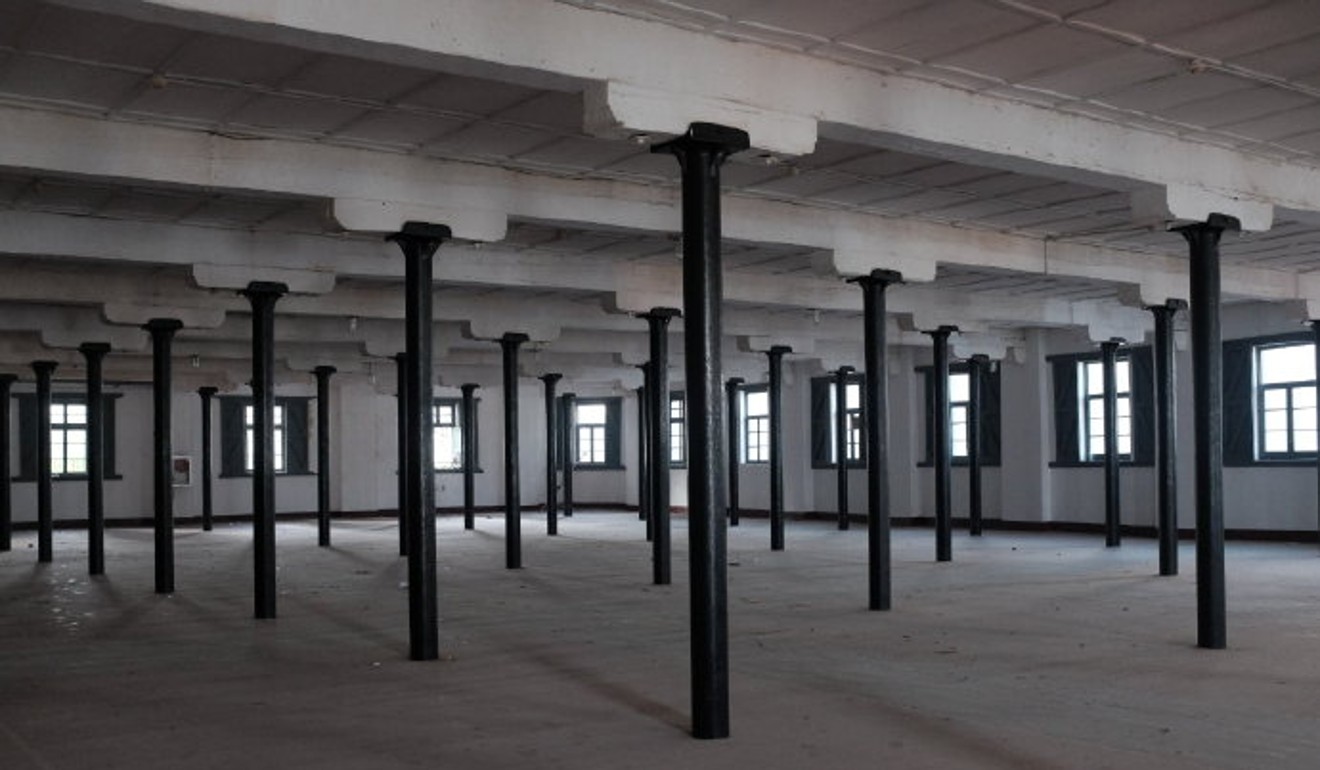
Liu Gang, an architecture professor at Shanghai’s Tongji University, said the properties featured big wooden beams supported by black iron pillars, which were prominent architectural features of industrial buildings dating back to the 19th century.

“We guess it was hard to move these giant beams with vehicles at the beginning of the 20th century. Quite possibly they were transported on the river. We guess that the wood was chopped down and processed in places across the Pacific [from North America] and shipped to Shanghai.”

In the WeChat article, Liu called for the protection of the interior structure of the buildings. “Without solid research, we cannot simply take them down to be replaced by new ones.”

Yu agreed, saying: “The building with a new inside structure would be a fake and this plan will destroy historical heritage.”

Experts say the interiors of the historic buildings are also worth preserving. Photo: Urban China magazine

Huangpu Road, where these houses sit, is rich with history. It features the Garden Bridge of Shanghai – the city’s first steel bridge, built in 1907 – and was once home to the consulates of the United States, Russia, Japan, Germany, Denmark and the Austro-Hungarian empire.

Other notable landmarks on the road include the Astor House Hotel, built in 1846, where Charlie Chaplin, Albert Einstein and George Bernard Shaw stayed in the 1920s and 1930s. The hotel is still there.

“History happened here,” Yu said. “But it’s a pity that most of the old buildings in this area no longer exist.”

Despite their success in winning a stay of execution for the two buildings, the experts are cautious in their expectations.

“The demolition work was suspended, but that does not mean they have accepted our proposals. We are not optimistic,” Yu said.

About two weeks ago as part of their effort to save the buildings, Yu and three other scholars approached officials from Shanghai’s Planning and Natural Resources Bureau, the government body behind the demolition project.

“Officials emphasised the difficulties of keeping the completeness of the old buildings and we just pointed out the damage to their historical values,” Yu said.

The Shanghai bureau did not immediately reply to a request for comment.

Shanghai nightclub king opens new art space – in disused oil tanks
Appeals by the public to conserve historical buildings have generally not been successful. Shenyuli, a typical Shanghai residential community built in the 1930s, was included in the city’s protected list of historical buildings in 2004.
The listing was not enough to prevent its demolition eight years later to make way for a public green land space.
Three years ago, the Shanghai government announced it was suspending the planned demolition of a former sex slavery station used by Japanese soldiers during the second world war, following media reports and a public outcry.
However, the building was later demolished, according to Su Zhiliang, history professor from Shanghai Normal University and a researcher on sex slavery, who predicts a similar outcome for this latest conservation effort.
“I think the government is just using the same tactic to postpone their plan. After the public’s attention is over, they will continue demolishing,” Su said.
Source: SCMP
Law of Unintended Consequences

continuously updated blog about China & India

ChiaHou's Book Reviews

continuously updated blog about China & India

What's wrong with the world; and its economy

continuously updated blog about China & India