28/04/2020
SHANGHAI (Reuters) – Apple Inc’s (AAPL.O) discounts on the iPhone 11 in China and the release of a new low-price SE model have put the company in a better position than rivals to weather a coronavirus-related plunge in global smartphone demand.
While China, which accounts for roughly 15% of Apple’s revenue, appears to be a rare bright spot, investors will be keen to get a picture of global demand when the Cupertino, California-headquartered company reports second-quarter results on Thursday.
The iPhone maker has shut retail stores in the United States and Europe following the COVID-19 outbreak, and China is the only major market where it has been able to reopen all shops.
Consumer spending is expected to be muted as the pandemic has crippled economies and Apple, the world’s second-most valuable tech company, is better armed with the launch of its new price-conscious iPhone model, analysts said.
“Apple is better positioned than most to experience a rapid recovery in a post COVID world,” Evercore analyst Amit Daryanani said in a research note. “We see demand as pushed out, not canceled.”
He added that the launch of the $399 iPhone SE suggested that Apple’s supply chain was getting back on its feet after weeks of shutdown earlier this year.
Analysts expect Apple to report a 6% drop in revenue and an 11% fall in net income in its fiscal second quarter, according to Refinitiv data.
On the other hand, Chinese brands such as Oppo and Vivo who have steadily moved to offer high-end models to challenge iPhones, stand to lose marketshare as bargain hunters choose Apple.
Earlier this month, several online retailers in China slashed prices of the iPhone 11 by as much as 18% – a tactic Apple has used in the past to boost demand. And while initial social media reaction to the new iPhone SE was muted, analysts said they were seeing a pick up in demand.
The cheaper iPhone SE could tempt iPhone owners to opt for a newer device, something they might have otherwise delayed in a weak economy, said Nicole Peng, who tracks the smartphone sector at research firm Canalys.
“People want to avoid uncertainty in a downturn,” she said. “Having a brand like Apple that can showcase quality and make people less worried about breakdowns or after-sales service can bring in buyers.”
CHEAP IS GOOD
Early data suggests that the Chinese smartphone market is recovering rapidly in the aftermath of the virus, and Apple has emerged relatively unscathed.
Sales of iPhones in China jumped 21% last month from a year earlier and more than three fold from February, government data showed, meaning March-quarter sales in the country were likely to have slipped just 1%.
To be sure, a recovery in Chinese demand won’t offset sales lost in the United States and Europe. And the company is yet to launch a smartphone enabled with 5G wireless technology like those offered by Asian rivals, a disadvantage for Apple so far.
But those same expensive 5G models may not sell well in the current climate of frugality, analysts said.
“If there are no massive subsidies (in China), I doubt there will be many smartphone users who will be eager to upgrade to 5G,” said Linda Sui, who tracks the smartphone sector at research firm Strategy Analytics.
Sui expects iPhone shipments in 2020 to be down 2 percentage points at the most, versus double digit declines at Chinese firms.
Apple also has revenue from its services business to fall back on. It has leveraged its large iPhone customer base to boost services revenue from music, apps, gaming and video.
“Apple’s Services segment should remain resilient in today’s work-from-home environment, thereby demonstrating the durability of Apple’s model,” Cowen analyst Krish Sankar said.
Source: Reuters
Posted in 5G models, 5G wireless technology, accounts, after, analyst, analysts, appears, Apple, Apple Inc’s (AAPL.O), apples, are bright spot, armed, Asian, avoid, back on its feet, better, blow, brand, breakdowns, Buyers, California-headquartered, canceled, cheaper, China, Chinese brands, climate, Company, Consumer spending, coronavirus-related, COVID, COVID-19 outbreak, crippled, Cupertino, current, demand, discounts, downturn, drop, earlier, economies, Europe, Evercore, expected, experience, fall, February, fiscal, fold, following, from, frugality, fter-sales service, global, Government, income, investors, IPhone, iPhone 11, iPhone SE, just, last month, launch, low-price, Major, maker, March, market, marketshare, model, muted, net, new, online retailers, only, Oppo, pandemic, plunge, position, Post, price-conscious, prices, put, quality, quarter, rapid, reaction, recovery, Refinitiv data, release, reopen, reports, research note, results, retail stores, Revenue, rivals, roughly, Sales, SE model, second-quarter, Shanghai, shops, showcase, shut, shutdown, slashed, slipped, smartphone, social media, Strategy Analytics, suggested, Supply chain, tactic, this year, Three, Thursday, to cushion, Uncategorized, uncertainty, United States, Virus, Vivo, weak economy, weather, weeks, World, world’s second-most valuable tech company, worried, year |
Leave a Comment »
22/02/2020
- Dips in tourism, consumer spending could reduce first-quarter growth by three or four percentage points, according to Zhu Min, a former deputy managing director of the International Monetary Fund
- Massive effort now needed to help country rebound, economist says
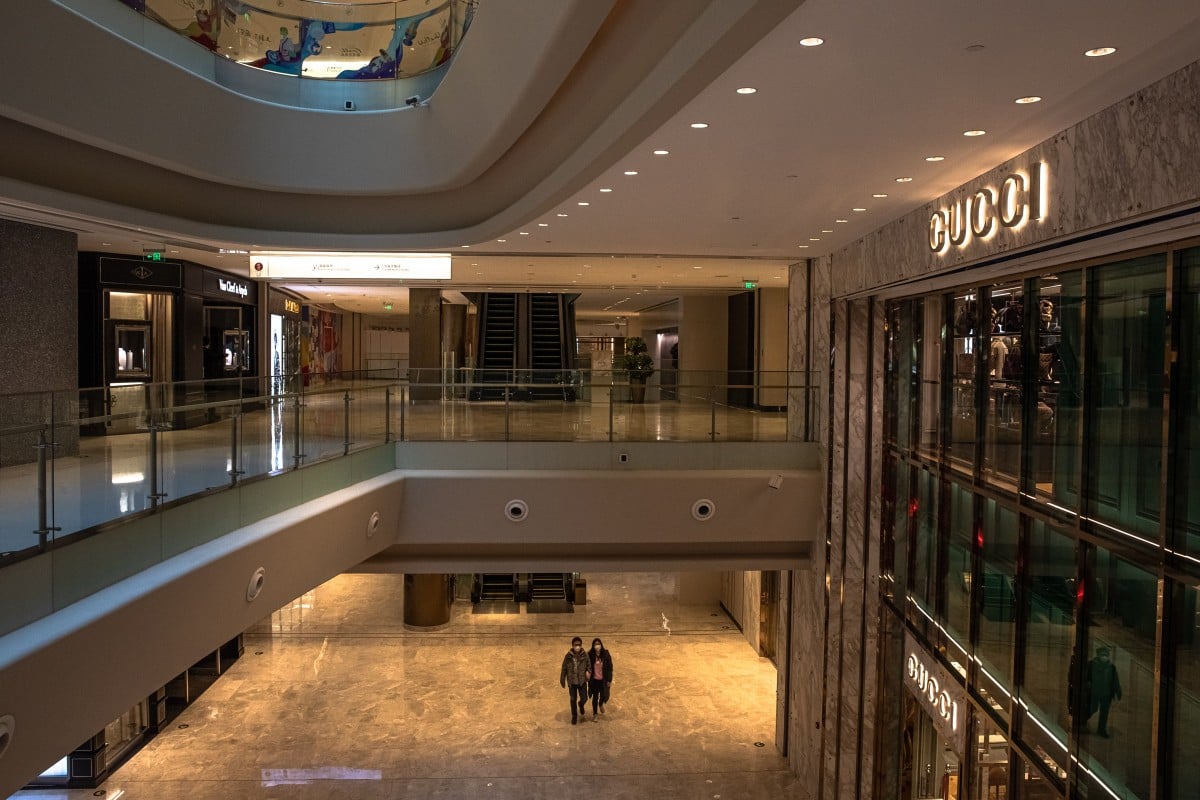
The coronavirus outbreak in China sparked a huge dip in consumer spending. Photo: EPA-EFE
The deadly
coronavirus outbreak may have cost China more than 1.3 trillion yuan (US$185 billion) in the first two months of the year because of huge dips in consumer spending and tourism, according to a former senior executive with the
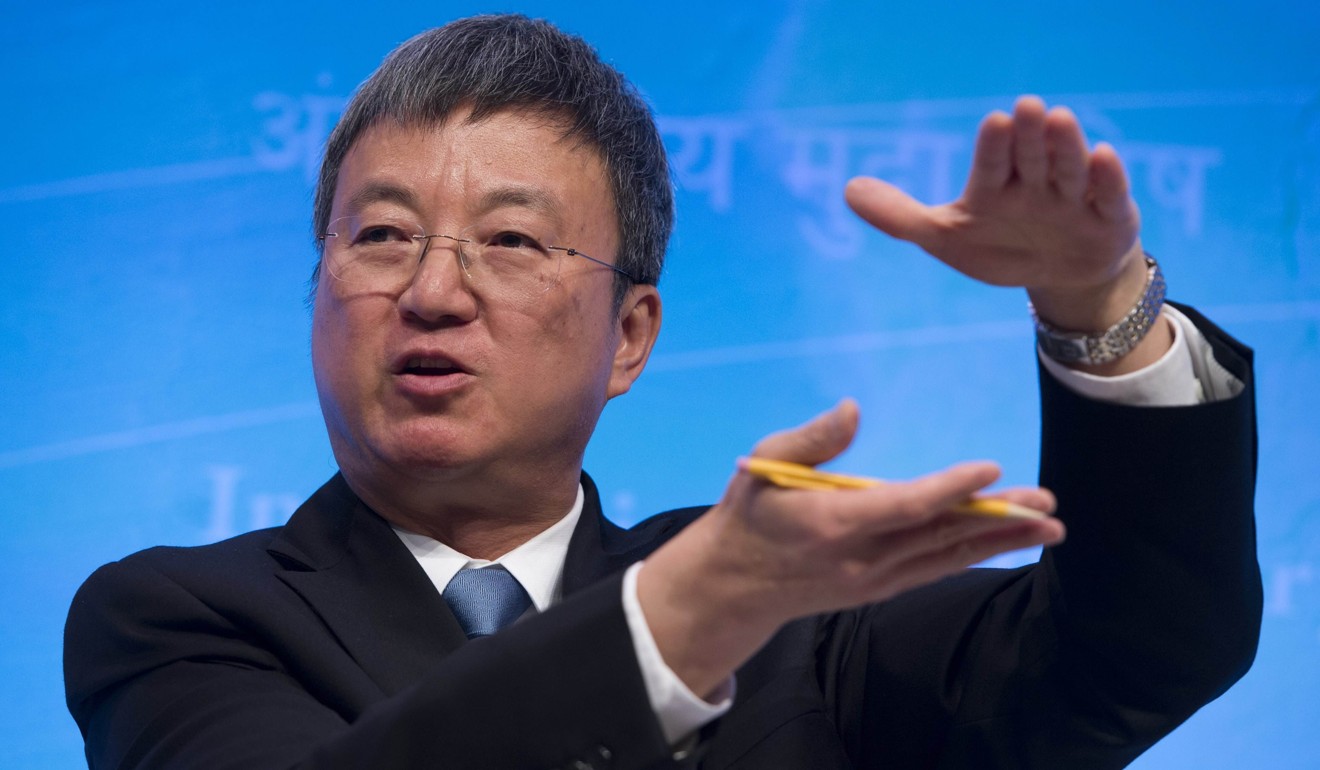
Zhu Min, who was deputy managing director of the IMF from 2011 to 2016, said during an online presentation on Saturday that the Covid-19 epidemic was likely to have cost the tourism industry about 900 billion yuan in January and February compared with last year, while consumer spending on food and drink was likely to have fallen by about 420 billion yuan.
While online spending – particularly on education and entertainment services – would offset some of the losses, the total drain on the economy over the period could be as much as 1.38 trillion yuan, said Zhu, who is currently head of the National Financial Research Institute at Tsinghua University in Beijing, which organised the presentation.
Based on figures from China’s National Bureau of Statistics, that would represent about 3.3 per cent of the country’s total retail sales in 2019.
Zhu Min says the Covid-19 epidemic cost China’s tourism industry about 900 billion yuan in January and February. Photo: AFP
“The falling consumption in the first quarter could knock down growth by three or four percentage points,” Zhu said. “We need a strong rebound, and that needs 10 times as much effort.”
Consumer spending is a cornerstone of the Chinese economy, accounting for almost 60 per cent of its growth last year. But with the coronavirus still far from contained, many local governments are reluctant to allow public facilities like cinemas and restaurants to reopen.
Despite the grim estimates provided by Zhu, his figures did not include car sales, which fell by 20.5 per cent year on year in January, their largest monthly dip in 15 years, according to figures from the China Passenger Car Association.
Sales in the first two weeks of February fell 92 per cent from the same period of 2019, mainly due to showroom closures. Over the whole of 2020, the coronavirus epidemic could cost China 1 million car sales, or about 5 per cent of its annual total, the industry group said.
In an effort to minimise that impact, Beijing has told local governments to introduce stimulus measures to boost car sales, including raising licence quotas in areas where numbers had previously been restricted to help fight air pollution.
Commerce ministry official Wang Bin said on Friday that the central government expected consumer spending to bottom out in March before rebounding in the second half of the year.
As for the economy as a whole, Chen Wenling, chief economist at the China Centre for International Economic Exchanges, a Beijing-based think tank, said this week that even if national production returned to 80 per cent by the end of February, first-quarter growth would still be less than 4.5 per cent. By comparison, China’s economy grew by 6.4 per cent in the first three months of 2019.
Economists from French bank Natixis forecast China’s gross domestic product to grow by between 2.5 and 4 per cent in the first quarter, depending on how quickly the situation was stabilised and the effectiveness of the government’s stimulus measures.
Source: SCMP
Posted in Beijing, China Centre for International Economic Exchanges, China’s economy, Consumer spending, COVID-19, ex-IMF official, International Monetary Fund, National Bureau of Statistics (NBS), National Financial Research Institute, Natixis, slash, Tourism, Tsinghua University, Uncategorized, US$185 billion |
Leave a Comment »



 CHINDIA ALERT: You'll be living in their world, very soon