Archive for ‘control’

10/12/2019

Bangalore: Dummies in police uniforms ‘control’ city traffic

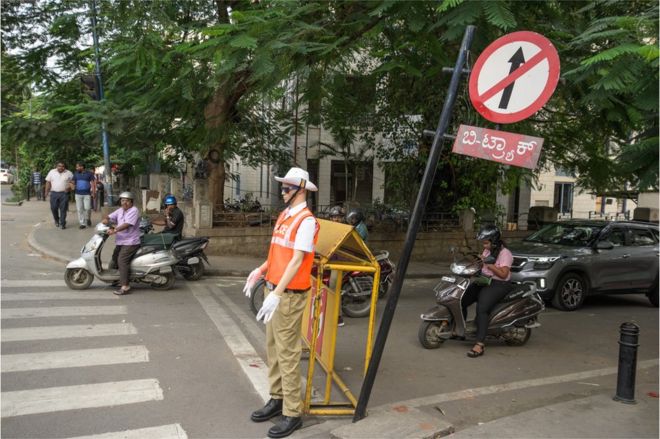
Traffic police mannequinImage copyright ASIF SAUD
Image caption The mannequins have been installed at major traffic crossings

One of India’s most gridlocked cities has come up with an unconventional solution to rein in errant drivers.

Mannequins dressed up as traffic police have been placed on roads in the southern city of Bangalore.

Dressed in police caps, white shirts and brown trousers, and wearing sunglasses, the mannequins are now on duty at congested junctions.

It’s hoped drivers will mistake them for real police and think twice about breaking the rules of the road.

Home to India’s IT industry, Bangalore has eight million registered vehicles on its streets. This number is expected to grow to more than 10 million by 2022.

At 18.7 km/h (11.61 mph) traffic speeds in the city are the second slowest in the country after Mumbai (18.5 km/h), according to a study by an office commute platform, MovinSync Technology Solutions. Cameras at traffic junctions have recorded more than 20,000 traffic violations every day.

But commuters have mixed feelings on whether mannequins can actually step in to help their real police counterparts.

Some feel they do.

“They look good. It is only when you look closely that you feel it is not a real police constable. So it is making people wear their helmets at traffic junctions and drive their two-wheelers,” says Gautam T, a college student.

Gautam and his college mate Talah Fazal had taken a selfie with one of the mannequins placed in the southern part of the city.
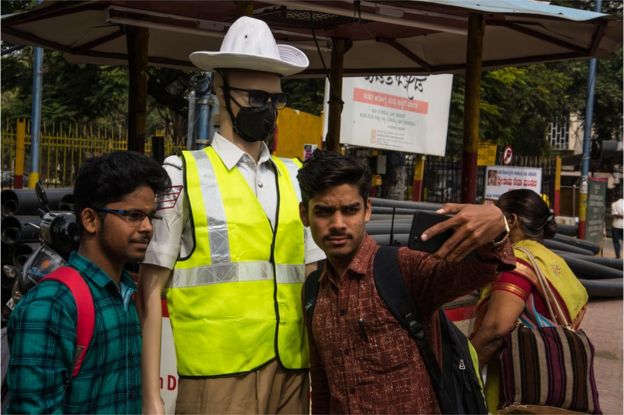
Asif SaudImage copyright ASIF SAUD

Similarly, Saravana – who goes by a single name – and drives a three-wheeled auto-rickshaw, had parked his vehicle near a no-parking sign board right next to a mannequin in the central business district. But he said: “It makes you not jump the traffic signal.”

On Twitter, the tone has been largely one of amusement and derision.

Presentational white space

Saleela Kappan, a public relations professional, said she found the concept “ridiculous”.

“These mannequins look too fit and fair compared to our Indian policemen to be posted on the road. I don’t think it will serve any purpose because people violate traffic rules even when policemen themselves are present at these junctions.”

Traffic police mannequinImage copyright ASIF SAUD

BR Ravikante Gowda, a senior traffic police officer in Bangalore, explaining the reasoning behind this initiatives said: “The idea of placing these mannequins at a different location every day is because people behave differently when there is a policeman present at the junction. When he is not there, their behaviour is different.”

A constable, who did not want to be named, said that police also confuse drivers by mixing things up.

“It’s been a couple of weeks since we got them here. There is some hesitancy in jumping the traffic lights. They are confused when we replace the mannequin daily with one of our colleagues.”

Source: Thr BBC

04/10/2019

Have scientists discovered why China is so rich in rare earth elements the world’s smartphones need?

Chinese geologists think they have formula that could help to increase control of market in the elements hi-tech industries depend upon

  • Simple combination of clay mined for porcelain production, granite bedrock and acid rain could point to lucrative sources of rare earths
China has 80 per cent of the reserves of rare earth elements the world needs to keep talking on its smartphones, and geologists in Guangzhou think they know why. Photo: EPA
Geologists in southern China say they have isolated a series of critical factors that could make it easier to find rare earth elements used in hi-tech consumer goods such as smartphones.
China has more than 80 per cent of the world’s reserves of heavy rare earths such as terbium, dysprosium and holmium concentrated in a few provinces to the south of the country.
The reason for the concentration is one of the biggest puzzles in geology, but researchers at the Guangzhou Institute of Geochemistry in Guangdong province say the answer may be found in a combination of clay deposits, acid rain and granite that is distinctive to southern China.

Professor He Hongping and his colleagues came to the conclusion by testing the interaction between rare earths and different types of clay. Through their research they found that kaolinite – or china clay – was the best at absorbing rare earths from water.

The clay, named after Gaoling village near Jingdezhen, a centuries-old ceramic production centre in east China’s Jiangxi province, is a raw material for porcelain production.

While kaolinite is found in many countries, those places do not have rare earth deposits – probably because of the lack of acid rain, He said.

“You need the right environment.”

He said that rocks that contained tiny amounts of rare earth elements weathered faster in an acid environment, but the acidity could not be too high or the rare earth might run off before it could be captured by the clay.

Why Beijing cut tax rate on rare earths amid trade war

Rainwater with the right natural acidity often occurred in areas around 20 degrees latitude, such as southern China, he said.

The last step was to locate the source rock. Granite formed in volcanic eruptions between 100 million and 200 million years ago is considered to be the main source of rare earths.

He said that part of the Pacific tectonic plate containing rare elements might have been forced under the Eurasian Plate and was pushed to the surface as magma that formed rocks.

Other countries could learn from the Chinese experience, said He, whose team submitted their findings to the research journal Chemical Geology.

Recent discoveries in Vietnam, Australia and North Carolina in the United States conformed to the Guangzhou team’s theory, but there was still more research to do, he said.

“Rare earth deposits are quite unlike minerals such as copper. Sometimes they occur in this mountain but not in another nearby with almost the same geological features.

Sometimes they occur in one half of the mountain but not in the other.”

With China and the US engaged in a trade war, and Beijing cutting taxes on mining companies looking for these elements, the pressure was on to unlock the secrets of China’s abundant rare earth deposits, he said.

Does China’s dominance in rare earths hold leverage in trade war?

Dr Huang Fan, associate researcher with the China Geological Survey, said the Guangzhou discovery would help geologists to find more rare earths.

Most rare earth mines were located along the borders between provinces such as Guangdong and Jiangxi, but recently there were discoveries on a plateau in Yunnan province, where few geologists believed rare earths could be found, he said.

“There are many more rare earth deposits out there waiting for us.”

Source: SCMP

28/12/2018

Peking University students clash with campus guards over control of Marxist Society

  • Witnesses say some protesters were injured as they were forced to go inside science building
  • University announced new committee will run the group after its chairman was detained and warned over Mao Zedong anniversary event
PUBLISHED : Friday, 28 December, 2018, 9:30pm
UPDATED : Friday, 28 December, 2018, 10:18pm

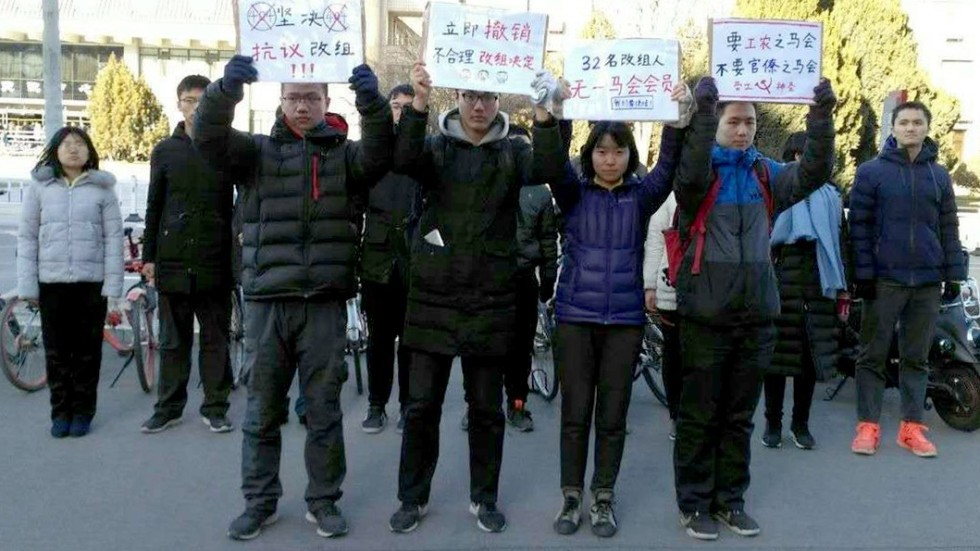
A dozen Peking University students clashed with guards on Friday as they protested over a change to the Marxist Society that was imposed after it organised an event to mark the 125th anniversary of Mao Zedong’s birth.

Witnesses said the students held placards near a science building at the campus in Beijing as they protested against the decision to install a new committee to run the society.

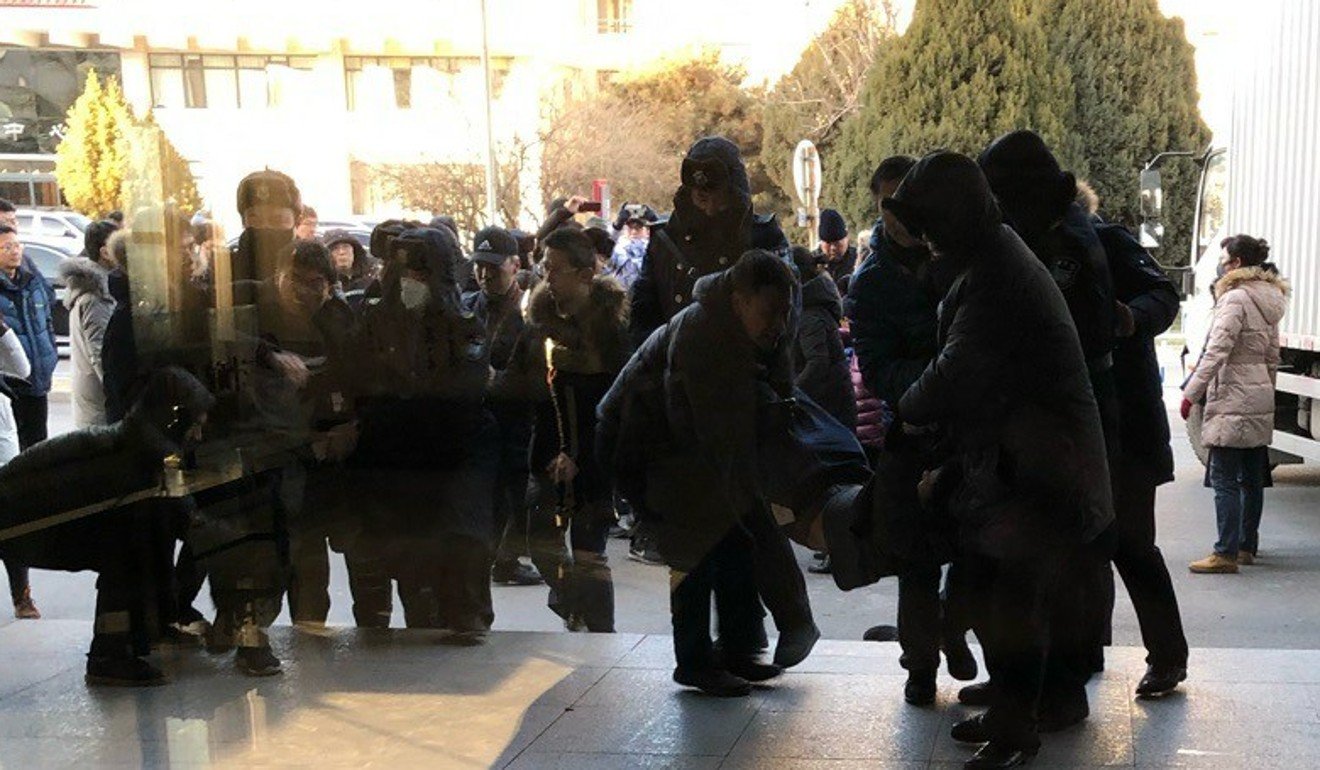
They said the students had locked arms during the peaceful protest but some were injured when security guards forced them to go into the building, manhandling and in some cases carrying them inside.

“Several of them were pushed to the ground and suffered cuts to their hands and some had their glasses broken in the struggle,” according to one witness.

At least eight of the students were still inside the building on Friday evening, according to a source.

Among the protesters taken inside by guards was Qiu Zhanxuan, chairman of the society. Qiu was not reachable on Friday night.

On Wednesday, Qiu was taken away by plain-clothes police ahead of an event he had arranged to commemorate the Mao anniversary. He was released the following day with a warning.

But a notice also appeared on the university’s online bulletin board on Thursday announcing that a new 32-member committee had been put in place to run the student Marxist Society.

The notice was issued by the university’s extracurricular activities office on behalf of Sun Guoxi, the academic in charge of the society.

It said the reshuffle was needed because society members had “severely deviated” from promises made when they registered and had repeatedly organised activities that violated regulations. It added that Qiu was “not qualified to lead [the society]”.

The young protesters have vowed to fight the change, which they said would force them underground.

“We are deeply shocked and angered by such an absurd scene happening on the campus of Peking University,” read a petition letter posted online on Friday and signed by about 30 students.

“This is a clear move to place the Marxist Society under the control of campus bureaucrats.”

Ning Yue, a PhD student majoring in Marxism, will lead the society as director general, with Ma Ning, a postgraduate Marxism student, as director, according to the notice.

But the protesters said both Ning and Ma were new to the society.

The university’s campus security could not be reached for comment on Friday.

In the past six months, authorities have widened a crackdown against nascent grass-roots activism on university campuses led by young Marxists.

Last month, more than 20 labour activists and young Marxists who were recent graduates from top universities were arrested. Their actions, which began in July in Shenzhen, were limited in scale but were seen by China watchers as a sign of rising left-leaning social activism in China.

In recent years, Marxism has inspired a growing number of young activists appalled by China’s poor protection of workers, rampant corruption and widening wealth gap. These activists have taken steps to speak up on social issues such as labour and farmers’ rights as well as income inequality.

17/12/2018

China tightens control of local economic data ahead of expected weak growth next year

  • Authorities in Guangdong, nation’s manufacturing powerhouse, told all future purchasing managers’ indexes will be produced by National Bureau of Statistics
  • Ruling comes ahead of what is likely to be tough start to 2019 for China’s economy as trade war bites
PUBLISHED : Monday, 17 December, 2018, 2:26pm
UPDATED : Monday, 17 December, 2018, 3:05pm

China’s central government has ordered authorities in the country’s export hub, Guangdong province, to stop producing a regional purchasing managers’ index for the manufacturing sector as it seeks to control the flow of sensitive economic data.

The order by the National Bureau of Statistics (NBS) means the province will now not release purchasing managers’ index (PMI) data for either October or November.

The move comes as Beijing looks to tighten its grip on the dissemination of economic news amid the trade war with the United States. Industry insiders and analysts raised concerns about what the move means for disclosure of the real impact of the conflict on local businesses.

The demise of Guangdong’s PMI came unannounced as the Guangdong government just stopped releasing the data.

When an individual inquired as to why Guangdong had stopped releasing its own PMI, the Guangdong Industry and Information Technology Department issued a brief statement on December 10, buried deep in the website, saying that it had received a notice from the NBS at the end of October and was told that all PMI compilations must be conducted by the NBS. Given this directive, it decided to stop compiling and releasing the provincial PMI from November 1 on.

Phone calls to the NBS information office went unanswered on Monday and the bureau has not replied to faxed questions from the South China Morning Post.

The Guangdong provincial PMI, complied by the Guangdong’s Industry and Information Technology Department, has been released on a monthly basis since November 2011.

When the Guangdong government decided to produce its own PMI that year, it said in a statement that Guangdong, which is a global manufacturing hub, was in need of its own PMI to help inform economic policymakers, enterprises and analysts so that they could accurately predict economic performance of the province and even the whole country.

“For instance, Chicago used to be the heartland of US manufacturing, and the Chicago PMI is often regarded one of the most significant [US] economic indicators by economists,” the Guangdong government said then. The Guangdong PMI is calculated based on a survey of 1,000 key enterprises in the province.

Peng Peng, vice-president of the South Nongovernmental Think Tank in Guangdong, said the demise of the provincial PMI would be a loss to the local business community.

“Guangdong’s monthly PMI was an important lead indicator showing China’s real economic situation,” he said.

Without it, local companies would have to rely on official statistics reported by the central government – via the NBS – or on official views of how manufacturing companies were doing in China, he said.

The owner of an export-oriented manufacturing business in Guangzhou, the capital of Guangdong, said he was concerned by the central government’s move as it suggested the economy might be in even worse shape than he thought.

“Timely and transparent PMI data is not only important for Guangdong companies but for all businesses nationwide, because Guangdong is China’s main economic engine,” said the person, who asked not to be identified.

“I’m actually worried about the official move. I think the situation in the manufacturing sector will be really bad in the coming year, and that might be why Guangdong’s provincial monthly PMI needed to be shut down.”

The Guangdong PMI for the manufacturing sector actually rose in September to 50.2, from 49.3 a month earlier. Readings above 50 points indicate the sector is expanding.

It is not the first time China’s statistics bureau has tightened control over PMIs not produced in house. The bureau in 2015 ordered a private compiler of a Chinese PMI to stop releasing preliminary readings that came out a week before the official release.

The tightened control by NBS over Guangdong’s PMI comes at the same time as the statistics bureau reduces the autonomy of local governments to produce their own gross domestic product data.

According to a notice issued by NBS in October 2017, the NBS will compile provincial GDP figures directly from 2019 onwards, taking over the work of local provincial statistics bureaus, so that the gaps between provincial and nationwide GDP data would be smaller. The NBS notice at that time only mentioned GDP data and did not touch on other indicators such as PMI.

Law of Unintended Consequences

continuously updated blog about China & India

ChiaHou's Book Reviews

continuously updated blog about China & India

What's wrong with the world; and its economy

continuously updated blog about China & India