Chindia Alert: You’ll be Living in their World Very Soon
aims to alert you to the threats and opportunities that China and India present. China and India require serious attention; case of ‘hidden dragon and crouching tiger’.
Without this attention, governments, businesses and, indeed, individuals may find themselves at a great disadvantage sooner rather than later.
The POSTs (front webpages) are mainly 'cuttings' from reliable sources, updated continuously.
The PAGEs (see Tabs, above) attempt to make the information more meaningful by putting some structure to the information we have researched and assembled since 2006.
Some companies polled by Shanghai’s American Chamber of Commerce said they were speeding up plans to move operations out of mainland
Transport bans and strict public health measures have disrupted economic activity
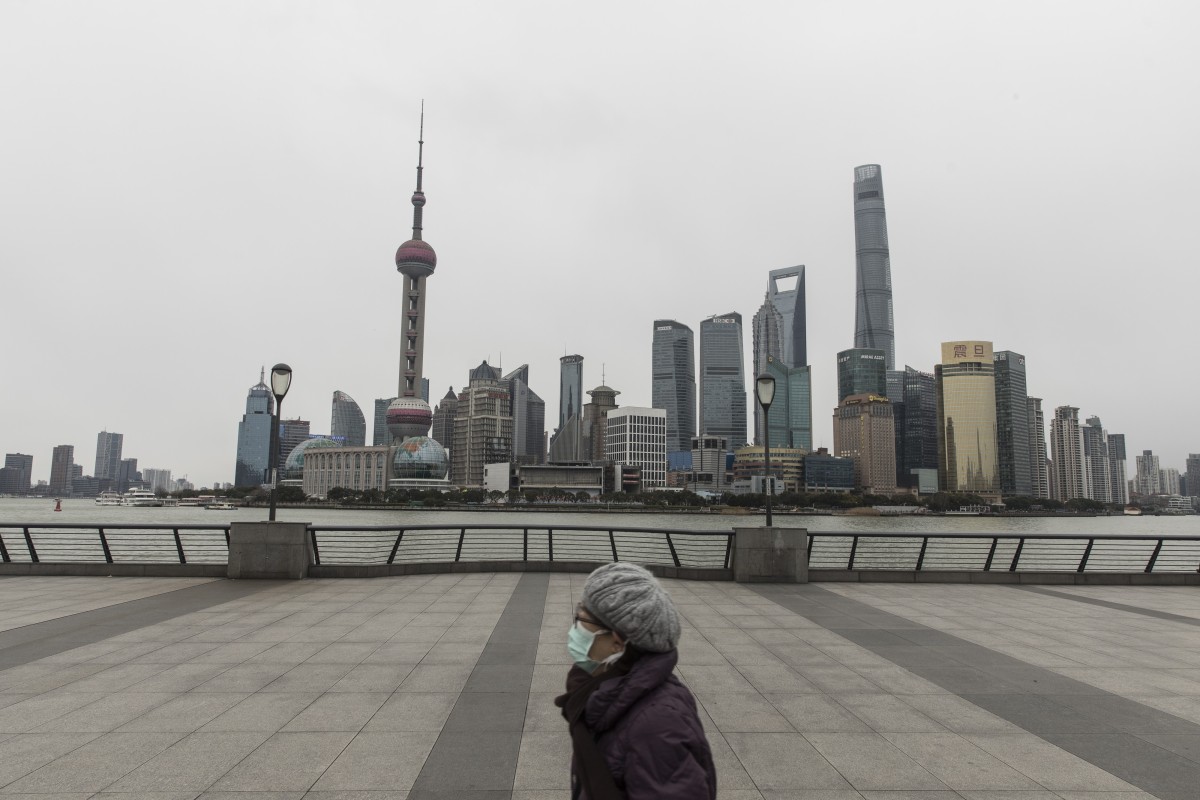
China’s economic growth may drop to 5 per cent or lower because of the outbreak, according to a government economist. Photo: Bloomberg
The majority of US firms with operations in China expect a virus outbreak
to cut revenue this year, and some are accelerating plans to shift their supply chains out of the country, according to a poll by Shanghai’s American Chamber of Commerce.
Nearly a quarter of the firms forecast revenue would fall by at least 16 per cent this year due to the outbreak, while over a fifth said it would decline by 11-15 per cent. Only 13 per cent of respondents said revenue would see very little or no impact from the virus.
The survey covered 127 companies, including 20 with China-sourced revenues of over US$500 million and 27 with China revenues of US$100 million to US$500 million.
Sixteen per cent of respondents expected China’s gross domestic product to fall by more than 2 per cent due to the outbreak.
China tries to get back to work amid coronavirus outbreak
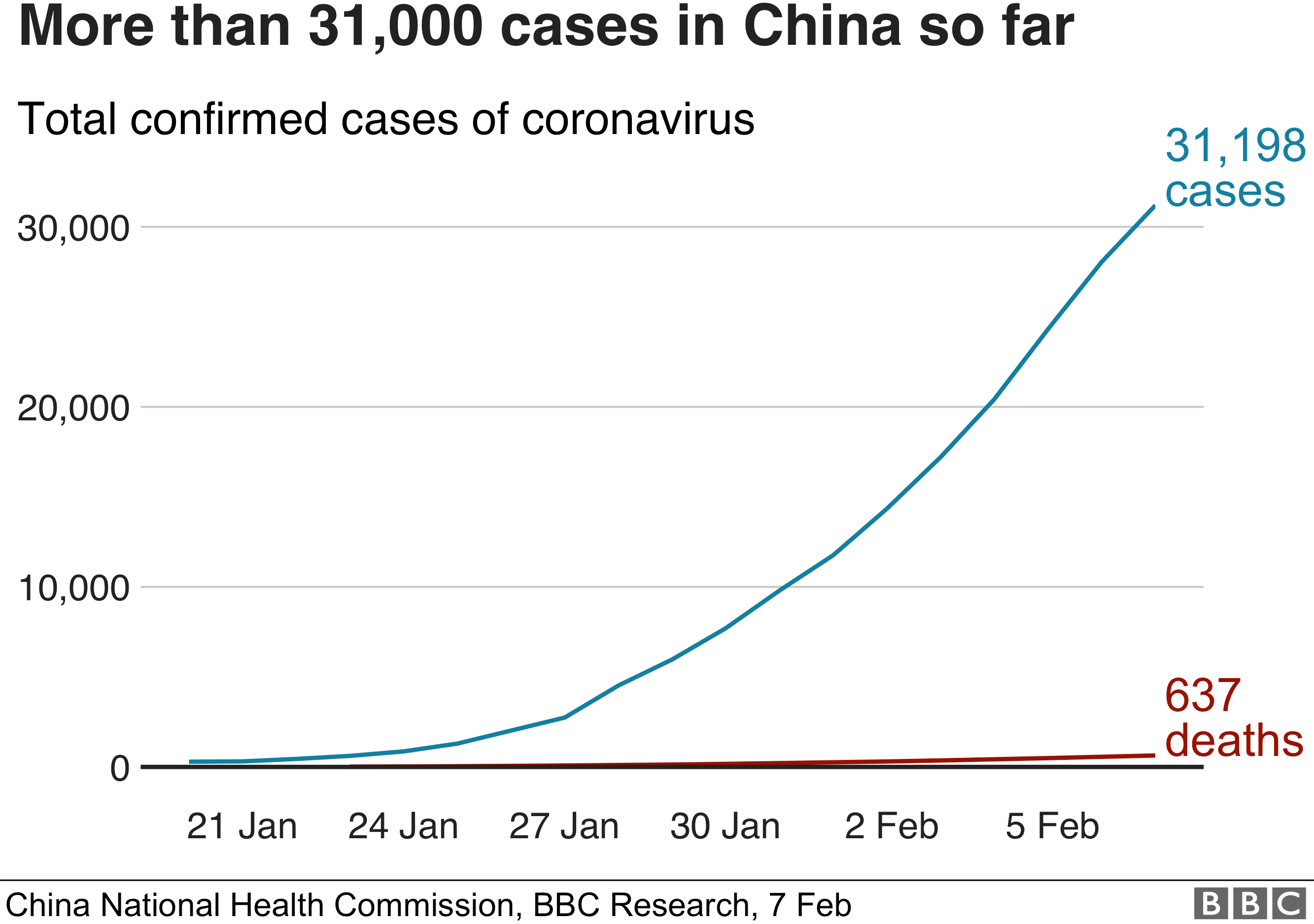
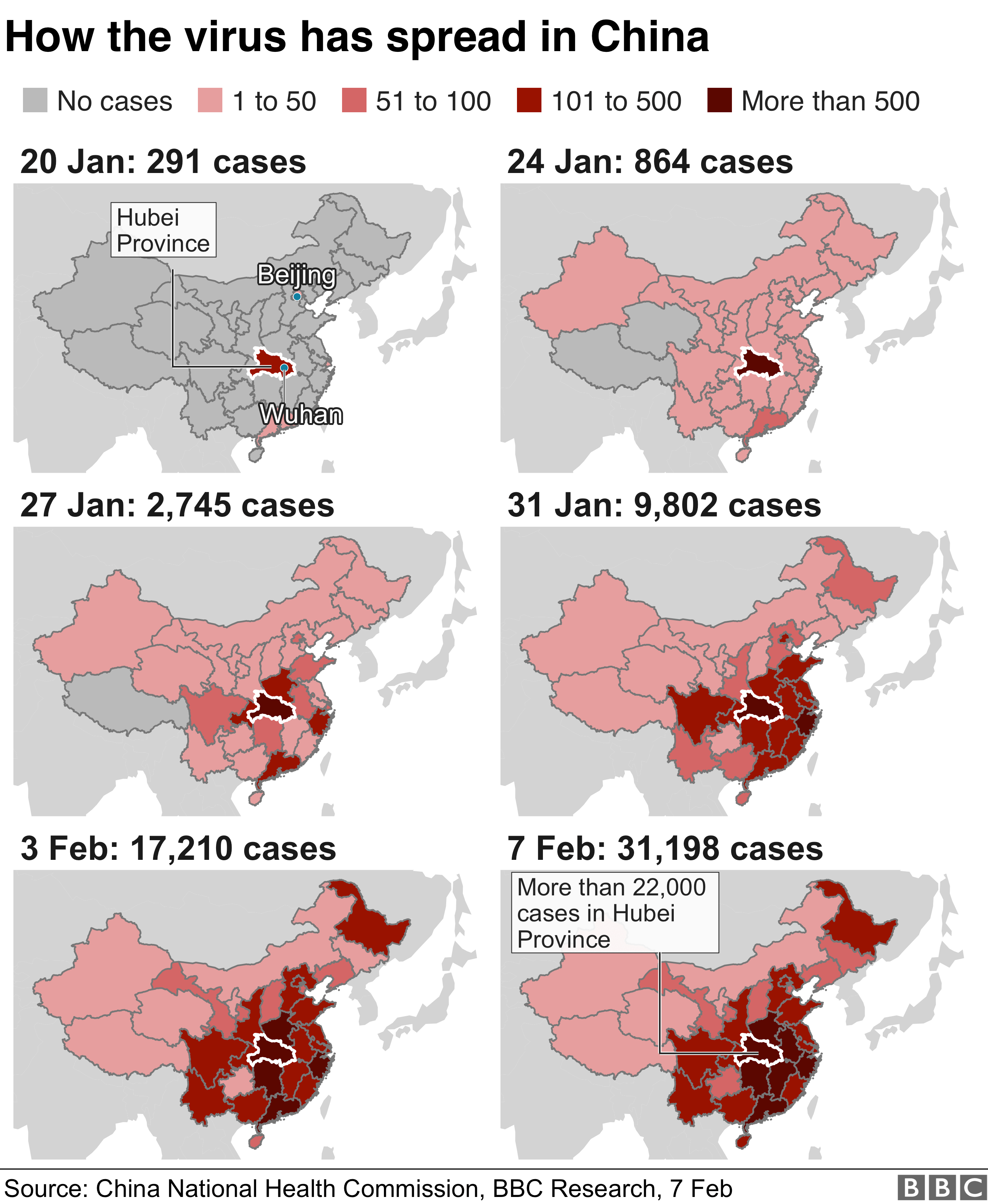
The death toll from the virus in China has topped 600, with more than 31,000 people infected. Widespread transport bans and strict public health measures have disrupted economic activity in much of the country, and factory closures are starting to ripple through global supply chains.
China faces dilemma as it tries to get back to work amid coronavirus outbreak fears
7 Feb 2020
A government economist said last week that China’s economic growth may drop to 5 per cent or even lower due to the outbreak, possibly pushing policymakers into introducing more stimulus measures.
Sources said Chinese policymakers were preparing measures, including more fiscal spending and interest rate cuts, amid expectations the outbreak would have a devastating impact on first-quarter growth.
In response to the virus, some survey respondents said they were shifting operations out of China and moving more production to other areas, including India.
“Not innovative, but our suppliers are moving operations to Taiwan. This has been considered before, options and planning were being made, but they are pulling the trigger now,” according to one respondent in the survey.
“Our company will directly source from Taiwan and eliminate the mainland China supply chain for more and more products.”
News of his death was met with an intense outpouring of grief on Chinese social media site Weibo – but this quickly turned into anger.
There had already been accusations against the government of downplaying the severity of the virus – and initially trying to keep it secret.
Dr Li’s death has fuelled this further and triggered a conversation about the lack of freedom of speech in China.
The country’s anti-corruption body has now said it will open an investigation into “issues involving Dr Li”.
The Chinese government has previously admitted “shortcomings and deficiencies” in its response to the virus, which has now killed 636 people and infected 31,161 in mainland China.
According to Chinese site Pear Video, Dr Li’s wife is due to give birth in June.
What has the public reaction been?
Chinese social media has been flooded with anger – it is hard to recall an event in recent years that has triggered as much grief, rage and mistrust against the government.
The top two trending hashtags on the website were “Wuhan government owes Dr Li Wenliang an apology” and “We want freedom of speech”.
Both hashtags were quickly censored. When the BBC searched Weibo on Friday, hundreds of thousands of comments had been wiped. Only a handful remain.
“This is not the death of a whistleblower. This is the death of a hero,” said one comment on Weibo.
A photo circulating on Twitter reportedly sourced from messaging platform WeChat also shows a message in Chinese saying “Farewell Li Wenliang” written in the snow on a riverbank.
Many have now taken to posting under the hashtag “Can you manage, do you understand?” – a reference to the letter Dr Li was told to sign when he was accused of disturbing “social order”.
These comments do not directly name him – but are telling of the mounting anger and distrust towards the government.
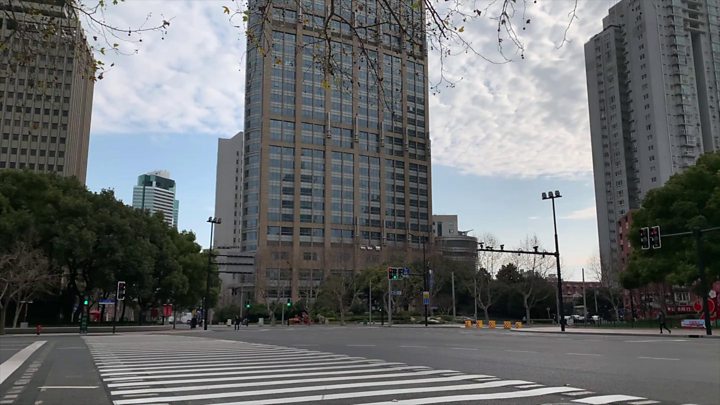
Media caption Coronavirus: Shanghai’s deserted streets and metro
“Do not forget how you feel now. Do not forget this anger. We must not let this happen again,” said one comment on Weibo.
“The truth will always be treated as a rumour. How long are you going to lie? What else do you have to hide?” another said.
“If you are angry with what you see, stand up,” one said. “To the young people of this generation, the power of change is with you.”
An epic political disaster
The death of Dr Li Wenliang has been a heart-breaking moment for this country. For the Chinese leadership it is an epic political disaster.
It lays bare the worst aspects of China’s command and control system of governance under Xi Jinping – and the Communist Party would have to be blind not to see it.
If your response to a dangerous health emergency is for the police to harass a doctor trying to blow the whistle, then your structure is obviously broken.
The city’s mayor – reaching for excuses – said he needed clearance to release critical information which all Chinese people were entitled to receive.
Now the spin doctors and censors will try to find a way to convince 1.4 billion people that Dr Li’s death is not a clear example of the limits to the party’s ability to manage an emergency – when openness can save lives, and restricting it can kill.
He was initially declared dead at 21:30 on Thursday (13:30GMT) by state media outlets the Global Times, People’s Daily and others.
Hours later the Global Times contradicted this report – saying he had been given a treatment known as ECMO, which keeps a person’s heart pumping.
Journalists and doctors at the scene said government officials had intervened – and official media outlets had been told to change their reports to say the doctor was still being treated.
But early on Friday, reports said doctors could not save Dr Li and his time of death was 02:58 on Friday.
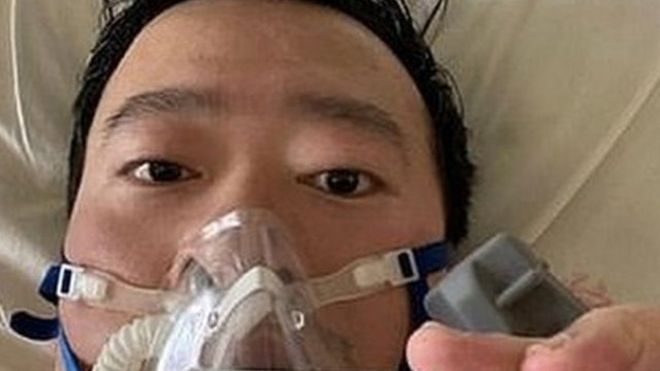
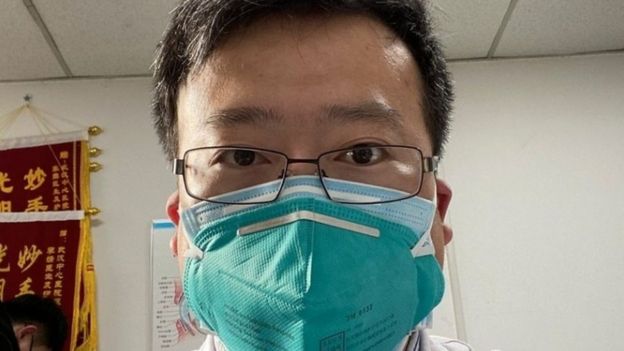
Image copyright LI WENLIANGImage caption Li Wenliang contracted the virus while working at Wuhan Central Hospital
What did Li Wenliang do?
Dr Li, an ophthalmologist, posted his story on Weibo from a hospital bed a month after sending out his initial warning.
He had noticed seven cases of a virus that he thought looked like Sars – the virus that led to a global epidemic in 2003.
On 30 December he sent a message to fellow doctors in a chat group warning them to wear protective clothing to avoid infection.
Four days later he was summoned to the Public Security Bureau where he was told to sign a letter.
In the letter he was accused of “making false comments” that had “severely disturbed the social order”. Local authorities later apologised to Dr Li.
In his Weibo post he describes how on 10 January he started coughing, the next day he had a fever and two days later he was in hospital. He was diagnosed with the coronavirus on 30 January.
Media caption The BBC’s online health editor on what we know about the virus
Singapore has raised its Disease Outbreak Response System Condition (Dorscon) level from yellow to orange. This means that the disease is deemed severe and spreads easily from person to person but has not spread widely and is being contained
Chinese President Xi Jinping has told his US counterpart Donald Trump that China is “fully confident and capable of defeating the epidemic”. The country has introduced more restrictive measures to try to control the outbreak:
The capital Beijing has banned group dining for events such as birthdays. Cities including Hangzhou and Nanchang are limiting how many family members can leave home each day
Hubei province has switched off lifts in high-rise buildings to discourage residents from going outside.
The virus has now spread to more than 25 countries. There have been more than 28,000 cases worldwide but only two of the deaths have been outside mainland China.
Tokyo (Reuters) – Japan on Saturday moved to contain the economic impact of a coronavirus outbreak originating in China as strict new measures aimed at limiting the spread of the virus, including targeting foreign visitors, came into effect.
Japan had 17 confirmed cases as of Friday, including some without symptoms. One of the most recent was a bus guide who worked on a bus tour for tourists from China – the same tour as a bus driver who also came down with the virus.
Prime Minister Shinzo Abe told a Saturday meeting of a government task force coordinating Japan’s response to the virus to come up with steps aimed at easing the impact of the outbreak on Japan’s economy.
Abe has made tourism a key part of his economic policy, with a large proportion of foreign visitors from China, and major Japanese companies have a number of factories in China.
“I ask ministers to compile measures to use reserves (in the state budget) and implement them as soon as possible,” Abe was quoted by Kyodo news agency as saying.
“The new coronavirus is having a major impact on tourism, the economy and our society as a whole. The government will do its utmost to address the impact.”
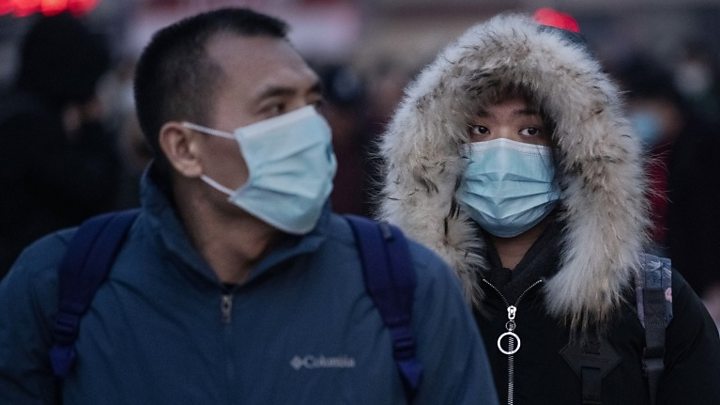
No further details were given, though Abe stressed ensuring that Japanese residents have access to medical checkups and masks, which have been selling out around the nation.
New measures to fight the disease took effect on Saturday, including banning the entry of Chinese holding passports issued by Hubei, where the disease is thought to have originated, as well as all foreigners who had visited the province within two weeks, whether they show symptoms or not.
The government also brought forward implementing measures including compulsory hospitalisation and the use of public funds for treatment by six days to Saturday.
Of the 2.6 million tourists who came to Japan in December 2019, nearly 600,000 were Chinese, outnumbered only by South Koreans, government data shows. Japan aims to have 40 million tourists visit the country in 2020, up from 31.8 million in 2019.
On Friday, the president of Japanese airline ANA Holdings (9202.T) said it was considering suspending flights to China after February reservations plunged, Jiji news agency reported.
JTB Corporation, Japan’s largest travel agency, said it was suspending tours to China throughout February, Kyodo news agency reported.
JIUJIANG, China (Reuters) – People are leaving and entering China’s Hubei province by foot over a bridge spanning the Yangtze river, despite a virtual lockdown on vehicle traffic due to a coronavirus epidemic that has killed more than 200 people.The Yangtze divides Jiujiang in Jiangxi province and Huanggang in neighbouring Hubei, one of the cities hardest hit by the coronavirus outbreak and now sealed off from the rest of China to try to contain it.
But the foot traffic over the Yangtze shows gaps in the lockdown, adding to doubts over its effectiveness and providing a glimpse of life inside the epicentre of what the World Health Organization (WHO) has called a global emergency.
Wu Minzhou, a 40-year-old business owner who was fishing near the bridge on the Jiangxi side, said he was worried about exceptions being made for people leaving Hubei.
“Because there’s an … incubation period at play here, if they head out, for example, to cities in the north of China, then it’s highly possible they will infect those areas too,” he said.
While vehicles are not allowed over the bridge, it is open to some pedestrians. Police explained that people were still entering Hubei and they could still get out, but only in “special circumstances”.
Those included people who were in Hubei but booked train tickets to leave from Jiujiang before the Lunar New Year.
“Everyone’s panicking right now, but I think things are not that bad,” migrant worker Guan, 45, told Reuters after crossing from Hubei.
A 40-year-old woman, who only gave her surname as Li, said she was heading back to her home in Huizhou, Guangdong province, with her son.
She had to show their train tickets at the checkpoint and get their temperatures taken on the Hubei side of the bridge before being allowed to make the long trek into Jiangxi.
Another man told Reuters that he had driven to the bridge from Jiujiang with his friend, who was going the other way home to Hubei, a province of about 60 million people.
“But once you get back you cannot come out again,” said the man, who gave his surname as Tian. “You have to stay there, stay at home. You can’t come out.”
The epidemic, believed to have originated in a seafood market in the Hubei provincial capital of Wuhan, prompted the WHO to declare a global emergency on Thursday, only the sixth time it has done so.
Trains and other public transportation have been suspended, roads have been sealed off and checkpoints established at tollgates around Wuhan. The special measures have been extended to other cities in Hubei province.
Though Jiujiang itself has not officially been locked down, its streets were mostly deserted and its tourist sites closed on what was officially the last day of China’s Lunar New Year celebrations on Thursday.
“This year … we are all just following what the government has asked us to do. That is, we’re at home almost all the time,” said local taxi driver Guo Dongbo, 59. “We don’t go out and nobody else is out on the streets either.”
In one of the residential areas of Jiujiang, a city of nearly five million people, a man carried a loudspeaker playing a recorded message ordering anyone who has been to Hubei recently to go and register with the local residents’ committee.
By Friday, the city had 42 confirmed cases of infection.
Elsewhere, shops were mostly shuttered, and the few restaurants that remained open were nearly empty.
“Normally at this time of year a lot of people come here. Now there’s nobody,” said a vegetarian restaurant owner near the Donglin Buddhist temple in Jiujiang.









 CHINDIA ALERT: You'll be living in their world, very soon