Chindia Alert: You’ll be Living in their World Very Soon
aims to alert you to the threats and opportunities that China and India present. China and India require serious attention; case of ‘hidden dragon and crouching tiger’.
Without this attention, governments, businesses and, indeed, individuals may find themselves at a great disadvantage sooner rather than later.
The POSTs (front webpages) are mainly 'cuttings' from reliable sources, updated continuously.
The PAGEs (see Tabs, above) attempt to make the information more meaningful by putting some structure to the information we have researched and assembled since 2006.
BANGKOK (Reuters) – Thailand will temporarily suspend issuing visas on arrival to visitors from 19 countries and territories, including China, to contain the spread of the coronavirus, its interior minister said on Wednesday.
The suspensions were the latest measures imposed in the tourism-reliant Southeast Asian country, which has reported 59 cases of the virus and one death so far. Globally, over 113,000 people have been infected in over 100 countries.
“People from any country who want to come will need to apply for a visa with our embassies,” Minister of Interior Anupong Paochinda told reporters.
“Thai embassies everywhere will ensure that no sick people will travel to Thailand.”
Visa on Arrival (VoA) will be suspended for nationals of all 19 countries and territories previously eligible, including Bulgaria, Bhutan, China, Cyprus, Ethiopia, Fiji, Georgia, India, Kazakhstan, Malta, Mexico, Nauru, Papua New Guinea, Romania, Russia, Saudi Arabia, Taiwan, Uzbekistan, and Vanuatu, according to a list provided to reporters by the Ministry of Foreign Affairs.
However, Russian passport holders will not be affected by the suspension of the visa on arrival from Russia, as they can still travel to Thailand and stay for 30 days under a visa waiver agreement, an official at the ministry told Reuters.
Visa exemptions will be cancelled for South Korea, Italy and Hong Kong, Anupong said.
“These measures will solve the problem of foreigners arriving from risky zones,” he said.
Anupong said he would start the process immediately but it was not immediately clear when they will be effective.
Chatree Atchananant, director-general of the foreign ministry’s Consular Affairs Department, said visa applicants will need to present medical certificates and insurance as part of the screening at Thai embassies.
Last week, Thailand designated South Korea, China, Macao, Hong Kong, Italy and Iran as “dangerous communicable disease areas.”
Thai authorities urged people arriving from the six places to self-quarantine for 14 days.
BEIJING (Reuters) – Shanghai increased airport screening on Saturday as imported coronavirus infections from countries such as Italy and Iran emerge as the biggest source of new cases in China outside Hubei, the province where the outbreak originated.
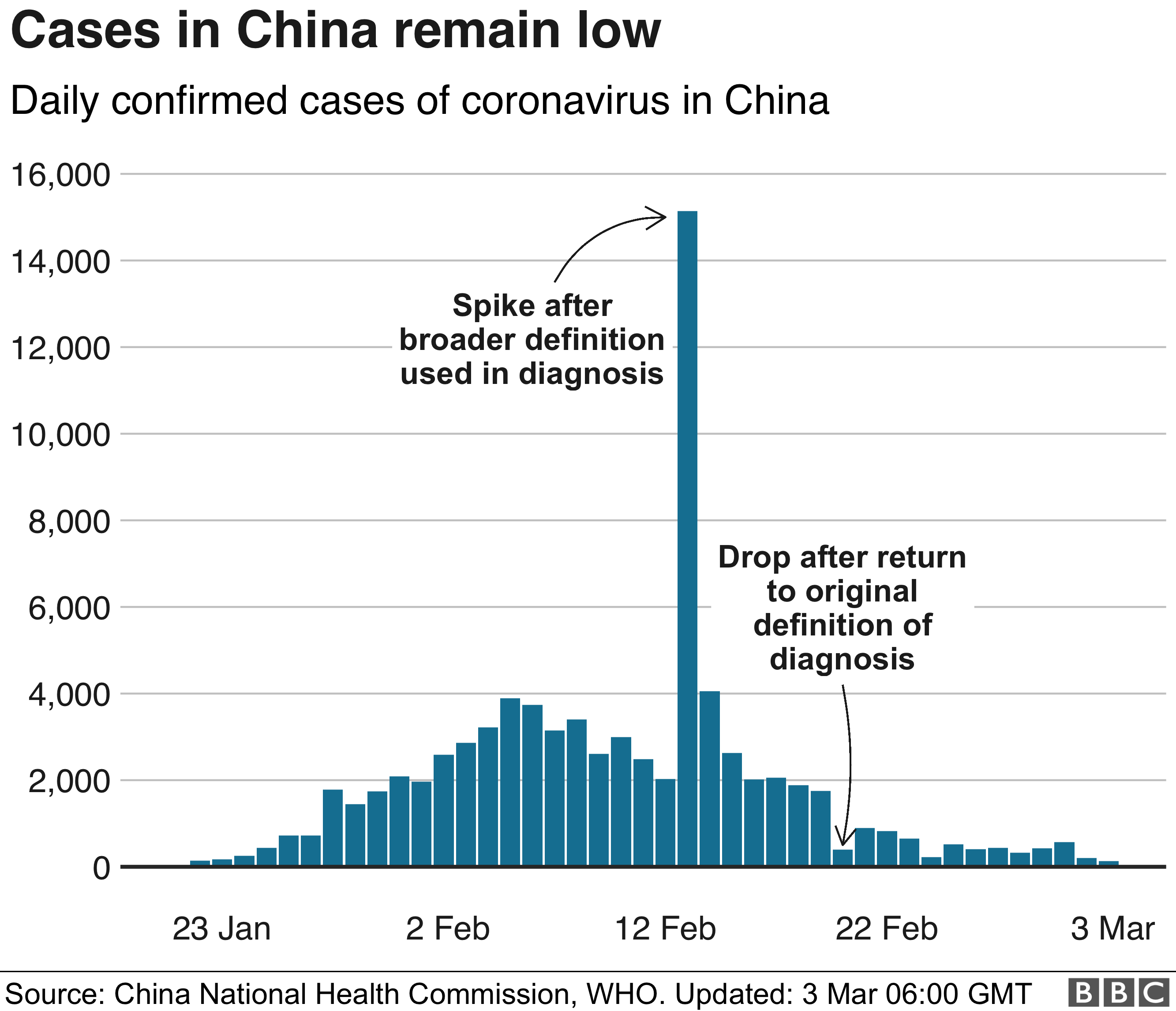
Mainland China had 99 new confirmed cases on Friday, according to official data. Of the 25 that were outside Hubei, 24 came from outside China.
Shanghai, which had three new cases that originated from abroad on Friday, said it would step up control measures at the border, which had become “the main battlefield”.
At a news conference, Shanghai Customs officials said they city would check all passengers from seriously affected countries for the virus, among other airport measures.
Shanghai already requires passengers flying in from such countries, regardless of nationality, to be quarantined for 14 days. They will now be escorted home in vehicles provided by the government.
Tighter screening has greatly lengthened waiting times at Shanghai’s Pudong International Airport – some passengers say they have had to wait as long as seven hours.
The Shanghai government vowed on Saturday to severely punish passengers who concealed infections.
Beijing police said on Saturday they would work with other departments to prevent imported infections. They said some members of a Chinese family flying in from Italy on March 4 had failed to fill in health declarations accurately, and later tested positive for the virus.
MIGRANT WORKERS
In addition to the growing risk of imported infections, China faces a challenge in trying to get migrant workers back to work by early April.
So far, 78 million migrant workers, or 60% of those who left for the Lunar New Year holiday in January, have returned to work.
Yang Wenzhuang of the National Health Commission (NHC) said that the “risk of contagion from increased population flows and gathering is increasing … We must not relax or lower the bar for virus control”.
But new cases in mainland China continued to decline, with just 99 new cases on Friday, the lowest number the NHC started publishing nationwide figures on Jan. 20, against 143 on Thursday.
Most of these cases, which include infections of Chinese nationals who caught the virus abroad, were in the northwesterly Gansu province, among quarantined passengers who flew into the provincial capital Lanzhou from Iran between March 2 and 5.
For the second day in a row, there were no new infections in Hubei outside the provincial capital Wuhan, where new cases fell to the lowest level since Jan. 25.
The total number of confirmed cases in mainland China so far is 80,651, with 3,070 deaths, up by 28 from Thursday.
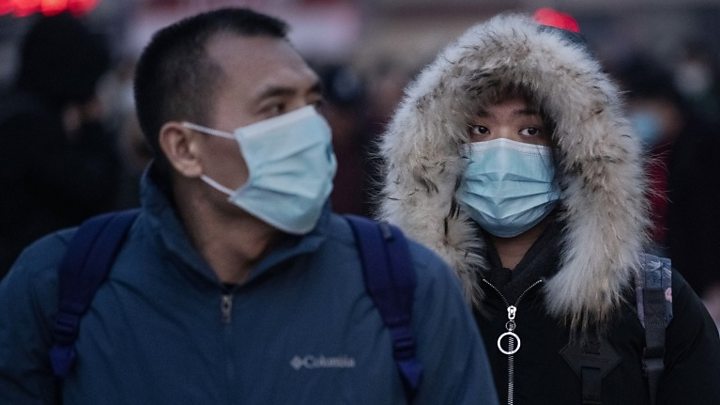
Image copyright GETTY IMAGESImage caption Authorities are also asking overseas Chinese to reconsider travel plans
Travellers from countries with severe coronavirus outbreaks who arrive in some parts of China will have to undergo a 14-day quarantine, state media say.
Travellers from the virus hotspots of South Korea, Japan, Iran and Italy arriving in the capital will have to be isolated, a Beijing official has said.
Shanghai and Guangdong announced similar restrictions earlier.
Authorities are worried the virus might be imported back into the country.
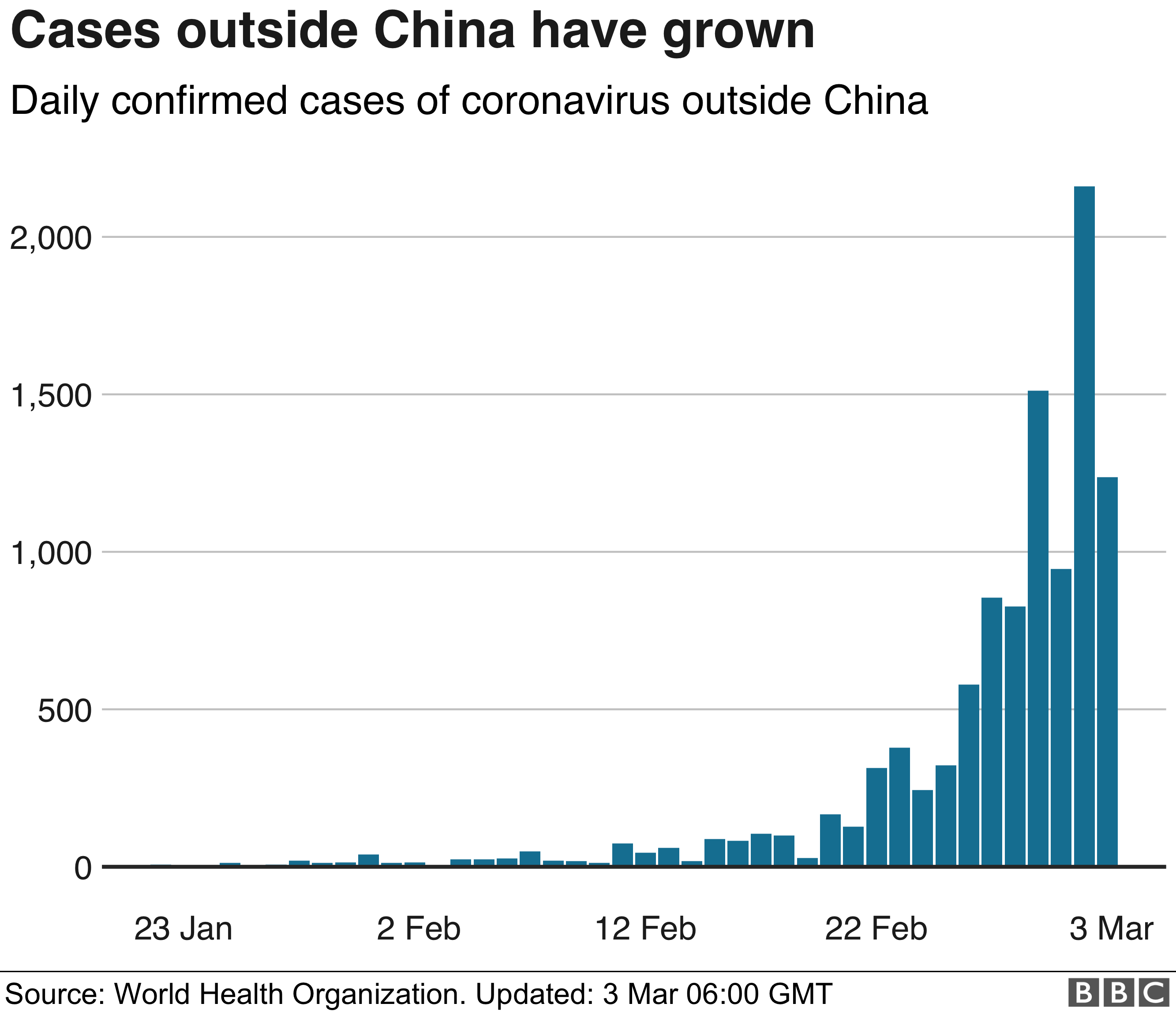
Although most virus deaths have been in China, Monday saw nine times more new infections outside China than in.
Shanghai said it would require new arrivals from countries with “relatively serious virus conditions” to be isolated, without naming the countries.
Authorities are also asking overseas Chinese to reconsider travel plans.
“For the sake of your family’s health and safety, please strengthen your precautions, carefully decide on your travel plans and minimise mobility,” officials in one southern Chinese province said.
China reported 125 new virus cases on Tuesday – the lowest number of new daily infections in six weeks. There were also 31 more deaths – all in Hubei province, where the virus emerged.
In other developments:
Finance ministers from the G7 countries have said they are “ready to take action”, including fiscal measures to aid the response to the virus and support the global economy
The Pope, who had cancelled a Lent retreat for the first time in his papacy because he was suffering from a cold, has tested negative for the virus, Italian media report
South Korean President Moon Jae-in has put the country into a “state of war” and ordered all government departments to shift to a 24-hour emergency system
Jailed British-Iranian woman Nazanin Zaghari-Ratcliffe is in good health, Iran’s judiciary has said. She was assessed after her husband said she was showing symptoms of Covid-19
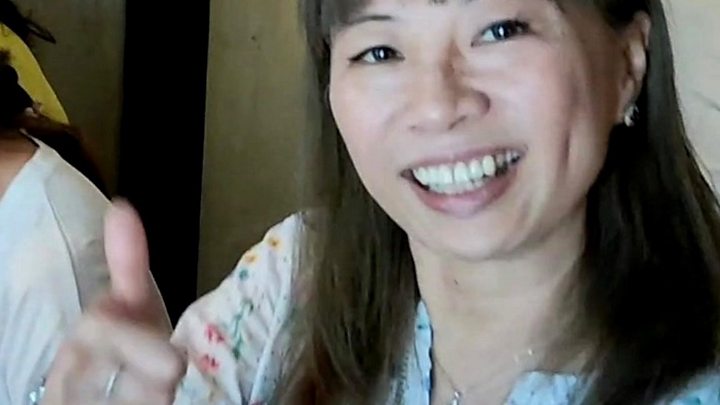
Media caption Julie, who lives in Singapore, was diagnosed with coronavirus and then put into isolation
How are different countries affected?
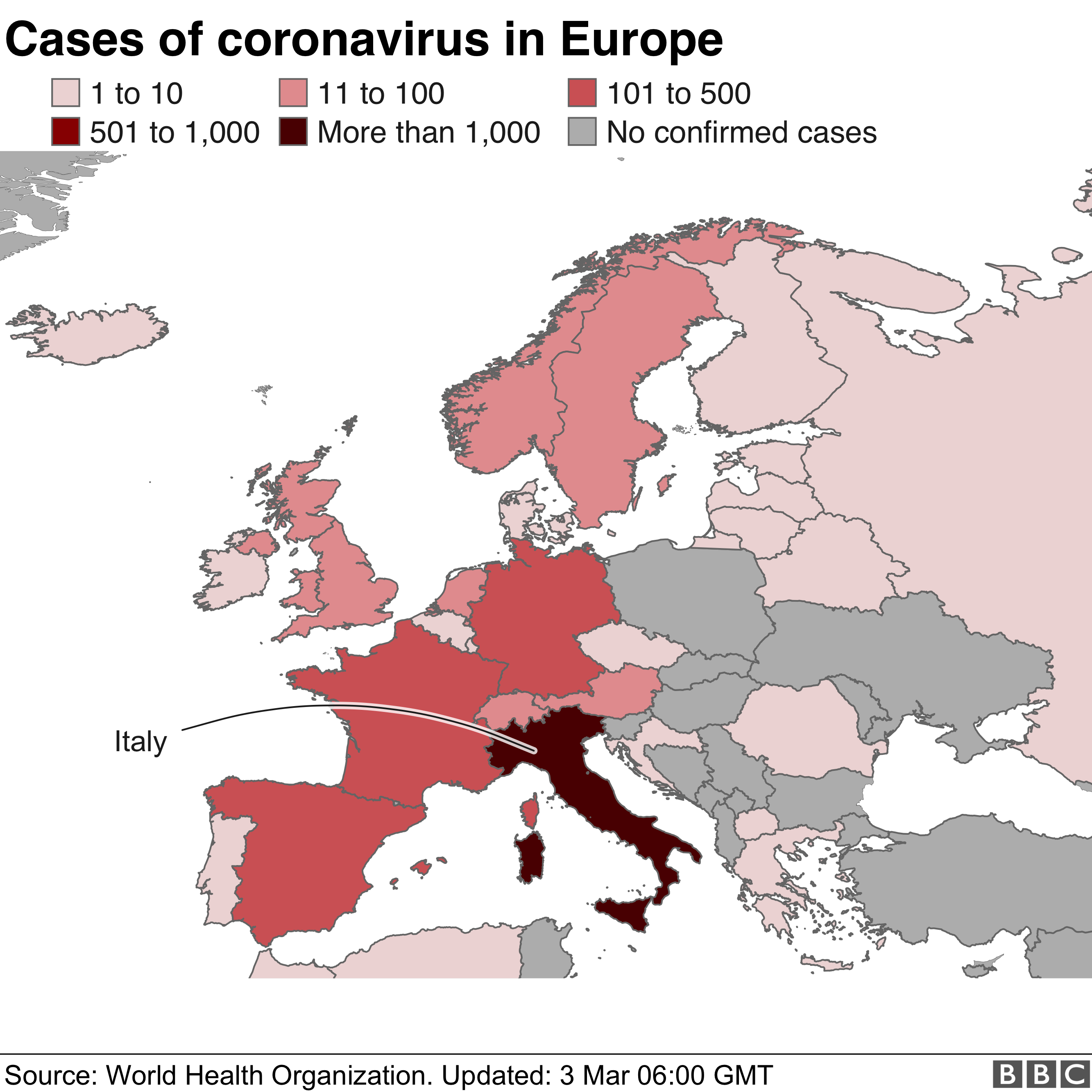
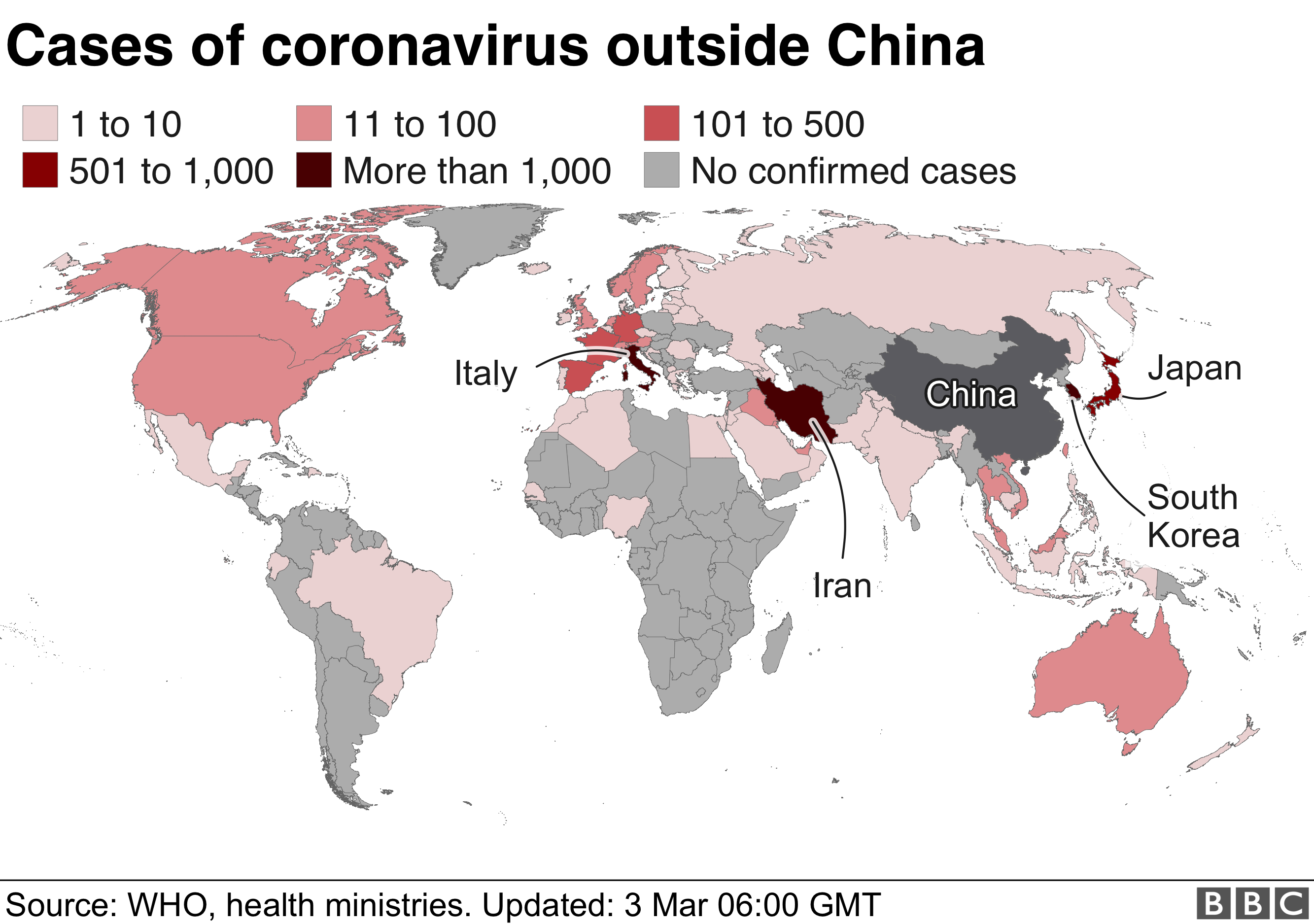
There are now almost 90,000 cases worldwide in about 70 countries, although the vast majority – just under 90% – remain in China, and most of those are in Hubei province where the virus originated late last year.
Of the nearly 8,800 cases outside China, 81% are in four countries – Iran, South Korea, Italy and Japan.
One of the countries worst affected outside China – Italy – said on Monday that the death toll there had risen by 18 to 52. There are 1,835 confirmed cases, most of them in the Lombardy and Veneto areas of the north. Nearly 150 people are said to have recovered.
However, the country is seeing a slowdown in new cases. On Monday, the authorities said there were 258 new cases of the virus – a 16% increase on the previous day – after new cases spiked by 50% on Sunday.
On Tuesday, Iran said the latest death toll from the virus was 77 – although the real figure is believed to be much higher. More than 2,300 people are said to be infected, including senior political figures. The head of Iran’s emergency medical services, Pirhossein Kolivand, was one of them, the Ilna news agency reported on Tuesday.
Some 23 MPs are also reported to have tested positive for the virus, and an official close to the Supreme Leader, Ayatollah Ali Khamenei, was reported on Monday to have died of the disease.
Health officials in the US state of Washington said on Monday that four more people had died, bringing the total there to six. They are the only deaths in the US so far. Local officials say they are buying a hotel to convert it into an isolation hospital.
On Tuesday, Ukraine confirmed its first case of coronavirus, while Portugal, Iceland, Jordan, Tunisia, Armenia, Latvia, Senegal, Morocco and Andorra confirmed their first cases on Monday.
How deadly is Covid-19?
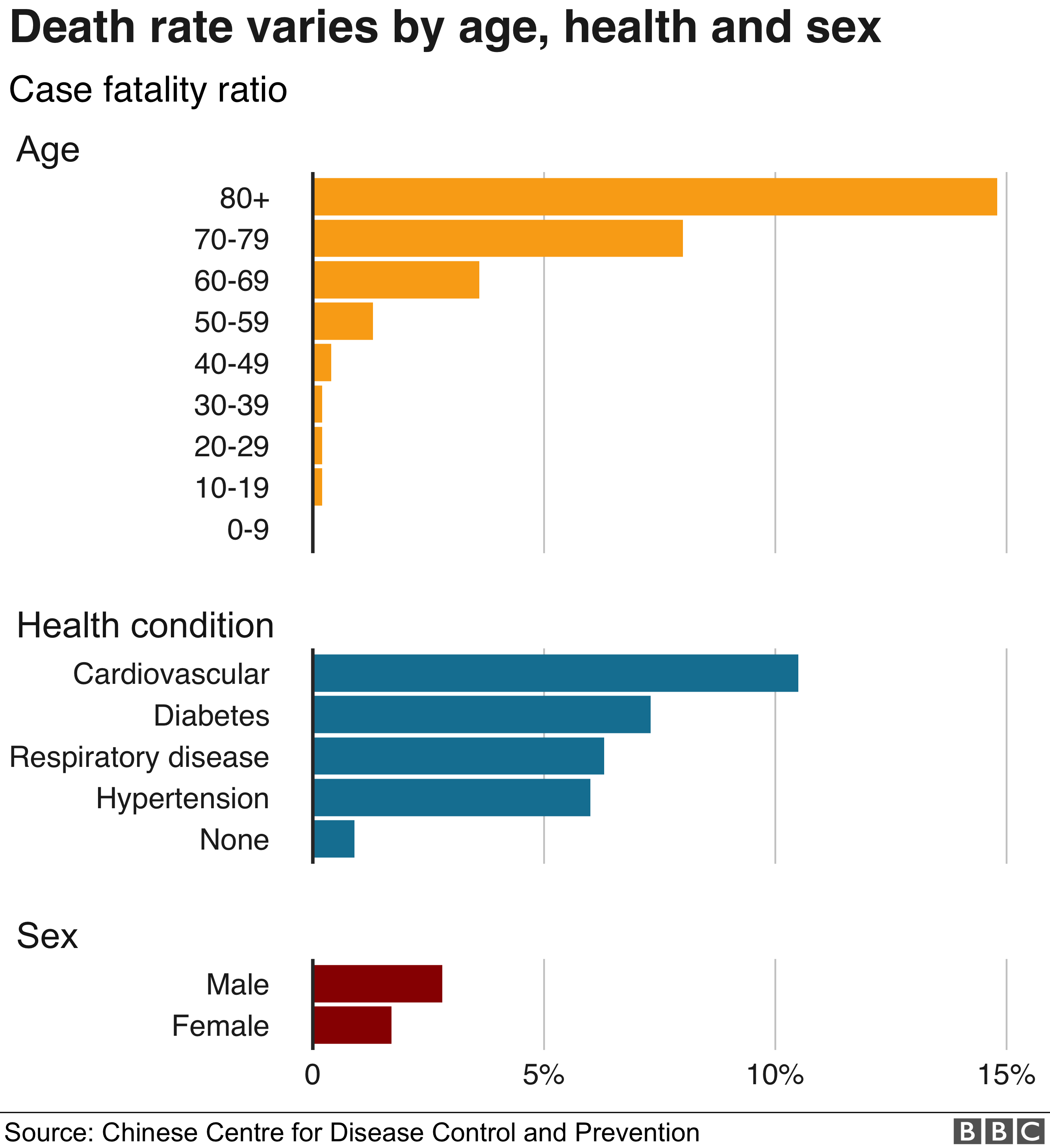
The WHO says the virus appears to particularly affect those over 60, and people already ill.
In the first large analysis of more than 44,000 cases from China, the death rate was 10 times higher in the very elderly compared to the middle-aged.
Most patients have only mild symptoms and the death rate appears to be between 2% and 5%, the WHO said.
By comparison, seasonal flu has an average mortality rate of about 0.1%, but is highly infectious – with up to 400,000 people dying from it each year.
Other strains of coronavirus, such as Severe Acute Respiratory Syndrome (Sars) and Middle East Respiratory Syndrome (Mers), have much higher death rates than Covid-19.
Chinese State Councilor and Foreign Minister Wang Yi meets with Vietnamese Deputy Prime Minister and Minister for Foreign Affairs Pham Binh Minh in Vientiane, Laos, Feb. 19, 2020. (Photo by Kaikeo Saiyasane/Xinhua)
VIENTIANE, Feb. 19 (Xinhua) — Chinese State Councilor and Foreign Minister Wang Yi met here Wednesday with Vietnamese Deputy Prime Minister and Minister for Foreign Affairs Pham Binh Minh, with both sides pledging to further promote bilateral ties and jointly advance Lancang-Mekong cooperation.
Wang is in Vientiane, capital of Laos, for the Special ASEAN-China Foreign Ministers’ Meeting on Coronavirus Disease and the fifth Lancang-Mekong Cooperation Foreign Ministers’ Meeting.
During the meeting with Pham Binh Minh, Wang said that under the strong leadership of the Communist Party of China Central Committee with Xi Jinping at the core, the whole party and the whole country are rallying together to counter the COVID-19 epidemic.
Thanks to the arduous efforts, China’s measures to prevent and control the epidemic have been achieving visible progress, he noted.
It is necessary for China and the Association of Southeast Asian Nations (ASEAN), linked by mountains, rivers and waters and sharing weal and woe, to timely share information and work together to tackle the epidemic so as to safeguard people’s health of China and ASEAN countries, Wang said.
Vietnam, as the ASEAN chair, has made active response to China’s proposal to hold the Special ASEAN-China Foreign Ministers’ Meeting on Coronavirus Disease, Wang said, noting that it testifies to the fine tradition of their shared spirit of “good neighbor, good friend, good comrade and good partner” as well as supporting and helping each other, he said.
Wang expressed belief that the Special ASEAN-China Foreign Ministers’ Meeting on Coronavirus Disease to be held Thursday will achieve success, thus sending out an explicit message that China and ASEAN countries will overcome difficulties with concerted efforts.
This year marks the 70th anniversary of the establishment of the diplomatic relations between China and Vietnam, Wang said, noting that the China-Vietnam comprehensive strategic cooperative partnership has entered into a critical phase of inheriting the past and ushering in the future.
He called on the two sides to carry forward the friendly cause initiated by past generations of leaders of both sides, implement the important consensus reached by leaders of the two countries, maintain high-level strategic communication and advance exchanges and cooperation across the board and at sub-national levels.
He also said that the two countries should properly manage and control differences, steadily promote practical cooperation in various fields and well uphold the common strategic interests of the two socialist countries.
China attaches great importance to the Lancang-Mekong cooperation, Wang said, adding that China stands ready to work together with the Vietnamese side to actively develop greater synergy between the Lancang-Mekong cooperation and the construction of the “new land-sea corridor” so as to give a boost to the economic development of the Mekong River areas.
Pham Binh Minh, for his part, said Vietnam speaks highly of the efforts China has made in the fight against the COVID-19 epidemic, believing that the Chinese government and the Chinese people will tide over the difficulties and win the fight.
Minh told Wang that those in Vietnam affected by the virus have almost recovered.
He said his country is willing to work together with China to ensure that the Special ASEAN-China Foreign Ministers’ Meeting on Coronavirus Disease will be held successfully here on Thursday.
Noting that the development of bilateral relations has maintained good momentum for the time being, Minh hoped that the two sides will boost strategic coordination, jointly hold activities to celebrate the 70th anniversary of the establishment of the diplomatic ties between the two countries and promote the cooperation in all fields so as to make greater achievements.
He said Vietnam is willing to strengthen mutual political trust with China, properly handle maritime issues and encourage the cooperation between localities of the two countries, especially in the border areas.
Minh also said his country is willing to strengthen coordination and cooperation with China within the framework of multilateralism.
Vietnam applauds the achievements made in Lancang-Mekong cooperation and is ready to join hands with China to advance the mechanism, he added.
News of his death was met with an intense outpouring of grief on Chinese social media site Weibo – but this quickly turned into anger.
There had already been accusations against the government of downplaying the severity of the virus – and initially trying to keep it secret.
Dr Li’s death has fuelled this further and triggered a conversation about the lack of freedom of speech in China.
The country’s anti-corruption body has now said it will open an investigation into “issues involving Dr Li”.
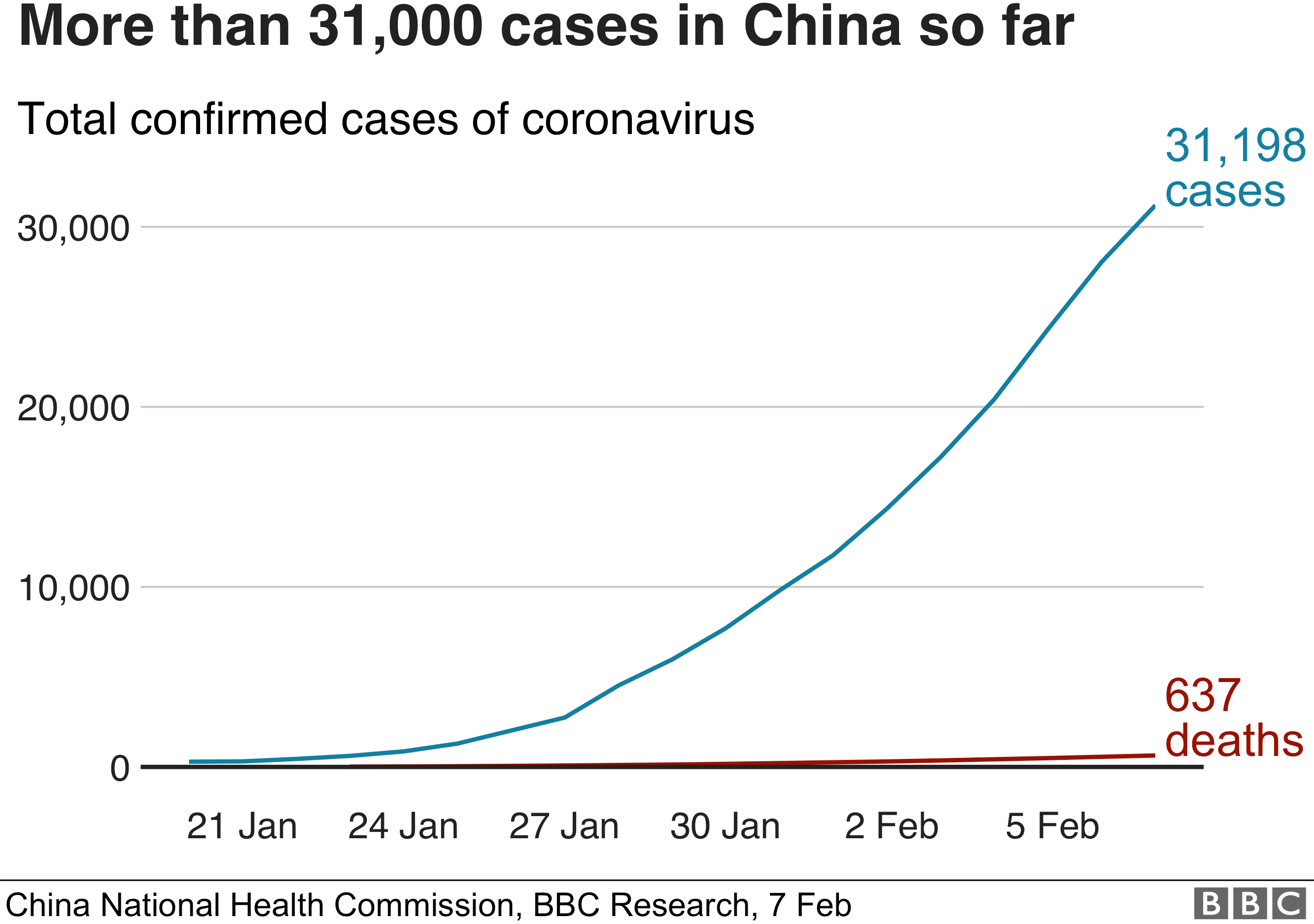
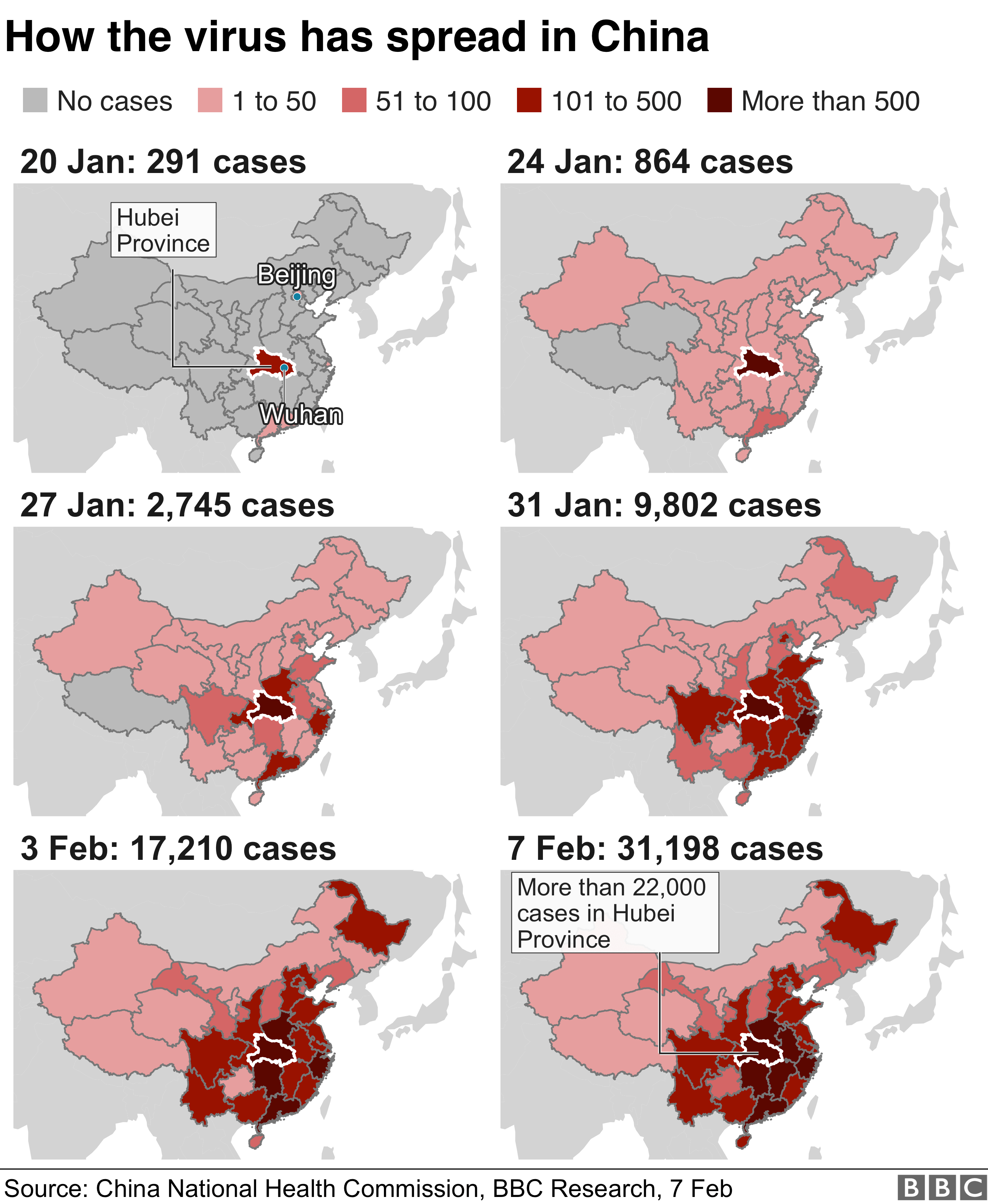
The Chinese government has previously admitted “shortcomings and deficiencies” in its response to the virus, which has now killed 636 people and infected 31,161 in mainland China.
According to Chinese site Pear Video, Dr Li’s wife is due to give birth in June.
What has the public reaction been?
Chinese social media has been flooded with anger – it is hard to recall an event in recent years that has triggered as much grief, rage and mistrust against the government.
The top two trending hashtags on the website were “Wuhan government owes Dr Li Wenliang an apology” and “We want freedom of speech”.
Both hashtags were quickly censored. When the BBC searched Weibo on Friday, hundreds of thousands of comments had been wiped. Only a handful remain.
“This is not the death of a whistleblower. This is the death of a hero,” said one comment on Weibo.
A photo circulating on Twitter reportedly sourced from messaging platform WeChat also shows a message in Chinese saying “Farewell Li Wenliang” written in the snow on a riverbank.
Many have now taken to posting under the hashtag “Can you manage, do you understand?” – a reference to the letter Dr Li was told to sign when he was accused of disturbing “social order”.
These comments do not directly name him – but are telling of the mounting anger and distrust towards the government.
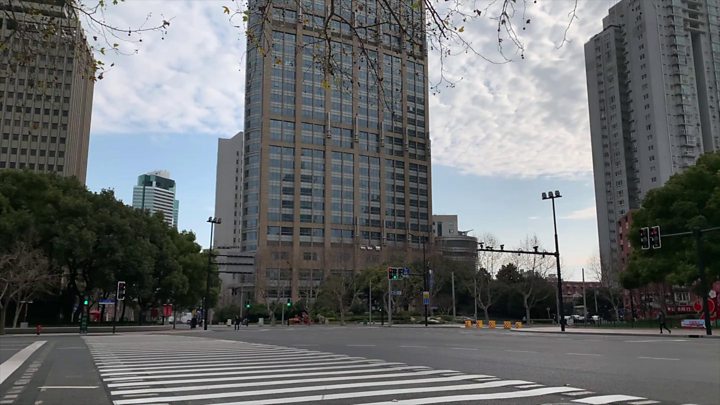
Media caption Coronavirus: Shanghai’s deserted streets and metro
“Do not forget how you feel now. Do not forget this anger. We must not let this happen again,” said one comment on Weibo.
“The truth will always be treated as a rumour. How long are you going to lie? What else do you have to hide?” another said.
“If you are angry with what you see, stand up,” one said. “To the young people of this generation, the power of change is with you.”
An epic political disaster
The death of Dr Li Wenliang has been a heart-breaking moment for this country. For the Chinese leadership it is an epic political disaster.
It lays bare the worst aspects of China’s command and control system of governance under Xi Jinping – and the Communist Party would have to be blind not to see it.
If your response to a dangerous health emergency is for the police to harass a doctor trying to blow the whistle, then your structure is obviously broken.
The city’s mayor – reaching for excuses – said he needed clearance to release critical information which all Chinese people were entitled to receive.
Now the spin doctors and censors will try to find a way to convince 1.4 billion people that Dr Li’s death is not a clear example of the limits to the party’s ability to manage an emergency – when openness can save lives, and restricting it can kill.
He was initially declared dead at 21:30 on Thursday (13:30GMT) by state media outlets the Global Times, People’s Daily and others.
Hours later the Global Times contradicted this report – saying he had been given a treatment known as ECMO, which keeps a person’s heart pumping.
Journalists and doctors at the scene said government officials had intervened – and official media outlets had been told to change their reports to say the doctor was still being treated.
But early on Friday, reports said doctors could not save Dr Li and his time of death was 02:58 on Friday.
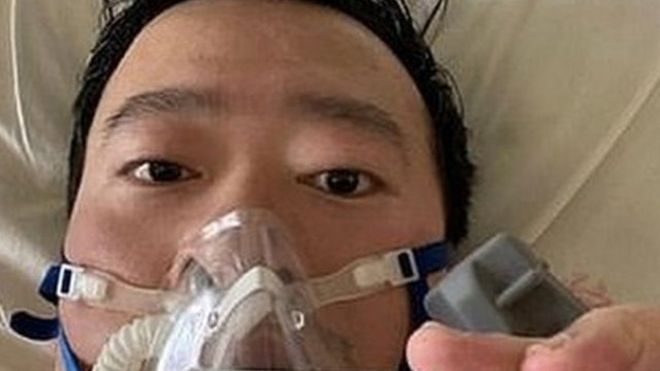
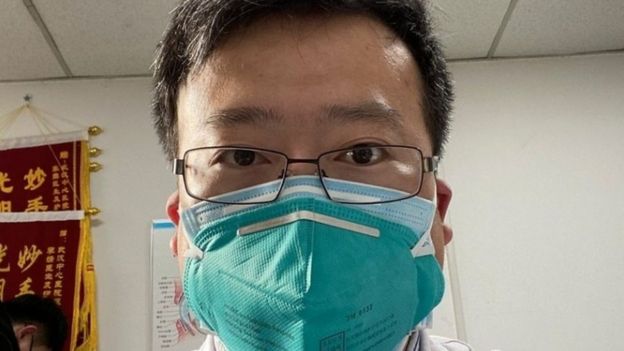
Image copyright LI WENLIANGImage caption Li Wenliang contracted the virus while working at Wuhan Central Hospital
What did Li Wenliang do?
Dr Li, an ophthalmologist, posted his story on Weibo from a hospital bed a month after sending out his initial warning.
He had noticed seven cases of a virus that he thought looked like Sars – the virus that led to a global epidemic in 2003.
On 30 December he sent a message to fellow doctors in a chat group warning them to wear protective clothing to avoid infection.
Four days later he was summoned to the Public Security Bureau where he was told to sign a letter.
In the letter he was accused of “making false comments” that had “severely disturbed the social order”. Local authorities later apologised to Dr Li.
In his Weibo post he describes how on 10 January he started coughing, the next day he had a fever and two days later he was in hospital. He was diagnosed with the coronavirus on 30 January.
Media caption The BBC’s online health editor on what we know about the virus
Singapore has raised its Disease Outbreak Response System Condition (Dorscon) level from yellow to orange. This means that the disease is deemed severe and spreads easily from person to person but has not spread widely and is being contained
Chinese President Xi Jinping has told his US counterpart Donald Trump that China is “fully confident and capable of defeating the epidemic”. The country has introduced more restrictive measures to try to control the outbreak:
The capital Beijing has banned group dining for events such as birthdays. Cities including Hangzhou and Nanchang are limiting how many family members can leave home each day
Hubei province has switched off lifts in high-rise buildings to discourage residents from going outside.
The virus has now spread to more than 25 countries. There have been more than 28,000 cases worldwide but only two of the deaths have been outside mainland China.
The decision, which follows a similar move by the US this week, came as the death toll from the outbreak soared to 259
Health officials on Friday confirmed the first cases in the UK after two people tested positive for the virus
A coach carrying British nationals evacuated from Wuhan arrives at the Arrowe Park Hospital in Wirral, near Liverpool in northwest England. Photo: AFP
Britain on Saturday said it was temporarily withdrawing some staff and their families from its diplomatic sites in China, as Beijing struggles to contain the nationwide new
The decision, which follows a similar move by the United States this week, came as the death toll from the outbreak soared to 259 and the total number of cases neared 12,000 within China.
The Sars-like virus has also begun to spread around the world, with more than 100 infections reported in more than 20 countries.
“We are committed to ensuring the safety and well-being of our staff and their families,” a spokesman for the British Foreign Office said.
“We are therefore temporarily withdrawing some UK staff, and their dependents from our embassy and consulates in China.”
He added that Britain’s ambassador in Beijing and staff needed to continue critical work will remain, and that British nationals in China would still have access to constant consular assistance.
The US, which on Friday temporarily banned the entry of foreign nationals, who had travelled to China over the past two weeks, has also made similar changes.
Two people in UK test positive for coronavirus
31 Jan 2020
On Wednesday, it authorised the departure of non-emergency government employees and their family members from its offices in Beijing, Chengdu, Guangzhou, Shanghai, and Shenyang.
And on Friday, it ordered all relatives of staff members under the age of 21 to leave China immediately.
A spokesman for the US Embassy in Beijing said it made the decision “out of an abundance of caution related to logistical disruptions stemming from restricted transportation and overwhelmed hospitals related to the novel coronavirus”.
Coronavirus outbreak: global businesses shut down operations in China
British health officials on Friday confirmed the first cases in the UK, after two members of the same family tested positive for the virus.
One of the two individuals is a student at the University of York, a university spokesman said on Saturday.
Also on Friday, 83 British citizens returned on a UK government-chartered flight from Wuhan, the Chinese city at the centre of the epidemic.
They were immediately taken to a hospital in northwest England for a two-week quarantine.
This is the third instalment in a four-part series examining the brewing US-China tech war over the development and deployment of artificial intelligence tech
The US is home to five of the world’s top 10 universities in the AI field, which includes computer vision and machine learning, while China has three
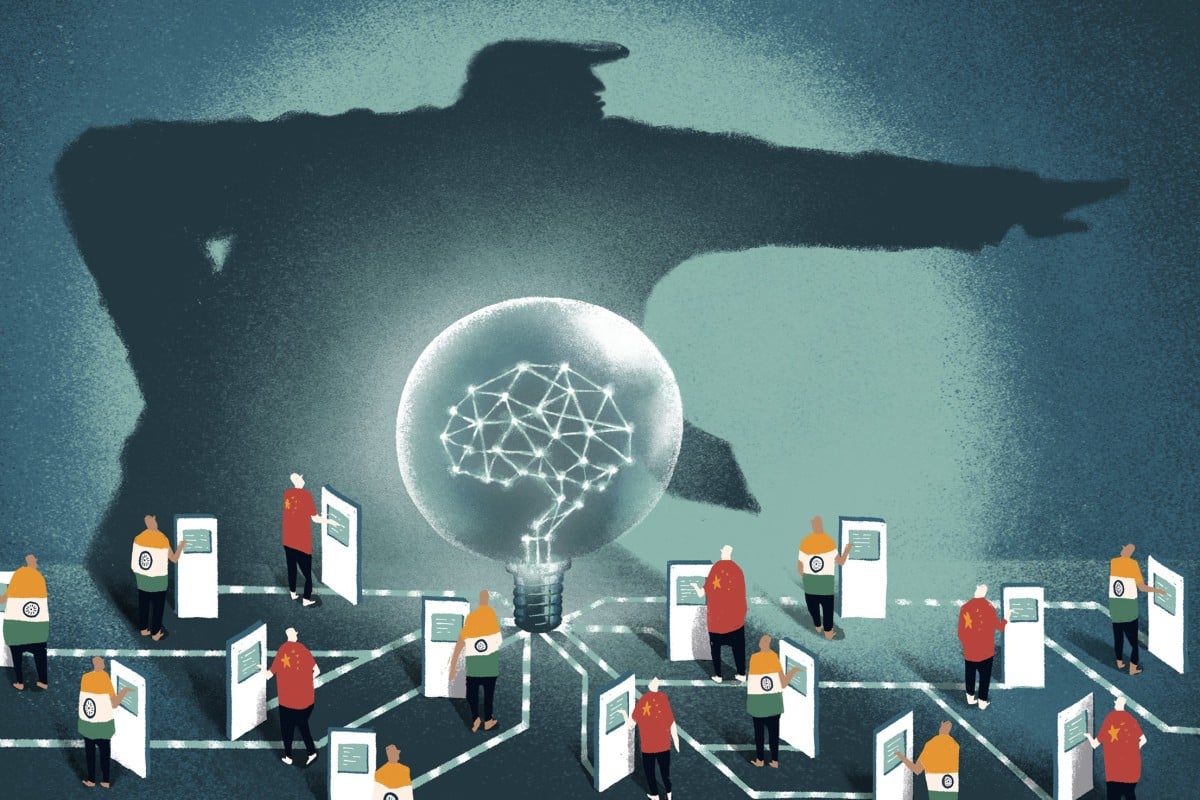
For those Chinese with long-term plans to stay in the US, a major obstacle lies in getting work visas, especially in the current trade war environment. Illustration: Perry Tse
After working in the United States for more than a decade, Zheng Yefeng felt he had hit a glass ceiling. He also saw that the gap in artificial intelligence between China and the US was narrowing.
Last year Zheng, who worked as a researcher at Siemens Healthcare in New Jersey, made a decision that addressed both problems. He accepted an offer to head up the medical research and development team at Tencent’s YouTu artificial intelligence lab in Shenzhen, known as China’s Silicon Valley.
“There was almost no room for promotion if I stayed in the US,” he said, expressing a common dilemma faced by experienced Chinese tech workers in America.
With the US-China trade war leading to tighter scrutiny of Chinese nationals working in the US tech industry, people like Zheng are moving back to China to work in the burgeoning AI sector, especially after Beijing designated AI a national priority. The technology’s varied applications have attracted billions of dollars of venture capital investment, created highly valued start-ups like SenseTime and ByteDance, and sparked a talent war among companies.
That has created an odd symbiotic relationship between the two countries vying for AI supremacy. The US, with its superior higher education system, is the training ground for Chinese AI scientists like Zheng, who obtained a PhD from the University of Maryland after earning bachelor’s and master’s degrees at China’s premier Tsinghua University.
“Many professors in China have great academic ability, but in terms of the number [of top professors], the US is ahead,” said Luo Guojie, who himself accepted an offer from Peking University to become an assistant professor after studying computer science in the US.
Among international students majoring in computer science and maths in US universities, Chinese nationals were the third largest group behind Indians and Nepalese in the 2018-2019 academic year, representing 19.9 per cent, according to the Institute of International Education.
[To build] the best universities is not easy. The university is a free speech space, whereas in China, this is not the case Gunther Marten, a senior official with the European Union delegation to China
The South China Morning Post spoke with several Chinese AI engineers who decided to stay and work in the US after their studies. They only agreed to give their surnames because of the sensitivity of the issues being discussed.
A 25-year-old Beijinger surnamed Lin graduated from one of China’s best engineering schools in the capital before heading to a US university for a master’s degree in computer science in 2017. Like some of his peers, he found the teaching methods in China to be outdated.
“It’s hard to imagine that a final exam of a coding course still asked you to hand write code, instead of running and testing it on a computer,” said Lin, who now works as a software engineer for Google in Silicon Valley.
“Although we still had to take writing tests [in the US], we had many practical opportunities in the lab and could do our own projects,” he added.
A Facebook software engineer surnamed Zhuang had a similar experience at his university in Shanghai.
“Many engineering students [in China] still get old-school textbooks and insufficient laboratory training,” he said. “Engineering practices for AI have been through a fast iteration over the past few decades, which means many Chinese students are not exposed to the most updated knowledge in the field, at least not in the classroom.”
Zhuang also noted out that many classes in China are taught in Chinese, meaning engineering graduates are not fluent in English, the preferred language of the global AI research community.
The US is home to five of the world’s top 10 universities in the AI field, which includes computer vision and machine learning, while China has three. Carnegie Mellon University (CMU) in Pennsylvania ranks No 1 while China’s Tsinghua University is No 2, according to CSrankings, which bases the list on papers published since 2009.
US tech chief: China is threatening US’ lead in global AI race
With its top institutions and an open culture that encourages freedom of speech, including unfettered internet access, the US has become a magnet for the brightest AI students the world over.
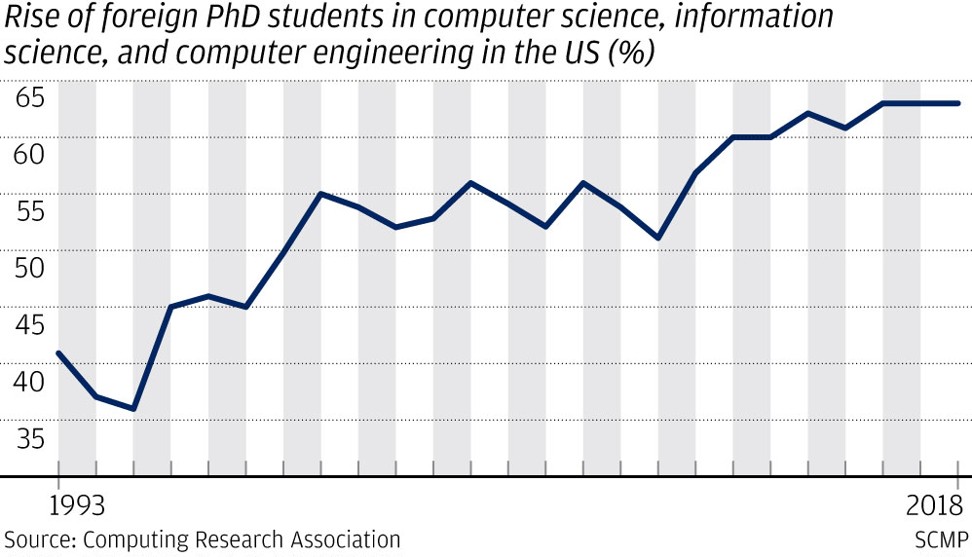
In 2018, 62.8 per cent of PhD degrees and 65.4 per cent of master’s degrees in computer science, information science and computer engineering programmes in the US were granted to “non-resident aliens”, according to a survey by the Computing Research Association.
“[To build] the best universities is not easy,” Gunther Marten, a senior official with the European Union delegation to China, said on the sidelines of the World Internet Conference in Wuzhen in October. “The university is a free speech space, whereas in China, this is not the case.”
When these US-educated AI scientists finish studying, most take advantage of a rule allowing them to stay in the country for three years to gain work experience.
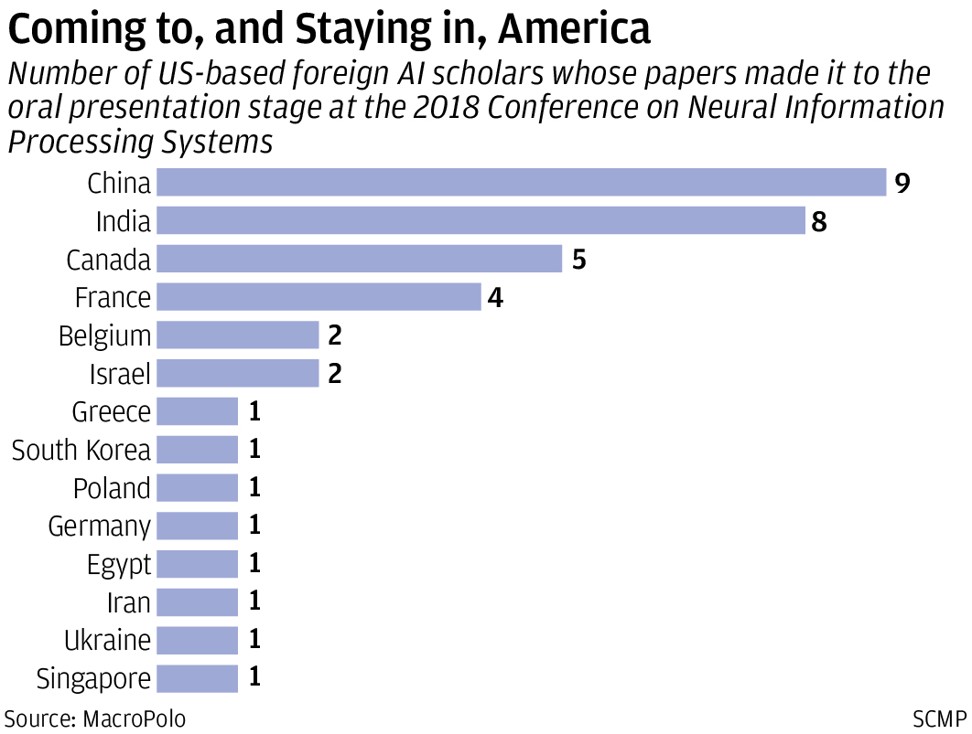
Of the foreign nationals taking part in last year’s Conference on Neural Information Processing Systems (NIPS), a major machine learning event for AI professionals, 87 per cent of those whose papers made it to the oral presentation stage went to work for American universities or research institutes after earning their PhD, according to MacroPolo, a think tank under the Paulson Institute.
“China has many great universities and companies, especially in certain subfields of AI such as computer vision, but many people remain hesitant to move to China due to the political environment, quality of life concerns and workplace issues,” said Remco Zwetsloot, a research fellow at Georgetown University’s Center for Security and Emerging Technology (CSET).
China’s PhD students miserable, yet hopeful: survey
Some of the US-trained Chinese AI engineers told the Post they were scared off by China’s “996” working culture: 9am to 9pm, six days a week. Tech firms in China typically expect their employees to work long hours to prove their dedication.
Lin, the Beijinger who now works for Google, used to be an intern at one of China’s largest internet giants. “I worked from the time I woke up until going to bed,” he said, “At Google, I’ve been confused because many people here only work till 5pm but Google is still a global leader.” Lin said he would be happy to return to China if the 996 work culture eases.
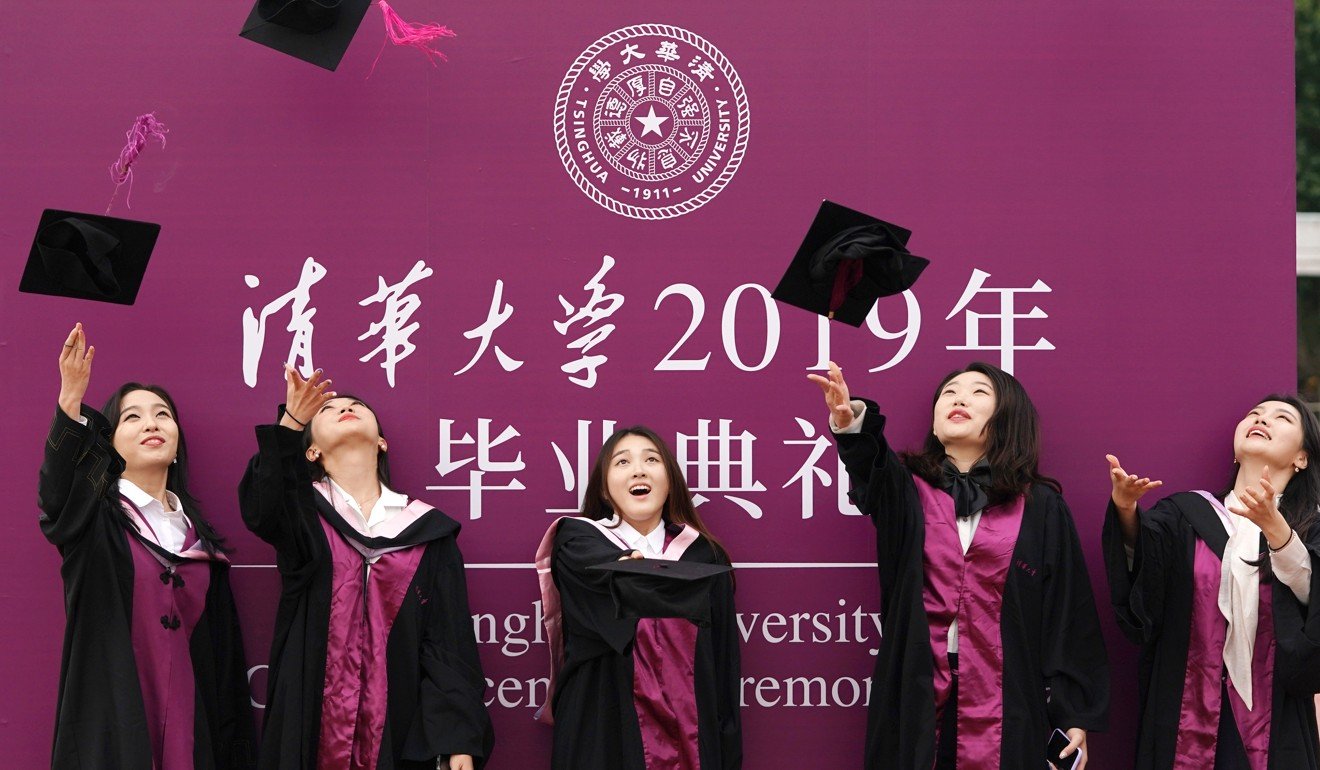
Graduates throw their caps in the air as they pose for a group photo during the 2019 commencement ceremony of Tsinghua University in Beijing. Tsinghua ranks as China’s top university for AI. Photo: Xinhua
Chen, a female postgraduate student at Carnegie Mellon, who recently accepted a job offer from Google, once interned at Beijing-based AI unicorn SenseTime, where she worked from 10am to between 8pm and 10pm most days.
A SenseTime spokesperson said the company has adopted flexible working hours for its employees.
Besides a better work-life balance, Chinese graduates look for jobs in Silicon Valley because of the higher pay.
“If you include pre-tax income, many of us get offers that pay more than 1 million yuan (US$142,000) a year but in China the salaries offered to the best batch of fresh undergraduates are about 200,000 to 300,000 yuan (US$28,000 to US$43,000),” Chen said.
Still, for those Chinese with long-term plans to stay in the US, a major obstacle lies in getting work visas, especially in the current trade war environment. Most AI-related workers are on H-1B visas that allow US companies to employ non-US nationals with expertise in specialised fields such as IT, finance and engineering.
However, the number of non-immigrant H-1B visas granted has started to fall since 2016, when it peaked at 180,000, according to the US Department of State, and US tech companies have complained that a policy shift by the Trump administration has made the approval process longer and more complicated.
In 2017, President Donald Trump requested an overhaul of the H-1B visa programme, saying he did not want it to enable US tech companies to hire cheaper foreign workers at the expense of American jobs. He also wants to give priority to highly skilled people and restrict those wanting to move to the US because of family connections.
Science graduates from overseas countries can stay in the US with their student visas for up to three years while competing for the hard to get work visas, which are granted based on undisclosed mechanisms. Overseas students already working in the US can apply for so-called green cards, which offer permanent residency.
After working for a major US tech company for almost three years on a student visa, one Chinese software engineer, who spoke to the Post on condition of anonymity, said she was relocated to the US firm’s Beijing office last year after failing to obtain a H-1B work visa.
“While there might be individual cases, it seems like the current tensions have not – at least as of a few months ago – led to noticeable changes in the overall number of Chinese students staying in the US after graduating,” said CSET’s Zwetsloot.
Some Chinese AI scientists use Twitter to announce their decision to stay. Chen Tianqi, who just obtained a PhD at the University of Washington in Seattle, and Jun-Yan Zhu, a CMU and UC Berkeley alumnus currently working at Adobe, each tweeted that they would join Carnegie Mellon as assistant professors next year.
To achieve the goal of turning China into “the world’s primary AI innovation centre” by 2030, according to a 2017 blueprint issued the State Council, the central government has stepped up efforts to attract US-educated talent.
The Thousand Talents Plan has seen more than 6,000 overseas Chinese students and academics return since its was established in 2008, but because of escalating tensions with the US, Beijing has played down the initiative.
Longer term, Beijing’s willingness to invest significant sums into the AI sector could see more Chinese return for the better employment opportunities. Between 2013 and the first quarter of 2018, China attracted 60 per cent of global investment in AI, according to a Tsinghua University report.
China’s spending on AI may be far lower than people think
Chinese authorities are investing heavily in the sector, with the city of Shanghai setting up a 10 billion yuan (US$142 million) AI fund in August and Beijing city government announcing in April it would provide a 340 million yuan (US$48 million) grant to the Beijing Academy of Artificial Intelligence.
“More and more senior people like me have come back, and some start their own businesses,” said Zheng, the Siemens Healthcare researcher who joined Tencent. “It’s easier for Chinese to seek venture capital in China than in other countries.”
“The central government and I are totally committed to constitutionally safeguard the political, linguistic, cultural and land rights of the Assamese people,” he tweeted.
However, with internet and mobile services shut down, it is unlikely residents would have been able to read the message.
The chief minister of Assam was stranded at the airport for several hours on Wednesday because roads were blocked by protests.
What do protesters want?
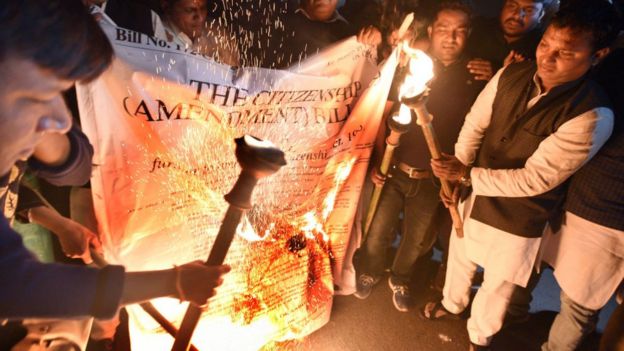
They want the bill to be repealed, as they say their ethnic and cultural identity is under threat from illegal migration.
Essentially, they do not want any migrants – regardless of religion – to be allowed into the state.
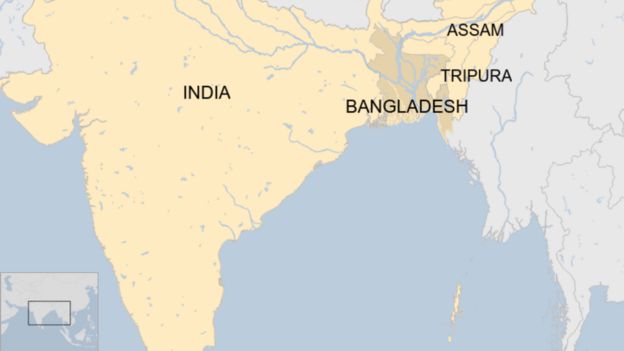
The National Register of Citizens (NRC) is a list of people who can prove they came to the state by 24 March 1971, a day before neighbouring Bangladesh became an independent country.
In the run-up to its publication, the BJP had supported the NRC, but changed tack days before the final list was published, saying it was error-ridden.
The reason for that was a lot of Bengali Hindus – a strong voter base for the BJP – were left off the list, and would possibly become illegal immigrants.
The CAB is seen as being linked to the register, although it is not the same thing.
It will help protect non-Muslims who are excluded from the register and face the threat of deportation or internment.
Has the bill been challenged?
The Indian Union Muslim League, a political party, has petitioned the country’s top court to declare the bill illegal.
In their petition to the Supreme Court, the Indian Union Muslim League argued that the bill violated articles of equality, fundamental rights and the right to life.
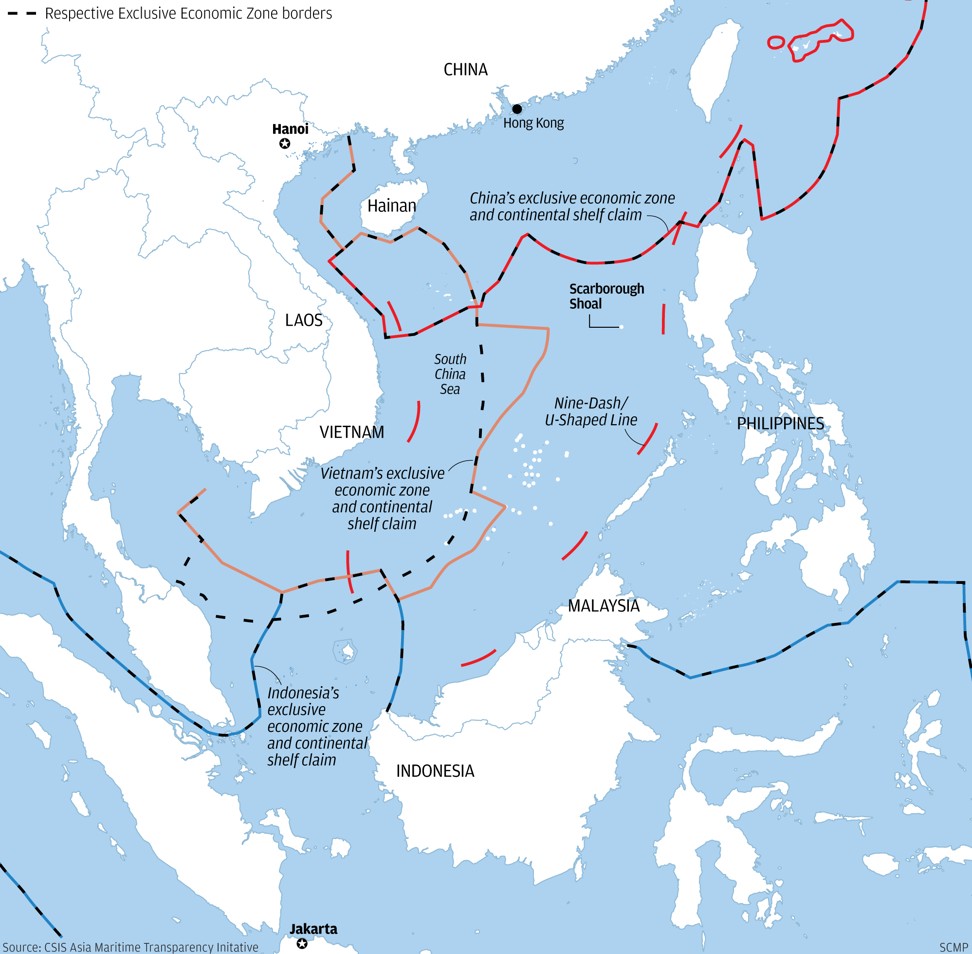
Chan is accused of supporting Beijing’s so-called nine-dash line, which is its historical justification for its territorial claims in the resource-rich sea
Vietnam, Malaysia, the Philippines, Taiwan and Brunei all have competing claims in the waterway that overlap with China’s
Film star Jackie Chan. Photo: Reuters
Martial arts film star Jackie Chan’s planned visit to Vietnam for a charity has been cancelled following an online backlash related to Beijing’s expansive claims in the disputed South China Sea.
The Hong Kong-born actor was set to visit Hanoi on November 10 to support Operation Smile, a charity that gives free surgery to children with facial disfigurements.
Jackie Chan says he wants to make films in Saudi Arabia
But the plans were scrapped after thousands of angry Facebook users flooded the charity’s official page when his visit was announced last week.
Some of their comments claimed Chan had spoken in support of China’s so-called nine-dash line – its historical justification for its territorial claims in the resource-rich sea.
A map showing claimant countries’ exclusive economic zones in the South China Sea.
However, Chan has not explicitly expressed public support for the controversial maritime assertion.
Vietnam, Malaysia, the Philippines, Taiwan and Brunei all have competing claims in the waterway that overlap with China’s – long a source of tension in the region.
Issuing a mea culpa on Friday for failing “to predict the reaction” of the Vietnamese public, the charity asserted that their work is “non-political”.
“We are very sorry … Operation Smile will not organise any activities with [Chan’s] involvement” in Vietnam, they said.
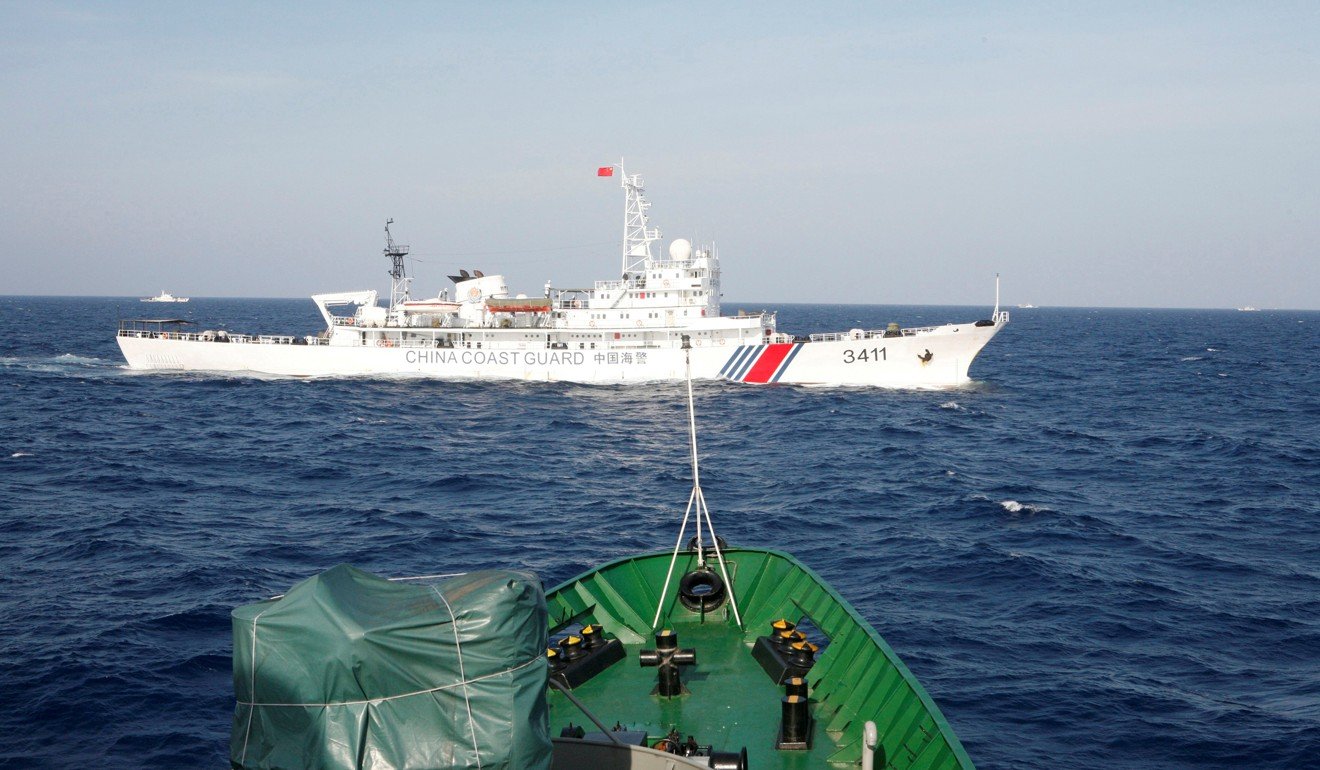
A Chinese coastguard ship sails by a Vietnamese vessel off the coast of Vietnam in 2014. Photo: Reuters
Vietnam is one of Beijing’s most vocal critics over the flashpoint South China Sea issue.
The foreign ministry on Thursday repeated its usual proclamation on the sea, citing the country’s “full legal basis and true evidence to affirm Vietnam’s sovereignty”, deputy spokesperson Ngo Toan Thang said.
Chan has in the past been accused of siding with China over Hong Kong’s democracy protests after calling the unrest in his hometown “sad and depressing”.
The comment sparked ire in Hong Kong but was warmly received by many in China where he has a massive fan base.
Abominable has been criticised for a scene showing the nine-dash line. Photo: DreamWorks
Beijing claims most the South China Sea through the vague delineation, which is based on maps from the 1940s as the then-Republic of China snapped up islands from Japanese control.
Competition from China is not the primary reason for regional job losses in rich countries, new IMF research finds
Study finds technological advancement is bigger driver of unemployment, undermining populist argument China is stealing manufacturing jobs
The IMF said automation displaced more jobs in rich countries than China’s growing productivity. Photo: SCMP
Automation rather than market competition from China can be blamed for regional job losses suffered in developed countries, including American rust belt states, according to new research by the International Monetary Fund released on Wednesday.
“Increases in import competition in external markets associated with the rise of China’s productivity do not have marked effects on regional unemployment,” the Washington-based fund said in an academic paper. “Only technology shocks tend to have lasting effects, with even larger unemployment rises for vulnerable lagging regions.”
The paper, which looked at regional disparities within advanced countries, undermines a key argument pushed by US President Donald Trump in the ongoing trade war
between Washington and Beijing – that China has been stealing American technology and jobs.
Although the research did not mention Trump, the IMF said the argument that market competition displaced jobs was flawed as imports from China could only cause job losses in the near term and such impact “quickly abates”.
The US goods trade deficit with China hit a record of US$419.2 billion in 2018, which the Trump administration has blamed for a decline in US manufacturing jobs.
In the paper, the IMF classified a region as “lagging” if two conditions were met – initial real gross domestic product (GDP) per capita was below the country’s median in 2000, and the region’s average growth between 2000 to 2017 was below average.
Labour productivity tended to be lower and employment in the agriculture sector higher in lagging regions, the IMF said. Within the United States, per capita GDP in the state of New York is 100 per cent higher than in Mississippi, parts of which are considered within the rust belt.
While increases in import competition tended to reduce labour force participation after one year, this impact faded quickly and did not have significant effects on regional unemployment on average, IMF analyst Weicheng Lian said.
The impact of technology was more far-reaching, however, with researchers pinpointing it as the main driver of rising unemployment in lagging regions.
translate into a decline in the cost of machinery and equipment, leading to more persistent rises in unemployment and declines in labour force participation in lagging regions, compared with less vulnerable regions, the study said.
Lian said that poorer regions tend to specialise in agriculture and manufacturing industries rather than high productivity service sectors such as information technology, communications and finance.
“We find that a negative technology shock … raises unemployment in all regions that are more vulnerable to automation, but lagging regions are particularly hurt,” she said.
US-China trade war could cost world economy US$700 billion by 2020: IMF
Read more
China tones down expectations ahead of US trade war talks
Read more
Kristalina Georgieva is the new IMF chief
Read more
China, US urged to ease tensions that are ‘weighing on global trade’
Read more
US-China trade war caused ‘self-inflicted’ damage to the global economy














 CHINDIA ALERT: You'll be living in their world, very soon