Chindia Alert: You’ll be Living in their World Very Soon
aims to alert you to the threats and opportunities that China and India present. China and India require serious attention; case of ‘hidden dragon and crouching tiger’.
Without this attention, governments, businesses and, indeed, individuals may find themselves at a great disadvantage sooner rather than later.
The POSTs (front webpages) are mainly 'cuttings' from reliable sources, updated continuously.
The PAGEs (see Tabs, above) attempt to make the information more meaningful by putting some structure to the information we have researched and assembled since 2006.
Purchasing managers’ indexes for both manufacturing and service sectors drop to all-time lows
Steep falls raise questions over extent of damage epidemic has caused to China’s economy and how long it will take the country to recover
Many Chinese factories have faced a labour shortage as migrants have been unable to return to work because of the coronavirus outbreak. Photo: AFP
The damage caused by the coronavirus outbreak to China’s US$14 trillion economy could be much worse than Beijing hoped, as official measures for the country’s factory and service activity indicated on Saturday, threatening President Xi Jinping’s vision for 2020 and underscoring his urgent appeal to get production back to normal.
Monthly economic indicators for February sank to all-time lows as the coronavirus halted China’s manufacturing machine and froze activity in the service sector – from retailing to recycling – painting a bleak picture of the world’s second-biggest economy and challenging Beijing’s repeated assurance that the impact would be manageable and short-lived.
Covid-19, the disease caused by the coronavirus – was first reported in Wuhan in December. Since then it has spread to more than 50 countries and more than 85,000 people have been infected. The outbreak has disrupted travel and cargo shipments, and caused stock markets to slump.
China’s official February purchasing managers’ indexes (PMI) for both manufacturing and services, released by the National Bureau of Statistics on Saturday, confirmed fears that China’s economy was in bad shape and fanned speculation that it may even contract in the first quarter.
Larry Hu, chief China economist at Macquarie Capital in Hong Kong, said in a note that Beijing might report negative growth for “the first time since the Cultural Revolution”.
The manufacturing PMI, which measures factory activity, dropped to 35.7 in February – below the previous all-time low of 38.8 set in November 2008 during the global financial crisis – from 50 in January when the impact of the epidemic was not apparent.
A reading below 50 indicates a contraction in activity.
The February PMI figures confirmed fears that China’s economy was in bad shape. Photo: AFP
All of the sub-indexes of the PMI pointed to the difficult situation facing Chinese factories. Output plummeted, new orders vanished, exports and imports stopped, and logistics were badly disrupted. Input prices, which reflects the costs factories must pay, was the only sub-index that remained above 50.
The non-manufacturing PMI – a gauge of sentiment in the services and construction sectors – also dropped, to 29.6 from 54.1 in January. This was also the lowest on record, beating the previous low of 49.7 in November 2011, according to the China Federation of Logistics and Purchasing, which produces the index with the National Bureau of Statistics.
The declines in the February reflect the difficulties businesses are having in bringing production back online due to shortages of labour as well as difficulties receiving supplies or shipping goods to market because of transport restrictions enacted to contain the spread of the virus.
An extended slump would put upwards pressure on unemployment, especially among small, private sector service firms. Beijing, which worries that rising joblessness could cause social unrest, has called on local governments to remove unnecessary restrictions to get businesses back to work.
The employment sub-index in the manufacturing PMI fell to 31.8 in February.
“It is not because factories have stopped hiring migrant workers, it is because the flow of migrant workers to factories has been blocked,” said Hua Changchun, an analyst at brokerage Guotai Junan Securities. “There’s no point talking about resuming production if workers can’t return to their jobs.”
Zhang Qiqun, a researcher with the Development Research Centre of State Council, said in a statement that the major economic indicators for this quarter would see “obvious drops” and China must “be prepared”.
The employment sub-index in the manufacturing PMI fell to 31.8 in February. Photo: AFP
How quickly China can dig itself out of the coronavirus hole is a matter of debate.
According to the PMI survey, about 90 per cent of medium and large-sized manufacturers are expected to resume production in March, meaning about 10 per cent will still be closed four weeks from now.
As for small firms, the industry ministry said this week that two-thirds would still be closed at the end of February.
China’s production difficulties have resulted in economic problems for nations around the world that rely on supply chains that begin or pass through the country. The global spread of the coronavirus will only exacerbate the problem.
Barclays and Nomura forecast China’s first-quarter growth at 2 per cent, while Capital Economics said it would contract in year-on-year terms.
“The sharp drop in China’s manufacturing PMI in February reinforces our view that the normalisation in economic activity will be delayed,” said Xing Zhaopeng, an economist at Australia & New Zealand Banking Group.
“There’s scant chance for a V-shaped rebound – the authorities are using targeted aids more than stimulus to stabilise the economy and that will lead to a gradual bounce.”
The National Bureau of Statistics tried to put a brave face on the data, saying there would be a substantial improvement in March.
“The resumption of work is ramping up and market confidence is steadily recovering,” said Zhao Qinghe, a senior statistician at the NBS.
“Although the novel coronavirus pneumonia epidemic has caused a larger impact on production and operations of Chinese enterprises … currently the epidemic has come under initial containment, and the negative impact on production is gradually weakening.”
Chinese President Xi Jinping holds talks with Mongolian President Khaltmaa Battulga at the Great Hall of the People in Beijing, capital of China, Feb. 27, 2020. (Xinhua/Liu Bin)
BEIJING, Feb. 27 (Xinhua) — Chinese President Xi Jinping Thursday held talks with Mongolian President Khaltmaa Battulga at the Great Hall of the People in Beijing.
Xi said the Chinese government and people are making all-out efforts to fight the novel coronavirus outbreak (COVID-19), during which the Mongolian government and people have offered precious support.
Hailing Battulga as the first foreign head of state to visit China since the outbreak, Xi said the special visit by Battulga to express consolations and support to China fully embodies the high attention he pays to the China-Mongolia ties and the profound friendship between the two peoples.
This vividly shows that China and Mongolia, as neighboring countries, can rely on each other in difficult times, said Xi.
Xi expressed his welcome as Battulga paid the visit only one day after Mongolia’s traditional Tsagaan Sar holiday, and sent festive greetings to the Mongolian people.
Xi said that since the outbreak of COVID-19, the Communist Party of China (CPC) and the Chinese government have attached great importance to the epidemic, activated a national response mechanism and taken the most comprehensive, thorough and rigorous measures.
A leading group of the CPC Central Committee on the prevention and control of the COVID-19 was established immediately and a central government guiding team was sent to Hubei province, said Xi.
After arduous work, the positive trend in the prevention and control work is now expanding, Xi said, adding that the country has full confidence, capability to win this battle against the epidemic.
China has coordinated the prevention and control work with the economic and social development, and tried its best to minimize the impact of the epidemic, he said.
According to Xi, China has adopted a targeted approach in different regions to advance resumption of work and production based on local health risks, ensure timely agriculture work in spring and guarantee people’s basic livelihood.
Noting that China’s economy is resilient with broad domestic demand and a strong industrial basis, Xi said China will strive to meet this year’s economic and social development targets.
Xi said that guided by the vision of a community with a shared future for humanity, China is making every effort not only to protect the life and health of its own people but also to contribute to global public health security.
With an open, transparent and responsible attitude, the Chinese government has actively stepped up international cooperation on fighting the outbreak, said Xi, adding that China’s efforts have been highly affirmed and recognized by the World Health Organization and the international community.
China will continue to work with countries including Mongolia to fight the epidemic and safeguard regional and global public health security, he said.
Noting that China and Mongolia are friendly neighbors linked by waters and mountains, Xi said China has attached high importance to the bilateral relations and always taken Mongolia as an important direction of China’s neighborhood diplomacy.
China is committed to cementing political mutual trust with Mongolia and enhancing Belt and Road cooperation to benefit both peoples, he said.
Battulga expressed consolations to the Chinese people over the outbreak and spoke highly of China’s rapid establishment of a joint prevention and control mechanism and national people-oriented efforts to fight the epidemic.
Stressing that Mongolia and China are comprehensive strategic partners, Battulga said the Mongolian people completely relate to what the Chinese people are going through and would like to stand closely together with the Chinese people in the difficult times.
Mongolia launched fund-raising activities to support China’s fight against the epidemic, and received active responses from all walks of life, he said, adding that Mongolia will send additional 30,000 sheep apart from the previous donations.
Battulga said he believes that the Chinese people will definitely win the battle against the epidemic at an early date and overcome the difficulties to realize the set goals of social and economic development under the strong leadership of President Xi.
Mongolia commends China’s pursuit of neighborhood diplomacy featuring amity, sincerity, mutual benefit and inclusiveness, and stands ready to work with China to deepen mutual trust and support, enhance cooperation to promote greater development of bilateral relations, said Battulga.
Around 200 Shincheonji Church of Jesus members continued to meet in the Chinese city amid rumours of virus, but ‘no one took [claims] seriously’ at first
Around half the Covid-19 cases in South Korea have been linked to members of the religious group
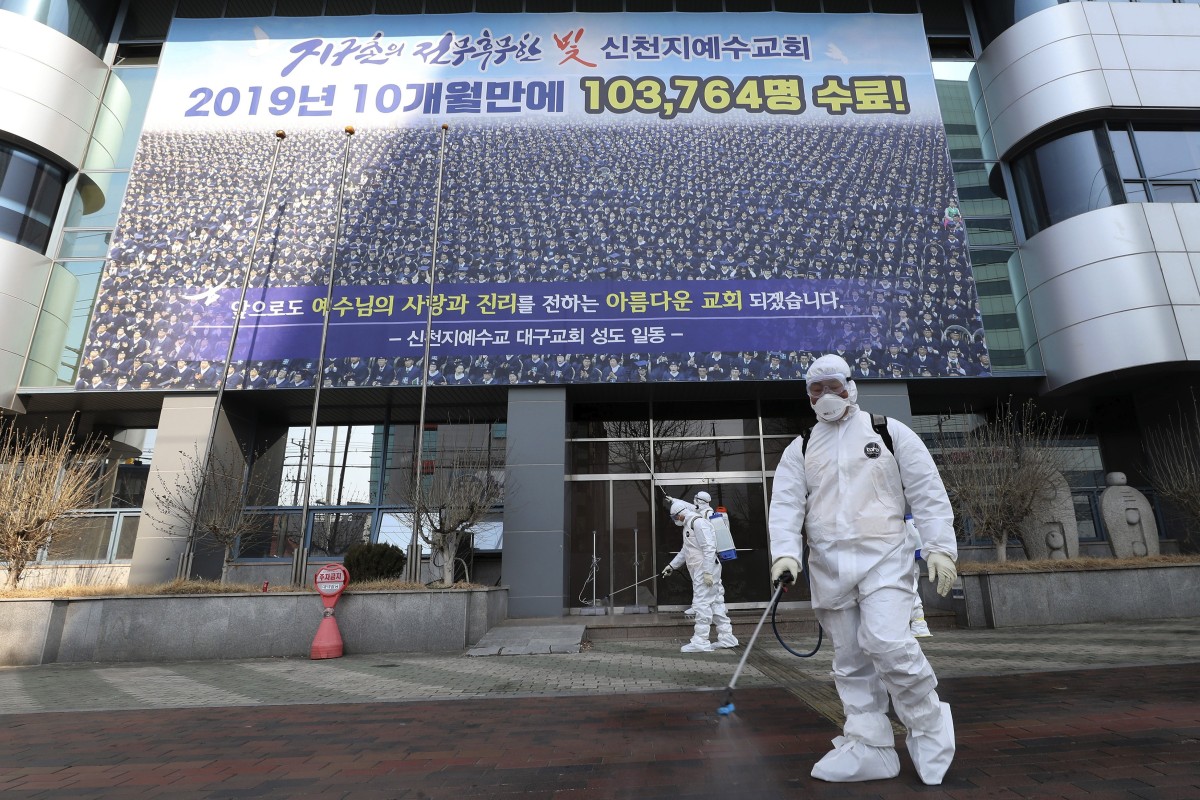
The Shincheonji church in Daegu has been linked to a cluster of infections. Photo: Yonhap via AP
Members of the Christian sect linked to a cluster of coronavirus cases in South Korea held meetings in Wuhan until December, only stopping when they realised that their community had been hit by Covid-19, the previously unknown disease caused by the virus.
The South China Morning Post has learned that the Shincheonji Church of Jesus in Wuhan, the Chinese city at the centre of the epidemic, has around 200 members, most of whom are currently under quarantine outside the city.
“Rumours about a virus began to circulate in November but no one took them seriously,” said one member, a 28-year-old kindergarten teacher.
“I was in Wuhan in December when our church suspended all gatherings as soon as we learned about [the coronavirus],” said the woman, who declined to be named because of the sensitivity of the matter.
She said the group was continuing to share sermons and teachings online, but most members had returned home at the start of the Lunar New Year holiday in late January.
The 250,000-member Shincheonji Church of Jesus is regarded by mainstream Christian groups as a secretive and unorthodox sect. Its founder, Lee Man-hee, has claimed that he is the second coming of Jesus Christ.
Around half the Covid-19 infections in South Korea have been linked to a branch of the church in Daegu.
Coronavirus spreads through Europe from Italy to Austria, Croatia, Tenerife
26 Feb 2020
According to the Korea Centres for Disease Control and Prevention, there were 977 confirmed cases as of Tuesday – the second highest number outside China – and 11 deaths.
Of the 84 new cases reported on Tuesday, over half were recorded in Daegu city.
Coronavirus: Churches on high alert as South Korea confirms huge rise in infections
A member of the church from Daegu reportedly visited China in January, and health officials in South Korea are investigating whether a cluster of infections in Cheongdo city is linked to a three-day funeral ceremony held at a local hospital.
Chinese sources said that the Shincheonji church has about 20,000 members in China – most of whom live in major cities such as Beijing, Shanghai, Dalian, Changchun and Shenyang.
One Christian pastor in Hubei province, who declined to be named, said that Shincheonji church members were hard-working and some continued to proselytise even during the outbreak.
Chinese cities quarantine travellers from South Korea amid spike in coronavirus cases
25 Feb 2020
The Wuhan kindergarten teacher said she was confident that the recent mass outbreaks in South Korea were not linked to Shincheonji church members from the city.
“I don’t think the virus came from us because none of our brothers and sisters in Wuhan have been infected. I don’t know about members in other places but at least we are clean. None of us have reported sick,” she said.
“There are so many Chinese travelling to South Korea, it’s quite unfair to pin [the disease] on us.”
Coronavirus: China reports 508 new Covid-19 cases, with only nine outside outbreak epicentre
She sidestepped questions on whether church members had travelled from Wuhan to South Korea after the outbreak.
The teacher said that in 2018 the Wuhan group’s “holy temple” in Hankou district had been raided by police “who branded us a cult”, but members continued to worship in small groups.
“We are aware of all the negative reporting out there after the outbreak in South Korea, but we do not want to defend ourselves in public because that will create trouble with the government,” she said. “We just want to get through the crisis first.”
Airfares from South Korea to China shoot up amid Covid-19 fears
25 Feb 2020
Bill Zhang, a 33-year-old Shanghai resident and a former missionary with Shincheonji, said the group’s secretive nature made it hard for the authorities to effectively crackdown on its activities.
He said the Shanghai branch held its main meetings on Wednesdays and Saturdays, attracting 300 to 400 people at a time.
“The Shincheonji church in Shanghai has been raided many times and police spoke to church leaders regularly.
“But the church members simply continued their meetings in smaller groups of eight-to-10 people and regrouped when the surveillance was relaxed.”
Zhang continued: “Shincheonji holds that it is the only real church that upholds the biblical truth and all other churches – mainstream or cults – are evil.”
Health official Debbie Birx appointed as ‘coronavirus response coordinator’ under Vice-President Mike Pence
Facing outbreak threat a month ago, US president said ‘we have it totally under control’. This week, under fire, he changed course
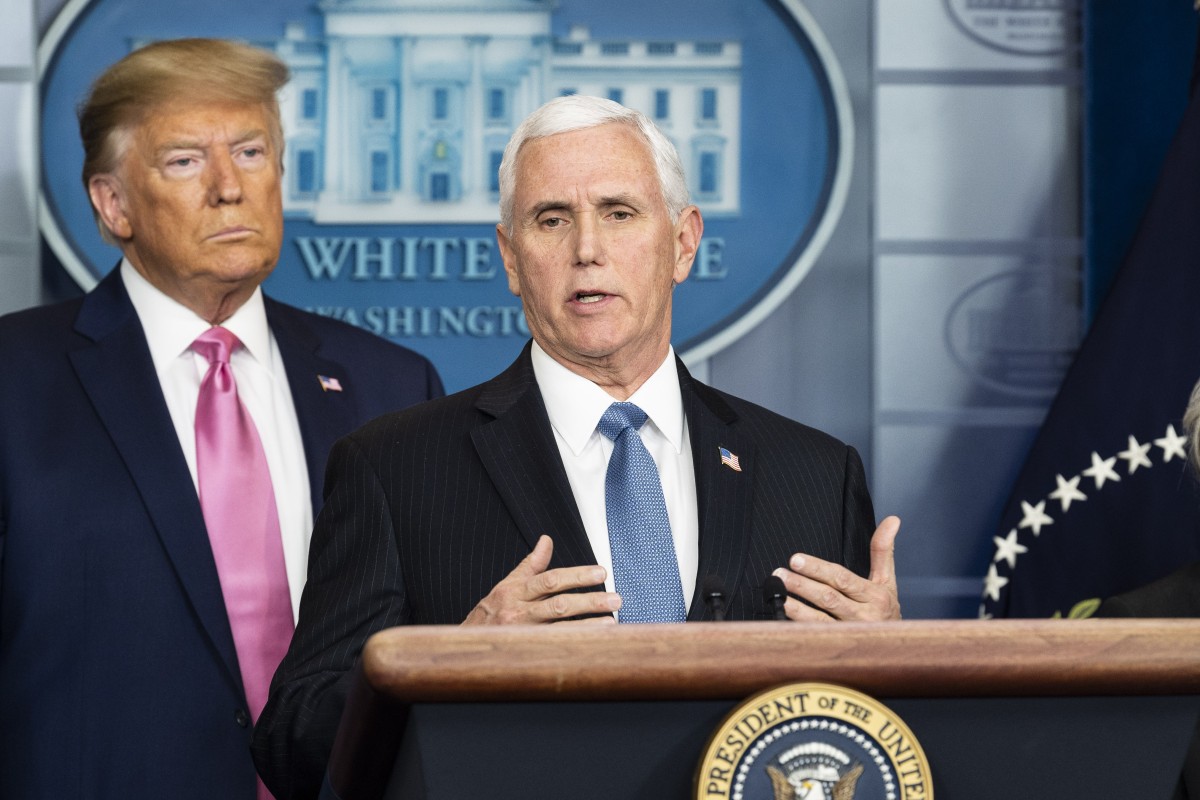
US Vice-President Mike Pence (right) speaks alongside US President Donald Trump during a press conference about the coronavirus at the White House on Wednesday. Photo: dpa
This story is published in a content partnership with POLITICO. It was originally reported by Adam Cancryn, Quint Forgey and Dan Diamond on politico.com on February 27, 2020.
In the end, US President Donald Trump got a coronavirus tsar – without having to call it a tsar.
Vice-President Mike Pence, whom Trump appointed on Wednesday to lead his coronavirus response, announced a global health official as the “White House coronavirus response coordinator” – installing a tsar-like figure under him to guide the administration’s response to the outbreak after a protracted public dance around how to display the power of the federal bureaucracy to the American people.
The move marked the administration’s latest attempt to show it is in control of the spreading global threat after weeks of fumbled messaging, rising market jitters and mounting backlash from lawmakers on both sides of the aisle.
Coronavirus: New cases outside China outnumber those inside for first time since start of epidemic
The two-day journey of upgrading the federal government’s public response highlighted a sharp contrast between Trump’s political instincts to play down the virus risk in an election year and calls from health officials and lawmakers to show the government in command of a deadly and frightening threat.
The new role will put Ambassador Debbie Birx, who has served since 2014 as the US government’s leader for combating HIV/Aids globally, at the centre of what now appears to be three leaders of the government response.
Trump revealed in a news conference on Wednesday evening that Pence would head up the administration’s management of the coronavirus, overseeing a task force nominally led by Health and Human Services Secretary Alex Azar. Birx will report to Pence but serve on the task force that Azar chairs.
Over three decades of public health experience, Birx “has been utilising the best science to change the course of the HIV pandemic and bring the pandemic under control”, the White House said in a statement, adding that she “will bring her infectious disease, immunologic, vaccine research and inter-agency coordinating capacity to this position”.
Speaking at the Conservative Political Action Conference on Thursday, Pence said “we are ready for anything” to fight coronavirus.
Trump faces ‘black swan’ threat to economy and re-election
25 Feb 2020
“I promise you, this president, this administration, is going to work with leaders in both parties. We’ll work with leaders across this nation, at the state and local level. And this president will always put the health and safety of America first.”
Birx’s appointment marked the latest swerve by the White House in assigning responsibility to tackle the burgeoning public health crisis.
At the World Economic Forum in Davos last month, Trump said “we have it totally under control” and maintained “it’s going to be just fine”. The virus has since exploded globally from China to nearly 50 countries, with more worries emerging inside the US.
A week after Trump’s Davos comments, the White House announced a task force to handle the widening outbreak. A month later, Trump was forced to vastly upgrade the response when his bold predictions proved to be wrong.
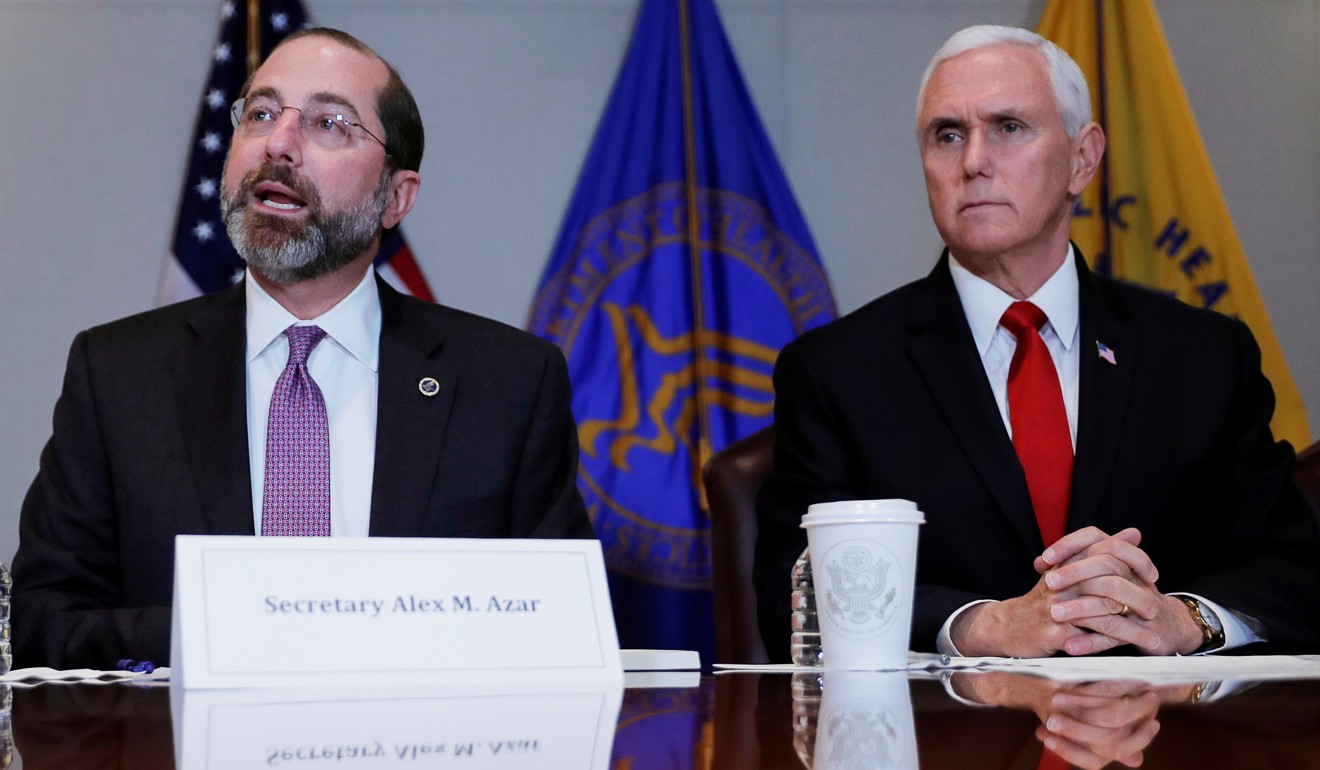
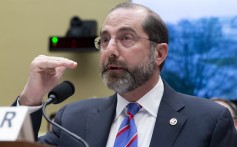
US Health and Human Services Secretary Alex Azar (left) speaks as US Vice-President Mike Pence listens during a coronavirus task force meeting in Washington on Thursday. Photo: Reuters
Appointing a “coordinator” allowed Trump to fulfil an increasingly urgent call from lawmakers to put a trusted public health official at the centre of the White House response as a tsar.
Some administration officials had opposed appointing a tsar – a move President Barack Obama used in 2014 during the Ebola threat – because it could be perceived as an admission of failure up to this point, while others have been criticising Azar for months for his work on the president’s health initiatives far beyond coronavirus.
On Wednesday, Azar told lawmakers “I serve as the lead” on coronavirus efforts, and he denied a POLITICO report stating that the White House was weighing whether to appoint a tsar to coordinate its response to the spreading epidemic.
The leadership change – putting Pence in charge – was a shock to Azar and his team, four people familiar with the matter said, coming soon after the health secretary returned from his full day of congressional testimony.
Facebook cancels its big annual developers event due to coronavirus
28 Feb 2020
Azar had reason to be confident: Trump had reassured him earlier in the day that he was doing a good job atop the task force and would not be replaced. And technically, he was not, even though he has lost ultimate authority over the federal response.
Azar insisted at Trump’s Wednesday news conference, however, that he would remain the chair of the White House task force, indicating Pence would play a supervisory role. That was before Thursday morning’s coronavirus “coordinator” announcement, which Trump hinted at the prior night.
At a congressional hearing on Thursday, Azar downplayed the significance of Pence’s appointment, calling it a “a lot of continuity” of the administration’s response to date.
“What the vice-president will do is actually a function very similar to what acting chief of staff Mick Mulvaney has been doing very ably for me,” he told the House Ways and Means Committee, describing the role largely as ensuring alignment across the government and coordinating decision-making outside the health care arena.
“The vice-president’s involvement and leadership across the whole of government brings just the weight of the office of the vice-president to that task.”
Why the WHO isn’t labelling Covid-19 a pandemic and how the world coped with past global diseases
Azar later insisted that he was consulted and involved in the decision to put Pence in charge, telling lawmakers that he was supportive as soon as the suggestion was made. “I said, quote, that’s genius,” he said.
Azar also told reporters after the hearing that he was “involved” in the decision Wednesday to name Birx.
“She’s a terrific leader. And she will do wonderful work helping us with just the internal processes,” he said. As for Pence’s new role, Azar said “the vice-president helps me, in terms of heft within the executive agency” but maintained that he’s still leading the inter-agency task force work among a slew of other responsibilities as the nation’s health chief.
The compromise position allows the White House to respond to frustration inside and outside the administration while allowing Azar to save face. Trump remains pleased with his health secretary and had reassured him as recently as Wednesday that he was happy with his work on the coronavirus, people close to the White House said.
The White House is battling bipartisan criticism from members of Congress sceptical of the administration’s response and emergency funding request, which some lawmakers have slammed as insufficient to counter the growing threat.
US lawmakers push White House for more aggressive coronavirus preparations
27 Feb 2020
The administration’s disjointed messaging about the severity of the threat earlier this week frustrated even Republicans on Capitol Hill, especially after White House National Economic Director Larry Kudlow declared the containment effort as nearly “airtight” at nearly the same time CDC officials were warning of its “inevitable” spread.
An exasperated Senator John Kennedy aired his concerns directly to Trump on Tuesday, after the Louisiana Republican struggled to extract basic answers about the disease from acting Homeland Security Secretary Chad Wolf.
“We had one story from the classified briefing, we had another story from one Cabinet secretary, then we had another story from another Cabinet secretary,” said Kennedy, who on Thursday praised the decision to elevate Pence. “[Trump] said, I hear what you’re saying, I’m gonna get this straight.”
The announcement of Birx’s latest role within the administration came hours after news broke in California of the first potential case of coronavirus spreading within the US.
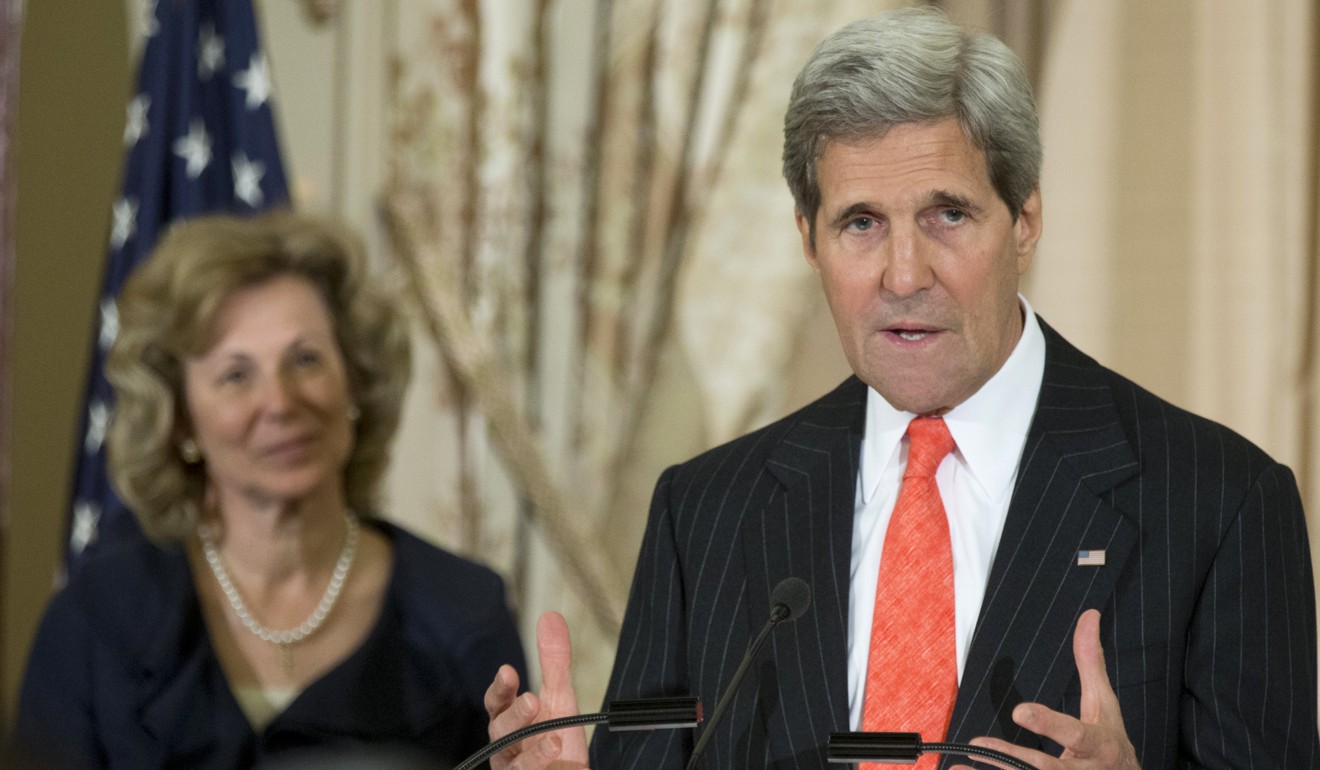
Secretary of State John Kerry speaks during an April 2014 swearing-in ceremony for Debbie Birx (left) as ambassador-at-large and coordinator of US government activities to combat HIV/Aids. Photo: AFP
It also follows intense scrutiny of Pence’s record as governor of Indiana overseeing a massive HIV outbreak in the state that public health experts deemed preventable – an episode that House Speaker Nancy Pelosi raised directly with the vice-president on Thursday morning.
“I expressed to him the concern that I had of his being in this position,” she said during her weekly press conference.
Birx brings bipartisan credibility to the job, having won widespread praise from Democrats in the run-up to her 2014 confirmation as head of the Obama administration’s global HIV/Aids office.
Senate Foreign Relations Committee Democrat Ben Cardin in 2014 called her “one of the most well-qualified nominees that has ever come before the US Senate for confirmation,” ahead of a unanimous vote to install her in the job.
Trump asks Congress for US$2.5 billion to fight coronavirus
25 Feb 2020
Congressman Eliot Engel, now the top Democrat on the House’s Foreign Affairs Committee, similarly lauded her as a “dedicated force in efforts to eliminate the global scourge of HIV/Aids”.
Yet despite her Obama-era appointment, Birx is a Republican and could be characterised as a conservative, one person who knows her said.
This person added that she’d be “good on camera” and has already worked closely with several of the administration’s current top public health officials – including Centres for Disease Control and Prevention director Robert Redfield, with whom she served as an Army doctor.
Most notably, this person said, she aided Redfield’s candidacy to become CDC chief in 2018, serving as a reference and advocating for him within the administration.
Around two thirds of the total number of flights scheduled every day in February were cancelled, placing huge financial pressure on airlines and airports
China’s aviation industry has also been affected by a series of restrictions by other countries and airlines, with British Airways extending its suspension until mid-April
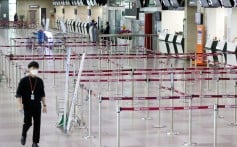
The cancellation of around 10,000 flights a day, or around two thirds of the total number of flights scheduled every day in February, has placed huge financial pressure on airlines and airports. Photo: Kyodo
A one-way air ticket from the coastal economic hub of Shanghai to the inland municipality of Chongqing, a journey of over 1,400km (870 miles), now costs less than a cup of coffee, with Chinese airlines slashing prices in a bid to boost weak domestic demand amid the coronavirus outbreak.
The cancellation of around 10,000 flights a day, or around two thirds of the total number of flights scheduled every day in February, has placed huge financial pressure on airlines and airports.
The Civil Aviation Administration of China said in a notice on Tuesday that flights should resume gradually as part of the country’s efforts to return economic and social life back to normal, but passengers are still reluctant to fly with the deadly outbreak still not fully under control.
The one-way flight from Shanghai to Chongqing is being offered for just 29 yuan (US$4.10) by China’s biggest low-cost carrier, Spring Airlines, as a special offer for its frequent flyer club members, while a tall caffe latte at Starbucks in China costs 32 yuan (US$4.5).
Many Chinese carriers do receive subsidies for operating key domestic routes, so this also skews the economics as well Luya You
A one-way ticket from Shanghai to Harbin, the capital of the northern Heilongjiang province, a distance of over 1,600km (994 miles), costs just 69 yuan (US$9.80).
Shenzhen Airlines, a division of state-owned carrier Air China, is also running special offers to Chongqing, with a one-way ticket for the 1000km (621 miles) journey from Shenzhen costing just 100 yuan (US$14), around 5 per cent of the standard price of 1,940 yuan (US$276).
Chengdu Airlines, a unit of Sichuan Airlines, which counts China Southern Airlines as a shareholder, is also offering cheap one-way flights from Shenzhen to Chengdu, a distance of over 1,300km (808 miles), for just 100 yuan.
“Considering lower average costs of operating in mainland China, carriers could potentially offer deeper discounts while making slim profits or just breaking even,” said Luya You, an aviation analyst with Bank of Communication International. “As outbreak numbers stabilise or even decline, carriers will likely adjust their fares as well, so these low fares will not last if the situation quickly turns for the better.
“Many Chinese carriers do receive subsidies for operating key domestic routes, so this also skews the economics as well. If it is a key route, for example, the carrier may choose to continue operating regardless of fares or loads as the route constitutes a major link in the domestic network infrastructure.”
China’s aviation authority confirmed earlier this month that between January 25 and February 14, which included the Lunar New Year holiday, the average daily passenger traffic in China was just 470,000, representing a 75 per cent drop from the same period last year.
China’s aviation industry has also been affected by a series of restrictions by other countries and airlines, with British Airways last week extending its suspension of flights to China until after the Easter holiday in mid-April following travel advice from the British government.
The novel coronavirus, which causes the disease officially named Covid-19, has infected more than 78,000 people and killed 2,700 in China. In recent days, South Korea, Italy and Iran have all reported a surge in new cases, raising fears over the spread of the coronavirus.
“The flight suspensions will track the outbreaks, but not likely lead them. If there are more outbreaks, expect more flight suspensions,” said Andrew Charlton, managing director of Aviation Advocacy.
BEIJING, Feb. 24 (Xinhua) — With the positive trend of containing the outbreak of novel coronavirus illness (COVID-19), China is meticulously expanding business operations with a precise approach that attaches different priorities to regions in light of their health risks.
A total of 11 newly confirmed cases of COVID-19 were reported Sunday outside Hubei Province, the center of the outbreak, while 24 provincial-level regions didn’t report newly confirmed cases, according to the National Health Commission Monday.
As more provincial-level regions have been reporting no newly confirmed cases for longer streaks, more local governments are starting to lower their emergency response to fast-track the restoration of economic and social order.
While high-risk regions still need to be fully committed to epidemic prevention and control, regions with relatively low risks are encouraged to focus on forestalling cases brought in from elsewhere and comprehensively restoring the order of production and life, said a meeting Sunday.
Coastal province Fujian has divided the 88 cities and counties into four groups, ranging from regions with over ten infections to regions with none, and adopted differentiated measures to better fight the outbreak and mitigate the impact on the economy.
Changting County in Fujian, for instance, which has no confirmed cases of infection, has seen most of the key enterprises resume production.
The country has pledged efforts such as arranging customized trains for migrant workers, smoothing the traffic, enhancing credit support and alleviating social security burden on employers to bring enterprises back on track.
Shanghai Municipality has rolled out 28 policies to provide targeted fiscal support, tax and fee cuts, as well as epidemic-prevention supplies for local enterprises, ferrying them through rough patches.
Foreign companies will also benefit from the supportive policies and be treated on the same footing as other types of enterprises, said Xu Wei, spokesperson for the Shanghai municipal government.
The operation resumption rate of 51,000 foreign-funded enterprises in Shanghai is nearly 70 percent, while that of the regional headquarters of 217 multinational companies is as high as 93 percent.
Wyeth Nutrition, a Sino-U.S. joint venture with its headquarter in Shanghai, is operating at its capacity to supply infant formula in China.
“The local commerce department has built a green channel for us, ensuring smooth operation of our supply chains and product delivery in the Yangtze River Delta,” said Cao Jingheng, vice president of the company.
Foreign firms and firms are high on the agenda of Chinese government agencies when formulating preferential policies.
The Ministry of Commerce has promised to strengthen services and guarantees to foreign-funded enterprises while the General Administration of Customs vowed efforts to optimize the port business environment and promote reciprocal market opening up.
Now with the country gradually heading back to work, many are confident that the potential economic blow brought by the national production halt is expected to be only a short-term, one-off hit against China’s solid economic foundation.
The epidemic might disturb economic activities in the first quarter of this year, but the economy is likely to steady shortly after the epidemic is contained, as the unleashing of pent-up demands will make up for previous weak economic performance, said Pan Gongsheng, vice governor of the People’s Bank of China, the central bank.
International Monetary Fund Managing Director Kristalina Georgieva said Saturday that she expects China’s economy to “return to normal in the second quarter” of 2020.
“As a result, the impact on the world economy would be relatively minor and short-lived,” Georgieva said.
In the Chinese city of Wuhan, where the virus emerged, the authorities earlier announced that some non-residents would be allowed to leave if they showed no symptoms of the virus.
However, local officials now say that order was made without authorisation and has been revoked.
The city has been in lockdown since January 23, with authorities cutting off transport links in and out of the city.
More than 2,500 people have died from the virus in mainland China, with some 77,150 cases confirmed cases reported.
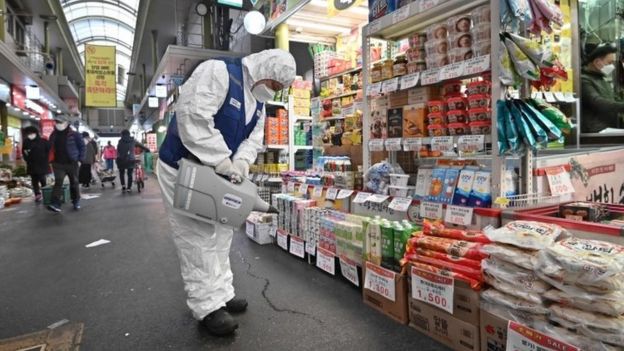
Image copyright AFPImage caption A worker sprays disinfectant to help prevent the spread of the novel coronavirus at a market in Seoul
What is the situation in North Korea?
North Korea has not confirmed any cases but the country shares a long and often porous border with China. There are concerns that North Korea, which is subject to international sanctions, lacks the health infrastructure to test and treat those infected and that any outbreak could quickly spread unchecked.
At the moment, all foreigners coming into the country must be quarantined for 30 days.
There are relatively few foreigners in North Korea, and only around 200 Westerners, according to one expert.
North Korean authorities have also cancelled the annual Pyongyang marathon, which typically sees people from all over the world participating.
Around 3,000 people in North Pyongan province – a north-western region bordering China – are also now under monitoring for reportedly showing suspected symptoms, said state media.
What about South Korea?
Media caption People in Daegu have voiced concern over the spread of the virus
South Korea has the largest number of confirmed cases outside China, after a huge spike in the past week.
Before last Wednesday, the country had recorded just 31 cases. That number has now jumped to 763.
Eight new cases of the virus have been reported in the army, and one in the navy, air force and marine corps – bringing the number to 11.
But the biggest virus clusters have been linked to a hospital and a religious group near the south-eastern city of Daegu.
A handful of South Korea airlines, including Korean Air Lines – the country’s biggest airline – has suspended flights going to Daegu, which has a population of around 2.5m.
Korean Air says the suspension will last until March 27
What’s happening in Italy?
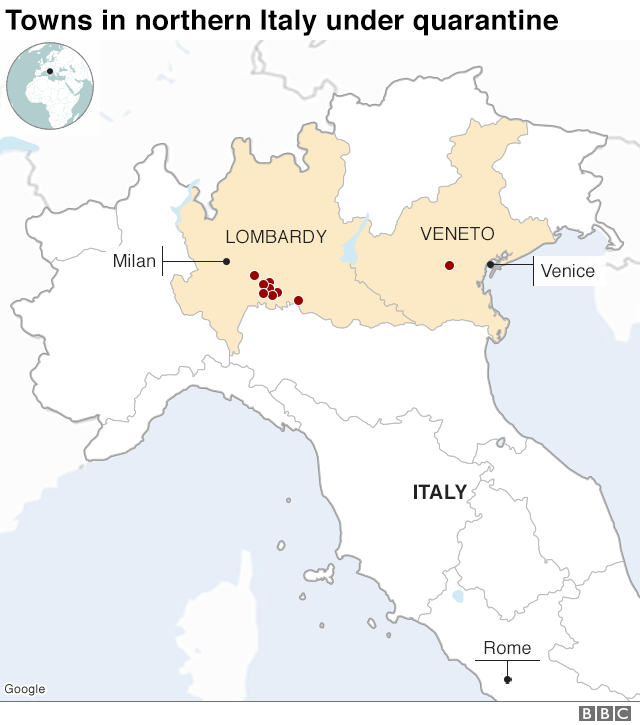
Italian officials have introduced sweeping measures to control what is now the worst outbreak of the coronavirus in Europe – at least three people have died and more than 150 cases confirmed.
In the regions of Lombardy and Veneto, a lock-down is in place in several small towns. For the next two weeks, 50,000 residents will not be able to leave without special permission.
Even outside the zone, many businesses and schools have suspended activities, and sporting events have been cancelled – including several top-flight football matches.
Officials have yet to find the first carrier of the virus in the country.
World edges closer to coronavirus pandemic
Analysis by Fergus Walsh, medical correspondent
The combined situation in South Korea, Iran and Italy points to the early stages of pandemic. This means a global outbreak, with the coronavirus spreading in the community in multiple parts of the world.
In each of these countries we are seeing spread of the virus with no connection to China. The lockdown efforts in Italy mirror those that have happened in China.
The situation in Iran is especially worrying, because the health authorities have reportedly said the virus has spread to multiple cities, and it appears the first case in Lebanon is linked to a traveller from Iran.
If we have a pandemic, it will still be important to limit the speed of spread of the virus.
If countries could hold it somewhat at bay until the end of winter, there is a hope that warmer temperatures will reduce the time the virus can survive in the air, as we see with seasonal flu. But this may not be certain.
What’s the latest from Iran?
Iran said on Sunday it had 43 confirmed cases of the virus, most of them in the holy city of Qom. Eight of those infected have died, the highest number of deaths outside China.
Iraq, Pakistan, Armenia and Turkey have closed their borders with Iran, and Afghanistan has suspended air and road travel to and from Iran.
What about China, where the outbreak started?
China’s President Xi Jinping has described the outbreak as the “largest public health emergency” in the country’s recent history.
Speaking on Sunday, he acknowledged “shortcomings” in China’s response and said lessons must be learned.
China reported 409 new infections on Monday, the bulk of which were from Wuhan.
But outside China, cases with no clear link to that country or other confirmed cases continue to rise, prompting concern from the World Health Organization (WHO).
BEIJING, Feb. 22 (Xinhua) — Some members of the China-World Health Organization (WHO) joint expert team traveled to Wuhan Saturday to investigate the COVID-19 outbreak, the National Health Commission said.
The experts will have discussions with Wuhan’s health authorities and visit medical and health institutions, the commission said.
The joint expert team began its work in China on Feb. 16 and has finished investigation in Beijing, Guangdong Province and Sichuan Province.
Head nurse Sun Chun is seen at an ICU ward of the First Hospital of Wuhan City in Wuhan, central China’s Hubei Province, Feb. 22, 2020. Sun Chun is among the first batch of medical workers dispatched from the First Hospital to the makeshift hospital of Leishenshan (Thunder God Mountain) in Wuhan, the epicenter of the novel coronavirus outbreak. After finishing the work at Leishenshan, she returned to the First Hospital and remained in the frontline of fighting against the virus. By now, she has taken care of some 167 COVID-19 patients with various degrees of symptoms. (Xinhua/Xiao Yijiu)
An extended Lunar New Year holiday provides people from the self-ruled island with the opportunity to rethink their careers as the death toll from the deadly infection continues to rise
Online poll finds 63 per cent of Taiwanese unwilling to return to mainland China over health concerns
Many Taiwanese are opting not to return to their jobs in mainland China because of the coronavirus epidemic. Photo: EPA-EFE
Taiwanese account manager Douglas Liu values his life more than his job, which is why he will be staying at home on Monday rather than going back to work in the mainland China city of Suzhou.
Liu returned to his home in Taipei on January 10 for an extended Lunar New Year
holiday – and to vote in the island’s presidential election – and planned to go back to work on February 1. But as the coronavirus epidemic worsened, the 45-year-old changed his plans.
“Last week, my company told me I should resume work on February 24, but after I argued in vain over the risk of returning to Suzhou, I tendered my resignation,” he said. “After all, my life is more important.”
Liu works for a firm that manufactures chest freezers for the mainland Chinese market.
“With more than 80 coronavirus infections in Suzhou and little sign of it subsiding, who knows what could happen to me if I return,” he said.
More than 78,700 people have contracted the virus since it was first detected in Wuhan, the capital of central China’s Hubei province, at the end of last year, and close to 2,500 have lost their lives to it.
As of Saturday, about 98 per cent of the infections and 99 per cent of the fatalities were in mainland China, two figures that have prompted many Taiwanese to rethink their employment plans.
According to a survey conducted last week by online recruitment agency 104 Job Bank, 63 per cent of Taiwanese with jobs on the mainland said they would not be returning to work after the extended Lunar New holiday. Before Wuhan was placed under lockdown on January 23 in a bid to contain the coronavirus outbreak, the figure was just 50 per cent.
“The intensification of the outbreak has created panic and insecurity for Taiwanese who work in mainland China and the lockdown of many cities has further discouraged them from returning to their jobs,” said Jason Chin, a senior vice-president at the recruitment agency.
Wuhan has been on lockdown since January 23. Photo: Reuters
Dozens of cities across China have introduced some form of restriction on the movement of residents, and several remain under total lockdown.
Chin said that the containment efforts had made it impossible for many companies to resume normal operations and provided a catalyst for Taiwanese workers to seek employment elsewhere.
“Taiwanese often to change jobs after the Lunar New Year, so the mainland government’s policy of delaying the resumption of regular business activities has given them more time to look for work outside mainland China,” he said.
Shannon Chiu is another Taiwanese who decided to call time on the mainland because of the coronavirus outbreak.
After two years working for an agricultural technology company in Zhengzhou, the capital of central China’s Henan province, she said she already had concerns about the standards of health care there.
“Being sick in Zhengzhou is a nightmare for Taiwanese because of the poor organisation and registration procedures,” she said.
“You either have to wait hours to see a doctor or go hospital-hopping in the hope of getting an appointment somewhere else.”
Chiu said she was still working in Zhengzhou after the outbreak had been reported in Wuhan – about 500km (310 miles) to the south – but no one in the city was wearing a face mask.
“I was lucky because I came back to Taiwan a week before the lockdown and my company allowed me to continue working from Taipei,” she said.
“Although I no longer enjoy the expatriate benefits, I feel a lot safer here because I don’t think I would survive if I was put in a mainland hospital because of Covid-19.”











 CHINDIA ALERT: You'll be living in their world, very soon