Archive for ‘Cross-border’

11/11/2019

Spotlight: China-Brazil trade set to reach new heights

SAO PAULO, Nov. 11 (Xinhua) — Though separated by oceans and continents, China and Brazil have fostered deepening bilateral cooperation over the years, especially in  investment, trade and finance.

With the upcoming 11th BRICS summit in Brazil’s capital Brasilia, expectations are high for the development of closer ties between the two countries.

STRENGTHENING INVESTMENT

China and Brazil have bolstered investment ties in recent years, and the Asian country has become Brazil’s largest source of foreign investment.

The two countries are not only deepening cooperation in the traditional areas of agriculture, electricity, mining and infrastructure, but also fostering growth in new areas such as technology innovation and the digital economy.

Last month, Brazilian telecommunications giant Oi put Chinese company Huawei’s 5G technology to the test during a local music festival — the largest trial of the 5G technology in Brazil.

Chinese Internet giant Alibaba’s website AliExpress has become one of Brazil’s most popular cross-border e-commerce platforms. Chinese Internet company Tencent and mobile ride-hailing platform DiDi have also invested in Brazilian companies.

Finally, the participation of Latin American countries — including Brazil — in jointly building the Belt and Road will provide a great opportunity for these countries to enhance investment cooperation with China, said Oliver Stuenkel, an expert of international relations at Brazil’s Getulio Vargas Foundation.

INCREASING TRADE

Although the global economy is facing downward pressure, bilateral trade between China and Brazil has continuously climbed, as both countries are committed to opening up their markets.

China has been Brazil’s largest trading partner and largest export market for a decade. In 2018, bilateral trade hit a record 100 billion U.S. dollars, official data showed.

Cheese bread, Brazil’s favorite breakfast and snack food, is now available at cafeterias in China, thanks to the first China International Import Expo (CIIE) in Shanghai last year.

In May, Brazil’s leading cheese bread maker Forno de Minas shipped its first container of 10 tons of cheese bread to China, supplying cafeterias in Shanghai. Two months later, the bakery shipped a second batch of 18 tons to China.

Brazil is also dedicated to opening up by optimizing its business environment. Li Tie, general manager of the Brazilian branch of BYD, a leading Chinese manufacturer of electric vehicles and batteries, said that the Brazilian government has actively promoted pension and labor law reforms and is planning to carry out tax reforms.

China and Brazil should further enhance their economic and trade relations, which have been fruitful and mutually beneficial, said Sergio Segovia, president of the Brazilian Trade and Investment Promotion Agency.

FINANCIAL COOPERATION

The two countries have enhanced cooperation in the financial sector.

In September, the Brazil government relaxed restrictions on the establishment of financial institutions. Bank XCMG, affiliated to China’s Xuzhou Construction Machinery Group, has become the first foreign bank that was approved by Brazil’s central bank after the release of the new regulation, and the bank’s foreign shareholding ratio is as high as 100 percent.

Wang Yansong, XCMG’s vice president, said that Bank XCMG will carry out financial leasing and other services in Brazil and help companies reduce exchange rate risks and financing costs.

As cross-border trade grows, fin-tech companies from both countries have carried out in-depth cooperation, such as that between Brazilian financial payment company Ebanx and AliExpress, in providing consumers with cross-border payment solutions.

In 2018, Ebanx handled 35 million cross-border transactions related to Chinese merchants, said its co-founder and CFO Wagner Ruiz. He expressed the hope that the company can help Chinese merchants sell more in Latin America in the future.

The BRICS leaders’ meeting is an excellent opportunity for Brazil to deepen business, investment and financial cooperation with China and other BRICS countries, said Marcos Trojan, special secretary for foreign trade and international affairs of Brazil’s Ministry of Economy.

Source: Xinhua
07/08/2019

China, US sign UN protocol on mediation despite ongoing trade dispute

  • 46 countries agree protocol aimed at using mediation instead of legal action
  • Singapore set to capitalise on the naming of the convention, at Hong Kong’s expense
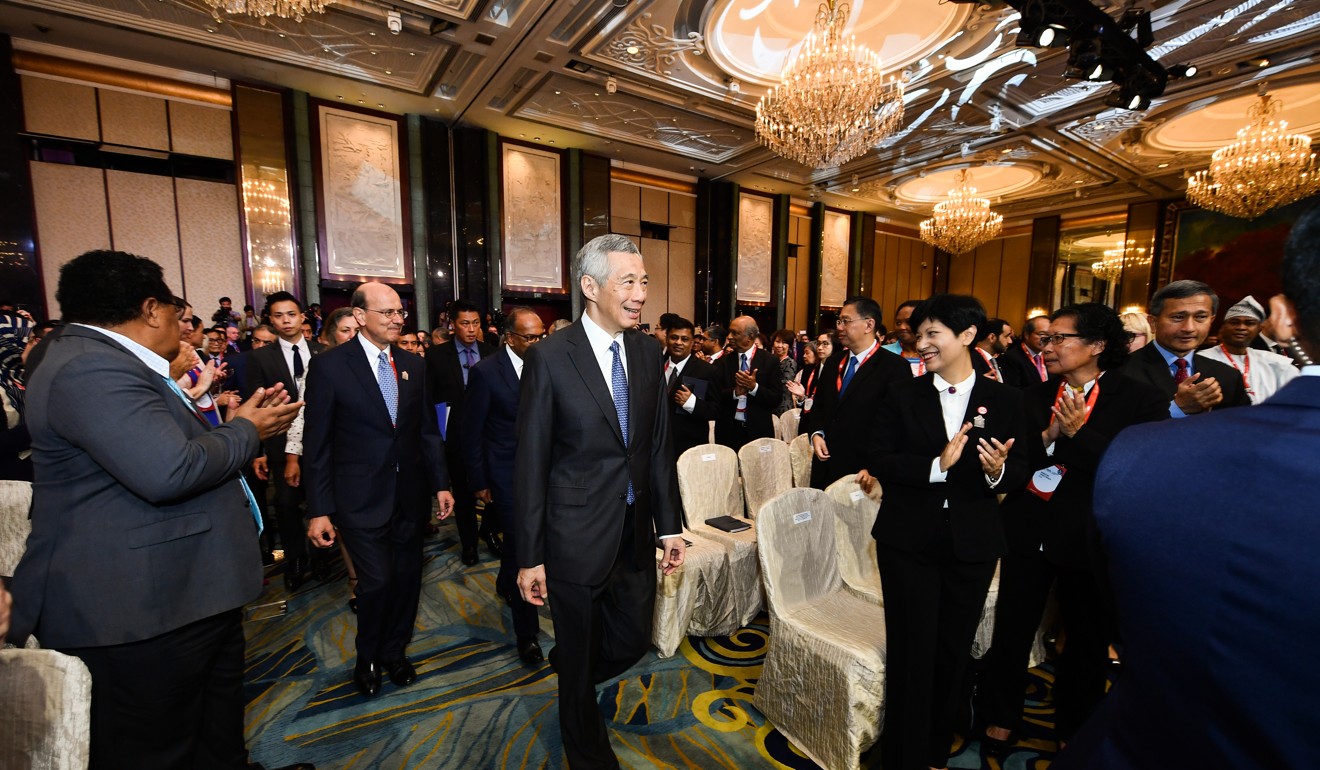
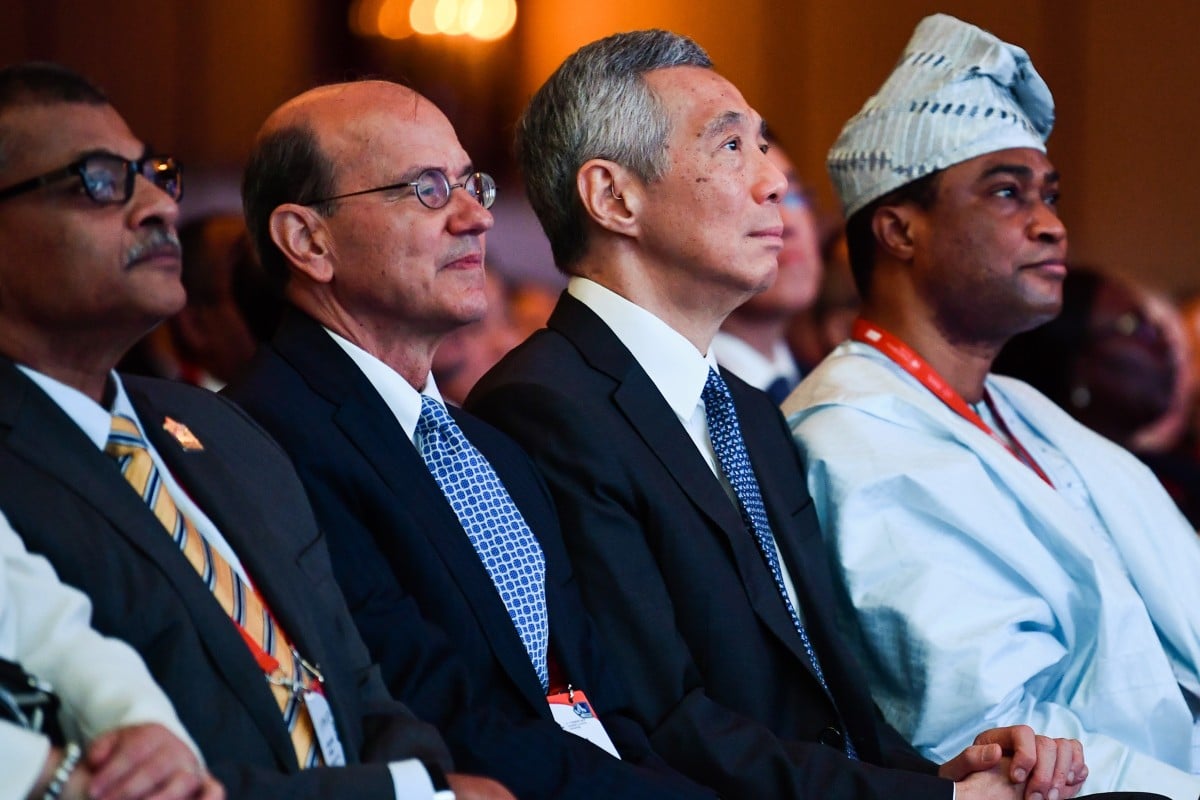
Singapore Prime Minister Lee Hsien Loong attends the signing ceremony of the Singapore Convention on Mediation. Photo: Handout
China and the United States have briefly put aside their escalating trade war and joined 44 other countries in signing a new global protocol on mediation aimed at settling cross-border trade and commercial disputes.
The Singapore Convention, under the United Nations framework, will allow mediation agreements to be recognised and enforced in the courts of all 46 signatories, which include South Korea and India. European Union nations are expected to sign in the next phase.
It was agreed against a backdrop of ongoing tensions between China and the US over tariffs and currency manipulation, and a trade dispute between South Korea and Japan
.
Singapore Prime Minister Lee Hsien Loong addresses delegates at the Singapore Convention on Mediation event. Photo: Handout

Speaking at the signing ceremony, Singapore Prime Minister Lee Hsien Loong said the protocol demonstrated that countries are capable of achieving consensus through effort and creativity, and are open to binding commitments.

He also observed that the established world order of multilateralism is “under pressure”.

“Existing multilateral institutions are not perfect, many are in need of urgent reform, suffer from a loss of confidence, or have practices and structures that are no longer fit for purpose,” Lee said, without elaborating which bodies he was referring to.

He added that the solution would not be to abandon these bodies, but to improve them through reform and bringing them up to date.
“We must make sure they reflect current economic and political realities, and ready them to deal with the new issues created by the progress of technology and globalisation.”

Stephen Mathias, the UN’s assistant secretary-general for legal affairs, said the agreement helped unify mediation rules and remove uncertainty in enforcing mediation agreements.

Delegates attend the signing ceremony of the Singapore Convention. Photo: Handout

The protocol contains standardised terms to apply mediation agreements across jurisdictions, and is expected to bolster the use of mediation rather than legal action to resolve trade disputes.

This rare example of international cooperation can be likened to the New York Convention on arbitration, which was adopted by the UN 60 years ago and is now applied by 160 countries.

Singapore has also capitalised on the naming of the convention, positioning itself as the legal hub in the region, in competition with Hong Kong.

The UN’s Commission on International Trade Law, for instance, has signed a memorandum to establish an academy in international dispute resolution in Singapore.

Hong Kong or Singapore: who to trust on belt and road disputes?
Mediators in Hong Kong said the convention only served to promote their rival city, as Hong Kong professionals remain competitive in the market.
“Lots of cases with a ‘Chinese element’ would pick Hong Kong,” said lawyer Christopher To Wing. “For instance, a US or British firm runs into a dispute with a Chinese firm, they will choose Hong Kong, as the city is close to China.”
But he conceded that more support and funding from the Hong Kong government is needed to catch up with similar promotion efforts by the Singapore government.
Source: SCMP
04/02/2019

Cross-border e-commerce pilot zone opens bonded import business to cut price, logistic time

GUANGZHOU, Feb. 3 (Xinhua) — A cross-border e-commerce pilot zone in south China started its first bonded import business on Sunday, a practice believed to benefit businesses in terms of lower logistics cost and provide consumers with cheap and fine products, local officials said.

The comprehensive cross-border e-commerce pilot zone in Zhuhai, Guangdong Province, ushered in the new business hoping to give full play to the proximity of Hong Kong and Macao.

Zhuhai is connected to the Hong Kong airport since the Hong Kong-Zhuhai-Macao Bridge opened to traffic in October last year.

The business model allows e-commerce platforms to purchase a large quantity of goods from overseas according to their market forecasts and consumer demands. The goods will be imported and stored in the special customs-supervised area before being delivered to consumers as personal items.

Such practices enable e-commerce enterprises to buy quality products from around the world at a lower price with less logistic time, according to Lin Xibin, a local commerce official.

The bonded import business program is expected to attract businesses from China’s Hong Kong and Macao, as well as businesses from Portuguese and Spanish speaking countries and regions.

Zhuhai is one of the 22 cities that was identified as a venue for comprehensive cross-border e-commerce pilot zones by the State Council, or China’s cabinet, in July last year.

China’s e-commerce market has developed at a double-digit pace for years. E-commerce transaction totaled 22.69 trillion yuan in the first three quarters of 2018, up 11.2 percent year on year.

Source:Xinhua

Law of Unintended Consequences

continuously updated blog about China & India

ChiaHou's Book Reviews

continuously updated blog about China & India

What's wrong with the world; and its economy

continuously updated blog about China & India