Archive for ‘Death’

08/07/2019

Seven Silk Road destinations, from China to Italy: towns that grew rich on trade

  • Settlements along the route linking Europe and Asia thrived by providing accommodation and services for countless traders
  • Formally established during the Han dynasty, it was a 19th-century German geographer who coined the term Silk Road
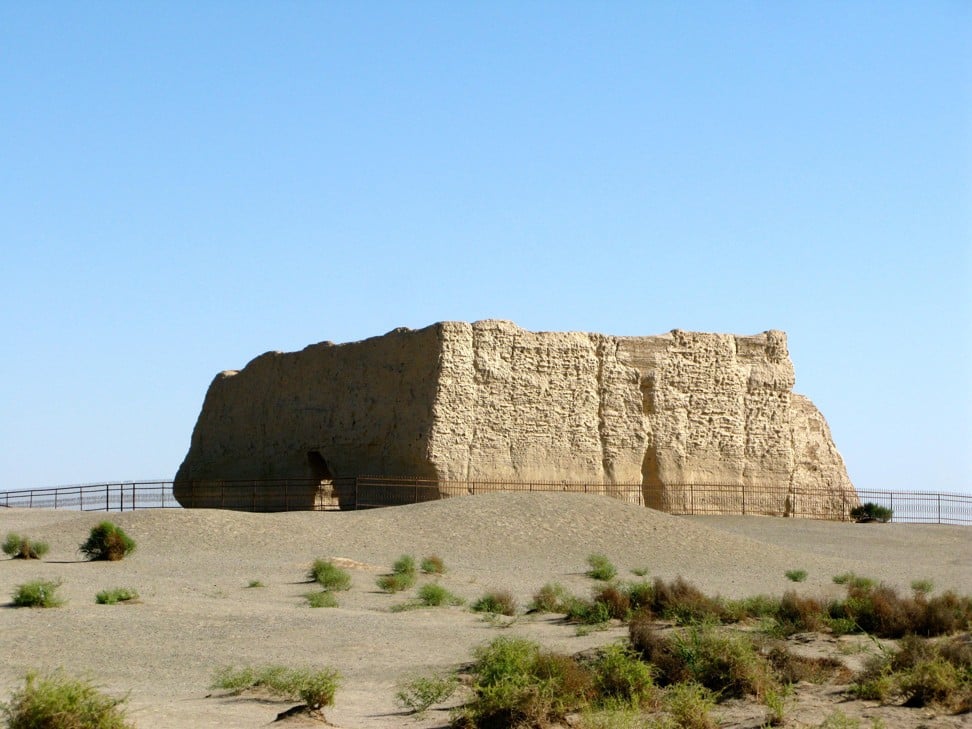
The ruins of a fortified gatehouse and cus­toms post at Yunmenguan Pass, in China’s Gansu province. Photo: Alamy
We have a German geographer, cartographer and explorer to thank for the name of the world’s most famous network of transconti­nental trade routes.
Formally established during the Han dynasty, in the first and second centuries BC, it wasn’t until 1877 that Ferdinand von Richthofen coined the term Silk Road (historians increasingly favour the collective term Silk Routes).
The movement of merchandise between China and Europe had been taking place long before the Han arrived on the scene but it was they who employed troops to keep the roads safe from marauding nomads.
Commerce flourished and goods as varied as carpets and camels, glassware and gold, spices and slaves were traded; as were horses, weapons and armour.
Merchants also moved medicines but they were no match for the bubonic plague, which worked its way west along the Silk Road before devastating huge swathes of 14th century Europe.
What follows are some of the countless kingdoms, territories, (modern-day) nations and cities that grew rich on the proceeds of trade, taxes and tolls.

China

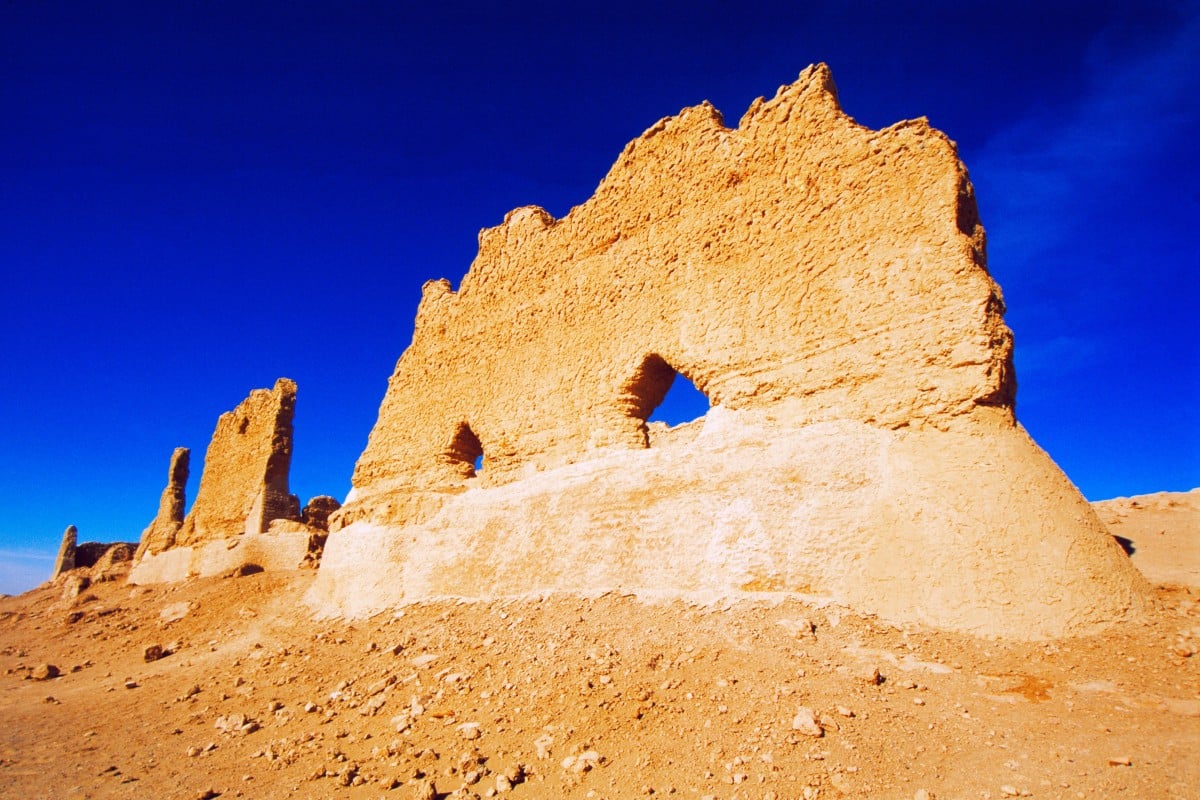
A watchtower made of rammed earth at Dunhuang, a desert outpost at the crossroads of two major Silk Road routes in China’s northwestern Gansu province. Photo: Alamy

Marco Polo worked in the Mongol capital, Khanbaliq (today’s Beijing), and was struck by the level of mercantile activity.

The Venetian gap-year pioneer wrote, “Every day more than a thousand carts loaded with silk enter the city, for a great deal of cloth of gold and silk is woven here.”

Light, easy to transport items such as paper and tea provided Silk Road traders with rich pickings, but it was China’s monopoly on the luxurious shimmering fabric that guaranteed huge profits.

So much so that sneaking silk worms out of the empire was punishable by death.

The desert outpost of Dunhuang found itself at the crossroads of two major Silk Road trade arteries, one leading west through the Pamir Mountains to Central Asia and another south to India.

Built into the Great Wall at nearby Yunmenguan are the ruins of a fortified gatehouse and cus­toms post, which controlled the movement of Silk Road caravans.

Also near Dunhuang, the Mogao Caves contain one of the richest collections of Buddhist art treasures any­where in the world, a legacy of the route to and from the subcontinent.

Afghanistan
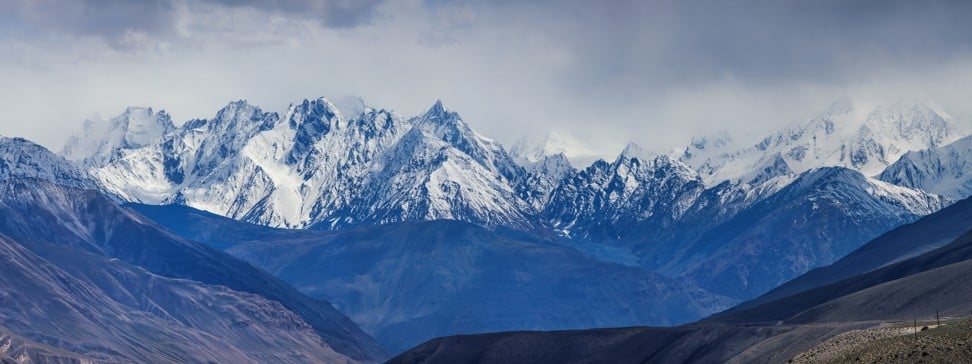
Afghanistan's mountainous terrain was an inescapable part of the Silk Road, until maritime technologies would become the area's undoing. Photo: Shutterstock
Afghanistan’s mountainous terrain was an inescapable part of the Silk Road, until maritime technologies would become the area’s undoing. Photo: Shutterstock

For merchants and middlemen hauling goods through Central Asia, there was no way of bypassing the mountainous lands we know today as Afghanistan.

Evidence of trade can be traced back to long before the Silk Road – locally mined lapis lazuli stones somehow found their way to ancient Egypt, and into Tutankhamun’s funeral mask, created in 1323BC.

Jagged peaks, rough roads in Tajikistan, roof of the world

Besides mercan­tile exchange, the caravan routes were responsible for the sharing of ideas and Afghanistan was a major beneficiary. Art, philosophy, language, science, food, architecture and technology were all exchanged, along with commercial goods.

In fact, maritime technology would eventually be the area’s undoing. By the 15th century, it had become cheaper and more convenient to transport cargo by sea – a far from ideal development for a landlocked region.

Iran
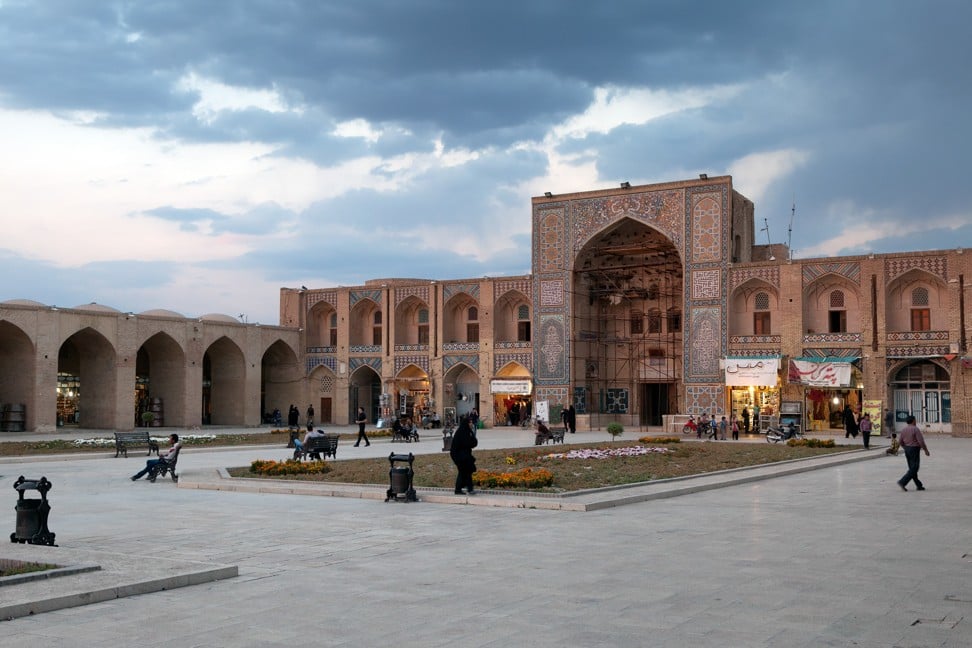
The Ganjali Khan Complex, in Iran. Photo: Shutterstock

Thanks to the Silk Road and the routes that preceded it, the northern Mesopotamian region (present-day Iran) became China’s closest trading partner. Traders rarely journeyed the entire length of the trail, however.

Merchandise was passed along by middlemen who each travelled part of the way and overnighted in caravan­serai, forti­fied inns that provided accom­mo­dation, storerooms for goods and space for pack animals.

The good, bad and ugly sides to visiting Chernobyl and Kiev

With so many wheeler-dealers gathering in one place, the hostelries developed into ad hoc marketplaces.

Marco Polo writes of the Persian kingdom of Kerman, where craftsmen made saddles, bridles, spurs and “arms of every kind”.

Today, in the centre of Kerman, the former caravanserai building forms part of the Ganjali Khan Complex, which incorporates a bazaar, bathhouse and mosque.

Uzbekistan
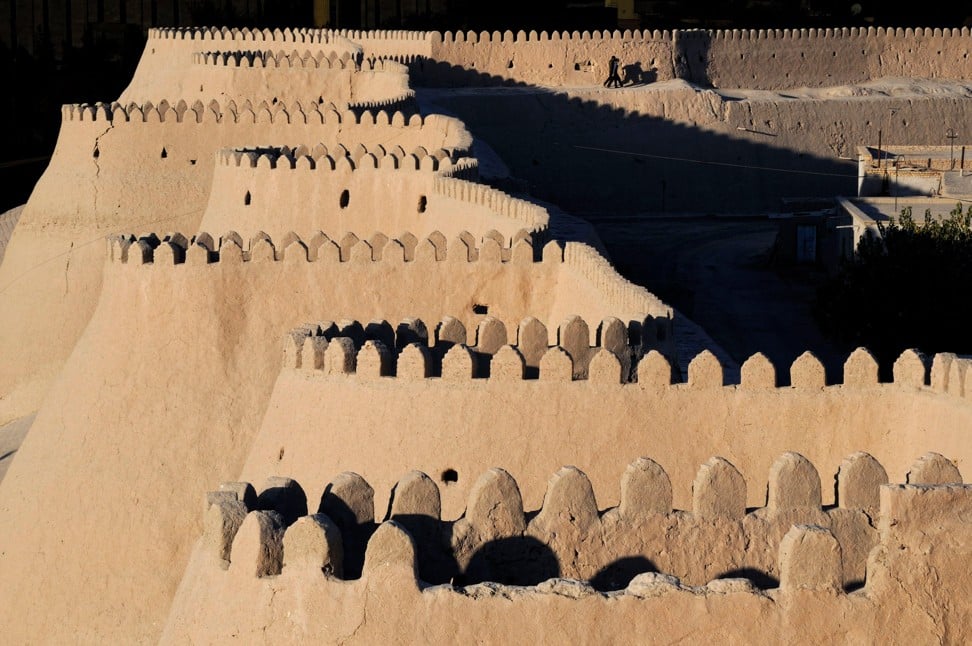
A fort in Khiva, Uzbekistan. Photo: Alamy

The double-landlocked country boasts some of the Silk Road’s most fabled destinations. Forts, such as the one still standing at Khiva, were built to protect traders from bandits; in fact, the city is so well-preserved, it is known as the Museum under the Sky.

The name Samarkand is also deeply entangled with the history of the Silk Road.

The earliest evidence of silk being used outside China can be traced to Bactria, now part of modern Uzbekistan, where four graves from around 1500BC-1200BC contained skeletons wrapped in garments made from the fabric.

Three thousand years later, silk weaving and the production and trade of textiles remain one of Samarkand’s major industries.

Georgia
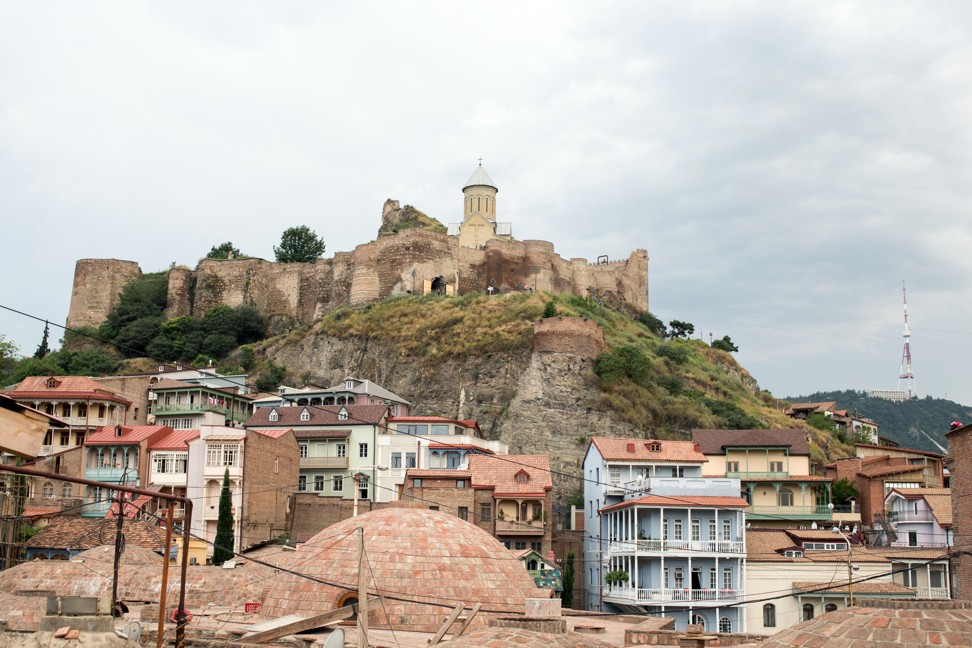
A street in old town of Tbilisi, Georgia. Photo: Alamy

Security issues in Persia led to the opening up of another branch of the legendary trade route and the first caravan loaded with silk made its way across Georgia in AD568.

Marco Polo referred to the weaving of raw silk in “a very large and fine city called Tbilisi”.

Today, the capital has shaken off the Soviet shackles and is on the cusp of going viral.

Travellers lap up the city’s monaster­ies, walled fortresses and 1,000-year-old churches before heading up the Georgian Military Highway to stay in villages nestling in the soaring Caucasus Mountains.

Public minibuses known as marshrutka labour into the foothills and although the vehicles can get cramped and uncomfortable, they beat travelling by camel.

Jordan
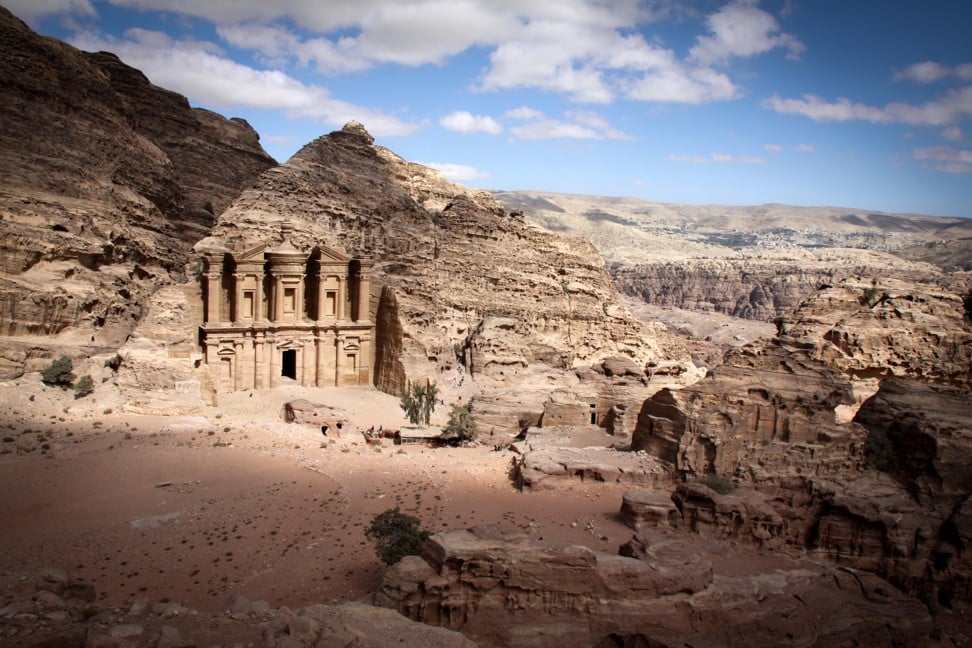
Petra, in Jordan. Photo: Alamy

The location of the Nabataean capital, Petra, wasn’t chosen by chance.

Savvy nomadic herders realised the site would make the perfect pit-stop at the confluence of several caravan trails, including a route to the north through Palmyra (in modern-day Syria), the Arabian peninsula to the south and Mediterranean ports to the west.

Huge payments in the form of taxes and protection money were collected – no wonder the most magnificent of the sand­stone city’s hand-carved buildings is called the Treasury.

The Red Rose City is still a gold mine – today’s tourists pay a hefty

US$70 fee to enter Petra

. The Nabataeans would no doubt approve.

Venice
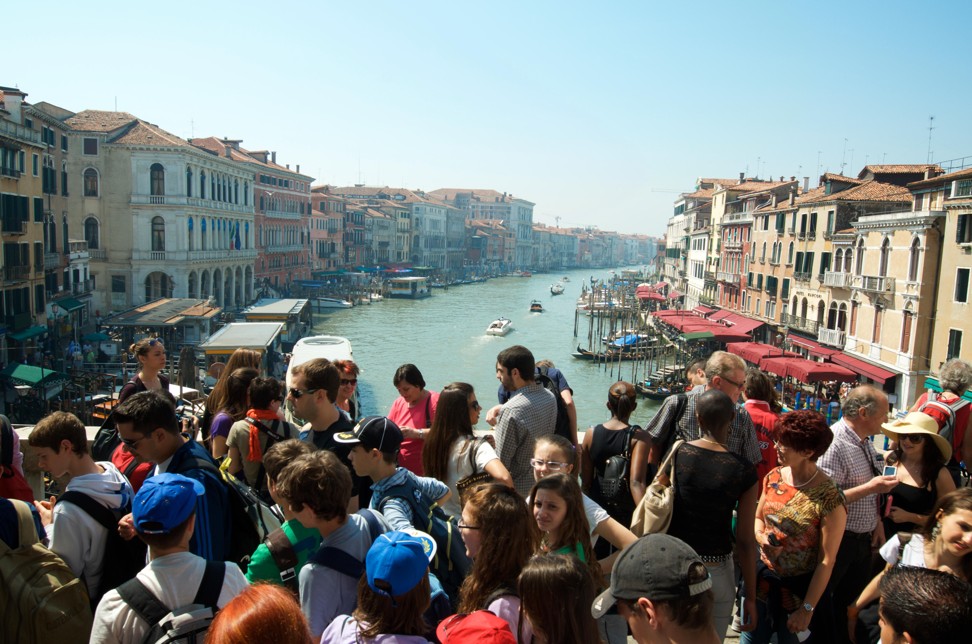
Tourists crowd onto Venice’s Rialto Bridge. Photo: Alamy

Trade enriched Venice beyond measure, helping shape the Adriatic entrepot into the floating marvel we see today.

Besides the well-documented flow of goods heading west, consignments of cotton, ivory, animal furs, grapevines and other goods passed through the strategically sited port on their way east.

Ironically, for a city built on trade and taxes, the biggest problem Venice faces today is visitors who don’t contribute enough to the local economy.

A lack of spending by millions of day-tripping tourists and cruise passengers who aren’t liable for nightly hotel taxes has prompted authorities to introduce a citywide access fee from January 2020.

Two thousand years ago, tariffs and tolls helped Venice develop and prosper. Now they’re needed to prevent its demise.

Source: SCMP
24/02/2019

Fang Fenghui: China’s ex-top general jailed for life

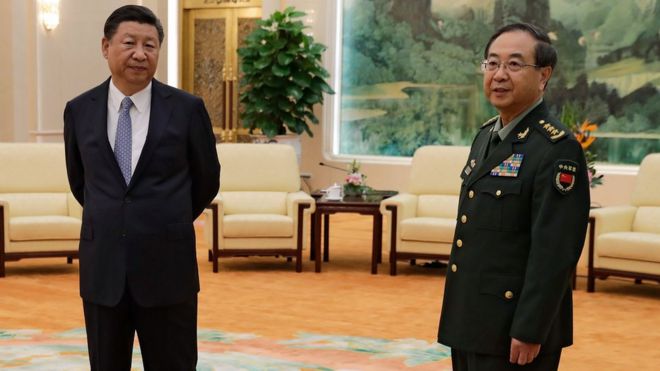
China's President Xi Jinping and General Fang Fenghui, chief of the general staff of the Chinese People's Liberation Army in 2017Image copyrightAFP
Image captionFang Fenghui with President Xi Jinping in 2017

A former high-ranking Chinese general has been sentenced to life in jail for corruption, state media reports.

Fang Fenghui, ex-chief of joint staff of the People’s Liberation Army, was found guilty of bribery and having huge wealth that he had been unable to account for, according to Xinhua.

The 67-year-old accompanied President Xi Jinping in his first meeting with US President Donald Trump in 2017.

Many officials have been jailed in what Mr Xi says is an anti-corruption drive.

The efforts have had a particular focus on the country’s military, which is the world’s largest and is undergoing a modernisation campaign.

Fang Fenghui lost his post with no explanation in 2017 and disappeared from public view. The government later confirmed he was under investigation for alleged corruption.

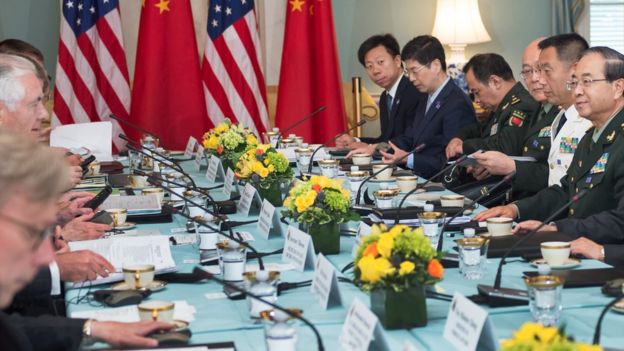
Fang Fenghui in 2017 in meeting with US officialsImage copyrightAFP
Image captionFang Fenghui in a meeting with US officials, including former Secretary of State Rex Tillerson, in Washington in 2017

He was also a member of the powerful Central Military Commission, China’s supreme military body, and was close to Zhang Yang, who also served on the commission and was found dead in 2017 while being investigated for corruption.

Fang was expelled from the Communist Party last year ahead of his trial at a military court.

All his assets have been confiscated, Xinhua adds, without mentioning how much money was involved.

It is unclear whether he was allowed to retain a lawyer, Reuters news agency reports.

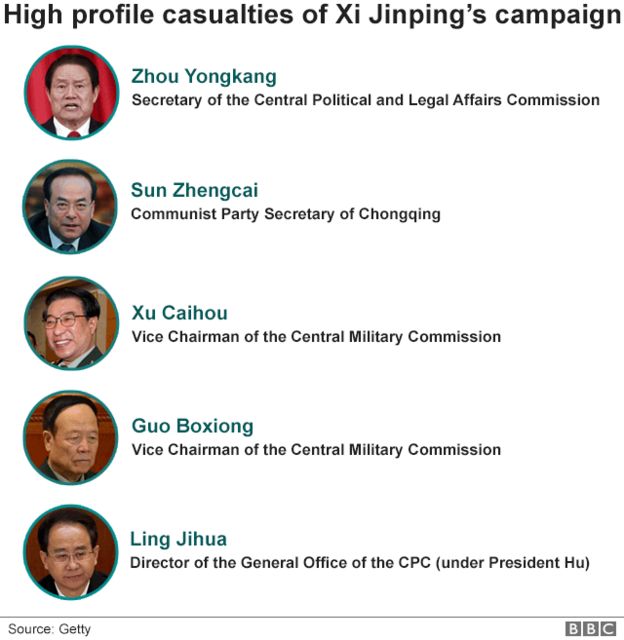
High profile casualties of Xi Jinping's anti-corruption campaign: five people who have been purged by Xi include Zhou Yongkang, Sun Zhengcai, Xu Caihou, Guo Boxiong and Ling Jihua
Presentational white space

More than one million officials have been punished in the anti-corruption drive started by Mr Xi when he took power in 2012, the government says.

They include Xu Caihou and Guo Boxiong, both former vice chairman of the Central Military Commission. Xu died of cancer in 2015 before he could face trial while Guo was sentenced to life in prison for bribery in 2016.

The anti-corruption campaign has been described by some as a massive internal purge of opponents, on a scale not seen since the days of Mao Zedong, in whose Cultural Revolution many top officials were purged.

Source: The BBC

18/02/2019

India asks World Court to order release of man sentenced to death in Pakistan

AMSTERDAM (Reuters) – India asked the World Court on Monday to order the release of an Indian national sentenced to death by Pakistan, saying Islamabad had failed to allow him diplomatic assistance before his conviction, as required by an international treaty.

The hearings at the U.N. court, formally known as the International Court of Justice (ICJ), revolve around the case of Kulbhushan Sudhir Jadhav, a former Indian navy commander who was arrested in Pakistan in March 2016 and convicted of spying.

Hearings in the case, which will run for four days, come at a time of intense tension between the nuclear-armed neighbours, as Indian Prime Minister Narendra Modi has warned of a “strong response” to a suicide attack on a convoy in Kashmir last week that killed 44 Indians.

“It would be in the interest of justice, of making human rights a reality, to direct his (Jadhav’s) release,” said Harish Salve, India’s senior counsel.

Pakistan is due to respond at the ICJ on Tuesday. Officials in Islamabad said ahead of the hearing that India was trying to use the court intended to resolve international disputes as a criminal appeals court. They also said the relief sought by India is disproportionate even if the treaty were violated, and at most Jadhav’s case could be reviewed.

India filed a claim against Pakistan before the ICJ in May 2017 arguing Islamabad had breached the 1963 Vienna Convention by not allowing diplomatic assistance to Jadhav during his secretive trial. India won an injunction that ordered Jadhav’s execution stayed while the court looked into the case.

No date has been set for a ruling, which will likely come months after the close of the hearings.

The ICJ is the U.N.’s highest court, and its decisions are binding — though it has no power to enforce them and they have been ignored in rare instances.

The 1963 treaty has been a frequent source of cases before the ICJ. A 2004 ruling led the United States to review the cases of dozens of Mexican citizens on U.S. death row after they were found not to have been granted consular access.

Source: Reuters
15/12/2018

Mystery shrouds death of 11 people who consumed temple food in Karnataka

Police confirm that the symptoms of the patients are consistent with poisoning through organophosphate,a common pesticide. Samples of the food have been sent for analysis.

INDIA Updated: Dec 15, 2018 20:16 IST

Vikram Gopal
Vikram Gopal
Sulawadi (Karnataka)
temple,prasad,Karnataka
Eleven people died and around 90 are in hospital, with the condition of many, including around 10 children, critical after eating food served at the Kicchugathi Maramma temple. (HT Photo)

A posse of policemen sits in the shade, keeping an eye on the people gathered in front of the unimposing structure of the Kicchugathi Maramma temple. On farmland opposite the temple, three forest officials are trying to manage a crowd gathered to see the carcasses of dead crows, around 20 of them.

This is the scene at Sulawadi, 200 km from Bengaluru, a day after 11 people died after eating food served at the temple. Around 90 are in hospital, with the condition of many, including around 10 children, critical. The crows died when they ate the food that was thrown away. By Saturday afternoon, Sulwadi has become a magnet for people from neighbouring villages.

Police confirm that the symptoms of the patients are consistent with poisoning through organophosphate,a common pesticide. Samples of the food have been sent for analysis.

Japamalai, a former gram panchayat member of the village, which is located 5 km from the Tamil Nadu border, stands at the centre of the clearing in front of the temple, eager to tell all the outsiders about the politics of the village, which he believes is at the heart of the tragedy, and others pitch in to fill the gaps.

According to them, tensions flared up in the village over the control of the temple, highly revered in the area. It is one of the temples that believers of the Om Shakti cult visit on the way to Melmaruvathur in Tamil Nadu, which has traditions much like the Sabarimala temple, including vows of purity that range from one week to 48 days.

Chinnappi, one of five persons taken in for questioning, was the chief trustee of the temple and nurtured ambitions of building a new dome for the temple. This was opposed by Immadi Mahadeva Swamy, “who also wished to have control of the trust”, Japamalai said. Many claim it was this fight that led to one faction adding pesticide in the food.

On Friday, Chinnappi held a small feast for about 100 people as part of a stone laying ceremony for the construction of the new dome. Among those who were present at the time were a large number of Om Shakti devotees who were passing by and decided to partake of the meal.

Around 20 crows died when they ate the food that was thrown away. (HT Photo)

Murugappa, one of the locals, said there was a foul smell in the food, but people continued to eat it. “Only a few of us threw the food away because there is a belief that you can’t refuse temple food.”

The only problem with this conspiracy theory is that the three cooks ate the food and are in hospital. Dharmender Singh Meena, Superintendent of Police for the district, said the three, Eeranna, Lokesh and Puttaswamy are in critical condition in a hospital in Mysuru.

Puttaswamy’s daughter Anita died after consuming the food, he added. “While it is almost certain at this point that there was poisoning we cannot be sure if there was criminal intent involved because the cooks have taken ill,” Meena said.

Indeed, locals at Sulawadi find it hard to understand how the food could have been poisoned. The kitchen is located behind the temple, where the trust has built a shelter for devotees who wished to rest there. All three cooks were on the payroll of the temple trust for years, Japamalai said.

Japamalai and Murugappa said the trouble began around 1 pm when some people complained of feeling sick. “Soon, people were throwing up on the side of the road and others just fell down,” Murugappa said.

About 40 km from Sulawadi, a large group of people have gathered at the government hospital in Hanur town, waiting to collect the body of Shantaraju, a Dalit from nearby Bidarahalli, who was at the temple as part of the Om Shakti devotees’ group.

Nagaraj, Shantaraju’s brother-in-law, asks his other relatives who gathered at the spot to sit down for a flash protest. “We will not leave this place till the accused is produced in front of us and we are allowed to dispense justice,” he says, before the policemen present at the spot calm him down.

Currently, 93 people are undergoing treatment at various hospitals in Mysuru, the minister in charge of the district, C Puttarangashetty said. “It is clear that there is foul play involved and we have asked the police to bring the guilty to book at the soonest,” he said. Of the 93, 29 are said to be in a critical condition.

The police are awaiting the results of tests conducted by the forensics lab in Mysuru to see if it throws up any more clues. “At present, we are questioning five people, Chinnappi, Mahadesha, Mahadeva and two others, whose identities cannot be revealed at this moment,” Meena said. “We have sent viscera and food samples to the forensics lab and I personally asked them to expedite the process,” he added.

Karnataka Chief minister HD Kumaraswamy announced a compensation of Rs 5 lakh each for the families of the deceased.

Law of Unintended Consequences

continuously updated blog about China & India

ChiaHou's Book Reviews

continuously updated blog about China & India

What's wrong with the world; and its economy

continuously updated blog about China & India