Archive for ‘destined’

31/05/2020

Destined for conflict? Xi Jinping, Donald Trump and the Thucydides trap

  • Tense relations with the US and the question of whether armed confrontation can be avoided will loom large when China’s political elites meet
  • Structural shifts in balance of power have brought the countries closer to the brink, analyst says, with the South China Sea the most likely flashpoint
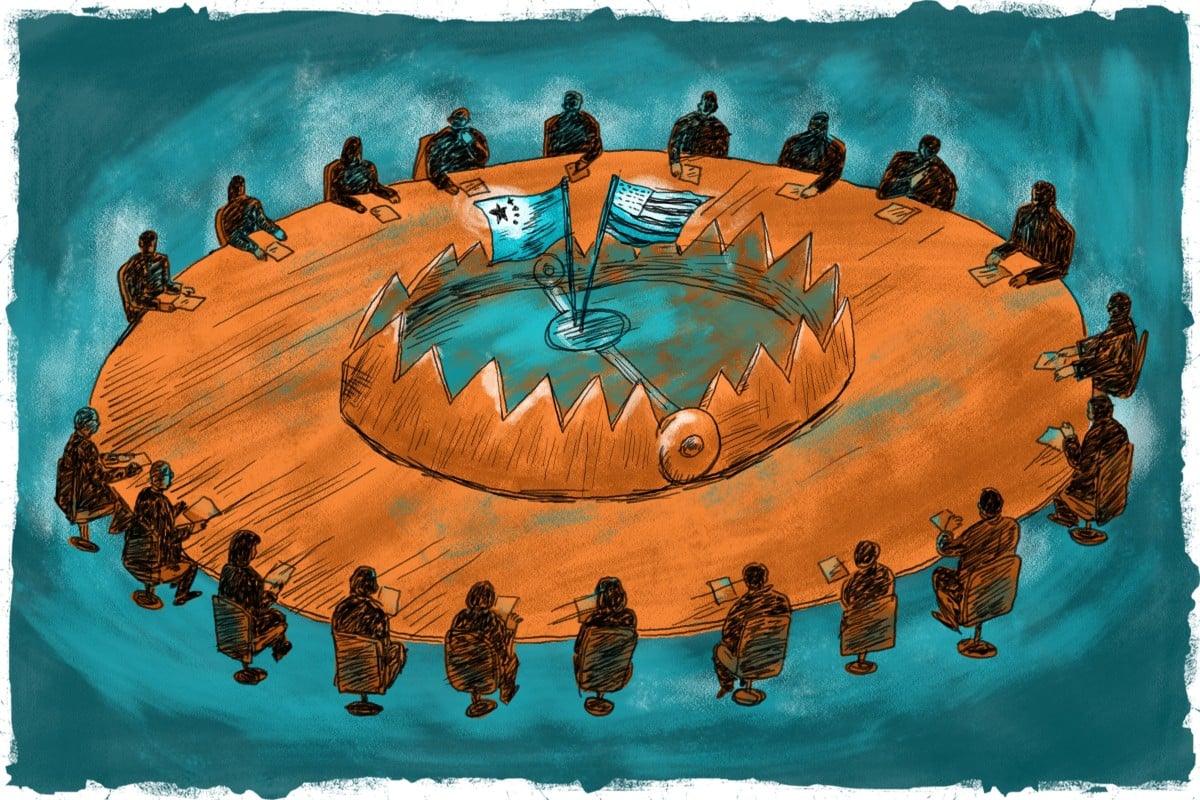
Illustration: Brian Wang
This is the fifth in a nine-part series examining the issues Chinese leaders face as they gather for their annual “two sessions” of the National People’s Congress and Chinese People’s Political Consultative Conference this week. This story looks at the sharp decline of US-China ties, and where it may lead.
When thousands of China’s elites flock to Beijing for the delayed national legislative session starting on Friday they will face a renewed debate about relations with the US. Specifically, can armed conflict between the two economic superpowers be avoided?
The question is not new, but it has taken on a new urgency as the acrimony escalates between Washington and Beijing amid the Covid-19 pandemic, exposing growing cracks in the current global order.

Harvard professor Graham Allison raised the question in a 2017 book, Destined for War: Can America and China Escape Thucydides’ Trap? The reference being to the Greek historian of 2,500 years ago and the conundrum named after him on the likelihood of armed conflict when a rising power challenges a ruling power.

President Xi Jinping has shown personal interest in the Thucydides trap concept, which Allison first posed in a 2012 newspaper article, referencing it on at least three occasions, including the eve of the swearing-in ceremony of US President Donald Trump three years ago.

Speaking at the World Economic Forum in Davos in January 2017, Xi said the Thucydides trap “can be avoided … as long as we maintain communication and treat each other with sincerity”.
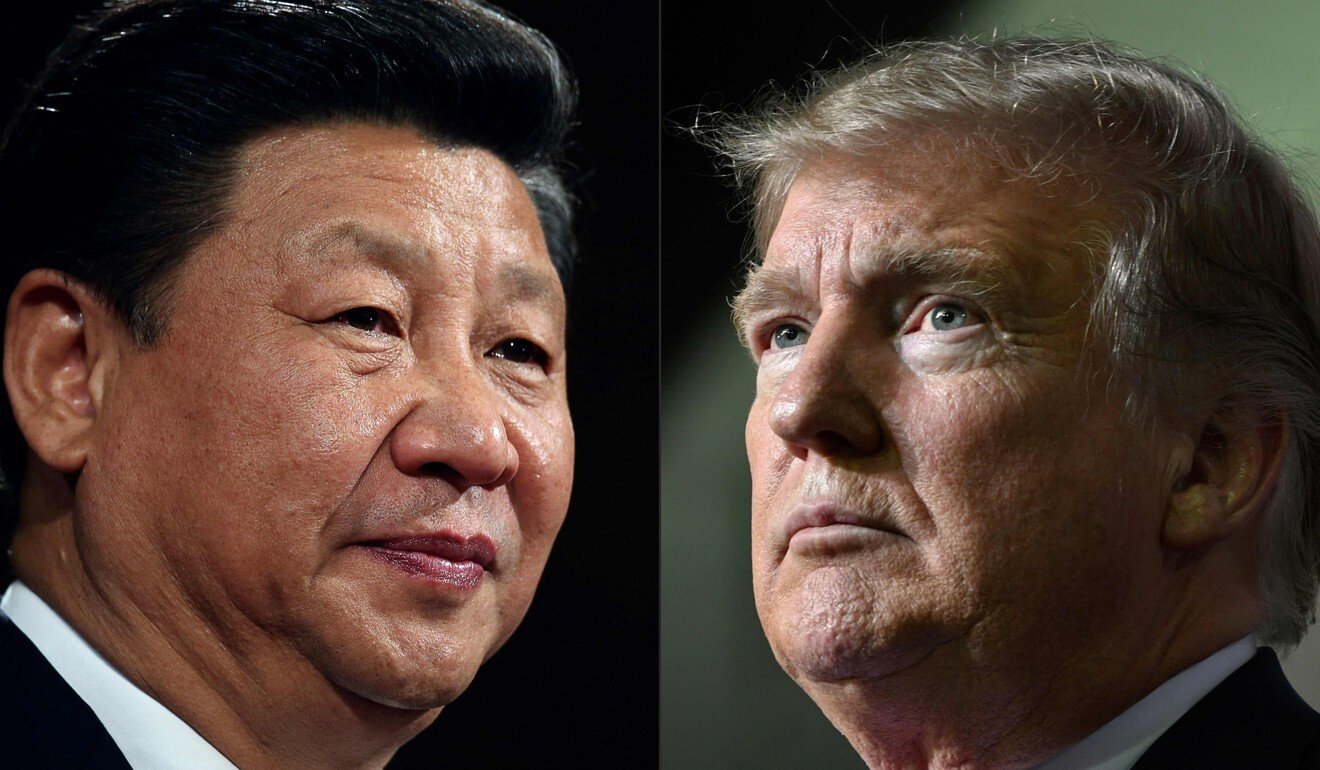
Xi Jinping referenced the Thucydides trap concept on the eve of Donald Trump’s swearing-in ceremony. Photos: AFP
But since then, the devastating Covid-19 pandemic has driven the deeply fraught US-China relations to the brink of an all-out confrontation as a result of strategic distrust and misperception, said Wang Jisi, president of Peking University’s Institute of International and Strategic Studies.

“China and the US are shifting from an all-around competition to a full-scale confrontation, with little room for compromise and manoeuvring,” Wang said in a speech in late March. “We cannot rule out the possibility that the two powers may fall into the Thucydides trap.”

That seems to sum up the tone of recent communications from the US side. Trump has vowed to “take whatever actions that are necessary” to seek reparations and hold China accountable for the Covid-19 disease that was first identified in the city of Wuhan at the end of last year. His top aides, especially Secretary of State Mike Pompeo and Defence Secretary Mark Esper, have been particularly blunt.
During the Munich Security Conference in February, Esper described China as a rising threat to the world order and urged countries to side with the US in preparing for “high intensity conflict against China”.

The prospects for bilateral ties are deeply worrying and we are just one step away from a new cold warZhu Feng, Nanjing University

Mainland authorities are usually reluctant to play up sensitive diplomatic topics during the annual gatherings of the National People’s Congress and the Chinese People’s Political Consultative Conference, known as the “two sessions”.

Domestic concerns, especially the socio-economic upheaval wrought by the pandemic, will no doubt dominate the week-long meetings as the country faces the deepest economic contraction in decades, mass unemployment, and a possible manufacturing exodus from China.

However, the sharp decline in relations with the US in recent months and its possible consequences are expected to loom large in the minds of over 5,000 participants at the two sessions, according to Gu Su, a political scientist at Nanjing University.

“Considering the boiling tensions with the US over Covid-19 and the resulting scrutiny of China’s global ambitions – which have dealt a heavy blow to the economy, especially at local levels, and left the country increasingly isolated – it may be hard to suppress such discussions,” Gu said.

Given the widespread public interest in these contentious topics, Xi and other top leaders may need to weigh in personally and set the tone for the national debate, especially on the future of China and US relations, he said.

But it would be unrealistic to expect major policy decisions on diplomacy, as “the two sessions are not usually known for substantial foreign policy deliberations”, said Zhu Feng, an international affairs expert at Nanjing University.

Paramilitary police officers patrol in Tiananmen Square near the Great Hall of the People in Beijing, where China’s political elites are about to meet for the “two sessions”. Photo: Reuters

‘Worst-case scenarios’

The deterioration of US-China ties has clearly alarmed Xi and his top aides. On April 8, the Chinese leader issued an unusually stark warning that “we must get ready for the worst-case scenarios” in light of unprecedented external adversity and challenges, according to Xinhua.
While the state news agency did not elaborate on what Xi meant by worst-case scenarios, a recent study by a Chinese government-backed think tank offered some hints.

The China Institutes of Contemporary International Relations (CICIR), affiliated with the Ministry of State Security, said Beijing may need to prepare for armed confrontation with Washington amid the worst anti-China backlash since the Tiananmen crackdown in 1989, according to Reuters, which cited an internal report.

The report warned that China’s overseas investments, especially the ambitious Belt and Road Initiative, could fall victim to rising anti-Chinese sentiments, while the US may accelerate efforts to counter Beijing’s expanding clout by increasing financial and military support for regional allies.

While the think tank declined to confirm the Reuters story, many international relations analysts shared similar bleak assessments of US-China relations.

“We are already in an all-around confrontation with the US, which sees both sides at odds on almost every front – from trade and tech tensions, military, ideological and geopolitical rivalry, to political and legal battles over the coronavirus,” Zhu said. “The prospects for bilateral ties are deeply worrying and we are just one step away from a new cold war.”

With much of the world still in the grip of the Covid-19 pandemic, Beijing’s critics and opponents, led by the US, have upped the ante in the blame-shifting game as they line up to pursue an international investigation into the origins of the deadly virus.

The coronavirus has also derailed most of China’s diplomatic agenda for the first half of the year, with Xi’s planned state visits to Japan and South Korea postponed.

Meanwhile, China’s relations with the European Union have become more tense, though Beijing managed to dodge a bullet at this week’s World Health Assembly, which adopted a mildly worded resolution drafted by the EU to carry out an independent inquiry into different countries’ response to the outbreak at “an appropriate time”.

But a growing number of European countries have pushed back against China’s diplomatic assertiveness and followed Washington’s lead to press Beijing for greater transparency over the coronavirus.

Shelley Rigger, a political science professor at Davidson College in North Carolina, said the CICIR report, if confirmed, offered a clear-eyed assessment of the situation and did not have the usual triumphalist tone present in many papers on international relations from China.

“That’s a good thing. Everyone needs to be realistic, and not indulge in wishful thinking or overconfidence,” she said.
The ‘two sessions’ explained: China’s most important political meetings of the year
Seth Jaffe, assistant professor of political science and international affairs at John Cabot University in Rome and an expert on Greek history, said the Chinese think tank report was “profoundly concerning”.
“The acrimonious narratives surrounding Covid-19 are currently reshaping the attitudes of leaders and populations alike, which is leading to harder-line strategic postures, as evidenced by the hawkish CICIR report,” he said. “In this way, the virus blame game is stirring up nationalistic pride and grievance, narrowing the space for political leaders to manoeuvre, and creating zero-sum dynamics that invite future conflict – a vicious cycle.”
According to Jaffe, the author of Thucydides on the Outbreak of War: Character and Contest, although the temperaments of Trump and Xi would matter enormously in any actual crisis, it was the structural shifts in the balance of power in recent years that had brought the two sides closer to the brink.
The most likely collision scenario, he said, would be in the South China Sea.
“I still worry most about military close encounters associated with American freedom of navigation operations, which could rapidly escalate in unintended but dangerous directions, for example, in the direction of a serious naval conflict.”
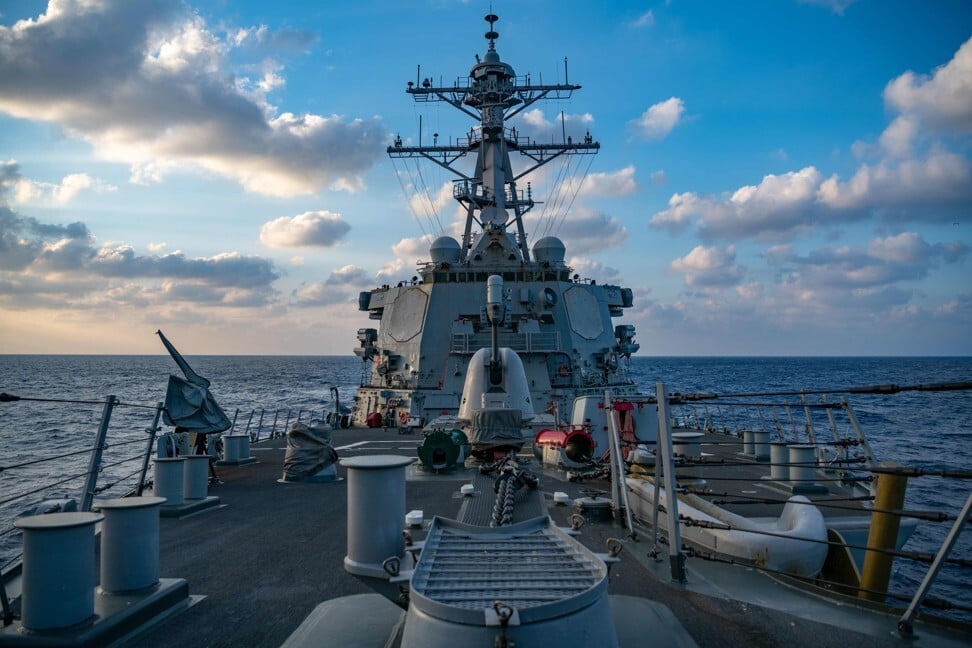
Guided-missile destroyer the USS Barry sails in the South China Sea last month. Photo: AFP
He said an international incident would put Trump and Xi on a reputational collision course, with each leader facing pressure to stand up to the other and not back down, given the mistrust and heated rhetoric.
“The danger, then, is an unforeseen spark, which could set off a frightening movement up the escalation ladder,” he added.
Zhao Tong, a senior fellow at the Carnegie-Tsinghua Centre for Global Policy in Beijing, also expressed concern that military incidents and conflicts with the US had become “less unimaginable given how quickly mutual animosity is building”.
Nationalist sentiment
In recent months, many senior Chinese diplomats have risen to Xi’s hardline, nationalist call and displayed their “fighting spirit”, often at the expense of the country’s global image.
“In future crises, if People’s Liberation Army officers, like some Chinese diplomats, calculate that it is in their personal interests to act extra tough, even if they know their aggression could cause war and cost China dearly, they might still feel incentivised to do so,” Zhao said.
To make things worse, according to Zhang Tuosheng, a security analyst from the China Foundation for International and Strategic Studies, Beijing and Washington had yet to set up an operational crisis management mechanism.

The Chinese leadership surely understands the massive costs of military action against TaiwanShelley Rigger, Davidson College

“One of the major lessons is that we’ve paid scant attention to the establishment of a series of mechanisms that have proven necessary during the Cold War era in preventing tensions spiralling out of control in the event of emergencies or a real crisis,” he said.
Beijing made clear its resentment over the warming ties between Washington and Taipei ahead of and during Taiwanese President Tsai Ing-wen’s inauguration on Wednesday, but a military confrontation over the self-ruled island in the near term was not likely, according to Rigger.
“The Chinese leadership surely understands the massive costs – in blood, treasure and reputation – of military action against Taiwan. They are way too smart to count on the US not intervening,” she said.
Rigger noted several retired PLA officers, including 
air force Major General Qiao Liang

, had unusually toned down their hawkish stance on seeking reunification with Taiwan by force.

“That is a frustrating message for many Chinese to hear, but war is very costly and very unpredictable – something the US has learned through painful experience,” she said.

While experts called for efforts to lower tensions in the lead-up to the US presidential election in November, most said that would largely hinge on Trump.

“Anything is possible with Trump,” Rigger said. “If he thinks better relations with China will help him win re-election, he will do whatever it takes to turn the relationship around. I’d be really surprised if the Chinese leadership didn’t respond positively to such an opportunity.”

But Zhu said it would be naive to pin hopes on Trump, who was desperate to play the China card in his re-election campaign.

“Beijing should be particularly cautious on Taiwan and the South China Sea disputes and should not engage in rhetorical tit-for-tat with Washington,” he said. “We need to look beyond the Trump presidency and prioritise the steady development of bilateral relations over the need to outcompete Trump.”

Source: SCMP
02/04/2020

China’s race to produce ‘super pigs’ destined to fail amid haphazard biosecurity, experts say

  • China’s pig herd has begun to build again after African swine fever devastated hog populations across the country 18 months ago
  • Scientists are racing to create disease-resistant pigs, but analysts say that will be undermined by basic hygiene problems in China’s pork industry
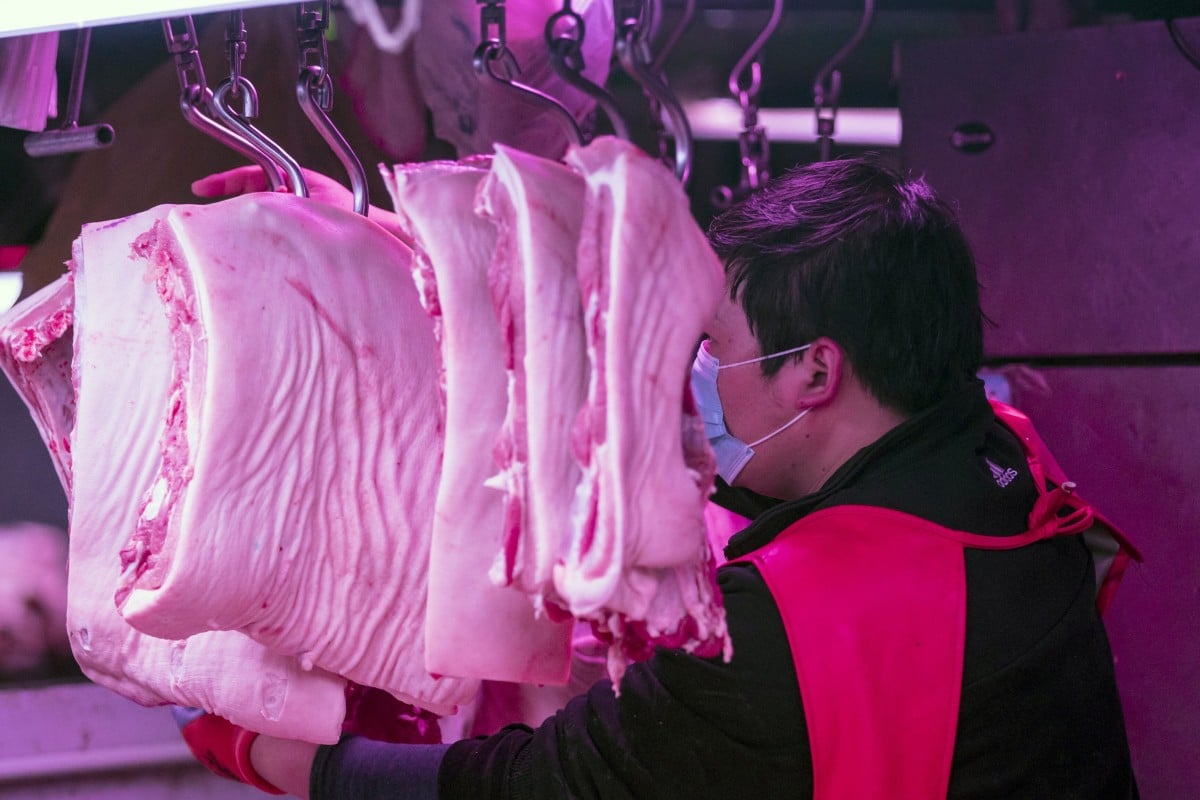
China’s pork industry has been severely dented by African swine fever disease in the past 18 months. Photo: Bloomberg

China should focus less on developing disease-resistant “super pigs” to protect its hog herd from infection and do more to improve basic biosecurity, analysts say, as several companies claim to be close to a breakthrough treatment for African swine fever.

China’s hog herd has begun to steadily rebuild after swine fever spread across the country a year and a half ago, killing or forcing the culling of 60 per cent of the pig population, according to authorities.

But poor biosecurity – including the transport of pigs in filthy trucks and a lack of disinfection at farms – still threaten the industry, observers said.

There is no commercially available vaccine for the disease – which is not harmful to humans – but a number of researchers claim they are close.

Swine fever could kill 25% of the world’s pigs, scientists say
China’s Harbin Veterinary Research Institute, the country’s top research body on animal diseases, said last month it had developed a vaccine for African swine fever (ASF) that laboratory testing showed was safe and effective. However, it did not give a timetable on when it would be available for commercial use.

Meanwhile,Shandong Landsee Genetics, a company in China’s eastern Shandong province, was reported this week to have successfully bred ASF-resistant pigs. The pigs, called Lansibai-2, are from the large white breed, one of the most common raised in China.

When approached for comment, a spokeswoman for the company said the research was confidential and she was not authorised to speak to media.

Despite the apparent progress, analysts are generally sceptical that a silver bullet to prevent the disease will be developed on a large scale any time soon.

“Because this disease has been found in many countries, I don’t think there has been major progress [when it comes to eliminating the disease],” said Chenjun Pan, senior analyst for animal protein at Rabobank. “There have been some vaccines, but the effectiveness of the vaccines is not that satisfactory. So far there haven’t been any solutions from a medical perspective.”

There have been some vaccines, but the effectiveness of the vaccines is not that satisfactory – Chenjun Pan

China’s swine fever problem was complicated by an unwillingness from local governments to diagnose and report ASF cases, said E.W. Johnson, of Enable AgTech Consulting in Beijing. It was also complicated by basic hygiene problems, he added.

“Pigs with ASF are sold to slaughter every day, and dirty trucks are going everywhere, spreading the disease as much as they did when the ASF outbreak began,” Johnson said.

“There is no doubt that people are very excited and extremely zealous about these super-pigs. [But] China seems intent on living with ASF rather than getting rid of it.”

“The most important problem now is how to control the ASF epidemic, and this is not the way to do it,” said Feng Yonghui, chief analyst at pork industry website Soozhu.com. “The whole global industry recognises that the greatest preventive measure is improving biosecurity.”

he whole global industry recognises that the greatest preventive measure is improving biosecurity – E.W. Johnson

Improved hygiene can lower the risk of disease in production, said Feng, including sickness caused by bacteria and viruses, like transmissible gastroenteritis, a coronavirus found in pigs.
“It’s a system – you can’t just do one step in the process,” he said. “The whole industry has to study it, and we still need time to improve.”
Basic controls – like keeping pig transport trucks clean, or disinfecting protective equipment used by workers on pig farms – is simple but comes at a price, and some smaller pig farms are struggling to keep up.
China’s outbreak of African swine fever pushes pork off the Lunar New Year menu
“What we’re worried about are the people on the lower rungs of the ladder who aren’t able to keep up with better practises,” Feng said. “If we are to get pig stocks back up to where they were before the outbreak within three years, this is the key issue that stands in the way.”
China’s pork industry is at a turning point in production unlike at any other time in history, he said.
“In the past, when it came to upgrading production, or when the industry went into loss, all producers big and small began again at the same starting line,” he said. “That’s because there was no threat of disease. Now, those with money get to run first.”
Pork prices in China, the world’s top consumer and producer of pork, have surged since AFS began cutting back supply, driving margins up for both domestic and imported pork.
The world’s biggest pork processor, Hong Kong-listed WH Group, reported a 32 per cent jump in profits last year as record high pork prices in China boosted the value of the company’s exports from the United States and lifted margins on its China sales.
China’s deadly African swine fever epidemic is spreading across Asia
China’s total pork production in 2019 was 42.55 million tons, a decrease of 21.3 per cent from 2018, data from the National Bureau of Statistics showed. In 2018, the total pork output was 54.037 million tons, down 0.9 per cent from 2017.
While researchers race to find a cure for swine fever, new cases keep cropping up across the country. On Wednesday, the Ministry of Agriculture and Rural Affairs said local authorities in Sichuan had detected infections in piglets transported from outside the province.
Another outbreak was recorded in Inner Mongolia, where local authorities detected the disease in a herd of 200 piglets on a farm in Ordos city, which killed 92 of the animals, according to the agriculture industry.
Authorities are also monitoring cases of ASF in piglets smuggled into the country and would launch a 60-day investigation into illegal transport of hogs this month.
Source: SCMP
Law of Unintended Consequences

continuously updated blog about China & India

ChiaHou's Book Reviews

continuously updated blog about China & India

What's wrong with the world; and its economy

continuously updated blog about China & India