22/03/2020
- Move will help air force with patrols and combat-readiness near Taiwan and in the East and South China seas, according to observers
- Markings including national flag and service insignia will also be standardised under new guidelines
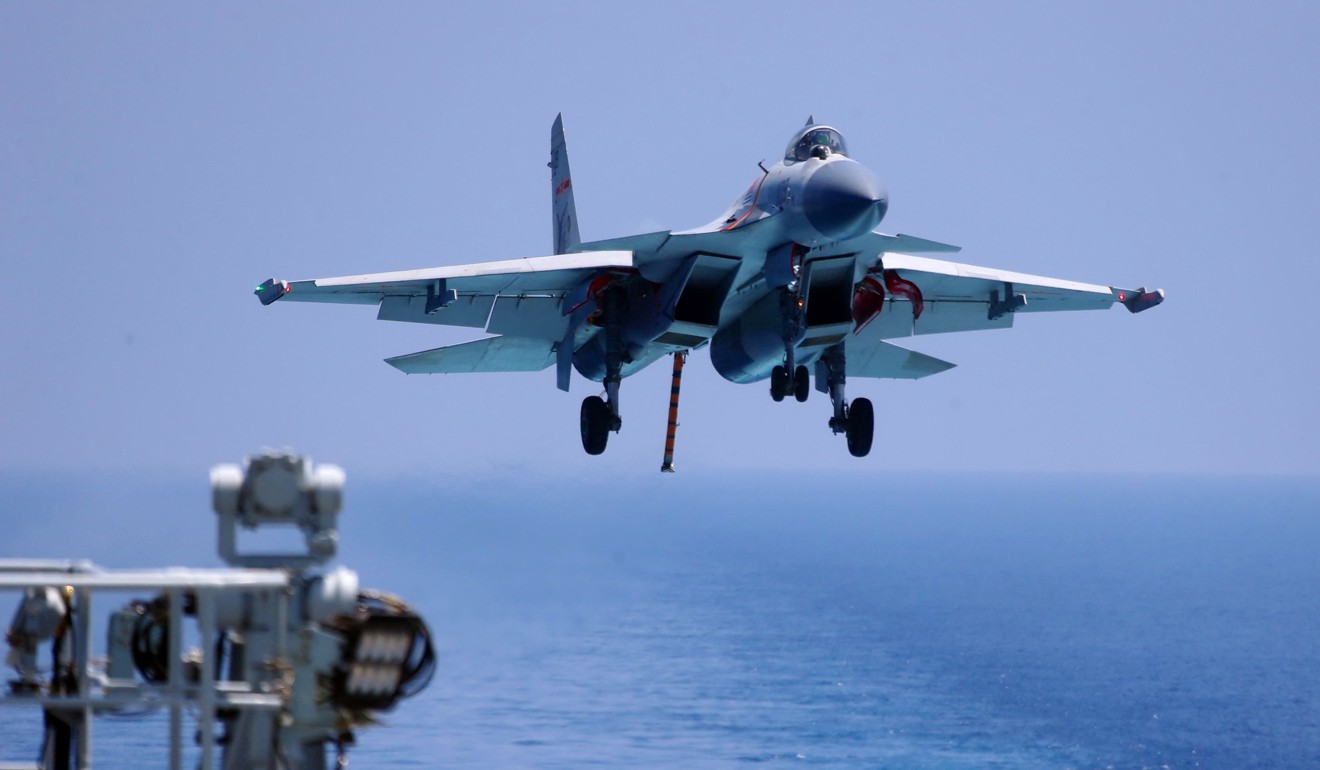
Chinese military aircraft will get “low observable” coatings and standardised markings. Photo: Xinhua
Chinese military aircraft are to be painted with “low observable” coatings and standardised markings under new guidelines, a move observers say will assist with operations near Taiwan and in the East and South China seas.
The guidelines require markings including the national flag and service insignia to be gradually standardised on both active and future warplanes, the official PLA Daily newspaper said earlier this month.
The move comes two years after the Chinese navy started experimenting with its J-16 strike fighter, using a dark grey low-visibility coating instead of blue-grey, and replacing its service insignia with a new design, according to military magazine Ordnance Industry Science Technology.
Some of the navy’s only active aircraft carrier-based fighter jets, the J-15s, have also been given new coatings and markings, according to the People’s Liberation Army’s official website.
PLA Daily said the move aimed to give Chinese warplanes a combat advantage as they “will be less likely to be detected by both the naked eye and military radar”. It said the new guidelines would be gradually implemented this year.
Some of the aircraft carrier-based J-15 fighter jets already have the new coatings. Photo: AFP
Macau-based military observer Antony Wong Dong said the move would help the air force improve patrols and combat-readiness as it carried out more drills near the Taiwan Strait and in the East and South China seas.
China’s air force and navy have sent warplanes including Su-35 fighter jets, H-6K strategic bombers and advanced KJ-2000 airborne early warning aircraft to conduct “encirclement” drills around Taiwan since 2018, as Beijing applies pressure on the self-ruled island that it sees as part of its territory. But none of the aircraft seen in photographs of the exercises had low-visibility coatings or standardised markings, as used on the navy’s J-16s and J-15s.
US spy plane pilots use China’s satellite navigation system as backup
“Aircraft used by the PLA Air Force have different coatings and markings because they are still in a transitional period,” Wong said. “Its counterparts like Taiwan have learned from Western countries like the United States to standardise coatings and markings and designs [since the 1990s].”
Beijing insists that Taiwan, which split from the mainland in 1949, remains part of China and they will eventually be reunited – by force if necessary.
The PLA also regularly sends aircraft to monitor freedom of navigation operations by the US Navy in the
South China Sea. Beijing has territorial disputes in the resource-rich waterway with countries including Vietnam, the Philippines, Malaysia and Brunei.
A military insider in Beijing said the US move to send hundreds of its new-generation F-35 stealth fighter jets to South Korea and Japan had also pushed the PLA to upgrade the coatings on its aircraft.
“These coatings are a highly technical area, and China puts a tremendous amount of resources into research on this every year,” said the insider, who requested anonymity due to the sensitivity of the issue. “The coating that’s used on
China’s first stealth fighter jet, the J-20, is more advanced than they used on the Lockheed Martin F-22s, but it’s not yet at the level of the F-35s.”
Hong Kong-based military expert Song Zhongping said military aircraft used to have a bright red national flag and service insignia that made them more detectable on radar systems, or even with the naked eye.
“The red they used is striking, but it’s not in line with the ‘low observable’ requirement for all fighter jets,” said Song, who is a military commentator for Phoenix Television.
“All fighter jets must have stealth and low-visibility capabilities, and the coatings and markings on them are part of how they can do this and meet requirements for combat.”
Source: SCMP
Posted in Beijing, Brunei, Chinese, Chinese navy, Chinese warplanes, coatings, detect, East China Sea, F-35 stealth fighter jets, H-6K strategic bombers, harder, J-16 strike fighter, Japan, KJ-2000 airborne early warning aircraft, Lockheed Martin F-22s,, Malaysia, national flag, Ordnance Industry Science Technology, Philippines, PLA Air Force, PLA Daily, service insignia, South China Sea, South Korea, Su-35 fighter jets,, Taiwan, Taiwan Strait, Uncategorized, United States, Vietnam |
Leave a Comment »
31/08/2019
- Researchers say system should allow them to track any sound-emitting source – from nuclear subs to whales – using a simple listening device mounted on a buoy, underwater drone or ship
- Breakthrough builds on previous work by team from Beijing and San Diego
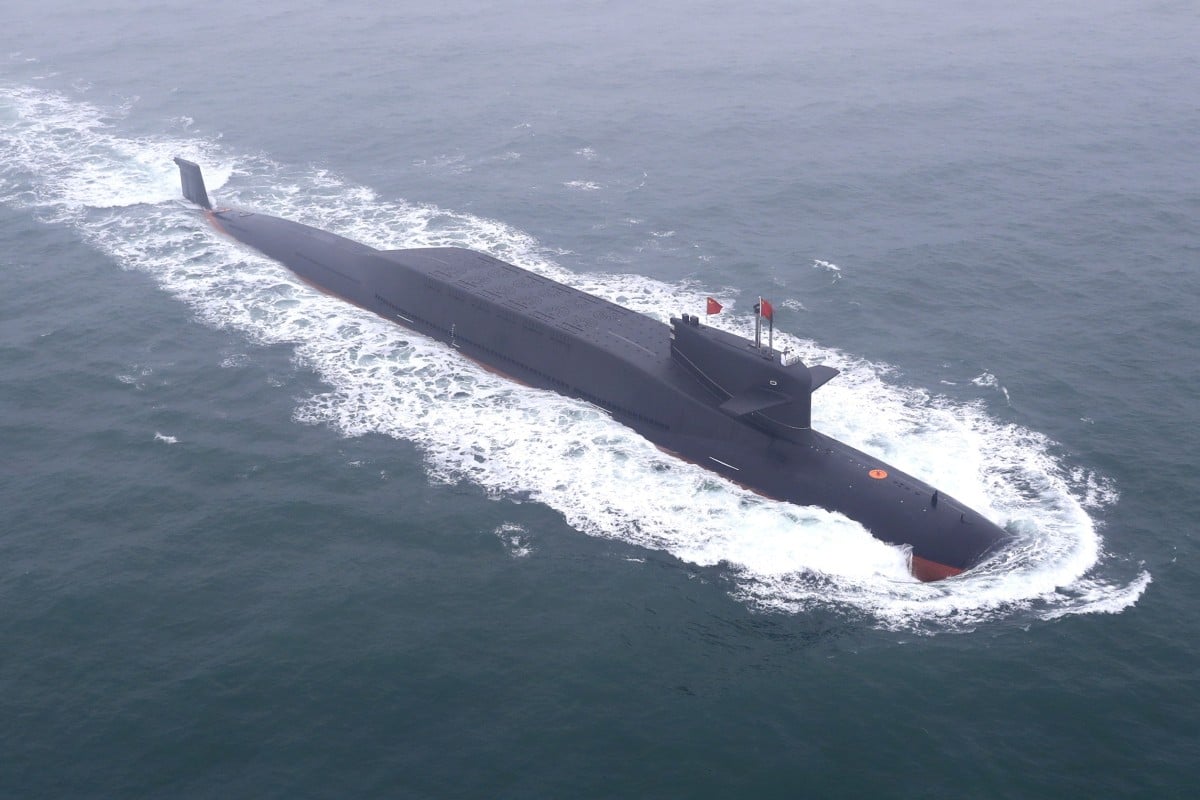
A new AI system developed by Chinese and US scientists could make detecting nuclear submarines possible even in unknown waters. Photo: Xinhua
Scientists from China and the United States have developed a new
artificial intelligence
-based system that they say will make it easier to detect submarines in uncharted waters.
The technology builds on earlier work by the team, led by Dr Niu Haiqiang from the Institute of Acoustics at the Chinese Academy of Sciences in Beijing, which saw them develop a deep-learning algorithm that could improve the speed and precision of detection.
The algorithm, however, needs a large amount of data to work, so its use is limited to waters that have already been fully charted. In contrast, the upgrade works in all waters, charted or otherwise.
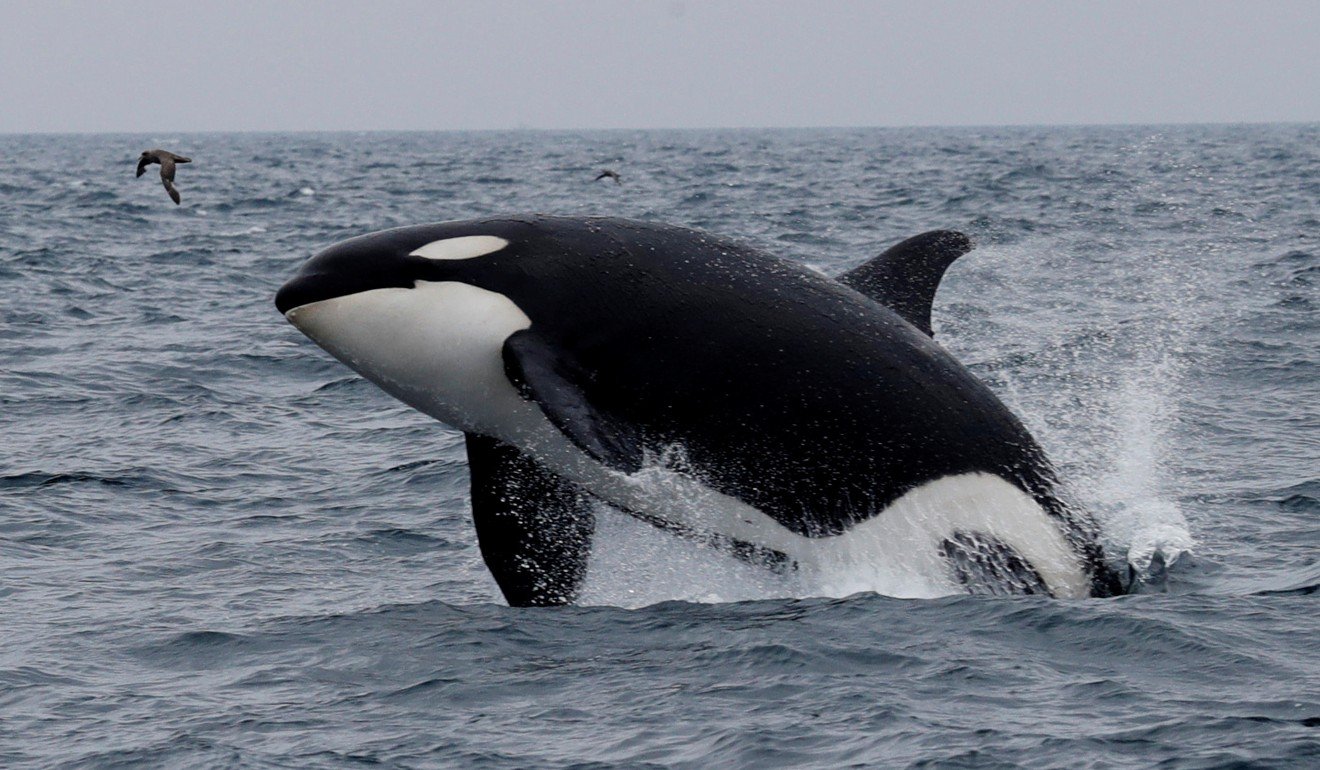
Even killer whales will be unable to hide from the new technology. Photo: Reuters
Niu and his colleagues, who included scientists from the Scripps Institution of Oceanography at the University of California San Diego, started by developing a simulator to generate a wide range of virtual environments from which the algorithm was able to learn.
Once it had assimilated that information, the simulator was able to analyse real-life data taken from the world’s oceans and seas, the team said in a paper published in the July issue of The Journal of the Acoustical Society of America.
It is now able to help a single hydrophone locate more than 80 per cent of underwater targets within an uncharted area with a margin of error of less than 10 metres (33 feet), the paper said.
Chinese monitoring devices installed near US submarine base
The researchers said the new technology should allow them to track any sound-emitting source – be it a nuclear submarine, a whale or even an emergency beeper from a crashed aircraft – using a simple listening device mounted on a buoy, underwater drone or ship.
The scientists worked together to improve the sensitivity and accuracy of passive underwater surveillance technology, according to the academy’s website.
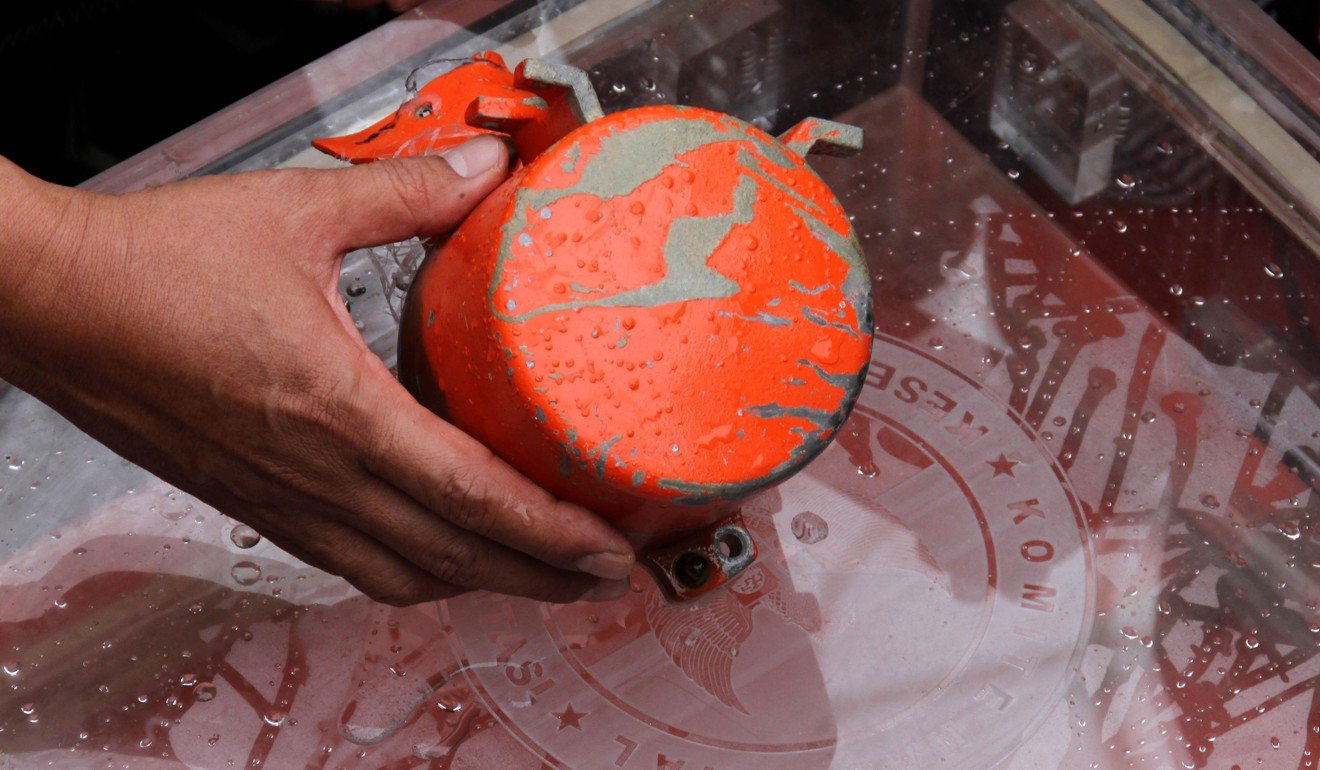
The new technology might also be able to detect emergency beepers from crashed aircraft. Photo: AFP
Locating targets in unfamiliar waters is challenging because the AI relies on environmental data parameters such as underwater currents and seabed landscapes.
But obtaining such information is not easy, and often impossible.
For instance, the United States does not allow China to collect information in waters close to its west coast, while Beijing forbids the US from getting too close to its military facilities in the South China Sea.
Murder suspect ‘caught by AI software that spotted dead person’s face’
Professor Zhang Renhe, a researcher at the Institute of Acoustics who was not involved in the study, said the latest development was encouraging.
“AI can be a useful assistant to underwater target recognition,” he said. “In a way it is similar to the speech recognition technology on our mobile phones.”
But he said scientists were still wrestling with exactly how the technology worked.
“It is like a black box with some inner workings that are still unexplained,” he said.
Researchers were now working on ways to combine the new AI technology with the physical models for underwater target detection that have been developed in recent decades, Zhang said.
“This is a new frontier for fundamental science,” he said. “It requires international cooperation.”
Source: SCMP
Posted in AI technology, Beijing, breakthrough, buoy, China alert, Chinese Academy of Sciences, Chinese monitoring devices, Chinese scientists, crashed aircraft, deep-learning algorithm, detect, develop, emergency beeper, hydrophone, Institute of Acoustics, international cooperation, listening device, military facilities, mobile phones, Murder suspect, nuclear submarines, researchers, San Diego, Scripps Institution of Oceanography, ship, sound-emitting source, South China Sea, speech recognition technology, submarines, subs, The Journal of the Acoustical Society of America, Uncategorized, uncharted waters, underwater drone, underwater surveillance technology, underwater targets, United States, University of California San Diego, US scientists, US submarine base, west coast, whales |
Leave a Comment »




 CHINDIA ALERT: You'll be living in their world, very soon