Archive for ‘director’

22/04/2020

How Gandalf and ancient poetry can show the world a different side to China amid coronavirus unease

  • Documentary puts China’s literary hero into context: there is Dante, there’s Shakespeare, and there’s Du Fu
  • Theatrical legend Sir Ian McKellen brings glamour to beloved verses in British documentary
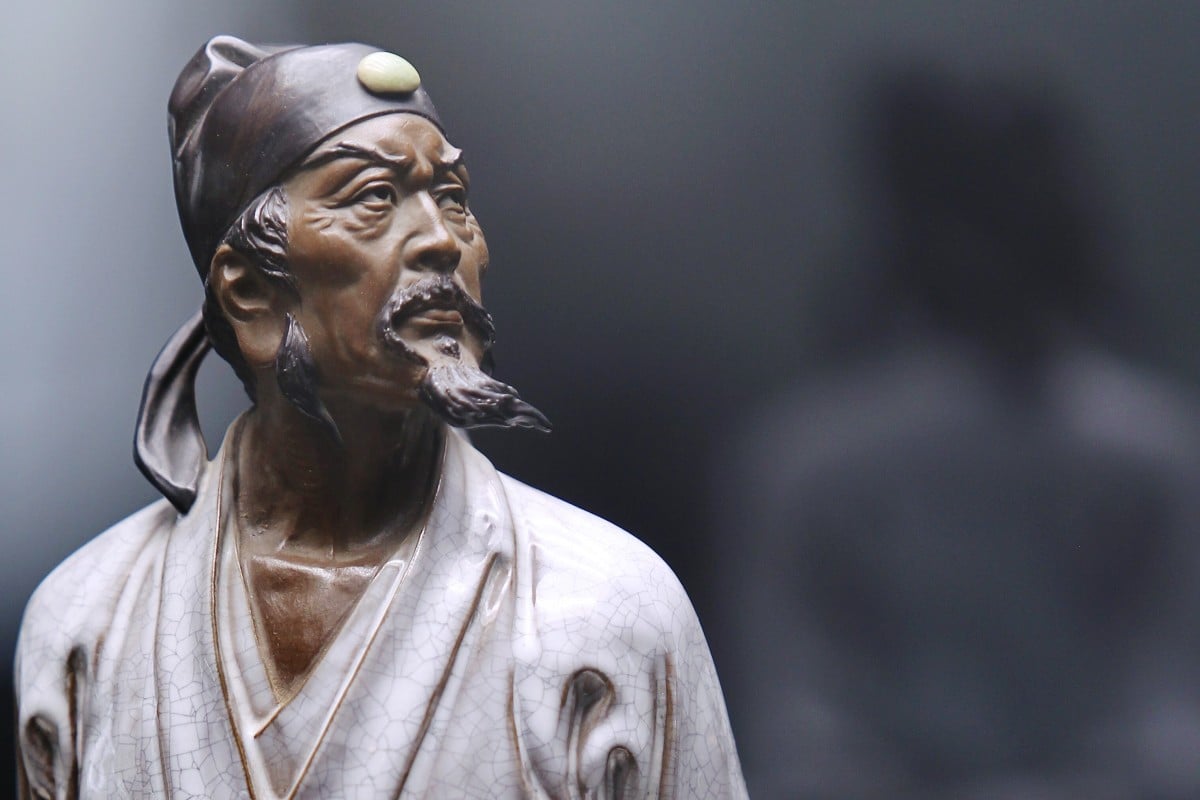
A ceramic figurine of Du Fu, a prominent Chinese poet of the Tang dynasty. Du is the subject of a new BBC documentary, thrilling devotees of his poetry. Photo: Simon Song
The resonant words of an ancient Chinese poet spoken by esteemed British actor Sir Ian McKellen have reignited in China discussion about its literary history and inspired hope that Beijing can tap into cultural riches to help mend its image in the wake of the coronavirus pandemic.
The BBC documentary Du Fu: China’s Greatest Poet has provoked passion among Chinese literature lovers about the poetic master who lived 1,300 years ago.
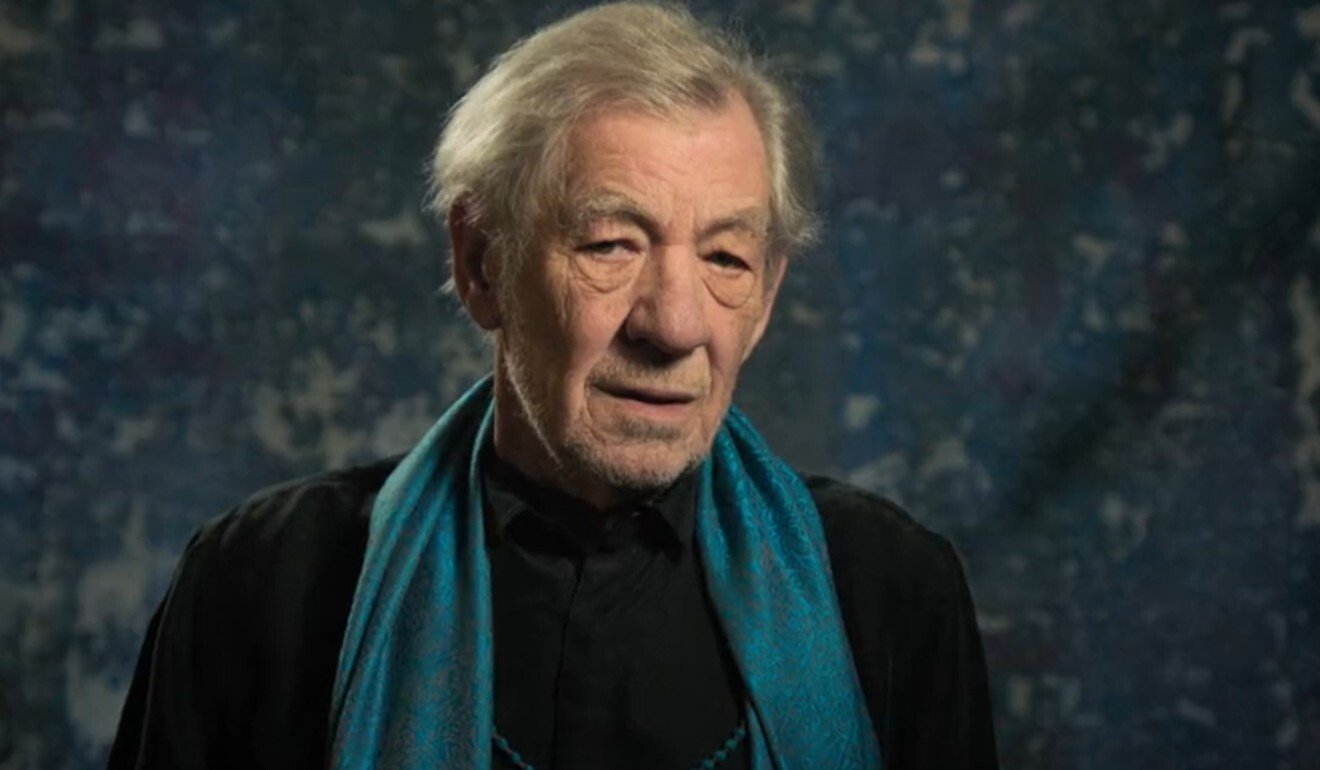
Sir Ian Mckellen read works of ancient Chinese poet Du Fu in Du Fu: China’s Greatest Poet. Photo: BBC Four / MayaVision International
The one-hour documentary by television historian Michael Wood was broadcast on television and aired online for British viewers this month but enthusiasm among Chinese audiences mean the trailer and programme have been widely circulated on video sharing websites inside mainland China, with some enthusiasts dubbing Chinese subtitles.
The documentary has drawn such attention in Du’s homeland that even the Communist Party’s top anti-graft agency has discussed it in its current affairs commentary column. Notably, Wood’s depiction of Du’s life from AD712 to 770 barely mentioned corruption in the Tang dynasty (618-907) government.

“I couldn’t believe it!!” Wood said in an email. “I’m very pleased of course … most of all as a foreigner making a film about such a loved figure in another culture, you hope that the Chinese viewers will think it was worth doing.”

Often referred to as ancient China’s “Sage of Poetry” and the “Poet Historian”, Du Fu witnessed the Tang dynasty’s unparalleled height of prosperity and its fall into rebellion, famine and poverty.
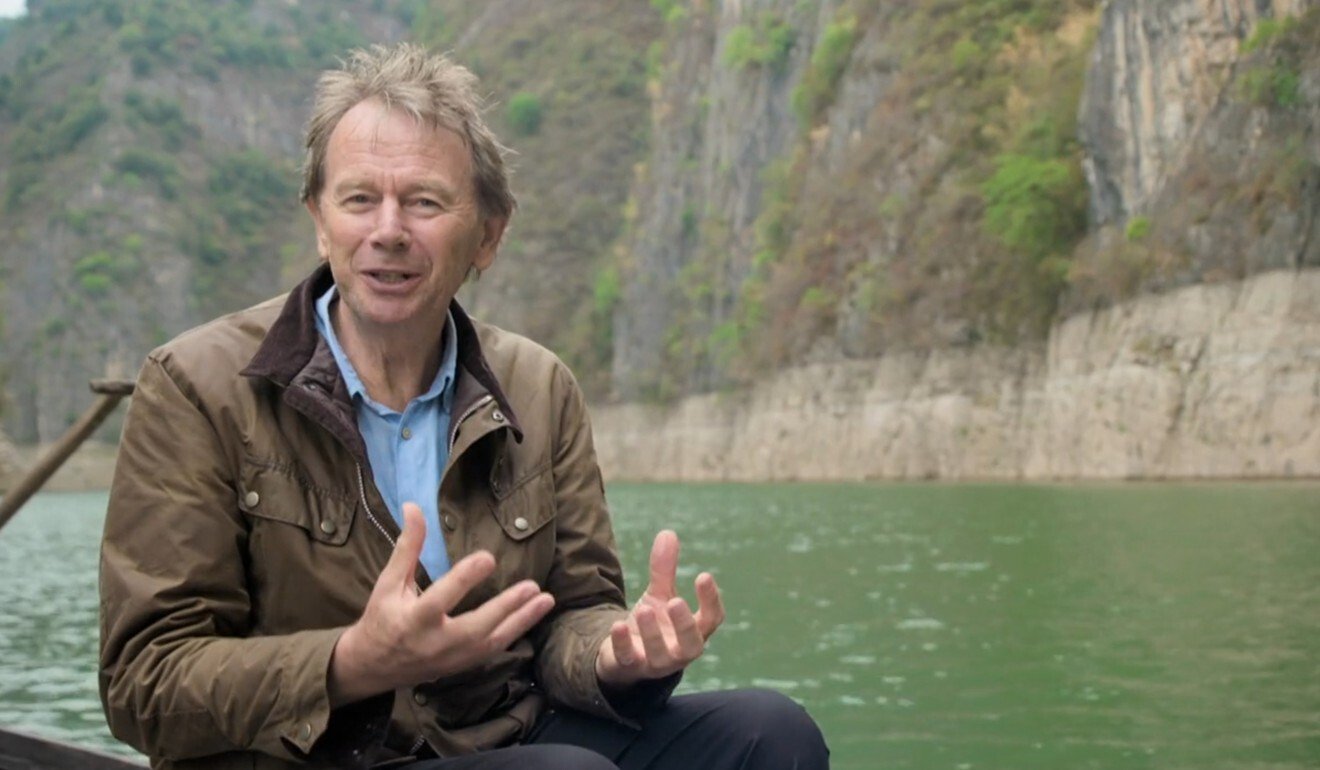
Writer, historian and presenter Michael Wood followed the footsteps of the ancient Chinese poet Du Fu in Yangtze River gorges. Photo: BBC Four / MayaVision International
Wood traced Du’s footsteps to various parts of the country. He interviewed Chinese experts and Western sinologists, offering historical and personal contexts to introduce some of Du’s more than 1,400 poems and verses chronicling the ups and downs of his life and China.
The programme used many Western reference points to put Du and his works into context. The time Du lived in was described as around the as the Old English poem Beowulf was composed and the former Chinese capital, Changan, where Xian is now, was described as being in the league of world cities of the time, along with Constantinople and Baghdad.

Harvard University sinologist Stephen Owen described the poet’s standing as such: “There is Dante, there’s Shakespeare, and there’s Du Fu.”

The performance of Du’s works by Sir Ian, who enjoyed prominence in China with his role as Gandalf in the Lord of the Rings movie series, attracted popular discussion from both media critics and general audiences in China, and sparked fresh discussion about the poet.

“To a Chinese audience, the biggest surprise could be ‘Gandalf’ reading out the poems! … He recited [Du’s poems] with his deep, stage performance tones in a British accent. No wonder internet users praised it as ‘reciting Du Fu in the form of performing a Shakespeare play,” wrote Su Zhicheng, an editor with National Business Daily.

A stone sculpture at Du Fu Thatched Cottage in Chengdu city, China. Photo: Handout
On China’s popular Weibo microblog, a viewer called Indifferent Onlooker commented on Sir Ian’s recital of Du’s poem My Brave Adventures: “Despite the language barrier, he conveyed the feeling [of the poet]. It’s charming.”
Some viewers, however, disagreed. At popular video-sharing website Bilibili.com, where uploads of the documentary could be found, a viewer commented: “I could not appreciate the English translation, just as I could not grasp Shakespeare through his Chinese translated works in school textbooks.”
Watching the documentary amid the coronavirus pandemic, some internet users drew comparisons of Du to Fang Fang, a modern-day award-winning poet and novelist who chronicled her life in Wuhan during the Covid-19 lockdown.
News of the forthcoming publication of English and German translations of Fang’s Wuhan Diary has attracted heated accusations that it would empower Western critics of Beijing’s handling of the outbreak.
Shanghai pictured in April. Devastation wrought by the coronavirus pandemic has brought about a new suspicion of China. Photo: Bloomberg
The pandemic has infected more than 2.5 million people and killed more than 170,000. It has put the global economy in jeopardy, fuelling calls for accountability. British Foreign Secretary Dominic Raab last week called for a “deep dive” review and the asking of “hard questions” about how the coronavirus emerged and how it was not stopped earlier.
Steve Tsang, director of the SOAS China Institute at University of London, said the British establishment and wider public had changed its perception of Beijing as questions arose about outbreak misinformation and the political leverage of personal protective gear supply.
“The aggressive propaganda of the Chinese government is getting people in the UK to look more closely at China and see that it is a Leninist party-state, rather than the modernising and rapidly changing society that they want to see in China,” Tsang said.

On Sunday, a writer on the website of the National Supervisory Commission, China’s top anti-corruption agency, claimed – without citing sources – that the Du Fu documentary had moved “anxious” British audience who were still staying home under social distancing measures.

“If anyone wants to put the fear of the coronavirus behind them by understanding the rich Chinese civilisation, please watch this documentary on Du Fu,” it wrote, adding that promoting Du’s poems overseas could help “healing and uniting our shattered world”.

English-language state media such as CGTN and the Global Times reported on the documentary last week and some Beijing-based foreign relations publications have posted comments about the film on Twitter.

Wood said he had received feedback from both Chinese and British viewers that talked about “the need, especially now, of mutual understanding between cultures”.

“It is a global pandemic … we need to understand each other better, to talk to each other, show empathy: and that will help foster cooperation. So even in a small way, any effort to explain ourselves to each other must be a help,” Wood said.

He said the idea for producing a documentary about Du Fu started in 2017, after his team had finished the Story of China series for BBC and PBS.

Du Fu: China’s Greatest Poet first aired in Britain on April 7 on BBC Four, the cultural and documentary channel of the public broadcaster. It is a co-production between the BBC and China Central Television.

Wood said a slightly shorter 50-minute version would be aired later this month on CCTV9, Chinese state television’s documentary channel.

The film was shot in China in September, he said.

“I came back from China [at the] end of September, so we weren’t affected by the Covid-19 outbreak, though of course it has affected us in the editing period. We have had to recut the CCTV version in lockdown here in London and recorded two small word changes on my iPhone!” Wood said.

Source: SCMP

19/04/2020

New media companies shine at China’s evolving documentary industry

BEIJING, April 18 (Xinhua) — New media platforms are reshaping China’s documentary industry, ushering in a new era of vigorous development, said Zhang Tongdao, director of the Documentary Center with Beijing Normal University.

There is a rapid growth of new media companies in the documentary market, according to an annual study report of the development of Chinese documentary in 2020, which was released Saturday by the center, the China Intercontinental Communication Center and other institutions.

China’s total investment in documentary making was 5.04 billion yuan (about 710 million U.S. dollars) last year, and the country was blessed with 6.66 billion yuan in total output value, according to the report.

“More and more documentaries are broadcast on the internet, even only on the internet media, which complement those aired on television,” Zhang said.

Some documentaries, including “Flavorful Origins: Chaoshan Cuisine” by Tencent video and the second season of “The Story Of Chuaner” by video-sharing platform Bilibili, gained the brand value in 2019 through exclusive streaming on the platforms.

The report also showed that the documentary production capacity of new media companies reached a new height in 2019.

Last year, Tencent produced 23 documentaries on its own, accounting for about one-third of its total online projects throughout the year. Bilibili produced and launched 16 documentaries, totaling 55.6 hours, while iQiyi, also an online platform, produced or co-produced 15 documentaries, said the report.

The report added that documentary producers and streamers are also foraying into the short video field, varying versions such as shorter or longer in length for different platforms.

Source: Xinhua

19/05/2019

Modi’s jobs deficit: J&J’s largest India plant idle three years after completion

ENJERLA/NEW DELHI, India (Reuters) – It was supposed to be Johnson & Johnson’s biggest manufacturing plant in India. It was to eventually employ at least 1,500 people and help bring development to a rural area near Hyderabad in southern India.

Yet, three years after the U.S. healthcare company completed construction of production facilities for cosmetics and baby products on the 47-acre site, they stand idle.

Two sources familiar with J&J’s operations in India and one state government official told Reuters production at the plant, at Penjerla in Telangana state, never began because of a slowing in the growth in demand for the products.

One of them said that demand didn’t rise as expected because of two shock policy moves by Prime Minister Narendra Modi: a late 2016 ban on then circulating high-value currency notes, and the nationwide introduction of a goods and services tax (GST) in 2017.

J&J spokespeople in its Mumbai operations in India and at its global headquarters in New Brunswick, New Jersey, declined to respond to a list of questions from Reuters.

Modi’s office did not respond to a call and an email with questions.

Aimed at rooting out corruption and streamlining the tax system, the double whammy of ‘demonetization’ and GST – were two of Modi’s signature policy moves. But instead of encouraging economic activity as intended, they did the opposite, at least in 2016-2018, by sapping consumer demand, according to some economists.

Many businesses, especially small and medium-sized enterprises, complained publicly – some in their financial statements – that they suffered a drop off in orders. The suspended J&J project stands as one of the most vivid examples of the impact on the broader investment picture.

In the first month after demonetization, some business surveys showed that sales of products such as shampoos and soap fell more than 20 percent.

Lack of jobs growth and a farm-income crisis because of low crop prices have hurt Modi in the current general election, according to several political strategists.

Still, Modi and his ruling Hindu nationalist Bharatiya Janata Party are expected by many of the strategists to be in a position to get a second term – probably with support of some other parties – when votes are counted on Thursday, partly because of his strong stance on national security issues.

BIG INVESTMENTS, GREAT EXPECTATIONS

A range of Modi’s business policies, such as capping prices of medical devices, forcing tech companies to store more data locally and stricter e-commerce regulations have in the past two years hurt plans of American multinationals such as J&J, Mastercard, Amazon and Walmart-owned Flipkart.

The groundbreaking of the J&J facility in Penjerla, its third in the country, was carried out with much fanfare in 2014, attended by Telangana state’s Chief Minister Chandrashekar Rao, who hailed the foreign investment as a big win for local communities. A document dated April 2017 that lists products the company planned to make at the facility, submitted to the Telangana government and reviewed by Reuters, names baby oil, baby shampoo, baby lotion, baby hair oil, face wash and creams.

Shaukat Ali, running a tea shop under a bamboo stall on barren land outside the plant, said local workers check in routinely for possible vacancies at the J&J site, but nothing has come up in years.

At the local pollution control board office, the member secretary Satyanarayana Reddy said the J&J plant had all the required approvals and he was not sure why it hadn’t started production.

“It is unusual for such a big plant to stay idle for so long,” he said. “But there is no problem from our side.”

Chandrasekhar Babu, an additional director at the Telangana industries department, said a J&J company official told him the plant hadn’t started due to lack of demand.

GST and demonetization were two key reasons the plan didn’t kick off, one of the sources said, adding that lack of consumer demand since then dented company’s plans.

The second source familiar with J&J’s plans said the company miscalculated Indian market demand.

On a recent visit by a Reuters reporter to the J&J plant, plush, furnished conference rooms and cubicles sat inactive; M. Sairam, who said he was the site manager, told Reuters production areas with machines were idle too.

PLANNED FURTHER EXPANSION

Local officials had hoped the initial J&J plant would be only the beginning. After the groundbreaking in 2014, Pradeep Chandra, who was Telangana’s special chief secretary of industries, told Business Today magazine that “based on the extent of land (J&J) have acquired we believe that they are looking at much larger expansion here.”

Local media reports at the time said the J&J facility would employ some 1,500 people.

A J&J official, who was not identified by name, was reported subsequently in December 2016 in India’s Business Standard assaying that the $85 million plant would be operational by 2018 after it had overcome procedural delays. The official was quoted as saying the company had earmarked an additional $100 million for expansion.

Vikas Srivastava, the managing director of J&J Consumer(India), who was at the 2014 groundbreaking, did not respond to calls for comment.

Reuters also talked to two workers outside a sprawling Procter & Gamble facility making detergents and diapers, which is next to the J&J plant. They said they were part of the P&G plant’s production team and the plant had been running below capacity.

A P&G spokesperson denied that, saying the plant was “operating at full capacity in line with our business plans”. “India is a priority market for P&G globally and in recent quarters, P&G’s business in India has registered strong double-digit growth consistently,” the company said.

The weak rural economy, where most Indians work, has also hurt growth in sales of basic items such as detergents and shampoo in the past year.

Hindustan Unilever Ltd, an industry bellwether that would compete with the likes of J&J and P&G in some categories, said its volume growth shrank to 7 percent in the quarter ended March 31, down from double-digit growth in the previous five quarters.

The company warned that the daily consumer goods segment in India was “recession resistant … not recession proof.”

Source: Reuters

13/04/2019

IOC awards Xinhua certificate in recognition of international news agency

(SP)CHINA-BEIJING-IOC-XINHUA NEWS AGENCY-CERTIFICATE

Anthony Edgar (L), chairman of the IOC Press Commission and director of the Media Operations Department, presents the certificate to Yan Wenbin, vice president of Xinhua News Agency, in Beijing, on April 12, 2019. The International Olympic Committee (IOC) officially awarded Xinhua News Agency a certificate in recognition of its status as an international news agency here on Friday. (Xinhua/Cao Can)

BEIJING, April 12 (Xinhua) — The International Olympic Committee (IOC) officially awarded Xinhua News Agency a certificate in recognition of its status as an international news agency here on Friday.

On behalf of IOC President Thomas Bach, Anthony Edgar, chairman of the IOC Press Commission and director of the Media Operations Department, presented the certificate to Yan Wenbin, vice president of Xinhua News Agency, at a ceremony held at Xinhua’s headquarters in Beijing.

Yan expressed appreciation to the IOC for its trust, saying Xinhua’s coverage of the Olympic Games has entered a new stage after becoming an international news agency recognized by the IOC.

“Xinhua will strengthen cooperation with the IOC more closely, report on the Olympic Movement more comprehensively, objectively and truthfully, and play a more important role in promoting the progress and development of the Olympic cause in China and the world,” said Yan.

Speaking at the handover ceremony, Edgar said that the IOC attaches great importance to Xinhua News Agency and has high expectations on Xinhua in promoting the Olympic Movement across the globe in the future.

“The designation of Xinhua as an IOC recognized international news agency is a recognition of the importance and global reach of Xinhua’s domestic, regional and global news and sports coverage. It is a recognition of the role Xinhua now plays – and will play in the future of producing the best possible coverage of the Olympic Games, the IOC and the Olympic Movement,” he said.

Source: Xinhua

Law of Unintended Consequences

continuously updated blog about China & India

ChiaHou's Book Reviews

continuously updated blog about China & India

What's wrong with the world; and its economy

continuously updated blog about China & India