Chindia Alert: You’ll be Living in their World Very Soon
aims to alert you to the threats and opportunities that China and India present. China and India require serious attention; case of ‘hidden dragon and crouching tiger’.
Without this attention, governments, businesses and, indeed, individuals may find themselves at a great disadvantage sooner rather than later.
The POSTs (front webpages) are mainly 'cuttings' from reliable sources, updated continuously.
The PAGEs (see Tabs, above) attempt to make the information more meaningful by putting some structure to the information we have researched and assembled since 2006.
Researchers say history of China’s biggest ethnic group is more complex than many believe
DNA study involving 20,000 unrelated people points to three river origins
The study of Han DNA by the team from the Kunming institute challenges a long-held view of the early origins of Chinese civilisation. Photo: Xinhua
The origins of China’s biggest ethnic group can be traced back to three river valleys, deposing the Yellow River as the sole cradle of Chinese civilisation, according to a new study.
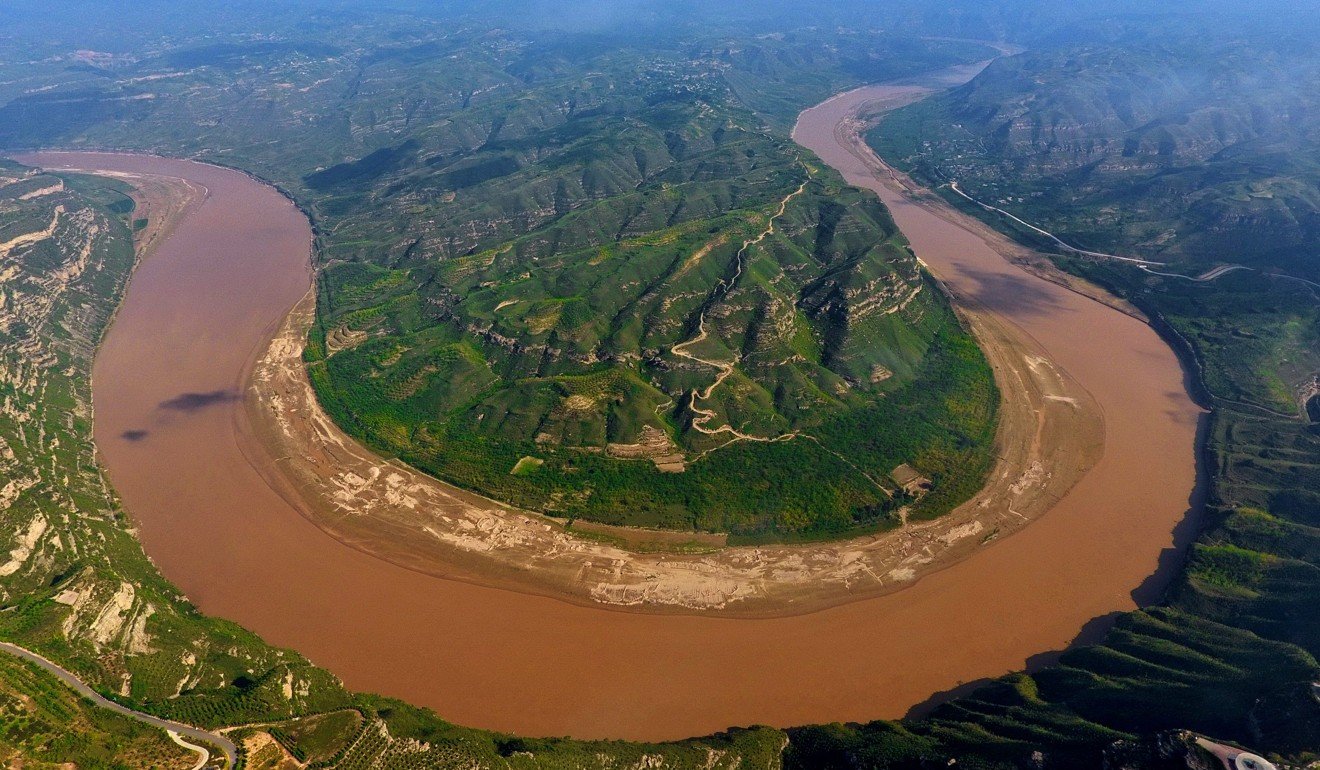
The Yellow has long been hailed as the mother river of Han Chinese, who make up nearly 92 per cent of the country’s population today.
But research published in the online journal Molecular Biology and Evolution on Wednesday said the Yangtze and Pearl rivers – as well as the Yellow – gave rise to genetically separate groups about 10,000 years ago. Those ancestors then mingled to become the largest ethnic group in the world today, it said.
“The history of Han Chinese is more sophisticated than thought,” said Professor Kong Qingdong, a researcher with the Kunming Institute of Zoology at the Chinese Academy of Sciences and lead scientist in the study. “Many details need investigation.”
A DNA study suggests the Yellow River (above) may have to share its place as a cradle for Han Chinese with the Yangtze and the Pearl. Photo: Xinhua
After analysing DNA samples from more than 20,000 unrelated Han Chinese, examining their dialects and family geography and comparing those to archaeological DNA records, scientists concluded that the Yangtze and Pearl had equal claim with the Yellow to Han origins.
Progenitors from the three river valleys evolved independently, the Kunming team said, and distinctions found in the mitochondrial DNA (the mother’s line) of study volunteers added weight to their assertion.
Who are you? DNA tests help Chinese retrace ancient steps
About 0.07 per cent of the DNA examined in the Han Chinese study differed according to river valley origin. By comparison, the difference was much lower – 0.02 per cent – when the study volunteer data was assessed by dialect, the researchers said.
Earlier studies of genetic markers and microsatellite data that mapped the prevalence of DNA revealed that Han Chinese can be generally divided into two groups: North and South. The latest study found that the genetic variation between North and South Han Chinese is 0.03 per cent, considerably less significant than the distinction by rivers.
Dr Li Yuchun, lead author of the paper, said the findings helped trace the history of Han to the dawn of civilisation, the emergence of agriculture and the sustainable growth of population.
The earliest migrants from Africa to China arrived in what is now the southwest between 60,000 and 100,000 years ago, studies said. The genes of this group of hunter-gatherers were largely unchanged for tens of thousands years.
About 10,000 years ago, agricultural practices began to emerge in the valleys of the three rivers. Archaeologists found evidence of millet cultivation around the Yellow River, rice in the Yangtze, and roots and tubers in the Pearl.
The busy Yangtze River flows through Chongqing in southwest China. Photo: Xinhua
“Increasing food led to a population boom in these areas. We can see it in the separate path of gene evolution,” Li said.
The research also found that women were able to preserve their genetic story better than men as they stayed at home to tend the fields, while men went to explore, trade or wage war.
“Females are resilient to invasion,” she said.
The cultural significance of knowing one’s ancestry
The research team planned to examine the Y-chromosome, which passed from father to son, to study the expansion of the Han civilisation, Li said.
“It will be interesting to hear the story from a male perspective,” she said.
As the Han empires expanded, many ancient ethnic groups such as Huns, Siberians, Khitan in northern China and the Thai-Khadai speaking peoples in the south, passed from the record.
Some researchers think these minorities become extinct, but others believe they were absorbed into the Han Chinese population.
Image copyrightGETTY IMAGESImage captionThe origin of Indians has been the subject of a heated debate
New research using ancient DNA is rewriting prehistory in India – and shows that its civilisation is the result of multiple ancient migrations, writes Tony Joseph.
Who are the Indians? And where did they come from?
In the last few years, the debate over these questions has become more and more heated.
Hindu right-wingers believe the source of Indian civilisation are people who called themselves Aryans – a nomadic tribe of horse-riding, cattle-rearing warriors and herders who composed Hinduism’s oldest religious texts, the Vedas.
The Aryans, they argue, originated from India and then spread across large parts of Asia and Europe, helping set up the family of Indo-European languages that Europeans and Indians still speak today.
As it happens, many 19th Century European ethnographers and, of course, most famously, Adolf Hitler, also considered Aryans the master race who had conquered Europe, although the German leader considered them to be of Nordic lineage.
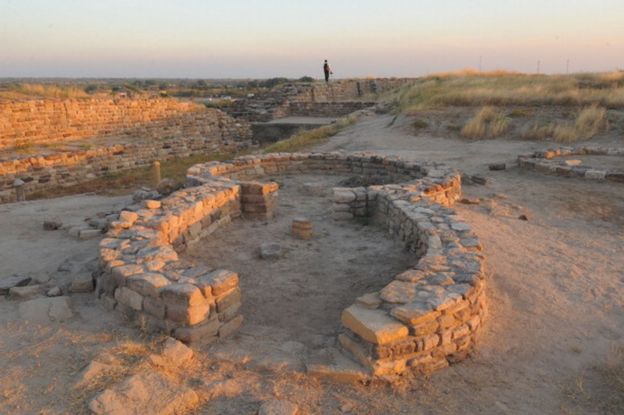
Image copyrightGETTY IMAGESImage captionThe Harappan civilisation thrived in north-western India and Pakistan
When scholars use the term Aryan, it refers to a group of people who spoke Indo-European languages and called themselves Aryans. And that is how I have used it in this article. It does not refer to a race, as Hitler used it or as some in the Hindu right wing use it.
Many Indian scholars have questioned the “out of India” thesis, arguing that these Indo-European language speakers – or Aryans – were possibly just one of many streams of prehistoric migrants who arrived in India after the decline of an earlier civilisation. This was the Harappan (or Indus Valley) civilisation, which thrived in what is now north-western India and Pakistan around the same time as the Egyptians and Mesopotamians.
However, Hindu right-wingers believe the Harappan civilisation was also an Aryan or Vedic civilisation.
Tensions between the two groups backing these opposing theories have only increased in the last few years, especially since the Hindu nationalist Bharatiya Janata Party (BJP) came to power in India in 2014.
Into this long-running dispute has now stepped the relatively new discipline of population genetics, which has started using ancient DNA to figure out when people moved where.
Studies using ancient DNA have been rewriting prehistory all over the world in the last few years and in India, there has been one fascinating discovery after another.
The most recent study on this subject, led by geneticist David Reich of Harvard University, was published in March 2018 and co-authored by 92 scholars from all over the world – many of them leading names in disciplines as diverse as genetics, history, archaeology and anthropology.
Image copyrightGETTY IMAGESImage captionDholavira in Gujarat state is one of the five largest Harappan sites
The study showed that there were two major migrations into India in the last 10,000 years.
The first one originated from the Zagros region in south-western Iran (which has the world’s first evidence for goat domestication) and brought agriculturists, most likely herders, to India.
This would have been between 7,000 and 3,000BCE. These Zagrosian herders mixed with the earlier inhabitants of the subcontinent – the First Indians, descendants of the Out of Africa (OoA) migrants who had reached India around 65,000 years ago – and together, they went on to create the Harappan civilisation.
In the centuries after 2000 BCE came the second set of immigrants (the Aryans) from the Eurasian Steppe, probably from the region now known as Kazakhstan. They likely brought with them an early version of Sanskrit, mastery over horses and a range of new cultural practices such as sacrificial rituals, all of which formed the basis of early Hindu/Vedic culture. (A thousand years before, people from the Steppe had also moved into Europe, replacing and mixing with agriculturists there, spawning new cultures and spreading Indo-European languages).
Other genetic studies have brought to light more migrations into India, such as that of the speakers of Austro-Asiatic languages who came from south-eastern Asia.
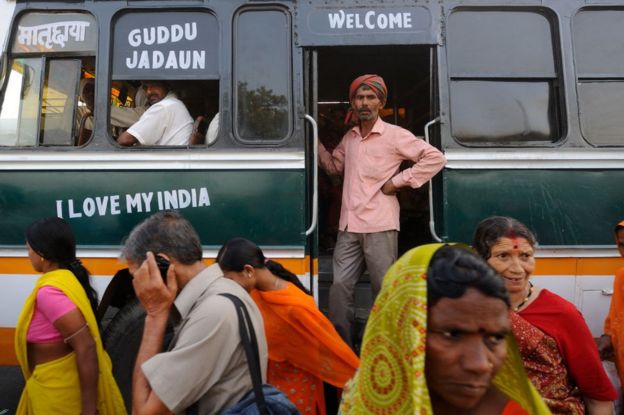
Image copyrightGETTY IMAGESImage captionIndia’s population is made up of a number of layers, according to the research
As I write in my book, the best way to understand the Indian population is to imagine it as a pizza, with the first Indians forming its base. Though the base of this rather irregular pizza is thin in some places and thick in others, it still serves as the support that the rest of the pizza is built upon because studies show that 50% to 65% of the genetic ancestry of Indians derives from the First Indians.
On top of the base comes the sauce that is spread over the pizza – the Harappans. And then come the toppings and the cheese – the Austro-Asiatic, Tibeto-Burman and Indo-European language speakers or Aryans, all of whom found their way into the subcontinent later.
To many in the Hindu right wing, these findings are unpalatable. They have been campaigning to change school curricula and remove any mention of Aryan immigration from textbooks. And on Twitter, several hugely popular right-wing “history” handles have long been attacking India’s leading historians who have defended the theory of Aryan migrations and continue to do so.
For Hindu nationalists, there is a cost to admitting that the Aryans were not the first inhabitants of India and that the Harappan civilisation existed long before their arrival. It would mean acknowledging that Aryans or their Vedic culture were not the singular fountainhead of Indian civilisation and that its earliest sources lay elsewhere.
India’s junior minister for human resource development, Satyapal Singh, was recently quoted in the media as saying: “Only Vedic education can nurture our children well and make them patriots who have mental discipline.”
The idea of the mixing of different population groups is also unappealing to Hindu nationalists as they put a premium on racial purity. There is also the additional issue of the migration theory putting Aryans on the same footing as latter-day Muslim conquerors of India – such as the Mughals.
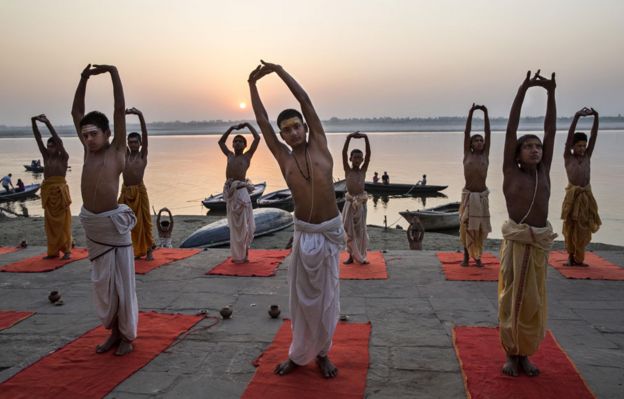
Image copyrightGETTY IMAGESImage captionYoung Brahmins training to be priests in Varanasi – India is a predominantly Hindu nation
These are not just theoretical debates. The ruling BJP government in Haryana state, which neighbours the Indian capital Delhi, has demanded that the Harappan civilisation be renamed the Saraswati river civilisation. Since the Saraswati is an important river that is mentioned in the earliest of the four Vedic texts, such a renaming would serve to emphasise the link between the civilisation and the Aryans.
The new study puts an end to these debates and it has thus come as a shock to the Hindu right-wing. In a tweet attacking its co-author Prof Reich, ruling party MP and former Harvard University professor Subramanian Swamy said: “There are lies, damned lies and (Harvard’s ‘Third’ Reich and Co’s) statistics.”
However, the real message that the new research carries is an exciting and hopeful one: that Indians have created a long-lasting civilisation from a variety of heredities and histories.
The genius of the Indian civilisation during its best periods has been inclusion, not exclusion. Unity in diversity is, indeed, the central theme of India’s genetic make-up.




 CHINDIA ALERT: You'll be living in their world, very soon