Chindia Alert: You’ll be Living in their World Very Soon
aims to alert you to the threats and opportunities that China and India present. China and India require serious attention; case of ‘hidden dragon and crouching tiger’.
Without this attention, governments, businesses and, indeed, individuals may find themselves at a great disadvantage sooner rather than later.
The POSTs (front webpages) are mainly 'cuttings' from reliable sources, updated continuously.
The PAGEs (see Tabs, above) attempt to make the information more meaningful by putting some structure to the information we have researched and assembled since 2006.
Image copyright GETTY IMAGESImage caption Delhi’sair quality has improved remarkably during the shutdown
When India shut down last month and suspended all transport to contain the spread of coronavirus, the skies over its polluted cities quickly turned an azure blue, and the air, unusually fresh.
As air pollution plummeted to levels unseen in living memory, people shared pictures of spotless skies and even Himalayan peaks from cities where the view had been obscured by fog for decades.
On one social messaging group, a resident of the capital, Delhi, which regularly records some of the foulest air in the world, celebrated the city’s “alpine weather“. Politician and author Shashi Tharoor wrote that the “blissful sight of blue skies and the joy of breathing clean air provides just the contrast to illustrate what we are doing to ourselves the rest of the time”.
Media caption India coronavirus lockdown cleans up Ganges river
Less than six months ago, Delhi was gasping for breath. Authorities said air quality had reached “unbearable levels”. Schools were shut, flights were diverted, and people were asked to wear masks, avoid polluted areas and keep doors and windows closed.
Delhi and 13 other Indian cities feature on a list of the world’s 20 most polluted. It is estimated that more than a million Indians die every year because of air pollution-related diseases. Industrial smoke, vehicular emissions, burning of trash and crop residue, and construction and road dust are the major contributors.
As urban Indians gazed at the skies and breathed clean air inside their homes, researchers hunkered down to track data on how the grinding lockdown – now extended to 3 May – was impacting air pollution across the country.
Image copyright GETTY IMAGESImage caption Lucknow is another city on the top 20 world’s most polluted list
“This was an unprecedented opportunity for us to take a close look at how air pollution levels have responded to an extraordinary development,” Sarath Guttikunda, who heads Urban Emissions, an independent research group that provides air quality forecasts, told me.
Dr Guttikunda and his team of researchers looked at the data spewed out by the 100-odd air quality monitoring stations all over India. They decided to concentrate on the capital Delhi and its suburbs – a massive sprawl called the National Capital region, where more than 20 million people live. Last winter, air pollution here had reached more than 20 times the World Health Organization’s safe limit.
Image copyright HINDUSTAN TIMESImage caption The financial capital Mumbai also seems very different
The deadliest particle in Delhi’s foul air is the tiny but deadly PM 2.5, which increases the likelihood of respiratory and cardiovascular diseases. They primarily come from combustion – fires, automobiles and power plants.
Urban Emissions found the levels of PM 2.5 in Delhi during the lockdown plummeted to 20 micrograms per cubic metre with a 20-day average of 35.
To put this into context, between 2017 and 2019, the monthly average of PM 2.5 in the capital was up to four times higher. (The national standard is set at 40, and the WHO has an annual average guideline of just 10 micrograms per cubic metre.)
“If 35 is the average lowest available PM2.5 with limited local emissions, it means that at least 70% of the pollution is locally generated,” Mr Guttikunda told me.
Media caption India coronavirus lockdown cleans up Ganges river
His study also found a marked dip in PM 10, caused mainly by road and construction dust, and nitrogen dioxide, which comes mainly from vehicular emissions, and nearly 90% of vehicles are off the road.
“The current crisis has shown us that clear skies and breathable air can be achieved very fast if concrete action is taken to reduce burning of fossil fuels,” says Sunil Dahiya, of the Centre for Research on Energy and Clean Air, which has also been tracking air pollution levels during the lockdown.
But will this prompt change? After all, urban Indians’ and the media’s panic and outrage during the deadly winter pollution every year soon gets lost in the fog of summer heat and concerns over monsoon rains and droughts.
“We don’t yet have a democratic demand for clean air,” Arunabha Ghosh, Chief Executive Officer of the Council on Energy, Environment and Water, a leading climate think tank, told me. Orders to clean up the air have almost always come from the courts, responding to pleas by NGOs.
Image copyright GETTY IMAGESImage caption Pollution in Delhi peaks during winter
However, Dr Ghosh still hopes that “the experience of blue skies and fresh air could be a trigger to create a democratic demand for clean air in India”.
Crises often trigger life changing reforms. A fatal four-day “pea-souper” that engulfed London in 1952 and killed thousands provoked the passing of the Clean Air Act to reduce the use of smoky fuels.
China tried to clean up its air several times before hosting marquee international events – like the Beijing Olympics in 2008, the World Expo in Shanghai and the Guangzhou Asian Games in 2010 – before sliding back to grey, smoky skies.
But many believe the 2014 Apec meeting in Beijing, when China hosted 21 heads of Asia-Pacific economies, was a turning point. The rare blue skies over Beijing spawned the phrase ‘Apec blue‘. In a rush to clean its air, China introduced a set of far-reaching measures. Over the next four years, this resulted in a 32% drop in average pollution across major Chinese cities.
So could a lockdown to prevent the spread of a pandemic, which has imperilled the health and livelihoods of millions, trigger similar policy changes to clean up India’s air?
Image copyright GETTY IMAGESImage caption The movement for clean air has been sporadic and mainly pushed by NGOs
Could it move to a shift in reducing traffic on the road by asking people to work from home in shifts now that millions have experienced clean air for the first time in years? (Facing energy shortages after the loss of the Fukushima nuclear power plant, Japan unleashed a Cool Biz campaign to cut down air conditioning in workplaces and reduce carbon emissions by asking office workers to shed their suits.)
Or can India use some of the money from an inevitable stimulus to help kick-start the economy go towards helping green industries? Renewables, experts say, creates more jobs than coal: India has already created nearly 100,000 jobs in solar and wind energy firms.
Can the country use the windfall revenues accruing from the steep decline in oil prices – most of India’s oil is imported – to provide rebates to polluting factories to set up much-needed emission control equipment?
“We have to learn lessons to deploy the economic recovery from the pandemic. We need growth, jobs and sustainable development,” says Dr Ghosh. Cleaning up the air could be the key. For too long, India – and Indians – have ignored their right to breathe easy.
What’s more, if China can reduce air pollution by 32% in four-and-a-half years, why can’t India pledge to reduce pollution by 80% in 80 cities by 2027, which is our 80th anniversary of Independence? asks Dr Ghosh.
ZADSHI VILLAGE, India (Reuters) – Three years ago, brick mason Pundlik Bhandekar was always busy as farmers in his tiny hamlet in Maharashtra commissioned new houses and nearby towns were undergoing rapid urbanisation. Now, as the rural economy sinks and the pace of construction slows, Bhandekar is struggling to get work.
“I used to get a new construction project before I could even finish one. People would come to my house to check when I would be free to work for them,” said Bhandekar, as he sat with friends under the shade of a tree on a hot afternoon.
From daily wage workers such as masons, to barbers and grocery shop owners – just about everyone in Zadshi village, some 720 km (450 miles) from India’s financial hub Mumbai, says a drop in farm incomes has dented their livelihoods.
Their woes are symptomatic of a wider problem across India, where more than half of the country’s 1.3 billion people are dependent on agriculture for their livelihoods, as the slowdown in the rural economy is felt in the dampening sales of consumer goods, especially the biggest such as car and motorbike sales.
The slowdown has also dented Prime Minister Narendra Modi’s popularity in the hinterland that propelled him to power in 2014, and political strategists say it may mean he struggles to form a majority after voting in a staggered general election that began on April 11 concludes on May 19.
Zadshi has been almost entirely dependent on annual cotton and soybean crops that, according to farmers, have given lacklustre returns in the past few years due to a dip in prices, droughts and pest attacks.
And as incomes have dropped, farmers have cut back on big-ticket spending such as building new houses, digging wells or laying water pipelines, squeezing employment opportunities for people such as Bhandkekar.
“No one is interested in hiring us. We are ready to work even at 250 rupees ($3.60) per day,” said Bhandekar, who charged 300 rupees a day when work was steady, but now gets work only once or twice in a fortnight.
LOWER WAGES, LESS SPENDING
Economic data reflects the plight of farmers and daily wage workers.
Retail food inflation in the fiscal year ended on March 31 fell to 0.74 percent, even as core inflation stood at 5.2 percent, according to Bank of America Merrill Lynch Research, eroding the spending power of farmers.
Inflation adjusted wage growth for workers involved in crop sowing was just 0.6 percent 2018/19 compared with 6.5 percent in 2013/14.
The value of farm produce at constant prices grew 15 percent in the past five years, compared with 23 percent in the previous five, while the manufacturing sector grew 40 percent, against 32.6 percent in the previous five years, government data shows.
“Lower rural wages will result in lesser spending, which in turn will reduce demand for goods and services that are part of the rural basket,” Rupa Rege Nitsure, group chief economist at L&T Finance Holdings in Mumbai, told Reuters.
The government needs to spend more in rural areas to generate employment and boost incomes, Nitsure said.
Modi’s Hindu nationalist government did introduce various support schemes in the past six months, such as a 6,000 rupees yearly handout to small farmers.
The main opposition Congress party has gone much further with its pledges though, saying it would introduce a basic minimum income, where the country’s poorest families would get 72,000 rupees annually, benefiting some 250 million people.
RISING UNEMPLOYMENT
In Zadshi, as the mercury touched a searing 40 degrees Celsius(104F), a group of villagers gathered under the trees lining a dusty road and began chatting about everything from crop prices to politics.
“What else we can do? Had work been available in urban areas, we could have moved there but even in the cities construction has slowed down,” said Amol Sontakke, an unskilled labourer who works in farms and on construction sites.
Job opportunities have slowed even in urban areas and India’s unemployment rate touched 7.2 percent in February, the highest since September 2016, according to data compiled by the Centre for Monitoring Indian Economy (CMIE). Official data is unavailable for recent periods.
The mood in Zadshi was glum. While four dozen villagers interviewed by Reuters were hopeful that if there was a good monsoon this year it could improve farm incomes, they’ve been cutting back on spending in the meantime.
“People are thinking twice before buying new clothes during festivals,” said Avinash Gaurkar, a farmer currently doubling up as a part-time driver. “Buying big-ticket items such as motorcycles or refrigerators is out of the question.”
Two years ago Gaurkar began building a house, but had to give up midway as his five-acre farm could not generate the money needed, he said, pointing towards a half-finished structure without doors.
In 2018, just four villagers bought new motorbikes compared with as many as 10 a year about four years ago, said cotton farmer Raju Kohale, whose son is sitting at home unemployed after graduating as an engineer.
“Poor monsoon or lower prices, something or the other has been hurting us in the past few years,” Kohale said.
MODI AGAIN?
In the 2014 general election, most in Zadshi voted for Modi, but the farmers’ distress has swayed many towards the opposition Congress party. That was clear from Reuters’ interviews with 48 villagers, who cast their ballots last month.
Farmers are at the bottom of the Modi administration’s priority list, said labourer Sagar Bahalavi.
“They are building big roads to connect metros and calling it development. How is that useful for us?” he said.
Some, though, want to give Modi a second chance.
“Modi’s intentions are good, it’s the bureaucratic system that is not supporting him,” said Gulab Chalakh, who owns a 20-acre farm and is among the richest in the village. “We should give him another chance.”


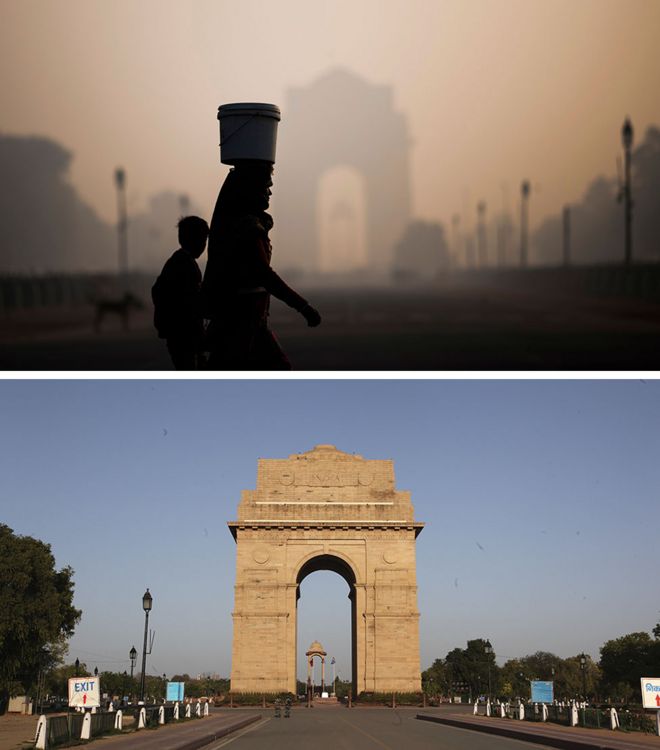 Image copyright GETTY IMAGES
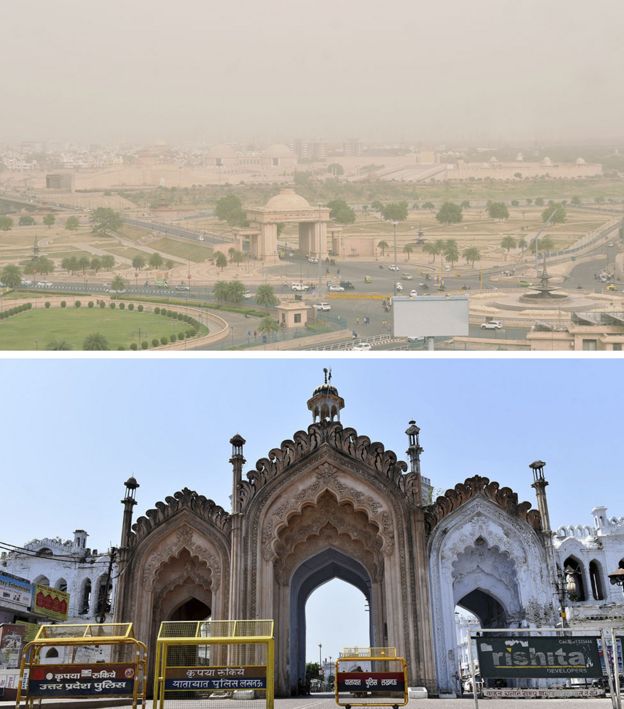 Image copyright GETTY IMAGES
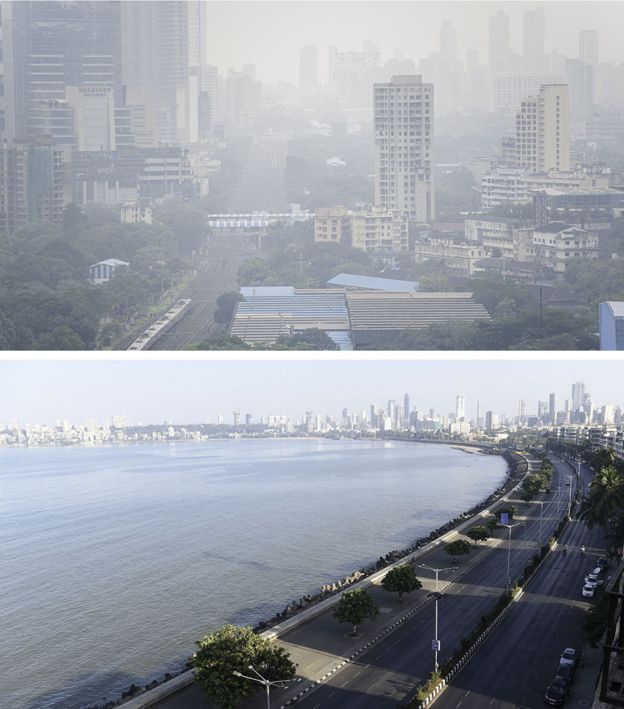 Image copyright HINDUSTAN TIMES
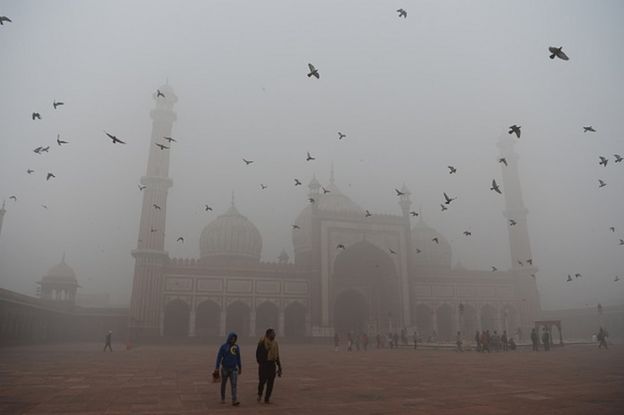 Image copyright GETTY IMAGES
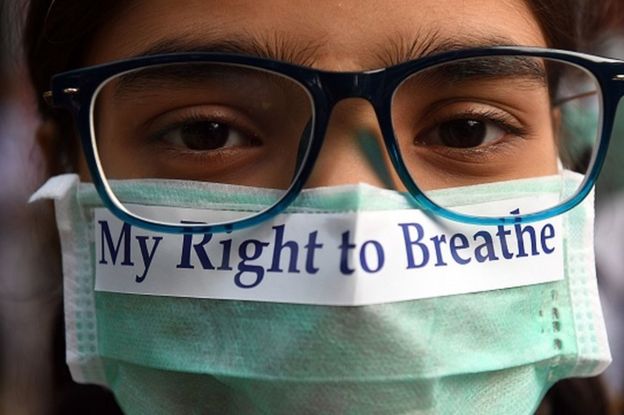 Image copyright GETTY IMAGES
 CHINDIA ALERT: You'll be living in their world, very soon