Chindia Alert: You’ll be Living in their World Very Soon
aims to alert you to the threats and opportunities that China and India present. China and India require serious attention; case of ‘hidden dragon and crouching tiger’.
Without this attention, governments, businesses and, indeed, individuals may find themselves at a great disadvantage sooner rather than later.
The POSTs (front webpages) are mainly 'cuttings' from reliable sources, updated continuously.
The PAGEs (see Tabs, above) attempt to make the information more meaningful by putting some structure to the information we have researched and assembled since 2006.
HONG KONG (Reuters) – Staff at Cathay Pacific Airways, Hong Kong’s flagship airline, are on edge.
A Cathay Pacific Boeing 777-300ER plane lands at Hong Kong airport after it reopened following clashes between police and protesters, in Hong Kong, China August 14, 2019. REUTERS/Thomas Peter
Their city has been gripped by months of anti-government protests, and their company is feeling the wrath of China’s aviation regulator after some staff members took part or expressed support.
Since an Aug.9 directive by the Civil Aviation Authority of China (CAAC) that called for the suspension of staff who supported or participated in the demonstrations, the regulator has rejected some entire crew lists without explanation, two sources with knowledge of the matter told Reuters.
The rejections have forced Cathay to scramble, pulling pilots and flight attendants off standby while it investigates social media accounts in an effort to determine which crew member has been deemed a security threat, one of the sources said.
Other disruptions have come in the form of a huge jump in the number of plane inspections upon landing, four pilots said.
The flexing of regulatory muscle has contributed to a climate of fear within the airline, with employees telling Reuters they felt Cathay’s longer-term future as an independent company was highly uncertain and subject to Beijing’s whims.
The CAAC’s labelling of employees who support the protest as a security risk and its demand that they be suspended from flying over mainland airspace has been a de facto career killer.
Around three quarters of Cathay flights use mainland airspace and due to the directive, 30 rank-and-file staff, including eight pilots and 18 flight attendants, have been fired or resigned under pressure, according to the Hong Kong Cabin Crew Federation.
Cathay CEO Rupert Hogg and his top deputy also resigned in August amid the mounting regulatory scrutiny on the 73-year-old airline, one of the region’s most high-profile brands that draws on Hong Kong’s British heritage.
“Things changed very quickly,” said Jeremy Tam, a pro-democracy lawmaker and pilot who resigned from the airline after the CAAC directive, likening the atmosphere to a political trial. “The threat is huge and it’s almost like zero to 100 in two seconds.”
Reuters talked to 14 current and former employees for this article. Nearly all declined to be identified for fear of being fired or due to the sensitivity of the matter.
The CAAC did not respond Reuters requests for comment on the rejections of crew lists or the increase in plane checks.Cathay said in a statement it must comply with all regulatory requirements. “Quite simply, this is our licence to operate; there is no ground for compromise,” it said.
The airline declined to comment on the number of employee departures, but said any terminations took into account factors such as a person’s ability to perform their role.
DEMERIT SYSTEM
Aviation regulators around the world conduct occasional plane inspections at airports to ensure an airline is in compliance with safety regulations.
But after the CAAC’s Aug. 9 directive, the once-infrequent inspections occurred almost daily and included the new and unusual step of checking phones owned by crew for anti-China photos and messages, the pilots said, adding that this had led to flight delays.
The step-up in checks has increased the likelihood of regulators finding minor issues to write up, which pilots said had included dirt on the plane’s exterior and scratches on a fire extinguisher.
Infractions can have outsized consequences under the CAAC’s strict demerit points system, they said, noting the regulator could force Cathay to reduce its number of flights, cut destinations or in a worst-case scenario, revoke the airline’s right to fly to mainland China.
Management has urged staff to do their utmost to avoid infractions.
“It is nothing less than the survival of the airline at stake,” said a senior employee. “Management have made that abundantly clear at meetings.”
Executives are particularly sensitive after seven incidents outside mainland China in the past two months in which pre-flight checks found emergency oxygen bottles for crew were depleted.
The CAAC is more public than many regulatory peers about disclosing safety violations, warnings and punishments.
In 2017, Emirates was banned from expanding its operations for six months following two safety incidents, while flag carrier Air China Ltd was ordered last year to cut Boeing Co 737 flights by 10% after an emergency descent linked to a pilot smoking an e-cigarette in the cockpit.
Cathay declined to provide information on its points under the CAAC system but said it wanted to emphasise that there had been no impact on its flight services into mainland China.
The pilots said the high frequency of airplane checks, which one described as “very intimidatory”, was starting to recede.
A THOUSAND CUTS
Employees are also feeling pressure from other regulatory bodies.
Last week, ahead of China’s National Day on Oct.1, immigration officers at some mainland airports requested photos of crew with the Chinese flag, said a pilot at regional arm Cathay Dragon who flies to the mainland regularly.
He said to his knowledge, most pilots – many of whom are expats from Western countries – had refused but Hong Kong cabin crew were “too nervous to say no” given the scrutiny on their actions by the company and the Chinese government.
“Everyone is walking on eggshells in China,” the pilot said.
Cathay did not respond to a request for comment, while China’s Ministry of Public Security, which oversees immigration, did not respond to a request for comment during a week of public holidays.
There has been no let-up in the widespread, sometimes violent, unrest that has beset Hong Kong. Triggered by a now-withdrawn extradition bill, it has morphed into an outpouring of opposition to the former British colony’s Beijing-backed government.
The crisis has also meant a sharp drop in travel demand to Hong Kong, putting more pressure on Cathay.
Cathay’s overall passenger numbers were down 11.3% in August. Flights at Cathay Dragon, which does most of Cathay’s mainland flying, were on average 60-65% full in September, down from the usual 80%, according to estimates from two pilots.
The pilots said while the sharp drop in demand was in some ways similar in scale to that weathered by Cathay during the SARS epidemic and the global financial crisis, there were key differences that felt more threatening to the company’s future.
Some state-controlled firms such as China CITIC Bank International and Huarong International have told employees to avoid flying with Cathay, and it has been attacked by Chinese state news organisations as well as by many mainland consumers on social media.
CAAC’s Aug.9 statement which called staff who supported the protests a security risk has also put Cathay’s reputation as one of the world’s safest airlines under a cloud it does not deserve, employees said.
Many acknowledged the new management team, which oversees around 33,000 employees, has few palatable options in dealing with the situation given the sway Beijing holds over the airline’s operations.
But they lamented the loss of freedom of speech and sense of job security, saying employees are afraid to speak about anything even vaguely political or voice support for protests on social media for fear of being reported by colleagues under a whistleblower policy.
“It has become a Hong Kong company with mainland employment terms,” a pilot at Cathay Dragon said. “The risk is death by a thousand cuts.”
Health watchdog warns that tobacco products are widely available on both social media and online retailers
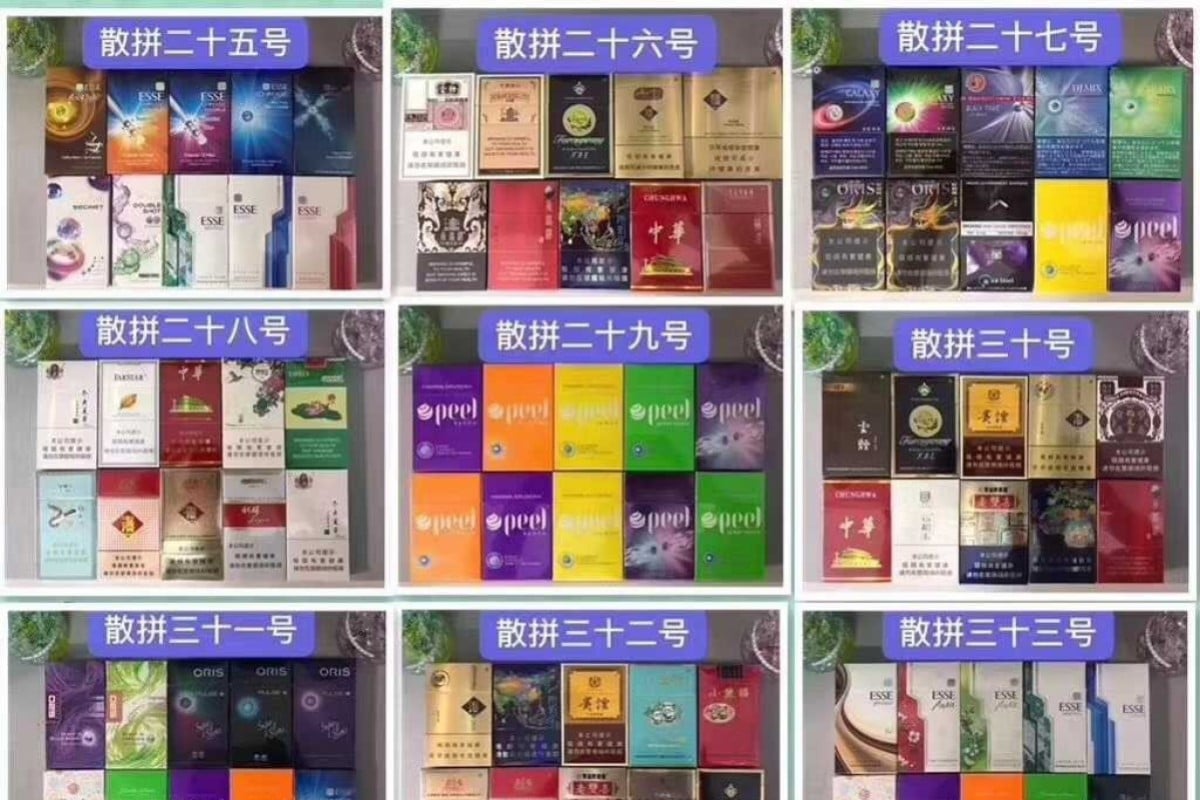
A tobacco seller’s advert posted on WeChat. Photo: Handout
Illegal tobacco trading is rife online in China both via social media and e-commerce platforms, a health watchdog has warned.
The Beijing Centre for Disease Prevention and Control released a report on Monday that said almost 52,000 advertisements and listings for tobacco products had been found on 14 social media and e-commerce platforms in the first half of last year.
“Compared with traditional advertising, tobacco promotion on the internet uses methods such as sponsored content, which is more discreet,” the report said.
China’s internet advertising regulations prohibit the online promotion of tobacco products.
Selling cigarettes online is illegal as the State Tobacco Monopoly Administration bans the sale of tobacco across provinces and strictly controls the production, sale and import of the product.
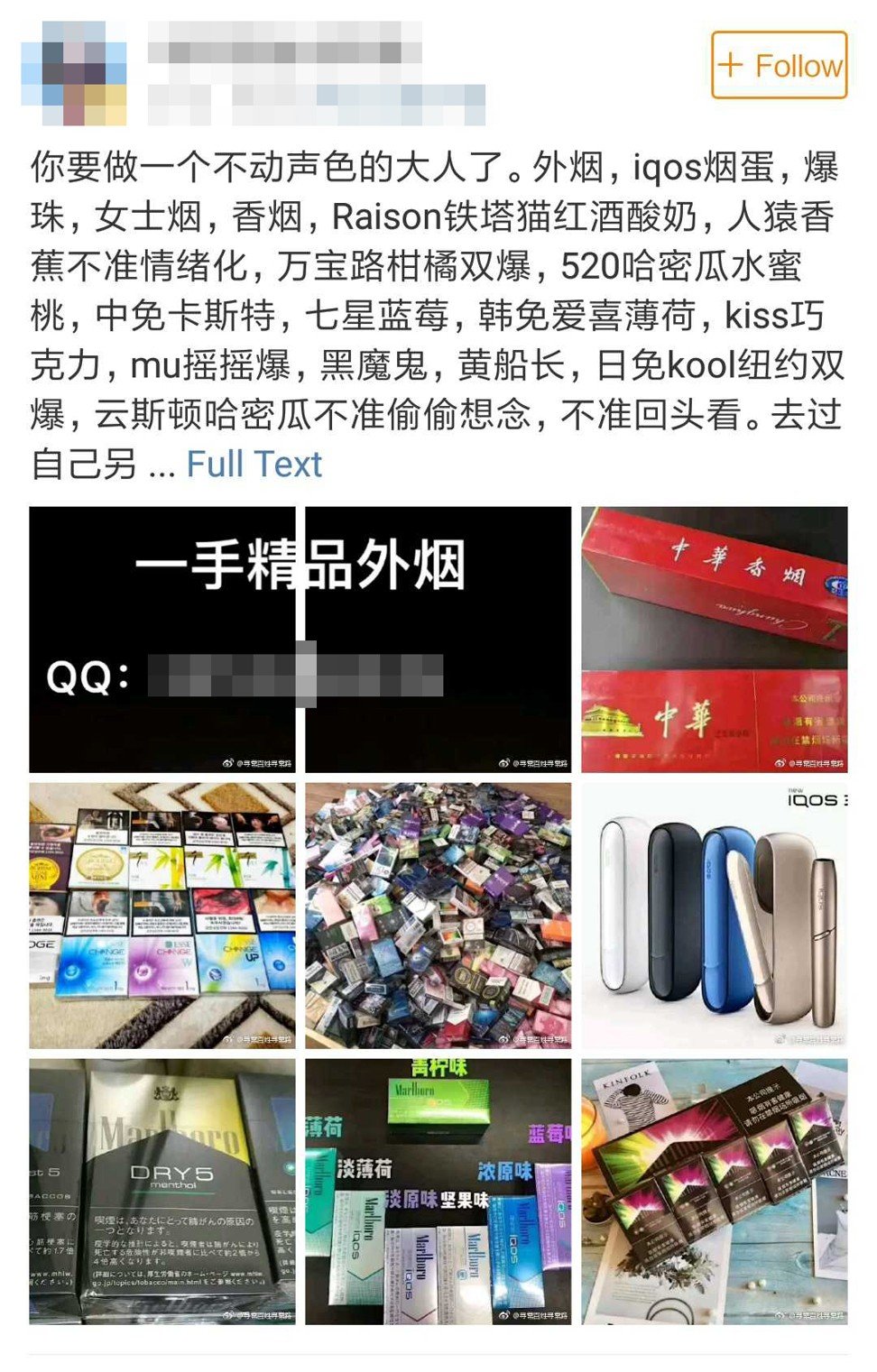
Screenshot from Weibo of an advertisement for imported cigarettes. Photo: Handout
The social network Weibo, China’s equivalent of Twitter, was highlighted as the platform where most of the banned promotion and selling were found, with nearly 43,000 adverts and listings, or 82 per cent of the total.
The South China Morning Post found that tobacco advertising and direct selling proliferates on Weibo, where searching for terms such as “cigarettes” and “women’s cigarettes” yielded almost 1,300 results, many of them offering WeChat and QQ contact information.
Five vendors found through Weibo offered various imported cigarettes such as Marlboro and South Korean brand Esse.
One seller claimed his wares were smuggled into China from places like the US. Another offered refunds for products that were confiscated, but only if they were bought for delivery within the same province.
A 10-packet carton of Kent cigarettes, an American brand, was selling for around 30 per cent less than the retail price in Beijing.
An extraordinary man’: China’s tobacco and orange king, entrepreneur Chu Shijian, dies aged 91
“A few days ago, cigarette sellers on Little Red Book began trending. People in different places have stopped. I’m still going, one step at a time,” a vendor calling herself “24 hours online cigarette hawker” wrote on her WeChat timeline on Wednesday.
She was referring to media coverage of Little Red Book the e-commerce platform popular with influencers selling lifestyle products.
Little Red Book, whose investors include Alibaba, the owner of the South China Morning Post, has pledged to remove as many as 95,000 adverts and listings for tobacco products found on the app on Tuesday in response to a report by newspaper Beijing Youth Daily.
Searches for “cigarettes” or “women’s cigarettes” no longer yielded results on Thursday.
“We are working hard to remove related content. We ask users to promptly report cases and work together to maintain order on the platform,” Weibo’s PR director Mao Taotao said.
Imported cigarettes on sale on Weibo. Photo: Handout
While advertising and online selling of tobacco are prohibited, e-cigarettes fall in a grey area. China’s tobacco agency has banned the sale of IQOS, a type of battery heated cigarette that delivers nicotine. However, regulations for non-nicotine vaporisers are less clear. These continue to be widely available online.
“In China, even toilet paper has standards. There are none for e-cigarettes,” Li Enze, the industrial law committee secretary for the Chinese Association on Tobacco Control, said.
“I think there needs to be a total ban on the sale of e-cigarettes until standards and regulations are set.”
E-cigarettes and vaporisers come in a variety of flavours and shapes to target women and young people, which poses a serious problem according to Li.
Under-18s can easily purchase vaporisers online and can be induced to smoking the real thing, he said.
Two sets of standards for e-cigarettes have been considered by the Standardisation Administration of China since 2017.
However, both were proposed by organisations associated with the state tobacco monopoly, which Li deemed a conflict of interest.




 CHINDIA ALERT: You'll be living in their world, very soon