Archive for ‘Eastern Europe’

30/04/2020

It’s complicated: China-Europe relations hit by diversity, distrust and dogmatism during pandemic

  • European nations are divided over how best to deal with Beijing, which looms larger in their policy and public debates
  • Think tanks came together and reported on China’s much-touted medical aid and ‘mask diplomacy’ during Covid-19 crisis
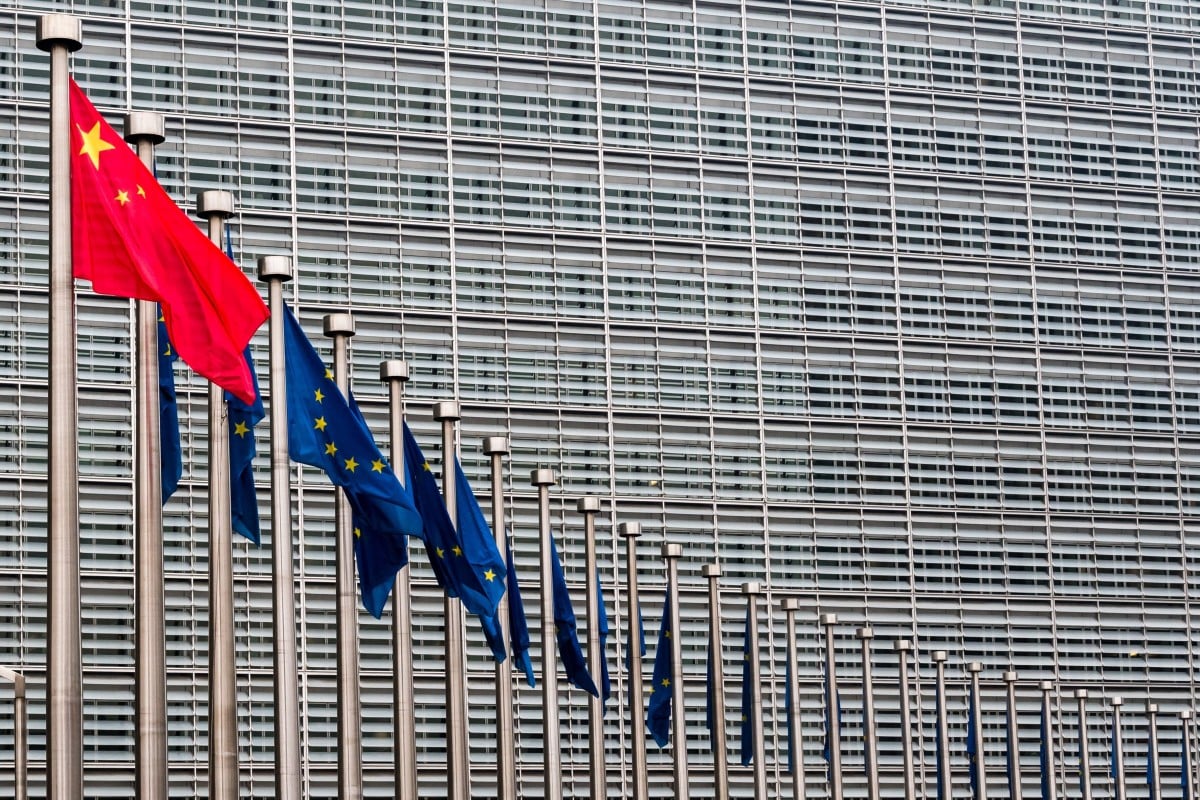
European nations are looking to be more cohesive in their approach towards relations with China. Photo: Bloomberg

As Beijing steps up its pressure campaign on Europe in the wake of the Covid-19 pandemic, their relations look set to become more diverse and contested amid growing distrust and wariness of China’s expanding influence, according to new research.

The study, based on analysis of China’s role in 19 European countries’ handling of the coronavirus crisis, showed that Europe remained largely divided over how to deal with Beijing, which has figured ever more prominently in policy and public debates in many parts of the continent.

A total of 28 experts from 21 think tanks across the continent, collectively known as the European Think-tank Network on China, were involved in the research.

It came on the heels of a diplomatic debacle in the past week that saw the European Union reportedly bowing to pressure by China. The EU reportedly toned down part of a report documenting Beijing’s disinformation efforts to deflect the blame and rewrite the global coronavirus narrative.

Although a spokesperson for the EU denied those allegations, the saga has “moreover revealed the pressures that China has placed on

European Union

officials during the crisis”, according to John Seaman, editor of the report and a research fellow at the French Institute of International Relations.

In a phone call on Wednesday, Chinese Premier Li Keqiang and European Commission President Ursula von der Leyen shrugged off concerns about their discord and vowed to boost the fight against the virus and boost economic recovery, according to Xinhua.

Germany ‘rejected China’s bid for positive spin’ on pandemic response

27 Apr 2020

According to Seaman, the Covid-19 crisis hit at a time when traditionally trade-driven China-EU relations had grown more complex and competitive after the European Commission said for the first time last year that Beijing was a systemic rival.

“Debates over the need to adopt more coherent strategies towards China have been emerging across Europe. In many ways, the current crisis has become a catalyst for a number of trends that have been shaping Europe-China relations in recent years, while in other ways it has turned the tables,” he said in the report.

“It has simultaneously brought Europe and China into closer cooperation, pushed them further apart, and seemingly underlined the fractures that exist within Europe on how to approach an increasingly influential China.”

A growing number of European countries, including Sweden and Britain, have joined the United States and Australia in calling for an international inquiry into China’s handling of the pandemic. Leaders from Germany and France have also pressed Beijing for greater transparency about the origin of the deadly virus.

The European think tanks’ report was also focused on China’s unusually aggressive coronavirus diplomacy, with Chinese embassies and ambassadors shifting the blame on to Western democracies and promoting Beijing’s messaging “with varying degrees of dogmatism, divisiveness and moderation” on Twitter and in traditional media.

“While China’s increasingly proactive public diplomacy is widespread, and there appears to be a relative degree of consistency in messaging, there is a diversity in method that ranges from low key (Latvia or Romania) to charm offensive (Poland, Portugal, Italy or Spain) to provocative or aggressive (Sweden, Germany or France),” the report said.

It examined China’s much-touted medical aid and “mask diplomacy” and found “a correlation between Chinese companies with commercial interests in the country and donations from these companies” in countries including Greece, Hungary, Italy, Portugal and Spain.
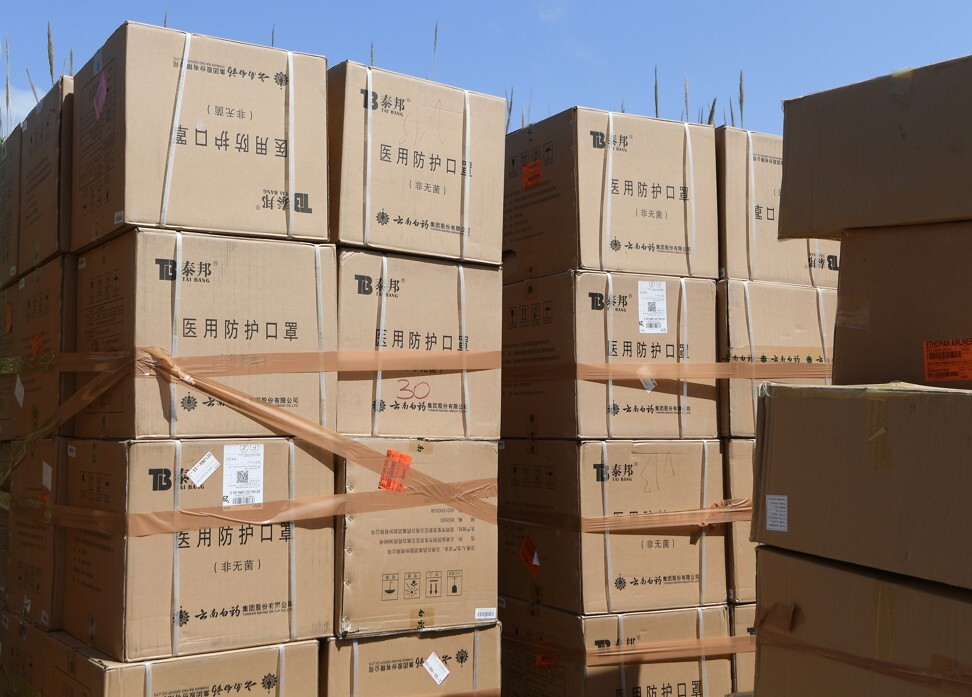
Boxes of medical supplies from China in Rome. Some European nations are growing wary about China’s diplomatic overreach and apparent willingness to alter the coronavirus narrative. Photo: Xinhua
Many countries have pushed back against China’s diplomatic overreach and its preferred narrative that has served to “[underline] the apparent successes of its autocratic governance model, ignoring its clear downfalls in managing the crisis initially, while sowing doubt on the effectiveness of liberal democracies”, according to Seaman.

While the European Union’s foreign policy chief Josep Borrell warned of Beijing’s geopolitical game to expand its influence through spinning and “politics of generosity”, countries such as Germany and Sweden have moved to tighten investment screening, 5G and industrial policies targeting Chinese firms.

Zhang Ming, China’s top envoy to the EU, last week dismissed the concerns about China’s alleged ploy to use the vulnerabilities of other countries to advance China’s geopolitical interests, such as with the country’s embattled tech giant Huawei and the ambitious Belt and Road Initiative.

“Disinformation is our common enemy and we need to make joint efforts to eradicate it,” Zhang said, claiming China had been a victim of unspecified disinformation campaigns.

The report also noted that China’s actions towards Europe in times of crisis looked set to amplify the fractures across the continent and prompt further debates about the need for a coherent EU strategy on China.

A poll of more than 12,000 people across the 28 EU member countries by German think tank Bertelsmann Stiftung in September last year showed 45 per cent of Europeans saw China as a competitor while only 9 per cent believed their countries shared the same political interests or values with China.

Another survey of 16 European countries released by the Pew Research Centre in December also showed the continent remained deeply divided over how to approach China.

While people in most of western Europe and some of Central and Eastern Europe, such as Slovak and Czech, saw China negatively, 51 per cent in Greece had a positive view of China and those in Russia, Ukraine, Poland, Bulgaria and Lithuania tended to see China more favourably.

Source: SCMP

18/01/2020

Why the ‘honeymoon is over’ between the Czech Republic and China

  • President Milos Zeman says Beijing has not fulfilled its promises and he will not attend this year’s 17+1 summit
  • He had hoped the country would be an ‘unsinkable aircraft carrier’ for Chinese investment in Europe, but now Zeman has changed his tone
Czech Republic President Milos Zeman has voiced disappointment over China’s lack of investment in the country. Photo: AFP
Czech President Milos Zeman’s decision to skip China’s summit with European leaders in April shows the “honeymoon is over” between Prague and Beijing, analysts say, as it tries to shake up the relationship to push for more investment.
And China could face similar trouble with other nations looking for more at this year’s “17+1” summit with Central and Eastern European nations in Beijing.
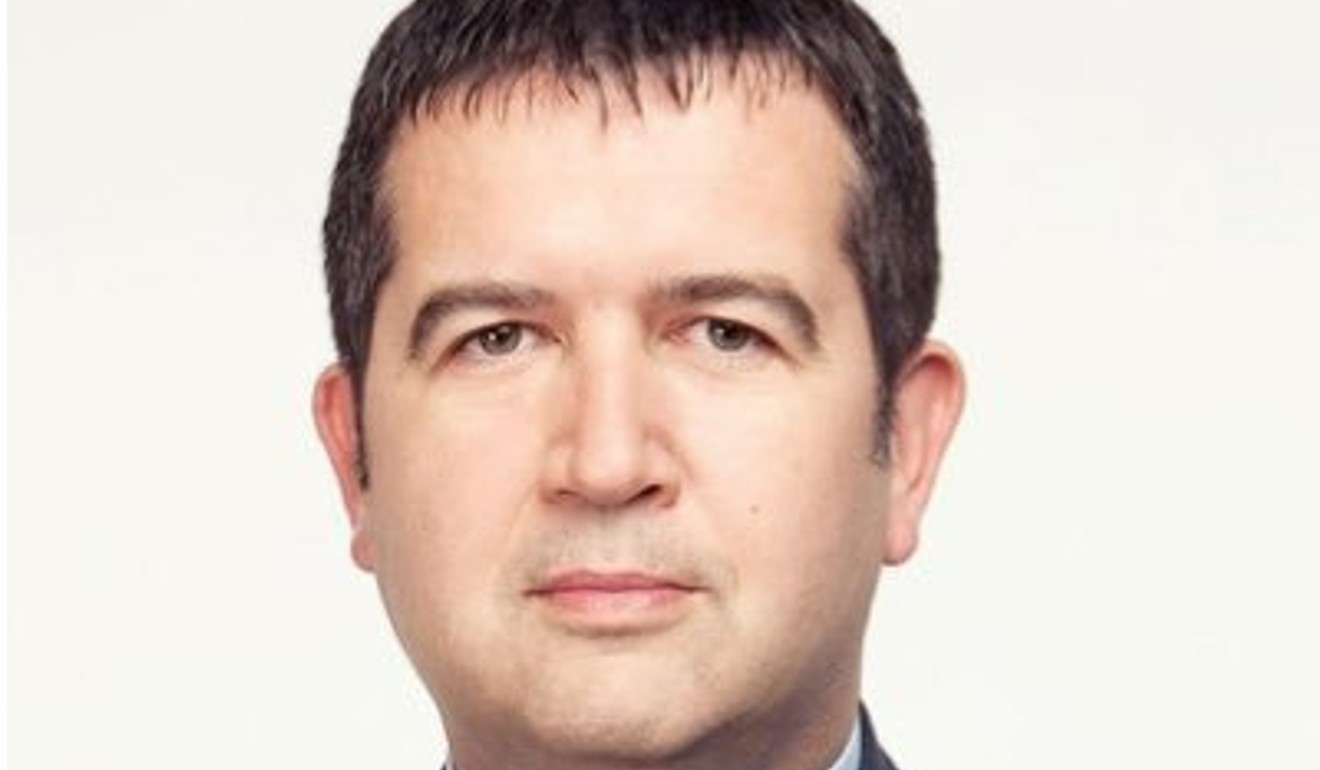
Top leaders usually attend the gathering, but Zeman on Sunday said he would not be going, and that China had not “done what it promised” by failing to invest more in his country. He would instead send Deputy Prime Minister Jan Hamacek, which he said was “adequate to the level of cooperation”.
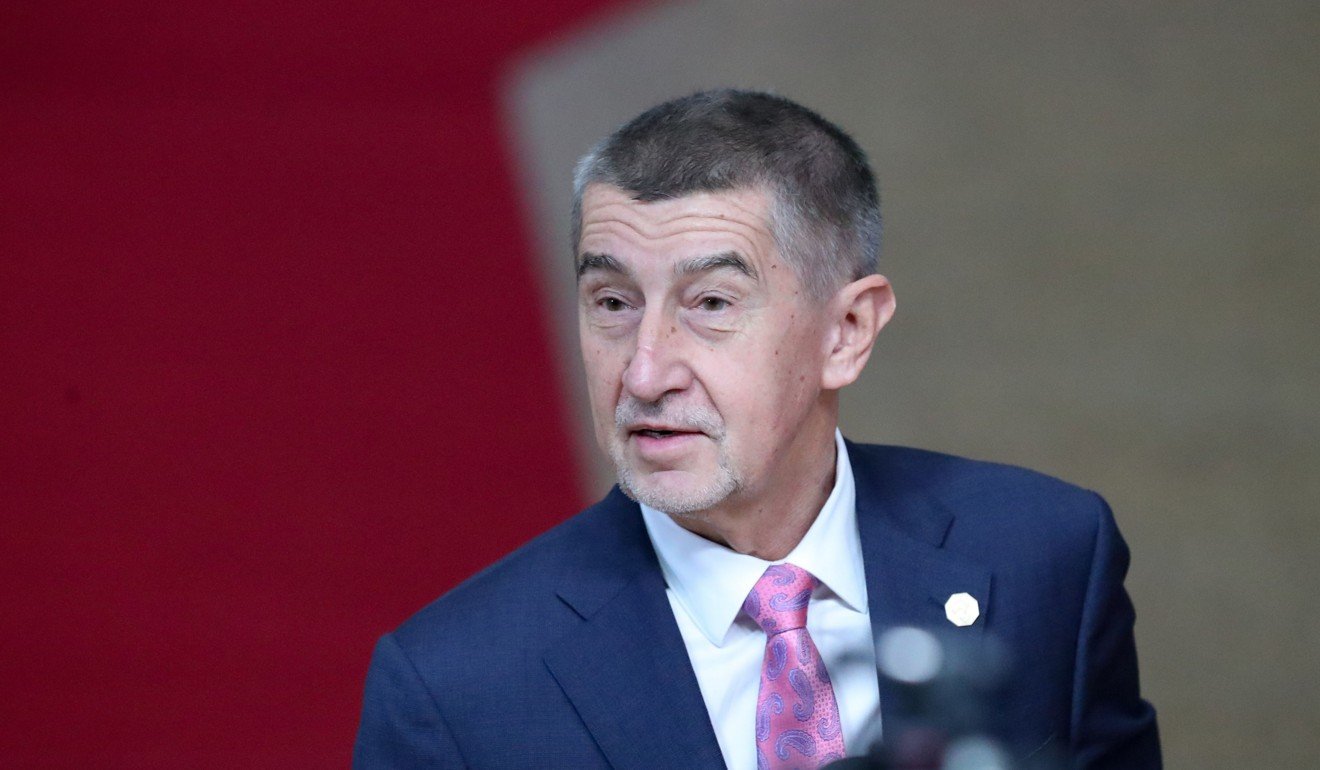
At last year’s summit in Croatia, Prague was represented by Prime Minister Andrej Babis, who was diplomatically on par with the Chinese representative, 
Premier Li Keqiang.

But it is China’s turn this year, and President Xi Jinping will be the host – meaning heads of state are expected to attend. The 17+1 grouping was launched by Beijing in 2012.

Deputy Prime Minister Jan Hamacek will represent Prague at the 17+1 summit. Photo: Twitter
Zeman was a strong advocate for deepening economic ties with China and investments were on the rise, for a time. But Zeman and other Czech leaders have increasingly questioned the nature of the relationship, especially as the economic benefits have dwindled.
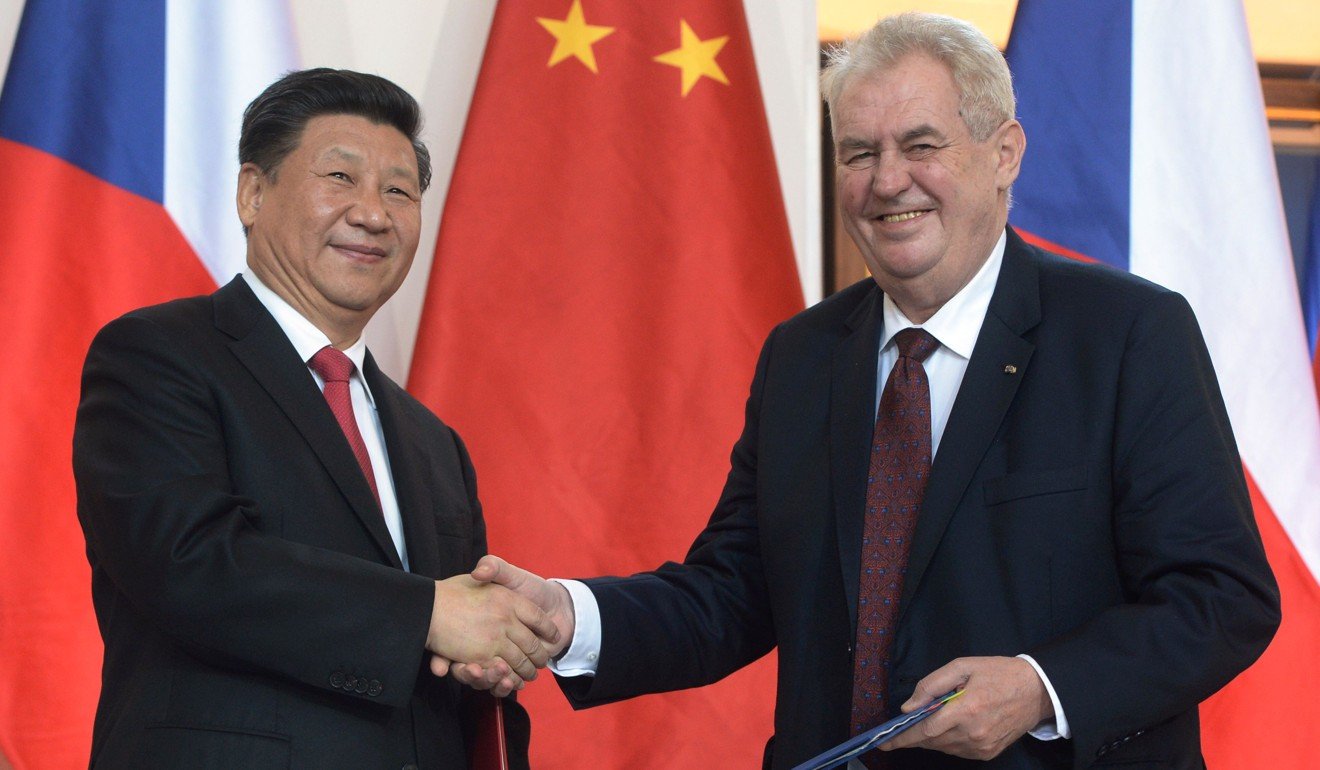
Relations with China grew after Zeman, who is in his second term as president, took office in 2013. The peak came in 2016, when Xi visited the country and promised more Chinese investment. That year, Zeman said he hoped his country would be an “unsinkable aircraft carrier” for Chinese investment in Europe.

But since then, the investments have faltered, not just in the Czech Republic, but across Central and Eastern Europe, and Zeman has changed his tone. In April, he called the lack of investment in his nation a “stain on the Czech-China relationship”, in an interview with Chinese state broadcaster CCTV.

Chinese President Xi Jinping meets his Czech counterpart Milos Zeman during a visit to Prague in 2016, when he promised more investment. Photo: AFP
“I suppose he feels that promises made to him personally were not fulfilled, since he has had personal contact with Xi Jinping on a number of occasions … he surely feels that his commitment to China has not been reciprocated,” said Jeremy Garlick, assistant professor of international relations at the University of Economics, Prague.

Zeman has visited China five times and was the only EU leader to attend a Chinese military parade in 2015 to mark the 70th anniversary of the end of World War II.

I suppose he feels that promises made to him personally were not fulfilled, since he has had personal contact with Xi Jinping on a number of occasions Jeremy Garlick, University of Economics, Prague
Rudolf Furst, a senior researcher at Charles University in Prague, said Zeman had given up his unequivocal support for a pragmatic pro-Chinese agenda.

“Chinese investments flow in Czechia have remained low, and not matching the Czech structural needs for stimulating the GDP growth,” he said.

Most of the 17+1 member states, except for Hungary and Greece, were now “perceiving the Chinese investment promises as merely virtual”, Furst said. “The 2012 new wave of China’s honeymoon is over.”

Rhodium Group has tracked Chinese foreign direct investment data in Europe since 2000. Its data shows that while total Chinese investment in the Czech Republic had grown to about 1 billion (US$1.1 billion) by 2018, growth has been slow, while neighbouring countries like Italy and Germany had some 15 to 20 times more investment in their economies.

Cumulative Chinese foreign direct investment in the Czech Republic between 2000 and 2017 sat at about 600 million, and grew to 1 billion in 2018, while that in neighbour Germany grew from 20.6 billion to 22.2 billion over the same period.

The picture is much the same for Eastern Europe as a whole – Austria, Bulgaria, the Czech Republic, Hungary, Poland, Romania and Slovakia received just 2 per cent of China’s overall investment in Europe in 2018, according to the data.

Countries like France, Germany and Britain meanwhile received 9, 12 and 24 per cent, respectively.

Czech Republic becomes unlikely front line in China’s soft power war

14 Dec 2019

Other Czech politicians have also taken a tougher line on China. Babis warned of a “considerable” trade deficit with China in 2018. The country exported US$1.8 billion of goods to China in the first nine months of last year, down 4.3 per cent from a year earlier. But it imported US$11.7 billion of products from China – by far its largest source of imports.

And after Zeman’s announcement this week, the Green Party, which holds a handful of seats in the Czech Senate, called for Prague to pull out of the 17+1 platform altogether.

Prime Minister Andrej Babis warned of a “considerable” trade deficit with China in 2018. Photo: AFP
Richard Turcsanyi, director of the Central European Institute of Asian Studies at Palacky University in the Czech Republic, said both Prague and Beijing were expecting too much.

“I see the current sharp downturn of Czech-China relations being related to very high and unrealistic expectations which existed perhaps on both sides, driven to a large extent by the ignorance of each other,” he said.

“Due to the impressive economic growth of China and also its international economic expansion, many expected that China could quickly become a significant economic actor in the Czech Republic,” he said.

“In reality, the Czech Republic and China are not natural trading or investment partners. They are more of competitors when it comes to moving up the value chain, rather than complementary economic partners – contrary to what has been claimed for years as part of the diplomatic exchanges.”

Political tensions with China have also increased, including over security allegations about Huawei Technologies, and sensitive issues like Taiwan and Tibet.

This week, Shanghai suspended official contact with the Czech capital Prague after it signed a sister city agreement with Taipei – following Prague cancelling its deal with Beijing in October over a “one China” pledge. Shanghai was also a sister city with Prague.

And although Zeman has been critical of the US-led campaign against Huawei, Babis ordered Czech government institutions to stop using products from the Chinese tech giant last year.

“There has been a breakdown of trust in China, at the level of the public, the media, and now even the president,” Garlick said.

Source: SCMP

Law of Unintended Consequences

continuously updated blog about China & India

ChiaHou's Book Reviews

continuously updated blog about China & India

What's wrong with the world; and its economy

continuously updated blog about China & India