Archive for ‘economic and social development’

09/12/2019

China Focus: Xinjiang, an emerging investment hotspot

URUMQI, Dec. 8 (Xinhua) — Rich in resources but remote, Xinjiang in China’s far west has become a magnet for investors for its unique position on the Silk Road.

In a workshop of the Amer International Group in Urumqi, capital of Xinjiang Uygur Autonomous Region, workers are busy adjusting and packing laptops.

Recently, Amer sent the first batch of 2,000 laptops it produced for the German company TrekStor to the European market via China-Europe freight trains.

Headquartered in the southern Chinese city of Shenzhen, Amer invested 20 billion yuan (around 2.8 billion U.S. dollars) to build an industrial park in Xinjiang in 2018. So far, the industrial park has produced and exported around 1.5 million mobile phones, according to Wang Wenyin, the founder and chairman of Amer International Group.

“We saw Xinjiang’s geographical advantages, so we established the industrial park and cooperated with our counterparts in South and Central Asia in the fields of smartphones and IT high-end manufacturing,” Wang said.

Amer International Group is among a growing number of enterprises that have been attracted by Xinjiang in recent years, as trains and planes have made Xinjiang better connected than ever before.

As China’s key trade gateway to Central and West Asia, the remote region’s position as the heart of the Belt and Road Initiative is unmistakable. In 2013, China proposed the BRI, which opened up new space for the world economy, spurring trade and economic growth and stimulating investment and creating jobs worldwide.

Urumqi Customs saw the number of China-Europe freight trains skyrocket to 5,743 in the first 10 months this year, up 53.68 percent year on year, outnumbering the total of 2018.

To attract more investors, the local government has gone to great lengths creating a more friendly business environment, such as cutting the time required for starting a business and lowering the entry threshold for products.

Up to now, Xinjiang has had more than 1.8 million market entities including 359,000 enterprises, up 18 percent year on year.

Foreign and domestic business giants including German chemical giant BASF and China’s real estate conglomerates Wanda Group have also invested in the region.

Lai Naixiang, head of Kashgar Oumeisheng Energy Technology, a home appliance manufacturer, moved his business from Shenzhen to Kashgar in southern Xinjiang in 2017.

“We chose to settle in Kashgar because of the great market potential in adjacent Central Asian countries as well as Xinjiang’s lower electricity prices and preferential tax policy,” he said.

Last year, the company exported electric kettles worth more than 16 million yuan to Kyrgyzstan and Tajikistan.

Foreign trade in Xinjiang has seen booming growth. The region recorded around 131.5 billion yuan in imports and exports in the first 10 months of this year, up 28 percent year on year.

In the first 10 months, Kazakhstan topped the list of Xinjiang’s major trade partners, with trade volume between the two growing by 28.2 percent to 60.2 billion yuan.

Xinjiang’s trade with Kyrgyzstan, Australia, Pakistan, Britain, Argentina and Vietnam also showed fast growth, according to the local customs authorities.

“With further Belt and Road construction, Xinjiang will get more impetus in economic and social development. I see great potential in the region,” Wang said.

Source: Xnhua
19/11/2019

China needs to divert more water to north to fight risk of drought, says premier

  • Li Keqiang tells senior officials to step up efforts to channel water from Yangtze River to arid regions
  • Impact of pollution and rising population has prompted increased efforts to improve efficiency and supply
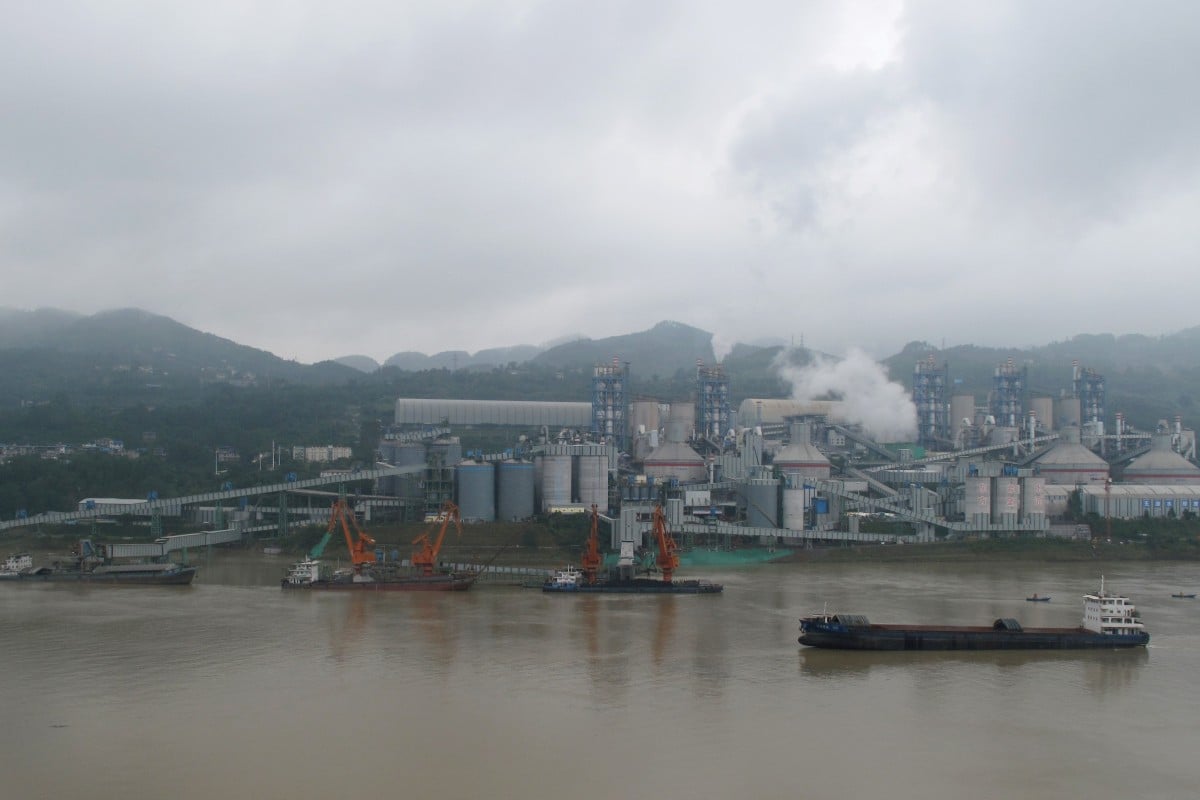
A cement plant on the banks of the Yangtze in Chongqing. The authorities are now trying to stop further development along the river. Photo: Reuters

China needs to divert more water to its arid northern regions and invest more in water infrastructure as shortages get worse because of pollution, overexploitation and rising population levels, Premier Li Keqiang has said.

China’s per capita water supplies are around a quarter of the global average. With demand still rising, the government has sought to make more of scarce supplies by rehabilitating contaminated sources and improving efficiency.

Water remained one of China’s major growth bottlenecks, and persistent droughts this year underlined the need to build new infrastructure, Li told a meeting of senior Communist Party officials on Monday. An account of the meeting was published by China’s official government website.

Local government bonds should be “tilted” in the direction of water infrastructure, he said, and innovative financing tools were also needed.

He also called for research into new pricing policies to encourage conservation.

Li said China’s water supply problems had been improved considerably as a result of the South-North Water Diversion Project, a plan to divert billions of cubic metres of water to the north by building channels connecting the Yangtze and Yellow rivers.

World ‘woefully unprepared’ for climate change’s effects on drinking water supplies drawn from mountains

He said opening up more channels to deliver water to regions north of the Yangtze River Delta would support economic and social development and optimise China’s national development strategy, according to a summary of the meeting on the government website.

China is in the middle of a wide-reaching programme to clean up the Yangtze River, its biggest waterway, and put an end to major development along its banks.

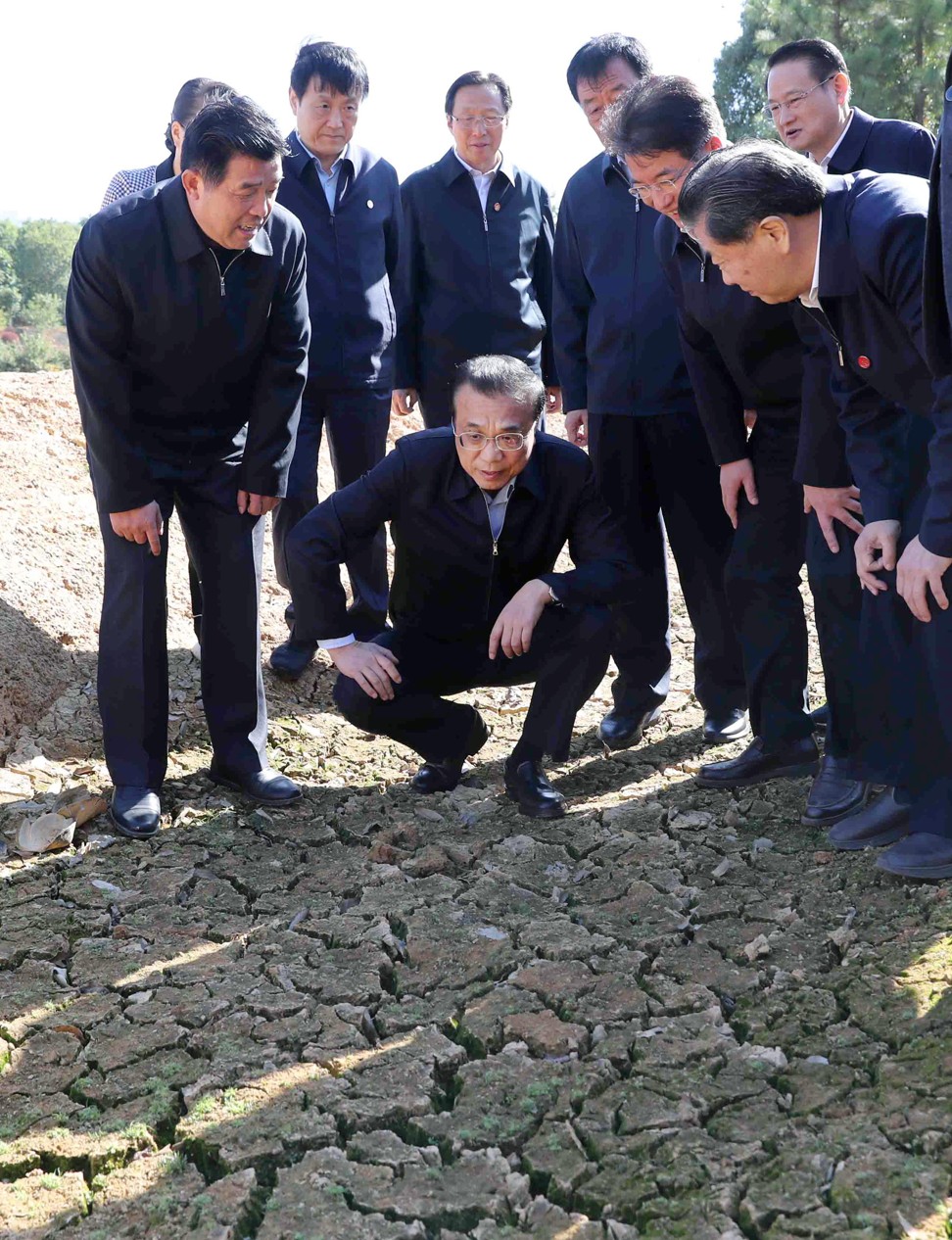
Chinese Premier Li Keqiang inspects an empty reservoir during a visit to Jiangxi province last week. Photo: Xinhua

Local governments have been under pressure to dismantle dams, relocate factories and even ban fishing and farming in ecologically fragile regions.

But experts say the ongoing campaign to divert the course of the Yangtze to other regions is still causing long-term damage to the river’s environmental health.

Many cities that had polluted their own water sources had drawn replacement supplies from the Yangtze, exceeding the river’s environmental capacity, said Ma Jun, founder of the Institute of Public and Environmental Affairs, which monitors water pollution.

Beijing already relied on diversion channels from the Yangtze to supply 70 per cent of its water, but had done little to improve conservation or reduce per capita consumption, which was higher than many Western countries, he said.

“[Diversion] has caused so much suffering and needs so many dams to keep up supply, and that has impacted biodiversity,” he said.

Source: SCMP

16/10/2019

Xi’s article on ecological protection, development of Yellow River basin to be published

BEIJING, Oct. 15 (Xinhua) — An article by President Xi Jinping on ecological protection and high-quality development of the Yellow River basin will be published Wednesday in the 20th issue of the Qiushi Journal this year.

The article is a transcript of a speech by Xi, also general secretary of the Communist Party of China Central Committee and chairman of the Central Military Commission, at a symposium during his inspection tour to central China’s Henan Province in mid-September.

The article stresses adherence to prioritizing ecological conservation and boosting green development, and calls for joint efforts from various sectors to protect the river and facilitate high-quality development of the basin.

It highlights the Yellow River basin’s important role in the country’s economic and social development and ecological security, adding that ecological protection and high-quality development of the Yellow River basin is regarded as a major national strategy.

Noting the tremendous achievements in harnessing the Yellow River after the founding of New China in 1949, the article points out that difficulties and problems still exist, with the risk of flooding as the biggest threat.

Efforts should be made in pushing for environmental protection, long-term stability, efficient use of water resources, high-quality development of the basin, as well as the protection, inheritance and promotion of the Yellow River culture, according to the article.

Source: Xinhua

30/04/2019

Xi holds talks with Nepalese president

CHINA-BEIJING-XI JINPING-NEPALESE PRESIDENT-TALKS (CN)

Chinese President Xi Jinping (R) holds talks with Nepalese President Bidhya Devi Bhandari in Beijing, capital of China, April 29, 2019. (Xinhua/Huang Jingwen)

BEIJING, April 29 (Xinhua) — Chinese President Xi Jinping held talks with Nepalese President Bidhya Devi Bhandari in Beijing on Monday.

China highly values the development of bilateral relations, and supports Nepal’s efforts in safeguarding national independence, sovereign and territorial integrity, and in exploring a development path suited to Nepal’s own conditions, Xi said.

He expressed appreciation for Nepal’s long-time firm support on issues related to China’s core interests and major concerns, and Nepal’s active participation in the Belt and Road Initiative.

China and Nepal should strengthen cooperation in infrastructure construction, and continue to advance the construction of cross-border economic cooperation zone, Xi said, adding that China is willing to continue to support Nepal’s economic and social development.

Xi called on the two countries to intensify exchanges among legislative institutions, political parties, youth, think tanks and media, consolidate public support for China-Nepal friendship, and advance the friendly cooperative relations to a new level.

Bhandari said that China’s prosperity and stability present opportunities to Nepal, and her country is willing to deepen mutually beneficial cooperation with China in various fields.

She said that Nepal adheres to the one-China policy, and that Nepal will not allow any forces to engage in anti-China activities by using the territory of Nepal.

The two heads of state attended a ceremony for the signing of bilateral cooperation documents after the talks.

Source: Xinhua

Law of Unintended Consequences

continuously updated blog about China & India

ChiaHou's Book Reviews

continuously updated blog about China & India

What's wrong with the world; and its economy

continuously updated blog about China & India