Archive for ‘Economic Daily’

29/10/2019

Donald Trump, Xi Jinping set for November 17 meeting in Chile to sign interim trade war deal: source

  • Chinese President Xi Jinping and US President Donald Trump set to meet on the sidelines of the Apec summit in Chile next month, a source says
  • The two state leaders are expected to sign an interim trade deal ‘if everything goes smoothly’
Chinese President Xi Jinping and US President Donald Trump have met twice already over the course of the 16-month trade war. Photo: AP

Chinese President Xi Jinping and US President Donald Trump are tentatively expected to meet on November 17 with the aim of signing an interim trade deal, a source briefed on the arrangements told the South China Morning Post.

The two leaders are expected to come face-to-face immediately after the Asia-Pacific Economic Cooperation (Apec) summit in Santiago, Chile, with a trade truce signed “if everything goes smoothly”, said the person, who declined to be identified.

Trade envoys from Beijing and Washington are still finalising the text for the two leaders to sign, but both sides have expressed optimism that Trump’s so-called phase one trade deal can be completed in time for the meeting.

Trump said on Monday that negotiations on the interim deal were running “ahead of schedule”.

“We are looking probably to be ahead of schedule to sign a very big portion of the China deal, and we’ll call it phase one but it’s a very big portion,” Trump said. “That would take care of the farmers. It would take care of some of the other things. It will also take care of a lot of the banking needs.

“So we’re about, I would say, a little bit ahead of schedule, maybe a lot ahead of schedule,” the president said, adding the deal would “probably” be signed.

Top trade negotiators for the two countries – US Treasury Secretary Steven Mnuchin, US trade representative Robert Lighthizer and Chinese Vice-Premier Liu He – spoke by telephone last Friday. The Office of the US Trade Representative released a statement after the call saying that the two sides “made headway on specific issues” and “are close to finalising some sections of the agreement”.

China’s official Xinhua News Agency said on Saturday negotiators have “agreed to properly resolve core concerns of each other” and had “basically completed technical discussions about parts of the text”. In particular, China would lift the current ban on US poultry imports and recognise the American public health certification system for meat product imports, Xinhua said.

The top trade envoys are expected to hold another conference call in the near future.
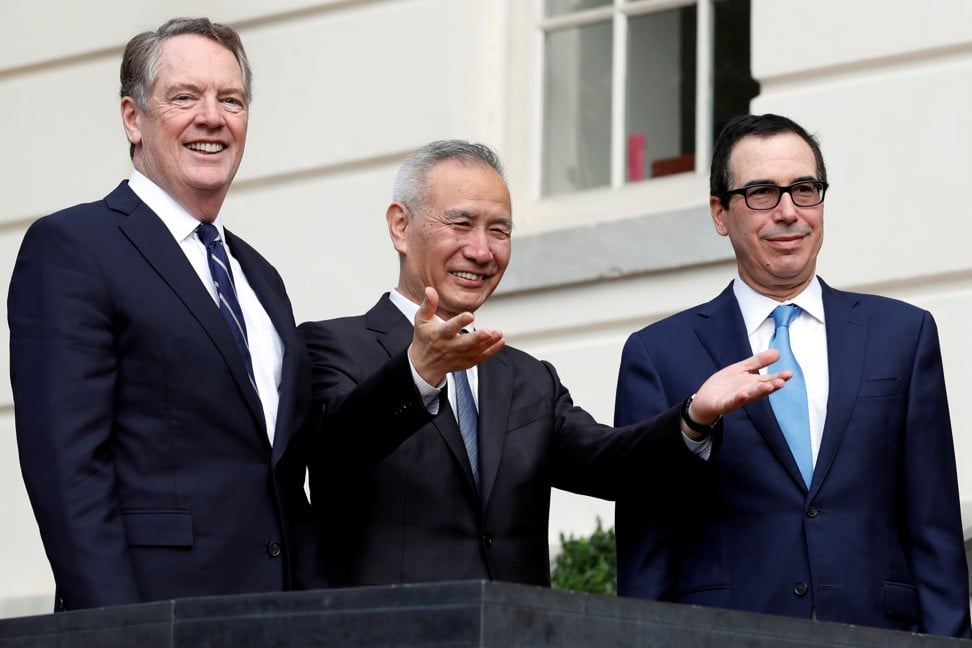
China's Vice-Premier Liu He between US trade representative Robert Lighthizer (left) and US Treasury Secretary Steve Mnuchin during trade negotiations in Washington this month. Photo: Reuters
China’s Vice-Premier Liu He between US trade representative Robert Lighthizer (left) and US Treasury Secretary Steve Mnuchin during trade negotiations in Washington this month. Photo: Reuters

Taoran Notes, an account on Chinese social media platform WeChat run by the official Economic Daily newspaper, wrote over the weekend that Beijing and Washington had moved a step closer to agreement on a “temporary deal”.

“According to past experiences and practises, the negotiation will enter the stage of translation and legal review after the technical completion of the text,” the account said.

Geng Shuang, a Chinese foreign ministry spokesman, said that technical negotiations about part of the deal were finished but deputy-level talks were ongoing. “China hopes both sides can find a trade solution based upon mutual respect and benefits,” Geng said at a regular press conference on Tuesday.

If it goes ahead as planned, the summit between Trump and Xi in Chile next month would be the third time the two leaders have sat down to talk about ending the nearly 16-month-long trade war.

Last December, the two leaders met on the sidelines of the G20 Leaders’ Summit in the Argentinian capital Buenos Aires and agreed to a three-month tariff truce to allow time for the countries’ trade envoys to work out a comprehensive deal. But the talks collapsed in early May with the US blaming China for reneging on promises it made in negotiations, while China blamed the US for attempting to infringe on its economic sovereignty.

The pair met again in late June in the Japanese city of Osaka, where they agreed to restart trade negotiations.

A minor ceasefire was reached in October when Beijing promised to buy US$40 billion to US$50 billion worth of American agricultural products in exchange for Washington postponing indefinitely a tariff increase on US$250 billion of Chinese goods to 30 per cent from 25 per cent on October 15.

Analysts expect fresh 15 per cent duties on about US$160 billion of Chinese imports – including popular products like smartphones and consumer electronics – that are due to go into effect mid-December will also be postponed if a deal is signed, though this has not been officially confirmed.

The interim deal is also expected to contain a provision on intellectual property protection, a key US demand. China has taken steps to improve IP protection, including setting up a system to punish and compensate instances of infringement, and improve settlement disputes. But how well these measures will be implemented remains in question.

China and the US would also agree to avoid allowing currency devaluations to gain trade advantages, codifying a commitment both countries made as part of a G20 agreement several years ago. A currency agreement – similar to provisions in the yet-to-be-ratified US-Mexico-Canada Agreement – could pave the way for the US to remove its designation of China as a “currency manipulator”.

The deal may include a new dispute resolution mechanism to ensure both sides live up to commitments. The system, which will give both sides equal standing, would replace a contentious US-proposed enforcement mechanism that was a key reason for trade talks breaking down in May after China felt the demands too intrusive and one-sided. It is unclear how effective the proposal would be, but the US has insisted since talks began that a similar mechanism be implemented to ensure China did not backslide on promises as it had in the past.

In addition to large purchases of farm products, the interim agreement may contain commitments by China to buy US-built aircraft and energy products, particularly liquefied natural gas.

China will also agree to lift foreign ownership limits on Chinese financial firms under the deal, changes which are already underway.

However, the interim deal will not address broader US complaints about China’s economic model, particularly allegations that foreign firms are treated unfairly and heavy government subsidies favour some domestic industries. Nor will it contain any break for telecommunications equipment maker Huawei and other Chinese tech companies that were blacklisted by the US on national security concerns.

Source: SCMP
19/10/2019

China expected to ramp up South Pacific push at economic forum in Samoa

  • Vice-Premier Hu Chunhua will lead delegation at two-day summit that is expected to be attended by 400 officials and 200 businesspeople
  • Observers say it is Beijing’s latest effort to regain momentum in the region and will be closely watched in the US
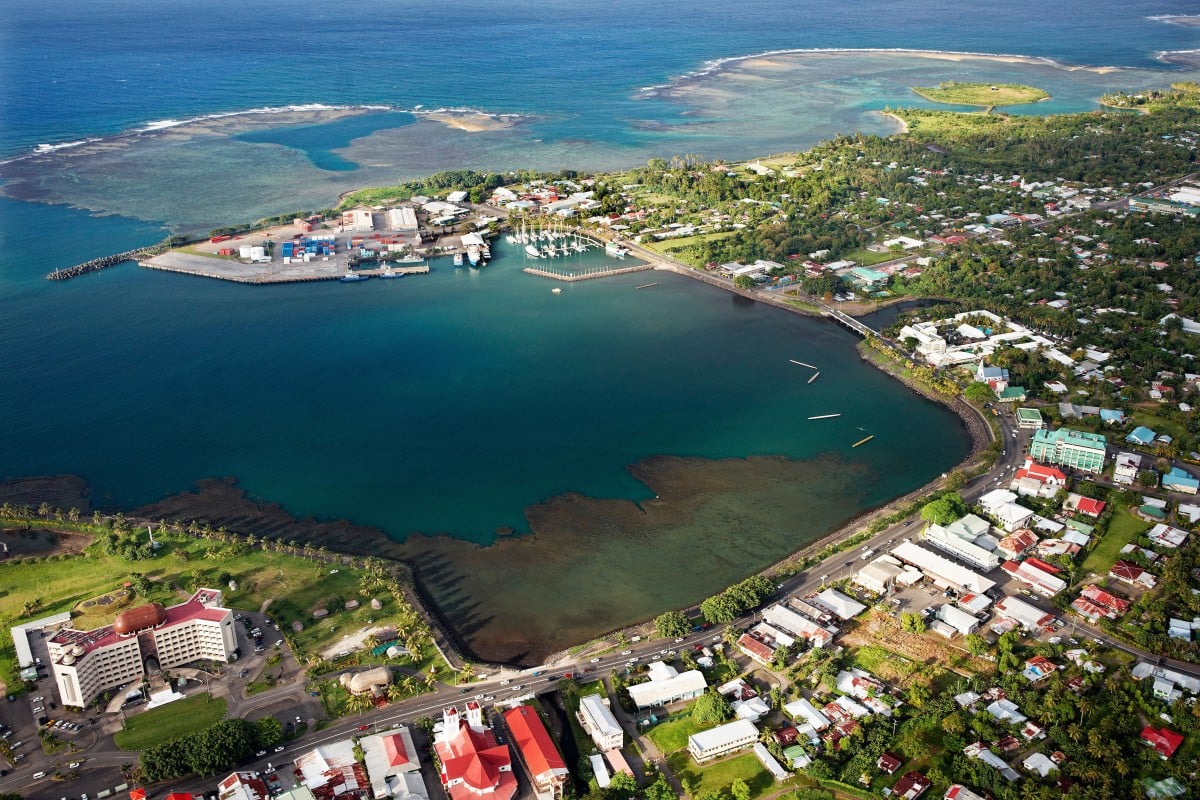
Samoan capital Apia will host the third China-Pacific Island Countries Economic Development Cooperation Forum, which begins on Sunday. Photo: Alamy

China will seek to expand its economic and diplomatic influence in the South Pacific at a forum this weekend, amid growing concern from the US and its allies over Beijing’s push in the strategically important region.

Vice-Premier Hu Chunhua will lead the Chinese delegation at the third China-Pacific Island Countries Economic Development Cooperation Forum in the Samoan capital Apia, which begins on Sunday. It is expected to be attended by 400 officials and more than 200 businesspeople.

Hu, the former Communist Party chief of China’s manufacturing powerhouse Guangdong who now overseas commercial and agricultural affairs, is expected to deliver a keynote speech at the opening ceremony.

Beijing sees the two-day forum as “timely” and “a good opportunity to deepen mutually beneficial cooperation between China and the Pacific”, a commerce ministry spokesperson told the official Economic Daily newspaper.

Trade, agriculture and fisheries, as well as tourism, infrastructure and climate change were at the top of the agenda for the forum, the spokesperson said.

Leaders of all the Pacific nations – except the four that do not have formal diplomatic ties with Beijing – are expected to attend the forum. Australia, which has “observer status” at the summit, will send Ewen McDonald, deputy secretary of the Department of Foreign Affairs and Trade and the head of its Pacific office.

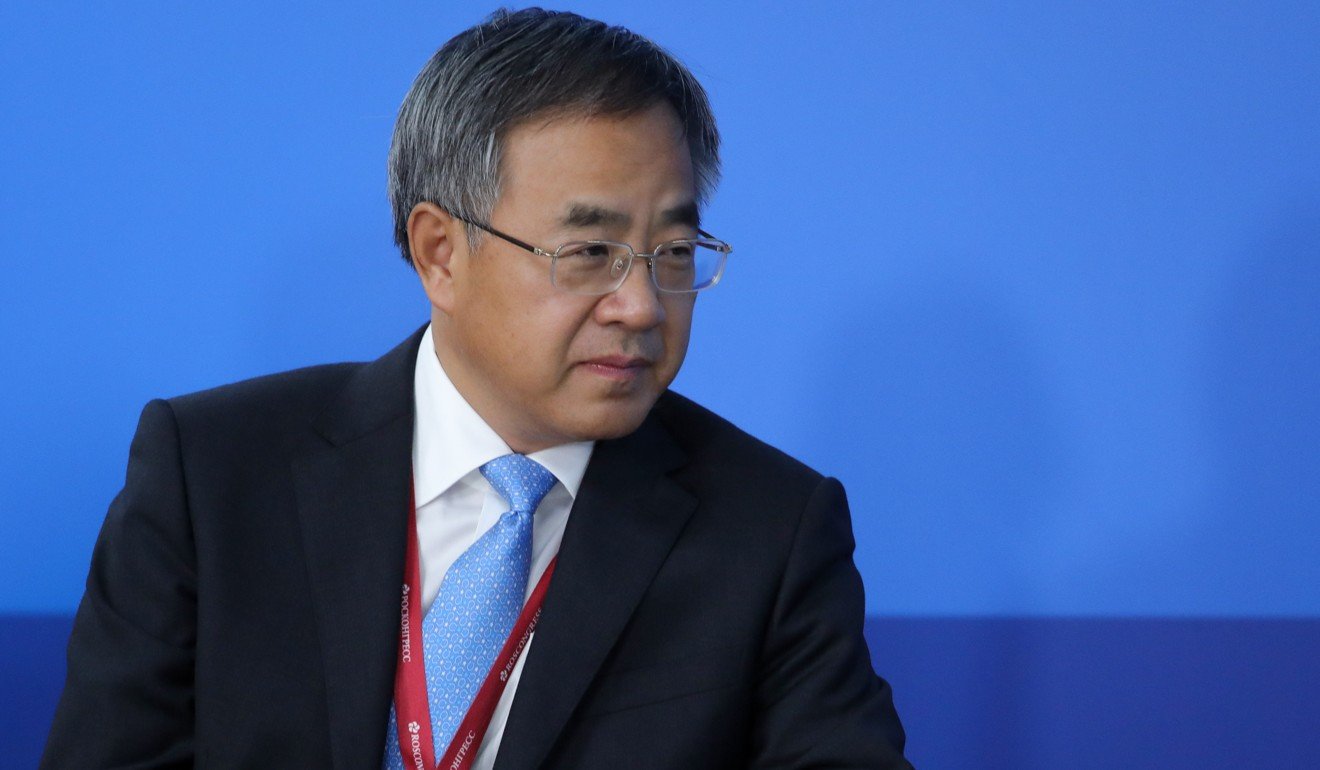
Vice-Premier Hu Chunhua will lead the Chinese delegation at the forum. Photo: EPA-EFE

The forum comes after China hailed a “new breakthrough” in the region following the decision last month by the Solomon Islands and then Kiribati – despite warnings from the US – to cut diplomatic ties with Taipei and switch to Beijing.

They are the latest of Taipei’s allies to be poached by Beijing as it ramps up pressure on the self-ruled island that it sees as a renegade province to be reunited with the mainland, by force if necessary.
Observers said this weekend’s forum was Beijing’s latest effort to regain momentum in the Pacific.

“Having one of China’s top 25 officials visit the region so soon after [Chinese President] Xi Jinping spent close to three days in Papua New Guinea last November is certainly significant,” said Jonathan Pryke, director of the Pacific Islands programme at the Lowy Institute in Sydney, referring to Hu’s position in the 25-member Politburo.

“It shows clearly China’s attempt to recapture momentum after the West, and in particular Australia, have redoubled their efforts in maintaining and building relationships in the Pacific,” he said.

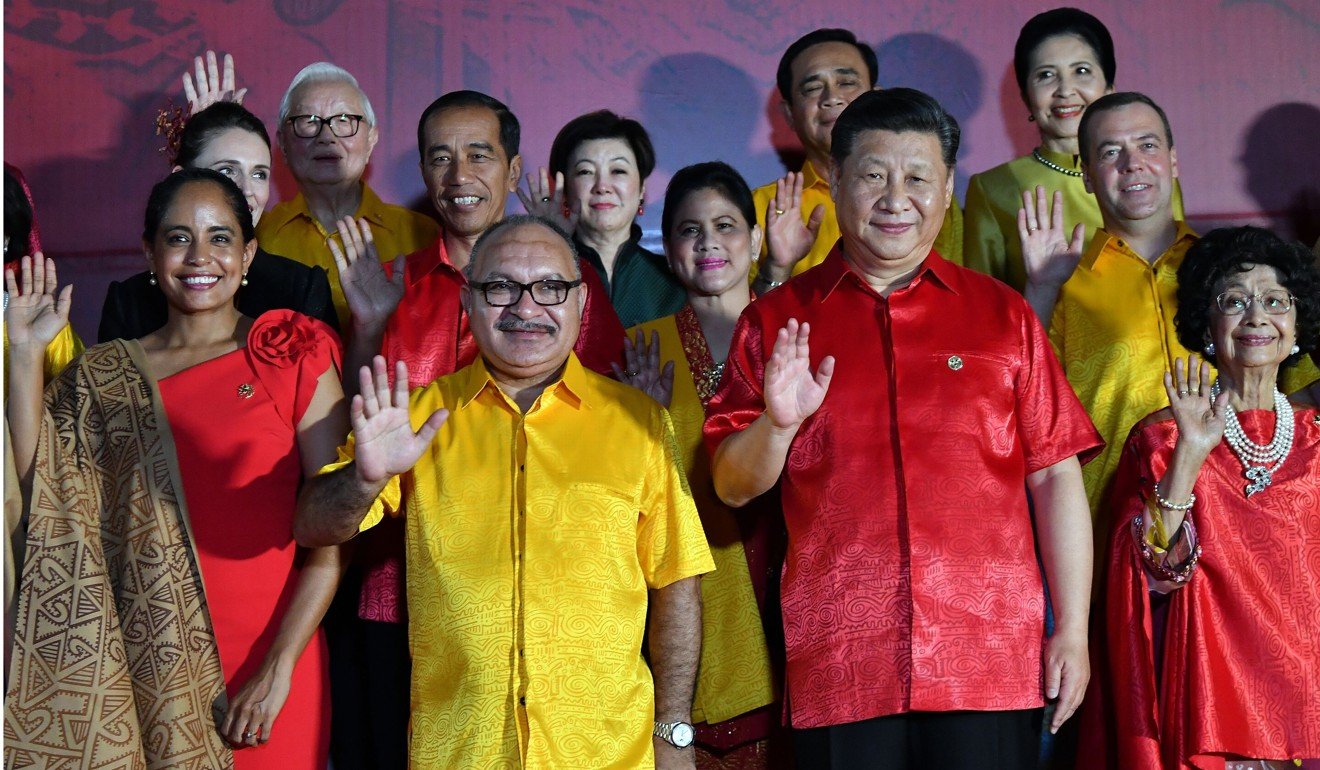
Papua New Guinea’s Prime Minister Peter O’Neill (second from left) and Chinese President Xi Jinping (second from right) pose for a photo during Xi’s visit in November. Photo: AFP

First held in Fiji in 2006, the forum is part of China’s efforts to expand its reach in the resource-rich region.

Back then, premier Wen Jiabao announced 3 billion yuan of concessional loans to Pacific nations and promised to facilitate more trade, medical aid and tourism with the countries. Chinese capital has been pouring into the region – particularly from the mining and fisheries sectors – ever since.

Of note was a 440 million yuan investment, supported by loans from the Export-Import Bank of China, to build a central business centre at Nuku’alofa, the capital of Tonga.

US and allies sideline China in PNG’s Bougainville by helping fund independence vote

As China’s influence grows, the South Pacific – a region traditionally under US hegemony, and on Australia’s doorstep – has “increasingly become a major power that cannot be neglected” and “an important part of China’s greater strategic landscape”, according to Shi Chunlin, an associate professor at Dalian Maritime University.

Trade has increased between China and the eight Pacific nations that have diplomatic ties with Beijing, rising to a combined US$4.32 billion last year – up 25 per cent from 2017.

China has also become the largest trading partner of new ally the Solomons, the second-largest to Papua New Guinea and Fiji, and the third-largest to Samoa.

China’s direct investment in the region has also jumped, reaching US$4.53 billion last year, a more than fourfold increase from the US$900 million of 2013.

Pryke said Beijing was expected to offer new support and loans to the Pacific nations.

“But the Pacific are much more picky about how they want to engage with all partners than they were a decade ago,” he added.

Returning from a trip to China earlier this month, Solomon Islands Prime Minister Manasseh Sogavare confirmed Beijing would provide a US$74 million grant to build a new stadium for the 2023 Pacific Games in the capital Honiara – something its former ally Taipei had committed to fund.

China Sam Group also reportedly signed an agreement on September 22 to lease the island of Tulagi in the Solomons, the site of a former Japanese naval base. The agreement mentioned the development of a refinery on the island, but critics said it could also potentially be used as a military base.

China is now the second-largest donor in the region, only after Australia, which has viewed Beijing’s financial largesse with suspicion.

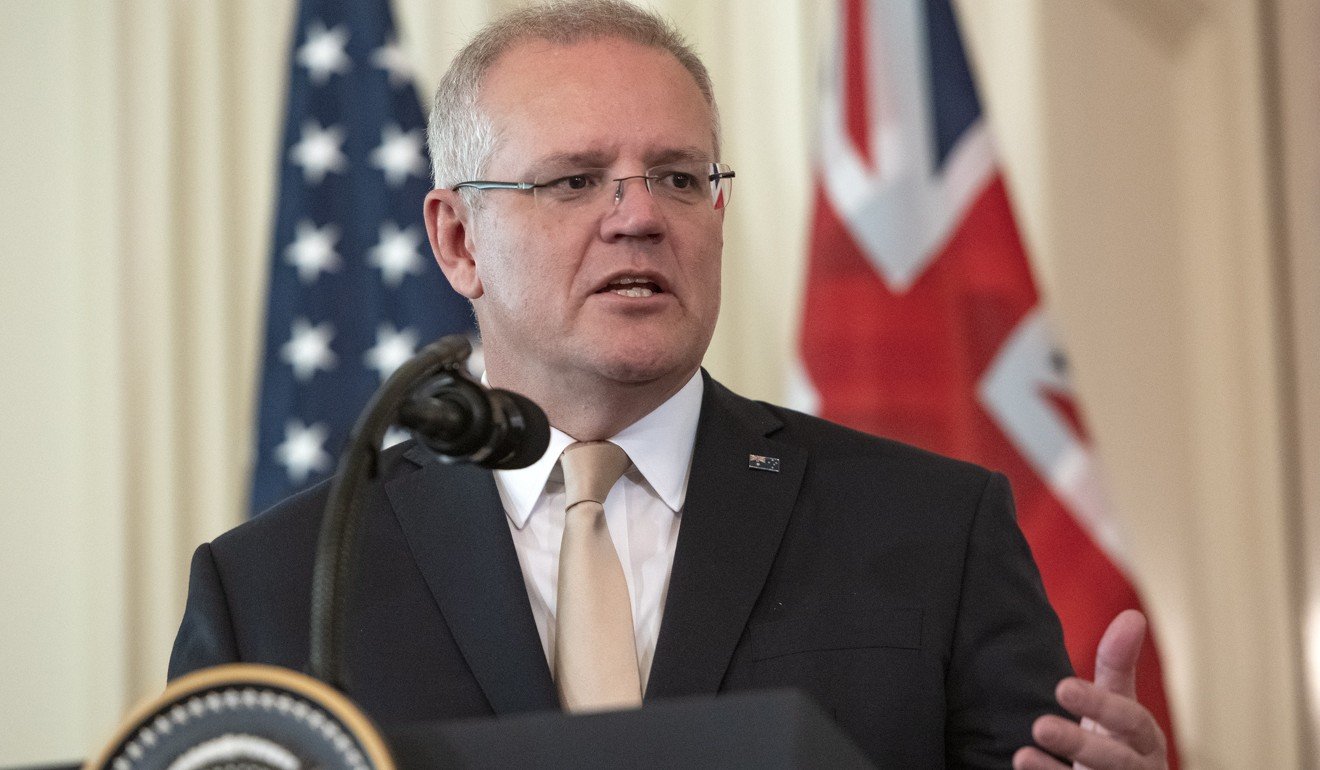
Last year, in an apparent effort to counter China’s rising influence in the region, Australian Prime Minister Scott Morrison announced that Pacific countries would be offered up to US$2.18 billion in grants and cheap loans to build infrastructure.

Australian Prime Minister Scott Morrison last year announced up to US$2.18 billion in grants and cheap loans for infrastructure in Pacific nations. Photo: EPA-EFE

The US, meanwhile, has also been wary of China’s push in the Pacific, amid an escalating geopolitical competition between the world’s two largest economies across many fronts – from trade to tech supremacy and security. The US has long maintained exclusive defence access in the region through its Guam military base and security pacts with the Federated States of Micronesia, the Marshall Islands and Palau.

Derek Grossman, a senior defence analyst with the US-based Rand Corporation, said this year’s forum in Samoa was likely to be higher profile than previous years after Beijing lured away two more diplomatic allies from Taipei.

He said it would be “closely watched in the US for how Beijing continues to leverage sweet economic deals via its Belt and Road Initiative to potentially entice others to switch”.

“The US, along with close friends Australia, Japan and New Zealand, are becoming increasingly concerned over the prospects for China to one day curry enough influence in these small island states to gain port access that could be used for new naval bases,” he said.

The most important issue at the forum, he said, would be “whether the West assesses that China is making further inroads with these states”.

“The likely answer will be that it is, suggesting that the US and its partners will have to compete with China in this region to ensure that it remains ‘free and open’, per the US Indo-Pacific strategy,” he said.

Source: SCMP

Law of Unintended Consequences

continuously updated blog about China & India

ChiaHou's Book Reviews

continuously updated blog about China & India

What's wrong with the world; and its economy

continuously updated blog about China & India