Archive for ‘Economic growth’

26/01/2019

China confident, capable of keeping economic growth within appropriate range in 2019: premier

CHINA-BEIJING-LI KEQIANG-FOREIGN EXPERTS-DISCUSSION (CN)

Chinese Premier Li Keqiang has a discussion with some foreign experts working in China prior to the Chinese Lunar New Year, which falls on Feb. 5 this year, at the Great Hall of the People in Beijing, capital of China, Jan. 25, 2019. (Xinhua/Yao Dawei)

BEIJING, Jan. 25 (Xinhua) — Chinese Premier Li Keqiang said Friday that the country has full confidence and capability to keep economic growth rate within an appropriate range in 2019 despite challenges.

The remarks came as Li had a discussion with some foreign experts working in China at the Great Hall of the People in downtown Beijing prior to the Chinese Lunar New Year, which falls on Feb. 5 this year.

“China’s economy has enough resilience, potential and ample room for growth, especially with a huge domestic market and rich human resources of nearly 1.4 billion people, therefore, we are fully confident and capable of keeping economic growth rate within an appropriate range in spite of multiple risks and challenges in 2019,” Li told foreign experts.

China’s economy, the world’s second largest, grew 6.6 percent year on year to reach 90.0309 trillion yuan (about 13.28 trillion U.S. dollars) in 2018, above the official target of around 6.5 percent, according to data issued by the National Bureau of Statistics on Monday.

“The growth rate of 6.6 precent is hard-won, as it is on the basis of China’s very high economic output, fairly sufficient employment and continuous improvement of environment,” said Li.

China will forge ahead with reforms unswervingly and inspire the vitality and creativity of some 100 million market entities, Li said.

He said China will further streamline administration, delegate more power, strengthen regulation, provide better services, reduce taxes and fees on a larger scale, further ease market access and provide a business environment of fair competition.

China is committed to opening wider to the outside world and learning advanced technology and experience from foreign countries, he said.

As a developing country, China will stick to inclusive development, said Li.

“China welcomes the entry of all competitive commodities and technology in the world, and we will strictly protect intellectual property rights and speed up the market transformation of innovation results,” the premier said.

Li had an in-depth exchange of views with renowned experts from the United States, Germany, Britain, Cuba and Sweden about their advice and suggestions on issues including economic growth, scientific innovation, intelligence manufacturing and environment protection.

The experts were Paul Romer, Nobel laureate in economics and professor at New York University; Peter Sachsenmeier, member of the National Academy of Sciences and Engineering of Germany and professor at Oxford University; Konstantin Novoselov, Nobel laureate in physics and professor at the University of Manchester; Juan Jesus Guanche Perez, a Cuban academician and vice president of Hebei Foreign Studies University; and Christopher Flensborg, a Swedish expert in finance.

Welcoming foreign experts to work in China, Li said China will further improve policies to better facilitate their work and life and hopes that they will offer more advice to promote the common development of China and the world.

Source:Xinhua
20/01/2019

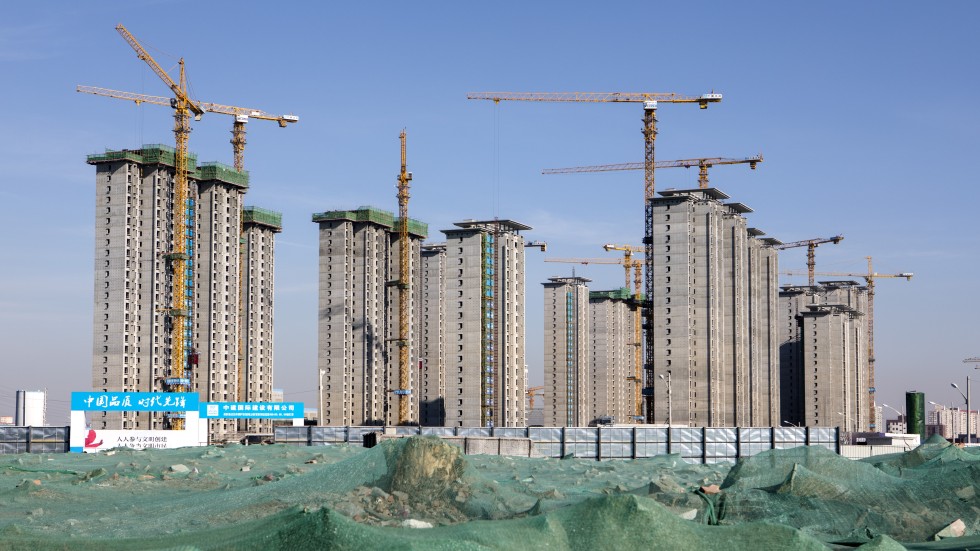
China set to report slowest economic growth for 28 years

  • Figures to be released on Monday could show 2018 GDP growth slowed to 6.6 per cent
  • Beijing’s promise of more support only likely to be enough to stop slide getting worse, analysts say
PUBLISHED : Sunday, 20 January, 2019, 5:15pm
UPDATED : Sunday, 20 January, 2019, 5:52pm

China is expected to report on Monday that economic growth cooled to its slowest in 28 years in 2018 amid weakening domestic demand and bruising US tariffs, adding pressure on Beijing to roll out more support measures.

Growing signs of weakness in China, which has generated nearly a third of global growth in the past decade, are stoking worries about risks to the world economy and are weighing on profits for firms ranging from Apple to big carmakers.

Policymakers in Beijing have pledged more support for the economy this year to reduce the risk of massive job losses, but have ruled out a “flood” of stimuli like that unleashed in the past, which boosted growth rates but left a mountain of debt.

Analysts polled by Reuters expect the world’s second-largest economy to have grown 6.4 per cent year on year in the final quarter of 2018, slowing from 6.5 per cent in the previous three months and matching levels last seen in early 2009 during the global financial crisis.

That could pull gross domestic product growth to 6.6 per cent for the year, its lowest since 1990 and down from a revised 6.8 per cent in 2017.

With stimulus measures expected to take some time to kick in, most analysts believe conditions in China are likely to get worse before they get better, and see a further slowdown to 6.3 per cent this year. Some have said real growth levels are already much weaker than official data suggest.

Even if Beijing and Washington agree on a trade deal, which is a tall order, analysts said it would be no panacea for China’s sputtering economy unless Beijing can galvanise weak investment and consumer demand.

Chen Xingdong, chief China economist at BNP Paribas, said investors should not expect the latest round of stimulus to produce similar results as during the 2008-09 global crisis, when Beijing’s massive spending quickly boosted growth.

“What China can really do this year is to prevent deflation, prevent a recession and a hard landing in the economy,” he said.

On a quarterly basis, growth likely eased to 1.5 per cent in the final three months of 2018, from 1.6 per cent in the previous period.

China will release its fourth-quarter and full-year figures on Monday, along with December factory output, retail sales and fixed-asset investment.

Since China’s quarterly GDP readings tend to be unusually steady, most investors prefer to focus on recent trends.

Surprising contractions in December trade data and factory activity gauges in recent weeks have suggested the economy cooled more quickly than expected at the end of 2018, leaving it on shakier footing at the start of the new year.

Sources have told Reuters that Beijing was planning to lower its growth target to 6-6.5 per cent this year from about 6.5 per cent in 2018.

Tepid expansion in industrial output and weaker consumer spending is squeezing companies’ profit margins, discouraging fresh investment and raising the risk of higher job losses.

Some factories in Guangdong province – China’s export hub – have shut earlier than usual ahead of the long Lunar New Year holiday as the tariff war with the United States curtails orders. Others are suspending production lines and cutting back on workers’ hours.

If the trade war drags on, some migrant workers may not have jobs to return to.

Trade negotiators are facing an early March deadline and Washington has threatened to sharply hike tariffs if there are no substantial signs of progress.

So far, Chinese policymakers have fast-tracked construction projects and cut taxes and some import duties to spur demand.

To free up more funds for lending, particularly to more vulnerable smaller firms, the central bank has cut the amount of reserves that banks need to set aside five times over the past year, and guided borrowing costs lower.

Further reserve ratio reductions are expected in the coming quarters, but most analysts do not see a cut in benchmark interest rates just yet, as policymakers wait to see if earlier steps begin to stabilise conditions. More forceful easing could pressure the yuan and aggravate high debt levels, with money going into less efficient or speculative investments.

The government may unveil more fiscal stimulus measures during the annual parliament meeting in March, including bigger tax cuts and more spending on infrastructure projects, analysts said.

Some China watchers believe the government could deliver 2 trillion yuan (US$293.9 billion) worth of cuts in taxes and fees this year, and allow local governments to issue another 2 trillion yuan in special bonds largely used to fund key projects.

Still, some analysts do not expect the economy to bottom out convincingly until summer.

Source: SCMP
Law of Unintended Consequences

continuously updated blog about China & India

ChiaHou's Book Reviews

continuously updated blog about China & India

What's wrong with the world; and its economy

continuously updated blog about China & India