Archive for ‘Affluence’

26/05/2012

* Chinese fashion group has global designs

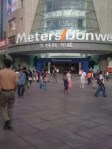
FT: “When research agency Millward Brown Optimor released rankings of the fastest growing global brands this week, at number 10 was a company that most Financial Times readers have probably never heard of: Chinese youth fashion brand Metersbonwe.

Some mainland brands are becoming household names in the west – such as Lenovo, Haier or Huawei – but they were not on the list. Instead, unknown Metersbonwe appeared, just a few slots below Apple.

Present in even the smallest Chinese cities, Metersbonwe will soon be coming to a high street near you if Zhou Chengjian, founder and chairman of the board, has his way. Within three to five years, he plans to push into the fashion markets of London, Paris, New York and Milan with his youthful and inexpensive designs.With revenue last year of Rmb10bn ($1.6bn) and net profit of Rmb1.2bn – up 32 and 59 per cent respectively year on year – Metersbonwe has done what so few other Chinese brands have been able to: outpace foreign rivals in the hyper-competitive mainland fashion market.

Millward Brown Optimor ranked Metersbonwe tenth in the world for “brand momentum” – advertising-speak for growth potential and consumer popularity. The result was based entirely on the company’s performance in China, where Euromonitor says Shenzhen-listed Metersbonwe is the third-largest apparel brand by sales behind Nike and Anta, a local sportswear brand. Even China’s economic slowdown seems not to be dimming the company’s lustre: Metersbonwe is predicting a 20 per cent rise in revenues and net profit this year, with sales so far appearing recession-proof.

The Metersbonwe story embodies the phrase “rags to riches”. Mr Chengjian, 46, who created the company 17 years ago, started out as a penniless tailor. Now he is the second richest person in Shanghai – a city of the stunningly wealthy – with a fortune of nearly $5bn, according to the latest Hurun rich list. A peasant from a tiny village in coastal Zhejiang province, he says he was no good at school, did not enjoy working in the sun and rain on construction sites, but did like the soft feel of fabric under his fingers so became a tailor. “My dream is to be the world’s tailor,” he told the FT in an interview this week, in an office decorated with posters of Chinese leaders Mao Zedong and Deng Xiaoping. His staff say he reveres Mao because he “made China free” and Deng because he “made China open”.

Mr Zhou says there is no particular secret to his success, apart from keeping his head amid all the fabulous opportunities for making money. “I work very hard and China is developing very fast,” he said. “Other Chinese companies dabble in too many things. But we set out 10 years ago to focus only on fashion.” He created a downmarket version of H&M and Zara, targeting college students and recent graduates, with a brand that many think is European.

Although Mr Zhou claims Metersbonwe was first a Mandarin name, many of its shops carry most prominently only the English transliteration, an obvious attempt to appeal to Chinese consumers who equate foreign brands with better style and quality.

“They did the right thing at the right time,” says Wu Xiaobo, dean of the school of management of Zhejiang University, who points out that Metersbonwe was the first garment company in China to adopt the international practice of outsourcing all manufacturing. …

With international retailers beating a path to China to make money, why is Mr Zhou so intent on launching overseas? In his typically earthy way, Mr Zhou says he is like a frog in boiling water, where the water is the increasingly competitive Chinese fashion scene. If he hangs around too long, he will die; there is no alternative but to jump out while there is still time – to become a household name around the world.”

via Chinese fashion group has global designs – FT.com.

Related posts: 

21/05/2012

* What the Chinese want

This is a much longer than usual post.  But if you are interested in either Chinese mentalilty or, more importantly, thinking of trading in China, this is a must read.

Consumers in China are increasingly modern in their tastes, but they are not becoming ‘Western.’ How the selling of coffee, cars and pizza sheds light on a nation racing toward superpower status.

By TOM DOCTOROFF, author of the book “What Chinese Want: Culture, Communism & The Modern Chinese Consumer.”

Apple has taken China by storm. A Starbucks can be found on practically every major street corner in coastal cities and beyond. From Nike to Buick to Siemens, Chinese consumers actively prefer Western brands over their domestic competitors. The rise of microbloggers, the popularity of rock bands with names like Hutong Fist and Catcher in the Rye, and even the newfound popularity of Christmas all seem to point toward a growing Westernization.

But don’t be deceived by appearances. Consumers in China aren’t becoming “Western.” They are increasingly modern and international, but they remain distinctly Chinese. If I’ve learned anything from my 20 years working as an advertising executive in China, it is that successful Western brands craft their message here to be “global,” not “foreign”—so that they can become vessels of Chinese culture.

Understanding China’s consumer culture is a good starting point for understanding the nation itself, as it races toward superpower status. Though the country’s economy and society are evolving rapidly, the underlying cultural blueprint has remained more or less constant for thousands of years. China is a Confucian society, a quixotic combination of top-down patriarchy and bottom-up social mobility. Citizens are driven by an ever-present conflict between standing out and fitting in, between ambition and regimentation. In Chinese society, individuals have no identity apart from obligations to, and acknowledgment by, others. The clan and nation are the eternal pillars of identity. Western individualism—the idea of defining oneself independent of society—doesn’t exist.

Various youth subtribes intermittently bubble to the surface—see the recent rise of “vegetable males” (Chinese metrosexuals) and “Taobao maniacs” (aficionados of the auction website Taobao). But self-expression is generally frowned upon, and societal acknowledgment is still tantamount to success. Liberal arts majors are considered inferior to graduates with engineering or accounting degrees. Few dare to see a psychologist for fear of losing “face”—the respect or deference of others—or being branded sick. Failure to have a child is a grave disappointment.

The speed with which China’s citizens have embraced all things digital is one sign that things are in motion in the country. But e-commerce, which has changed the balance of power between retailers and consumers, didn’t take off until the Chinese need for reassurance was satisfied. Even when transactions are arranged online, most purchases are completed in person, with shoppers examining the product and handing over their cash offline.

Even digital self-expression needs to be safe, cloaked in anonymity. Social networking sites such as Sina Weibo (a Chinese version of Twitter), Renren and Kaixing Wang (Chinese versions of Facebook) have exploded. But users hide behind avatars and pseudonyms. A survey conducted by the advertising firm JWT, where I work, and IAC, the Internet holding company, found that less than a third of young Americans agreed with the statement “I feel free to do and say things [online] I wouldn’t do or say offline,” and 41% disagreed. Among Chinese respondents, 73% agreed, and just 9% disagreed.

Chinese at all socioeconomic levels try to “win”—that is, climb the ladder of success—while working within the system, not against it. In Chinese consumer culture, there is a constant tension between self-protection and displaying status. This struggle explains the existence of two seemingly conflicting lines of development. On the one hand, we see stratospheric savings rates, extreme price sensitivity and aversion to credit-card interest payments. On the other, there is the Chinese fixation with luxury goods and a willingness to pay as much as 120% of one’s yearly income for a car.

Every day, the Chinese confront shredded social safety nets, a lack of institutions that protect individual wealth, contaminated food products and myriad other risks to home and health. The instinct of consumers to project status through material display is counterbalanced by conservative buying behavior. Protective benefits are the primary consideration for consumers. Even high-end paints must establish their lack of toxicity before touting the virtues of colorful self-expression. Safety is a big concern for all car buyers, at either end of the price spectrum.

To win a following among Chinese buyers, brands have to follow three rules.

First and most important, products that are consumed in public, directly or indirectly, command huge price premiums relative to goods used in private. The leading mobile phone brands are international. The leading household appliance brands, by contrast, are cheaply priced domestic makers such as TCL, Changhong and Little Swan. According to a study by the U.K.-based retailer B&Q, the average middle-class Chinese spends only $15,000 to fit out a completely bare 1,000-square-foot apartment.

Luxury items are desired more as status investments than for their inherent beauty or craftsmanship. The Chinese are now the world’s most avid luxury shoppers, at least if trips abroad to cities like Hong Kong and Paris are taken into account. According to Global Refund, a company specializing in tax-free shopping for tourists, the Chinese account for 15% of all luxury items purchased in France but less than 2% of its visitors.

Public display is also a critical consideration in how global brands are repositioning themselves to attract Chinese consumers. Despite China’s tea culture, Starbucks successfully established itself as a public venue in which professional tribes gather to proclaim their affiliation with the new-generation elite. Both Pizza Hut and Häagen Dazs have built mega-franchises in China rooted in out-of-home consumption. (The $5 carton of vanilla to be eaten at home is a tough sell in China.)

The second rule is that the benefits of a product should be external, not internal. Even for luxury goods, celebrating individualism—with familiar Western notions like “what I want” and “how I feel”—doesn’t work in China. Automobiles need to make a statement about a man on his way up. BMW, for example, has successfully fused its global slogan of the “ultimate driving machine” with a Chinese-style declaration of ambition.

Sometimes the difference between internal versus external payoffs can be quite subtle. Spas and resorts do better when they promise not only relaxation but also recharged batteries. Infant formulas must promote intelligence, not happiness. Kids aren’t taken to Pizza Hut so that they can enjoy pizza; they are rewarded with academic “triumph feasts.” Beauty products must help a woman “move forward.” Even beer must do something. In Western countries, letting the good times roll is enough; in China, pilsner must bring people together, reinforce trust and promote mutual financial gain.

Emotional payoffs must be practical, even in matters of the heart. Valentine’s Day is almost as dear to the Chinese as the Lunar New Year, but they view it primarily as an opportunity for men to demonstrate their worthiness and commitment. In the U.S., De Beers’s slogan, “A Diamond is Forever,” glorifies eternal romance. In China, the same tagline connotes obligation, a familial covenant—rock solid, like the stone itself.

The last rule for positioning a brand in China is that products must address the need to navigate the crosscurrents of ambition and regimentation, of standing out while fitting in. Men want to succeed without violating the rules of the game, which is why wealthier individuals prefer Audis or BMWs over flashy Maseratis.

Luxury buyers want to demonstrate mastery of the system while remaining understated, hence the appeal of Mont Blanc’s six-point logo or Bottega Veneta’s signature cross weave—both conspicuously discreet. Young consumers want both stylishness and acceptance, so they opt for more conventionally hip fashion brands like Converse and Uniqlo.

Chinese parents are drawn to brands promising “stealthy learning” for their children: intellectual development masked as fun. Disney will succeed more as an educational franchise—its English learning centers are going gangbusters—than as a theme park. McDonald’s restaurants, temples of childhood delight in the West, have morphed into scholastic playgrounds in China: Happy Meals include collectible Snoopy figurines wearing costumes from around the world, while the McDonald’s website, hosted by Professor Ronald, offers Happy Courses for multiplication. Skippy peanut butter combines “delicious peanut taste” and “intelligent sandwich preparation.”

Even China’s love affair with Christmas—with big holiday sales and ubiquitous seasonal music, even in Communist Party buildings—advances a distinctly Chinese agenda. Santa is a symbol of progress; he represents the country’s growing comfort with a new global order, one into which it is determined to assimilate, without sacrificing the national interest. The holiday has become a way to project status in a culture in which individual identity is inextricably linked to external validation.

The American dream—wealth that culminates in freedom—is intoxicating for the Chinese. But whereas Americans dream of “independence,” Chinese crave “control” of their own destiny and command over the vagaries of daily life. Material similarities between Chinese and Americans mask fundamentally different emotional impulses. If Western brands can learn to meet China’s worldview on its own terms, perhaps the West as a whole can too.”

http://online.wsj.com/article/SB10001424052702303360504577408493723814210.html?mod=WSJ_hp_mostpop_read

19/05/2012

* Hitching his Starwood to China

China Daily: “CEO of one of world’s biggest five-star chains says future is written in Chinese.

When Frits van Paasschen first visited China as a backpacker, staying in basic accommodation and traveling on crowded buses and trains, little did he imagine that two decades later, he would be returning as the boss of a five-star hotel chain. The senior executive retains vivid memories of those days, traveling the length and breadth of the country and leaving via the Karakoram Highway from China to Pakistan, clinging precariously to the roof of a pick-up truck.

Nowadays, van Paasschen flies business class on regular visits to China from his New York head office – and stays in the luxury properties of the St Regis, Westin, Sheraton and Le Mridien hotels that make up the Starwood portfolio.Van Paasschen is president and CEO of Starwood, one of the largest hotel management groups in the world which is adding to its China portfolio at a phenomenal rate: this year alone will see 23 new properties open – roughly one every fortnight – bringing the total to 100.

The country is considered to be so important that last year the boss flew the entire senior management team to China for a months visit; executive meetings were held wherever they happened to be on their grand China tour. “If a picture is worth a thousand words, then a visit is worth ten thousand,” says van Paasschen.  …

“Literally one of the high points was being on the top floor of what will be the St Regis in Shenzhen on the 100th floor of that building, looking out and toward Hong Kong and seeing that the Shenzhen side looks snazzier and more well developed than the New Territories of Hong Kong.

“When I am asked about the future I say I can’t read it, it is written in Chinese!  …

via Hitching his Starwood to China|Last Word|chinadaily.com.cn.

07/05/2012

* Foreign firms bullish about Chinese economy

China Daily: “Germany looking more to China than Europe for overseas investment

Germany has always been the cornerstone of the European economy but Europe is not as important to Germany as it used to be.

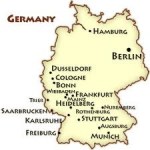
For the first time China has become German companies top foreign investment destination, totaling $1.36 billion by the end of last year, according to a survey by the Association of German Chambers of Industry and Commerce. The amount was more than the combined German investment in France, Spain and Italy.

The profound shift is visible in the case of Knauf Gips KG, a German-headquartered plasterboard manufacturer.When asked what helped turn the family-owned workshop into the world’s second-largest gypsum board maker, Mark Norris, the company’s China chief executive officer, said one particular factor stands out – China. After its entry into the Chinese market in the 1990s, Knauf built three plants in Beijing, Shanghai and Guangzhou. The initial investment soon gave Knauf a solid foothold in the country’s dry-wall market. Norris said he was quite bullish about the future and remained committed to continuing investment, despite decelerating economic growth in China, compounded by the European crisis and stagnation in the United States. “In relative terms, China remains a dynamic growth engine compared with places like Spain and Greece, where there is absolutely no growth,” he said. “And people seem to forget that the market is so big, the demand for good quality is there.” As we noticed over the past five years, a mid-to-upper class has emerged and the quality of life is increasing. People are prepared to pay for green building materials. Even though its not comparable to the European or US standard, it is catching up quick.””

via Foreign firms bullish about economy[1]|chinadaily.com.cn.

03/05/2012

* China’s Bright Food buys Weetabix

Reuters: “China’s Bright Food will take control of breakfast cereal maker Weetabix, beloved by generations of British children, in the biggest foreign acquisition by a Chinese food group.

State-owned Bright Food has agreed to buy a 60 percent stake in a deal which puts a value of 1.2 billion pounds $1.94 billion, including debt, on the private-equity owned company that coined the slogan “Have you had your Weetabix today?”

The Shanghai-based group has been on the acquisition trail, seeking to raise its profile and cater for its rapidly growing home market. Weetabix is its second foreign purchase in a year and its first in Europe after other deals fell through. Eighty-year-old Weetabix is Britain’s second biggest maker of breakfast cereals and cereal bars after Kellogg. Its brands include Alpen muesli and Ready Break as well as Weetabix, which lays claim to being Britain’s No. 1 breakfast cereal for under-5s and is made from wheat grown within 50 miles 80 km of its base in southern England.

“As China’s leading food group, we are pleased to become the controlling shareholder of Weetabix,” Bright Food chairman Wang Zhongnan said in a statement on Thursday. “Weetabix has an excellent product portfolio, including leading British cereal brand Weetabix and other category-leading brands. “Private equity owners Lion Capital and Weetabix management will keep a 40 percent stake. The quintessentially British breakfast cereal group was founded in 1932 by the secretive George family and soon producing its iconic bricks of wheat. It was bought by a private equity firm in 2004.

Bright Food now sees a big opportunity for Weetabix in China, where breakfast is a very important meal and there is a trend towards healthy eating.The group, which makes “White Rabbit” candy, bought majority stakes in Australias Manassen Foods and New Zealands Synlait Milk over the past two years.”

via UPDATE 2-Chinas Bright Food buys Weetabix | Reuters.

Related post: https://chindia-alert.org/2012/02/13/pattern-of-chinese-overseas-investments/

01/05/2012

* High-end Chinese brands coming soon

Luxury-brands

China Daily: “As foreign luxury brands compete to carve out portions of China’s fast-growing market, experts are predicting that Chinese companies will soon develop luxury brands of their own.

It is time for domestic enterprises to establish luxury brands, since China has already become the dominant driver of growth in the luxury sector, said Zhou Ting, executive director of the research center for luxury goods and services at the University of International Business and Economics. The sales volume of Chinas luxury market was 11.5 billion euros $15 billion in 2011, a year-on-year growth of 25 percent, according to PricewaterhouseCoopers International Ltd.

Potential domestic luxury brands could come from some traditional Chinese industries, including liquor, tea, porcelain and silk, said Yang Qingshan, a guest researcher of luxury goods and services at UIBE. The research center listed 10 domestic brands with the potential to become luxury brands in its luxury report in November. Three liquor brands – Moutai, Wuliangye and Langjiu – are among the 10 brands. Zhuyeqing tea and some clothing brands, such as NE-Tiger and Shanghai Tang, are also on the list.”Many traditional Chinese products already have a feature of luxury because of their heritage,” Yang said.”

via High-end Chinese brands coming soon|Economy|chinadaily.com.cn.

29/04/2012

* China’s great leap forward – into the supermarket

The Guardian: “Made in China says everything, economically, about the last decade. Sold in China tells you everything about the next.

Recent output figures from China were greeted with concern after the country reported its lowest GDP growth for three years, although, at 8.1%, its magnificent compared to the UK’s double-dip recession. Still, there is much talk among economists about a “hard landing”, a “property bubble” and “bankrupt banks”. But there is one key fact to remember about the economy in China. It’s that the minimum wage is going up 15% a year, every year, for the next five years. Take a billion workers and give them a 100% pay rise. It changes everything.

Within a generation, China is likely to displace the US as the biggest consumer market in the world. At Tianjin Port, the world’s fifth biggest, container ships used to export Chinese goods to the rest of the world but come back empty. Now they return with the finished and semi-finished goods from the rest of the world to satisfy a ravenous consumer appetite.

In Tianjin’s vast factory zone, across the road from a Foxconn plant making the next wave of Apple iPhones, the Master Kong factory makes more pot noodles than anywhere else in the world. The huge automated production lines, with machine tools imported from Japan and Germany, churn out five billion noodle packets a year – enough to reach to the moon and back. All the raw materials come from China, all of the finished product is consumed in China. Its just one of 23 Master Kong plants on the mainland.

Further south in the “groundscraper” and weirdly Hogwarts-esque Shanghai offices of Ping An, China’s second biggest insurer, 12,000 commission-led telesales agents make one million sales calls every day. It is the largest telemarketing operation on the planet, feeding on the explosive growth of domestic car sales. Last year 14.5m cars were sold in China – or 2m more than in the US, previously the world’s biggest auto market. Nine in 10 were to people who had never bought a car before. Ping An now insures 32m private cars, raking in premiums of £2.2bn 22.3bn renminbi a year. Four years ago, that revenue was below £100m.

Just off outer ring road five in Beijing, a mundane average-income district, the Wu Mart hypermarket is perhaps an early indicator of how domestic consumption will grow.

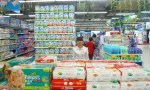
The store bears more resemblance to a Lidl than a Tesco but, unlike the oddly deserted luxury shops in the city centre, it is teeming. It’s instantly apparent that mid-range western brands are phenomenally popular with middle-income Chinese consumers. Shelf after shelf stocks the likes of Colgate toothpaste, Nivea, Quaker Oats and Snickers bars.

Whole aisles are devoted to disposable nappies. China’s one-child policy, rigorously enforced, means that spending on a sole child is proportionately huge. Hong Kong babies use 50% more diapers than those in the west, and mainland China is heading the same way. Want to invest in China? Maybe buy Procter & Gamble (Pampers) or Kimberly-Clark (Huggies) instead.

via Chinas great leap forward – into the supermarket | Money | The Guardian.

26/04/2012

* Understanding social media in China

McKinsey Quarterly: “The world’s largest social-media market is vastly different from its counterpart in the West. Yet the ingredients of a winning strategy are familiar.

No Facebook. No Twitter. No YouTube. Listing the companies that don’t have access to China’s exploding social-media space underscores just how different it is from those of many Western markets. Understanding that space is vitally important for anyone trying to engage Chinese consumers: social media is a larger phenomenon in the world’s second-biggest economy than it is in other countries, including the United States. And it’s not indecipherable. Chinese consumers follow the same decision-making journey as their peers in other countries, and the basic rules for engaging with them effectively are reassuringly familiar.

In addition to having the world’s biggest Internet user base—513 million people, more than double the 245 million users in the United States. China also has the world’s most active environment for social media. More than 300 million people use it, from blogs to social-networking sites to microblogs and other online communities. That’s roughly equivalent to the combined population of France, Germany, Italy, Spain, and the United Kingdom. In addition, China’s online users spend more than 40 percent of their time online on social media, a figure that continues to rise rapidly.

This appetite for all things social has spawned a dizzying array of companies, many with tools more advanced than those in the West: for example, Chinese users were able to embed multimedia content in social media more than 18 months before Twitter users could do so in the United States. Social media began in China in 1994 with online forums and communities and migrated to instant messaging in 1999. User review sites such as Dianping emerged around 2003.  Blogging took off in 2004, followed a year later by social-networking sites with chatting capabilities such as Renren. Sina Weibo launched in 2009, offering microblogging with multimedia. Location-based player Jiepang appeared in 2010, offering services similar to foursquare’s. This explosive growth shows few signs of abating, a trend that’s at least partially attributable to the fact that it’s harder for the government to censor social media than other information channels. That’s one critical way the Chinese market is unique.

As you shape your own social-media strategy, it’s important to fully understand some other nuances of the country’s consumers, content, and platforms.”

via Understanding social media in China – McKinsey Quarterly – Marketing & Sales – Digital Marketing.

26/04/2012

* For Apple, China Is Middle Kingdom

WSJ: “Not long ago, Asia Pacific was all but a footnote in the financial statements of technology juggernaut Apple Inc. But no more.

Image representing Apple as depicted in CrunchBase

Apple’s sales in the fast-growing region, fueled largely by China, more than doubled and represented 26% of its $39.2 billion in sales for the first three months of the year. IPhone sales in mainland China increased fivefold from the year-ago period and more than doubled in Japan.

Asia Pacific came within striking distance of becoming Apple’s largest revenue source in the fiscal second quarter. The company took in $10.2 billion in sales for the region for the first three months of the year, compared with $13.2 billion for the Americas, long its biggest source of revenue. Apple breaks out Asia Pacific separately from Japan, where sales nearly doubled to $2.6 billion.

Its a dramatic transformation considering Apple didn’t include Asia Pacific in its geographic breakdown until it reported results for the three months ended December 2009. That’s the quarter when Apple released the iPhone in China, more than two years after the U.S. debut. Apple has also yet to ship its new iPad in mainland China, selling 11.8 million of the tablets globally in the latest quarter.”

via For Apple, China Is Middle Kingdom – WSJ.com.

So China is rapidly becoming not only the producer but also consumer of high-tech electronic consumer products!

17/04/2012

* Irish horses to race in China as Magnier wins €38m stud deal

Independent.ie: “HUNDREDS of Irish horses are set to race regularly in China after bloodstock giant Coolmore announced a ground-breaking deal. The agreement is part of a plan that will see Ireland help set up a horse racing industry in Tianjin, China’s fourth largest city.

Horse racing in Sligo, Ireland

Horse racing in Sligo, Ireland (Photo credit: Wikipedia)

Top Irish stud farm Coolmore – owned by racing tycoon John Magnier and based in Fethard, Co Tipperary – will help China set up a similar operation. The planned equine centre will be the first of its kind in the country.

It is due to open for business next year. The contract is worth more than €38.5m to Ireland over three years.

via Irish horses to race in China as Magnier wins €38m stud deal – Irish, Business – Independent.ie.

A sure sign that China is liberalising. As far as we know gambling is illegal in China. Though, behind closed doors …  

But now we are going to see real horse racing in China. Or will the races be run without any betting?!

Law of Unintended Consequences

continuously updated blog about China & India

ChiaHou's Book Reviews

continuously updated blog about China & India

What's wrong with the world; and its economy

continuously updated blog about China & India