Archive for ‘brands’

09/05/2020

Xinhua Headlines: World’s factory turns to domestic market amid global coronavirus recession

— As the continued global spread of COVID-19 is weighing on the world economy, China’s foreign trade is under considerable downward pressure.

— Many export-oriented companies in China are turning to the domestic market for a lifeline while grappling with dropping overseas orders as major markets remain in the grip of the pandemic.

by Xinhua writers Zhang Yizhi, Li Huiying, Hu Guanghe, Xu Ruiqing

FUZHOU, May 9 (Xinhua) — Walking back and forth between shelves of neatly stacked shoes, some 20 live streamers dashed at the instructions of their followers on the phone, grabbing a shoe now and then from the shelves for a close-up in front of the camera.

At around eight o’clock every night, the supply chain platform 0594 in the city of Putian, east China’s Fujian Province, springs to life as live streamers flock to the exhibition area to sell shoes produced by the local manufacturers, many of which are troubled by the cancellations or delays of overseas orders amid the global coronavirus pandemic.

“To get rid of the excess inventory, many manufacturers in Putian are turning to live streaming to explore the domestic market,” said Chen Xing, general manager of 0594. “We are now cooperating with over 40 manufacturers and there will be more of them joining us in the future.”

The platform is also building an internet celebrity incubator and has so far organized seven rounds of influencer training courses enrolling more than 200 attendees.

Huang Huafang, 39, signed up for the two-day crash course in late March and soon after started her first live streaming session. She works from around 2 p.m. to 10 p.m., attracting over 500 followers and selling more than 20 pairs of shoes every day.

Though she is not a well-known live streamer, she is optimistic about the future. “There is a long way to go, but I believe live streaming is a trend. It is an essential skill for anyone who wants to market online,” said Huang.

A staff sells shoes through live streaming at an e-commerce warehouse in Putian, southeast China’s Fujian Province, May 7, 2020. (Xinhua/Lin Shanchuan)

According to Chen, the platform 0594 sold almost 130,000 pairs of shoes in April alone. As the domestic economic outlook continues to pick up, the sales target of May has been set at 200,000 pairs.

Like manufacturers in Putian, a city with a large number of export-oriented enterprises, many Chinese factories are turning to the domestic market for a lifeline, while grappling with dropping overseas orders as major markets remain in the grip of the pandemic.

ADAPT OR DIE

With decades of experience in manufacturing and developing products for overseas clients, some export-oriented companies in China are rolling out products catering to the domestic market.

After months of gloomy business, Wu Songlin, general manager of Putian-based Hsieh Shun Footwear Co., Ltd., heaved a sigh of relief as trucks loaded with therapeutic shoes tailored to the home market left his factory.

It was the first shipment for the domestic market since Wu and his partners started the company in 2010. In the past, his company only had two clients, one from Europe and the other from Japan. Business used to run smoothly and life was good.

But his factory was on the brink of a shutdown in March when the coronavirus pandemic started to ravage the global economy. No new orders came in and shipments of existing orders were requested to be delayed until June.

People work in a footwear workshop in Putian, southeast China’s Fujian Province, April 27, 2020. (Xinhua/Lin Shanchuan)

“Orders were canceled after completion of production, and our capital flow is stuck in our inventory. The pressure is mounting to keep the factory running,” Wu said. “By the end of June, workers would be left with no work to do as soon as we complete the existing orders.”

After losing almost all their orders from overseas clients, the desperate shoemaker turned to the domestic market. He called one of his old business partners and secured an order for massage footwear, which is selling like hot cakes in the domestic market as health tops the agenda in the time of the novel coronavirus.

The factory produced 10,000 pairs of massage shoes in April, and the number is expected to reach 30,000 in May, enough to keep the production lines running.

Thanks to the company’s quick adaptation, about 200 workers kept their jobs in the factory, while 20 percent were furloughed and the remaining workers were arranged to work in other companies as part of the city’s employee sharing program.

“If domestic orders keep coming in, our operation will hopefully get back to normal by September when the monthly output of massage shoes will reach 90,000,” Wu said. “By then the company will live and thrive without any orders from overseas customers.”

A woman works in a workshop of Hsieh Shun Footwear Co., Ltd. in Putian, southeast China’s Fujian Province, May 7, 2020. (Xinhua/Lin Shanchuan)

But switching to another market is not easy, explained Wu. In the past, export-oriented factories were only in charge of manufacturing, while brands would take care of sales, promotion as well as customer support.

“If you are selling to the domestic market, you need to have your own brand and marketing capacity,” he said. “Working with e-commerce platforms could be one way out, but it’s more important to understand domestic consumers and meet their needs.”

CUSTOMIZE THE FUTURE

For years, many export-focused manufactures have been trying to climb up the value chain and tap the uncharted waters of the domestic market. As the pandemic continues to spread, there is a strong push for them to embrace customized manufacturing.

In an experience store located in downtown Putian, customers line up waiting to have their feet measured on a smart device. After a few seconds, they get their readings on the phone, and a few swipes and clicks later, they place their orders with unique features, colors, and shapes.

Adjacent to the experience store, there is a flexible manufacturing workshop, which gives quick responses to orders and produces shoes following the customized demands of individual buyers.

SEMS, a longstanding sports footwear manufacturer that has established a partnership with several international brands, started to adopt flexible manufacturing years ago in an effort to adapt to the evolving domestic market.

A customer has her feet measured on a smart device in sports footwear manufacturer SEMS in Putian, southeast China’s Fujian Province, May 8, 2020. (Xinhua/Lin Shanchuan)

Customization gives consumers the benefit of products that fit their needs, and at the same time allows factories to utilize improved workflows and technology to maintain high output and omit the process of inventory and distribution, said Zhu Yizhen, the executive vice president of the company.

“Currently we only sell over 100 pairs of customized shoes a day, but we are at the dawn of a new era,” Zhu said. “We hope more companies awaken to the developing trend and join in the practice of mass customization.”

Customer to manufacturer, or C2M, which allows consumers to place orders directly to factories for customized products, has become a buzzword among export-oriented manufacturers hoping to reach domestic consumers amid the pandemic.

Li Junjie, who runs a ceramic flowerpot plant in Fujian’s Dehua County, one of the manufacturing centers of ceramics in China, did not sell a single pot to his overseas customers since the coronavirus outbreak in late January.

The factory used to export 30 percent of its flowerpots to the United States and Spain, but Li managed to make up for the lost deals by selling on domestic e-commerce platforms. Instead of bulk orders placed by foreign clients, domestic consumers tend to purchase customized products in small amounts.

Photo shows the automatic production line of a customized workshop in sports footwear manufacturer SEMS in Putian, southeast China’s Fujian Province, May 8, 2020. (Xinhua/Lin Shanchuan)

With the big data provided by e-commerce platforms, Li can tell which items will be a hit so as to increase their production and develop new products based on a thorough analysis of different consumer groups.

“Our online sales almost doubled over the past year, and we have sold over 100,000 customized pots this year, thanks to the C2M business model,” Li said.

Li’s company is one of many Chinese small and medium-sized enterprises (SMEs) that have benefited from the e-commerce giant Alibaba’s Spring Thunder Initiative, which is aimed at helping export-focused SMEs expand into new markets.

The initiative will also help some SMEs to transform and develop their business in the Chinese market through measures such as resource support, fee reductions, and fast-track processing.

Source: Xinhua

10/02/2020

China’s first-quarter smartphone sales may halve due to coronavirus: analysts

SHANGHAI (Reuters) – China’s smartphone sales may plunge by as much as 50% in the first quarter, as many retail shops have closed for an extended period and production has yet to fully resume due to the fast spread of a new coronavirus, according to research reports.

The virus outbreak, which has killed more than 900 people and roiled China’s manufacturing industry, comes as top smartphone vendors such as Huawei had hoped China’s 5G rollout plans this year would help the world’s biggest smartphone market rebound after years of falling sales.

“Vendors’ planned product launches will be canceled or delayed, given that large public events are not allowed in China,” research firm Canalys said in a note last week.

“It will take time for vendors to change their product launch roadmaps in China, which is likely to dampen 5G shipments.”

Canalys expects China’s smartphone shipments to halve in the first quarter from a year ago, while IDC, another research firm that tracks the tech sector, forecasts a 30% drop.

Apple Inc said last week it is extending its retail store closures in China and has yet to finalise opening dates, as Foxconn, which assembles iPhones, struggles to fully resume factories.

Foxconn received government approval on Monday to resume production at a plant in the city of Zhenghzou, but its major plant in Shenzhen remain unopened.

Huawei, China’s biggest smartphone vendor, said its manufacturing capacity is “running normally” without specifying further. But like many other local peers, Huawei relies heavily on third-party manufacturers for production.

If factories cannot resume production to full capacity on time, this could delay brands’ ability to bring their newest products to market, analysts said.

Xiaomi Corp, Huawei, and Oppo, three of China’s top Android brands, are all expected to announce flagship devices in the first half.

Oppo told Reuters that while the impact of the virus will affect operations at some local factories, “manufacturing capacity can be guaranteed effectively” thanks to its plants overseas.

Xiaomi did not respond to requests for comment.

“The delays in reopening factories and the labour return time will not only affect shipments to stores, it will also affect the product launch times in the mid- and long-term,” Will Wong, an IDC analyst, said.

Globally, smartphone production will decrease by 12% in the March quarter to a five-year low of 275 million units, research firm TrendForce said on Monday. It revised down iPhone production by 10% to 41 million units, while Huawei’s output forecast was cut by 15% to 42.5 million phones.

Samsung Electronics Co, the world’s top smartphone maker, is seen the least affected by the virus outbreak as its main production base is in Vietnam, the report said, lowering its production forecasts by just 3% to 71.5 million units.

Source: Reuters

05/09/2019

What Chinese women wear: debate reveals battle between freedom and tradition

  • When Kazakh actress Reyizha Alimjan arrived in Shanghai last month wearing jeans and a camisole it reignited a long-running debate over who gets a say on how Chinese women should dress
  • Fashion choices that would be regarded as unremarkable in Europe or North America are often seen as outrageous in the world’s most populous nation
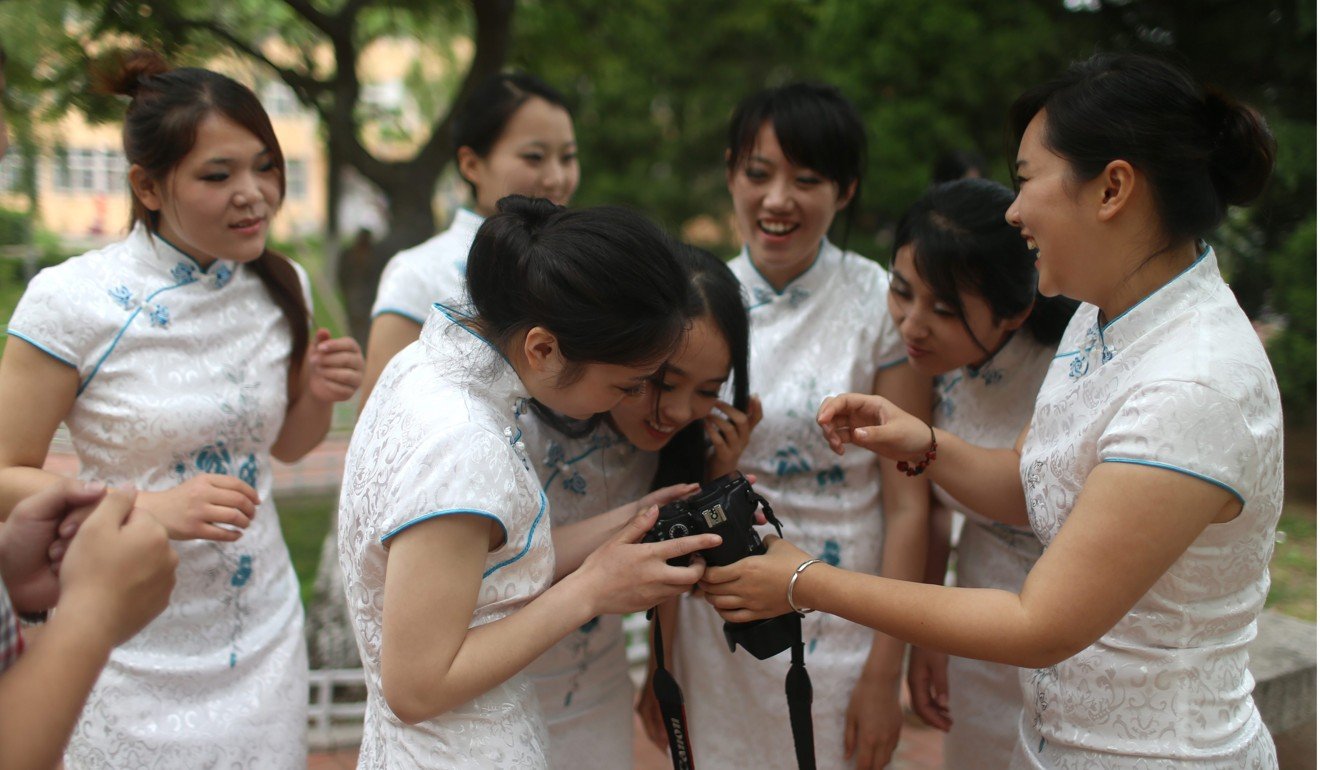
Kazakh actress Reyizha Alimjan’s fashion choices sparked a social media storm in China last month. Photo: Weibo

When Li Xiang broke up with her boyfriend over a selfie she posted on social media, it was not just about a woman letting a man know he wasn’t entitled to tell her how to dress in public, but a matter of personal freedom, social norms and cultural tradition.

A few weeks ago, the 24-year-old media worker from Shanghai shared a photo on WeChat that showed her posing at her bedroom door in a camisole and mini shorts. Her boyfriend said it made him very “uncomfortable”, and they quarrelled.

“‘Look how scantily clad you are, and [if] that is not enough, you shared it online,’ he said,” Li recalled.

“I got mad when he said, ‘You should go and ask other men if they’d like their girlfriends to dress like that’, as if he should decide what I wear – as if I were his appendage,” she said, referring to the archaic notion that a woman is secondary to a man in their relationship.

What clothes Chinese women should or should not wear has been the subject of intense online debate in recent weeks. Photo: EPA

Their argument was not unusual in China, especially over the past month when the online world became embroiled in a war of words about women’s freedom to dress as they please.

The controversy erupted when an article defending Reyizha Alimjan – the Kazakh actress criticised for showing too much flesh when she arrived at an airport in Shanghai in late July wearing jeans and a camisole – appeared on a WeChat movie review account called Staff of the 3rd Hall on August 12.

Reyizha Alimjan was criticised for her outfit on Chinese social media. Photo: Weibo

While that perspective was supported by many women online, others disagreed and said that society was open and tolerant but that people had the right to disagree.

By coincidence, a poll about women wearing camisoles in public was launched on August 10 by a WeChat account called Cicada Creativity. About 70 per cent of the nearly 14,000 respondents said they did not dare to do so.

More than 40 per cent avoided doing so for reasons such as thinking they were “not thin enough”, but a quarter said they said no because either their boyfriends disapproved or would not allow it, or they feared they would be harassed.

Chinese women spurn Victoria’s Secret for home-grown lingerie brands

Joy Lin, a feminist from Shanghai, said the debate was so fierce because it was not just about dress.

“It’s more about people’s judgment about one’s character and morals behind what she wears,” Lin said. “If you wear revealing clothes, they would say you are asking for harassment. If you show a little skin, you are frigid. And if you are casual, they call you ‘dama’ [Chinese slang, often derogatory, for middle-aged and elderly women].”

Some women say they are often judged by the clothes they wear. Photo: AP

In her experience, Lin said that if she appeared on the streets of Shanghai – the most cosmopolitan city in China – without a bra, there would be judgmental looks from passers-by before she had walked 10 metres (33 feet).

In contrast, she did just that in Paris in July, and, “no one stared at me or came near me at all”.

“Usually, when it comes to comments about what we wear, they’re not about whether the dress matches the hairstyle or things like that, but about our bodies, whether we’re slim or not and stuff like that,” she said. “Some [comments] can be very malicious and insulting.”

#MeToo rally accuses Hong Kong police of sexual violence against protesters

While shaming women for their clothing choices has been an issue for many years, it reached peak public awareness in China after the #MeToo movement took off in the US.

The social media campaign went viral in 2017 when dozens of women accused American film producer Harvey Weinstein of sexual assaults over a period of nearly 30 years.

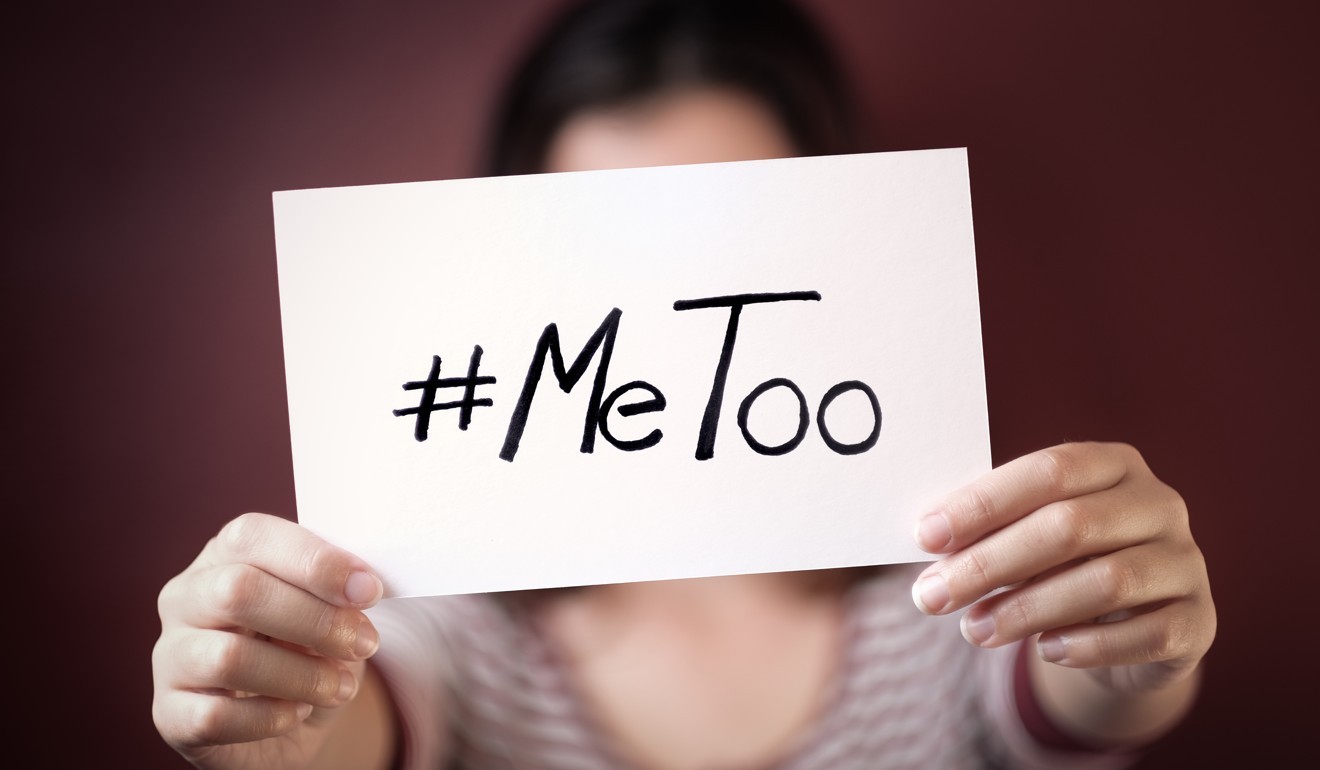
The #MeToo movement took off in the US in 2017 after dozens of women accused film producer Harvey Weinstein of sexual assault. Photo: Shutterstock

Lu Peng, a researcher from the Shanghai Academy of Social Sciences, said the online debate helped encapsulate conflicts between a growing desire for freedom, gender norms and generations of tradition.

“There will hardly be a consensus on such a question about whether women have the freedom to dress,” he said. “But if this discussion can make people realise that men, not just women, also face restrictions in dressing, then it’s bringing progress.”

The simplest example was to dress for the occasion, which applies to both sexes.

“We have never been free in dressing. We’re only free within a certain extent … About what to wear in public, I don’t think we should emphasise freedom only and ignore the local culture and society,” Lu said.

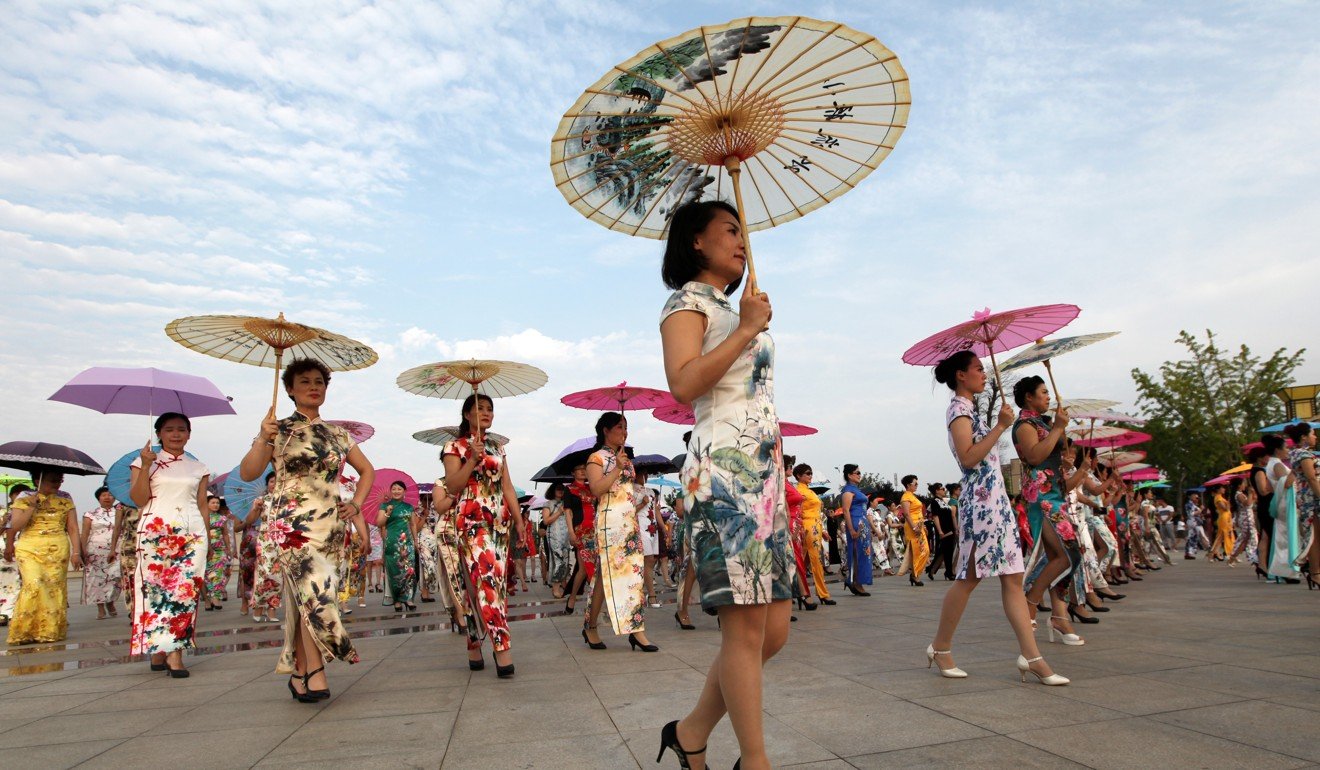
Keeping a low profile has long been part of the Chinese philosophy. Photo: Xinhua

In China, there is no law banning states of dress or undress in public, nor do the Han people, who make up most of the population, have religious beliefs that restrict their mode of dress. But keeping a low profile and avoiding unwanted attention has long been part of the Chinese philosophy.

“My father will also ask me not to be ‘overexposed’, because he believes it’s increasing the risk of being harassed,” Li, the Shanghai media worker, said.

“They think they mean well, but I just want to be myself. I’m not breaking any law. I want to make my own contribution in changing this culture,” she said.

Source: SCMP

01/07/2015

Foreign Brands Losing Luster in China – China Real Time Report – WSJ

Move over Western brands, Chinese companies are taking over.

China’s 1.34 billion-plus consumers are filling their shopping baskets with Chinese-branded toothpaste, laundry detergent, juice, cookies and more, according to a new study from consultancy Bain & Co.

Local Chinese companies have become more competitive and are leveraging their strength in smaller cities, where growth rates are higher than in top cities like Beijing and Shanghai, according to the study, which looked at the shopping habits of 40,000 consumers.

The result is that foreign brands are losing market share in large consumer goods categories–such as personal care, home care and packaged foods– all across China, from its biggest to smallest cities, Bain said. And sales growth, which is dwindling as China’s economy slows, is going primarily to Chinese companies, such as fabric-softener maker Guangzhou Liby Enterprise and juicer Tian Di No. 1 Beverage, it said.

While that’s good news for Chinese brands, it’s nothing to cheer about for global companies, which have been banking on Chinese shoppers to boost their sales. China’s economy is also slowing, meaning that the days of easy money in China are over and tireless boardroom references to “China’s emerging middle class” as the saving grace may soon be put to rest.

Some companies, like Best Buy Co. and Home Depot Inc., have either exited or are rethinking their goals in China. Best Buy Co. sold all its remaining stores in China last year, citing online competition.

But there’s still growth for many foreign brands. Foreign makers of beer, chewing gum and hair conditioner are still gaining traction and market share from Chinese companies, according to Bain.

Below are charts from Bain & Co and Kantar Worldpanel showing how Chinese companies are standing up against foreign rivals at retail and in consumer products.

via Foreign Brands Losing Luster in China – China Real Time Report – WSJ.

21/03/2015

ChemChina close to Pirelli deal that would trigger buyout offer | Reuters

China National Chemical Corp (ChemChina) is close to becoming the biggest single shareholder in Pirelli (PECI.MI) in a deal that would trigger a 7 billion euro ($7.5 billion) buyout of the Italian tire company.

The Pirelli logo is pictured at their headquarters in Milan March 18, 2014. REUTERS/Alessandro Garofalo

Three sources familiar with the deal, which would be the latest in a string of Chinese investments in large Italian companies, said ChemChina was discussing a deal with Pirelli’s top shareholders to buy a holding company called Camfin, which owns 26 percent of Pirelli and is 50 percent owned by Russia’s Rosneft (ROSN.MM).

Without identifying the possible buyer, Camfin said it was in talks with an international industrial group to sell its Pirelli stake at 15 euros per share, valuing the tire group at 7.1 billion euros.

It said the stake would be transferred to a vehicle controlled by the new partner, after which a takeover offer for the rest the world’s fifth-largest tire maker would ensue.

If the offer succeeds, Pirelli will be delisted. The deal comes as Pirelli’s rivals Michelin (MICP.PA) and Continental (CONG.DE) look around for growth opportunities in Asia.

State-controlled ChemChina and Rosneft declined to comment.

Previous Chinese investments in Italy include State Grid Corp of China [STGRD.UL] buying into electricity grid company Terna (TRN.MI) and gas network operator Snam (SRG.MI).

Besides Rosneft, Camfin’s owners are a holding company comprising Pirelli chief Marco Tronchetti Provera as well as Italian banks Intesa Sanpaolo (ISP.MI) and UniCredit (CRDI.MI).

via ChemChina close to Pirelli deal that would trigger buyout offer | Reuters.

27/01/2015

China’s Top 100 Brands: The Private Sector Reigns Supreme – China Real Time Report – WSJ

China’s top brand is no longer a state-owned company, nor is it e-commerce giant Alibaba Group Holding Ltd.BABA +0.85% It’s technology player Tencent Holdings TCEHY +3.45%.

In a ranking of the top 100 most valuable Chinese brands by research from agency Millward Brown and media company WPP, Tencent,  China’s largest online-games and social-networking company, ranked No. 1 with a brand value of $66 billion, ahead of No. 2 Alibaba’s $59 billion. Tencent’s WeChat and QQ messaging services propelled it to the top of the list, said Doreen Wang, global head of Millward Brown’s BrandZ division.

Tencent’s rise unseats state-owned telecom giant China Mobile, which has held the top spot since the ranking’s launch in 2010. It also marks a sea change for China’s private-sector companies, which now account for 47% of the value of the top 100 brands. To calculate rankings, Millward Brown and WPP analyze financial data of listed companies’ brands, pairing it with survey data from more than two million consumers in over 30 countries.

China’s state-owned enterprises have long dominated China’s list of leading companies. In 2010, of the top 50 Chinese brands identified in the report, state-owned companies occupied a third of the list and accounted for an estimated 70-75% of the $280 billion total combined value of the top 50.

Today, it’s a different story. In the past year, the government as has pushed private sector reforms and talked about the need to let market forces play a “more decisive” role in the economy. Alibaba’s public listing last year also contributed to the jump in value for market-driven brands, Millward Brown said, adding that technology brands have also for the first time surpassed financial institutions, becoming the highest valued sector in the rankings, representing 23% of the top 100’s value. Search giant Baidu Inc.BIDU -1.66% ranked No. 5, behind China Mobile and Industrial & Commercial Bank of China Ltd.

Tencent now ranks fifth in the world for global technology leaders’ brand value, according to MIllward Brown. Google Inc. is No. 1 with $158.8 billion, with Apple Inc. holding the No. 2 spot, followed by International Business Machines Corp.and Microsoft Corp.

Yet, even with Alibaba’s record-setting IPO and Tencent’s various successes, Chinese brands haven’t gained global recognition, said Ms. Wang. Only 22% of consumers surveyed outside of China could recognize a Chinese brand in 2014, a slight rise from 20% the year earlier. Chinese brands need to clarify what they stand for and need to ensure that they can satisfy needs beyond the Chinese market for them to gain more recognition, said Ms. Wang. “They need to consider what kind of benefit they bring to global consumers,” she said.

via China’s Top 100 Brands: The Private Sector Reigns Supreme – China Real Time Report – WSJ.

Law of Unintended Consequences

continuously updated blog about China & India

ChiaHou's Book Reviews

continuously updated blog about China & India

What's wrong with the world; and its economy

continuously updated blog about China & India