Archive for ‘Consumer’

02/01/2013

* China’s taste for pork serves up a pollution problem

This is but an indication of what is going to happen when billions of poor people become affluent enough to want the things that affluent Westerners take for granted.

The Guardian: “Fan Jianjun points to a concrete pipe jutting from the lake bank. Sludge spews from its mouth and arcs across the water, the surface bubbling with the bodies of flies.

Piglets being fed on a farm near Suining, Sichuan province, China - 27 Apr 2009

Fan has lived in Houtonglong village all his 31 years. The water was clear, he says, before the pig farm was built and people’s health began to suffer.

No one consulted the villagers before Shengtai pig farm was built 100 metres from their homes. The farm produces 10,000 animals a year – a relatively small concern in the world of industrialised farming – but there is so much waste to dispose of, the village air is thick with the stench. In the rainy season manure escapes from the farm, covering the roads. Villagers are developing respiratory problems and Fan struggles to raise chickens and ducks, which die soon after hatching.

In the 10 years since the farm arrived, the villagers have tried to get it dislodged. “We pulled down the walls several times, and blocked the gate with mud and trucks,” said Fan, a self-employed businessman. Complaints to the local government have gone unanswered, so Fan turned to internet forums to raise awareness. “We can only hope the farm will stop polluting our environment,” he added. “Our village was once a very beautiful place.”

Pork is China’s favourite meat: last year the country produced 50m tonnes – more than half the world’s total – and as the disposable incomes of China’s 1.3 billion people rise, their appetite is growing. “Pork is wrapped up in ideas of progress and modernity,” said Mindi Schneider, a sociologist at Cornell University. Until the 1990s typical families only ate meat at Chinese new year.

Memories of the devastating famine that killed tens of millions in the early 1960s still weigh heavy on the Chinese psyche. “I’ve heard people talking about eating meat in ‘revenge,'” Schneider said. “It was so limited before. Now it’s like: ‘look at this progress, we can eat as much meat as we want.'”

In 1980 the average Chinese person ate 14kg of meat. Today that person eats over four times more, almost 60kg. In comparison, the average American eats 125kg of meat each year and the average Briton about 85kg.

The livestock industry is transforming accordingly. Seen from a hilltop 200 miles from Houtonglong, the future of Chinese pork production takes the form of 32 identical redbrick pig sheds, shaded by leafy trees.”

via China’s taste for pork serves up a pollution problem | World news | The Guardian.

22/12/2012

* Yiwu’s purveyors of Christmas tat give China a dose of ho-ho-ho

This article illustrates extremely well our view that the Chinese mindset is practical, materialistic and down-to-earth. And I am talking about the entrepreneurs at Yiwu City and the shopkeepers embracing the Christmas spirit (or at least the Christmas decorations anyway); as well as the average urbanite who wants to celebrate international festivals whatever the origin and raison d’etre.

The Times: “On Thursday the Ling Guo massage parlour, in the central business district of Beijing, suddenly turned festive.

A vendor hangs Christmas decorations in between Santa Claus dolls at her stall ahead of Christmas at a wholesale market in Wuhan, Hubei province, ChinaAn outsized image of Father Christmas beamed from the window, flanked by a manic array of snowmen, reindeer and present-stuffed stockings. The masseuses greeted customers in Santa hats.

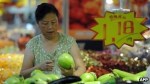
It is not a triumph of Western culture, but of raw Chinese salesmanship, entrepreneurial flair and desperation.

Elsewhere, the festive decorations are up, adorning everything from roadside noodle shops to suburban shopping malls. Where China’s Christmas lights used to be restricted to the big hotels and stores in Beijing and Shanghai, the briskest sales are now to small shops in provincial cities.

“We are absolutely focused more on the Chinese market and we are shifting 2,000 plastic Christmas trees a day domestically,” said Liu Qing, from Yanghang Art and Crafts, who has been part of the all-out push by manufacturers to persuade the Chinese to celebrate someone else’s season of goodwill.

“Our biggest buyers are now from Shandong and Chongqing, which is so different from a couple of years ago,” Mr Liu said. “Chinese people’s living standards have improved so much, so people start going after something more spiritual. Christmas is a lively holiday. The younger generations like it.”

For a growing number of Chinese businesses making Christmas-related goods, domestic sales now represent their single biggest — and often fastest-growing — market. It is an unexpected development in a country that does not celebrate Christmas. Without it, though, hundreds of factories would be driven to bankruptcy because, despite strong sales, Santa’s Chinese elves are working on tiny margins.

The key to the tinsel-strewn, gold-baubled Christmas-ification of China is to be found on the country’s east coast in Yiwu, the acknowledged world hub of yuletide tat — or “ornamental handicrafts” as they are described by the city’s factory owners.

It is from these workshops that Yiwu annually exports about £200 million of plastic trees, self-illuminating angel choirs and every other Christmas decoration conceivable. Other manufacturing centres in China also feed into the great £1.3 billion flow of Christmas exports, but none do it with such determination and concentration as Yiwu.

The problem, however, is that Yiwu became too good at its trade at just the wrong moment. In 2010 the city had 400 companies making Christmas products; now there are more than 750, with about 120,000 workers engaged in making Christmas goods.

The huge jump in capacity and competition coincided with a drop of about 25 per cent in what had traditionally been Yiwu’s strongest markets for its tawdry wares, Europe and the United States. The effect on profits has been harsh. This year labour costs in Yiwu have risen by 15 per cent and material prices have risen by about 10 per cent.

Chen Jinlin, from the Yiwu Christmas Products Industry Association, said that some of his members have suffered 20 per cent to 25 per cent declines in orders. “There are nearly twice as many companies as there were two years ago fighting for pieces of a smaller cake,” he said. “We are encouraging manufacturers to develop new products, especially lower-cost ones, to adjust to the new economic reality.”

But the longer-term answer, said Mr Hu, the sales manager of the Youlide Art & Crafts Company, has to be to look for new markets, China being the most convenient and potentially vast. Many of Yiwu’s Christmas goodsmakers have seen the domestic share of their sales rocket to 20 per cent of the total over one or two years.

They have also changed the way that they look at opportunities abroad: a shift of marketing focus has made Brazil the largest export destination for Yiwu’s Christmas goods, accounting for 12 per cent of the total. A similar drive has proved successful in Russia, where sales of Yiwu’s seasonal goods have tripled in the past year.

“About 80 per cent of our products go to South America, so we’ve had to change things to reflect that,” Mr Hu said. “Brazilians like their artificial Christmas trees in a paler shade of green than the Europeans.””

via Yiwu’s purveyors of Christmas tat give China a dose of ho-ho-ho | The Times.

Related articles

24/11/2012

* No meatballs’ as IKEA hits hurdles in India

India cannot make up its mind, it seems, whether to welcome foreign retailers or not.

Hindustan Times: “Swedish retailer IKEA said Friday it was reviewing sweeping curbs imposed on what it can sell at its planned new stores in India that will reportedly prevent it offering its famed meatballs. India’s foreign investment panel has rejected 15 of IKEA’s 30 product lines, a report said on

Friday, underscoring the regulatory hurdles faced by foreign stores who are eyeing the Indian market with renewed interest.

“We are now internally reviewing the details (of the investment board’s decision),” an IKEA spokeswoman told AFP, adding that she could not confirm the curbs as reported by The Economic Times on Friday.

Among the lines IKEA has been told by the Foreign Investment Promotion Board that it cannot sell are gift items, fabrics, books, toys, consumer electronics and food, the newspaper reported.

The group will, however, be allowed to sell furniture — its core business.

The investment panel also reportedly told IKEA it cannot offer customer financing schemes because that would violate banking regulations, or open cafes and food markets because that would break food policy regulations.

IKEA’s entry into India — it has pledged to invest $1.9 billion in the coming years — is being closely watched by competitors as a test case for how a large foreign corporation negotiates India’s byzantine rules and red tape.

India’s government announced a string of pro-market and investor-friendly reforms in September that relaxed or removed barriers preventing foreign retailers from operating in the country.

IKEA hopes to open 25 of its trademark blue-and-yellow stores in India through a 100-percent owned unit, Ingka Holding, as part of a wider push into emerging markets like China and Russia.

The government initially insisted that IKEA obtain 30 percent of its supplies from small Indian manufacturers that the Swedish retailer feared would not be able to keep pace with demand.

Later the government dropped the demand specifying the size of the supplier, but kept the 30 percent local sourcing requirement.”

via No meatballs’ as IKEA hits hurdles in India – Hindustan Times.

21/11/2012

* Construction on Chery-Jaguar Land Rover JV starts in east China

Jaguar-Land Rover is following a path long set by other top-end car makers like Mercedes and BMW. It will, hopefully, not mean a reduction of jobs in the UK.

Xinhua: “Construction of a joint venture (JV) project between China’s auto giant Chery and Britain-owned luxury carmaker Jaguar Land Rover (JLR) started Sunday in east China’s Jiangsu Province.

Foundation stone-laying ceremony was held at the economic and technology development area in the city of Changshu, according to the city’s government.

The JV project, with a total investment of 17.5 billion yuan (2.8 billion U.S. dollars), will have an ultimate annual output of 250,000 units of passenger vehicles, said the government in a press release.

The first phase of the project, which costs 10.9 billion yuan, is expected begin producing vehicles in July 2014. Annual production capacity of the first phase will include 77,000 Land Rover SUVs, 23,000 Chery cars, and 30,000 unit of Jaguar cars by 2016.

New energy vehicles and cars with aluminum body will be produced in the JV, and its own brand will also be developed after its completion.

The JLR is also expected to establish a research and development center in the city, said the press release.

Chery was founded in 1997 and has since emerged as one of China’s largest and most productive automotive manufacturers. In 2011, Chery recorded sales of 643,000 units, ranking the sixth among China’s passenger vehicle manufacturers.

JLR, a wholly-owned subsidiary of Tata Motors, is the largest manufacturer of premium vehicles in Britain.

In 2005, sales in China accounted for one percent of combined Jaguar and Land Rover sales. The country is now JLR’s third largest market and is still growing.”

via Construction on Chery-Jaguar Land Rover JV starts in east China – Xinhua | English.news.cn.

29/10/2012

* Oh, what a sinking feeling: Toyota misfires with Chinese buyers

Although like other Japanese car makers, Toyota suffered recently due to the anti-Japanese protests and violence (eg burning of Japanese car showrooms), its woes are partly self-inflicted.

Reuters: “The roots of Toyota Motor Corp‘s China troubles run far deeper than the anti-Japan protests that have swept the country, stretching back to the 2008 launch of the Yaris subcompact — a spectacular flop with price-conscious Chinese buyers.

A visitor walks past a Toyota Motor Corp's car displayed behind a sign in both Chinese (L) and Japanese at the company's showroom in Tokyo in this October 18, 2012 file photo. REUTERS-Toru Hanai-Files

The car, a success elsewhere, was meant to help build brand loyalty and send Toyota hurtling towards a still-unattained goal of selling one million vehicles annually in the world’s largest auto market.

However the Yaris missed the mark with China’s traditional higher-end customers as well as its new emerging middle class.

To some company insiders and dealers it epitomizes all that does not appeal to the status-conscious, lacking what the Chinese call ‘daqi’ or ‘road presence’. Next to Nissan Motor Co Ltd’s pricier Tiida, for example, it feels small and lacks oomph.

But for frugal first-time buyers, the Yaris which is priced from 87,000 yuan ($13,900) was a non-starter, costing some 55 percent more than General Motor’s Chevy Sail and putting Toyota at a competitive disadvantage in a must-win market.

via Analysis: Oh, what a sinking feeling: Toyota misfires with Chinese buyers | Reuters.

29/09/2012

* All that glitters is sold

China Daily: “With the rapid development of China’s economy, Chinese consumers’ appetite for jewellery has continued to grow, resulting in consistent sales growth in the domestic market.

All that glitters is sold

In 2011, spending in China’s retail jewellery market reached 40 billion yuan ($6.3 billion), making it the world’s largest consumer market for platinum and jade, and the second-largest diamond jewellery consumer after the US. But in addition to being one of the world’s largest jewellery consumers, China has gradually emerged as a competitive jewellery maker in the international market.

In fewer than 20 years, China’s jewellery industry has grown rapidly, and Shenzhen, a booming city in South China’s Guangdong province, has played a crucial role in leading this industry.

Thanks to the influence of Hong Kong’s industry, the past two decades have seen Shenzhen evolve into China’s jewellery capital. Since the 1990s, the city has been acknowledged as China’s biggest jewellery manufacturing base and trade distribution center.

According to the Gems and Jewellery Trade Association of Shenzhen, more than 2,000 jewellery companies now call the city home, and their annual output value of more than 50 billion yuan accounts for more than 70 percent of China’s overall jewellery production. In fact, the sales revenue of Shenzhen’s jewellery enterprises is not just ranked first in terms of domestic market share, it makes up about one-third of China’s total.

But jewellers in Shenzhen are no longer content to remain the largest outsourcing base for brands from Hong Kong or other parts of the world. They are trying to reshape old business models by investing heavily in branding their own independently designed products, aspiring to upgrade Shenzhen from an international hub of original equipment manufacturers to the birthplace of famous jewellery brands.

Some jewellers in Shenzhen have taken the lead in brand-building campaign. One of the most successful is Chow Tai Seng Jewelry Co Ltd, a large jewellery producer based in the city.

Established in 1966, Chow Tai Seng Jewelry is now one of the largest diamond-jewellery retailers and wholesalers in China. It currently has the largest jewellery chain in the country, with more than 2,000 shops in more than 300 Chinese cities.

The company posted sales revenue of 13 billion yuan (US$2 billion) in 2011, accounting for 7.1 percent of the market. Zhou Zongwen, board chairman of Chow Tai Seng Jewelry, said sales this year are expected to increase by about 30 percent over the previous year, and the company will maintain this robust growth momentum in the next few years.”

via All that glitters is sold |Economy |chinadaily.com.cn.

See also:

05/09/2012

* Guangzhou Moves to Limit New Cars

NY Times: “It is as startling as if Detroit or Los Angeles restricted car ownership.

The municipal government of Guangzhou, a sprawling metropolis that is one of China’s biggest auto manufacturing centers, introduced license plate auctions and lotteries last week that will roughly halve the number of new cars on the streets.

The crackdown by China’s third-largest city is the most restrictive in a series of moves by big Chinese cities that are putting quality-of-life issues ahead of short-term economic growth, something the central government has struggled to do on a national scale.

The measures have the potential to help clean up China’s notoriously dirty air and water, reduce long-term health care costs and improve the long-term quality of Chinese growth. But they are also imposing short-term costs, economists say, at a time when policy makers in Beijing and around the world are already concerned about a sharp economic slowdown in China.

“Of course from the government’s point of view, we give up some growth, but to achieve better health for all citizens, it is definitely worth it,” said Chen Haotian, the vice director of Guangzhou’s top planning agency.

Nanjing and Hangzhou in east-central China are moving to require cleaner gas and diesel. Cities near the coast, from Dongguan and Shenzhen in southeastern China to Wuxi and Suzhou in the middle and Beijing in the north, are pushing out polluting factories. And Xi’an and Urumqi in northwestern China are banning and scrapping cars built before 2005, when automotive emissions rules were less stringent.

“There’s a recognition finally that growth at all costs is not sustainable,” said Ben Simpfendorfer, the managing director of Silk Road Associates, a Hong Kong consulting firm.

Facing public pressure to address traffic jams and pollution, municipal governments from across China have been sending delegations to Guangzhou. But the national government in Beijing is pushing back against further car restrictions because of worries about the huge auto industry, said An Feng, a senior adviser in Beijing to transportation policy makers.

“This has really become a battle,” Mr. An said.”

via Guangzhou Moves to Limit New Cars – NYTimes.com.

See also: 

27/08/2012

* Car plate applicants exceed 1m in Beijing

China Daily: “A record 1-million-plus people in Beijing competed for fewer than 20,000 registration certificates qualifying them to buy cars through a lottery system on Sunday.

With a fixed number of car registrations issued each month and a lengthening waiting list, many potential car buyers are losing hope.

Some 1.05 million qualified applicants entered the registration lottery in August – 110,000 of them for the first time – and only 19,926 registrations will be issued, the city office in charge of the lottery system said on Saturday.

One in every 53 applicants will get the registrations, 80 percent fewer than in January last year, when Beijing introduced the lottery system to cap new car ownership at 240,000 a year.”

via Car plate applicants exceed 1m in Beijing |Society |chinadaily.com.cn.

09/08/2012

* China inflation rate dips to a 30-month low in July

BBC News: “China’s inflation dipped to a 30-month low in July, giving policymakers a bigger cushion to boost stimulus measures to spur economic growth.

Consumer prices rose by 1.8% in July, from a year earlier. That was down from a 2.2% growth rate in June and a 3% rise in May.

China has been looking to spur domestic consumption amid a slowing global demand for its exports.

China’s economy grew at its slowest pace in three years in second quarter.

The drop in prices of pork and meat and poultry products, which fell by 18.7% and 6.1% from a year earlier respectively, were the key drivers of the slowdown in the rate of inflation.

China’s economy grew at an annual rate of 7.6% in the April to June period, down from an 8.1% expansion in the previous three months.

There are fears that growth in the world’s second-largest economy may slow further in the coming months.

As a result, Beijing has taken various measures to spur growth.”

via BBC News – China inflation rate dips to a 30-month low in July.

06/08/2012

* Chinese Consumer Products Get More Competitive

WSJ: “Gone are the days when big multinationals in China could easily dominate every consumer segment from toothpaste to laundry detergent.

For years, companies such as Procter & Gamble Co. PG mainly had to worry about counterfeits, as their brands, such as Crest, were the hot items for the newly expanding consumer market.

That isn’t always the case anymore.

Take for instance a Chinese herbal toothpaste for whitening and sensitive gums. It sells for the equivalent of about $8.60, roughly double the price of Crest 3D White Vivid, one of P&G’s pricier brands. Yet the herbal toothpaste’s market share in China grew to 8.8% in 2011 from 1.1% five years ago, according to market research firm Euromonitor International. Over that same period, P&G’s market share in the toothpaste category fell to 19.7% from 20.8%. Toothpaste market share in China for Unilever NV, which sells the Zhonghua brand there, fell to 9.9% from 12%, according to Euromonitor. (In other markets, Unilever produces Close Up and Signal brand toothpastes.)

Industry insiders say losses of a point or two are small enough in the short term for foreign companies to manage. But the Chinese brand, made by Yunnan Baiyao Group Co., one of many local competitors gaining market share at the expense of foreign giants, is a sign of a changing consumer environment, some people say.

“P&G and Unilever will have to fight harder for shelf space and fight harder to differentiate from domestic brands that are now offering a wider range of products and features,” said Ben Cavender, a senior analyst at China Market Research Group.

Chinese companies like Yunnan Baiyao are gaining as they sharpen their branding.”

via Chinese Consumer Products Get More Competitive – WSJ.com.

Law of Unintended Consequences

continuously updated blog about China & India

ChiaHou's Book Reviews

continuously updated blog about China & India

What's wrong with the world; and its economy

continuously updated blog about China & India