Archive for ‘coal’

29/07/2014

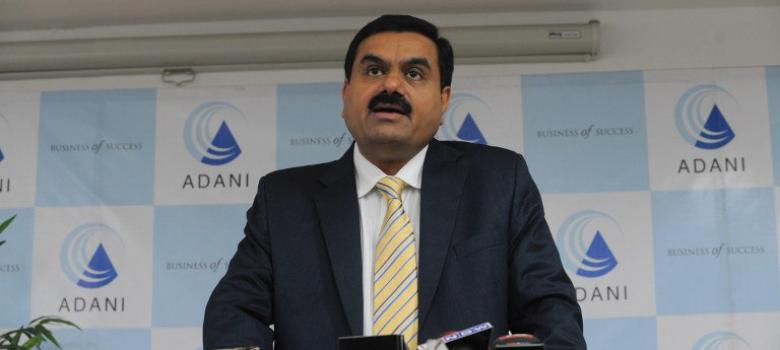
Adani gets clearance for $16.5 billion coal mine in Australia

Adani gets environmental clearance for $16.5 billion coal mine in Australia

Despite serious environmental concerns, the Australian federal government approved the Adani group’s $16.5 billion Carmichael coal mine and rail project. When completed, it will be one of the biggest coal mines in the world.

via Scroll.in – News. Politics. Culture..

16/04/2014

A Green Group Sees Hope in ‘The End of China’s Coal Boom’ – NYTimes.com – NYTimes.com

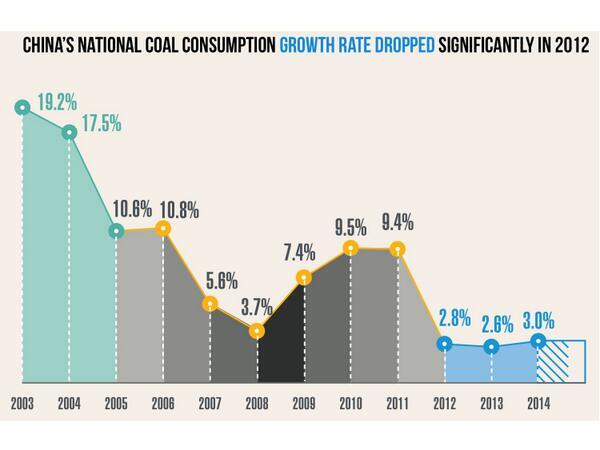
A report from Greenpeace charts slowing growth in China’s coal use.

Through much of its history, Greenpeace has been big on what I call “woe is me, shame on you” messaging on the environment. As I explained at a TEDx event in Portland, Ore., over the weekend, fingerpointing (including Greenpeace’s) is appropriate in many instances, but doesn’t work well with human-driven global warming. The blame game too often ends up resembling a circular firing squad.

This is why “The End of China’s Coal Boom,” a valuable new report from Greenpeace’s East Asia office, is so refreshing and worth exploring. I was led to it by a Twitter item from the group’s outgoing director, Phil Radford, that focused on a telling graphic:

View image on Twitter

via A Green Group Sees Hope in ‘The End of China’s Coal Boom’ – NYTimes.com – NYTimes.com.

Enhanced by Zemanta
06/03/2014

India’s SAIL-led group hopes to buy coal assets in Poland-chairman | Reuters

A consortium led by India’s Steel Authority of India Ltd, the country’s second-biggest steelmaker, hopes to buy coal assets in Poland in the next few months, Chairman C. S. Verma said on Thursday.

Steel Authority of India Limited

Steel Authority of India Limited (Photo credit: Wikipedia)

Most steel producers in India, the world’s third-largest coal importer, depend on overseas coal shipments and are trying to buy mines in Africa and Europe.

SAIL-led International Coal Ventures Private Ltd (ICVL), whose five participating firms are all state-owned or state-controlled, has been scouting for mines since 2009.

Verma said they had already invested in due diligence for the Polish assets.

JSW Steel Ltd, India’s third-largest steel maker, has already bought U.S. mines that produce the coal used in steel making.

India’s coal imports rose 21 percent to 152 million tonnes last year, with most of that being thermal coal used to generate power, according to Delhi-based research firm OreTeam. (Reporting by Krishna N Das; Editing by Jo Winterbottom)

via India’s SAIL-led group hopes to buy coal assets in Poland-chairman | Reuters.

Enhanced by Zemanta
06/03/2014

Coal India plans to set up power plant in 2015/16 | Reuters

The company has often said its output would be 300 million tonnes more than the current figure of about 475 million given enough rail tracks to carry the fuel from new and remote mines.

Insufficient connectivity is one of the reasons the company has lagged output targets for more than six straight years – leading to shortages at power producers and crippling outages.

“The country either needs coal or power,” said CB Sood, an executive director at the company. “If we are not able to evacuate coal, we should set up pit-head power plants.”

Speaking on the sidelines of a coal conference in the resort state of Goa, Sood said the company was seeking a joint venture partner to set up the plant.

via Coal India plans to set up power plant in 2015/16 | Reuters.

Enhanced by Zemanta
18/02/2014

UPDATE 1-Coal India units see double-digit output growth in 2014/15 | Reuters

The expected production jump will help India keep a lid on imports of coal, which have surged in recent years due to regulatory, environmental and land acquisition delays in starting new mines at home.

Coal India Limited

Coal India Limited (Photo credit: Wikipedia)

Mahanadi Coalfields, a Coal India unit with operations in the eastern state of Odisha, expects output to rise to 135 million tonnes next fiscal year from about 114 million this year, Director Of Operations A.K. Tiwari told Reuters.

via UPDATE 1-Coal India units see double-digit output growth in 2014/15 | Reuters.

Enhanced by Zemanta
31/01/2014

Environment: Browner, but greener | The Economist

China stands out for its greenness in a new environmental ranking

CHINA is the world’s biggest polluter, so it is no surprise that it fares poorly on some measures of pollution in a new global index of environmental performance. The shock is that it also stands out for its world-beating greenness in other areas on the same index.

The Environmental Performance Index (EPI), a joint product of America’s Yale and Columbia universities, is the latest volume in a long-running biennial ranking of 178 countries on a variety of measures of environmental performance. New this year are assessments of performance in waste-water treatment and combating climate change, as well as the clever use of satellite data (to track trends in forestry and air pollution) in order to top up traditional computer modelling and official data.

The report’s conclusions are more cheerful than most green report cards. The experts believe countries are doing well in improving access to safe drinking water and sanitation, and in bringing down child mortality. However, the global trends are worrying in other areas like fisheries, wastewater treatment and air quality. Overall, Switzerland came out top. Somalia came last. China was 118th, a middling ranking that beats India (155th) but falls well below South Africa (72nd), Russia (73rd) and Brazil (77th).

However, that average masks a huge divergence in China’s performance in two areas. Using satellite data, the boffins worked out, for the first time, what global exposures were to fine particulate matter (known as PM2.5) from 2000 to 2012. China ranked at the bottom on air pollution, with nearly all of its population exposed to levels of PM2.5 pollution deemed unhealthy by the World Health Organisation (WHO). Though less frequently criticised than Beijing, Delhi’s air is also terrible—but China as a whole fares worse. In 2012 the average human exposure to PM2.5 for all of China was 48 micrograms per cubic metre, but the national figure for India was only 32 units (the WHO says anything above 10 units is unhealthy).

The surprise is that China has done very well on carbon. The experts calculate that, unusually among big emerging economies, it slowed the rate at which its greenhouse-gas emissions have grown in the past decade. That is partly a natural result of its development, which has led to investment in better technology and cleaner industries, but it is also thanks to policies to improve efficiency and boost renewable energy.

Environmentalists the world over can breathe a little easier knowing that the biggest global polluter has started to slow the rise in its greenhouse-gas emissions and may one day even reduce them. If only China’s urban residents could breathe a little easier, too.

via Environment: Browner, but greener | The Economist.

Enhanced by Zemanta
Law of Unintended Consequences

continuously updated blog about China & India

ChiaHou's Book Reviews

continuously updated blog about China & India

What's wrong with the world; and its economy

continuously updated blog about China & India