Archive for ‘energy’

23/09/2016

A glowing future | The Economist

UPON learning (via a terse government statement) that their bustling port city in eastern China had been tipped as the likely site of a plant to recycle used nuclear fuel, residents of Lianyungang took to the streets last month in their thousands. Police, whose warnings against demonstrations were ignored, deployed with riot gear in large numbers but only scuffled with the protesters, who rallied, chanted and waved banners in the city centre for several days. “No one consulted us about this,” says one woman who participated in the protests. “We love our city. We have very little pollution and we don’t want a nuclear-fuel plant anywhere near us. The government says it is totally safe, but how can they be sure? How can we believe them?” she asks.

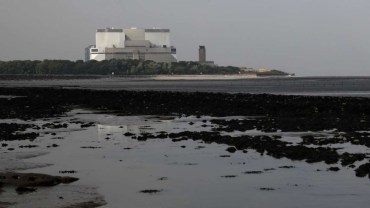
Such scepticism is shared by many in Lianyungang, which already hosts a nuclear-power plant (pictured), and elsewhere in China, where the government plans to expand nuclear power massively. China started its first nuclear plant in 1994. There are now 36 reactors in operation, and another 20 under construction (see map). A further four have been approved, and many more are in the planning stages. Only one new plant has been built in America, in contrast, since 1994; four more are under construction. By 2030 China is projected to get 9% of its power from nuclear, up from 2% in 2012. In absolute terms, its nuclear generation capacity will have increased eightfold over the same period, to 750 billion kilowatt-hours a year, roughly America’s current level.

After disaster struck Japan’s Fukushima nuclear power station in 2011, the Chinese authorities briefly halted this pell-mell rush toward the nuclear future, announcing a moratorium on the construction of new plants, urgent safety checks on existing ones and a prolonged policy review to decide whether nuclear power would remain a part of China’s energy strategy. The following year, however, the government resolved to carry on with its nuclear-energy programme.

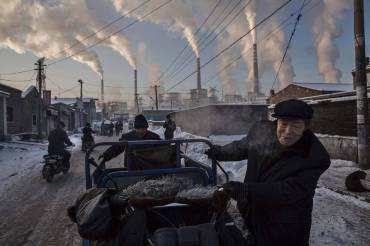
The need is clear. Despite slowing economic growth, energy consumption per person is projected to rise dramatically, with no plateau in sight before 2030. Pollution from coal-fired power plants, China’s main source of electricity, causes widespread respiratory disease and many premature deaths each year, a source of persistent public anger. China has also made ambitious promises to reduce greenhouse-gas emissions. If it hopes to meet such targets, it will need to embrace nuclear, “because the only other truly reliable 24/7 source of electric power is coal,” says Zha Daojiong of Peking University.China’s utilities are also keen. The state-owned firms that run all the country’s nuclear plants are thought to earn a good return on their investment (their accounts are too murky to be certain), in part because their official backing allows them to finance new reactors very cheaply, and in part because regulators have fixed power tariffs in a favourable manner. One estimate put the return on nuclear assets between 2002 and 2012 at 7% a year, compared with 3% for coal- and gas-fired plants.

China even harbours ambitions to export its growing expertise in nuclear power. After relying first on Russian designs, and more recently importing American and French ones, China has also developed indigenous nuclear reactors. A recently approved deal with Britain, valued at $23 billion, will see China help finance a French-designed nuclear-power station and possibly build one of its own design later.

But China’s nuclear push has its critics. These include those who live near proposed nuclear facilities. Many, like the protesters in Lianyungang, are happy to have the power they need to run their air-conditioners but want to keep the unpleasant parts of the operation far from their doorsteps. Chinese now has a word for NIMBY: linbi, a fusion of the words for “adjacent” and “shun”. The government has repeatedly backed down in the face of public demonstrations, twice agreeing to relocate a uranium-enrichment plant, for example. It has also put the decision about the reprocessing plant in Lianyungang on hold.

Yet attitudes to nuclear power may be less hostile than in many Western countries. A study published in 2013 found an even split between supporters and opponents of expanding China’s nuclear-power industry. Compared with their counterparts in the rich world, Chinese citizens showed much greater “trust and confidence in the government” as the manager of nuclear policy and operations, the emergency responder in case of accidents and the provider of reliable information about the industry. The lead researcher for that study, He Guizhen of the Chinese Academy of Sciences, says that even protesters like those in Lianyungang are not implacably opposed. “Their message is not really that you can’t build these things no matter what, but that we are concerned about safety, especially after Fukushima, and we demand that you take safety seriously,” she says.

It appears this message is getting through. Early this year the government acknowledged in a white paper that its system for responding to a nuclear accident had “certain inadequacies”. In April officials revealed plans to draft a national nuclear-safety law. In May officials announced 600m yuan ($91m) in funding for six new nuclear-emergency squads, which would be ready for action by 2018. In August—on the same day that protesters marched in Lianyungang—China conducted its first “comprehensive nuclear-security emergency drill”. This week the government said officials must consult locals before settling the location of new nuclear facilities.

Deborah Seligsohn of the University of California, San Diego, says that because China’s nuclear-power industry is centrally run and limited to a handful of companies, authorities are able to keep tight control over safety standards, and that they have not hesitated to slow projects down when seeing signs of strain. Supervision, however, falls to several different agencies and levels of the bureaucracy. The burden of inspecting and managing the growing number of plants, she says, could be better handled by a more independent regulator in charge of its own budget.

In July China Energy News, a newspaper, reported that “quality problems” with domestically manufactured pump-valves were forcing some plants to shut down unexpectedly. (Most plants have since switched to imported valves.) More alarmingly, regulators this month revealed that a radiation-monitoring system at the Daya Bay nuclear-power station, which is within 50km of the huge cities of Shenzhen and Hong Kong, had been turned off inadvertently for three months before anyone noticed. Since no radiation leaked, the government deemed the oversight an event of “no safety significance”—one of several such lapses this year. The residents of Shenzhen and Hong Kong, presumably, would not see it in quite the same way.

Source: A glowing future | The Economist
15/09/2016

Britain approves China-backed Hinkley Point nuclear plant deal after review of scheme | South China Morning Post

The British government said on Thursday it was giving the green light to a controversial new nuclear project at Hinkley Point after Prime Minister Theresa May ordered a review.

“Having thoroughly reviewed the proposals for Hinkley Point C, we will introduce a series of measures to enhance security and will ensure Hinkley cannot change hands without the government’s agreement,” Business Secretary Greg Clark said in a statement.

Beijing calls for British nuclear project financially backed by China to proceed.

“Consequently, we have decided to proceed with the first new nuclear power station for a generation.”

The board of French state-owned power company EDF approved its participation in the project in southwest England on July 28, only for Britain’s new government under May to announce hours later that it wanted to review it.China has a one-third stake in Hinkley Point and analysts have warned that Britain would have risked its relations with the world’s second-largest economy if it cancelled the costly deal.

Source: Britain approves China-backed Hinkley Point nuclear plant deal after review of scheme | South China Morning Post

04/09/2016

UK’s May to review security risks of Chinese-funded nuclear deal | Reuters

Prime Minister Theresa May said on Sunday she wanted her security advisers to review a delayed nuclear power investment from China – a source of diplomatic tension – as she arrived in the country to attend a G20 summit.

May upset Chinese officials in July by delaying a $24 billion project that would see French firm EDF (EDF.PA) build Britain’s first new nuclear power plant in decades with the help of $8 billion from China.

Speaking during her first visit to China, May was asked whether she would ask the National Security Council, a team of ministers supported by intelligence officers, to look at the potential security implications of the Hinkley deal.

“I will be doing exactly as you’ve said,” May replied, saying it would be part of her decision-making process. The comment marked the first official acknowledgement that national security was a factor in her decision.

The initial delay caught investors by surprise and has cast doubt over whether May, who took office in July following Britain’s vote to leave the European Union, will continue to court China as a major source of infrastructure investment.

“This is the way I operate,” May earlier told reporters en route to the summit, which will include a one-to-one with Chinese President Xi Jinping.

“I look at the evidence, …take the advice and consider that and come to my decision.

“A final decision is expected later this month.

May, a former interior minister, is wary of the risks of allowing China to invest in nuclear projects, according to a former cabinet colleague. The EDF deal is viewed as a precursor to Chinese involvement in another two nuclear plants.

Asked whether she trusted China, May said: “Of course we have a relationship with them… What I want to do is build on that relationship.

“She also stressed a need to broaden the group of nations that Britain can trade with and tap for cash to help reinvigorate its power, transport and technology infrastructure.”This is the G20, this is about talking to a number of world leaders. I’m going to give the message that Britain is very much open for business… I want to be talking about the opportunities for free trade around the world.”

Source: UK’s May to review security risks of Chinese-funded nuclear deal | Reuters

24/08/2016

The perils of peace in China’s commodity industries | The Economist

WHEN the number of strikes plummets, something significant is usually going on. Strikes in China’s mining, iron and steel industries have fallen from more than 40 in January to four a month or fewer between May and August, according to China Labour Bulletin, an NGO based in Hong Kong. The explanation seems to be that China is backtracking on plans for the restructuring of state-owned firms in these sectors.

In February the government announced that it would redeploy 1.8m people, or 15% of the workforce, in the bloated and debt-laden coal, iron and steel industries. Just after that, a huge strike over unpaid wages by coal miners in the north-east dramatised the risks of trying to force through massive lay-offs and plant closures. So local officials have dragged their feet. According to the national planning authority, in the first seven months of the year provincial governments achieved only 38% of their full year’s targets for coal production cuts.

Fear of unrest is not the only explanation. Commodity prices have rebounded slightly this year, so local authorities are playing a game of chicken, keeping mines and factories open and hoping the neighbours will close theirs, so they themselves will be the ones to gain from higher prices. China itself is not benefiting.

Source: The perils of peace in China’s commodity industries | The Economist

24/06/2016

China rejects bending rule for India to join nuclear club | Reuters

China maintains its opposition to India joining a group of nations seeking to prevent the proliferation of nuclear weapons by controlling access to sensitive technology, said the head of the arms control department in China’s Foreign Ministry.

The Nuclear Suppliers Group (NSG) met this week in Seoul, but China said it would not bend the rules and allow India membership as it had not signed the nuclear Non-Proliferation Treaty (NPT), the main global arms control pact.

“Applicant countries must be signatories of the Treaty on the Non-Proliferation of nuclear weapons (NPT),” Wang Qun, the head of arms control department in China’s Foreign Ministry, was quoted as saying in Seoul on Thursday night.

“This is a pillar, not something that China set. It is universally recognized by the international community,” Wang said according to a statement released by the Chinese foreign ministry on Friday.China is leading opposition to a push by the United States to bring India into the NSG which aims to prevent nuclear weapons proliferation by stopping the sale of items that can be used to make nuclear arms.

The issue of India’s membership was not formally discussed at the NSG meeting this week, Wang said on Friday.

The United States, which has a nuclear cooperation deal with India, considers it a nuclear power that plays by the rules and is not a proliferator, and wants to bring Asia’s third largest economy into the 48-member group.

India already enjoys most of the benefits of membership under a 2008 exemption to NSG rules granted to support its nuclear cooperation deal with Washington.

On Friday, on the sidelines of the plenary meeting of the NSG, Wang stressed China considered it important to handle new memberships under a consensus and that there was no move yet to allow a non-NPT state to join.

“International rules will have to be respected, big or small,” Wang told Reuters. “Big like NPT. Small like the rules and procedures of this group.”   “The important question of which we are concerned, is how to deal with the question of participation of countries within the group of non-NPT states. It’s a formidable task.”Indian Prime Minister Narendra Modi raised the issue on Thursday at a meeting with Chinese President Xi Jinping at a regional summit in Tashkent, Uzbekistan, but there was no breakthrough.

One diplomat at the NSG plenary in Seoul said the group’s outgoing chairman, Argentinian diplomat Rafael Grossi, would act as a “facilitator” to continue to search for an accession deal.

Opponents argue that granting India membership would further undermine efforts to prevent proliferation. It would also infuriate India’s rival Pakistan, an ally of China’s, which has responded to India’s membership bid with one of its own.Pakistan joining would be unacceptable to many, given its track record. The father of its nuclear weapons program ran an illicit network for years that sold nuclear secrets to countries including North Korea and Iran.

Source: China rejects bending rule for India to join nuclear club | Reuters

09/06/2016

China leads resistance to India joining nuclear export club | Reuters

China is leading opposition to a push by the United States and other major powers for India to join the main club of countries controlling access to sensitive nuclear technology, diplomats said on Thursday as the group discussed India’s membership bid.

Other countries opposing Indian membership of the Nuclear Suppliers Group (NSG) include New Zealand, Ireland, Turkey, South Africa and Austria, diplomats said.

The 48-nation NSG aims to prevent the proliferation of nuclear weapons by restricting the sale of items that can be used to make those arms.

India already enjoys most of the benefits of membership under a 2008 exemption to NSG rules granted to support its nuclear cooperation deal with Washington, even though India has developed atomic weapons and never signed the nuclear Non-Proliferation Treaty (NPT), the main global arms control pact.

Opponents argue that granting it membership would further undermine efforts to prevent proliferation. It would also infuriate India’s rival Pakistan, which responded to India’s membership bid with one of its own and has the backing of its close ally China.

“By bringing India on board, it’s a slap in the face of the entire non-proliferation regime,” a diplomatic source from one of a handful of countries resisting India’s push said on condition of anonymity.

A decision on Indian membership is not expected before an NSG plenary meeting in Seoul on June 20, but diplomats said Washington had been pressuring hold-outs, and Thursday’s closed-door meeting was a chance to see how strong opposition is.U.S. Secretary of State John Kerry wrote to members asking them “not to block consensus on Indian admission to the NSG” in a letter seen by Reuters and dated Friday.

China, however, showed no sign of backing down from its opposition to India joining unless Pakistan becomes a member. That would be unacceptable to many, given Pakistan’s track record — the father of its nuclear weapons program sold nuclear secrets to countries including North Korea and Iran.

“China, if anything, is hardening (its position),” another diplomat said.

Most of the hold-outs oppose the idea of admitting a non-NPT state such as India and argue that if it is to be admitted, it should be under criteria that apply equally to all states rather than under a “tailor-made” solution for a U.S. ally.

Mexico’s president said on Wednesday his country supports India’s membership bid, but one Vienna-based diplomat said it still opposed the idea of it joining under conditions that did not apply equally to all.

Source: China leads resistance to India joining nuclear export club | Reuters

08/06/2016

U.S. Firm to Build Six Nuclear Reactors in India – India Real Time – WSJ

The U.S. and India agreed to move ahead with the construction of six nuclear reactors in India by an American company, the first such move since the countries signed a landmark civil nuclear deal in 2008.

The breakthrough capped a wide-ranging White House meeting on Tuesday between President Barack Obama and Indian Prime Minister Narendra Modi, who are seeking closer cooperation as Washington wants to boost New Delhi’s role in counterbalancing China.

The meeting, which included lunch at the White House, will be followed on Wednesday by a speech by Mr. Modi to Congress, wrapping up the Indian leader’s fourth visit to the U.S. as part of an increasingly close relationship that has been sought by both governments.

The warming Indian relationship is backed by the lure of accelerating growth in that country, signs of improvement in the business climate, shared democratic values and some overlapping strategic goals.

By contrast, recent U.S. interactions with China, a far bigger Asian economy and U.S. trading partner whose growth appears to be slowing down, have been marked by strains and warnings over economic and security issues.

Source: U.S. Firm to Build Six Nuclear Reactors in India – India Real Time – WSJ

07/06/2016

Indian solar power | The Economist

NARENDRA MODI, India’s prime minister, visits America for three days this week for talks with Barack Obama. Climate commitments may be one of many topics discussed. Six months ago 187 countries agreed to cut pollution through pledges for the UN climate talks in Paris. The deal adopted there was stronger than many expected, but much remains to be done. Even if countries manage to do all they offered, global warming will likely be held to around 3.5°C above pre-industrial temperatures. Conversely, the Paris deal aims overall to ensure warming does not exceed 2°C.

Unlike America and China, the world’s two largest polluters, India did not pledge a future reduction in aggregate emissions. It offered instead to reduce the intensity of its emissions—the amount of pollution per unit of economic output—by around a third by 2030 as measured against 2005 levels. Its greenest promise was to install 175GW of renewable power by 2022 (most of it solar). This is an enormous undertaking. In 2014, for example, the world’s entire installed solar capacity was 181GW.

The Modi government says the plans are “ambitious but achievable”. The country’s total installed solar power capacity now comes to 5.8GW; to meet its targets it will need to speed up from adding around 4GW a year to adding more than 15GW instead.

Mr Modi believes solar power is the “ultimate solution to India’s energy problem”. Of 250m households in India, 56m do not have access to electricity. The majority are in rural areas where off-grid solar installations, suitable for single homes or small clusters of buildings, could prove particularly helpful.

India’s solar programme is a good way to assess how seriously countries are taking the Paris agreement—particularly given India’s huge population and increasing economic heft. Mr Modi’s moves will illuminate the state of climate diplomacy.

Source: Daily chart: Indian solar power | The Economist

25/05/2016

China to replace direct coal combustion with electricity in new plan | Reuters

China will reduce the amount of coal burned directly in industrial furnaces and residential heating systems in order to tackle a major source of smog, the country’s energy regulator said on Wednesday.

The National Energy Administration (NEA) said in a joint announcement with other government bodies that around 700 million to 800 million tonnes of coal is burned directly in China every year, much of it in the countryside, where access to electricity is limited.

Directly burned coal amounts to about 20 percent of China’s total coal consumption volume, much higher than the 5 percent rate in Europe and the United States.

China will aim to replace direct burning with electricity, including renewable power as well as ultra-low emission coal-fired generators, the NEA said.

China currently relies on coal for around 64 percent of its total primary energy needs and for three-quarters of its total power generation. Emissions from the direct combustion of coal are around five times higher than those from coal-fired power plants, which are subject to strict anti-pollution regulations.

During the 2016-2020 period, China plans to raise electricity’s share of the country’s overall energy mix to 27 percent, up about 1.5 percentage points from now and raising total power consumption by around 450 billion kilowatt-hours a year, the NEA said.

Experts have estimated that China will need an additional 600 GW of coal-fired power capacity over the 2015-2030 period in order to replace direct coal combustion.

Source: China to replace direct coal combustion with electricity in new plan | Reuters

26/04/2016

China Bans Some New Coal Power Plants – China Real Time Report – WSJ

China Bans Some New Coal Power Plants A coal-fired power plant in Shanxi, China. Beijing has announced a ban on new coal plants in areas with surplus power supply.

Beijing has announced a ban on new coal plants in areas with surplus power supply.

China’s government is banning construction of new coal-fired power plants in areas with surplus power supply, a move that could weigh on already-struggling coal markets. As WSJ’s Brian Spegele reports:

The new measures outlined Monday by China’s top economic planner, the National Development and Reform Commission, underscore the central government’s deep concern with overcapacity across China’s economy, a result of weakening industrial demand as growth slows.

Beijing has previously said it aimed to curb thermal power overcapacity; analysts said the fact that it now came from an official NDRC communiqué was the clearest signal yet that it won’t tolerate new coal capacity in regions that already have excess supply.

Weaker demand for coal inside China could ultimately lead to higher exports, which would exacerbate the huge supplies of coal sloshing around global markets. The higher supplies could drive down global benchmark prices and hit the bottom lines of major U.S. and international coal producers.

The global commodities downturn has proven particularly tough on global coal companies. St. Louis-based Peabody Energy Corp. and Arch Coal Inc. are among the large U.S. miners to file for chapter 11 bankruptcy protections in recent months. The U.S. sector has shed 31,000 jobs since 2009.

Source: China Bans Some New Coal Power Plants – China Real Time Report – WSJ

Law of Unintended Consequences

continuously updated blog about China & India

ChiaHou's Book Reviews

continuously updated blog about China & India

What's wrong with the world; and its economy

continuously updated blog about China & India