Archive for ‘energy’

13/08/2014

Beijing cuts coal use by 7 percent in first half of year – China – Chinadaily.com.cn

Beijing cut coal consumption by 7 percent in the first half of 2014 as part of its efforts to tackle smog, the city’s environmental protection bureau said.

Beijing cuts coal use by 7 percent in first half of year

Beijing is at the front line of a “war on pollution” declared by the central government earlier this year in a bid to head off public unrest about the growing environmental costs of economic development.

The city has already started to close or relocate hundreds of factories and industrial plants.

The coal-fired power generators at Beijing’s Gaojing Thermal Power Plant are decommissioned on July 23. Provided to China Daily

It will also raise vehicle fuel standards and is mulling the introduction of a congestion charge.

To reduce coal consumption, it is in the process of shutting down all of its aging coal-fired power plants and replacing them with cleaner natural gas-fired capacity or with power delivered via the grid.

Based on last year’s coal consumption level of 19 million metric tons, the 7 percent cut would amount to around 1.33 million tons per year.

Beijing has said previously that it plans to reduce total coal use by 2.6 million tons in 2014, and aims to slash consumption to less than 10 million tons per year by 2017.

The Beijing environmental bureau said the city had cut sulfur dioxide emissions by 5.4 percent over the first six months of the year.

It also took 176,000 substandard vehicles off the road.

Previous data issued by the Ministry of Environmental Protection showed that concentrations of hazardous airborne particles known as PM2.5 stood at 91.6 micrograms per cubic meter in Beijing in the first half of the year, down 11.2 percent year-on-year but still more than twice the recommended national limit of 35 mcg.

Much of the pollution that hits Beijing drifts in from the surrounding province of Hebei, a major industrial region that is home to seven of China’s 10 most polluted cities.

Under new plans to integrate Beijing with Hebei and the port city of Tianjin, the region will be treated as a “single entity” with unified industrial and emission standards.

Hebei said last week that it had cut coal consumption by 7.53 million tons in the first half of 2014, amounting to just over half of its target of 15 million tons for the year.

The province agreed last year to cut coal use by 40 million tons by 2017, and it is also planning to shed at least 60 million tons of excess steel capacity over the same period.

via Beijing cuts coal use by 7 percent in first half of year – China – Chinadaily.com.cn.

09/08/2014

China’s Shale-Gas Production Target Cut in Half by Top Official – Businessweek

Tapping China’s vast shale-gas reserves has proved more difficult than government planners in Beijing once hoped. In 2012, China’s National Energy Administration projected that, by 2020, from 60 billion to 80 billion cubic meters (bcm) of domestic shale gas would be pumped annually. Earlier this week the country’s energy chief, Wu Xinxiong, slashed the goal in half, to 30 billion bcm by 2020.

A shale well at Fuling, owned by Sinopec, China's largest oil refiner, in Chongqing, southwest China on April 21

According to the U.S. Energy Information Administration, China’s holds the world’s largest reserves of theoretically recoverable shale gas. But much of it is locked in mountainous regions in western China.

While China’s leaders—concerned about steeply rising energy demand accompanying rapid urbanization—dearly want to emulate the U.S.’s shale-gas boom, it turns out Americans have several practical advantages. For starters, the U.S. shale-gas revolution kicked off in fairly accessible regions: the flatlands of Texas, North Dakota, and Pennsylvania.

So far, explorations in China have identified only one clearly promising shale play: Fuling shale gas field, near the western megalopolis of Chongqing. Sinopec, which controls the Fuling field, projects that its annual shale gas production will reach 5 bcm by 2015 and 10 bcm by 2017. (China trivia fact: Fuling was also the site of River Town, well-known journalist Peter Hessler’s first book chronicling his years as a Peace Corps volunteer in the then-small city on the Yangtze.)

With no other comparable sites yet identified, it’s not clear where the other 20 bcm may come from. While Sinopec is currently at the forefront of China’s shale-gas development, two foreign companies, Royal Dutch Shell (RDSA:LN) and Hess (HES), have secured production-sharing contracts for other potential sites.

via China’s Shale-Gas Production Target Cut in Half by Top Official – Businessweek.

09/08/2014

China provinces on track to meet 2015 energy targets: NDRC | Reuters

Most of China’s provinces are ahead of schedule or on track to meet 2015 energy savings targets, the government said on Friday, with Beijing and Shanghai among the frontrunners as the world’s No.2 economy seeks to reduce its impact on the environment.

Smoke rises from chimneys of a thermal power plant near Shanghai March 26, 2014.  REUTERS/Carlos Barria

China has pledged to reduce its energy intensity – the amount of energy it uses to add a dollar to its gross domestic product (GDP) – to 16 percent below 2010 levels by 2015.

Beijing’s intention in setting the targets was to slow emissions of climate-changing greenhouse gases and cut expensive fuel imports, but they have won new relevance with the pollution crisis that has enveloped the nation the past two years.

via China provinces on track to meet 2015 energy targets: NDRC | Reuters.

29/07/2014

Adani gets clearance for $16.5 billion coal mine in Australia

Adani gets environmental clearance for $16.5 billion coal mine in Australia

Despite serious environmental concerns, the Australian federal government approved the Adani group’s $16.5 billion Carmichael coal mine and rail project. When completed, it will be one of the biggest coal mines in the world.

via Scroll.in – News. Politics. Culture..

17/06/2014

China battles to be first ecological civilisation – environment – 13 June 2014 – New Scientist

SO YOU want to live in a country that is guided by a philosophy of “ecological civilisation”, run by people with the vision to implement policies that will benefit their children even if it costs more in the short term? Move to China.

Easing off coal

Not convinced? Last week, news circulated that China is considering limiting its greenhouse gas emissions so that they peak in 2030, followed by an orchestrated fall.

It was one man’s view, expressed at a Beijing conference, not an official announcement. But He Jiankun is chairman of China’s Advisory Committee on Climate Change, and his words are in line with actions China is now taking to address global warming.

“China is already doing a lot,” says Fergus Green of the London School of Economics. “They are probably making the most progress of any country, given that they are starting from a position that is far more challenging.”

“Things are changing very, very fast,” says Changhua Wu of The Climate Group think tank in Beijing.

To be clear, China is still the biggest emitter of carbon dioxide. Cities like Beijing are plagued by smog, and efforts to clean them up may just move the pollution elsewhere. But there is a huge push for change.

Water scarcity and awareness that China will suffer from global warming are factors, but it is health concerns that loom large. The air in many cities is dangerous to breathe, the water is toxic and there are often food health scares. “People are fed up,” says Wu.

Premier Li Keqiang has declared a “war on pollution”. His leadership has drawn up a philosophical framework called ecological civilisation. It aims to “bring everything back to the relationship between man and nature”, says Wu, and is driving major changes.

Prompted by the idea that used resources must be paid for, China has launched carbon trading schemes in six areas. There, companies must pay to pollute, and abide by a cap on overall emissions. A seventh scheme should start within weeks. They will form the world’s second largest carbon trading scheme, after Europe’s. A national programme should begin this decade.

China has set targets to make more wealth using less energy and it is on course to meet them. It contributes one-fifth of global investment in renewables, more than any other nation, has more installed wind power than anywhere else and in 2013 doubled its solar capacity.

The smog is turning people off dirty power. Construction of coal-fired power stations peaked in 2007 (see graph), and smaller power stations are being switched off. According to the London-based think tank Carbon Tracker, 10 out of 30 provinces have cut their coal use, and wind capacity is growing twice as fast as coal. “The coal-fired power plants that China is building are some of the most high-tech and efficient available,” says Carbon Tracker’s Luke Sussams. There are also schemes in place to make people who pollute water pay those who suffer as a result.

Environmentalists have pushed policies like these for years. But while Western nations debate them, China is testing them and rolling out those that work.

via China battles to be first ecological civilisation – environment – 13 June 2014 – New Scientist.

24/05/2014

‘Four Dishes, One Soup’ Not Enough For Sino-Russian Gas Deal Celebration – China Real Time Report – WSJ

Say you’re the leader of the world’s No. 2 economy. You just signed a massive energy deal with your Russian counterpart that has major political and economic implications – and that, under international protocol, calls for a big-time state wingding. At the same time, you’re pushing a government austerity platform to convince your people that their leaders aren’t corrupt fat cats living large off the people.

What to do?

That’s the dilemma Chinese President Xi Jinping faced this week after he reached a 30-year, potentially $400 billion gas supply deal with Vladimir Putin. His answer, it seems, was to split the difference. The state dinner that followed the high-profile deal-signing had enough fancy dishes, tipple and desserts to fail the sort of austerity test Mr. Xi might apply to, say, a banquet thrown by county-level officials in a tier-three burg.

Still, experts said, the wines steered more to the local than to the Bordeaux, and the whole affair fell short of what you might get at a fancy wedding.

After 10 years of difficult negotiation, China and Russia signed a landmark natural-gas contract on Wednesday. The night before, Chinese President Xi Jinping and his wife Peng Liyuan hosted a dinner in Shanghai welcoming more than 300 guests from 46 countries, including Russian President Vladimir Putin.

What dishes were served during the 90-minute dinner?

The dinner was definitely more elaborate than the “four dishes and one soup” set promoted by Xi Jinping as a form of domestic cost-cutting. There were four plates of desserts alone—implying that the anti-corruption rules don’t always apply when it comes to state events, as China doesn’t want to lose face on diplomatic occasions. The six appetizers included mashed green beans, spicy cabbage, sliced whitebait, a pea dish and bamboo shoots with green onions. The five dishes and one soup served included shrimp balls, fried and braised beef, macadamia nuts with greens, flatfish with bean curd sauce, luffa with green beans and mushroom with fish maw. Other dishes included moulded pudding, vegetable dumplings and plates of fruit.

This dinner was intended to be a creative combination of Chinese and western-style cooking, one that highlighted fresh ingredients from southern regions of the Yangtze River. The executive chef behind it, Su Dexing, was also the chief cook for the state banquet during the APEC meeting in 2001, according to Shanghai International Convention Center staff.

As at many state events, China’s ubiquitous luxury liquor Maotai was also served, along with a dry red and dry white wine produced by Cofco Wines & Spirits. According to prices advertised on e-commerce websites, such red and white wine would likely cost between 400-600 yuan ($64-96) per bottle and 300 yuan per bottle, respectively.

Although abundant, the dinner was still simple compared to other options available in Shanghai, where wedding banquets can easily cost a minimum of 500 yuan per person, excluding liquor. In 5-star hotels, such meals might cost more than double that amount.

via ‘Four Dishes, One Soup’ Not Enough For Sino-Russian Gas Deal Celebration – China Real Time Report – WSJ.

Enhanced by Zemanta
23/04/2014

Energy-Hungry China Plans to Accelerate Approvals for New Nuclear Reactors – Businessweek

China slowed down the approval process for new nuclear power plants in the wake of Japan’s 2011 Fukushima disaster. Now it intends to speed things up again.

The construction site of the No. 2 reactor at the Changjiang Nuclear Power Plant on Hainan Island, China, on Sept. 25, 2012

On Friday, China’s State Energy Commission met in Beijing to review energy forecasts and discuss safety considerations regarding nuclear power. According to a statement released on the commission’s website on Sunday, it now intends to expedite the approval process for new reactors in China.

In 2013, China approved the construction of just two new nuclear reactors, with a combined generating capacity of 2.1 gigawatts. This year, it intends to green-light another 8.6 GW of nuclear energy, according to an article in Monday’s state-run China Daily newspaper.

via Energy-Hungry China Plans to Accelerate Approvals for New Nuclear Reactors – Businessweek.

Enhanced by Zemanta
16/04/2014

A Green Group Sees Hope in ‘The End of China’s Coal Boom’ – NYTimes.com – NYTimes.com

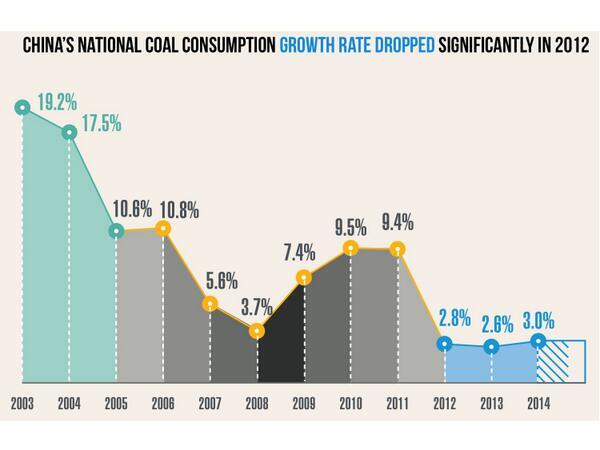
A report from Greenpeace charts slowing growth in China’s coal use.

Through much of its history, Greenpeace has been big on what I call “woe is me, shame on you” messaging on the environment. As I explained at a TEDx event in Portland, Ore., over the weekend, fingerpointing (including Greenpeace’s) is appropriate in many instances, but doesn’t work well with human-driven global warming. The blame game too often ends up resembling a circular firing squad.

This is why “The End of China’s Coal Boom,” a valuable new report from Greenpeace’s East Asia office, is so refreshing and worth exploring. I was led to it by a Twitter item from the group’s outgoing director, Phil Radford, that focused on a telling graphic:

View image on Twitter

via A Green Group Sees Hope in ‘The End of China’s Coal Boom’ – NYTimes.com – NYTimes.com.

Enhanced by Zemanta
06/03/2014

India’s SAIL-led group hopes to buy coal assets in Poland-chairman | Reuters

A consortium led by India’s Steel Authority of India Ltd, the country’s second-biggest steelmaker, hopes to buy coal assets in Poland in the next few months, Chairman C. S. Verma said on Thursday.

Steel Authority of India Limited

Steel Authority of India Limited (Photo credit: Wikipedia)

Most steel producers in India, the world’s third-largest coal importer, depend on overseas coal shipments and are trying to buy mines in Africa and Europe.

SAIL-led International Coal Ventures Private Ltd (ICVL), whose five participating firms are all state-owned or state-controlled, has been scouting for mines since 2009.

Verma said they had already invested in due diligence for the Polish assets.

JSW Steel Ltd, India’s third-largest steel maker, has already bought U.S. mines that produce the coal used in steel making.

India’s coal imports rose 21 percent to 152 million tonnes last year, with most of that being thermal coal used to generate power, according to Delhi-based research firm OreTeam. (Reporting by Krishna N Das; Editing by Jo Winterbottom)

via India’s SAIL-led group hopes to buy coal assets in Poland-chairman | Reuters.

Enhanced by Zemanta
06/03/2014

Coal India plans to set up power plant in 2015/16 | Reuters

The company has often said its output would be 300 million tonnes more than the current figure of about 475 million given enough rail tracks to carry the fuel from new and remote mines.

Insufficient connectivity is one of the reasons the company has lagged output targets for more than six straight years – leading to shortages at power producers and crippling outages.

“The country either needs coal or power,” said CB Sood, an executive director at the company. “If we are not able to evacuate coal, we should set up pit-head power plants.”

Speaking on the sidelines of a coal conference in the resort state of Goa, Sood said the company was seeking a joint venture partner to set up the plant.

via Coal India plans to set up power plant in 2015/16 | Reuters.

Enhanced by Zemanta
Law of Unintended Consequences

continuously updated blog about China & India

ChiaHou's Book Reviews

continuously updated blog about China & India

What's wrong with the world; and its economy

continuously updated blog about China & India