Archive for ‘air pollution’

16/02/2016

India and China Have Most Deaths From Pollution – China Real Time Report – WSJ

More than half of the 5.5 million deaths related to air pollution in 2013 happened in India and China, according to a new study.

About 1.4 million people in the South Asian nation and 1.6 million in its northern neighbor died of illnesses related to air pollution in 2013, researchers at the University of British Columbia in Canada said.

The Indian and Chinese fatalities accounted for 55% of such deaths worldwide, the study said.

Researchers studied risk factors for death and disease around the world and found that air pollution, both indoors and outdoors, was one of the leading contributors to global fatalities.

The inhalation of emissions from power plants, vehicles, the burning of crop stubble before replanting, and wood or open fires in homes are some of the leading causes of deaths from air pollution, the report said.

The number of premature deaths linked to air pollution worldwide will increase over the next two decades unless more aggressive targets are set to curb it, researchers studying India and China’s air said at a meeting Friday in Washington D.C.

A major contributor of poor air quality in India is linked to the burning of wood and cow dung for cooking and keeping warm, particularly in the winter months. These methods are popular among India’s rural and urban poor, who don’t have access to electricity or cleaner fuels.

Household air pollution from cooking with wood “is primarily a problem in rural areas of developing countries of the world,” said Michael Brauer, a professor at the University of British Columbia’s School of Population and Public Health, in Canada.

Over the past few months, levels of tiny insidious particles, known as PM 2.5, in the Indian capital New Delhi have often exceeded amounts deemed safe by the United Nations World Health Organization.

Taking their lead from Beijing, Indian authorities in January experimented with restricting cars on roads for two weeks in New Delhi to reduce emission levels. Delhi Chief Minister Arvind Kejriwal said Thursday the city would revive the restrictions for 15 days, starting April 15.

Scientists said vehicle emissions contribute only 20% to 40% of pollution in Delhi, saying other sources of the particulate matter include the burning of dung, rubbish and leaves and the use of diesel backup generators, which kick in when Delhi’s patchy electricity supply cuts out, as well as emissions from small-scale industries such as brick kilns.

A federal environmental court in New Delhi said Feb. 4 it wanted officials to improve air quality by asking authorities to reduce the number of traditional cremations that use wood to burn bodies, a widespread practice in majority Hindu India.

In China, outdoor air pollution from burning coal was found to be the biggest contributor to poor air quality, causing an estimated 366,000 deaths in the country in 2013. Scientists predict 1.3 million premature deaths will take place in China by 2030 if coal combustion remains unchecked.

“One of the unique things about air pollution is you cannot run, you cannot hide from it. We know that if you improve air quality everybody benefits, so from a health perspective reducing levels of air pollution is actually an incredibly efficient way to improve the health of the entire population,” Mr. Brauer said.

Source: India and China Have Most Deaths From Pollution – China Real Time Report – WSJ

01/01/2016

Launching of odd-even scheme in New Delhi: Overwhelmed by response of odd-even scheme, says Arvind Kejriwal – The Hindu

Delhi Chief Minister Arvind Kejriwal on Friday said he was “over-whelmed” by the response of people towards the odd-even scheme in New Delhi.

Delhi Chief Minister Arvind Kejrwal The scheme has been successful so far, the Aam Aadmi Party convenor said. “I am truly overwhelmed by the response we have received so far. There are very less even-numbered cars on the roads. The plan seems to have been successful,” Mr. Kejriwal told the media. He said the people of Delhi have accepted the scheme “whole-heartedly”, adding “I am confident that in next five years people will show the way to rest of the country”.
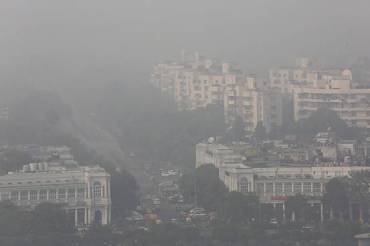
The odd-even scheme for private vehicles started in New Delhi on Friday. The move aims at reducing air pollution levels.

Source: Launching of odd-even scheme in New Delhi: Overwhelmed by response of odd-even scheme, says Arvind Kejriwal – The Hindu

10/12/2015

China to introduce tough emissions controls for ships | Reuters

China will introduce tough controls on ship emissions at three key port areas from January to reduce sulfur dioxide which results in acid rain, causing respiratory difficulties and sometimes premature death, said the Ministry of Transport.

Shipping containers are seen on a ship docked at a port in Rizhao, Shandong province, China, December 6, 2015. REUTERS/Stringer

If strictly implemented the move would force oil suppliers to increase the supply of cleaner marine fuel, industry experts said. The ministry gave no details on how the new emissions rules would be enforced or penalties for non-compliance.

The new rules will apply to merchant ships navigating or anchoring in the waters of Pearl River Delta, Yangtze River Delta and the Bohai Bay rim, with a goal to cut sulfur dioxide by 65 percent by 2020 from the 2015 level, according to a document issued by the Ministry of Transport.

Similar emissions control areas exist in the North Sea and the north American coast.

Ships berthed at ports within the three Chinese emissions control zones will start using bunker fuel with a maximum sulfur dioxide (SO2) content of 0.5 percent from January 2016, the ministry said.

Hong Kong made it mandatory in July for merchant ships to switch to fuel with a SO2 content of 0.5 percent from high sulfur fuel. Neighboring Shenzhen port launched a voluntary fuel switching scheme in July this year that is expected to cost 200 million yuan ($31.07 million) in subsidies over three years.

Enforcement of the new emission measures will initially be up to individual ports, but the controls will be toughened in 2017 to cover all key ports in the three control areas.

They will be tightened further from the start of 2019, when ships entering control zones, not just berthed or anchored, will have to use 0.5 percent SO2 bunker fuel or below. Fishing, sports and military vessels will be exempt, said the ministry.

Oil consultancy ICIS estimated that majority of fuel use in China’s shipping sector is currently using fuel with 1-2 percent SO2 content.

The International Maritime Organization (IMO), a U.N. body which regulates merchant shipping, plans to introduce a global cap on ship emissions in either 2020 or 2025.

The IMO will carry out a review in 2018 that will include an assessment of the availability of low-sulfur fuel that will be used to decide the actual implementation date.

Source: China to introduce tough emissions controls for ships | Reuters

10/12/2015

Why Delhi Doesn’t Have a Beijing-Style Response to Pollution – China Real Time Report – WSJ

The cities of Delhi and Beijing share a dubious honor as the world’s most-polluted capitals. But their response to dangerous levels of air pollution separates them.

Earlier this week, Beijing for the first time issued a red-alert for pollution, triggered when authorities forecast air-quality levels above 300 for at least three consecutive days.

On China’s government index, a measure of overall air quality, the maximum reading of 500, is described by the government as “severely polluted.” The Chinese administration immediately sent cars off the roads, shut factories and urged schools to close.

In Delhi, where air was similarly dirty, life went on as normal. The starkly different responses prompted some in the Indian capital to question why their government wasn’t taking Beijing-style measures to combat the smog. For sure, plans are underway in India to tackle the capital’s filthy air.

On Friday, Delhi’s government announced it would impose restrictions on the number of cars on its roads from Jan.1. Residents in the Indian city can look up air-pollution data on the website of The System of Air Quality and Weather Forecasting and Research, known as Safar, which uses data collected at 10 locations in the city. On that index, air quality in the city regularly hits “very poor” conditions when levels of PM 2.5 — insidious particles in the air including dirt, soot, smoke and liquid droplets — spike.

These tiny particles are thought to be particularly dangerous because they can lodge deeply in the lungs and cause inflammation, infection and lead to diseases including cancer. Readings on the Safar monitor are calibrated from “good” to “severe.” The Delhi Pollution Control Committee also publishes raw pollution data but doesn’t give qualitative readings alongside.

The U.S. Embassy, which measures pollution on monitors at its compound in the capital and around the country, warns the very young and elderly to remain indoors whenever air quality becomes what it calls hazardous. But none of the readings currently trigger alerts, or responsive action, by Delhi’s government. That’s because India is a democracy, said Ashwani Kumar, chairman of the Delhi Pollution Control Committee, an arm of the state government.

China, of course, is a one-party state. The idea that alerts should tell people to stay indoors when smog hits was  “absurd,” Mr. Kumar added, and people “should decide for themselves what to do with the pollution information.” However, he said the Delhi Pollution Control Committee does plan to introduce an app so that information is available to residents with smartphones. Less than 10% of Indians own a smartphone. It also proposes to install around 70 big screens in strategic locations around the city advising residents what they can do to reduce pollution, Mr. Kumar added. The idea of an environmental alert system is not alien to India.

Source: Why Delhi Doesn’t Have a Beijing-Style Response to Pollution – China Real Time Report – WSJ

10/12/2015

Raise the green lanterns | The Economist

WHEN world leaders gathered in Paris to discuss cutting planet-heating emissions, a pall of smog hung over Beijing. In parts of the capital levels of fine particulate matter reached 30 times the limit deemed safe.

Though air pollution and climate change are different things, Chinese citydwellers think of them in the same, poisoned breath. The murky skies seemed irreconcilable with the bright intentions promised in France.

Yet a marked change has taken place in China’s official thinking. Where once China viewed international climate talks as a conspiracy to constrain its economy, it now sees a global agreement as helpful to its own development.

China accounts for two-thirds of the world’s increase in the carbon dioxide emitted since 2000. It has come a long way in recognising the problem. When China first joined international climate talks, the environment was just a minor branch of foreign policy. The ministry for environmental protection had no policymaking powers until 2008. Only in 2012 did public pressure force cities to publish air-pollution data.

Yet today China pledges to cap carbon emissions by 2030 (reversing its former position that, as a developing power, it should not be bound to an absolute reduction); and it says it will cut its carbon intensity (that is, emissions per unit of GDP) by a fifth, as well as increase by the same amount the electricity generated from sources other than fossil fuels. The latest five-year plan, a blueprint for the Communist Party’s intentions that was unveiled last month, contains clear policy prescriptions for making economic development more environmentally friendly.

There’s more

Right after the Paris summit, however it ends, China is expected to make more promises in a new document, co-written by international experts, that presents a far-reaching programme of how China should clean up its act. It is based on models that account for both economic and political viability. On top of existing plans, such as launching a national emissions-trading scheme in 2017, the government may even outline proposals for a carbon tax, something that has eluded many prosperous countries in the West.

The big question is why China is now so serious about climate change. The answer is not that Communist leaders are newly converted econuts. Rather, they want to use environmental concerns to rally domestic support for difficult reforms that would sustain growth in the coming decades. Since a global slowdown in 2008 it has become clear that to continue growing, China must move its economy away from construction and energy-intensive industry towards services. At the same time, China faces an energy crunch. For instance, in recent years China has been a net importer of coal, which generates two-thirds of China’s electricity. It all argues for growth plans that involve less carbon.

This is where signing international accords, such as the one hoped for in Paris, come in, for they will help the government fight entrenched interests at home. Observers see a parallel with China’s joining the World Trade Organisation in 2001. It allowed leaders to push through internal economic reform against fierce domestic opposition. In the same way, a global climate treaty should help it take tough measures for restructuring the economy.

It will not be easy. Provincial party bosses and state-owned enterprises hate to shut factories, particularly in those parts of the country, such as Shanxi and Inner Mongolia in the north, where coal is a big employer. Cutting demand for energy is even harder. Even if the amount of electricity used by state industry falls, that used by private firms and households is bound to increase. What is more, environmental regulations and laws laid down by the centre are routinely flouted.

But cleaning up China’s act has, for the central government, become a political necessity too. Environmental issues have been major public concerns for over a decade, says Anthony Saich of Harvard University, which has conducted polls. True, rural people fret most (and with good reason) about water pollution. But those in the cities gripe about their toxic air. Both represent a reproach to the government over its neglect of people’s lives and health.

That is why national economic goals, political goals, public opinion and international pressure all point towards trying to cut emissions, pollutants included. In particular, says Zhang Zhongxiang of Tianjin University, now that dealing with climate change is a pillar of China’s diplomacy, the government must show it can keep its promises. It has some tools at its disposal. Across the country, the environmental record of government officials has become a crucial part of their evaluation by the Communist Party; and cadres will be held account

Source: Raise the green lanterns | The Economist

30/11/2015

Smog chokes Chinese, Indian capitals as climate talks begin | Reuters

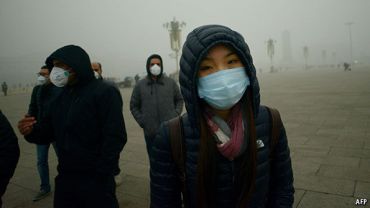
The capitals of the world’s two most populous nations, China and India, were blanketed in hazardous, choking smog on Monday as climate change talks began in Paris, where leaders of both countries are among the participants.

China’s capital Beijing maintained an “orange” pollution alert, the second-highest level, on Monday, closing highways, halting or suspending construction and prompting a warning to residents to stay indoors.

The choking pollution was caused by the “unfavourable” weather, the Ministry of Environmental Protection said on Sunday. Emissions in northern China soar over winter as urban heating systems are switched on and low wind speeds have meant that polluted air has not been dispersed.

In New Delhi, the U.S. embassy’s monitoring station recorded an air quality index of 372, which puts air pollution levels well into “hazardous” territory. A thick smog blanketed the city and visibility was down to about 200 yards (metres).

Air quality in the city of 16 million is usually bad in winter, when coal fires are lit by the poor to ward off the cold. Traffic fumes, too, are trapped over the city by a temperature inversion and the lack of wind.

However, the government has not raised any alarm over the current air quality and no advisories have been issued to the public. Thirty thousand runners took part in a half marathon at the weekend, when pollution levels were just as high.

In Beijing, a city of 22.5 million, the air quality index in some parts of the city soared to 500, its highest possible level. At levels higher than 300, residents are encouraged to remain indoors, according to government guidelines.

The hazardous air underscores the challenge facing the government as it battles pollution caused by the coal-burning power industry and will raise questions about its ability to clean up its economy at the talks in Paris.

Chinese President Xi Jinping and Indian Prime Minister Narendra Modi are both in Paris and both were scheduled to meet U.S. President Barack Obama on Monday to give momentum to the two-week negotiations.

Source: Smog chokes Chinese, Indian capitals as climate talks begin | Reuters

Law of Unintended Consequences

continuously updated blog about China & India

ChiaHou's Book Reviews

continuously updated blog about China & India

What's wrong with the world; and its economy

continuously updated blog about China & India