Chindia Alert: You’ll be Living in their World Very Soon
aims to alert you to the threats and opportunities that China and India present. China and India require serious attention; case of ‘hidden dragon and crouching tiger’.
Without this attention, governments, businesses and, indeed, individuals may find themselves at a great disadvantage sooner rather than later.
The POSTs (front webpages) are mainly 'cuttings' from reliable sources, updated continuously.
The PAGEs (see Tabs, above) attempt to make the information more meaningful by putting some structure to the information we have researched and assembled since 2006.
People work at a construction site of a utility tunnel in Wuhan, central China’s Hubei Province, April 30, 2020. (Xinhua/Xiao Yijiu)
BEIJING, May 1 (Xinhua) — China is getting the world’s largest workforce back to work as the nationwide battle against COVID-19 has secured major strategic achievements.
The unprecedented fight has nurtured new trends in the workplace. For example, more attention is being paid to public health and e-commerce to boost consumption and emerging sectors brought by new applications based on the country’s rapid new infrastructure development of 5G networks and data centers.
In this aerial photo taken on April 29, 2020, representatives of frontline health workers fighting COVID-19 attend a bell-ringing ceremony at the Yellow Crane Tower, or Huanghelou, a landmark in Wuhan, central China’s Hubei Province. (Xinhua/Xiao Yijiu)
ANGELS OF PUBLIC HEALTH
Ye Man, head nurse of gastrointestinal department of Hubei General Hospital East District, one of the five remaining COVID-19 designated hospitals in Wuhan, is taking her first weeklong vacation since January.
The 34-year-old mother of two started to take a week off on Monday, one day after her hospital cleared all remaining confirmed COVID-19 patients. The nine ICU wards in her hospital had been kept occupied over the past several months.
Friday marked International Workers’ Day, and the start of China’s five-day public holiday. Ye said she planned to visit urban parks with her family during the holiday.
At her busiest point, she and her colleagues took care of a ward filled with 40 COVID-19 patients.
“It was a really tough time,” she recalled. She had to wear a protective gown and a mask for nine hours a day and be separated from her family to avoid possible cross-infections.
Wuhan, capital of central China’s Hubei Province and once hard hit by COVID-19, cleared all confirmed cases in hospitals on April 26. Over 42,000 medical workers mobilized nationwide to aid Hubei have contributed to achieving a decisive outcome in the fight to defend Hubei and Wuhan.
In an inspection tour to Wuhan on March 10, President Xi Jinping, also general secretary of the Communist Party of China Central Committee and chairman of the Central Military Commission, lauded medical workers as “the most beautiful angels” and “messengers of light and hope.”
To reward brave and dedicated medics, major tourist sites in Hubei are offering free entry to medical staff over the following two years.
Chinese President Xi Jinping, also general secretary of the Communist Party of China Central Committee and chairman of the Central Military Commission, learns about development of the black fungus industry in Jinmi Village of Xiaoling Township in Zhashui County, Shangluo City, northwest China’s Shaanxi Province, April 20, 2020. (Xinhua/Xie Huanchi)
LIVESTREAMING ANCHORS
“We have a new batch of supplies today. Those who did not get the goods should hurry to buy now,” said Li Xuying, a livestreaming anchorwoman selling agaric mushrooms in Zhashui, a small county deep in the Qinling Mountains in northwest China’s Shaanxi Province.
Li has been prepared for a boom of online shopping in the holiday, because online buyers rushed to her livestreaming website to place orders, after Xi inspected the county and chatted with her in the village of Jinmi during a recent tour to Shaanxi.
“I used to sell goods worth about 50,000 yuan (7,070 U.S. dollars) on average after a six-hour livestreaming session. Now the sales are 10 times that,” she said.
Li was one of the 10 sales staff sent by the local agricultural e-commerce firm to Chinese e-commerce platform Taobao’s headquarters for livestreaming training. She said livestreaming is effective in bridging buyers and farmers, through which viewers can watch planting and harvesting online.
With the number of netizens in China reaching 904 million in March, e-commerce has been one of the popular means of promoting the sale of farm produce and helping farmers shake off poverty. Despite the impact of COVID-19, the country is determined to eradicate absolute poverty by the end of this year.
Workers work at the construction site of a 5G base station at Chongqing Hi-tech Zone in Chongqing, southwest China, April 15, 2020. (Xinhua/Wang Quanchao)
HI-TECH WORKERS IN “NEW INFRASTRUCTURE” BUILDING
As an elasticity calculation engineer of Alibaba Cloud, Zhao Kun and his colleagues always stay on alert for high data flow, for example, brought by the anticipated online shopping spike during the holiday.
“The profession, which may sound obscure, is actually closely connected to everyone’s life, as cloud computing is the infrastructure supporting high-tech applications of artificial intelligence and blockchain,” said Zhao.
The Chinese leadership has underscored expediting “new infrastructure” development to boost industrial and consumption upgrading and catalyze new growth drivers.
Seizing the opportunities of industrial digitization and digital industrialization, China needs to expedite the construction of “new infrastructure” projects such as 5G networks and data centers, and deploy strategic emerging sectors and industries of the future including the digital economy, life health services and new materials, President Xi has said.
During the epidemic, Zhao and his colleagues expanded more than 100,000 cloud servers to ensure the stable operation of “cloud classrooms” and “cloud offices” for millions of people working and studying from home.
In the “new infrastructure” building, people like Zhao contribute to constructing the virtual infrastructure of an ecosystem, which enables e-commerce, e-payment, online teaching and the digital transformation of manufacturing and supply chain management.
In early April, China released a plan on promoting the transformation of enterprises toward digitalization and intelligence by further expanding the application of cloud and data technologies, to nurture new business models of the digital economy.
Observers say domestic issues prompted Kremlin to tighten environmental protection around the lake in Siberia, but Chinese activities also played a part
Businesses catering to growing number of visitors from China may be easy scapegoats as they are ‘among the most visible because they are foreign’
A growing number of Chinese tourists are visiting Lake Baikal in Siberia. Photo: Shutterstock
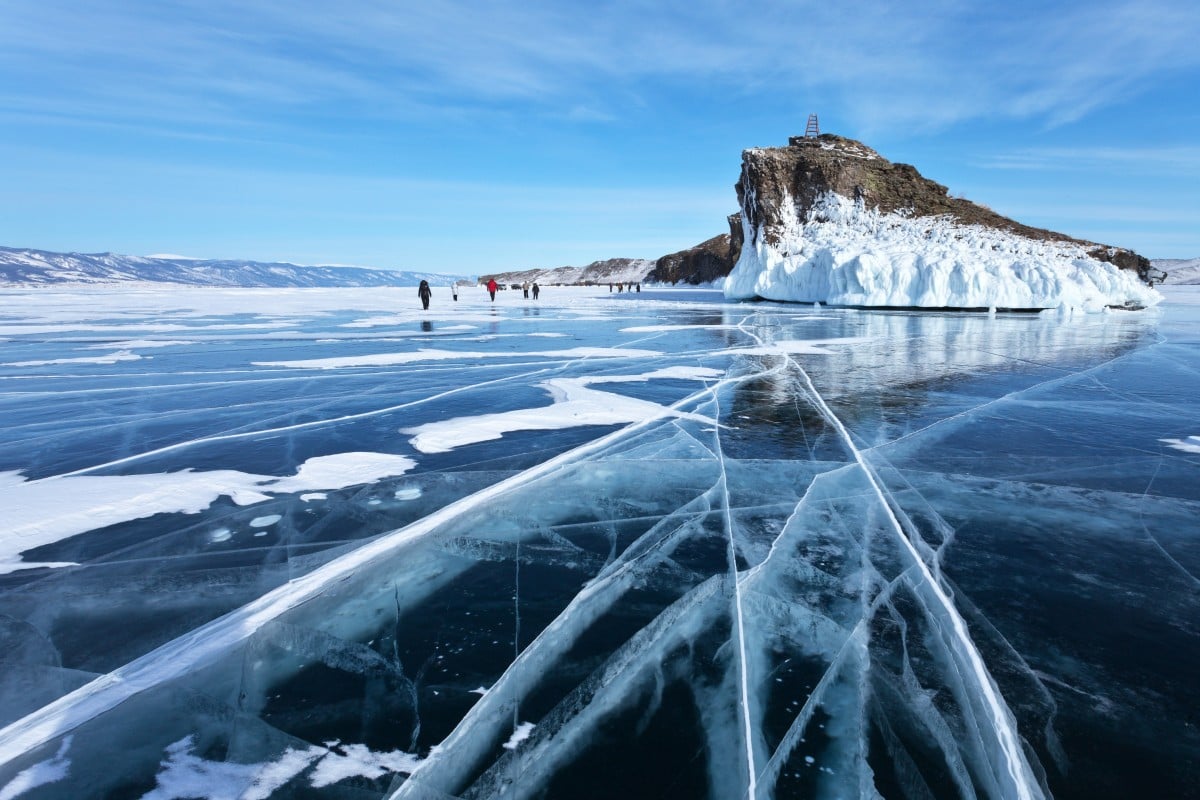
Russia has tightened environmental protection around Lake Baikal amid growing concerns over degradation, with Chinese development and tourism at the heart of recent debates on the nationally treasured Siberian lake.
New protocols signed by President Vladimir Putin on September 12 clarify how authorities will monitor “compliance with the law on Lake Baikal’s conservation and environmental rehabilitation”.
They also call for improved state environmental monitoring of the lake’s unique ecosystem, aquatic animal and plant life; prevention of and response to risks; analysis of the pressure from fishing on its biological resources; as well as measures to conserve those unique aquatic resources.
Observers say domestic issues – including a backlash over the government’s hand in accelerating environmental damage – prompted the Kremlin to act, but concerns over Chinese activities in the area also played a part.
Eugene Simonov, coordinator of the Rivers Without Boundaries International Coalition, said the protocols were a bid by Moscow to show it was concerned about the lake, where mismanagement and relaxed standards had damaged water quality and the ecosystem – drawing concern from Unesco, which has designated it a World Heritage Site.
But it was also related to local concerns that an influx of Chinese money and tourists in the region was making matters worse.
“One of the leading causes of problems on Lake Baikal is the development of the lake shore for tourism these days, which, at least in the Irkutsk region, is greatly driven by Chinese business,” said Simonov, who has worked extensively on the area’s environmental issues.
He pointed to the “not legal” hotels opened by local and Chinese businesses that cater to the increasing number of tourists from China, saying they stood out as easy scapegoats.
“The real driving force is the desire of locals to privatise the lake shore, illegally, but the Chinese demand is one of the reasons they want to privatise it, while Chinese businesses are among the most visible because they are foreign,” he said.
Public opposition to a water bottling plant being built by a Chinese-owned company pushed local authorities to halt the project in March. Photo: Weibo
Some 186,000 Chinese tourists visited the region last year, up 37 per cent from 2017, according to official Irkutsk figures. But while they accounted for about two-thirds of foreign visitors to the Irkutsk region, they made up only about 10 per cent of the 1.7 million tourists who visited last year.
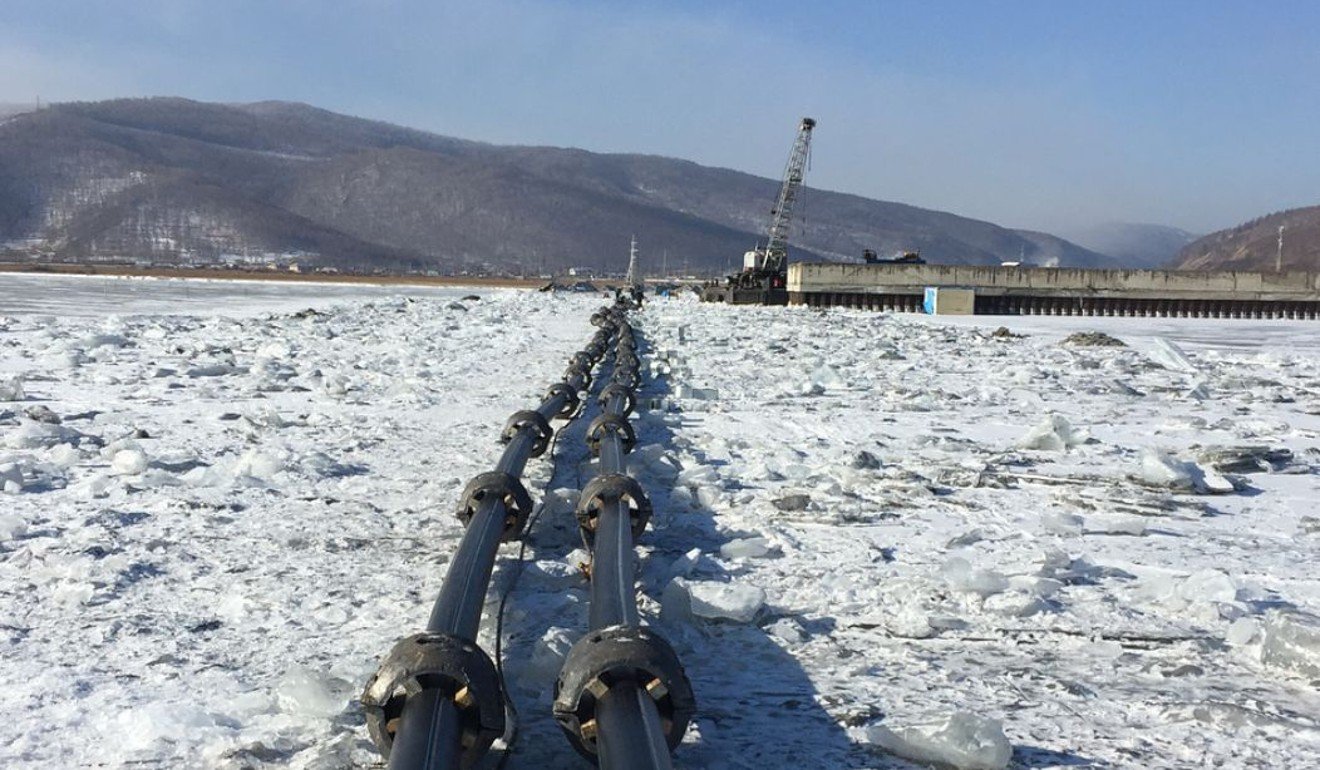
Concern about Chinese investment and development in the region reached a crescendo in March, when public opposition pushed local authorities to halt the construction of a water bottling plant operated by AquaSib, a Russian firm owned by a Chinese company called Lake Baikal Water Industry, based in China’s Heilongjiang province.
The Irkutsk government acted after more than a million people – more than the city’s population – signed a petition calling for the “Chinese plant” to be halted.
Adventures in the frozen wilderness: a Hong Kong man’s trek across icy Lake Baikal
“There were at least 10 problems [around Lake Baikal] that were much more important at that moment, but it was the Chinese plan that was the focus,” Simonov said, noting the nationalism surrounding the lake as a Russian point of pride.
Paul Goble, a Eurasia specialist who has been tracking the issues at Lake Baikal, said stirring up resentment over Chinese encroachment in Siberia and the country’s Far East had long been a government tactic to quell dissent and unite popular opinion.
But he said the new protocols showed Moscow realised that locals – facing the effects of a deteriorating environment including deforestation driven by China’s domestic market demand – may not be satisfied with that explanation.
Chinese Premier Li Keqiang and Russian Prime Minister Dmitry Medvedev exchange documents after talks in St Petersburg on Tuesday. Photo: AFP
“People are angry not at China, as might have been the case a year ago or more, but they are angry at Moscow for not standing up to China and what it’s doing,” he said, pointing to this as the reason the Kremlin tightened environmental controls on the lake.
Concerns about the impact of Chinese activities on Russia’s environment come as the two neighbours are playing up closer diplomatic and economic ties. One of the outcomes of a
between Chinese Premier Li Keqiang and Russian heads of state last week was an agreement to increase bilateral trade to more than US$200 billion over the next five years.
But how that investment could be sustainable for Russia – a key supplier of raw materials needed by China such as oil, gas and timber – remained to be seen, observers said.
Are Chinese tourists the greatest threat to Lake Baikal?
“Our great relationship is going well, but we have not seen the accompanying rise in Chinese foreign direct investment into Russia – that remains very small, despite all the talk,” said Artyom Lukin, an associate professor with the School of Regional and International Studies at Far Eastern Federal University in Vladivostok.
“Russia is not satisfied with that, they would like to see more Chinese money, more Chinese greenfield investment coming into Russia, into more productive areas of the Russian economy, not just into the extraction sector like oil, timber or coal,” he said.
Lake Baikal has been seen as an area that could draw a lot of Chinese investment. Back in 2016 there were reports of a tourism development deal, worth up to US$11 billion, between Russian operator Grand Baikal and a consortium of Chinese firms, according to Russian state media reports.
But so far most development from Chinese businesses has remained at the small and medium scale.
The reasons for that, according to experts, range from the difficulty of competing with powerful local rivals and the need to tread carefully around anti-China sentiment.
However, the burden and liability of complying with environmental standards also kept operations at a smaller scale.
China and Russia: a fool’s errand for Trump to try to come between them
“It’s simpler and easier to operate smaller businesses and facilities, and it’s easier to monitor and manage them,” said Vitaly Mozharowski, a partner at Bryan Cave Leighton Paisner in Moscow, who specialises in environmental law, noting that concerns included management of waste water and garbage.
Meanwhile, big complexes were obvious targets for scrutiny, and that would only increase with the new protocols in place, Mozharowski said. “Any large-scale initiatives would be considered from the very top of the Russian establishment,” he said.
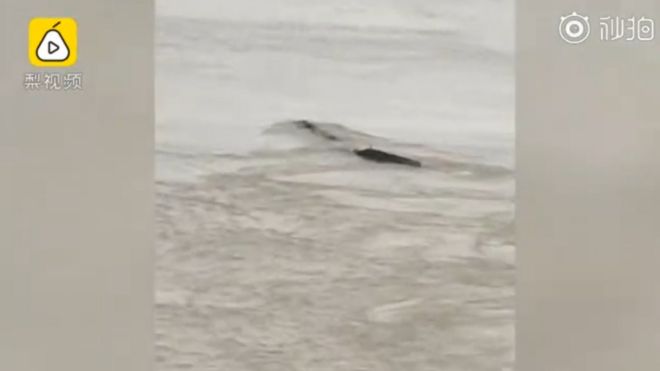
Image copyright PEAR VIDEOImage caption Grainy footage showed something that appeared to have a tail slithering back and forth in the water
Something is lurking in the deep in China’s famous Yangtze River – and social media discussion is rife over what it might be.
On Friday, footage appeared on China’s popular Sina Weibo microblog of what appeared to be a long, black creature, manoeuvring through the waters, and it has dominated online discussion ever since.
Footage has quickly racked up millions of views, and theories are rife.
Specialists have weighed in – but some think there may be a simple, and less murky, explanation.
Excitement over footage
A video filmed off the coast of the city of Yichang in western Hubei province, close to the Three Gorges Dam, captured the unusual scene.
Locals are filmed watching the creature from the shore – and social media users have similarly been captivated over theories about what the creature might be.
Many have posted using the hashtag #ThreeGorgesMonsterPhotos, and specialists have begun to weigh in with their thoughts.
In an interview with Pear Video, Professor Wang Chunfang from the Huazhong Agricultural University dismissed the idea of it being a new species, saying it was likely a simple “water snake”.
Some users said that “external factors such as pollution” could have a role to play in a sea snake growing to an extraordinary size. But not everyone was convinced.
Separate footage has led some users to question whether the unidentified object is actually a living creature at all.
Image copyright THE PAPERImage caption Millions have watched footage of the item, but some think it might be a piece of simple rubbish
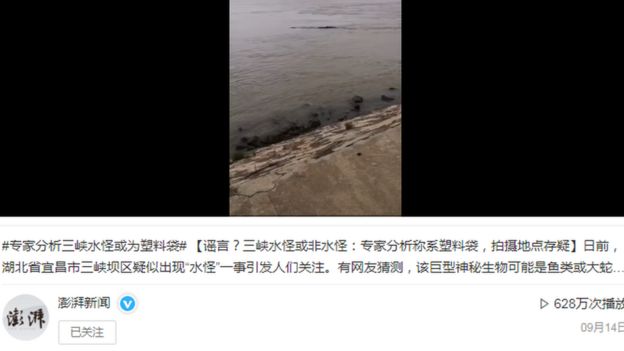
Popular news website The Paper shared separate footage of something long and black moving in the water that appeared to be less animated.
It asked if the whole thing was simply “a rumour” – and interviewed a biologist, Ding Li, who said that the object was neither a fish nor a snake, but simply “a floating object”.
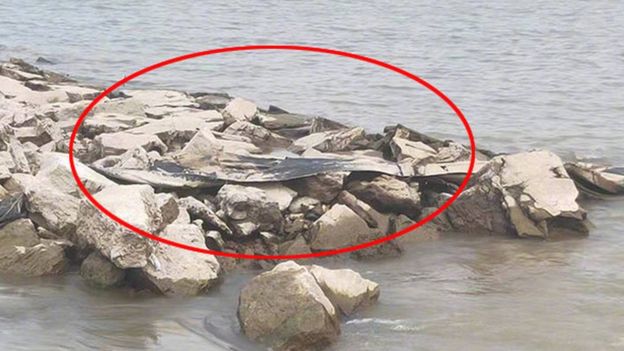
A picture has since gone viral showing a long piece of black cloth washed up on some rocks, fuelling discussion this might have been the mysterious object.
Image copyright THE PAPERImage caption The appearance of some cloth washed up on some rocks has got users asking if they were mistaken
Both have led to jokes about whether the local government was trying to attract tourism to the area, given the millions of dollars involved in building and maintaining the Three Gorges Dam.
Others have made jokes about the quality of the footage, despite the rapid development in China of high quality smartphones.
Some joked that the user obviously didn’t have a Huawei phone. Another said: “Monsters always appear only when there are few pixels.”
So what does live in the Yangtze?
Image copyright AFPImage caption Giant Chinese salamanders live in the Yangtze river. They can grow to 1.8 metres in length
The Yangtze River is the longest river in Asia, and at 3,900 miles in length (6,300km), is the third longest in the world.
But pollution has severely affected the river in recent years, meaning that its ecosystem has become narrower, rather than wider.
The largest creature thought to exist in the waters at present is the Chinese giant salamander, which can reach some 1.8m in length.
This species is critically endangered, largely as a result of pollution.
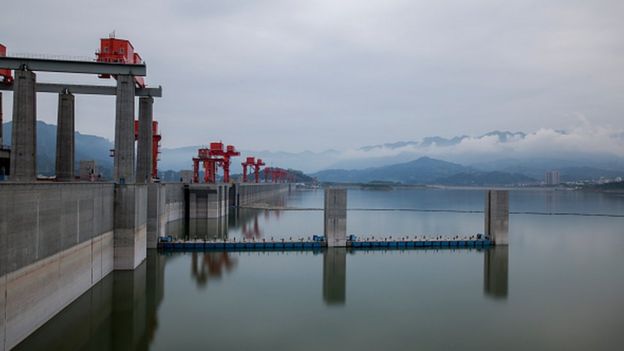
Image copyright ZHANG PENG/GETTY IMAGESImage caption The Three Gorges Dam is the world’s latest hydroelectric dam
China’s other ‘Nessies’
China is no stranger to conspiracy theories about mythical creatures lurking in the deep.
Since 1987, questions have been asked about whether a “Lake Monster” exists in the Kanas Lake in north-western Xinjiang, following numerous reports of sightings.
However, specialists believe that this is a giant taimen, a species of salmon that can grow to 180cm long, the official China Daily said.
LHASA, March 6 (Xinhua) — To conserve the ecosystem while eradicating poverty, southwest China’s Tibet Autonomous Region hired 309,000 farmers and herders as forest rangers in 2018, bringing the total number of people engaged in environmental protection to 667,000.
Average annual subsidies in the jobs increased to 3,500 yuan (522 U.S. dollars), according to the regional department of ecology and environment.
Last year, Tibet invested 10.7 billion yuan in environmental protection funds, with 74,133 hectares of trees planted and forest coverage rising to 12.14 percent.
The region also invested 100 million yuan in enhancing the ecology along the upper reaches of the Yangtze, China’s longest river.
“Protecting the forests is equal to protecting our homeland,” said a local Tibetan forest ranger.
The implementation of a series of measures contributed to environmental protection, making Tibet one of the areas with the best ecological environment in the world, authorities said.
China’s skies may be toxic, and its rivers fetid and prone to sudden infestations of pig carcasses. But according to a new study, the country’s environmental battle has also been making quiet, measurable progress.
The paper, a collaboration between U.S. and Chinese researchers published in this week’s issue of Science, found that China’s ecosystems have become healthier and more resilient against such disasters as sandstorms and flooding. The authors partly credit what they describe as the world’s largest government-backed effort to restore natural habitats such as forests and grasslands, totaling some $150 billion in spending since 2000.
“In a more and more turbulent world, with climate change unfolding, it’s really crucial to measure these kinds of things,” says Gretchen Daily, a Stanford biology professor and a senior author on the paper.
The study didn’t examine air, water or soil quality, all deeply entrenched problems for the country.
Beijing’s investments in promoting better ecosystem protection were triggered after a spate of disasters in the 1990s. In particular, authors note, two decades after China started to liberalize its economy, rampant deforestation and soil erosion triggered devastating floods along the Yangtze River in 1998, killing thousands and causing some $36 billion in property damage.
The government subsequently embarked on an effort to try to forestall such environmental catastrophes. According to the study, in the decade following, carbon sequestration went up 23%, soil retention went up 13% and flood mitigation by 13%, with sandstorm prevention up by 6%.
The paper also involved authors from the Chinese Academy of Sciences and the University of Minnesota, among other institutions. Data was collected by remote sensing and a team of some 3,000 scientists across China, said Ms. Daily, who praised the “big-data” approach to tracking the quality of China’s ecosystems.
“The whole world is waking up to the need to invest in natural capital as the basis for green growth,” she said.
Reforestation was one particular bright spot, she said. Under the country’s founding father, Mao Zedong, China razed acres of forests to fuel steel-smelting furnaces. To reverse the trend–and combat creeping desertification in the country’s north — the country embarked on a project in 1978 to build a “Great Green Wall” of trees. Today, authorities say that 22% of the country is covered by forest, up 1.3 percentage points compared with 2008.
The authors note that the study has limits. While China has reported improving levels of air quality in the past year, urban residents still choke under regular “airpocalypses.” The majority of Chinese cities endure levels of smog that exceed both Chinese and World Health Organization health standards.
“You can plant trees till the end of time,” says Ms. Daily. “But they’ll never be enough to clean up the air.”






 CHINDIA ALERT: You'll be living in their world, very soon