Archive for ‘Infrastructure’

15/05/2012

* No storage space for bumper harvest, warns food ministry

Times of India: “Food Corporation of India FCI has warned that unless the government can distribute 750 lakh tonnes of food grain, there will be no storage space for the bumper harvest being currently procured, the food ministry told Rajya Sabha on Monday.

The crisis of plenty has been engaging the government for a while as it is under pressure to distribute food grain to the poor or intervene in some manner to cool inflation and the FCI alarm provides the clearest indication of the scale of the problem.”

via No storage space for bumper harvest, warns food ministry – The Times of India.

This problem is not new and once again the inability of the Indian government to anticipate and solve a recurring problem makes it hard to believe what some economists say that India will overtake China in economic terms in the latter half of this century.

Related posts: 

27/04/2012

* China Wants More Trade With Central and Eastern Europe

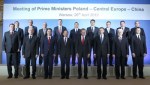
New York Times: “Prime Minister Wen Jiabao said Thursday that China wanted to double trade with the countries of Central and Eastern Europe to $100 billion a year by 2015, and pledged billions in loans to help promote investment in the region.

Mr. Wen made the announcement at a gathering in Warsaw that brought together business and political leaders of countries stretching from the Baltics to the Balkans that are eager to do business with China, even as they struggle to overcome stereotypes still held by many in the region who associate the Chinese as makers of inexpensive toys and designer knock-offs.

Infrastructure, high technology and green technology are target areas for growth, Mr. Wen said, announcing that Beijing would set up a $10 billion line of credit to support investment in these specific industries. He also pledged an additional $500 million in funds to be made available to Chinese companies seeking to make first-stage investment in the region.”

via China Wants More Trade With Central and Eastern Europe – NYTimes.com.

China continues to woo everyone. And Mr Wen is making himself very busy in his final year in office.

Related post: https://chindiapedia.wordpress.com/wp-admin/post.php?post=5753&action=edit

https://chindia-alert.org/political-factors/geopolitics-chinese/

25/04/2012

* Four men move a mountain for their offspring

Snowy mountains (probably 'white-horse mountai...

Snowy mountains Yunnan, China (Photo credit: Wikipedia)

China Daily: “For years the people of Zhongzhai village, Wenshan, Yunnan province, have been blocked from the outside world by a mountain. But after six years, four men have finally carved a five kilometer stretch out of the remote mountainous area.

The four families endured years of hardship, one man even partly losing the function of his hand, spending all their saving on clearing the hilly road and building an enormous debt of 80,000 yuan $11,895 despite each family only earning 500 yuan a year. But the group – who have been dubbed the “Modern Yu Gong” say it has all be worth it, “As long as our children get a way to go to school,” said one.

Yu Gong was an old man in Chinese fable who was determined to dig away two big mountains in front of his family home, which caused his family great inconvenience. His famous words read: “I will soon be dead, but I have children, and when my children are dead, there are still my grandchildren. My family will grow and grow and the mountain will get smaller and smaller. With such determination, surely it is possible to move the mountains!”

via Four men move a mountain for their offspring[1]|chinadaily.com.cn.

It so happens that Yu Gong Yi Shan – Foolish Old Man Moves Mountains was one of Chairman Mao’s favourite fables. Fortunately, his successor Deng Xiaoping and his successors followed through with this endeavour – http://www.imdb.com/title/tt1312185/plotsummary

23/04/2012

* Solar giant turns the desert green and blue in Gujarat

The Times, London: “Asia’s mightiest solar power farm has been switched on in the Indian desert state of Gujarat. It is part of a drive to transform the region into one of the world’s leading green energy producers and to provide electricity to some of the 400 million people who still have no access to it.

The Gujarat Solar Park, which spans a remote 3,000 acres near the border with Pakistan, started generating 214 megawatts of electricity, sufficient to power 90,000 British households, over the weekend. The huge array of solar panels outstrips China’s 200MW Golmud Solar Park as the biggest in Asia. An official said that eventually the facility would reach a capacity of 1,000MW (edit – equivalent to a nuclear power station), bigger than any other single existing solar power plant in the world.

India, which is heavily dependent on imported coal, oil and gas for its energy requirements, is still chronically short of electricity and is aiming to build 20,000 megawatts of solar capacity by 2020.”

via Solar giant turns the desert green and blue in Gujarat | The Times.

16/04/2012

* US Alert as China’s Cash Buys Inroads in Caribbean

New York Times: “A brand new $35 million stadium opened here in the Bahamas a few weeks ago, a gift from the Chinese government. The tiny island nation of Dominica has received a grammar school, a renovated hospital and a sports stadium, also courtesy of the Chinese. Antigua and Barbuda got a power plant and a cricket stadium, and a new school is on its way. The prime minister of Trinidad and Tobago can thank Chinese contractors for the craftsmanship in her official residence.

China’s economic might has rolled up to America’s doorstep in the Caribbean, with a flurry of loans from state banks, investments by companies and outright gifts from the government in the form of new stadiums, roads, official buildings, ports and resorts in a region where the United States has long been a prime benefactor.

The Chinese have flexed their economic prowess in nearly every corner of the world. But planting a flag so close to the United States has generated intense vetting — and some raised eyebrows — among diplomats, economists and investors. “When you’ve got a new player in the hemisphere all of a sudden, it’s obviously something talked about at the highest level of governments,” said Kevin P. Gallagher, a Boston University professor who is an author of a recent report on Chinese financing, “The New Banks in Town.”

Most analysts do not see a security threat, noting that the Chinese are not building bases or forging any military ties that could invoke fears of another Cuban missile crisis. But they do see an emerging superpower securing economic inroads and political support from a bloc of developing countries with anemic budgets that once counted almost exclusively on the United States, Canada and Europe.

China announced late last year that it would lend $6.3 billion to Caribbean governments, adding considerably to the hundreds of millions of dollars in loans, grants and other forms of economic assistance it has already channeled there in the past decade. Unlike in Africa, South America and other parts of the world where China’s forays are largely driven by a search for commodities, its presence in the Caribbean derives mainly from long-term economic ventures, like tourism and loans, and potential new allies that are inexpensive to win over, analysts say.

American diplomatic cables released through WikiLeaks and published in the British newspaper The Guardian quoted diplomats as being increasingly worried about the Chinese presence here “less than 190 miles from the United States” and speculating on its purpose. One theory, according to a 2003 cable, suggested that China was lining up allies as “a strategic move” for the eventual end of the Castro era in Cuba, with which it has strong relations.

via U.S. Alert as China’s Cash Buys Inroads in Caribbean – NYTimes.com.

While the US is trying to encroach on China’s backyard with military alliances with Australia and other South Pacific nations, China is encroaching the US backyard too, but with stadiums, roads and other civilian projects.

30/03/2012

* Senior leader underlines infrastructure building in Xinjiang

Maps of Xinjiang Uygur Autonomous Region of Ch...

Maps of Xinjiang Uygur Autonomous Region of China Español: Región autónoma de Xinjiang (Photo credit: Wikipedia)

Xinhua: “Senior Chinese leader Zhou Yongkang on Thursday demanded infrastructure be improved in the western Xinjiang Uygur autonomous region through projects supported by central government.

Zhou, a member of the Standing Committee of the Political Bureau of the Communist Party of China CPC Central Committee, urged authorities to give more support to the construction of major projects in the region, including irrigation systems, reservoirs, railways, electricity and natural gas schemes. Antiquated public facilities had created a major bottleneck constraining the regions development, Zhou said at a meeting attended by representatives from the National Development and Reform Commission, the central bank, and ministries of finance, railways, and water resources. These departments and a group of large state-owned enterprises and commercial banks have been tasked to assist the projects.

Three Uyghur girls at a Sunday market in the o...

Zhou called for more financial support and administrative coordination to push forward these projects, which he said will help enhance the regions capability of self-initiated development, ensure sound economic and social development, and create more jobs. The projects should benefit Xinjiang by improving people’s livelihoods, promoting ethnic solidarity and maintaining social stability, according to Zhou. He also demanded efforts to avoid illegal land use, prevent excessive exploitation of resources and protect the environment in Xinjiang.”

via Senior leader underlines infrastructure building in Xinjiang – Xinhua | English.news.cn.

17/02/2012

* China resumes rail building

China Daily: “With 3,500 kilometers of new high-speed railways expected to be put into use this year, the length of China’s high-speed railways will exceed 10,000 kilometers, a senior railway official said.

One of the four arteries, the Beijing-Shanghai line, opened in June. The others will connect Beijing and Guangzhou in South China, Beijing and Harbin in Northeast China, and cities on the southeast coast with high-speed railways.”

http://europe.chinadaily.com.cn/china/2012-02/17/content_14631260.htm

The official reason for the delay was funding shortages. That may be so, but another reason was the high profile crash in July 2011 at Wenzhou due to design fault and, possibly, human error. http://www.chinadaily.com.cn/china/2011-12/29/content_14346798.htm

Law of Unintended Consequences

continuously updated blog about China & India

ChiaHou's Book Reviews

continuously updated blog about China & India

What's wrong with the world; and its economy

continuously updated blog about China & India