13/06/2012
BBC News: “Bankrupt carmaker Saab has been sold to a Chinese-Swedish investment group which aims to turn the company into a maker of electric vehicles. Saab’s administrator said the buyer was National Electric Vehicle Sweden (Nevs). No sale price was given. Saab went bankrupt in December, two years after former owner General Motors sold it to Dutch group Spyker.
Saab “will start a new operation” to develop and produce electric cars, the administrator said in a statement.
The administrator said in April that Saab had assets to cover about a third of its debts of 13bn kronor (£1.2bn).
The chief executive and main owner of Nevs is a Chinese businessman with Swedish citizenship, Kai Johan Jiang.  The chairman of Nevs is Karl-Erling Trogen, a former head of the truck division of truck and construction equipment maker Volvo.
“Nevs and the receivers of the Saab Automobile bankruptcy estate today signed a purchase agreement which covers the main assets of Saab Automobile AB, Saab Automobile Powertrain AB and Saab Automobile Tools AB,” Nevs and the administrators said in a joint statement.
Saab employs about 3,000 people, with its main base at Trollhattan, west Sweden, where investment in new electric car manufacturing will be made.”
via BBC News – Saab sold to Chinese-Swedish investment group.
Posted in China alert, Economics, Investment in tangibles, Manufacturing |
Leave a Comment »
30/05/2012
Hong Kong’s Singtao Daily reports: According to South Korea’s “Korean Daily”, the Chinese government is issuing work visas to allow 20,000 North Koreansto work in the three Northeast provinces.
The Korean paper cites diplomatic sources in Seoul, that in order to ease the labour shortage in the three Northeast provinces, the authorities have decided to let in 20,000 North Korean labourers to work as “industrial study students”. An enterprise in Tulin, Jilin Province has recently employed 29 North Korean women and another batch of 160 North Korean women will be sent to that area. Sources say the monthly pay for a North Korean worker exceeds US$150.
In my previous posts on Sino-North Korean and US-North Korean relations, I said that China would be benefited from North Korea’s isolation in exploiting North Korea’s cheap labour and rich natural resources. It seems this process has now begun on quite a large scale.
From China Daily Mail blog: First batch of 20,000 North Korean workers in China.
Posted in China alert, Economics, Labour, Manufacturing |
Leave a Comment »
07/05/2012
WSJ: “Personal-computer maker Lenovo Group Ltd. said Monday that it plans to spend about $800 million on a new base to house the development, production and sale of mobile products as the Chinese company tries to expand beyond its core PC business.

Lenovo Ideapad U8 MID example (Photo credit: Wikipedia)
Lenovo, the world’s second-largest PC maker, said in a written statement on Monday that the five-billion-yuan facility, in the central Chinese city of Wuhan, will have several thousand employees, mainly focused on smartphones, tablet computers and other mobile devices for China and global markets. The company estimates total revenue from the base will reach 10 billion yuan $1.59 billion by 2014, and increase to 50 billion yuan within the next five years. The facility is expected to begin operations in October 2013.
Now, the company is making a mobile-devices push. The investment represents the company’s latest effort to break into new product categories as PC sales lag behind demand for mobile devices, including smartphones and tablets. Lenovo created a business unit last year called the Mobile Internet Digital Home group to focus on developing smartphones, tablets and Internet-connected smart television sets that can communicate with the mobile devices.”
via Lenovo Reaches Beyond PC Business – WSJ.com.
See also: Chinese innovation
Posted in Chindia Alert, Consumer, Economics, Manufacturing, Technology |
Leave a Comment »
07/05/2012
China Daily: “Germany looking more to China than Europe for overseas investment
Germany has always been the cornerstone of the European economy but Europe is not as important to Germany as it used to be.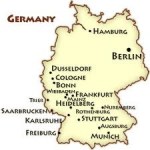
For the first time China has become German companies top foreign investment destination, totaling $1.36 billion by the end of last year, according to a survey by the Association of German Chambers of Industry and Commerce. The amount was more than the combined German investment in France, Spain and Italy.
The profound shift is visible in the case of Knauf Gips KG, a German-headquartered plasterboard manufacturer.When asked what helped turn the family-owned workshop into the world’s second-largest gypsum board maker, Mark Norris, the company’s China chief executive officer, said one particular factor stands out – China. After its entry into the Chinese market in the 1990s, Knauf built three plants in Beijing, Shanghai and Guangzhou. The initial investment soon gave Knauf a solid foothold in the country’s dry-wall market. Norris said he was quite bullish about the future and remained committed to continuing investment, despite decelerating economic growth in China, compounded by the European crisis and stagnation in the United States. “In relative terms, China remains a dynamic growth engine compared with places like Spain and Greece, where there is absolutely no growth,” he said. “And people seem to forget that the market is so big, the demand for good quality is there.” As we noticed over the past five years, a mid-to-upper class has emerged and the quality of life is increasing. People are prepared to pay for green building materials. Even though its not comparable to the European or US standard, it is catching up quick.””
via Foreign firms bullish about economy[1]|chinadaily.com.cn.
Posted in Affluence, China alert, Consumer, Economics, Green, Manufacturing |
Leave a Comment »
07/05/2012

Trinamool Congress chief Mamata Banerjee September 7, 2008. (Photo credit: Wikipedia)
The Hindu: “The U.S. has agreed to treat West Bengal as a partner state for investment in the changed political situation, Chief Minister Mamata Banerjee said in Kolkata on Monday.
“As per partner state, they will invest in West Bengal which was not taking place due to the political situation in the past,” Ms. Banerjee told reporters after a 52-minute meeting with U.S. Secretary of State Hillary Clinton. She also said that the issue of FDI in retail did not come up during the meeting. She said that the areas identified for U.S. investment were IT, software sector, manufacturing, deep sea port, tourism, health care and education. “They will give full support for economic and business development,” Mr. Banerjee said, adding that Chief Secretary Samar Ghosh and U.S. Ambassador Nancy Powell would coordinate and monitor the progress.”
via The Hindu : News / National : U.S. agrees to treat West Bengal as partner for investment: Mamata.
Posted in Economics, GeoPolitics, India alert, Investment in tangibles, Manufacturing, Technology |
2 Comments »
26/04/2012
CNN Money: “Chinese conglomerates, on a mission to expand their global footprint and avoid “anti-dumping” tariffs, are shifting more of their production to America.

(Photo credit: Wikipedia)
In the United States, cash-strapped states desperate for revenue and jobs, are rolling out the welcome mat for foreign companies that can guarantee both. More Chinese manufacturers have been launching their own U.S. facilities in the last five years, said Thilo Hanemann, research director at Rhodium Group, a New York-based economic advisory group. The biggest investments are being made by Chinese firms with products that have been slapped with hefty anti-dumping tariffs, he said.”
via http://d2pnews.com/index.php/2012/04/24/chinese-manufacturers-offshore-to-the-u-s/.
Related post: https://chindia-alert.org/2012/02/13/reverse-outsourcing/
Posted in China alert, Economics, Good news, Investment in tangibles, Manufacturing |
7 Comments »
26/04/2012
New York Times: “As Prime Minister Wen Jiabao of China tours Europe this week, it is no accident that Germany occupies a special place on his itinerary. After all, Germany is the one European Union country that has a trade surplus with China. And it has also been a focus of Chinese investment in Europe — so much so that analysts say some Germans are growing wary as Chinese businesses have been snapping up German engineering companies.
Mr. Wen, making his sixth visit in eight years, and the German chancellor, Angela Merkel, on Sunday opened the annual trade fair in Hanover, billed as the world’s leading showcase for industrial technology. They plan to witness the signing of an economic agreement at the Volkswagen headquarters, in Wolfsburg, on Monday. According to German media reports, the deal will include the opening of a new car plant in the far western Chinese region of Xinjiang.
Mr. Wen’s agenda, as with a follow-up trip planned by his likely successor, Vice Prime Minister Li Keqiang, seems aimed at presenting an aura of business as usual, even as trade tensions flare with the West and the Communist Party at home is embroiled in its biggest scandal in years, involving the deposed Politburo member Bo Xilai.”
via China Invests in Germany Amid Uncertainty – NYTimes.com.
Two birds with one stone: Collaboration with Germany & VW; and opening up a major auto plant in Xinjiang, one of the two provinces with significant unrest (the other, of course, is Tibet).
Posted in China alert, Diplomacy, Economics, Ethnic clash, GeoPolitics, Good news, Investment in tangibles, Manufacturing, unrest |
Leave a Comment »
23/04/2012
WSJ: “General Motors Co. plans to add 600 dealerships in China this year, about a 20% increase, as the auto maker looks to bolster its presence here amid growing competition and an economic-growth slowdown.Chief Executive Dan Akerson on Monday outlined steps GM is taking to boost sales and market share in China, where it is the largest foreign auto maker.
The addition of 600 dealerships would bring the companys dealer network in China to 3,500 stores, up from 2,900 at the end of 2011. At that size, Chinas dealers would begin to rival the companys U.S. network of 4,400.
GM is adding new models and factory capacity and expanding a technology center near its China headquarters in Shanghai, which will soon be its second-largest global development center. The largest is in Warren, Mich., near its Detroit headquarters. Like GM, many of the worlds major auto makers are expanding in China, concentrating on a market expected to grow to more than 30 million vehicle sales by the end of the decade from 18.5 million last year.”
via GM to Add 600 China Dealerships – WSJ.com.
If you are looking for a business opportunity in China, go for a tyre franchise. The vast majority of Chinese cars have yet to have their first set of tyres replaced!
Posted in China alert, Consumer, Economics, Manufacturing, Retail, Transport |
2 Comments »
03/04/2012
Reuters: “German businessman Norbert Scheuch was bowled over by his red-carpet treatment on a visit to China late last year and by how fast the country’s largest construction firm sealed the deal to buy his company. The head of Sany Heavy Industry, which is controlled by China’s richest man, Liang Wengen, personally gave Scheuch a tour of their plant and then had a top manager drive him to the airport and wait with him for his flight home. “Nobody would ever do that in Europe,” said Scheuch, CEO of concrete pump maker Putzmeister.
“The Chinese made it very clear from the beginning they wanted the company immediately,” he added. Barely a month later, Sany’s top negotiator Xiang Wenbo was in the offices of law firm Shearman Sterling in Frankfurt at 3 am to sign the deal to buy Putzmeister for 360 million euros ($472 million) after a nine-hour session with the notary.
The purchase, which gives Sany a technological edge over its rivals, illustrates how Chinese investors are becoming more savvy about foreign takeovers, not just to gain access to raw materials or patents but as an engine for growth. By keeping the German management in place after its acquisition and announcing that Putzmeister would become its new international distribution hub outside China for concrete machinery, Sany also defied the clichés about Chinese practices and assuaged local anxiety among employees. “I had to promise the Chinese solemnly that our management would stay on board,” Scheuch said.
Germany, Europe’s largest economy and home to many small and medium-sized companies famed for their technological know-how and exporting prowess, is especially attractive for cash-rich Chinese businesses looking to build a global profile. Some German and other European companies also look cheap to Chinese buyers after the euro zones sovereign debt crisis.”
Rest of long article is equally interesting.
via Insight: Bullish China shops in industrial Germany | Reuters.
Related articles:
Posted in China alert, Economics, Good news, Investment in tangibles, Manufacturing |
Leave a Comment »


 CHINDIA ALERT: You'll be living in their world, very soon