Archive for ‘Manufacturing’

27/05/2016

Foxconn replaces ‘60,000 factory workers with robots’ – BBC News

If manufacturers like Foxconn and high street companies like McDonald’s and, no doubt soon, offices too start replacing humans with robots, where will it all end? Where will all the ‘surplus’ people find jobs and pay.  And, eventually, who will be able to afford the iPhones, the hamburgers and so forth?  Won’t it be self-defeating in the long run for the employers with no customers or, at best, not enough customers to keep all the robots occupied and earning their keep.

“One factory has “reduced employee strength from 110,000 to 50,000 thanks to the introduction of robots”, a government official told the South China Morning Post.

Xu Yulian, head of publicity for the Kunshan region, added: “More companies are likely to follow suit.”

China is investing heavily in a robot workforce.

In a statement to the BBC, Foxconn Technology Group confirmed that it was automating “many of the manufacturing tasks associated with our operations” but denied that it meant long-term job losses.

“We are applying robotics engineering and other innovative manufacturing technologies to replace repetitive tasks previously done by employees, and through training, also enable our employees to focus on higher value-added elements in the manufacturing process, such as research and development, process control and quality control.

“We will continue to harness automation and manpower in our manufacturing operations, and we expect to maintain our significant workforce in China.”

Since September 2014, 505 factories across Dongguan, in the Guangdong province, have invested 4.2bn yuan (£430m) in robots, aiming to replace thousands of workers.

Kunshan, Jiangsu province, is a manufacturing hub for the electronics industry.

Economists have issued dire warnings about how automation will affect the job market, with one report, from consultants Deloitte in partnership with Oxford University, suggesting that 35% of jobs were at risk over the next 20 years.

Former McDonald’s chief executive Ed Rensi recently told the US’s Fox Business programme a minimum-wage increase to $15 an hour would make companies consider robot workers.

“It’s cheaper to buy a $35,000 robotic arm than it is to hire an employee who is inefficient, making $15 an hour bagging French fries,” he said.”

Source: Foxconn replaces ‘60,000 factory workers with robots’ – BBC News

24/02/2016

U.S. Design Company Redesigns the Cycle Rickshaw to Make it ‘Sexy’ – India Real Time – WSJ

It is not quite reinventing the wheel, but one company is trying to overhaul an old-fashioned form of public transport–the cycle rickshaw.

Funded by the Asian Development Bank, Colorado-based Catapult Design has produced a new, flashy design for the vehicle — ubiquitous in Indian and other South Asian cities — that includes electrical assistance and gears for tricky hills.

Cycle rickshaws, or pedicabs, in South Asia provide backbreaking but vital work for the drivers who pedal passengers often on short “last mile” trips from other forms of transport to their final destination.

Dhaka, Bangladesh’s capital, has half a million cycle rickshaws alone, Bradley Schroeder, who is leading the $340,000 project to develop an open-source design of the pedicab, said. But the design hasn’t improved much in 40 years.

The ADB will spend $150,000 on manufacturing 60 prototype vehicles and testing them in Nepal’s capital Kathmandu, and Lumbini, a tourism hotspot in the Himalayan nation and the birthplace of Buddha, over the coming months.

Half of the new rickshaws will be pedal-only, and the rest will have built-in electrical assistance provided by a lithium-ion battery, the company said.

Most rickshaws are currently made from tubular steel and if they have electrical assistance, it is provided by a heavy car battery, Mr. Schroeder said. Exposed parts of the rickshaw’s mechanics mean that clothes such as saris can become caught and cause accidents.

The new design is made from stainless steel and the mechanics are fully enclosed and include gears. The lithium batteries are more lightweight and the electrics comply with European Union standards, he added. The vinyl cover on the rickshaw provides protection from the elements.

“We wanted to make the body very sexy,” Mr. Schroeder said. The designers talked about adding seatbelts but decided against it since the the speeds were so low.

The new cabs are more expensive – they will cost $750, compared with about $400 for an average rickshaw. That cost, Mr. Schroeder says, is a result of the reduced weight and the addition of smartphone vehicle-hailing and driver-evaluation technologies as well as touch screens that can deliver tour guides to passengers.

“Weight is everything in the pedicab industry,” Mr. Schroeder wrote in an emailed response. The lighter model will mean that the pedicab will have a top speed of 15.5 miles an hour, but, Mr. Schroeder wrote, “essentially the vehicle will go as fast as the wallah (driver) can pedal and since the vehicle is lighter and now has gears, the wallah should be able to go faster.”

The drivers of the rickshaws for the trial in Nepal will be taken from the existing pool of the cities’ rickshaw chauffeurs, Mr. Schroeder said.

His team spent several months interviewing drivers, owners and garages. “There are a lot of questions, it’s not always easy. But over time we win them over and they are happy,” he said.

“They live on the fringes of society and are very concerned about making money every day,” he said. “They can see their industry is in decline.’

But although the cycle rickshaw is steeped in tradition, its drivers aren’t resistant to change.

“If you show them a 3-D printed model of the design, they’re blown away,” Mr. Schroeder said.

After the trial, Mr. Schroeder hopes a bicycle, motorcycle or auto company picks up the unpatented design and uses it to manufacture the product.

Source: U.S. Design Company Redesigns the Cycle Rickshaw to Make it ‘Sexy’ – India Real Time – WSJ

15/11/2015

In ‘Milestone’ Move, GM to Sell Chinese-Made Cars in U.S. – China Real Time Report – WSJ

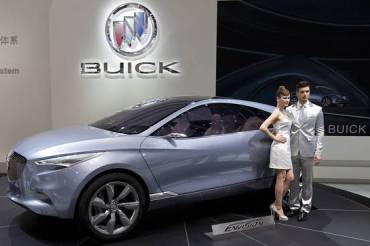
Yale Zhang, the head of Shanghai-based consultancy Automotive Foresight, called the export of the Buick Envision SUV from China to the U.S. a “landmark.”

“It means that China’s manufacturing quality has met the requirements of the world’s strictest market,” he said.

GM introduced the Buick Envision SUV in China last October. Since then, it has been one of the best-selling cars sold by GM in the country. According to the China Association of Automobile Manufacturers, a government-backed industry group, the Envision ranked seventh in China’s fast-growing SUV market in October, with monthly sales of 17,300 vehicles. Data from Automotive Foresight show that sales of Buick Envision SUVs totaled 100,826 cars in the period from January to September.

Despite the progress, experts say that Chinese home-grown car manufacturers will continue struggling to compete with foreign brands, even in China.

China is already the world’s largest market for cars in terms of sales and production. But global auto makers have been slow to ship Chinese vehicles to the U.S. and Europe on worries that Western buyers would shun them over quality concerns. European car maker Volvo Car Corp., which is owned by China’s Zhejiang Geely Holding Group Co., was the first to challenge that assumption when it started shipping sedans from a plant in China to the U.S. this spring. A Volvo China spokesman declined to disclose how many Chinese-made Volvos have been shipped to the U.S., saying only that it is a “small volume.”

A study released by automotive industry consultants J.D. Power in October shows that although Chinese car makers have been improving in quality in recent years, they still lag behind international brands in producing reliable vehicles. According to the study, Chinese brands had 120 problems for every 100 vehicles this year, compared with 131 in 2014 and 155 in 2013. International brands had 98 problems for every 100 vehicles in 2015.

“Buick is a household brand in the U.S.,” said Ms. Li from Deren Electronic. “American consumers are probably not aware that the car is made in China. But Chinese local  auto brands, like Chery and Geely, are little known outside of China.” Victor Yang, a spokesman for Zhejiang Geely Holding Group Co., said that as a global player, it’s normal for GM to sell its China-made cars at home in the U.S. “All the cars made by foreign companies in China should be produced in line with their global standards,” Mr. Yang said.

“Geely aims to sell its cars to developed markets including the U.S. By doing so, our quality and technology will be well recognized,” he said, without specifying a time frame. Jin Yibo, a vice president for Chery Automobile, said that Chinese home-grown auto makers “will absolutely go to the U.S. and other developed markets to sell their cars.”

But he cautioned: “It will take time.”

Source: In ‘Milestone’ Move, GM to Sell Chinese-Made Cars in U.S. – China Real Time Report – WSJ

04/11/2015

Prepare for Takeoff: China Rolls Out First Large Passenger Jet – China Real Time Report – WSJ

China’s first large passenger jet rolled off the assembly line on Monday after years of delays, bringing Beijing’s dream of developing a rival to Boeing Co. and Airbus Group SE closer to reality.

As WSJ’s Chun Han Wong reports: Still, the single-aisle C919 airliner won’t be delivered to airlines for at least another three years, highlighting the difficulties

China has faced in becoming a global player in aviation. Developed by the state-run Commercial Aircraft Corp. of China Ltd. (Comac), the twin-engine jet was initially set for its first flight in 2014, ahead of commercial deliveries starting in 2016. Production setbacks forced Comac to extend its deadlines repeatedly. Company executives say flight testing should start next year, with deliveries expected in 2018 or 2019 at the earliest.

Thousands of guests, including government officials and aerospace executives, witnessed the C919’s rollout at an assembly plant near Shanghai’s Pudong International Airport, according to Chinese state media.

Source: Prepare for Takeoff: China Rolls Out First Large Passenger Jet – China Real Time Report – WSJ

16/10/2015

China aims for 30 million annual auto production capacity by 2020: industry association | Reuters

China will aim to have the capacity to make 30 million autos a year by 2020, according to an industry association, a figure that is lower than analysts’ estimates of its current annual production capacity.

Drivers stand next to brand new Geely Englon TX4 taxis, which were created based on the ''London cab'', during an inauguration ceremony in Shanghai, October 11, 2014. REUTERS/Stringer

The capacity target was in an advance copy of a speech that Vice-Secretary Shi Jianhua of the China Association of Automobile Manufacturers (CAAM) is due to make on Friday, predicting what targets the Communist Party will set out for the auto industry when it meets later this month to decide the country’s economic blueprint for 2016 to 2020.

The speech does not specify whether the 30 million refers to passenger cars or the overall auto market, but consultancy IHS estimates China will produce 23.5 million passenger and light commercial vehicles this year and already has capacity to make 36 million annually.

Shi predicts that the country’s next five-year plan will aim for an annual production capacity of 2 million units for plug-in hybrids and battery-electric vehicles by 2020, and to have already produced 5 million vehicles, the speech says.

It also aims to lift the market share of Chinese brand vehicles to more than 60 percent, from roughly 41 percent of the passenger car market so far this year, to create five globally competitive automakers.

China’s government will also target to boost auto exports to 3 million compared to this year’s goal of 860,000.

Source: China aims for 30 million annual auto production capacity by 2020: industry association | Reuters

29/09/2015

Boeing to sell 300 jets to China firms, set up China plant: Xinhua | Reuters

Boeing Co has signed deals to sell 300 aircraft to three Chinese firms and set up an aircraft plant in China, becoming the first U.S. firm to clinch a business tie-up in the country since Chinese president Xi Jinping began a U.S. state visit, the official Xinhua news agency said.

Photo

The aircraft deals, potentially worth tens of billions of dollars in total, are collectively the largest order the aerospace firm has received from Chinese companies.

China’s ICBC Financial Leasing Co, a unit of the Industrial and Commercial Bank of China, on Wednesday separately confirmed it will buy 30 of Boeing’s 737-800 jets, worth $2.88 billion at list prices.

China Aviation Supplies Holding Company and China Development Bank Leasing are the other two customers for the aircraft, said Xinhua.

Boeing, which is locked in a fierce battle for plane orders with European rival Airbus, will build its first aircraft completion plant outside the United States in China in order to gain a foothold in that important market, say industry observers. Boeing raised its forecast for China’s aircraft demand by 5 percent in August, saying that the country will need 6,330 planes over the next 20 years.

It signed a cooperation document with Commercial Aircraft Corporation of China (Comac) to build the aircraft completion center for its 737 passenger jet in China, added Xinhua. The agency didn’t disclose further details.

An aircraft’s interiors and some systems are usually installed, and the plane is painted in the customer’s livery, at completion centers. The final flight trials are then completed before the aircraft is delivered to the customer.

Boeing executives and officials from the Chinese firms could not immediately be reached for comment. Xi, who arrived in Seattle on Tuesday, is set to visit Boeing on Wednesday.

The number of air passengers traveling to, from and within China is set to nearly triple by 2034 to some 1.3 billion, surpassing an expected 1.2 billion for the United States, according to official estimates.

State-owned airlines like Air China, China Eastern Airlines and China Southern Airlines, and privately-owned budget carrier Spring Airlines, are growing fast and adding new planes to meet this demand for both short and long haul air travel.

Boeing’s plans for an aircraft completion center comes after Airbus signed an agreement in July to set up its second Chinese plant.

Source: Boeing to sell 300 jets to China firms, set up China plant: Xinhua | Reuters

27/08/2015

Why India Stands to Benefit From China Slowdown and Global Reaction – India Real Time – WSJ

India’s economy has been insulated from the turmoil in emerging markets by a long-standing handicap: It isn’t an export powerhouse. For years, growth in India has been fueled more by domestic demand—not, as in China, by manufacturing goods for sale abroad. Now India’s resilient consumer spending is an advantage as demand decelerates almost everywhere else. It is luring companies to produce in India and, the government hopes, can help spark a belated industrial revolution in the country of 1.2 billion.

Jayant Sinha, India’s minister of state for finance, said this week the Chinese slowdown and its world-wide fallout could provide a chance for India to “take the baton of global growth.” Mumbai’s benchmark stock index ended Wednesday down 1.2%, having slid 8.5% in total since the People’s Bank of China moved to devalue the yuan on Aug. 11. The rupee has lost 3.4% since then. India hasn’t been rattled as badly as Brazil, Russia or South Africa. Its international reserves are ample, and it isn’t highly dependent on foreign capital to fund imports.

Source: Why India Stands to Benefit From China Slowdown and Global Reaction – India Real Time – WSJ

10/08/2015

5 Things to Know about Foxconn’s Overseas Ambitions – WSJ

Foxconn, Apple Inc.’s major assembler, has signed a preliminary deal with India’s Maharashtra state to invest $5 billion in factories and research facilities in coming years. But the company, officially known as Hon Hai Precision Industry Co., has a history of making ambitious statements and floating investment ideas that haven’t materialized. Here are five things to know about Foxconn’s overseas ambitions.

Deutsch: Foxconn Logo

Deutsch: Foxconn Logo (Photo credit: Wikipedia)

1 India isn’t its first billion-dollar bet

In 2011, Foxconn agreed to invest $12 billion in Brazil to create a new supply chain that it had hoped will generate jobs. But four years later, Foxconn’s investment in Brazil has been much smaller than the pledged amount. It is still struggling to improve the manufacturing operations at its plants for iPhones and iPads there citing its inefficient labor force. The company has also been in talks for a new plant investment in Indonesia for years.  The Indonesian government once said that Foxconn would invest up to $10 billion, but plans remain in limbo due to political snags.

2 Why India?

While China remains the world’s largest smartphone market by shipments, India has the biggest growth potential for the next 5 years, says Bernstein analyst Mark Li. India recently raised taxes on mobile phones imported to the country to 12.5% from 6%, spurring global handset makers to look at ways to manufacture devices locally.

3 Sign of shift in manufacturing to India from China?

Analysts say it is unlikely that India will overtake China to become the company’s main production base in the next few years as China has an well-established supply chain ecosystem. India still lacks good infrastructure and favorable tax and labor policies, making it a less attractive destination for tech manufacturing.

4 Foxconn Chairman Terry Gou always aims for the best deal

The agreement with the Indian government is non-binding. Foxconn Chairman Terry Gou usually gives a rosy picture about the company’s potential investments when he negotiates with government officials. But only a few investment plans materialize as he wants favorable terms including big tax incentives and free land that most governments can’t accommodate.

5 Foxconn seeks other investment opportunities in India

The company and Chinese e-commerce giant Alibaba Group Holding Ltd. are in talks to jointly invest about $500 million in Snapdeal.com, a five-year-old Indian e-commerce startup. The deal would give Foxconn a retail foothold in India where it has experienced booming demand for smartphones. Foxconn is also setting up a new production site for Chinese smartphone maker Xiaomi Corp. in India.

via 5 Things to Know about Foxconn’s Overseas Ambitions – WSJ.

10/08/2015

China’s Xiaomi to Make Smartphones in India – India Real Time – WSJ

Chinese smartphone maker Xiaomi Corp. will begin manufacturing phones in the southern Indian state of Andhra Pradesh, according to the state’s highest elected official.

A tweet from the verified account of N. Chandrababu Naidu, the state’s chief minister, said Xiaomi would announce the move today.

Xiaomi’s move follows Taiwanese contract manufacturer Foxconn’s announcement Saturday that it plans to spend $5 billion on factories and research and development in the western state of Maharashtra. Foxconn, known officially as Hon Hai Precision Industry Co. assembles Apple Inc. iPhones and as well as most of Xiaomi’s phones. Foxconn has a plant in Andhra Pradesh.

The Indian government amended its customs rules recently to make it more attractive to make electronic goods in India, as it seeks to boost manufacturing, create jobs and reduce reliance on expensive imports from China.

via China’s Xiaomi to Make Smartphones in India – India Real Time – WSJ.

28/07/2015

Maruti Suzuki Q1 profit jumps 56 percent; lower costs, higher sales | Reuters

Maruti Suzuki India Ltd(MRTI.NS), India’s top-selling carmaker, said on Tuesday first-quarter net profit rose 56 percent helped by lower costs, favourable foreign exchange rates and higher sales, but still missed bullish analyst estimates.

A Suzuki badge is reflected on the body of a Maruti Suzuki Eeco car at a Maruti Suzuki stockyard on the outskirts of Ahmedabad April 26, 2013. REUTERS/Amit Dave/Files

Maruti, controlled by Japan’s Suzuki Motor Corp (7269.T), said profit for the April-June quarter was 11.9 billion rupees ($185.94 million), up from 7.6 billion rupees in the same period a year earlier. Analysts had expected a profit of 12.35 billion rupees, according to Thomson Reuters I/B/E/S.

Net sales rose about 18 percent to 130.8 billion rupees, the company said, as India’s car trade continues to grow. India is expected to become the world’s third-largest car market by 2020, moving up three places.

“During the quarter, higher volumes, cost reduction efforts, lower sales promotion expenses, and favourable foreign exchange helped improve the performance,” the company said in a stock exchange statement.

Total expenses as a percentage of net sales fell to 91 percent during the quarter from about 96 percent in the year ago period, while finance costs were halved to 190.4 million rupees. Maruti, which imports certain car components from Japan and also pays royalty to its Japanese parent, Suzuki, is benefiting from the yen’s weakening.

The carmaker, which sells about one in every two cars in India, wants to increase its share of the premium car segment at a time when rivals like Honda Motor Co (7267.T) and Ford Motor Co (F.N) are launching cheaper, compact cars – Maruti’s mainstay.

Maruti has had little prior success in the premium segment and is now planning an aggressive rollout of new vehicles and dealerships to capture buyers with deeper pockets – a move that is expected to boost margins and profits, say analysts.

Next week Maruti will launch the S-Cross – a crossover between a sport-utility vehicle and a hatchback – the first car to be sold at its new Nexa showrooms. These spruced-up showrooms will differ from existing dealerships in design and service, managing director Kenichi Ayukawa said recently.

“It is a very good strategy because as income levels rise we will see that more and more consumers will prefer premium vehicles,” said Nitesh Sharma, auto analyst at Mumbai-based brokerage, Phillip Capital, adding that it will boost margins.

Shares in Maruti, valued by the market at about $20 billion at Monday’s close, were trading 0.5 percent higher at 4,200 rupees a share at 0850 GMT in a weak Mumbai market.

Maruti’s shares have risen more than 25 percent since January – the highest among major automobile companies in India.

($1 = 64.0000 rupees)

via Maruti Suzuki Q1 profit jumps 56 percent; lower costs, higher sales | Reuters.

Law of Unintended Consequences

continuously updated blog about China & India

ChiaHou's Book Reviews

continuously updated blog about China & India

What's wrong with the world; and its economy

continuously updated blog about China & India