Archive for ‘monsoon’

18/03/2020

Coronavirus: What India can learn from the deadly 1918 flu

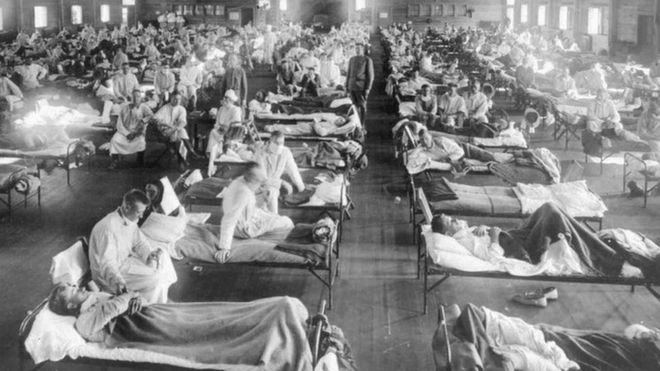
In this 1918 photograph, influenza victims crowd into an emergency hospital at Camp Funston, a subdivision of Fort Riley in KansasImage copyright NATIONAL MUSEUM OF HEALTH AND MEDICINE
Image caption The 1918 flu pandemic is believed to have infected a third of the population worldwide

All interest in living has ceased, Mahatma Gandhi, battling a vile flu in 1918, told a confidante at a retreat in the western Indian state of Gujarat.

The highly infectious Spanish flu had swept through the ashram in Gujarat where 48-year-old Gandhi was living, four years after he had returned from South Africa. He rested, stuck to a liquid diet during “this protracted and first long illness” of his life. When news of his illness spread, a local newspaper wrote: “Gandhi’s life does not belong to him – it belongs to India”.

Outside, the deadly flu, which slunk in through a ship of returning soldiers that docked in Bombay (now Mumbai) in June 1918, ravaged India. The disease, according to health inspector JS Turner, came “like a thief in the night, its onset rapid and insidious”. A second wave of the epidemic began in September in southern India and spread along the coastline.

The influenza killed between 17 and 18 million Indians, more than all the casualties in World War One. India bore a considerable burden of death – it lost 6% of its people. More women – relatively undernourished, cooped up in unhygienic and ill-ventilated dwellings, and nursing the sick – died than men. The pandemic is believed to have infected a third of the world’s population and claimed between 50 and 100 million lives.

Gandhi and his febrile associates at the ashram were lucky to recover. In the parched countryside of northern India, the famous Hindi language writer and poet, Suryakant Tripathi, better known as Nirala, lost his wife and several members of his family to the flu. My family, he wrote, “disappeared in the blink of an eye”. He found the Ganges river “swollen with dead bodies”. Bodies piled up, and there wasn’t enough firewood to cremate them. To make matters worse, a failed monsoon led to a drought and famine-like conditions, leaving people underfed and weak, and pushed them into the cities, stoking the rapid spread of the disease.
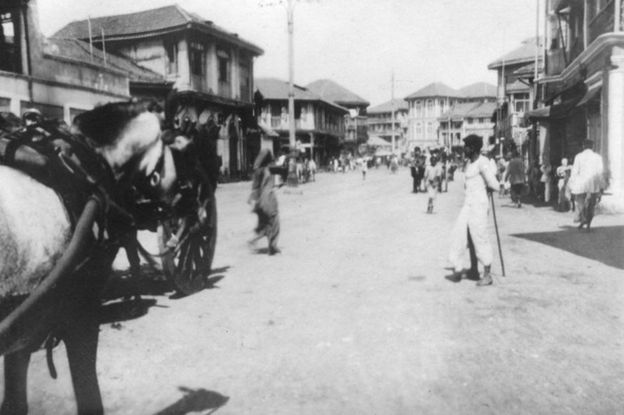
A street in Mumbai (Bombay), India, c1918.Image copyright PRINT COLLECTOR
Image caption Bombay was one of the worst hit cities by the 1918 pandemic

To be sure, the medical realities are vastly different now. Although there’s still no cure, scientists have mapped the genetic material of the coronavirus, and there’s the promise of anti-viral drugs, and a vaccine. The 1918 flu happened in the pre-antibiotic era, and there was simply not enough medical equipment to provide to the critically ill. Also western medicines weren’t widely accepted in India then and most people relied on indigenous medication.

Yet, there appear to be some striking similarities between the two pandemics, separated by a century. And possibly there are some relevant lessons to learn from the flu, and the bungled response to it.

The outbreak in Bombay, an overcrowded city, was the source of the infection’s spread back then – this something that virologists are fearing now. With more than 20 million people, Bombay is India’s most populous city and Maharashtra, the state where it’s located, has reported the highest number of coronivirus cases in the country.

By early July in 1918, 230 people were dying of the disease every day, up nearly three times from the end of June. “The chief symptoms are high temperature and pains in the back and the complaint lasts three days,” The Times of India reported, adding that “nearly every house in Bombay has some of its inmates down with fever”. Workers stayed away from offices and factories. More Indian adults and children were infected than resident Europeans. The newspapers advised people to not spend time outside and stay at home. “The main remedy,” wrote The Times of India, “is to go to bed and not worry”. People were reminded the disease spread “mainly through human contact by means of infected secretions from the nose and mouths”.

“To avoid an attack one should keep away from all places where there is overcrowding and consequent risk of infection such as fairs, festivals, theatres, schools, public lecture halls, cinemas, entertainment parties, crowded railway carriages etc,” wrote the paper. People were advised to sleep in the open rather than in badly ventilated rooms, have nourishing food and get exercise.

“Above all,” The Times of India added, “do not worry too much about the disease”.
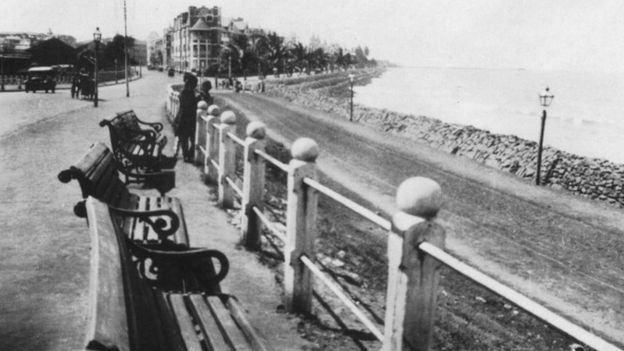
Colaba, Bombay, India, c1918.Image copyright PRINT COLLECTOR

Colonial authorities differed over the source of infection. Health official Turner believed that the people on the docked ship had brought the fever to Bombay, but the government insisted that the crew had caught the flu in the city itself. “This had been the characteristic response of the authorities, to attribute any epidemic that they could not control to India and what was invariably termed the ‘insanitary condition’ of Indians,” observed medical historian Mridula Ramanna in her magisterial study of how Bombay coped with the pandemic.

Later a government report bemoaned the state of India’s government and the urgent need to expand and reform it. Newspapers complained that officials remained in the hills during the emergency, and that the government had thrown people “on the hands of providence”. Hospital sweepers in Bombay, according to Laura Spinney, author of Pale Rider: The Spanish Flu of 1918 and How It Changed the World, stayed away from British soldiers recovering from the flu. “The sweepers had memories of the British response to the plague outbreak which killed eight million Indians between 1886 and 1914.”
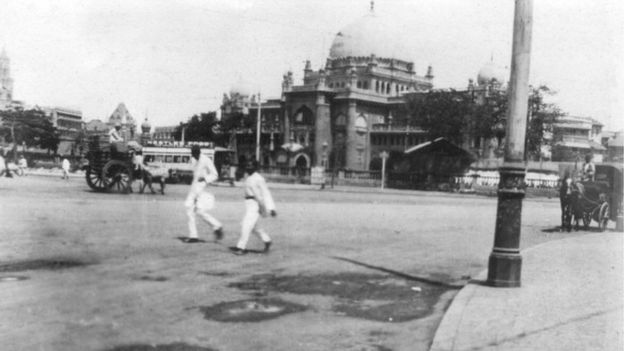
Lady Harding's war hospital, Bombay, India, c1918Image copyright PRINT COLLECTOR
Image caption The hospitals in Bombay were overwhelmed by patients

“The colonial authorities also paid the price for the long indifference to indigenous health, since they were absolutely unequipped to deal with the disaster,” says Ms Spinney. “Also, there was a shortage of doctors as many were away on the war front.”

Eventually NGOs and volunteers joined the response. They set up dispensaries, removed corpses, arranged cremations, opened small hospitals, treated patients, raised money and ran centres to distribute clothes and medicine. Citizens formed anti-influenza committees. “Never before, perhaps, in the history of India, have the educated and more fortunately placed members of the community, come forward in large numbers to help their poorer brethren in time of distress,” a government report said.

Now, as the country battles another deadly infection, the government has responded swiftly. But, like a century ago, civilians will play a key role in limiting the virus’ spread. And as coronavirus cases climb, this is something India should keep in mind.

Source: The BBC
24/02/2020

China’s green zombie fungus could hold key to fighting East Africa’s swarms of locusts

  • An insect-killing fungus has been turned into a mass-produced biopesticide that will face its biggest challenge in East Africa
  • Current swarm has put 13m people at risk of famine and this will be the first large-scale test of its effectiveness
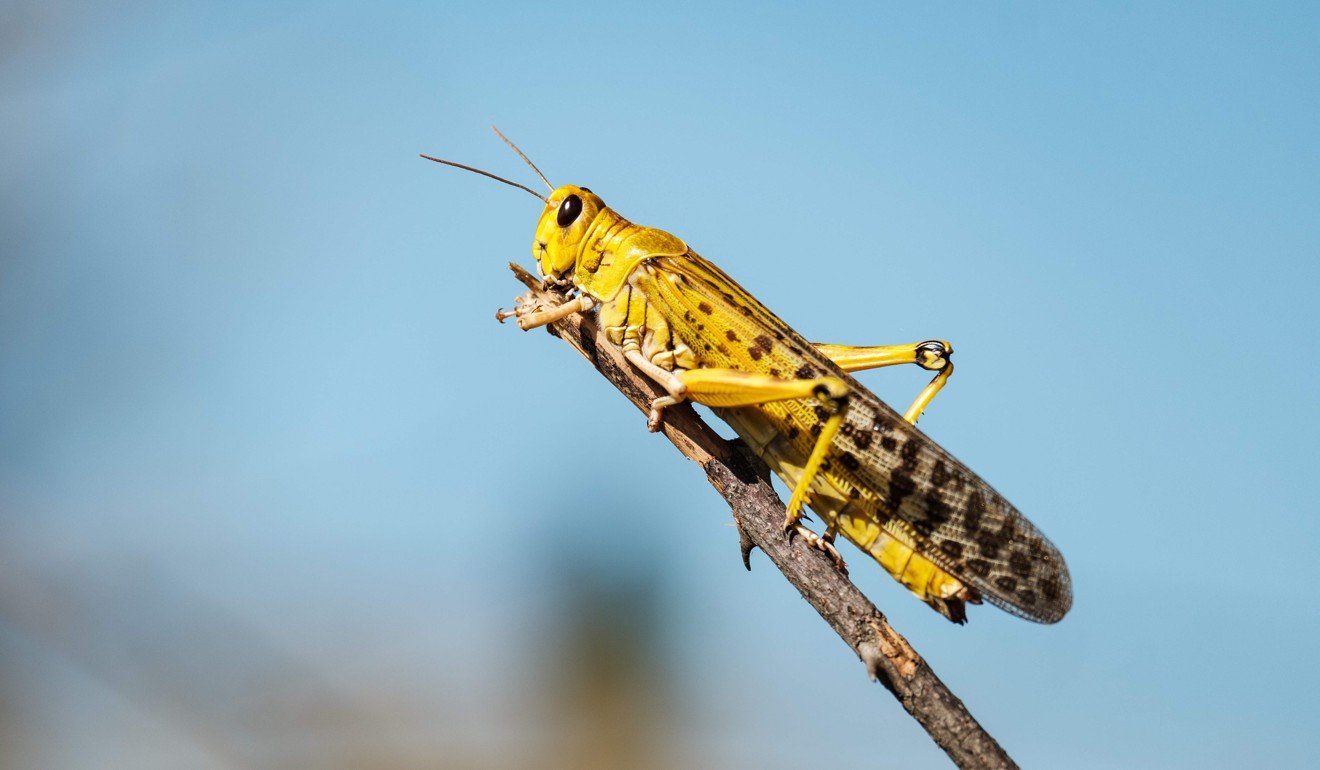
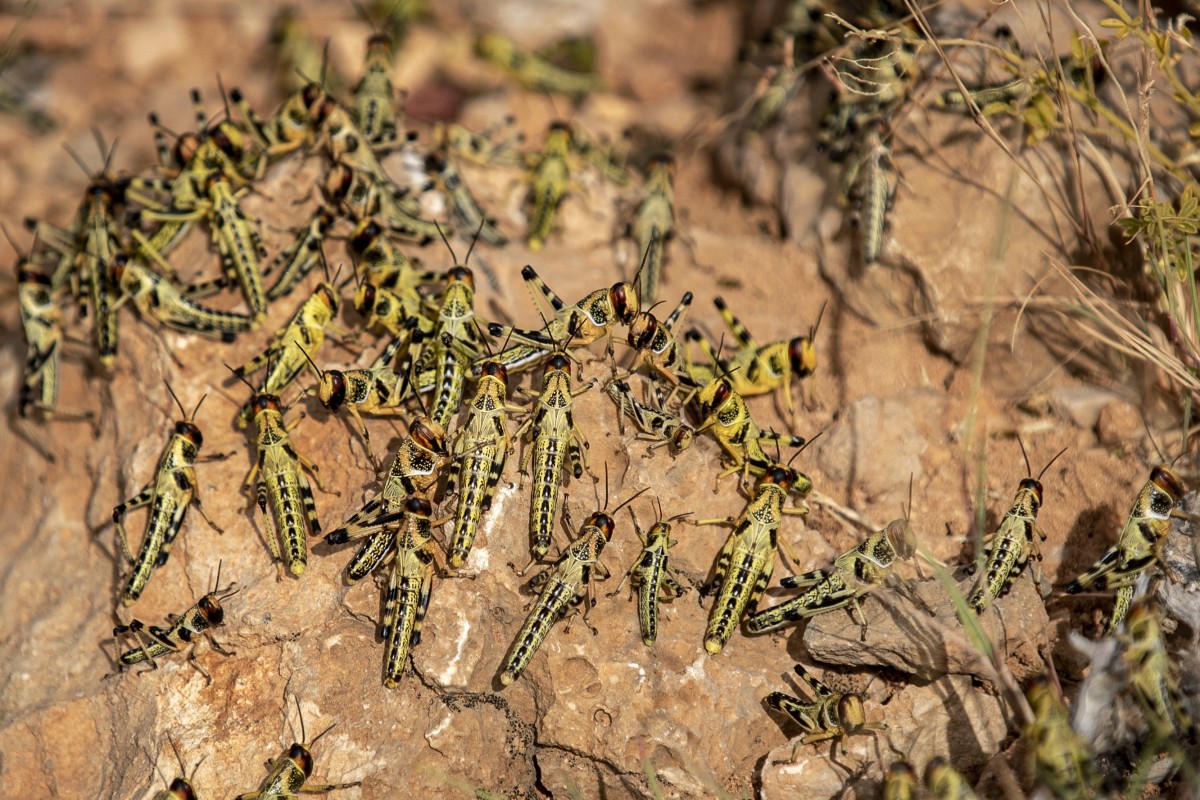
Young locusts in Somalia, where the fungus will be used to try to kill them. Photo: AP

Chinese factories are producing thousands of tonnes of a “green zombie fungus” to help fight the swarms of locusts in East Africa.

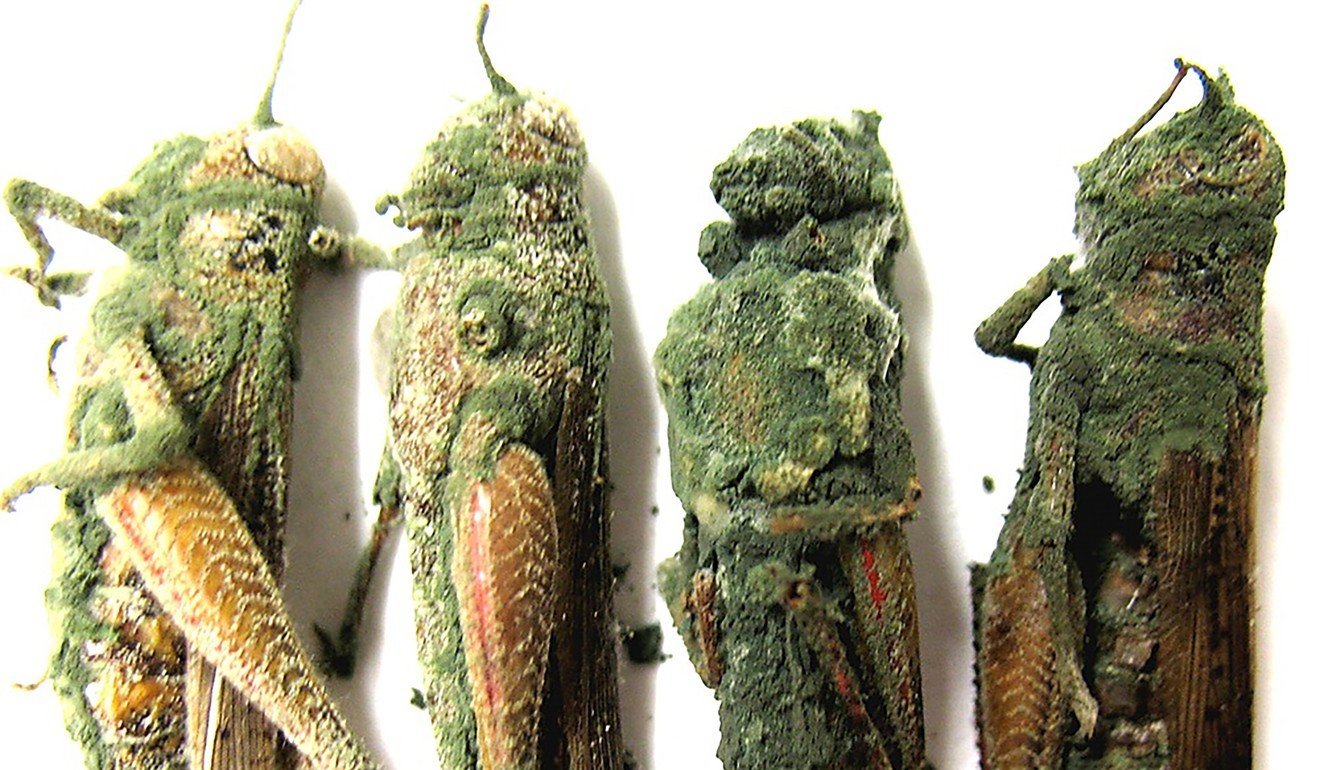
Metarhizium is a genus of fungi with nearly 50 species – some genetically modified – that is used as a biological insecticide because its roots drill through the insects’ hard exoskeleton and gradually poisons them.

In China it was named lu jiang jun, which means green zombie fungus, because it gradually turns its victims in a green mossy lump.

There are now dozens of factories across the country dedicated to producing its spores and despite the curbs introduced to stop the spread of Covid-19, many of them have resumed operations and are shipping thousands of tonnes to Africa.

Plague fears as massive East Africa locust outbreak spreads

11 Feb 2020

These factories are set up in a similar way to breweries, growing the spores on rice which is kept in carefully controlled conditions to ensure the correct temperature and humidity.

Each plant can produce thousands of tonnes of fungi powder per year, each gram of which contains tens of billions of spores.

“I am sending off a truckload right now. Our stock is running out,” said the marketing manager of a production plant in Jiangxi province. “Some customers need it urgently. They need it to kill the locusts.”

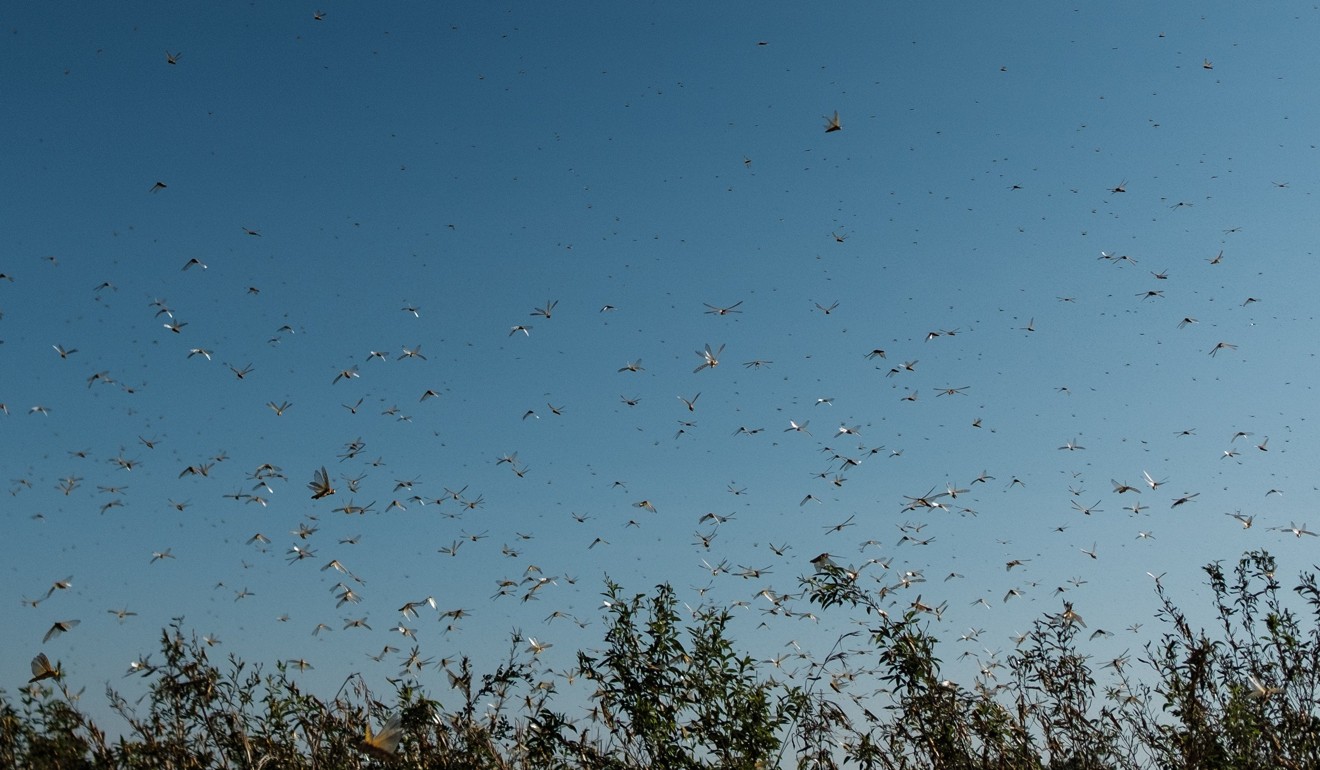
The need is particularly pressing in East Africa at the moment, where abnormally high levels of rainfall during the dry season allowed hundreds of billions of locusts to hatch in recent months.

So far the swarms have devastated crops in countries such as Ethiopia, Kenya, Somalia and Uganda and are moving on to neighbouring countries.

Up to 13 million people face the risk of famine in East Africa. Photo: AFP
The UN’s Food and Agriculture Organisation (FAO) has warned the situation could be the “worst in decades” and the resulting famine may affect 13 million people and cause international food prices to soar.

Last week, Science magazine reported that the Somalian government, working with the FAO, was preparing to a metarhizium species that only kills locusts and grasshoppers in what it described as the largest ever use of biopesticides against the insects.

Scientists do not believe that the fungus will be enough to solve the problem – monitoring the outbreak and targeting their breeding grounds will be more important in the long-run – but if it proves effective it could be an important weapon to target future outbreaks.

It will take time to gauge the effectiveness, partly because each fungus will take several days to take effect and partly because of the sheer scale of the challenge; a single swarm in Kenya was estimated to contain between 100 billion and 200 billion locusts.

By fair means or fowl: how Chinese herdsmen are planning to stop a locust invasion

17 Apr 2018

The locusts have also swept eastward into the Middle East, travelling up to 150km (90 miles) a day, and are moving closer to China now that they have now reached some of its neighbours, including India and Pakistan.

At present China’s agriculture ministry believes some locusts may follow the monsoon into the country but “the chances of them causing damage is very small”.

Most scientists agree the swarms will not have lasting effect on food production but say developing countries can tap into China’s cutting-edge anti-locust technology.

Radar stations have been set up all the way along China’s western and southern borders to detect possible clouds of locusts, while unmanned devices lure the insects into traps to collect data about their species population and size.

A locust being eaten inside out by the metarhizium fungi. Photo: Chinese Academy of Sciences and the University of Maryland
The data is streamed to the ministry’s programme command, which is responsible for the planning and coordination of the national efforts to prevent an outbreak.
The scientists also said that planes loaded with biological and chemical sprays were standing by.
Today, most locust outbreaks happen in developing countries that do not have advanced monitoring networks and some of them are unable to produce pesticides on a mass scale, according to Li Hu, an associate professor with the China Agricultural University in Beijing.
The Chinese locust treatment technologies were highly advanced, and usually cheaper than competing solutions from the West, he said.

Chinese researchers are now working with colleagues in other countries to help them solve the problem.

One disadvantage of the Chinese research is that it is mostly focused on local species, or the East Asia migratory locust. The desert locusts currently swarming East Africa have different genes and behaviour, and Li warned that some methods that work in China might not work elsewhere.

A giant indoor farm in China is breeding 6 billion cockroaches a year. Here’s why

26 Apr 2018

There were some sightings of the species reported in Yunnan and Tibet in the past, but they did not build up to large colonies, Professor Kang Le, lead scientist of the locust research programme with the Institute of Zoology at the Chinese Academy of Sciences in Beijing, told China Science Daily last week.

The vast west China region of Xinjiang, which shares a border with eight countries, is currently too cold for a locust migration, but once temperatures start to rise in the spring it could see locusts swarming across the border with Afghanistan.

Shi Wangpeng, a senior government locust expert, told China Business Network on Sunday that China should be on high alert because many Afghan farms had already been affected.

“These areas share a long border with us, there are almost no barriers,” he was quoted as saying by the Shanghai-based magazine.

China has a long and bitter history of locust swarms, with more than 840 being recorded in the official records over the past 2,700 years.

One famine, in the year 628 was so devastating that even the Tang dynasty emperor Taizong was reported to have run short of food and resorted to eating the insects to survive.

China has a long and bitter history of locust swarms. Photo: AFP
This, in turn, means that China’s rulers have long been looking for innovative ways to solve the problem
In the past farmers tried remedies such as building huge fires, burying the insects in ditches or trying to kill them with sticks.
In one campaign organised by prime minister Yao Chong in 715, the farms collected 9 million sacks of dead locusts and managed to save a significant proportion of their crops, according to historic text.
In more recent times more sophisticated technologies have been deployed to tackle the menace.
Some researchers have spent decades chasing locust colonies and studying their individual and collective behaviour everywhere from coastal areas to inland deserts, and in 2014 Chinese scientists released the world’s most comprehensive genetic map of locusts.
Researchers have also developed chemical agents that can disorient swarms of locusts and disperse them.

Chinese scientists first became interested in the green zombie’s potential in the 1980s after discovering that South Pacific islanders had been using them to kill insects on coconut trees.

Research by US scientists confirmed its effectiveness in the 1990s and the Chinese started importing the fungus from the United States and Britain.

Their experiments led to the development of newer and deadlier strains and mass production started in the past decade.

Other fungi or bacteria can be used to fight locusts, and some laboratories are working with agricultural technology companies to modify their genes to turn them into more deadly or precise killers.

One genetically engineered species of microsporidia, another type of insect-killing fungus, for instance, can generate three times as many as the spores to those produced by nature species, according to a document from the China Association of Agricultural Science Societies last year.

While it remains to be seen whether the current swarms will reach China, these treatments have been effective in the past and there has not been a locust outbreak in China for a decade.

Source: SCMP

21/07/2019

India floods: Tired tiger takes nap in resident’s bed

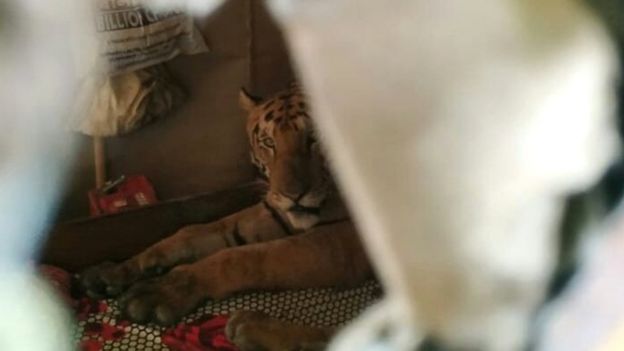
A tiger lying on a bed in Assam stateImage copyright WTI
Image caption The tiger was seen relaxing in a bed in Assam state

A female tiger which fled a wildlife park in India’s flood-ravaged state of Assam was found relaxing on a bed inside a local resident’s house.

She is believed to have fled the Kaziranga National Park, where 92 animals have died in recent days amid heavy flooding.

Officials from a wildlife conservation group arrived at the house and created a safe escape route for her.

She was guided in the direction of the jungle.

According to the Wildlife Trust of India (WTI), the tigress was first spotted next to a highway on Thursday morning, some 200 metres away from the national park.

She was likely to have been disturbed by the busy road and ended up seeking refuge in the house, which is located near the highway, it said.

Tiger in residence's houseImage copyright WTI
Image caption The house owner fled as soon as he saw the tiger

Rathin Barman, who led the rescue operation, said the tigress entered the house – which is next to a shop – at 07:30 local time (02:00 GMT) and slept throughout the day.

“She was very exhausted and had a nice day-long nap,” he told the BBC.

The house owner, Motilal, who also owns the adjoining shop, fled the house along with his family members as soon as they saw the tiger walking in.

“The great thing was that nobody disturbed her so she could rest. There’s a lot of respect for wildlife in this region,” Mr Barman said.

“[Motilal] says he will preserve the bed sheet and pillow on which the tiger rested.”

WTI officials were later called to the scene and began preparing a safe escape route for her.

They blocked traffic on the highway for an hour and set off firecrackers to wake the animal up. She eventually left the house at 17:30 local time, crossed the highway and went in the direction of the forest.

Media caption Floods cause death and destruction in north India

Mr Barman said it was not clear if she had actually entered the forest or if she had just “walked off into an adjoining area”.

The Unesco-recognised Kaziranga National Park is home to 110 tigers, but none of them have died in the flooding.

Animals killed in the park include 54 hog deer, seven rhinos, six wild boars and one elephant.

Monsoon floods have devastated the eastern states of Bihar and Assam, killing more than 100 people and displacing millions.

The monsoon season, which lasts from June to September, has also wreaked havoc in Nepal and Bangladesh.

Source: The BBC

19/06/2019

Viewpoint: How the British reshaped India’s caste system

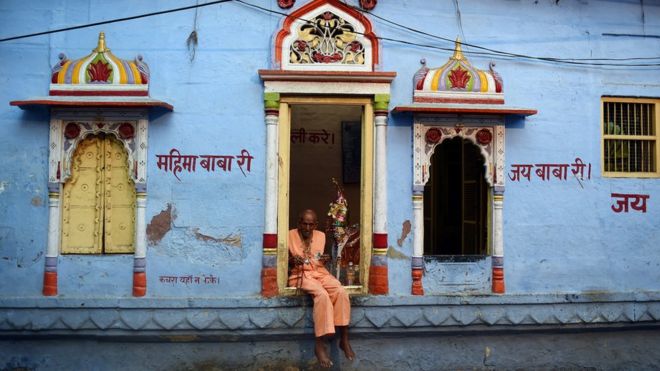
A priest sits in front of a Hindu templeImage copyright AFP

A Google search for basic information on India’s caste system lists many sites that, with varying degrees of emphasis, outline three popular tropes on the phenomenon.

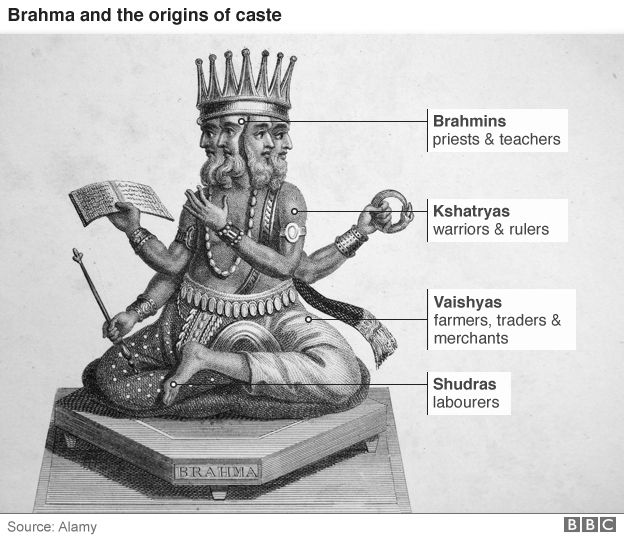
First, the caste system is a four-fold categorical hierarchy of the Hindu religion – with Brahmins (priests/teachers) on top, followed, in order, by Kshatriyas (rulers/warriors), Vaishyas (farmers/traders/merchants), and Shudras (labourers). In addition, there is a fifth group of “Outcastes” (people who do unclean work and are outside the four-fold system).

Second, this system is ordained by Hinduism’s sacred texts (notably the supposed source of Hindu law, the Manusmriti), it is thousands of years old, and it governed all key aspects of life, including marriage, occupation and location.

Third, caste-based discrimination is illegal now and there are policies instead for caste-based affirmative action (or positive discrimination).

These ideas, even seen in a BBC explainer, represent the conventional wisdom. The problem is that the conventional wisdom has not been updated with critical scholarly findings.

The first two statements may as well have been written 200 years ago, at the beginning of the 19th Century, which is when these “facts” about Indian society were being made up by the British colonial authorities.

In a new book, The Truth About Us: The Politics of Information from Manu to Modi, I show how the social categories of religion and caste as they are perceived in modern-day India were developed during the British colonial rule, at a time when information was scarce and the coloniser’s power over information was absolute.

graphic
Image caption Conventional wisdom says the caste system is a four-fold categorical hierarchy of the Hindu religion

This was done initially in the early 19th Century by elevating selected and convenient Brahman-Sanskrit texts like the Manusmriti to canonical status; the supposed origin of caste in the Rig Veda (most ancient religious text) was most likely added retroactively, after it was translated to English decades later.

These categories were institutionalised in the mid to late 19th Century through the census. These were acts of convenience and simplification.

The colonisers established the acceptable list of indigenous religions in India – Hinduism, Sikhism, Jainism – and their boundaries and laws through “reading” what they claimed were India’s definitive texts.

The so-called four-fold hierarchy was also derived from the same Brahman texts. This system of categorisation was also textual or theoretical; it existed only in scrolls and had no relationship with the reality on the ground.

This became embarrassingly obvious from the first censuses in the late 1860s. The plan then was to fit all of the “Hindu” population into these four categories. But the bewildering variety of responses on caste identity from the population became impossible to fit neatly into colonial or Brahman theory.

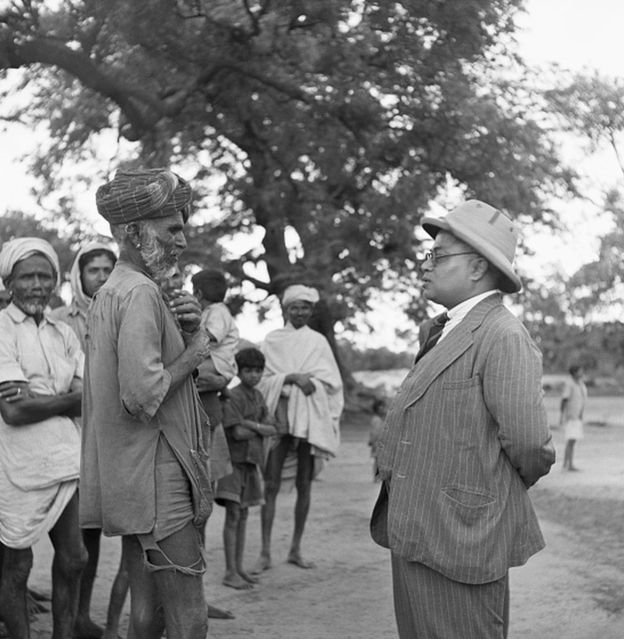
A leader of those formerly considered untouchable discusses a food shortage with a government official. Bengal Province, British India. | Location: Bengal Province, British IndiaImage copyright GETTY IMAGES
Image caption A leader of those formerly considered untouchable with a government official in British India

WR Cornish, who supervised census operations in the Madras Presidency in 1871, wrote that “… regarding the origin of caste we can place no reliance upon the statements made in the Hindu sacred writings. Whether there was ever a period in which the Hindus were composed of four classes is exceedingly doubtful”.

Similarly, CF Magrath, leader and author of a monograph on the 1871 Bihar census, wrote, “that the now meaningless division into the four castes alleged to have been made by Manu should be put aside”.

Anthropologist Susan Bayly writes that “until well into the colonial period, much of the subcontinent was still populated by people for whom the formal distinctions of caste were of only limited importance, even in parts of the so-called Hindu heartland… The institutions and beliefs which are now often described as the elements of traditional caste were only just taking shape as recently as the early 18th Century”.

In fact, it is doubtful that caste had much significance or virulence in society before the British made it India’s defining social feature.

Astonishing diversity

The pre-colonial written record in royal court documents and traveller accounts studied by professional historians and philologists like Nicholas Dirks, GS Ghurye, Richard Eaton, David Shulman and Cynthia Talbot show little or no mention of caste.

Social identities were constantly malleable. “Slaves” and “menials” and “merchants” became kings; farmers became soldiers, and soldiers became farmers; one’s social identity could be changed as easily as moving from one village to another; there is little evidence of systematic and widespread caste oppression or mass conversion to Islam as a result of it.

All the available evidence calls for a fundamental re-imagination of social identity in pre-colonial India.

The picture that one should see is of astonishing diversity. What the colonisers did through their reading of the “sacred” texts and the institution of the census was to try to frame all of that diversity through alien categorical systems of religion, race, caste and tribe. The census was used to simplify – categorise and define – what was barely understood by the colonisers using a convenient ideology and absurd (and shifting) methodology.

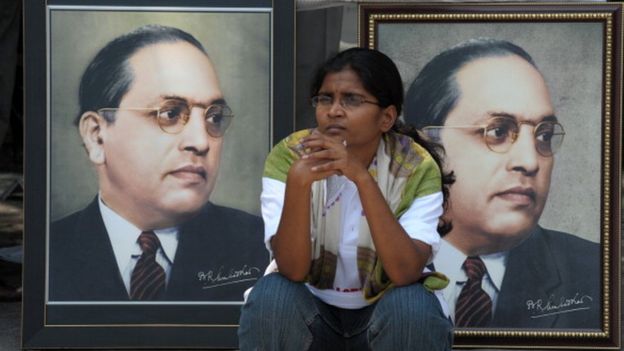
n Indian woman sits infront of portraits of Bhimrao Ramji Ambedkar during 122nd birth anniversary celebrations for Ambedkar in Hyderabad on April 14, 2012.Image copyright AFP
Image caption India’s constitution was written by BR Ambedkar, a member of the Dalit community which is at the bottom of the caste system

The colonisers invented or constructed Indian social identities using categories of convenience during a period that covered roughly the 19th Century.

This was done to serve the British Indian government’s own interests – primarily to create a single society with a common law that could be easily governed.

A very large, complex and regionally diverse system of faiths and social identities was simplified to a degree that probably has no parallel in world history, entirely new categories and hierarchies were created, incompatible or mismatched parts were stuffed together, new boundaries were created, and flexible boundaries hardened.

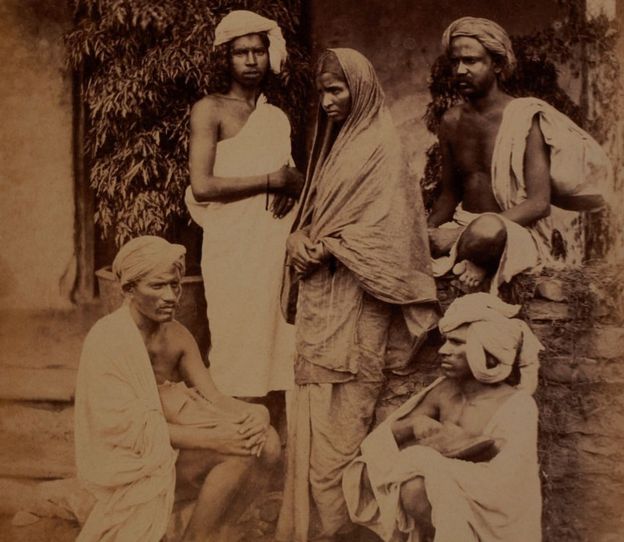
Group of Untouchables, India, circa 1890Image copyright GETTY IMAGES
Image caption Dalits, or untouchables, were at the bottom of the caste system

The resulting categorical system became rigid during the next century and quarter, as the made-up categories came to be associated with real rights. Religion-based electorates in British India and caste-based reservations in independent India made amorphous categories concrete. There came to be real and material consequences of belonging to one category (like Jain or Scheduled Caste) instead of another. Categorisation, as it turned out in India, was destiny.

The vast scholarship of the last few decades allows us to make a strong case that the British colonisers wrote the first and defining draft of Indian history.

So deeply inscribed is this draft in the public imagination that it is now accepted as the truth. It is imperative that we begin to question these imagined truths.

Source: The BBC

23/06/2016

Why India’s monsoon is difficult to forecast | The Economist

METEOROLOGISTS are forecasting a bumper monsoon for India this year. This is good news for the more than 600m people—about half of India’s population—who depend on the rains it brings. Knowing when and where the monsoon will arrive is especially important for farmers; even now, two-thirds of India’s fields lack irrigation. But forecasting the monsoon remains fantastically difficult, especially as four in every ten monsoons are classified as abnormal anyway. What makes India’s monsoon so unpredictable?

The word monsoon derives from mausam in Hindi (and originally from Arabic), meaning “weather”. Monsoon climates typically have two very distinct seasons: wet and dry. In India, the onslaught of the rains begins when moist air is carried northwards from the Indian ocean during the summer. The winds transporting the main or “south-west” monsoon come from an area south of the equator which is characterised by high atmospheric pressure. As the air gathers moisture during the journey, atmospheric convection forms huge storm clouds which arrive first in southern India around early June (as they did this year). The monsoon creeps north and west, showering Pakistan and north India about a month later. By September it is in retreat, and has normally withdrawn from the south of the country by December. Many factors seem to affect the duration and intensity of the monsoon. One is El Niño, a climatic phenomenon associated with warmer temperatures in the tropical Pacific ocean. Last year the monsoon proved disappointing while El Niño was in full swing: total rainfall between June and September was 14% below the 50-year average. How exactly the phenomenon interacts with the monsoon is not well understood, however, as even large Niños in the past have coincided with normal monsoons.

Anthropogenic emissions also seem to affect rain patterns. India is the world’s fourth-biggest emitter of greenhouse gases. The insulating effect of such emissions helped make last year the hottest on record; this year looks set to be even more scorching. A warmer atmosphere probably means even greater variability in the monsoon. Rainfall extremes are expected to increase, thanks in part to the fact that a warmer atmosphere can hold more moisture (about 7% more, for every degree Celsius of warming). Air pollution complicates matters further. It is a terrible problem in India, contributing to more than 600,000 early deaths a year. Cooking at home, and the smoke it releases, accounts for much of the trouble. Aerosols such as black carbon interact with sunlight. Some of these tiny particles—many less than a tenth the width of a human hair—scatter light, while others absorb it. In the former case, this prevents the light from warming the earth’s surface. In the latter, absorbing the light causes the particles to warm the air around them. Both alter the heating of the atmosphere, and therefore the heating of the land relative to the ocean—the process which drives the monsoon.

Scientists are using a variety of techniques to better forecast the monsoon, from monitoring changes in land use (because vegetation stores more moisture) to sending underwater robots into the Bay of Bengal (to learn more about the salinity and temperature of the ocean). Their research could improve climate models and farming practices—but improved water-storage facilities, better irrigation and more access to insurance schemes might have to make up for the gaps in knowledge that will persist.

Source: The Economist explains: Why India’s monsoon is difficult to forecast | The Economist

Law of Unintended Consequences

continuously updated blog about China & India

ChiaHou's Book Reviews

continuously updated blog about China & India

What's wrong with the world; and its economy

continuously updated blog about China & India