Archive for ‘Coal’

12/04/2020

Covid-19 lockdowns brought blue skies back to China, but don’t expect them to last

  • Between January 20 and April 4, PM2.5 levels across the country fell by more than 18 per cent, according to the environment ministry
  • But observers say that as soon as the nation’s factories and roads get back to normal, so too will the air pollution levels
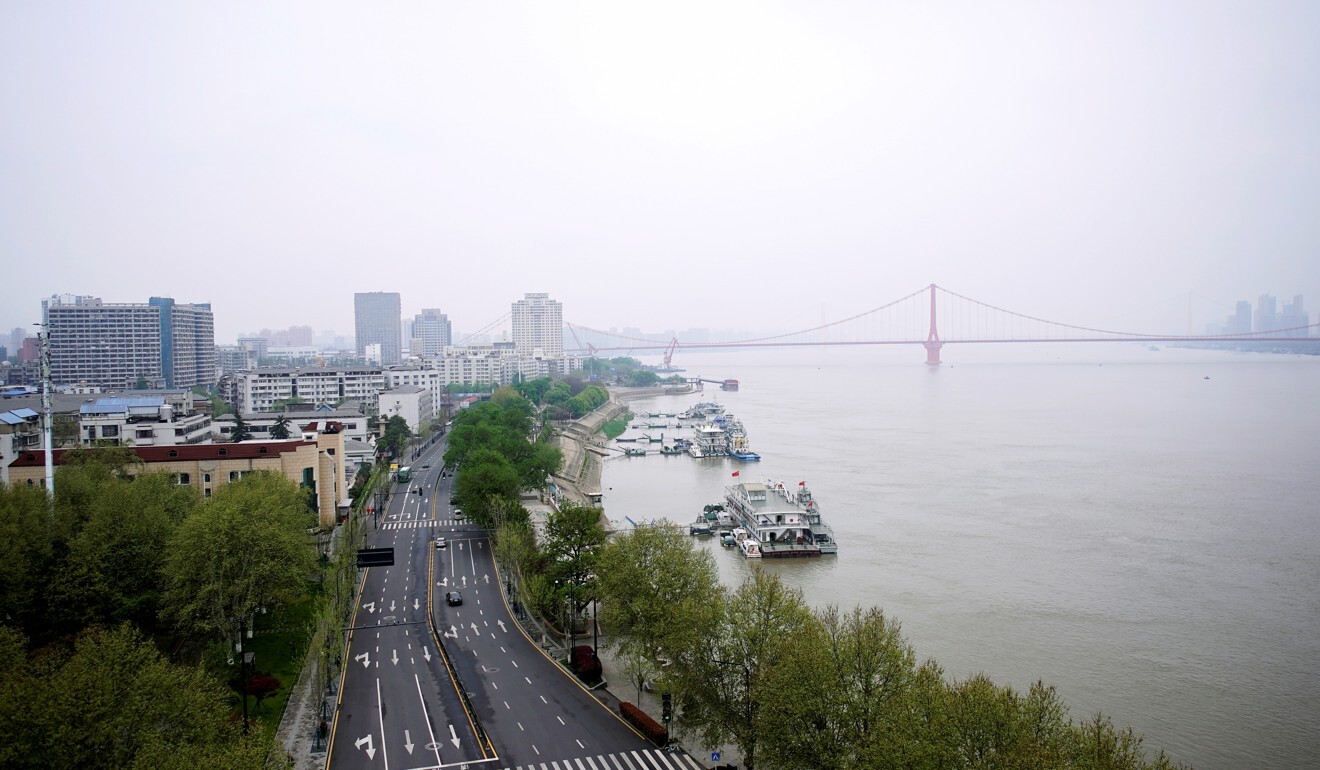
Blue skies were an unexpected upside of locking down cities and halting industrial production across China. Photo: AFP
China’s air quality has improved dramatically in recent weeks as a result of the widespread city lockdowns and strict travel restrictions introduced to contain the

coronavirus epidemic

. But experts say the blue skies could rapidly disappear as factories and roads reopen under a government stimulus plan to breathe new life into a stalled economy.

According to the Ministry of Ecology and Environment, between January 20 and April 4 the average concentration of PM2.5 – the tiny particles that pose the biggest risk to health – fell by 18.4 per cent from the same period of last year.
Meanwhile, the average number of days with good air quality – determined as when the air pollution index falls below 100 – rose by 7.5 per cent, it said.

Satellite images released by Nasa and the European Space Agency showed a dramatic drop in nitrogen dioxide emissions in major Chinese cities in the first two months of 2020, compared with a year earlier.

According to Nasa, the changes in Wuhan – the central China city at the epicentre of the initial coronavirus outbreak – were particularly striking, while nitrogen dioxide levels across the whole of eastern and central China were 10 to 30 per cent lower than normal.

The region is home to hundreds of factories, supplying everything from steel and car parts to microchips. Wuhan, which has a population of 11 million, was placed under lockdown on January 23, but those restrictions were lifted on  Wednesday
.
Air pollution is likely to return to China’s cities once the lockdowns are lifted. Photo: Reuters
Nitrogen dioxide is produced by cars, power plants and other industrial facilities and is thought to exacerbate respiratory illnesses such as asthma.

The space agency said the decline in air pollution levels coincided with the restrictions imposed on transport and business activities.

That was consistent with official data from China’s National Development and Reform Commission, which recorded a 25 per cent fall in road freight volume and a 14 per cent decline in the consumption of oil products between January and February.

Guangzhou cases prompt shutdown in ‘Little Africa’ trading hub

8 Apr 2020

Liu Qian, a senior climate campaigner for Greenpeace based in Beijing, said the restrictions on industry and travel were the primary reasons for the improvement in air quality.

According to official data, in February, the concentrations of PM2.5, nitrogen dioxide and sulphur dioxide – a toxic gas that comes mostly from industrial burning of coal and other fossil fuels – all fell, by 27 per cent, 28 per cent and 23 per cent, respectively.

“The causes of air pollution are complicated, but the suspension of industrial activity and a drop in public transport use will have helped to reduce levels,” Liu said.

As the epicentre of the Covid-19 pandemic has shifted to the United States and

Europe

, human and industrial activity in China is gradually picking back up, and so is air pollution.

Lauri Myllyvirta, lead analyst with the Centre for Research on Energy and Clean Air in Helsinki, said that levels of nitrogen dioxide pollution, measured both by Nasa satellites and official stations in China, started inching back up in the middle of March and had returned to normal levels by the end of the month.

That coincided with the centre’s findings – published on Carbon Brief, a British website on climate change – that coal consumption at power plants and oil refineries across China returned to their normal levels in the fourth week of March.

How the Wuhan experience could help coronavirus battle in US and Europe

10 Apr 2020

Ma Jun, director of the Institute of Public & Environmental Affairs, a Beijing-based charity, said a stimulus plan to kick-start the economy would have a significant impact on air pollution.

“Once industrial production is fully resumed, so are the emission levels,” he said. “Unless another outbreak happens and triggers another lockdown, which would be terrible, the improvement achieved under the pandemic is unstable and won’t last long.”

After the 2008 financial crisis, Beijing launched a 4 trillion yuan (US$567.6 billion) stimulus package that included massive infrastructure investment, but also did huge damage to the environment. In the years that followed, air pollution rose to record highs and sparked a public backlash.

Even before the Covid-19 outbreak, China’s economy was slowing – it grew by 6.1 per cent in 2019, its slowest for 29 years – and concerns are now growing that policymakers will go all out to revive it.
“Local governments have been under huge pressure since last year, and there are fears that environmental regulations will be sidelined [in the push to boost economic output],” Ma said.
But Beijing had the opportunity to get it right this time by investing more in green infrastructure projects rather than high-carbon projects, he said.
“A balance between economic development and environmental protection is key to achieving a green recovery, and that is what China needs.”
Source: SCMP
05/07/2017

Indian utility bets $10 billion on coal power despite surplus, green concerns | Reuters

India’s state-run power utility plans to invest $10 billion in new coal-fired power stations over the next five years despite the electricity regulator’s assessment that thermal plants now under construction will be able to meet demand until 2027.

In the first phase, India’s biggest power producer, NTPC (NTPC.NS), plans to build three new plants with a combined capacity of more than 5 gigawatts (GW), nearly double the capacity of those currently being phased out, five senior company officials said.

The company has not made the investment public because it has not yet received government approval.If approved, the plan could set back efforts by the world’s third-largest greenhouse gas emitter to control carbon output and raise questions about Prime Minister Narendra Modi’s vow to stand by commitments under the Paris climate accord.

The proposal also comes as several coal-fired stations built in the last power boom a decade ago are standing idle due to softer-than-expected demand. State-controlled Coal India (COAL.NS) is struggling to sell its stockpile as a result.

But other indicators indicate demand will pick up, a top NTPC executive said, asking not to be named because the plan had not yet been announced.

“I don’t think (the current) electricity surplus will be there for a long time,” he told Reuters. “We should not fool ourselves.”

More than 300 million of India’s 1.3 billion people are still not hooked up to the grid, according to NITI Aayog, which makes policy recommendations to the government.

As connections improve, the panel reckons, the country’s per-capita power consumption could jump around a third to up to 2,924 kilowatt-hours by 2040 from 2012 levels.

In the next decade, the around 50 GW of capacity from thermal plants due to come online by 2022 will meet demand, the Central Electricity Authority (CEA) said. Additional supplies will come from sources such as solar and wind, it said.

Asked about NTPC’s plan, CEA chairman RK Verma said the commercial decisions of the company were its own affair.

“NTPC is a commercial organization and they must be having their own commercial considerations,” Verma said.For its part, a spokesperson at NTPC would say only: “NTPC takes decisions after consulting both the CEA and the ministry of power.”

THERMAL VS RENEWABLE

Solar power generation capacity in India has more than tripled in three years to more than 12 GW since Modi targeted raising energy generation from renewable sources to 175 GW by 2022, against total installed capacity at the end of May of 330.3 GW.

Around 78 percent of generated power in India at the moment still comes from coal-fired plants, however, making it one of the biggest users of the dirty and cheap fuel in the world.

Carbon dioxide emissions from India’s thermal plants are expected to jump to 1,165 million tonnes by 2026/27 from 462 million tonnes in 2005, the CEA estimates. Emission intensity, measured in carbon dioxide emissions versus GDP, is likely to fall, however.India is undergoing a program to retrofit several coal-fired plants to reduce emissions.

The plants planned by NTPC are “supercritical”, meaning they are 2-3 percent more efficient than conventional plants and therefore have lower emissions.

NTPC’s proposal is likely to be greeted with alarm by environmental activists who are already worried by the CEA’s statement that existing power plants are unlikely to meet India’s emission norms before the Paris deadline of December this year.

“Adding more power plants would aggravate health impacts even further,” said Sunil Dahiya, an energy activist with Greenpeace in New Delhi, when asked about the possibility of new coal-fired plants.NTPC’s proposal is to build plants of two 660 megawatt (MW) units each at Singrauli in central India’s Madhya Pradesh and Talcher in Odisha in the east.

The biggest plant, with a capacity of 2.4 GW in the eastern state of Jharkhand, was close to getting clearance from the environment ministry, one of many steps in the process of getting government approval, one of the senior company officials said.

A plan announced by NTPC last year to generate 10 GW of energy from renewable sources by 2022 was making slow progress due to land acquisition issues, another company official said.

Source: Exclusive: Indian utility bets $10 billion on coal power despite surplus, green concerns | Reuters

Tags:
Law of Unintended Consequences

continuously updated blog about China & India

ChiaHou's Book Reviews

continuously updated blog about China & India

What's wrong with the world; and its economy

continuously updated blog about China & India