Archive for ‘Economics’

01/05/2012

* Sign nuclear non-proliferation treaty, Japan tells India

The Hindu: “Japan on Monday asked India to sign the Nuclear Non-Proliferation Treaty NPT even as the two sides decided to reopen talks on a bilateral civil nuclear agreement.

During the sixth Foreign Minister-level strategic dialogue here, the two sides agreed to prepare a master plan for the industrial development of south India, especially areas around Chennai and Bangalore, and accelerate talks on export of rare earths to Japan.

Another decision was to extend their dialogue to a code of conduct in outer space, cyber security and maritime issues, including security and freedom of navigation in the South China Sea. The talks also covered Japanese investment in high speed trains, the Delhi-Mumbai Industrial Corridor and the Dedicated Freight Corridor. While agreeing to step up interaction between the Coast Guards, India and Japan decided to hold their first-ever maritime exercises towards the middle of the year.”

via The Hindu : News / National : Sign nuclear non-proliferation treaty, Japan tells India.

29/04/2012

* China’s great leap forward – into the supermarket

The Guardian: “Made in China says everything, economically, about the last decade. Sold in China tells you everything about the next.

Recent output figures from China were greeted with concern after the country reported its lowest GDP growth for three years, although, at 8.1%, its magnificent compared to the UK’s double-dip recession. Still, there is much talk among economists about a “hard landing”, a “property bubble” and “bankrupt banks”. But there is one key fact to remember about the economy in China. It’s that the minimum wage is going up 15% a year, every year, for the next five years. Take a billion workers and give them a 100% pay rise. It changes everything.

Within a generation, China is likely to displace the US as the biggest consumer market in the world. At Tianjin Port, the world’s fifth biggest, container ships used to export Chinese goods to the rest of the world but come back empty. Now they return with the finished and semi-finished goods from the rest of the world to satisfy a ravenous consumer appetite.

In Tianjin’s vast factory zone, across the road from a Foxconn plant making the next wave of Apple iPhones, the Master Kong factory makes more pot noodles than anywhere else in the world. The huge automated production lines, with machine tools imported from Japan and Germany, churn out five billion noodle packets a year – enough to reach to the moon and back. All the raw materials come from China, all of the finished product is consumed in China. Its just one of 23 Master Kong plants on the mainland.

Further south in the “groundscraper” and weirdly Hogwarts-esque Shanghai offices of Ping An, China’s second biggest insurer, 12,000 commission-led telesales agents make one million sales calls every day. It is the largest telemarketing operation on the planet, feeding on the explosive growth of domestic car sales. Last year 14.5m cars were sold in China – or 2m more than in the US, previously the world’s biggest auto market. Nine in 10 were to people who had never bought a car before. Ping An now insures 32m private cars, raking in premiums of £2.2bn 22.3bn renminbi a year. Four years ago, that revenue was below £100m.

Just off outer ring road five in Beijing, a mundane average-income district, the Wu Mart hypermarket is perhaps an early indicator of how domestic consumption will grow.

The store bears more resemblance to a Lidl than a Tesco but, unlike the oddly deserted luxury shops in the city centre, it is teeming. It’s instantly apparent that mid-range western brands are phenomenally popular with middle-income Chinese consumers. Shelf after shelf stocks the likes of Colgate toothpaste, Nivea, Quaker Oats and Snickers bars.

Whole aisles are devoted to disposable nappies. China’s one-child policy, rigorously enforced, means that spending on a sole child is proportionately huge. Hong Kong babies use 50% more diapers than those in the west, and mainland China is heading the same way. Want to invest in China? Maybe buy Procter & Gamble (Pampers) or Kimberly-Clark (Huggies) instead.

via Chinas great leap forward – into the supermarket | Money | The Guardian.

28/04/2012

* China, Russia sign 27 contacts worth 15 billion USD

Xinhua: “China and Russia have signed 27 trade contracts worth 15 billion U.S. dollars, Chinese Vice Premier Li Keqiang said here on Saturday.

Li attended the signing ceremony of the contracts before a meeting on China-Russia trade and investment. Addressing the meeting, Li proposed that both China and Russia endeavor together to further promote their trade and economic cooperation. The two countries could expand their cooperation in various fields, including finance, direct investment, energy, mechanical and electronic products, he said. Russian First Deputy Prime Minister Igor Shuvalov also attended the meeting.

China is the top trade partner of Russia. Bilateral trade volume reached 79.25 billion U.S. dollars in 2011, up 42.7 percent year-on-year.”

via China, Russia sign 27 contacts worth 15 billion USD – Xinhua | English.news.cn.

Related articles
27/04/2012

* China Wants More Trade With Central and Eastern Europe

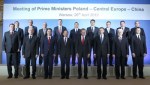
New York Times: “Prime Minister Wen Jiabao said Thursday that China wanted to double trade with the countries of Central and Eastern Europe to $100 billion a year by 2015, and pledged billions in loans to help promote investment in the region.

Mr. Wen made the announcement at a gathering in Warsaw that brought together business and political leaders of countries stretching from the Baltics to the Balkans that are eager to do business with China, even as they struggle to overcome stereotypes still held by many in the region who associate the Chinese as makers of inexpensive toys and designer knock-offs.

Infrastructure, high technology and green technology are target areas for growth, Mr. Wen said, announcing that Beijing would set up a $10 billion line of credit to support investment in these specific industries. He also pledged an additional $500 million in funds to be made available to Chinese companies seeking to make first-stage investment in the region.”

via China Wants More Trade With Central and Eastern Europe – NYTimes.com.

China continues to woo everyone. And Mr Wen is making himself very busy in his final year in office.

Related post: https://chindiapedia.wordpress.com/wp-admin/post.php?post=5753&action=edit

https://chindia-alert.org/political-factors/geopolitics-chinese/

27/04/2012

* Wen paints Europe green in 4-nation trip

China Daily: “Trade and investment deals and business cooperation have been the focus of Premier Wen Jiabao’s tour to four European nations this week. Such fare is common for such visits, but

Wen Jiabao (温家宝), Chinese Premier

Wen Jiabao (温家宝), Chinese Premier (Photo credit: Wikipedia)

there was a new ingredient in the latest trip: Wen and his delegation have been paying particular attention to green and innovative industries in almost every destination of the seven-day visit, which ends on April 29.

As China switches from high growth to sustainability in the current five-year plan and as the country’s foreign trade growth slows, politicians, businesses and industrial leaders from China and Europe are seeing more opportunities in each others markets. Before his scheduled arrival in Warsaw on April 27, Wen pressed for global action on sustainable development that strikes a balance between economic growth, social progress and environmental protection, instead of focusing exclusively on the environment, at the Stockholm+40 conference in Sweden.”

via Wen paints Europe green in 4-nation trip|News|chinadaily.com.cn.

This relatively new theme of ‘sustainability’ goes along with strenuous efforts to reduce carbon and increase renewable energy sources. Good for China and good for the world.

Related pagehttps://chindia-alert.org/economic-factors/greening-of-china/

27/04/2012

* China’s vice-premier starts landmark European mission

Li Keqiang, Chinese politician

Li Keqiang, Chinese politician (Photo credit: Wikipedia)

China Daily: “Visit covers Russia, Hungary, Belgium and EU headquarters

Business opportunities will emerge from the economic development of China and Russia and both countries will benefit from increasing prosperity and global influence, Vice-Premier Li Keqiang said on Thursday. “The two countries are in total agreement on this point,” Li said in a Russian newspaper article.

The vice-premier started a 10-day visit on Thursday, to promote trade and investment. He will visit Russia, Hungary, Belgium and EU headquarters in Brussels.”We view each others growth as opportunities because both nations share similar targets,” Li said.”

via Chinas vice-premier starts landmark European mission|Politics|chinadaily.com.cn.

The wooing continues unabated; Premier Wen visits Iceland, Sweden, Germany and Poland, then VP Li visits Russia, Hungary, Belgium and EU.

Related posts:

26/04/2012

* Understanding social media in China

McKinsey Quarterly: “The world’s largest social-media market is vastly different from its counterpart in the West. Yet the ingredients of a winning strategy are familiar.

No Facebook. No Twitter. No YouTube. Listing the companies that don’t have access to China’s exploding social-media space underscores just how different it is from those of many Western markets. Understanding that space is vitally important for anyone trying to engage Chinese consumers: social media is a larger phenomenon in the world’s second-biggest economy than it is in other countries, including the United States. And it’s not indecipherable. Chinese consumers follow the same decision-making journey as their peers in other countries, and the basic rules for engaging with them effectively are reassuringly familiar.

In addition to having the world’s biggest Internet user base—513 million people, more than double the 245 million users in the United States. China also has the world’s most active environment for social media. More than 300 million people use it, from blogs to social-networking sites to microblogs and other online communities. That’s roughly equivalent to the combined population of France, Germany, Italy, Spain, and the United Kingdom. In addition, China’s online users spend more than 40 percent of their time online on social media, a figure that continues to rise rapidly.

This appetite for all things social has spawned a dizzying array of companies, many with tools more advanced than those in the West: for example, Chinese users were able to embed multimedia content in social media more than 18 months before Twitter users could do so in the United States. Social media began in China in 1994 with online forums and communities and migrated to instant messaging in 1999. User review sites such as Dianping emerged around 2003.  Blogging took off in 2004, followed a year later by social-networking sites with chatting capabilities such as Renren. Sina Weibo launched in 2009, offering microblogging with multimedia. Location-based player Jiepang appeared in 2010, offering services similar to foursquare’s. This explosive growth shows few signs of abating, a trend that’s at least partially attributable to the fact that it’s harder for the government to censor social media than other information channels. That’s one critical way the Chinese market is unique.

As you shape your own social-media strategy, it’s important to fully understand some other nuances of the country’s consumers, content, and platforms.”

via Understanding social media in China – McKinsey Quarterly – Marketing & Sales – Digital Marketing.

26/04/2012

* China offshores manufacturing to the U.S.

CNN Money: “Chinese conglomerates, on a mission to expand their global footprint and avoid “anti-dumpingtariffs, are shifting more of their production to America.

This flag is for the Chinese community in the ...

(Photo credit: Wikipedia)

In the United States, cash-strapped states desperate for revenue and jobs, are rolling out the welcome mat for foreign companies that can guarantee both. More Chinese manufacturers have been launching their own U.S. facilities in the last five years, said Thilo Hanemann, research director at Rhodium Group, a New York-based economic advisory group. The biggest investments are being made by Chinese firms with products that have been slapped with hefty anti-dumping tariffs, he said.”

via http://d2pnews.com/index.php/2012/04/24/chinese-manufacturers-offshore-to-the-u-s/.

Related post: https://chindia-alert.org/2012/02/13/reverse-outsourcing/

26/04/2012

* China Invests in Germany Amid Uncertainty

New York Times: “As Prime Minister Wen Jiabao of China tours Europe this week, it is no accident that Germany occupies a special place on his itinerary. After all, Germany is the one European Union country that has a trade surplus with China. And it has also been a focus of Chinese investment in Europe — so much so that analysts say some Germans are growing wary as Chinese businesses have been snapping up German engineering companies.

Mr. Wen, making his sixth visit in eight years, and the German chancellor, Angela Merkel, on Sunday opened the annual trade fair in Hanover, billed as the world’s leading showcase for industrial technology. They plan to witness the signing of an economic agreement at the Volkswagen headquarters, in Wolfsburg, on Monday. According to German media reports, the deal will include the opening of a new car plant in the far western Chinese region of Xinjiang.

Mr. Wen’s agenda, as with a follow-up trip planned by his likely successor, Vice Prime Minister Li Keqiang, seems aimed at presenting an aura of business as usual, even as trade tensions flare with the West and the Communist Party at home is embroiled in its biggest scandal in years, involving the deposed Politburo member Bo Xilai.”

via China Invests in Germany Amid Uncertainty – NYTimes.com.

Two birds with one stone: Collaboration with Germany & VW; and opening up a major auto plant in Xinjiang, one of the two provinces with significant unrest (the other, of course, is Tibet).

26/04/2012

* For Apple, China Is Middle Kingdom

WSJ: “Not long ago, Asia Pacific was all but a footnote in the financial statements of technology juggernaut Apple Inc. But no more.

Image representing Apple as depicted in CrunchBase

Apple’s sales in the fast-growing region, fueled largely by China, more than doubled and represented 26% of its $39.2 billion in sales for the first three months of the year. IPhone sales in mainland China increased fivefold from the year-ago period and more than doubled in Japan.

Asia Pacific came within striking distance of becoming Apple’s largest revenue source in the fiscal second quarter. The company took in $10.2 billion in sales for the region for the first three months of the year, compared with $13.2 billion for the Americas, long its biggest source of revenue. Apple breaks out Asia Pacific separately from Japan, where sales nearly doubled to $2.6 billion.

Its a dramatic transformation considering Apple didn’t include Asia Pacific in its geographic breakdown until it reported results for the three months ended December 2009. That’s the quarter when Apple released the iPhone in China, more than two years after the U.S. debut. Apple has also yet to ship its new iPad in mainland China, selling 11.8 million of the tablets globally in the latest quarter.”

via For Apple, China Is Middle Kingdom – WSJ.com.

So China is rapidly becoming not only the producer but also consumer of high-tech electronic consumer products!

Law of Unintended Consequences

continuously updated blog about China & India

ChiaHou's Book Reviews

continuously updated blog about China & India

What's wrong with the world; and its economy

continuously updated blog about China & India