08/09/2019
- Two people from the circus have been detained after the animal managed to get out of its cage and run towards nearby cornfields on Friday evening
- It was found the next morning and police used a tranquilliser to subdue the tiger but it died on the way to the zoo, which believes it had been hit by a car
Video footage shows circus handlers using sticks to try to coax the tiger back inside the cage after it escaped on Friday night. Photo: Thepaper.cn
A circus tiger that escaped from its cage during a show in central China was captured by police after an overnight search, but died while it was being transported to a nearby zoo, according to media reports.
Two people from the circus where the tiger was raised in the county of Yuanyang, Henan province, have been detained, Beijing Youth Daily reported, without elaborating. It said the tiger escaped during the circus’ first public show, which had not been registered with the local authorities.
The tiger was part of a performance for a local school on Friday evening when it managed to get out of its cage and run towards nearby cornfields.
A video posted by news site Thepaper.cn shows the moment it escaped from the cage, with its handlers using sticks to try to coax the animal back inside. The scene is chaotic, as people scream and run from the venue.
A tranquilliser dart was used to subdue the tiger on Saturday morning and it was transported to a zoo in Xinxiang. Photo: Thepaper.cn
The police were called in, and officers used drones, police dogs and thermal imaging equipment to hunt for the tiger, according to the local government.
The authorities also put out an emergency advisory telling residents to stay indoors and contact police if they had any information on the tiger’s whereabouts.
It was spotted the following morning, and a tranquilliser dart was used to subdue the animal at about 10.30am on Saturday. The tiger was then transported to a zoo in the city of Xinxiang.
According to one of its zookeepers, the animal had already died by the time it was delivered to the zoo, China Youth Daily reported on Sunday.
The \jsq, surnamed Feng, said the tiger was hit by a car after it escaped and may have sustained internal injuries. The zoo is conducting an autopsy.
Chinese circus tiger attacks two children after breaking out of cage in middle of performance
Thousands of social media users expressed their sympathy for the tiger’s plight, saying it must have suffered greatly, with many people calling for animal circuses to be banned in China.
“Tigers don’t belong in cages, they belong in the wilderness,” one person wrote on microblog site Weibo.
Chinese circus defends using rare animals in its acts despite poor crowds at shows and criticism of its methods.
Source: SCMP
Posted in Beijing Youth Daily, cage, captured, car, Central China, chaotic, China alert, circus, Circus tiger, cornfields, died, dies, drones, escapes, handlers, Henan province, local authorities, local school, performance, Police, police dogs, registered, scream and run, sent to zoo, show, Thepaper.cn, thermal imaging equipment, tiger, tranquilliser, tranquilliser dart, Uncategorized, venue, Weibo, Xinxiang, Yuanyang, Zoo |
Leave a Comment »
05/09/2019
The fourth China-Arab States Expo is opened in Yinchuan, capital of northwest China’s Ningxia Hui Autonomous Region, Sept. 5, 2019. (Xinhua/Feng Kaihua)
YINCHUAN, Sept. 5 (Xinhua) — The fourth China-Arab States Expo opened Thursday in Yinchuan, capital of northwest China’s Ningxia Hui Autonomous Region.
The four-day event will feature trade fairs and forums on infrastructure, Internet plus healthcare, high technology, modern agriculture, logistics, tourism, digital economy and industrial cooperation.
Sponsored by the Ministry of Commerce, China Council for the Promotion of International Trade and Ningxia regional government, this year’s event attracts around 12,600 participants from 2,900 regional organizations, commerce chambers, associations and enterprises in 89 countries, according to the organizer of the expo.
Source: Xinhua
Posted in Associations, China Council for the Promotion of International Trade, China-Arab States Expo, China’s Ministry of Commerce, Chinese Ministry of Commerce, commerce chambers, countries, digital economy, enterprises, forums, healthcare, high technology, industrial cooperation, Infrastructure, Internet, logistics, Ministry of Commerce, Ministry of Commerce (MOC)., modern agriculture, Ningxia Hui Autonomous Region, Ningxia regional government, organizer, participants, regional organizations, Tourism, trade fairs, Uncategorized, Yinchuan |
Leave a Comment »
05/09/2019
- When Kazakh actress Reyizha Alimjan arrived in Shanghai last month wearing jeans and a camisole it reignited a long-running debate over who gets a say on how Chinese women should dress
- Fashion choices that would be regarded as unremarkable in Europe or North America are often seen as outrageous in the world’s most populous nation
Kazakh actress Reyizha Alimjan’s fashion choices sparked a social media storm in China last month. Photo: Weibo
When Li Xiang broke up with her boyfriend over a selfie she posted on social media, it was not just about a woman letting a man know he wasn’t entitled to tell her how to dress in public, but a matter of personal freedom, social norms and cultural tradition.
A few weeks ago, the 24-year-old media worker from Shanghai shared a photo on WeChat that showed her posing at her bedroom door in a camisole and mini shorts. Her boyfriend said it made him very “uncomfortable”, and they quarrelled.
“‘Look how scantily clad you are, and [if] that is not enough, you shared it online,’ he said,” Li recalled.
“I got mad when he said, ‘You should go and ask other men if they’d like their girlfriends to dress like that’, as if he should decide what I wear – as if I were his appendage,” she said, referring to the archaic notion that a woman is secondary to a man in their relationship.
What clothes Chinese women should or should not wear has been the subject of intense online debate in recent weeks. Photo: EPA
Their argument was not unusual in China, especially over the past month when the online world became embroiled in a war of words about women’s freedom to dress as they please.
The controversy erupted when an article defending Reyizha Alimjan – the Kazakh actress criticised for showing too much flesh when she arrived at an airport in Shanghai in late July wearing jeans and a camisole – appeared on a WeChat movie review account called Staff of the 3rd Hall on August 12.
Reyizha Alimjan was criticised for her outfit on Chinese social media. Photo: Weibo
While that perspective was supported by many women online, others disagreed and said that society was open and tolerant but that people had the right to disagree.
By coincidence, a poll about women wearing camisoles in public was launched on August 10 by a WeChat account called Cicada Creativity. About 70 per cent of the nearly 14,000 respondents said they did not dare to do so.
More than 40 per cent avoided doing so for reasons such as thinking they were “not thin enough”, but a quarter said they said no because either their boyfriends disapproved or would not allow it, or they feared they would be harassed.
Chinese women spurn Victoria’s Secret for home-grown lingerie brands
Joy Lin, a feminist from Shanghai, said the debate was so fierce because it was not just about dress.
“It’s more about people’s judgment about one’s character and morals behind what she wears,” Lin said. “If you wear revealing clothes, they would say you are asking for harassment. If you show a little skin, you are frigid. And if you are casual, they call you ‘dama’ [Chinese slang, often derogatory, for middle-aged and elderly women].”
Some women say they are often judged by the clothes they wear. Photo: AP
In her experience, Lin said that if she appeared on the streets of Shanghai – the most cosmopolitan city in China – without a bra, there would be judgmental looks from passers-by before she had walked 10 metres (33 feet).
In contrast, she did just that in Paris in July, and, “no one stared at me or came near me at all”.
“Usually, when it comes to comments about what we wear, they’re not about whether the dress matches the hairstyle or things like that, but about our bodies, whether we’re slim or not and stuff like that,” she said. “Some [comments] can be very malicious and insulting.”
#MeToo rally accuses Hong Kong police of sexual violence against protesters
While shaming women for their clothing choices has been an issue for many years, it reached peak public awareness in China after the #MeToo movement took off in the US.
The social media campaign went viral in 2017 when dozens of women accused American film producer Harvey Weinstein of sexual assaults over a period of nearly 30 years.
The #MeToo movement took off in the US in 2017 after dozens of women accused film producer Harvey Weinstein of sexual assault. Photo: Shutterstock
Lu Peng, a researcher from the Shanghai Academy of Social Sciences, said the online debate helped encapsulate conflicts between a growing desire for freedom, gender norms and generations of tradition.
“There will hardly be a consensus on such a question about whether women have the freedom to dress,” he said. “But if this discussion can make people realise that men, not just women, also face restrictions in dressing, then it’s bringing progress.”
The simplest example was to dress for the occasion, which applies to both sexes.
“We have never been free in dressing. We’re only free within a certain extent … About what to wear in public, I don’t think we should emphasise freedom only and ignore the local culture and society,” Lu said.
Keeping a low profile has long been part of the Chinese philosophy. Photo: Xinhua
In China, there is no law banning states of dress or undress in public, nor do the Han people, who make up most of the population, have religious beliefs that restrict their mode of dress. But keeping a low profile and avoiding unwanted attention has long been part of the Chinese philosophy.
“My father will also ask me not to be ‘overexposed’, because he believes it’s increasing the risk of being harassed,” Li, the Shanghai media worker, said.
“They think they mean well, but I just want to be myself. I’m not breaking any law. I want to make my own contribution in changing this culture,” she said.
Source: SCMP
Posted in #MeToo, actress, American film producer, archaic notion, battle, bedroom door, between, bra, brands, camisole, casual, Chinese women, Cicada Creativity, City, cosmopolitan, debate, derogatory, dress, elderly women, Europe, Fashion choices, feminist, fierce, Freedom, frigid, harassment, Harvey Weinstein, home-grown, Hong Kong police, insulting, jeans, judgment, judgmental looks, Kazakh, lingerie, long-running, malicious, middle-aged, mini shorts, morals, most populous nation, North America, one’s character, outrageous, Paris, passers-by, posing, public awareness, quarrelled, reignited, relationship, reveals, Reyizha Alimjan, scantily, secondary, sexual assaults, sexual violence, shaming women, Shanghai, Shanghai Academy of Social Sciences, social media storm, tradition, Uncategorized, uncomfortable, unremarkable, US, Victoria's Secret, wear, wearing, WeChat |
Leave a Comment »
05/09/2019
- Researchers will conduct tests at site in Gansu to see whether it will make a viable facility to store highly radioactive waste safely
- Scientists say China has the chance to become a world leader in this field but has to find a way to ensure it does not leak
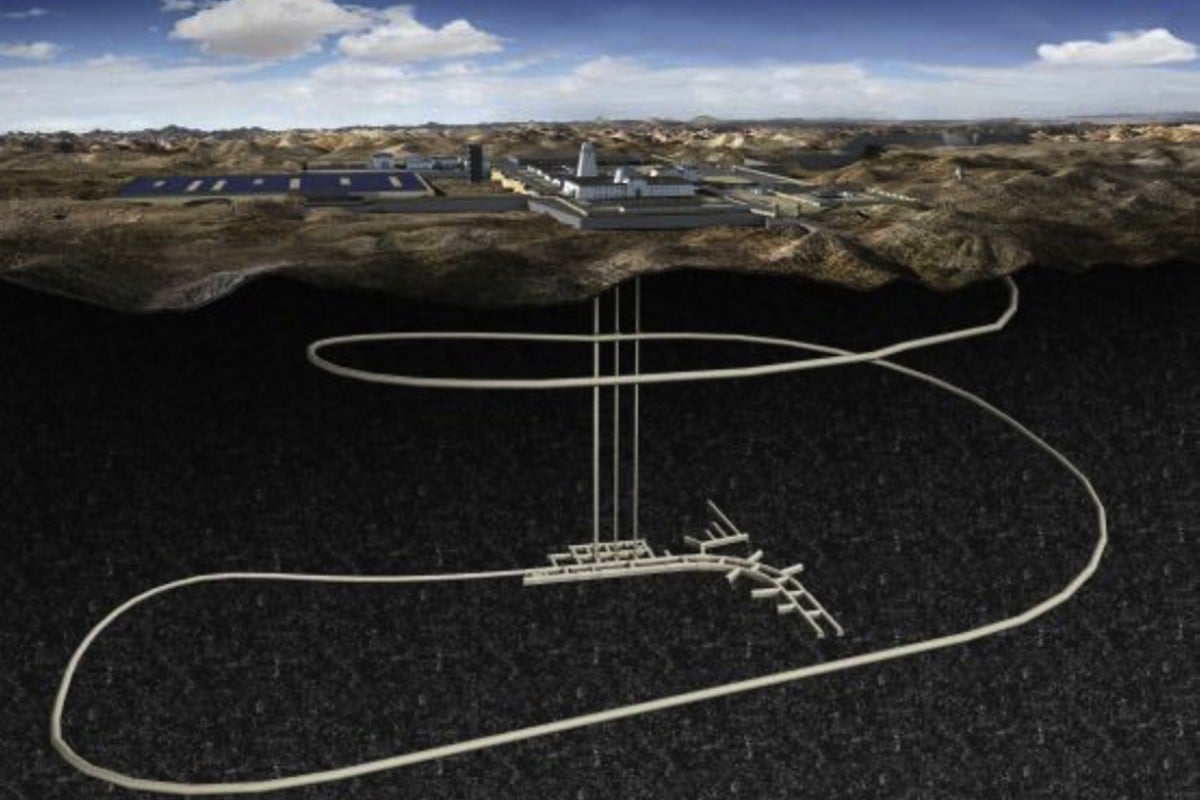
A preliminary design for the Beishan Underground Research Laboratory. Photo: Handout
China has chosen a site for an underground laboratory to research the disposal of highly radioactive waste, the country’s nuclear safety watchdog said on Wednesday.
Officials said work will soon begin on building the Beishan Underground Research Laboratory 400 metres underground in the northwestern province of Gansu.
Liu Hua, the head of the Chinese National Nuclear Safety Administration, said work would be carried out to determine whether it would be possible to build a repository for high-level nuclear waste deep underground.
“China sees radioactive waste disposal as a very important part [of the development nuclear energy],” said Liu. “To develop nuclear energy, we must have safe storage and disposal of nuclear waste.”
China condemns US blacklisting of nuclear firms and says American companies could be hurt as a result
The Chinese authorities see nuclear power an important source of energy that will help to curb carbon emissions and pollution as well as reducing its dependence on fuel imports.
But while the country has made great strides in the development of nuclear power, it needs to find a safe and reliable way of dealing with its growing stockpiles of nuclear waste.
Liu said the Gansu site had been identified as a possible location for a deep nuclear waste store after years of searching.
Once the laboratory is built, scientists and engineers will start experiments to confirm whether it will make a viable underground storage facility.
“Based on the data of the experiments, we can then decide if we are going to pick this as the final site,” he added.
China ‘actively promoting’ nuclear fuel processing plant with French Areva
Chinese officials usually stay tight-lipped about how nuclear waste is disposed of mainly because of fears that any discussion of the topic would trigger safety fears, although in recent years more efforts have been made to inform the public to win support.
Scientists say that nuclear waste can be divided into three categories depending on the level of radioactivity.
Low-level waste consists of minimally radioactive materials such as mop heads, rags, or protective clothing used in nuclear plants, while intermediate-level waste covers things such as filters and used reactor components.
High-level waste, however, is generated by the reprocessing of spent nuclear fuel and scientists generally agree that the safest way to dispose of it is to bury it deep underground in areas where the geology means it will have a minimal impact on the environment while it decays over thousands of years.
The facility will be built in a remote part of Gansu province. Photo: Handout
Some Chinese scientists said the country had the chance to lead the world in this area of research but others have expressed concerns about safety.
Jiang Kejun, a senior researcher at the Energy Research Institute of China’s National Development and Reform Commission, said that very few countries in the world are studying this form of nuclear waste disposal.
“It gives China an opportunity to be a leader in research in this area, plus China has the technology and financial means,” he said.
About a dozen countries including France, Switzerland, Japan, and the United States have carried out research in this area, but in recent years most have abandoned or scaled back their programmes.
At present there are storage sites operating in Finland and the US, but other countries such as Germany have abandoned plans to build similar facilities.
Washington blacklists Chinese nuclear firms for ‘helping military acquire US technology’
But despite broad scientific support for underground disposal, some analysts and many members of the public remain sceptical about whether it is really safe.
Lei Yian, an associate professor at the School of Physics at Peking University, said there was no absolute guarantee that the repositories would be safe when they are come into operation.
“Leakage has happened in [repositories] in the US and the former Soviet Union … it’s a difficult problem worldwide,” he said. “If China can solve it, then it will have solved a global problem.”
China is also building more facilities to dispose of low and intermediate level waste. Officials said new plants were being built in Zhenjiang, Fujian and Shandong, three coastal provinces that currently lack disposal facilities.
At present, two disposal sites for low and intermediate-level waste are in operation in Gansu and Guangdong provinces.
Source: SCMP
Posted in American companies, Beishan Underground Research Laboratory, blacklists, bury it deep, carbon emissions, China alert, chinese authorities, Chinese National Nuclear Safety Administration, Chinese nuclear firms, Chinese officials, coastal provinces, condemns, conduct, Country, deep underground, difficult problem, disposal facilities, earmarks, Energy Research Institute, Environment, filters, Finland, France, French Areva, fuel imports, Fujian, Gansu Province, geology, Germany, global problem, great strides, helping military acquire, High-level waste, highly radioactive waste, hurt, intermediate-level waste, Japan, lack, Leakage, Low-level waste, mop heads, National Development and Reform Commission, National Development and Reform Commission (NDRC), nuclear energy, nuclear firms, nuclear fuel processing plant, Nuclear power, nuclear safety watchdog, nuclear waste, Peking University, Pollution, protective clothing, rags, repositories, repository, reprocessing of spent nuclear fuel, researchers, result, safely, School of Physics, scientists, shandong province, site, source of energy, Soviet Union, stockpiles, store, Switzerland, tests, Uncategorized, underground, underground disposal, United States, US, US blacklisting, US technology, used reactor components, viable facility, Washington, world leader, worldwide, Zhenjiang |
Leave a Comment »
04/09/2019
Chinese Premier Li Keqiang, also a member of the Standing Committee of the Political Bureau of the Communist Party of China Central Committee, presides over a forum on the work of National Science Fund for Distinguished Young Scholars in Beijing, capital of China, Sept. 2, 2019. (Xinhua/Pang Xinglei)
BEIJING, Sept. 3 (Xinhua) — Chinese Premier Li Keqiang has pledged greater government support to help create a more favorable and freer environment for young scientists to explore and innovate.
He said the National Science Fund for Distinguished Young Scholars will play a bigger role in financially supporting the researchers to be dedicated to basic research and innovation.
Li made the remarks at a forum on the work of the fund, which was held on Monday. He also visited an exhibition of scientific research achievements in the fields of astrophysics, new material, new energy application, medicine and biology, thanks to the support of the fund.
He stressed the need to reinforce basic research in an effort to lay a solid foundation for China’s innovation-driven development.
Governments at all levels should lend long-term and stable support to basic research, and enterprises will also be encouraged to increase investment into basic research, he said.
“We should continue to streamline administrative approvals, delegate power to lower levels and improve regulations and services in the field of science and technology to further reduce constraints,” he said.
The premier also required the further improvement of the management and evaluation of scientific research projects as well as the income distribution system for researchers.
He suggested the fund be used as a national “venture capital fund,” which will not only promote innovation but also be tolerant to failures, so that more scientific and technological personnel, especially young talent, will be encouraged to venture into “no man’s land” to achieve more breakthroughs.
Source: Xinhua
Posted in astrophysics, Biology, Chinese premier Li Keqiang, explore and innovate, favorable and freer environment, government support, medicine, National Science Fund for Distinguished Young Scholars, new energy application, new materials, no man's land, pledged, promote innovation, science and technology, scientific and technological personnel, tolerant to failures, Uncategorized, venture capital fund, young scientists |
Leave a Comment »
03/09/2019
Chinese Vice President Wang Qishan meets with Peruvian Vice President Mercedes Araoz in Beijing, capital of China, Sept. 2, 2019. (Xinhua/Zhang Ling)
BEIJING, Sept. 2 (Xinhua) — Chinese Vice President Wang Qishan met here Monday with Peruvian Vice President Mercedes Araoz, who is in Beijing to attend relevant activities of the Beijing Horticultural Expo.
Wang spoke highly of the current bilateral relationship, saying that China is willing to further advance mutual understanding and trust and deepen cooperation to push the relationship to a higher level.
Araoz congratulated China on the 70th anniversary of the founding of the People’s Republic of China, and said her country is ready to deepen cooperation with China in such areas as trade and economy, investment, agriculture, poverty relief, science, technology and culture.
Source: Xinhua
Posted in agriculture, Beijing, Beijing Horticultural Expo, Chinese Vice President Wang Qishan, Culture, economy, founding of the People's Republic of China (PRC), Investment, Mercedes Araoz, nation’s 70th anniversary, Peruvian Vice President, poverty relief, Science, Technology, Trade, Uncategorized |
Leave a Comment »
03/09/2019
YINCHUAN, Sept. 2 (Xinhua) — China and Arab states are seeking to boost cooperation in tourism along the Belt and Road at an upcoming conference in Yinchuan, capital of northwest China’s Ningxia Hui Autonomous Region.
As part of the fourth China-Arab States Expo, the 2019 China-Arab States Tour Operators Conference will be held on Sept. 4-7.
More than 100 representatives from 13 countries including Egypt, and a dozen Chinese provinces, autonomous regions and municipalities are expected to hold discussions on tourism exchanges.
The conference will focus on the future development of tourism along the Belt and Road through promotional events, project signings and tour routes explorations, according to the regional department of culture and tourism.
“Ningxia is reaching out to the world under the Belt and Road Initiative,” said Zhao Mingxia, deputy head of the department.
As a pivot along the ancient Silk Road, Ningxia astonishes tourists with its picturesque landscape, a combination of both the beauty of Chinese southern canal towns and the magnificent scenery of the north
Source: Xinhua
Posted in ancient silk road, Arab states, Belt and Road (B&R), canal towns, China alert, China-Arab States Expo, China-Arab States Tour Operators Conference, Egypt, Ningxia Hui Autonomous Region, picturesque landscape, promote, Tourism, Uncategorized, Yinchuan |
Leave a Comment »
02/09/2019
- Germany welcomes first panda cubs born in the country
- Zoo reports mother and babies doing well and in good health
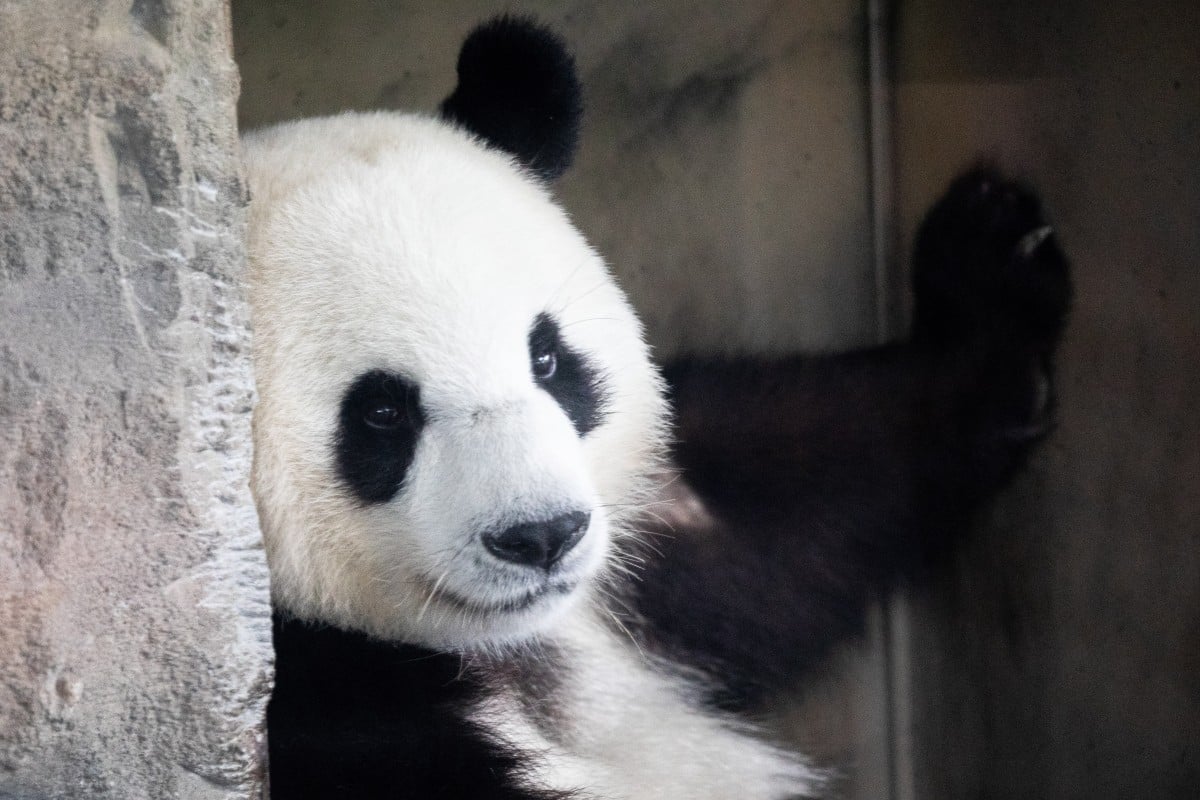
Chinese giant panda Meng Meng has given birth to twins at Berlin zoo, the first pandas to be born in Germany. Photo: EPA-EFE
Berlin zoo is celebrating the safe arrival of panda twins, in the first time that the rare animals have been born in Germany.
Resident panda Meng Meng delivered her first cub on Saturday evening, with the second baby arriving about an hour later.
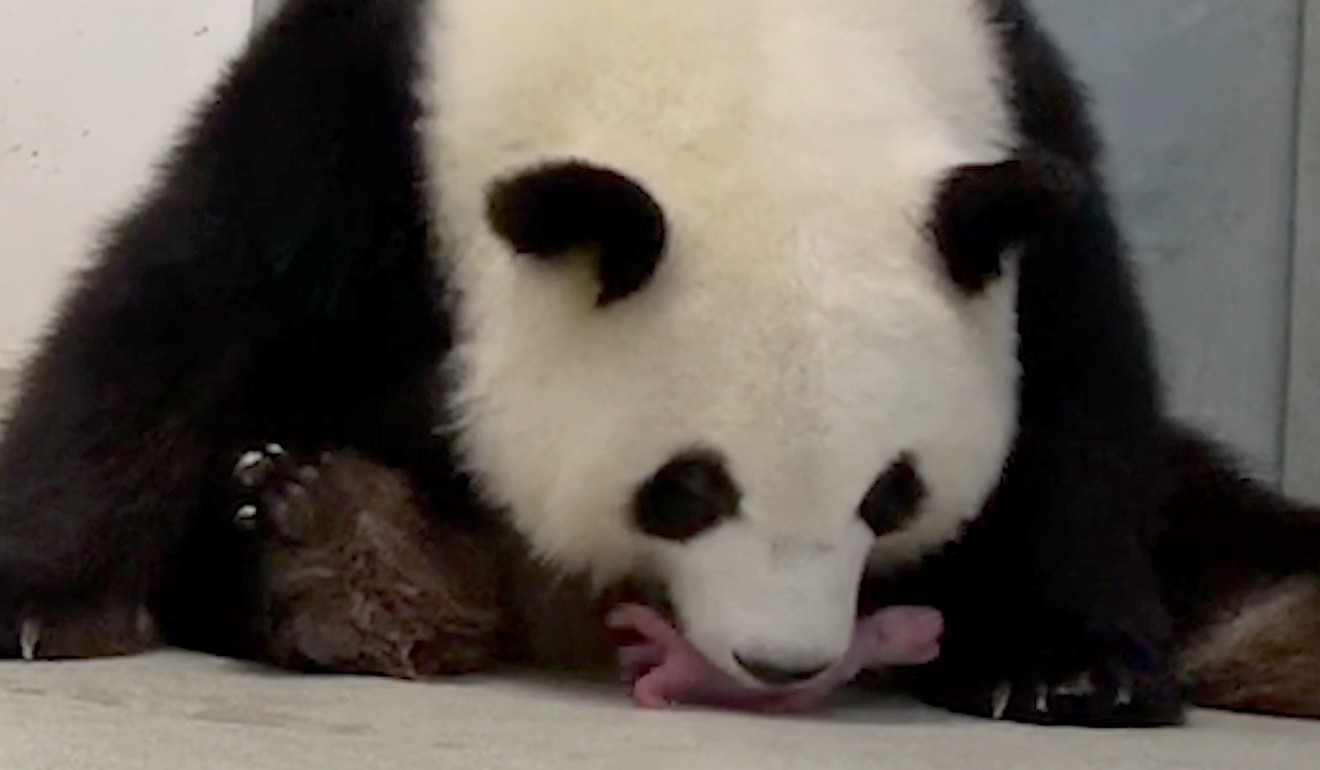
The zoo posted a video on Twitter of the new mother guiding one of her pink babies to feed, with the announcement: “Meng Meng became a mom – twice! We are so happy, we are speechless.”
The cubs weighed in at 136 and 186 grams but their genders had not been determined, the zoo said.
Meng Meng guides one of her newborn panda twins to feed. Photo: EPA-EFE
“Meng Meng and her two cubs coped well with the birth and are all in good health,” zoo director Andreas Knieriem said.
At birth, the pink cubs, with their fine white down and disproportionately long tails, bear little resemblance to the adult black and white bears.
The births are particularly rare as it is notoriously hard to breed pandas.
Famed for its “panda diplomacy”, China has sent its national treasure to only about a dozen countries as a symbol of close relations.
The zoo pays US$15 million for a 15-year contract to host them, with most of the money going toward a conservation and breeding research programme in China.
While the cubs are born in Berlin, they remain Chinese and must be returned to China within four years after they have been weaned.
China has previously given three pandas to Germany but the last one, 34-year-old Bao Bao, died in Berlin in 2012, having become the oldest male panda in the world.
About 1,864 pandas remain in the wild in China, up from around 1,000 in the late 1970s, according to the environmental group WWF.
Just over 400 pandas live in zoos around the world, in conservation projects set up with Beijing.
Source: SCMP
Posted in Babies, Berlin, birth, Country, Double happiness, Germany, Giant panda, health, mother, panda cubs, resident panda, twins, Uncategorized, welcomes, well, Zoo |
Leave a Comment »
01/09/2019
- The manufacturing purchasing managers’ index, released by the National Bureau of Statistics on Saturday, was 49.5 in August
- Figure adds to a month of woe for policymakers in Beijing, even ahead of planned US tariff increases on September 1, October 1, and December 15
China’s manufacturing purchasing managers’ index fell by 0.2 points in August as the trade war continued to bite. Photo: Xinhua
As the trade war with the United States continues to gather pace, manufacturers in China remain gloomy about their prospects, with the sector activity contracting for the fourth successive month in August.
The manufacturing purchasing managers’ index (PMI), released by the National Bureau of Statistics (NBS) on Saturday, stood at 49.5 in August, down from a reading of
, and below analysts’ expectations. The median result of a survey of analysts by Bloomberg expected a reading of 49.6.
The PMI is a gauge of sentiment among factory operators, with 50 being the demarcation line between expansion and contraction in sector activity. In the survey, manufacturers are asked to give a view on business issues such as export orders, purchasing, production and logistics.
That the index has remained in contractionary territory for six of eight months this year shows that the effects of US tariffs are resonating through the Chinese economy. The manufacturing PMI only showed expansion in March and April of this year.
New and higher US tariffs scheduled to enter force on September 1, October 1 and December 15 could provide some very temporary boost to Chinese exports and therefore manufacturers, should they inspire American buyers to make early purchases to pay lower tariff rates. However the long term trajectory is negative, with many manufacturers scoping out or already relocating to production sites outside the world’s second largest economy.
Also released on Saturday was the official non-manufacturing PMI, a survey of the construction and services sectors. This stood at 53.8, up from 53.7 in July, showing that these sectors have remained more robust in the face of a general slowdown in China’s economy. The Bloomberg survey of analysts had expected non-manufacturing PMI in August to remain unchanged.
Composite PMI, a combined reading of both manufacturing and non-manufacturing, was 53, down from 53.1 in July.
The August PMI decline “indicates downward pressure on the economy,” said Zhang Liqun, an analyst with the China Federation of Logistics and Purchasing, which produces the index with the NBS.
“Corporations’ forecasts of the market outlook were quite poor while being cautious on their production operations,” Zhang said. The PMI indicated a drop in new orders, which also reflected a lack of domestic demand. Given that the US is escalating tensions with China, downward pressure on external demand is also apparent, Zhang said.
August was a month to forget for policymakers in Beijing, with a series of negative data highlighting the serious economic challenges facing the nation. With the trade war threatening to tip the global economy into a recession, China remains heavily exposed.
The trade war is having a significant impact on Chinese manufacturing. Photo: Xinhua
While exports grew by 3.3 per cent in July, a sign of front-loading, imports fell by 5.6 per cent, emphasising the issues with consumption in China. This problem was also clear in retail sales figure, which came in at a disappointing 7.6 per cent for July, down from 9.8 per cent growth in June.
, a measure of output in China’s manufacturing and mining sectors, grew by just 4.8 per cent in July, the lowest reading since February 2002.
Gross domestic product in China for the second quarter of 2019 grew at 6.2 per cent, the lowest rate since NBS quarterly records began in 1992.
Source: SCMP
Posted in Beijing, Bloomberg, China Federation of Logistics and Purchasing, China’s manufacturing, Chinese economy, Escalating trade war, export orders, factory operators, gross domestic product (GDP), hit, Industrial production, logistics, national bureau of statistics, National Bureau of Statistics (NBS), policymakers, production, purchasing, purchasing managers’ index (PMI), Uncategorized, United States, US tariff, Xinhua |
Leave a Comment »
01/09/2019
- US president likely had Beijing ‘on his mind’ when he made his audacious offer, diplomat says
- Proposal ‘could be interpreted as a very clear signal’ to China and Denmark that the US sees Greenland as part of an exclusive strategic zone, academic says
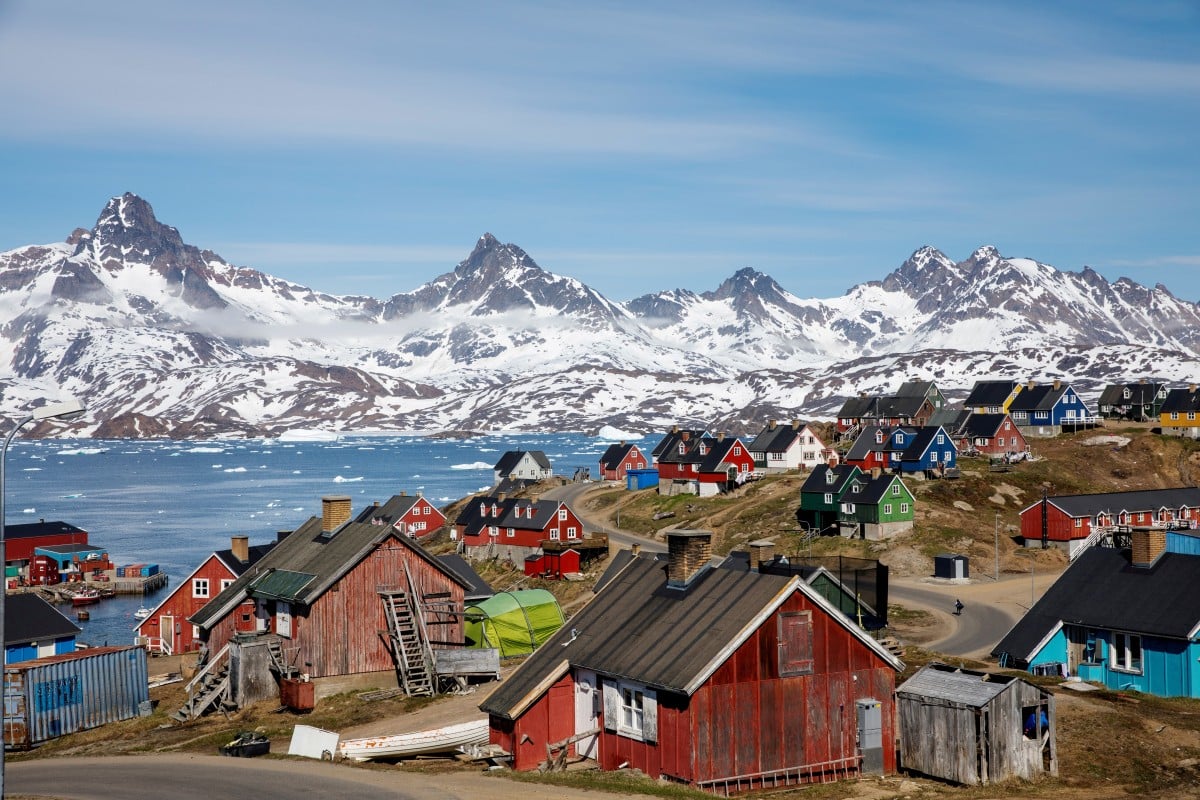
China has been building closer ties with Greenland in recent years. Photo: Reuters
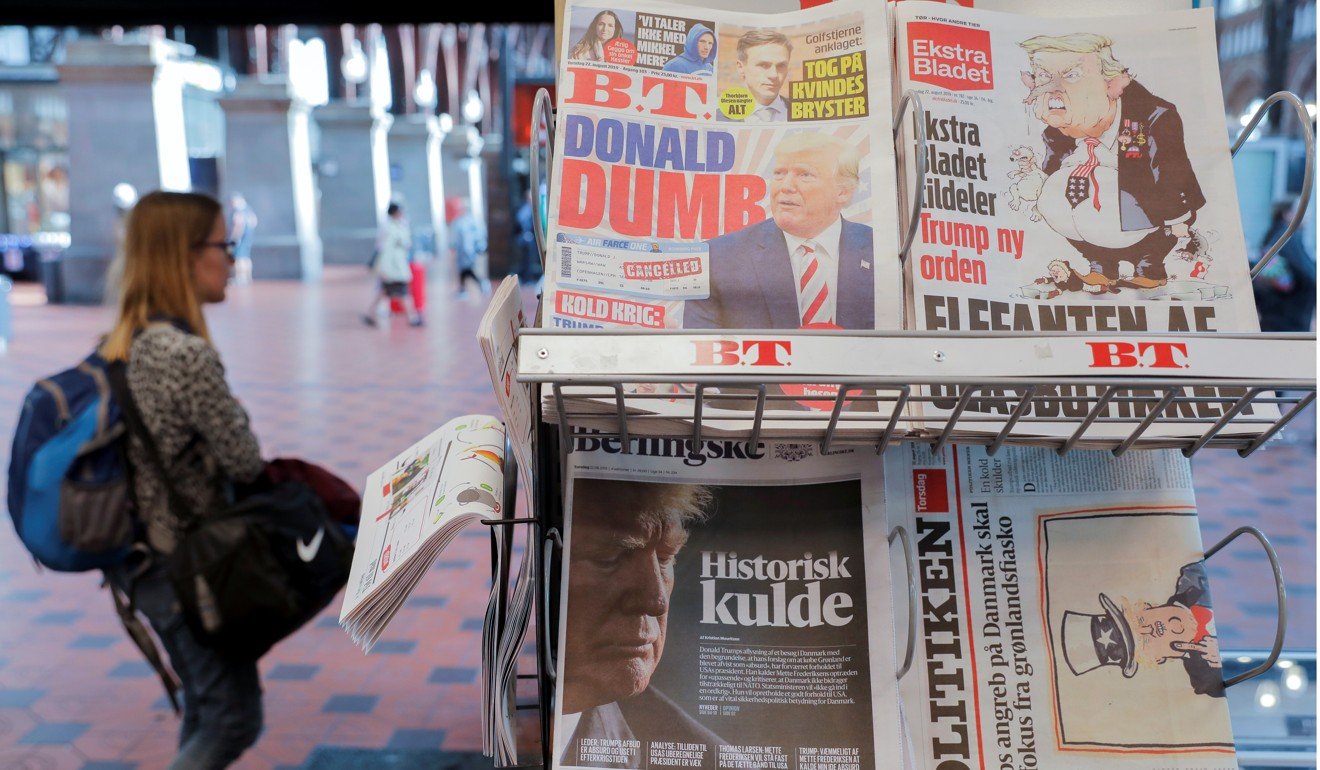
US President Donald Trump’s eyebrow-raising idea to buy Greenland from Denmark last month epitomised what analysts say is Washington’s fear of the growing interplay of Chinese money, Russian aggression and Arctic political division.
Of all the countries involved in the region, Denmark is feeling the most heat, and not just because Trump recently cancelled a trip and called its Prime Minister Mette Frederikse “nasty” for describing his plan to buy the world’s largest island “absurd”.
Over the past few years, both of Denmark’s self-ruled governments – Greenland and the Faroe Islands – have increasingly turned to China for commercial deals, adding weight to Beijing’s growing strategic influence in the vast area that forms the common backyard of Europe, North America and Russia.
Russia seeks Chinese support in developing Arctic shipping routes
Greenland is of particular concern to the White House and the Pentagon as it is home to the US Thule Air Force Base, located far above the polar circle and which served as the first line of defence during the cold war.
Nowadays, the island is also strategically important for the US ballistic missile early warning system, as the shortest route from Europe to North America goes via the ice-cloaked, resource-rich territory.
“Though it’s difficult to tell the motivations of President Trump, he likely had China on his mind with his Greenland offer,” said a Beijing-based diplomat, who asked not to be named.
The US was likely to step up its presence in Greenland in the future, the person said.
In May, US Secretary of State Mike Pompeo accused China and Russia of introducing a strategic power struggle into the Arctic region and described Beijing’s behaviour there as aggressive.
When Greenland signalled an interest in engaging a Chinese state-owned company to build two airports in 2017 – the island’s prime minister flew to Beijing to appeal for financial backing – Copenhagen stepped in amid US pressure, reluctantly agreeing to finance the projects from the public coffers.
Denmark’s reluctance stems from a long-standing mistrust between Copenhagen and Greenland, as the island’s quest for economic development is viewed by the Danes as an attempt to shore up capital to push for a future independence movement.
“There is no doubt that the US foreign and security policy community is becoming far more interested in Greenland as a strategic asset,” said Andreas Bøje Forsby, a researcher at the University of Copenhagen’s Nordic Institute of Asian Studies.
“Proposing to buy Greenland could be interpreted as a very clear signal to both China and Denmark that Greenland is part of an exclusive American strategic zone,” he said.
Danish Prime Minister Mette Frederikse described Donald Trump’s plan to buy Greenland as “absurd”. Photo: Reuters
The government of the Faroe Islands – an archipelago located between Scotland, Norway and Iceland – has a similar readiness to engage with China but for a different purpose.
Unlike Greenland, there are no immediate political movements calling for independence from Denmark, making its overall relationship with Copenhagen more amiable.
This month, the Faroese government will open a liaison office in Beijing, located within the Danish embassy.
“Our top priority is to have a free-trade agreement with China,” Sigmundur Isfeld, the first head of the Faroe Islands’ representation to Beijing, said.
US defence report flags China’s expanding military reach in the Arctic
With Norway – a key competitor of the Faroes in the fishing and export industries – eyeing a similar arrangement with China, the time was ripe to clinch a deal, he said.
“It is a challenge for us … we need to get in the game.”
Although part of Denmark, the Faroe Islands are not part of the European Union and therefore have to form separate trade agreements with other countries.
“For example, there is an EU-Japan economic partnership agreement. It covers all EU nations, but it does not cover the Faroe Islands,” Isfeld said.
Trade between Greenland and China totalled US$126 million in 2108. Photo: AFP
China, for its part, has sought to exert its economic and cultural influence on the Faroes, which has a population of about 52,000 people.
, the embattled Chinese telecoms giant, has been working with the islands’ main telecoms provider for four years and is said to be finalising a plan for 5G upgrades across the archipelago.
Beijing also helped fund a project for a Chinese-Faroese dictionary.
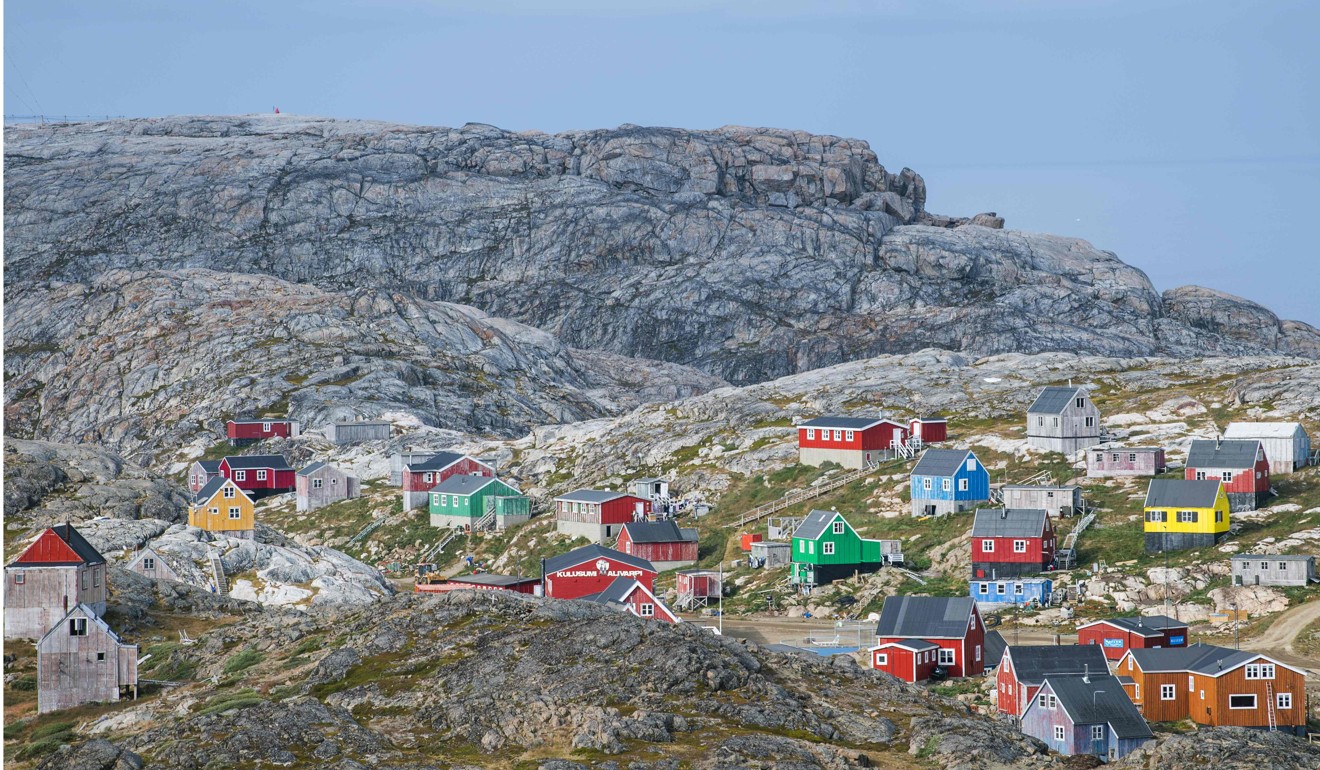
With a population of about 56,000 people, Greenland is one of China’s smallest trading partners. In the first seven months of 2019, trade between the two was US$126 million, with Chinese imports of fish accounting for the bulk of the total.
The Greenland government’s annual political and economic report for 2019 said that strong demand for metals from China had contributed to mineral and mining projects in the country, though China’s transition to a less mineral-intensive economy could spell trouble for the future of the sector.
The island’s gross domestic product is expected to grow by 3 per cent this year, according to the report, with seafood – principally cod, halibut and prawns – set to continue to be its chief export.
The end of the Arctic as we know it
China’s attempts in recent years to expand its involvement in Greenland have run into roadblocks.
In 2016, a Chinese mining company expressed interest in taking over an abandoned marine station in Grønnedal, an offer that the Danish government turned down the following year. A Chinese state-owned construction company had also offered to build airports in Greenland, but withdrew its offer this year.
Also this year, China expanded its involvement in exporting from Kvanefjeld, one of the world’s largest deposits of rare earths and uranium, by creating a joint venture to process and export the resources.
Beijing has made clear its strategic ambitions in the region. Early last year, it unveiled its Polar Silk Road strategy, plotting the course for its future development goals in the region – including scientific, commercial, environmental preservation and resource extraction efforts.
It also aligned its Arctic interests with its Belt and Road Initiative. Chinese companies are encouraged to invest in building infrastructure along the routes and conduct commercial trial voyages to gauge feasibility.
Putin boasts of nuclear icebreaker fleet as he outlines Arctic expansion plans
Anders Rasmussen, a former Danish prime minister and erstwhile Nato secretary general, said in an article published in Atlantic magazine last month that with melting ice caps opening the Arctic Sea to shipping, Arctic sea lanes “will likely become another flashpoint of renewed competition among the great powers as climate change alters our world”.
It was a situation he said he found “regrettable, but inevitable”.
“Both China and Russia are interested in getting a foothold in Greenland, to expand their influence in the Arctic region,” Rasmussen said. “Instead of being a source of contention,
Greenland should serve to highlight how many interests the United States and Denmark have in common.”
Source: SCMP
Posted in 5G upgrades, airports, Anders Rasmussen, archipelago, Arctic, Arctic expansion plans, Arctic political division, Arctic Sea, Arctic sea lanes, Arctic shipping routes, Atlantic magazine, Beijing, Belt and Road Initiative, Belt and Road Initiative (BRI), China alert, China’s growing presence, Chinese mining company, Chinese money, Chinese support, Chinese-Faroese dictionary, climate change, Cold War, commercial, Copenhagen, Danish embassy, Danish government, Danish prime minister, Denmark, early warning system, environmental preservation, EU nations, EU-Japan economic partnership agreement, Europe, European Union, Faroe Islands, Faroese government, first line of defence, Grønnedal, Greenland, Huawei, Iceland, imports of fish, Kvanefjeld, liaison office, melting ice caps, Mette Frederikse, Mike Pompeo, Nato secretary general, Nordic Institute of Asian Studies, North America, Norway, nuclear icebreaker fleet, offer, Pentagon, polar circle, Polar Silk Road strategy, President Donald Trump, Prime minister, prompt, Putin, rare earths, resource extraction, Russia, Russian aggression, scientific, Scotland, shipping, telecoms giant, to buy, Uncategorized, United States, University of Copenhagen, Uranium, US ballistic missile, US Secretary of State, US Thule Air Force Base, Washington, White House |
Leave a Comment »










 CHINDIA ALERT: You'll be living in their world, very soon