Archive for ‘Economics’

28/01/2019

China eyes development of tourism industry

CHINA-TOURISM INDUSTRY-DEVELOPMENT(CN)

Aerial photo taken on Nov. 17, 2018 shows the snow scenery of the Mount Huashan scenic area in northwest China’s Shaanxi Province. The Chinese government has laid down key measures to improve the quality of tourism services amid efforts to promote the high-quality development of the industry. Targeting key problems affecting travel, a guideline issued by the Ministry of Culture and Tourism listed seven priority areas for quality enhancement, including scenic zones, accommodation, online and brick-and-mortar travel agencies, tour guides and tourism administration. The guideline calls on government agencies to strengthen supervision, market participants to fulfill their responsibility, industry associations to play a better role in coordination and the introduction of industry standards, and practitioners to improve their professional skills. The government aims to make tourism services “an important representative of China’s services” by 2020, with the tourism market and consumption environment improved, and market order well-regulated. (Xinhua/Tao Ming)

BEIJING, Jan. 28 (Xinhua) — The Chinese government has laid down key measures to improve the quality of tourism services amid efforts to promote the high-quality development of the industry.

Targeting key problems affecting travel, a guideline issued by the Ministry of Culture and Tourism listed seven priority areas for quality enhancement, including scenic zones, accommodation, online and brick-and-mortar travel agencies, tour guides and tourism administration.

The guideline calls on government agencies to strengthen supervision, market participants to fulfill their responsibility, industry associations to play a better role in coordination and the introduction of industry standards, and practitioners to improve their professional skills.

The government aims to make tourism services “an important representative of China’s services” by 2020, with the tourism market and consumption environment improved, and market order well-regulated.

With the approaching of the Spring Festival, which falls on Feb. 5 this year, the ministry also reminded outbound tourists to raise awareness of safety and “abide by the norms of civilized behavior.”

Source: Xinhua

26/01/2019

President Xi congratulates launch of China-Laos Tourism Year 2019

BEIJING, Jan. 25 (Xinhua) — Chinese President Xi Jinping sent a congratulatory message on the launch of the China-Laos Tourism Year 2019 in Vientiane on Friday, expressing his hope for deepening understanding and friendship between the two peoples.

Noting that China and Laos enjoy mutual political support, comprehensive economic cooperation and constant deepening of traditional friendship, Xi said China views Laos as a good neighbor, friend, comrade and partner. He also said China is willing to work with the Laotian side to better dovetail development strategies, enhance cooperation on Belt and Road construction, and promote the China-Laos comprehensive strategic partnership of cooperation to achieve new fruits.

China and Laos both have brilliant cultures and beautiful sceneries, Xi said. People of both countries, drinking water from the same river, have the strong aspiration to deepen mutual understanding and friendship, the Chinese president added.

Xi said he hopes the two countries will take the chance of holding the year of tourism to expand people-to-people and cultural exchanges, and to consolidate the public and social basis for the building of a China-Laos community of shared future.

The agreement to hold the China-Laos Tourism Year was reached during the talks between Xi and visiting Laotian President Bounnhang Vorachit in Beijing in May 2018.

Both sides will jointly hold exhibitions, artistic performances, forums, training programs and other events, to promote mutual understanding and friendship, as well as to make contributions to building a China-Laos community of shared future.

Source: Xinhua

22/01/2019

Inner Mongolia to lift 140,000 people out of poverty

HOHHOT, Jan. 21 (Xinhua) — North China’s Inner Mongolia Autonomous Region will help 140,000 people and all its county-level regions escape poverty in 2019, local authorities said Monday.

Governments at all levels invested 10.1 billion yuan (1.5 billion U.S. dollars) of special poverty-relief fund in 2018, up 25 percent year on year, lifting 235,000 people out of poverty, it said.

About 332,000 government officials attended training sessions for poverty alleviation last year.

The regional government said the poverty headcount ratio had dropped to 1.06 percent by the end of last year.

In 2019, the government will strengthen the implementation of poverty relief policies, deepen cooperation with Beijing city on fighting poverty and boost its featured industries to create more jobs and income for local people.

Source: Xinhua

20/01/2019

China set to report slowest economic growth for 28 years

  • Figures to be released on Monday could show 2018 GDP growth slowed to 6.6 per cent
  • Beijing’s promise of more support only likely to be enough to stop slide getting worse, analysts say
PUBLISHED : Sunday, 20 January, 2019, 5:15pm
UPDATED : Sunday, 20 January, 2019, 5:52pm

China is expected to report on Monday that economic growth cooled to its slowest in 28 years in 2018 amid weakening domestic demand and bruising US tariffs, adding pressure on Beijing to roll out more support measures.

Growing signs of weakness in China, which has generated nearly a third of global growth in the past decade, are stoking worries about risks to the world economy and are weighing on profits for firms ranging from Apple to big carmakers.

Policymakers in Beijing have pledged more support for the economy this year to reduce the risk of massive job losses, but have ruled out a “flood” of stimuli like that unleashed in the past, which boosted growth rates but left a mountain of debt.

Analysts polled by Reuters expect the world’s second-largest economy to have grown 6.4 per cent year on year in the final quarter of 2018, slowing from 6.5 per cent in the previous three months and matching levels last seen in early 2009 during the global financial crisis.

That could pull gross domestic product growth to 6.6 per cent for the year, its lowest since 1990 and down from a revised 6.8 per cent in 2017.

With stimulus measures expected to take some time to kick in, most analysts believe conditions in China are likely to get worse before they get better, and see a further slowdown to 6.3 per cent this year. Some have said real growth levels are already much weaker than official data suggest.

Even if Beijing and Washington agree on a trade deal, which is a tall order, analysts said it would be no panacea for China’s sputtering economy unless Beijing can galvanise weak investment and consumer demand.

Chen Xingdong, chief China economist at BNP Paribas, said investors should not expect the latest round of stimulus to produce similar results as during the 2008-09 global crisis, when Beijing’s massive spending quickly boosted growth.

“What China can really do this year is to prevent deflation, prevent a recession and a hard landing in the economy,” he said.

On a quarterly basis, growth likely eased to 1.5 per cent in the final three months of 2018, from 1.6 per cent in the previous period.

China will release its fourth-quarter and full-year figures on Monday, along with December factory output, retail sales and fixed-asset investment.

Since China’s quarterly GDP readings tend to be unusually steady, most investors prefer to focus on recent trends.

Surprising contractions in December trade data and factory activity gauges in recent weeks have suggested the economy cooled more quickly than expected at the end of 2018, leaving it on shakier footing at the start of the new year.

Sources have told Reuters that Beijing was planning to lower its growth target to 6-6.5 per cent this year from about 6.5 per cent in 2018.

Tepid expansion in industrial output and weaker consumer spending is squeezing companies’ profit margins, discouraging fresh investment and raising the risk of higher job losses.

Some factories in Guangdong province – China’s export hub – have shut earlier than usual ahead of the long Lunar New Year holiday as the tariff war with the United States curtails orders. Others are suspending production lines and cutting back on workers’ hours.

If the trade war drags on, some migrant workers may not have jobs to return to.

Trade negotiators are facing an early March deadline and Washington has threatened to sharply hike tariffs if there are no substantial signs of progress.

So far, Chinese policymakers have fast-tracked construction projects and cut taxes and some import duties to spur demand.

To free up more funds for lending, particularly to more vulnerable smaller firms, the central bank has cut the amount of reserves that banks need to set aside five times over the past year, and guided borrowing costs lower.

Further reserve ratio reductions are expected in the coming quarters, but most analysts do not see a cut in benchmark interest rates just yet, as policymakers wait to see if earlier steps begin to stabilise conditions. More forceful easing could pressure the yuan and aggravate high debt levels, with money going into less efficient or speculative investments.

The government may unveil more fiscal stimulus measures during the annual parliament meeting in March, including bigger tax cuts and more spending on infrastructure projects, analysts said.

Some China watchers believe the government could deliver 2 trillion yuan (US$293.9 billion) worth of cuts in taxes and fees this year, and allow local governments to issue another 2 trillion yuan in special bonds largely used to fund key projects.

Still, some analysts do not expect the economy to bottom out convincingly until summer.

Source: SCMP
19/01/2019

China pharma must swallow that jagged little pill called R&D as government slashes profit margins of generic drugs

  • New policy environment demanding cheaper drugs adds pressure to innovate
  • China’s hospital drugs market was US$118 billion last year
PUBLISHED : Saturday, 19 January, 2019, 12:33pm
UPDATED : Saturday, 19 January, 2019, 12:40pm

China’s pharmaceutical industry – shaken by drastic price cuts from Beijing’s recent pilot roll-out of state hospital bulk purchase open bidding – will need to go through painful restructuring and raise big sums to fund innovation, according to executives.

As Beijing’s pilot reform spreads nationwide to cut prices of drugs and improve their efficacy and safety, companies are under mounting pressure to invest in innovative drugs development and reduce reliance on low profit products that are the same copies of original drugs.

That is because the reform means generic drugs manufacturing – the cornerstone of the industry – has become much more competitive.

“The industry and investors need to get used to the new environment in China, where generic drugs are a tool for lowering medical costs,” China Pharmaceutical Innovation and Research Development Association executive president Song Ruilin said in an interview at the sidelines of the JP Morgan Healthcare conference – the world’s largest – in San Francisco last week.

“To survive this, companies need to innovate,” he said.

Early last month, the first round of price bidding in 11 cities saw prices slashed by 62 per cent on average, according to Guoyuan Securities, raising concerns about the industry’s profitability. Two drugs saw prices fall by over 95 per cent.

This sent Hong Kong-listed mainland pharmaceutical firms’ share price down sharply, extending a sector-wide correction that saw the Hang Seng Mainland Healthcare Index nearly halved in seven months from an all-time high in late May.
The stakes are high. The nation’s hospital drugs market is estimated to be worth 800 billion yuan (US$118 billion) last year and is forecast to exceed 1.2 trillion yuan in 2021, according to a Credit Suisse research report.

The winners will be given up to 70 per cent of the local hospital system’s procurement volume. That will only increase as the drugs become more affordable.

Most, except those in the extreme price cut cases, are expected to come out better off as volume gains and unit cost savings are expected to more than offset lower prices.

Direct, centralised procurement will also cut out layers of hefty drugs marketing and distribution costs, bringing additional savings.

Losers will not only be subject to price caps set by the winning bids, they will also have to contend with the need to fight among themselves for the remaining 30 per cent of market that requires significant marketing and distribution costs to serve.

The entire industry will see lower profit margins than the over 30 per centprior to pricing reform, Everbright Securities analyst Lin Xiaowei noted in a report.

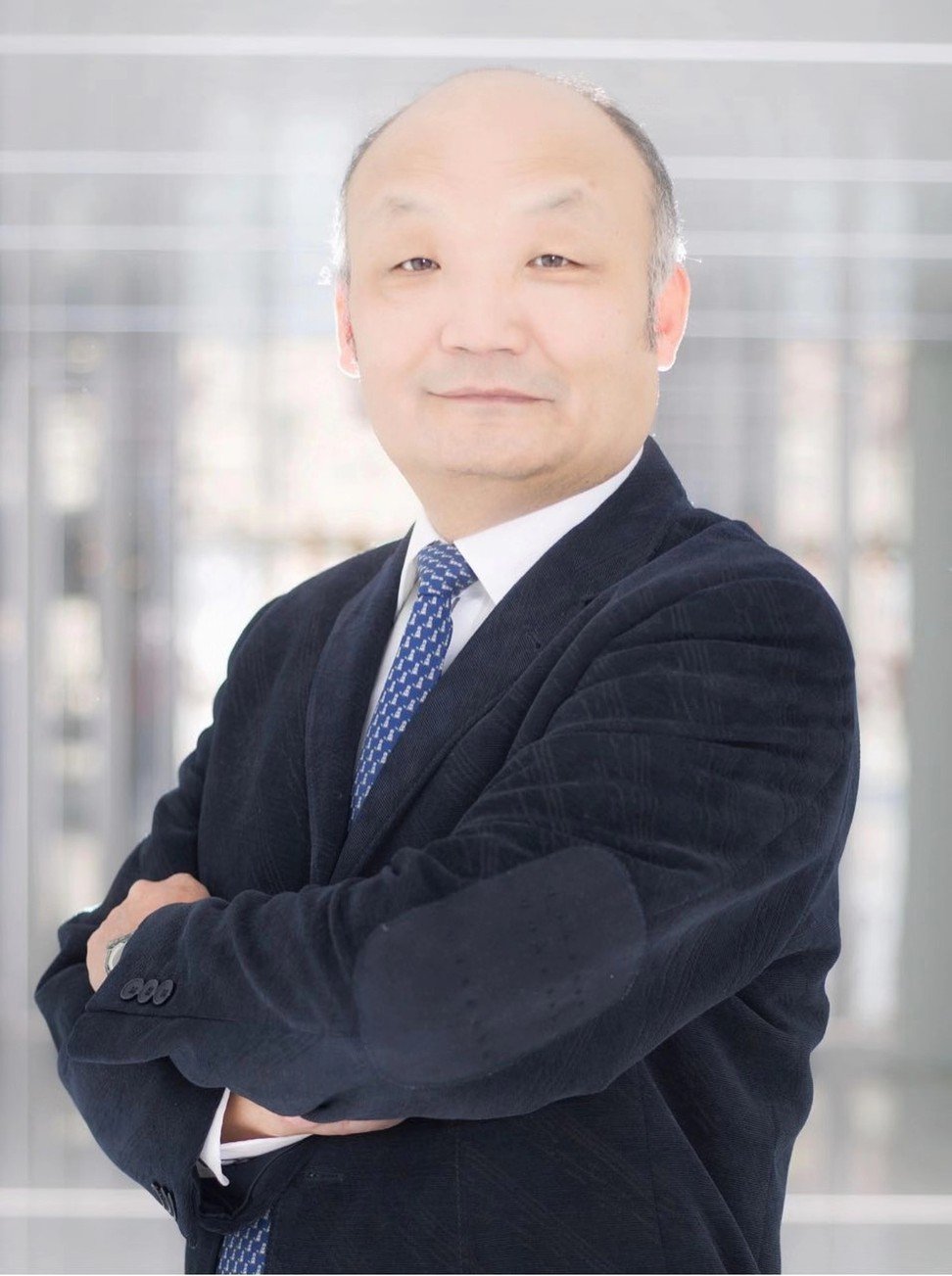
“Many generic drug makers will be wiped out in the process if they can’t pass bioequivalence [efficacy and safety] tests, or be selected as winners in the bulk procurement tenders,” said cancer drugs developer Innovent Biologics co-founder and chairman Michael Yu Dechao. “The clean-up will leave more room for innovation.”

To thrive in the environment, drug makers will have to focus on a smaller number of generic products where they have a clear cost advantage, while investing to develop new innovative drugs that will enjoy patent protection from competition.
Although some of the price reductions appear excessive, Song believes regulators will fine-tune their policies, as overly low prices raise the risk of compromises on drug quality.

“Reform needs to be done step by step. Now we have had a start, and the sky has not fallen. It only created a scare,” he said. “I believe the authorities are also reflecting on the results … price reduction is not its only objective.”

For generic products where some Chinese companies have attained western or Japanese standards while others have not, Song suggested that regulators give a 10 to 15 per cent price increment above the winning bids to the winners with international standards, so as to encourage industry quality improvement.
As the pricing reform spreads nationwide, the better resourced companies will be driven to spend billions of yuan each year in attempts to be the first to come up with a new compound that act on a new biological target to treat a disease. They will be rewarded by multi-year legal protection against competition.

Others that failed to do so will try to find an alternative compound – so-called “me-too drugs” – to act on the same target, and sell at a lower price to grab market share.

Many will place bets on their drug candidates, which if successfully developed ahead of rivals, will become blockbuster products and multi-year cash cows thanks to a burgeoning middle class that can afford better and costlier medicine.
China’s drug makers still have a long way to go to become a truly innovative industry.

Song pointed out that even among the most advanced pharmaceutical companies in the nation, some 80 per cent of their enterprise value has been derived from generic products and the rest from new drugs development.

This proportion is reversed among the big drug firms in the US, the world’s largest and most innovative pharmaceutical market, he added.

This, together with demographic and economic trends, mean tremendous room for growth and investment.

“China has entered prime time for health care industry development, especially biotechnology, thanks to the gradual maturing of the nation’s 300 million-strong middle class as health care consumers, especially those born in the 1950s and 1960s who are wealthy and soon entering old age,” said Houston Huang Guobin, JP Morgan Chase & Co’s head of global investment banking for China.

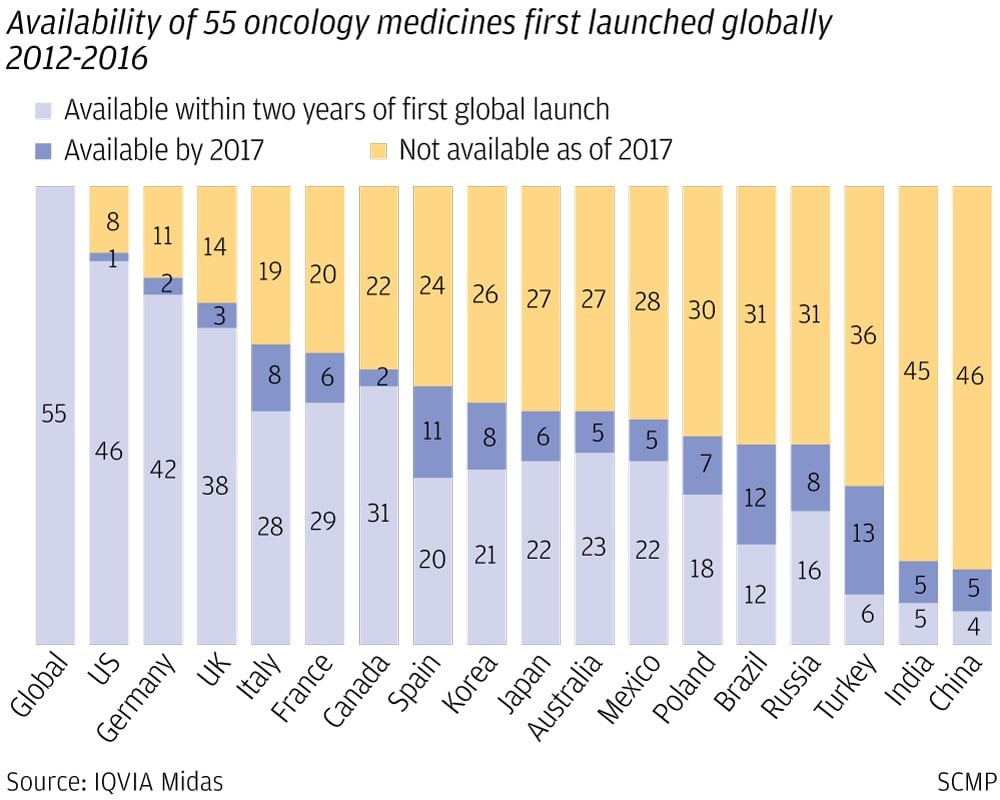
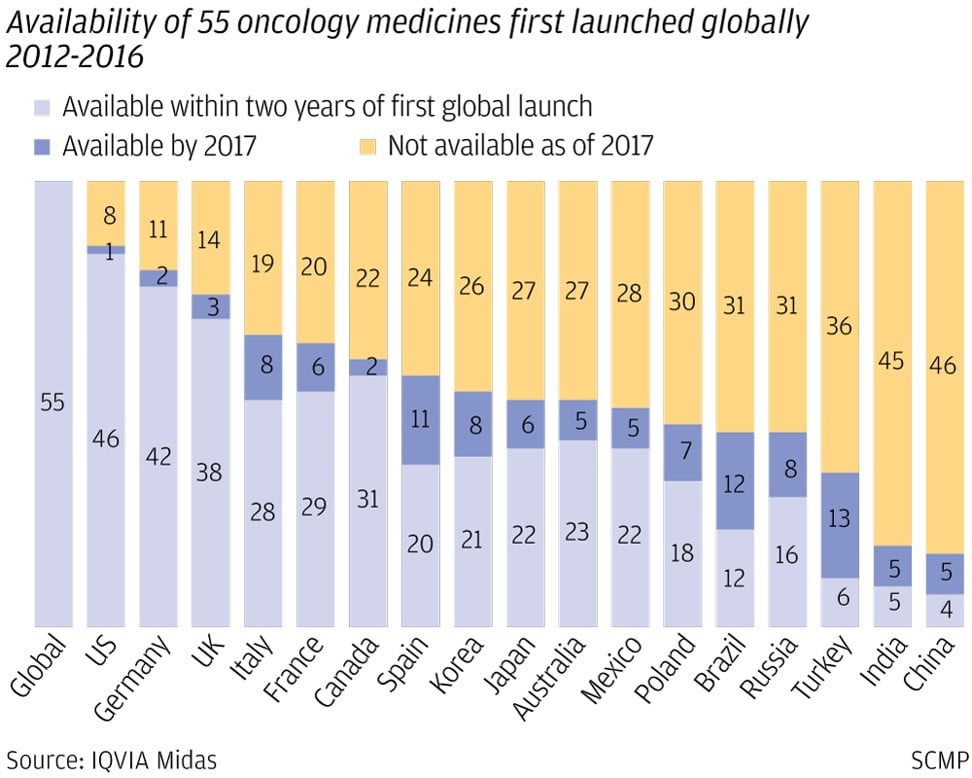
This is especially the case for expensive therapies for cancer patients, whose number in China is projected by Frost and Sullivan to rise to 5.8 million in 2030 from 4.3 million last year.

The market for PD-1 and PD-L1 antibodies alone – a class of cutting-edge novel immuno-oncology therapies that stimulate the body’s immune system to kill cancer cells and cost half a million yuan per year – is forecast by the business consultancy to jump to 56 billion yuan in 2023 from nothing last year.

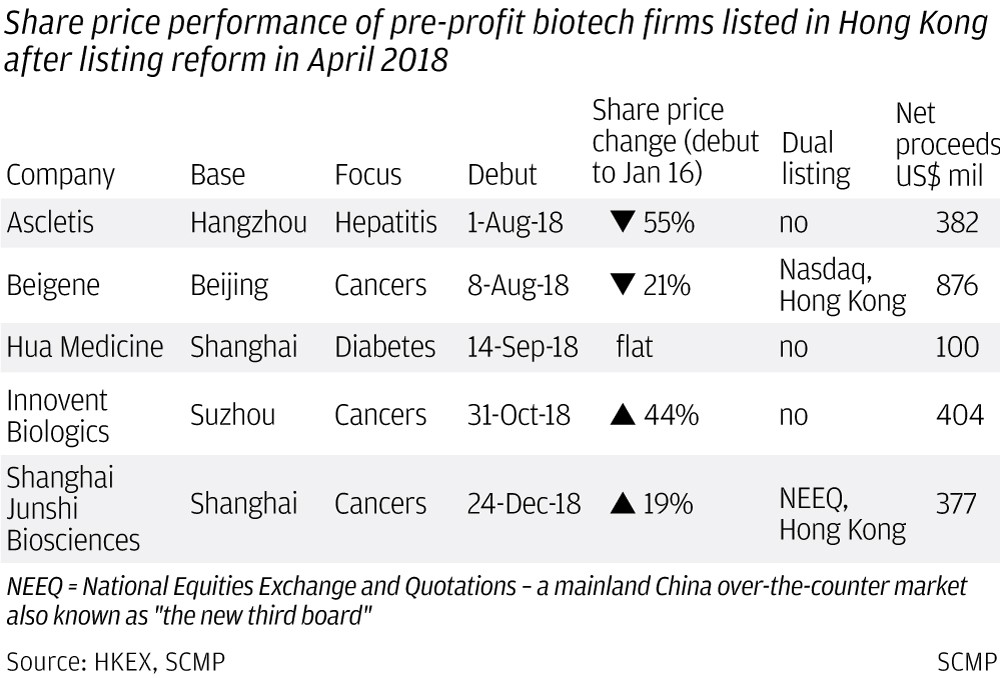
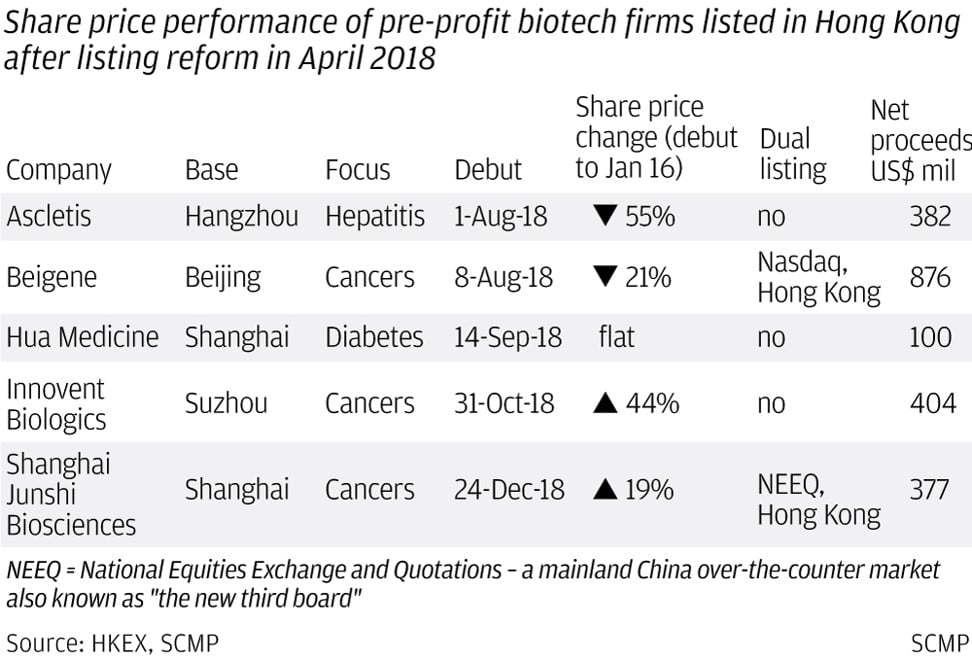
Three of the five companies so far listed in Hong Kong under revamped listing rules have completed clinical trials on their PD-1 antibodies, and submitted the results to regulators for commercialisation approval.

Hong Kong, a new overseas fund-raising conduit for Chinese companies to fund costly drugs discovery and development, stands to benefit from the industry transition, but not without its own growing pains.

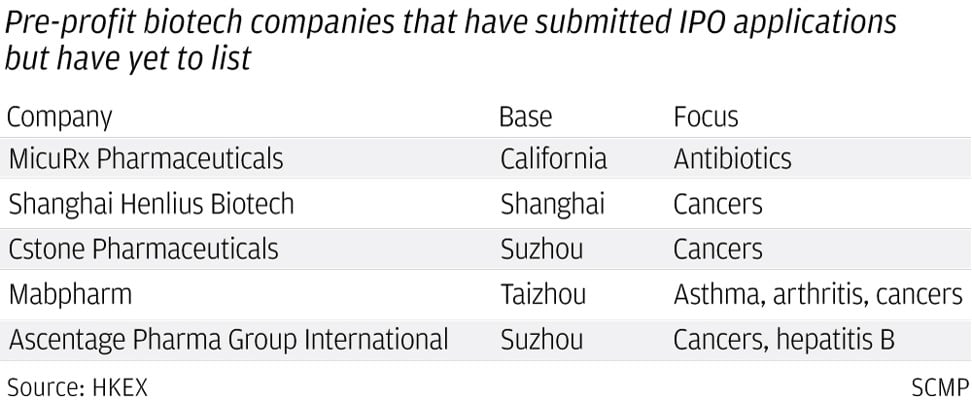
Hong Kong Exchanges and Clearing, which last April revised listing rules to allow biotechnology firms that have yet to generate any profit or even revenue to list, has been busy marketing the new listing regime.

Its senior executives – led by chief executive Charles Li Xiaojia – this month embarked on a North America roadshow to meet listing hopefuls and investors covering Vancouver, San Francisco, New York and Boston, HKEX senior vice-president Issuer Services Michael Chan told the South China Morning Post by teleconference on Wednesday from New York.

A year ago, it only did marketing in San Francisco ahead of the regime’s launch late April.

“This time around we are getting more interest from US-based listed companies looking at the Hong Kong listing option to complement their China or Asia strategy … it is not just China-based US-listed firms considering coming back for a dual listing or business spin-off,” he said.

His comment came barely two weeks after Stealth BioTherapeutics, a US-based and Hong Kong investor-backed biotech firm, filed to list on Nasdaq and let its Hong Kong listing application filed six months earlier lapse.

Chan said he believes that is an individual case which by no means suggests that Hong Kong has fallen out of favour as a biotech listing venue, adding he has not received many enquiries about that case during his roadshow.

Stephen Peepels, head of US Securities Asia-Pacific, Hong Kong at international law firm Hogan Lovells, agreed.

“As the first couple of companies that took advantage of the new rules [in Hong Kong]didn’t quite perform as well as hoped, it might have prompted some companies to reconsider their choice of IPO venue,” he said. “It would be pre-mature at this time to look at individual examples and start concluding that everybody is going to change their mind and focus on Nasdaq again. It may just take longer to see a lot of deals than many people have expected.”

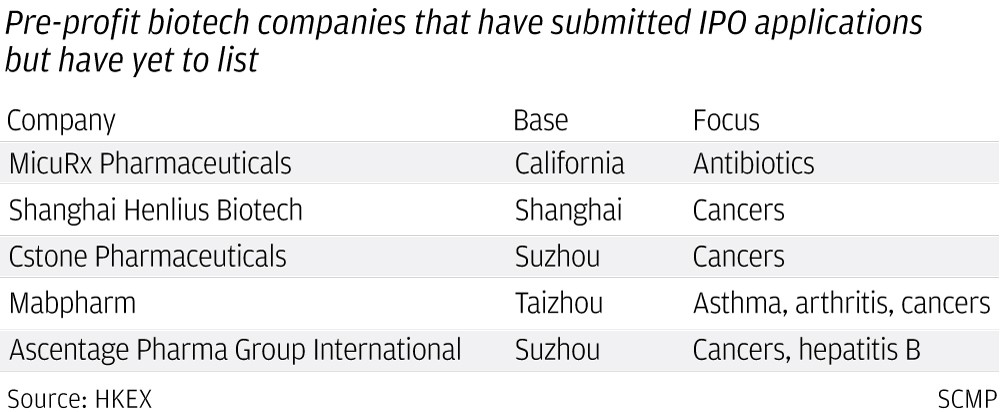
So far, five companies have listed in Hong Kong under the new rules, while five more have applied but yet to sell shares and list.

The first one, hepatitis drugs developer Ascletis Pharma, which listed early August, saw its share price halved just over two weeks after market debut, triggering criticism of overly aggressive pricing.

“It is an issue of supply and demand, but it also reflects a degree of immaturity on the investment banking and stock analysis sides which allowed this kind of pricing to happen,” said Samantha Du, chief executive of Shanghai-based drugs developer Zai Lab.

“In the US, where there are 2,000 biotech listed firms and stock prices are driven by companies’ performance, very rarely do you see that kind of volatility,” added the former venture capitalist who sits on a panel that assists the Hong Kong stock exchange in its review of biotech listing applications under the new rules.

“Everything needs to start from somewhere, it is hard to have it perfect right at the beginning … it is a process of trial and error … overall there are more positives than negatives,” she said.

JP Morgan’s Huang said it will take time to build up the “ecosystem” as Hong Kong lacks bankers, lawyers, auditors and investors experienced in biotech firms.

To capture the growth opportunities and to augment its market share in China where it is less prominent as a leading investment bank as in its home market the US in the health care sector, he said the bank plans to “increase significantly” its bankers headcount in the broad “health care services and technology” category in China.

While noting Shanghai’s plan to introduce a new science and technology innovation board this year, which may allow international investors to participate and feature a more market-oriented and less cumbersome listing vetting process, he said Hong Kong’s advantages as an open international market will stay and its role will not be taken away in the foreseeable future.

Shanghai-based PegBio, a drug developer for metabolic syndrome conditions such as diabetes, nonalcoholic fatty liver disease (NAFLD) and obesity that is seeking to go public within this year, is hedging its bets and will consider all three options – Hong Kong, Nasdaq and the proposed Shanghai board, said chief executive Michael Xu Min.

Having raised around US$60 million private capital since inception a decade ago, it aims to develop and commercialise three to five products within five years.

Some 10.9 per cent of China’s adult population was estimated to be diabetic in 2013 while 35.7 per cent was pre-diabetic – with high blood sugar and likely to become diabetic, according to a Peking University and Chinese Center for Disease Control and Prevention study with over 170,000 participants published in 2017.

Around half of patients suffering from nonalcoholic steatohepatitis (NASH) – a type of NAFLD – are also diabetic, Xu said.

PegBio aims to complete a phase two type 2 diabetes drug clinical trial involving 450 patients in China and the US by the end of this year, and commercialise it by 2022.

“Rising living standards and changing eating habits have resulted in major increases in incidences of metabolic diseases,” he said. “So far, there is no cure and drugs can only help control the symptoms and slow down their development.

“We aim to develop drugs that are better than current ones on efficacy, safety, ease of use and affordability.”

Source: SCMP

18/01/2019

Saving a river: Pollution in India’s holy Ganges makes it toxic

NEW DELHI (Reuters) – The Ganges river, holy to most Indians, flows from the western Himalayas down to the Bay of Bengal through crowded cities, industrial hubs and some of the most populated areas in the world.

The river begins as pristine, clear waters in the icy heights of the tallest mountain range in the world. But pollution, untreated sewage and use by hundreds of millions of people transform parts of it into toxic sludge by the time it reaches the sea, about 2,525 kilometres downstream.

Personified by Hindus as the goddess Ganga, the river is the site of thousands of cremations and ash scatterings every day. The Hindu nationalist government of Prime Minister Narendra Modi has launched a nearly $3 billion five-year plan to clean up the river by 2020, but Reuters found last year that only a tenth of the funds had been used in the first two years of the project.

A Reuters team that investigated the state of the holy river has compiled data and photographs to portray its condition.

(Click here for the interactive graphic tmsnrt.rs/2AemoyA)

The government maintains it is on track to clean up the river.

Water Resources Minister Nitin Gadkari said last month that the Ganges will be 70 percent to 80 percent clean within three months and 100 percent clean by March 2020. He did not give details on how the government had arrived at the figures and did not respond to requests for further comment.

Source: Reuters

18/01/2019

China upbeat about 2019 foreign trade growth: MOC

BEIJING, Jan. 17 (Xinhua) — China is confident in its ability to keep foreign trade growth stable while improving its quality this year despite greater external uncertainties, the Ministry of Commerce (MOC) said Thursday.

“The development of China’s foreign trade remains on a strong and solid foundation,” MOC spokesperson Gao Feng told a news conference.

The confidence derives from deepening supply-side structural reform, improvement in the country’s foreign trade structure and increasing internal impetus to growth, Gao said.

The ministry has unveiled a list of 30 key markets for foreign trade expansion this year, which will see China actively tap into the potential of emerging and developing economies related to the Belt and Road Initiative while continuing to explore the traditional markets in developed countries.

Gao said the ministry will offer enterprises greater support including trade promotion, public information services and government institutional safeguards for trade market diversification.

“We will roll out more measures in a targeted and timely manner to help foreign trade firms turn challenges into opportunities and achieve innovational development,” Gao said.

Commenting on the decline of China’s foreign trade growth in December, Gao said the growth in the fourth quarter was still within reasonable range despite the monthly fluctuation.

“The fluctuation was mainly caused by weaker demand in the international market and a high basis the previous year,” he said.

China’s import and export volume hit a historic high of 30.51 trillion yuan (about 4.5 trillion U.S. dollars) in 2018, up 9.7 percent year-on-year, official data showed.

Source:Xinhua

15/01/2019

Chinese premier urges efforts to keep growth within reasonable range

CHINA-BEIJING-LI KEQIANG-STATE COUNCIL-PLENARY MEETING (CN)

Chinese Premier Li Keqiang presides over a plenary meeting of the State Council, which discusses a draft version of the government work report and analyzes economic work in the first quarter of 2019, Jan. 14, 2019. (Xinhua/Rao Aimin)

BEIJING, Jan. 14 (Xinhua) — Chinese Premier Li Keqiang on Monday called for efforts to ensure economic growth within a reasonable range.

Chairing a plenary meeting of the State Council, which discussed a draft version of the government work report and analyzed economic work in the first quarter of 2019, Li said the country faces a more complicated development environment this year, with growing challenges and downward pressure on the economy, creating arduous tasks for the government.

He urged efforts to strike a balance among stabilizing growth, promoting reforms, restructuring, improving people’s well-being and preventing risks.

The government will strive to innovate and improve its macro-regulation but not resort to massive economic stimulus, Li said.

He said the country will keep economic growth within a reasonable range through range-based, targeted and precise regulation, and resist downward pressure with market vitality unleashed by reform and opening-up.

The government will continue to improve the business environment, foster new momentums, improve weak links, expand the domestic market, and promote coordinated development among different industries and regions.

Efforts will be made to extend the country’s advantage of having sufficient maneuver room for economic development, improve people’s living standards, promote high-quality development, and lay a solid foundation for securing a victory in building a moderately prosperous society in all respects, Li said.

He urged relevant authorities to better implement policies aimed at supporting enterprises and improving people’s livelihood, stabilize and boost market confidence, and strive for a good start to the economy in the first quarter to create conditions favorable to achieving major economic and social development targets set for 2019.

The country achieved its key economic and social targets in 2018, which Li said were “hard-won.”

The draft version of the government work report, which will be submitted for deliberation at the annual session of the National People’s Congress in March, will be distributed to provincial governments and central government departments to solicit opinions, according to a decision made at the meeting.

12/01/2019

China’s premier says tax cuts support employment, economic stability

SHANGHAI (Reuters) – China’s plans for tax cuts targeting smaller companies will help to support employment and economic stability, and will expand the country’s tax base over the long term, Premier Li Keqiang was quoted as saying on Saturday.

“Implementing tax cuts for small and micro enterprises is mainly to support employment,” Li said in comments posted on the Chinese government’s website.

Developing and strengthening small companies is linked to economic stability and stable employment, he said.

“Looking at the long term, this will continue to expand the tax base, conserve tax resources and ultimately achieve wins for mass employment, corporate profits and fiscal revenues,” he was quoted as saying, referring to the corporate tax cuts.

Li’s comments come amid growing official concern over China’s slowing economic growth and its impact on the labour market.

Chinese authorities plan to set a lower economic growth target of 6 to 6.5 percent in 2019, compared with “around” 6.5 percent in 2018, sources told Reuters, as weakening domestic demand and a damaging trade war with the United States drag on business activity and consumer confidence.

Analysts expect that China’s economy grew around 6.6 percent last year, its slowest pace since 1990, and it is expected to cool further in coming months before a slew of support measures start to kick in.

“The bottom line for the policymakers is social stability, which is crucially tied to the unemployment rate and job creation,” analysts at BoAML said in a recent note. “With U.S.-China trade risks still looming large, we believe policymakers would not hesitate to take pre-emptive measures to stabilise expectations on job stability.”

More growth boosting steps are expected this year as policymakers seek to avert the risk of a sharper slowdown.

China’s State Council, or cabinet, said on Jan. 9 that it would further reduce taxes for smaller companies. On Friday, Finance Minister Liu Kun said authorities would step up tax and fee cuts to lower corporate burdens.

08/01/2019

China to expand investment in civil aviation sector in 2019

BEIJING, Jan. 7 (Xinhua) — China’s civil aviation regulator said Monday that the country aimed to expand its fixed-asset investment in the civil aviation sector to 85 billion yuan (about 12.41 billion U.S. dollars) in 2019.

This was compared with 81 billion yuan made in 2018, according to the Civil Aviation Administration of China (CAAC).

Total transport turnover of the country’s civil aviation industry was expected to rise 11.8 percent year-on-year to 136 billion tonne-kilometers in 2019, said Feng Zhenglin, head of the CAAC, at a work conference.

Passenger transport volume as well as cargo and mail transport volume are likely to increase 11 percent and 5.7 percent respectively this year, according to the CAAC.

Feng said the civil aviation industry had made remarkable achievements last year, with the total transport turnover up 11.4 percent year-on-year to 120.64 billion tonne-kilometers.

In 2018, 167 new international flight routes were launched, with 105 of them linking domestic cities with countries along the Belt and Road, taking number of China’s total flight routes to 4,206.

Efforts will be made to push forward the construction of Beijing’s new international airport and ensure its opening to air traffic at the end of September this year, Feng said.

He said as of the end of 2018, 55.49 billion yuan had been invested Beijing Daxing International Airport. The new airport is expected to handle 45 million passengers annually by 2021 and 72 million by 2025.

Law of Unintended Consequences

continuously updated blog about China & India

ChiaHou's Book Reviews

continuously updated blog about China & India

What's wrong with the world; and its economy

continuously updated blog about China & India