Archive for ‘Economics’

14/12/2018

India’s ruling party seeks to energise workers after state losses

NEW DELHI (Reuters) – Prime Minister Narendra Modi’s ruling BJP will try to canvass and galvanise its activists across India before a general election due next May, after losing power in three heartland rural states, senior leaders said after a meeting on Thursday.

Disgruntled voters blamed the slow pace of job creation and weak farm prices for the Hindu nationalist party’s defeat in the states, two of which it had ruled for three straight terms.

“We realise that rural distress and employment generation are the key issues and we are working on them,” said BJP spokesman Gopal Krishna Agarwal, who attended the meeting. “They’ll have to be tackled, and we will take suggestions from wherever needed.”

The Bharatiya Janata Party’s (BJP) various wings – representing women, farmers, lower castes, Muslims and young members – will all hold deliberations after losses in the supposed stronghold states of Madhya Pradesh, Rajasthan and Chhattisgarh.

“These meetings are aimed at preparing for the 2019 election and spreading the party’s message in various sections of society,” Bhupender Yadav, a BJP national general secretary, said after the meeting, which he said had been scheduled before the state election results came out on Tuesday.

He also announced that a planned national convention would be held in New Delhi on Jan. 11 and 12.

Senior BJP minister Nitin Gadkari told the ET Now business channel on Thursday that the agriculture sector may have been neglected under their government.

JOBS AND FARM PRICES

Agarwal, a chartered accountant who is also a director in a state-run bank, said increasing lending for job-generating small businesses was a key focus, as was enhancing procurement of grain from farmers by government agencies at state-mandated prices so there are no distress sales.

The government announces so-called minimum support prices for most crops to set a benchmark, but state agencies mainly buy limited quantities of staples such as rice and wheat at those prices, restricting benefits of higher prices to only around 7 percent of India’s 263 million farmers, according to various studies.

Following the state election setbacks, Modi’s government is expected to announce loan waivers worth billions of dollars to woo farmers, government sources told Reuters this week.

Agarwal said the party’s loss in Madhya Pradesh, known for multiplying agriculture production under three BJP governments, has reinforced its realisation that higher output helps consumers by bringing down prices, but can badly hurt farmers.

“The focus has so far been on consumers, like importing onions when prices shot up,” Agarwal said. “Now we need to look at the producers, not just the consumers.”

He also said there was a case for fiscal stimulus, given that inflation fell to a 17-month low in November. Food inflation sank to a negative 2.61 percent from a negative 0.86 percent in October, according to official data released on Wednesday.

14/12/2018

World stocks tumble on weak economic data from China and Europe

LONDON (Reuters) – Stocks worldwide tumbled on Friday after weak economic data from China and Europe fanned concerns of a global economic slowdown and left investors fretting over the wider impact of a still-unresolved Sino-U.S. trade dispute.

The MSCI All-Country World Index .MIWD00000PUS, which tracks stocks across 47 countries, was down half a percent.

Euro zone business ended the year on a weak note, expanding at the slowest pace in over four years as new order growth all but dried up, hurt by trade tensions and violent protests in France, a survey showed.

Another survey showed French business activity plunged unexpectedly into contraction this month, retreating at the fastest pace in over four years in the face of violent anti-government protests.

Germany’s private sector expansion slowed to a four-year low, meanwhile, suggesting growth in Europe’s largest economy may be weak in the final quarter.

The data out of Europe added to weak readings from China, where November retail sales grew at the weakest pace since 2003 and industrial output rose the least in nearly three years, underlining risks to the economy as Beijing works to defuse a trade dispute with the United States.

Stock markets in Europe opened sharply lower, with Germany’s DAX index .GDAXIfalling 1-1/2 percent. The pan-European STOXX 600 index was down 1.3 percent. [.EU]

“The data this morning out of France really hasn’t helped the mood. You look at China data, you look at the flash PMIs out of France and Germany and they’ve really sort of reinforced concerns that the global economy is slowing down,” said Michael Hewson, chief markets analyst at CMC Markets in London.

“Ultimately, I think it rather questions the wisdom of the ECB ending its asset purchase programme at the end of this month. You’ve got Mario Draghi basically tightening into a downturn.”

MSCI’s broadest index of Asia-Pacific shares outside Japan .MIAPJ0000PUS fell 1.5 percent. Japan’s Nikkei .N225, also dragged down by the country’s weak tankan sentiment index, dropped 2.0 percent.

China’s benchmark Shanghai Composite .SSEC and the blue-chip CSI 300 .CSI300closed down 1.5 percent and 1.7 percent, respectively, and Hong Kong’s Hang Seng .HSI was off 1.5 percent.

A Chinese statistics bureau spokesman said the November data showed downward pressure on the economy is increasing.

The data “means that the worst is yet to come and policymakers will be very worried, particularly with consumption growth falling off a cliff,” said Sue Trinh, head of Asia FX strategy at RBC Capital Markets in Hong Kong.

“So I expect further support measures including rate cuts will come in coming weeks, although these data would indicate measures to date aren’t really working.”

The Chinese yuan weakened 0.4 percent to 6.9063 per dollar CNH=D4 in offshore trade following the data.

“Although hopes of progress in U.S.-China talks and cheap valuations are supporting the market for now, we have lots of potential pitfalls,” said Nobuhiko Kuramochi, chief strategist at Mizuho Securities.

“If U.S. shares fall below their triple bottoms hit recently, that would be a very weak technical sign.”

Overnight on Wall Street, the S&P 500 .SPX ticked down 0.02 percent to 2,650, not far from its 6-1/2-month closing low of 2,633 touched on Nov. 23, while the Nasdaq Composite .IXIC dropped 0.39 percent.

U.S. corporate earnings due next month could throw a spotlight on the impact from the U.S. tariffs on imports from China, while there is risk of a government shutdown and further political stalemate in a divided U.S. congress, Kuramochi added.

In the currency market, the euro was down 0.7 percent after the weak PMIs, last changing hands at $1.1293.[FRX/]

Sterling’s rally fizzled as signs that the British parliament was headed towards a deadlock over Brexit prompted traders to take profits from its gains made after Prime Minister Theresa May had survived a no-confidence vote.

The European Union has said the agreed Brexit deal is not open for renegotiation even though its leaders on Thursday gave May assurances that they would seek to agree a new pact with Britain by 2021 so that the contentious Irish “backstop” is never triggered.

The pound fell 0.6 percent to $1.2615 GBP=D3, on track to post its fifth consecutive week of losses. It was down 0.9 percent so far this week.

The dollar stood at 113.48 yen JPY=, down 0.1 percent on the day but above this week’s low of 112.245 set on Monday.

Oil prices gave up some of their Thursday’s gains following inventory declines in the United States and expectations that the global oil market could have a deficit sooner than they had previously thought.

U.S. crude futures CLc1 edged down 0.5 percent to $52.32 per barrel and Brent crude LCOc1 slipped 0.6 percent to $61.09, after both gained more than 2.5 percent on Thursday.

Cryptocurrency Bitcoin BTC=BTSP fell as low as $3,200, a fresh 15-month low.

A rash of bomb threats were emailed on Thursday to hundreds of businesses, public offices and schools across the United States and Canada demanding payment in cryptocurrency, but none of the threats appeared credible, law enforcement officials said.

14/12/2018

Lowest retail sales growth for 15 years dash China’s hopes that consumption will offset trade war

Beijing had high hopes that tax cuts for individuals would lift consumer spending and boost an economy which is showing the effects of the trade war, but overall retail sales in November proved disappointing.

Even record spend on Singles’ Day’ on November 11 could not prevent retail sales from posting their weakest growth rate in 15 years.

November’s retail sales, which covers both corporate and consumer spending, stood at 3.52 trillion yuan, down from 3.55 trillion yuan in October, according to data released by the National Bureau of Statistics on Friday.

The growth rate fell to 8.1 per cent compared to November 2017, below the 8.6 per cent rate in October. The figure was also below the 8.8 per cent growth forecast by a Bloomberg poll of economists. Adjusted for inflation, the growth was even lower, at 5.8 per cent.

As the US-China trade war continues to weigh on exports, Beijing is counting on households and companies to spend more to stabilise growth.

However, weak consumption underscores the difficulties the Chinese leadership is having in its efforts to keep the economy stable.

The government expected that its October move to raising the threshold for taxable personal income to 5,000 yuan per month would release unlock spending power equivalent to hundreds of billions of yuan.

It appears likely that some consumers saved their extra income for the November 11 shopping festival, when they can benefit from large discounts.

Shen Li, a physical therapist from Beijing, said his monthly after-tax income increased by 1,000 yuan due to the tax cut, which he used to purchase items such as household appliances on Singles’ Day.

Singles’ Day, China’s version of the US’ Black Friday, is often seen as a gauge of Chinese consumers’ spending power, but in the past it has not been able to drive up total retail sales figures.

This year’s Singles’ Day sales across Alibaba’s e-commerce platforms totalled US$30.8 billion, dwarfing the online sale numbers for Black Friday and Cyber Monday combined. But the growth rate of total transactions fell to 27 per cent, from last year’s 39 per cent.

The late October launch of Apple’s new iPhone XR, which is cheaper than the earlier iPhone XS series, did not boost telecom sales in China, which dropped 5.9 per cent in November year on year, to 48.5 billion yuan.

However, a plunge in car sales was the main culprit for weak consumption. Auto sales were down 10 per cent on a year earlier, to 345.9 billion yuan, according to the statistics bureau figures, as auto dealers struggled to clear their inventories.

This matched industry surveys from the China Passenger Car Association (CPCA), which reported this week that retail sales of sedans, multi-purpose vehicles and sport utility vehicles plunged 18 per cent to 2.05 million units last month, which makes a full-year decline very likely in the world’s largest auto markets.

Ding Shuang, chief China economist from Standard Chartered Bank, said weak auto sales were caused by the expiration of tax rebates for smaller cars, a slowdown in consumer loans partly due to the crackdown in online peer-to-peer lending platforms, and subdued property investment, since new homes are often sold together with garages.

Local commentators worried about ‘downgrading’ of consumption in 2018 as spending on premium goods slowed.

The growth of real estate investment from January to November remained stable at the 9.7 per cent rate seen in the January to October period.

“The decline of consumers’ abilities and willingness to spend is going to first cut down on big ticket items like cars,” said Jiang Chao, chief economist from Haitong Securities. “Auto accounts for two-thirds of China’s consumption of consumer durables.”

Rising household debt has given Chinese policymakers few options to boost spending other than cutting taxes. China’s household debt-to-GDP rose to 49.3 per cent in the first quarter, which was lower than in advanced economies but higher than the average 40 per cent among emerging economies, according to the Bank of International Settlements.

“Household debt will continue to rise and so debt service costs will remain a drag on consumption. But the debt service burden on households should not get much worse unless there is a big acceleration in credit growth (which we do not expect),” Ernan Cui, an analyst from research firm Gavekal Dragonomics, wrote in a report.

“Local commentators worried about ‘downgrading’ of consumption in 2018 as spending on premium goods slowed,” Cui said. “The biggest boom in products favoured by affluent households is probably over, but consumption upgrading will continue as long as income growth does.”

NBS spokesman Mao Shengyong said at a press conference on Friday that China still had the potential to maintain a stable and fast rate of consumption growth next year, given the rise in the number of middle class citizens.

Economists are eyeing new individual tax deductions that will go into effect next year and more tax relief for private companies to prevent the economy from slowing further.

A more complex tax deduction policy which takes in six types of expenses – from elderly care to medical costs- could inject an additional 80 billion yuan in consumers spend, according to Cui’s estimate.

Beijing has also indicated that it will tighten the collection of social insurance contributions that employers are required to pay, but analysts fear that this could negate the benefits of the tax deductions for employees.

13/12/2018

Can South China Sea conflict between Washington and Beijing be avoided?

This story is part of an ongoing series on US-China relations produced jointly by theSouth China Morning Post and POLITICO, with reporting from Asia and the United States.

Rising tensions over Beijing’s accelerating military build-up in the South China Sea are stoking fears of a major-power clash between China and the United States – fuelling urgent calls for new security talks before the two nations stumble into a shooting war.

But the worries come amid a dearth of official dialogue between two of the world’s largest militaries, and as US leaders espouse an increasingly harder line against China’s actions.

The US and its allies have stepped up naval and air patrols over the sea and cancelled joint exercises with Beijing, while China is considering requiring all aircraft flying over the area to first identify themselves – a step that many nations would consider threatening.

Military experts say the showdown could easily spin out of control.

“Chinese colleagues have said to me explicitly that if the US continues to sail through and overfly what they see as their waters, China will eventually shoot down the offending aircraft,” said Matthew Kroenig, a former CIA analyst and Pentagon strategist.

“Maybe that’s just a bluff, but if China shot down a US plane, that would be a scenario ripe for escalation. It’s hard to see President Trump or any other US leader backing down from that.”

US military leaders insist they’re determined to avoid that. Navy Admiral Phil Davidson, the US commander of the Indo-Pacific Command, told POLITICO he’s eager to open a new dialogue with his Chinese counterparts, contending that “a military-to-military relationship is quite important.”

“I have yet to meet the [chief of defence] or the minister of defence in China,” he said. “I hope to visit early next year.”

Marine General Joseph Dunford, the chairman of the US Joint Chiefs of Staff, says establishing more channels for the militaries to avoid conflict is one of his top priorities as Washington and Beijing also tussle over issues such as trade and North Korea’s nuclear program. “Competition does not necessarily lead to conflict,” he said at a recent security forum in Canada.

On the other hand, the US is trying to send Chinese leaders a pointed message by sending an increased number of military patrols through the disputed waters, Dunford said in an interview with POLITICO.

“What we are doing is preserving the principle of open access to the global commons,” Dunford said. And he said nations “violating international norms, standards and the law” should know they are “going to pay a cost that is higher than whatever they hope to gain.”

Similarly, Beijing’s leaders are not backing down from their military expansion in the vast South China Sea, which stretches more than 1.3 million square miles with trillions of dollars worth of trade transiting annually. Those waters near the Spratly Islands chain where China seized reefs and began building artificial islands during the second term of the Obama administration.

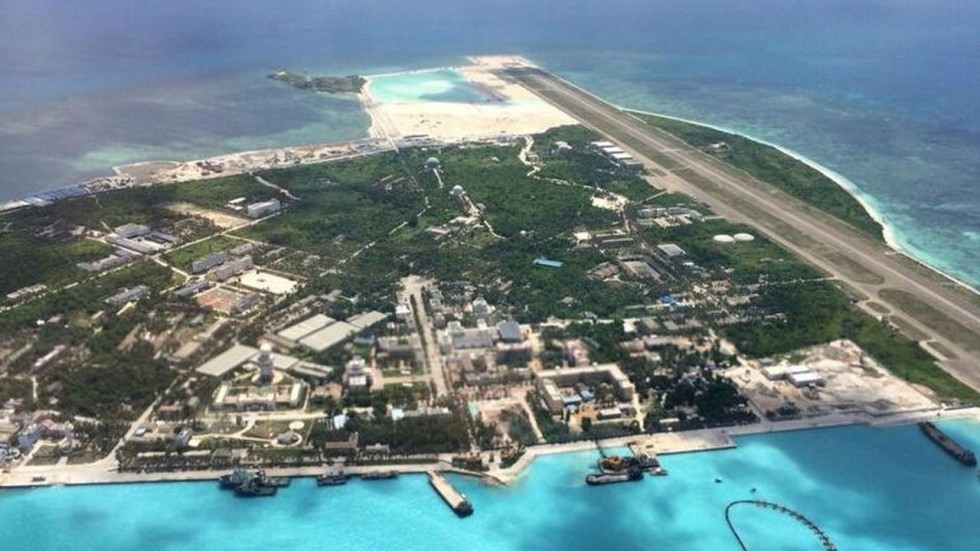
Despite public assurances from President Xi Jinping that the features would not be militarised, China recently deployed surface-to-air missiles and other weapons and equipment. Earlier this year, satellite images showed that Beijing has built at least four airstrips suitable for military aircraft on Woody Island, as well as the reefs in the archipelago known as Fiery Cross, Mischief and Subi.

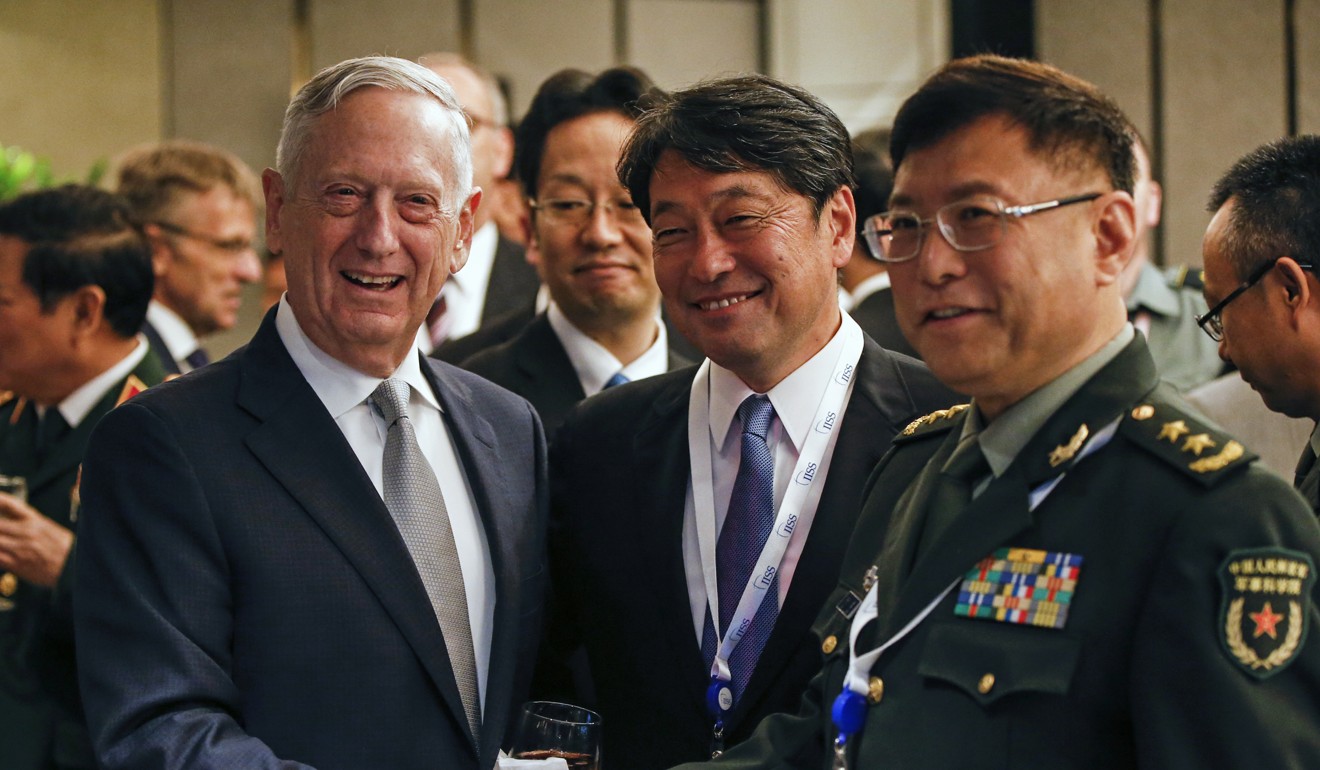
China has telegraphed steps to further solidify its claims in the waters. In June, Chinese Lieutenant General He Lei acknowledged during the Shangri-La defence summit in Singapore that China is deploying troops and weapons on both natural and man-made islands in the Paracel and Spratly archipelagos.

Chinese military sources from a state-owned firm specialising in radar systems to detect stealth aircraft for the PLA said the People’s Liberation Army’s Air Force and Strategic Support Force have also placed sophisticated radar systems in the South China Sea.

“Since the US has kept sending spy aircraft to do the close-in reconnaissance activities near China’s territory waters in the South China Sea, it’s necessary to deploy a sophisticated radar system to the artificial islands to detect the US aircraft,” one of the sources from the firm said.

Lieutenant General He Lei, who led the Chinese military delegation to the Shanghai-La Dialogue, said that “deploying troops and weapons on islands in the South China Sea is within China’s sovereign right to do and allowed by international law.”
The US and other countries have condemned the expansion as a violation of international law. And, in recent months, top American military officials have dropped some of their usual diplomatic language.

US Defence Secretary James Mattis revoked China’s invitation to participate in an annual military exercise this fall, then cancelled a trip to Beijing planned for October.

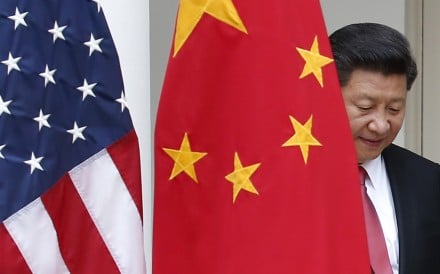
“If you’d asked me two months ago, I’d have said we are still attempting to maintain a cooperative stance,” the retired four-star general said at the Shangri-La summit. “But then you look at what President Xi said in the Rose Garden of the White House in 2015, that they would not militarise the Spratlys, and then we watched what happened four weeks ago, it was time to say there’s a consequence to this.”

During his trip to Vietnam in October, Mattis said Washington was highly concerned about China’s “predatory” behaviour and militarisation of the South China Sea.

“We remain highly concerned with the continued militarisation of features in the South China Sea,” he said, saying that this continued to happen despite a pledge by President Xi Jinping not to do so.

Davidson, the top American commander in the Asia-Pacific, expressed alarm recently at China’s “secretly deployed anti-ship missiles, electronic jammers and surface-to-air missiles.”

“So what was a great wall of sand just three years ago,” Davidson added, “is now a great wall of SAMs in the South China Sea, giving [the People’s Republic of China] the potential to exert national control over international waters in the South China Sea.”

The US and its allies have also launched “freedom of navigation” operations in the region. In September, two pairs of US Air Force B-52 bombers flew over the disputed area – one pair over the South China Sea and one over the East China Sea. A week later, the destroyer USS Decatur came within 12 nautical miles of two of the disputed reefs, prompting manoeuvres by a Chinese destroyer that the Pentagon called “unsafe” and “unprofessional.”

Australia, Japan, France, Canada and New Zealand are among the allies taking part in the patrols.

But the growing prominence of those other military forces has caused China to “push back more, and that heightens the risk that you could have an inadvertent crisis,” said Lindsey Ford of the Asia Society, who is also a former senior adviser to the US assistant secretary of Defence for Asian and Pacific security affairs.

China’s interest is not simply to exert political or economic influence in the region, said Kroenig, the former CIA analyst. Its activities are also defensive in nature, he believes.

China, like the Soviet Union during the cold war, is not confident that its nuclear ballistic missile submarines could survive in the open ocean during a conflict with the United States, he said – because waters closer to Chinese territory are too shallow. So it hopes to use the South China Sea as an operating area for its subs.

“That’s a strategic military purpose on top of the political purpose,” said Kroenig. “I’ve had a Chinese colleague say to me: ‘You guys don’t really care about these territorial claims in the South China Sea. You’re trying to deny our nuclear deterrent.’”

Now, Chinese military experts say, Beijing is considering establishing an “air defence identification zone”, which would require all aircraft over the area to declare their identity and destination.

The rationale is ostensibly peaceful in nature: Chinese officials maintain it would help prevent disasters such as the 2014 disappearance of Malaysia Airlines flight MH370.

But a zone Beijing established in the East China Sea in 2013 drew a joint rebuke from Japan and the Association of Southeast Asian Nations, which considered it threatening.

The resistance from other nations “implied that such a move constituted a security challenge”, said Collin Koh Swee Lean, an analyst at the S. Rajaratnam School of International Studies in Singapore.

Koh warned that the air traffic proposal could derail regional talks about establishing a code of conduct to avoid confrontations in the area. He also predicted that the US might feel compelled to ramp up its military presence in response – a view echoed by Zhou Chenming, a military expert based in Beijing.

Further fuelling tensions in the South China Sea is the growing role of China’s so-called Maritime Militia, a naval paramilitary force that operates disguised as fishing or other civilian vessels. Vice-President Mike Pence recently criticised the forces as extra-legal, and the rules for approaching them are ill-defined.

“Should we treat them as military vessels and expect them to behave that way?” asked the Asia Society’s Ford. “China is exploiting a loophole. Pence’s recent remarks calling out the Maritime Militia explicitly suggest the US is refining its thinking about how to approach that loophole.”

For now, senior American military leaders are expressing confidence that US forces can continue to aggressively promote their freedom of navigation mission without sparking a violent confrontation.

“I think one of the unfortunate things is the focus on two destroyers passing in the daylight,” Davidson told POLITICO. “That is not what the issue is about in the South China Sea. It is about trade, commerce, financial markets moving their information around the globe – every airline that flies over the top.”

Others worry that the longer the United States and China up the ante the more likely things could spin out of control.

13/12/2018

Submit China encourages mechanized agriculture with new measure

CHINA-MECHANIZED AGRICULTURE (CN)

A reaper harvests wheat in Pingyi County of Linyi City, east China’s Shandong Province, May 30, 2018. China has decided to boost mechanized farming and the upgrading of agricultural machinery, according to the State Council’s executive meeting chaired by Premier Li Keqiang on Wednesday. The meeting said that quickening the work as required by the country’s rural vitalization strategy would provide essential support for China to achieve agricultural modernization, allow farmers to increase their income and further expand the domestic market. (Xinhua/Wu Jiquan)

BEIJING, Dec. 12 (Xinhua) — China has decided to boost mechanized farming and the upgrading of agricultural machinery, according to the State Council’s executive meeting chaired by Premier Li Keqiang on Wednesday.

The meeting said that quickening the work as required by the country’s rural vitalization strategy would provide essential support for China to achieve agricultural modernization, allow farmers to increase their income and further expand the domestic market.

The work must be advanced to meet the needs of developing scale farming appropriately. During the process, farmers’ wishes must be respected while the roles of the market are exploited. Grassroots creativity must be valued so that the work can proceed smoothly, it said.

The meeting also listed several crops whose production and harvest could depend more on mechanized farming. They are rice, wheat, corn, potato, oilseed rape, cotton and sugarcane.

In the meeting, it was said that farmers engaged in mechanized farming would be subsidized equally no matter if the machinery they purchase is from Chinese or foreign brands.

Financial institutions were encouraged to use mortgage loans to finance such purchases while local governments were called on to support the work through financial discounts.

The meeting stressed that advanced agricultural machinery and mechanized farming techniques should be further promoted.

It also urged enterprises to quicken innovation on agricultural equipment, double their efforts to develop complete sets of equipment and improve the quality of farming equipment suitable for major cash crops.

It said that small plots of farmland could be consolidated when possible so as to broaden the use of farming equipment and that various cooperatives need to be established to facilitate the sharing of agricultural machinery.

It was stated in the meeting that smart farming based on the application of modern information and communication technologies shall be advanced.

12/12/2018

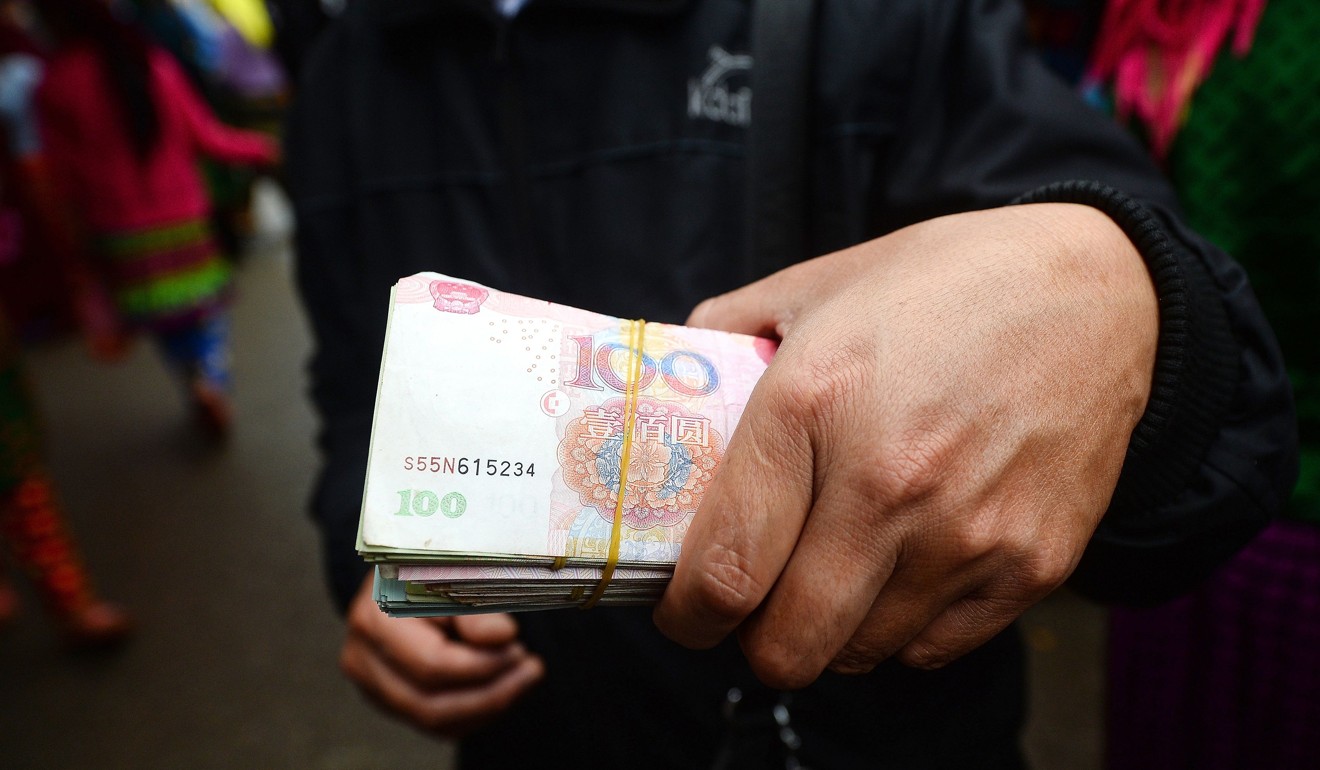
In Vietnam, anguished mothers search in vain for the children they have lost to China’s booming ‘buy-a-bride’ trade

  • In the borderlands, most people have a story of bride trafficking – from kidnapped cousins and disappeared wives to vanished daughters

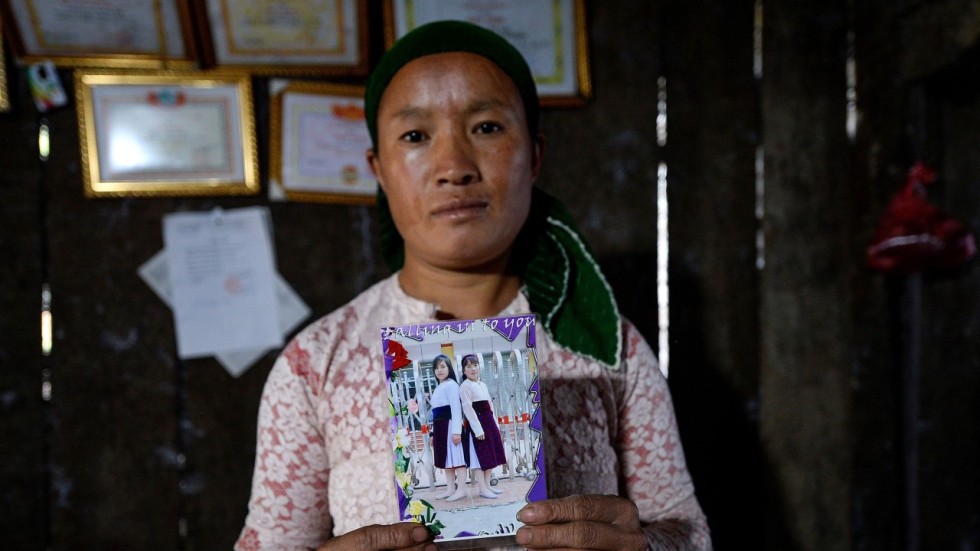
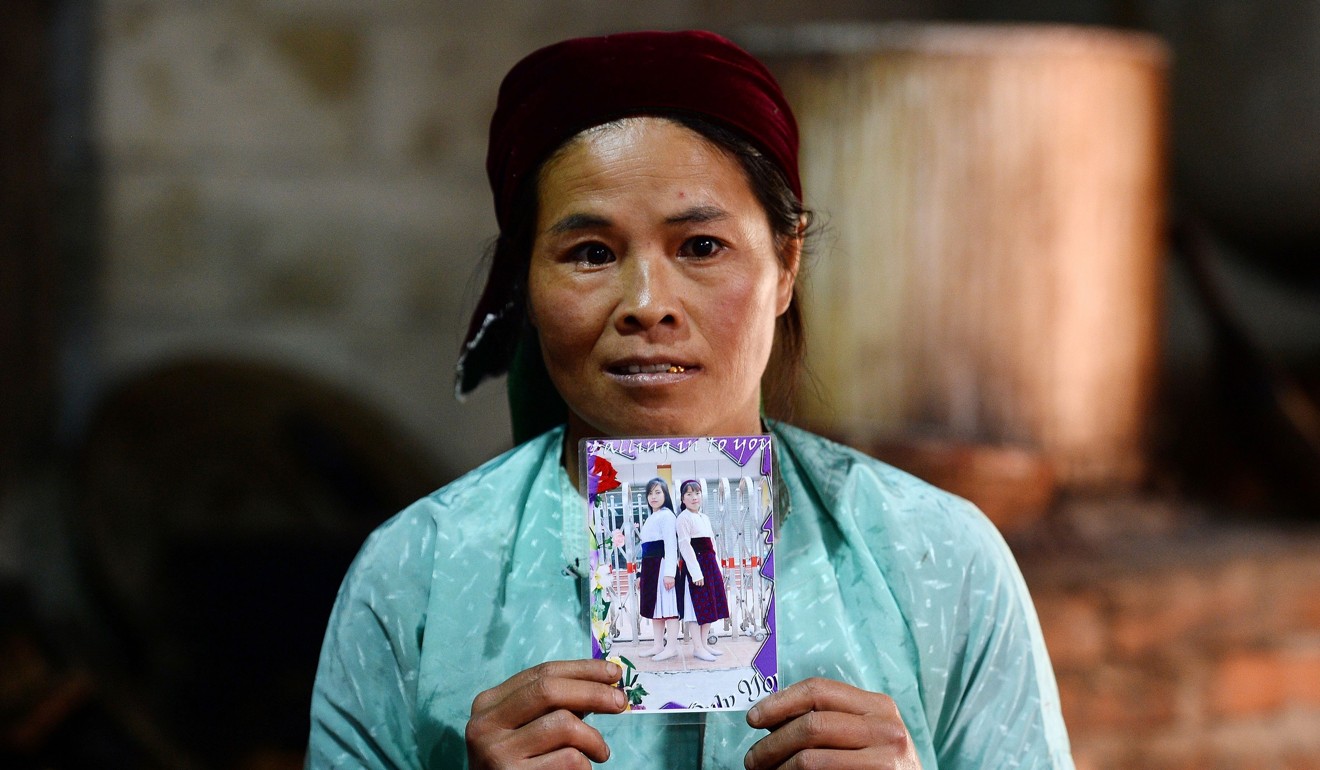
Vu Thi Dinh spent weeks scouring the rugged Vietnamese borderland near China after her teenage daughter vanished with her best friend, clutching a photo of the round-faced girls that she now fears have been sold as child brides.

The anguished mother showed everyone she met the snap of the 16-year-old friends Dua and Di in white and red velvet dresses, the words “Falling Into You” printed above their picture.

They went missing in February during an outing in Meo Vac, a poor mountainous border zone that is a stone’s throw from China. Their mothers fear they were sold in China on one of the world’s most well-trodden bride trafficking circuits.

“I wish she would just call home to say she is safe, to say ‘please don’t worry about me, I’m gone but I’m safe,’” said Dinh, bursting into tears.

I wish she would just call home to say she is safe
VU THI DINH

She is among countless mothers whose daughters have disappeared into China where a massive gender imbalance has fuelled an unregulated buy-a-bride trade. Most people in this part of Vietnam have a story about bride traffi

High-school students talk of kidnapped cousins. Husbands recall wives who disappeared in the night. And mothers, like Dinh, fear they may never see their daughters again.

“I warned her not to get on the backs of motorbikes or meet strange men at the market,” she says from her mud-floored home where she expectantly keeps a wardrobe full of her daughter’s clothes.

She has not heard from Dua since she went missing, unable to reach her on the mobile phone she bought just a few weeks before she disappeared.

The victims come from poor communities and are often tricked by boyfriends and sold, kidnapped against their will or moved across the border by choice for marriage or the promise of work.

Like many of the missing, Dua and Di are from the Hmong ethnic minority, one of the country’s poorest and most marginalised groups.

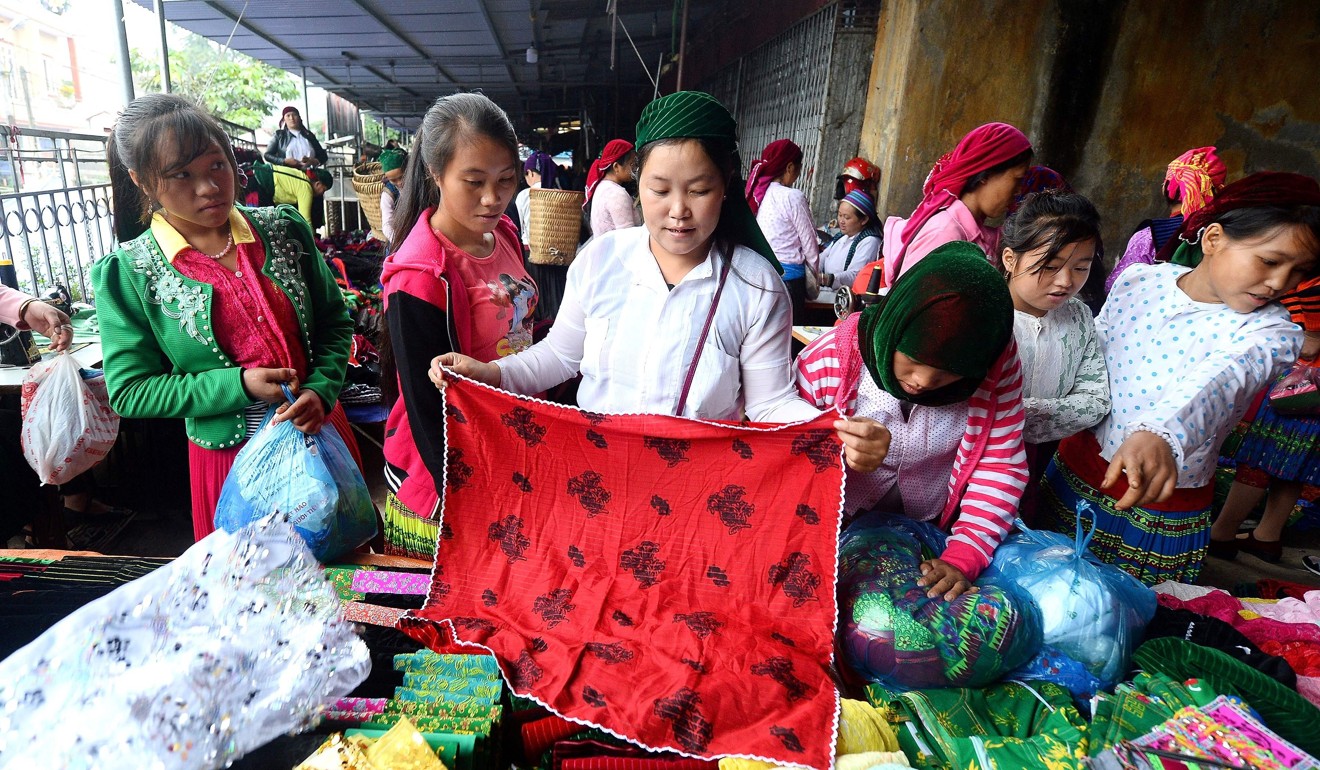
Traffickers target girls at the busy weekend market, where they roam around in packs dressed in their Sunday best, chatting to young men, eyeing the latest Made-in-China smartphones or shopping for lipstick and sparkly hair clips. Or they find them on Facebook, spending months courting their victims before luring them into China.

It is a sinister departure from the traditional Hmong custom of zij poj niam, or marriage by capture, where a boyfriend kidnaps his young bride-to-be from her family home – sometimes with her consent, sometimes not.

Others are enticed by the promise of a future brighter than that which awaits most girls who stay in Ha Giang: drop out of school, marry early and work the fields.

“They go across the border to earn a living but may fall into the trap of the trafficking,” said Le Quynh Lan from the NGO Plan International in Vietnam.

Vietnam registered some 3,000 human trafficking cases between 2012 and 2017. But the actual number is “for sure higher”, said Lan, as the border is largely unregulated.

Ly Thi My never dreamed her daughter would be kidnapped, since the shy Di rarely went to the market or showed much interest in boys.

Just two weeks after that photo shoot with Dua, the giggling girls went for a walk in the rocky fields near their homes. They never came back.

“We think she was tricked and trafficked as a bride, we don’t know where she is now,” said My.

Her worst fear is the teenagers are now child brides or have been forced to work in brothels in China where there are 33 million more men than women because of a long-entrenched preference for male heirs.

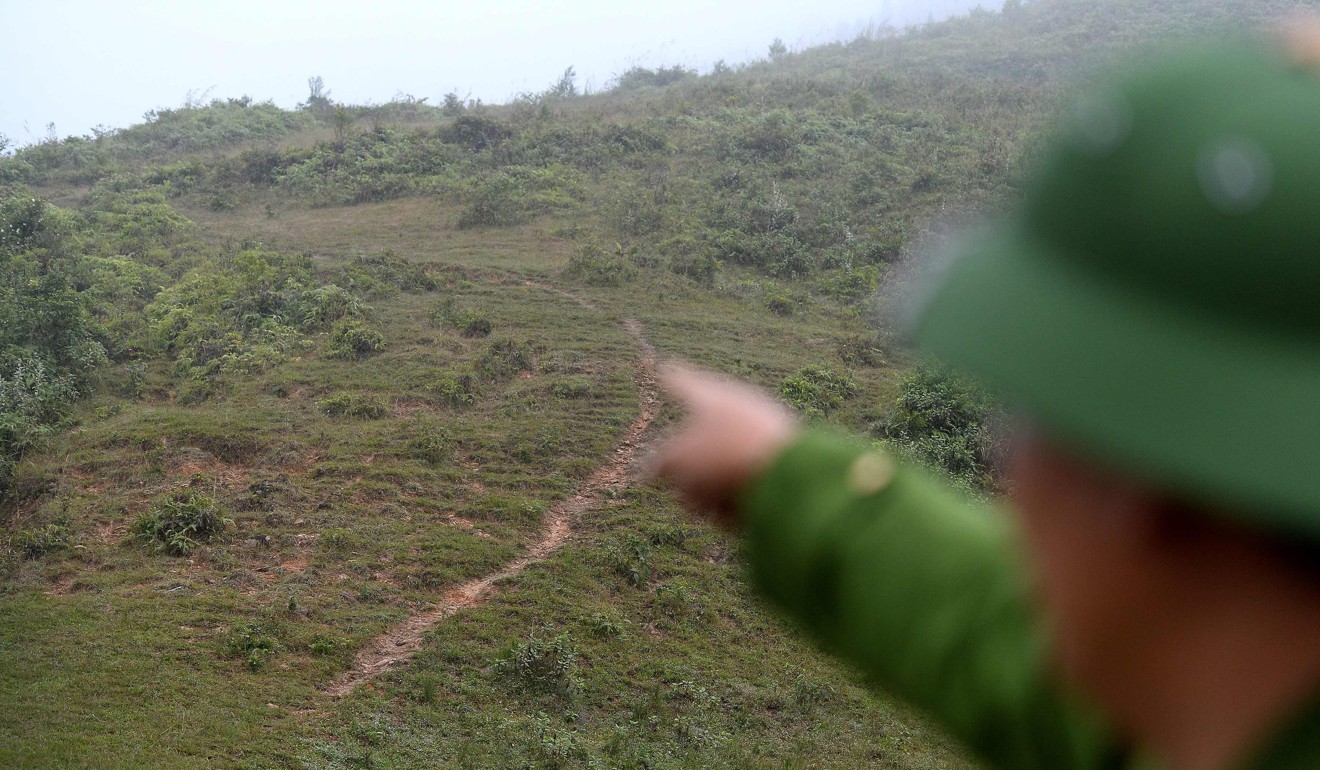
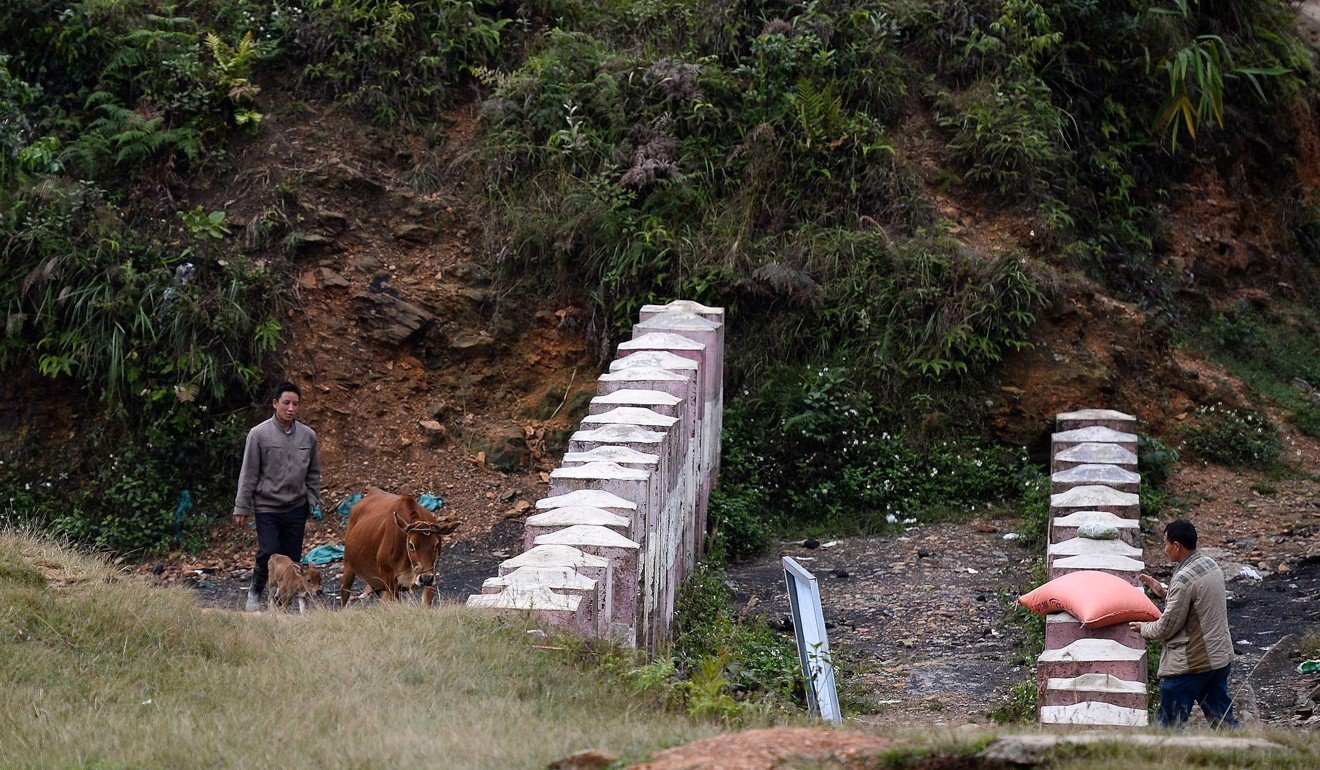
The trip across the 1,300-kilometre border is an easy one, said Trieu Phi Cuong, an officer with Meo Vac’s criminal investigations unit.

“This terrain is so rugged, it’s very hard to monitor,” he said at a border crossing marked by waist-high posts near where a Vietnamese man was selling a cage of pigeons to a customer on the China side.

Many victims don’t even know they’ve crossed into China – or that they’ve been trafficked.

Lau Thi My was 35 and fed up with her husband, an abusive drunk, when she grabbed her son and headed to the border.

She went with a neighbour who promised her good work in China, but she fell prey to traffickers.

My was separated from her son and sold three times to different brokers before a Chinese man bought her as a wife for about US$2,800.

“He locked me up several times, I hated him,” said My, who fled after 10 years by scrabbling together enough money for the journey home.

She is now back with her Vietnamese husband – still a drinker – in the same home she escaped a decade ago, a smoke-filled lean-to where her dirt-streaked grandchildren run about. But she is desperate for word from her son.

“I came back totally broken … and my son is still in China, I miss him a lot,” she said.

12/12/2018

China issues white paper on human rights progress over 40 years of reform, opening up

BEIJING, Dec. 12 (Xinhua) — China on Wednesday issued a white paper on progress in human rights since its reform and opening up drive.

The white paper, titled “Progress in Human Rights over the 40 Years of Reform and Opening Up in China,” said reform and opening up has helped liberate and develop social productive forces, opened up a path of socialism with Chinese characteristics, and ushered in a new chapter in the development of human rights.

Over the four decades, the Chinese people have worked hard as one under the strong and coherent leadership of the Communist Party of China (CPC), the white paper said. Huge changes have taken place, and living standards have significantly improved.

The CPC has always prioritized the people’s interests, ensuring that reform is conducted for the people and by the people, and that its benefits are shared by the people, it added.

China has showed respect for, protected and promoted human rights in the course of reform and opening up, blazing a trail of human rights development that conforms to the national conditions, and created new experiences and made progress in safeguarding human rights, it said.

China has summed up its historical experience, drawn on the achievements of human civilization, combined the universal principles of human rights with the realities of the country, and generated a series of innovative ideas on human rights, it said.

China has brought into being basic rights that center on the people and prioritize their rights to subsistence and development, and proposed that China should follow a path of comprehensive and coordinated human rights development under the rule of law.

The white paper said China has carried out extensive exchanges and cooperation in the field of human rights and earnestly fulfilled its international human rights obligations.

10/12/2018

Violent veterans rally in China leads to 10 arrests

Ten suspects have been arrested for organising a “serious attack” on police officers during a veterans’ protest in northern China in October, according to state media.

According to People’s Daily, the accused organised a protest by 300 people from across the country, calling for better benefits for veterans, at a major public square in Pingdu, Shandong province.

During the assembly, some of the rally participants, led by the 10 suspects, acted violently towards the police and smashed police vehicles, the provincial police authority said, adding that their actions had caused injuries and led to substantial economic losses.

The report said 34 people, including an unknown number of police officers, were wounded in the violence, including two senior people officers who were seriously injured. In addition, a police bus and three private cars were destroyed.

More than 100 shops were forced to close during the rally and 11 buses had to change their routes to avoid the violence. Direct economic losses were estimated to have reached 8.2 million yuan (US$1.1 million).

The incident, on October 6, attracted the attention of the Ministry of Public Security as one of only a few large-scale examples of social unrest on the mainland over the past few years.

The People’s Daily report did not say if the 10 suspects were veterans, but local police said they had “complicated backgrounds” including criminal records in some cases.

All of the arrested are residents of Pingdu.

They are alleged to have used social media to contact people across the country and to have encouraged them to file petitions in Beijing during the “golden week” holiday, at the start of October, while posing as tourists.

They are also accused of spreading fake messages on social media after their plans were thwarted by authorities in Pingdu.

The suspects are reported to have told their followers they had been beaten up by government officials and encouraged them to support them by coming to the city.

At noon on October 6, about 300 people appeared at the People’s Hall square in Pingdu, waving banners and chanting slogans, although the report was unclear what they were calling for.

Two of the accused are said to have addressed the event, inciting people to use violence against the government.

One of the suspects, surnamed Ge, 46, was quoted as saying: “Bring wooden sticks and iron shovels with you. Hit their heads and beat them to death.”

Another suspect, surnamed Ji, 55, is alleged to have said: “We should kill more people to shock the whole nation”, according to the report.

Police said the suspects hired cars to take 105 sticks, 60 hammers, 16 dry powder extinguishers and a bag of talcum powder to the assembly site.

According to a local government statement, offers to negotiate with the protesters were rejected. The demonstrators also refused to leave the square until they received financial compensation from the government.

The conflict is believed to have been triggered when police tried to stop people crossing a cordon to join the 30 protesters originally within the square.

A tussle ensued and eight people were taken to a police bus parked nearby.

Several minutes later, three of the suspects are said to have led 60 protesters in an attack on the police. The windows of the police bus were smashed and the fire extinguisher was discharged into the vehicle, forcing police officers and the eight detained protesters to climb on to the roof of the bus to escape the fumes.

According to the report, the protesters threw stones at the police officers while also continuing to spray them with the fire extinguisher.

The police officers behaved in accordance with the law throughout the riot, which lasted for 11 minutes, the report said.

The report did not say how many people who took part in the rally were veterans.

Police said one of the suspects, surnamed Zheng, had previously been jailed for obstructing police and provoking trouble. Another suspect, surnamed Yang, had previously been caught with drugs.

Police also said a suspect surnamed Liu had been jailed for two years for theft, while another, surnamed Ge, had previously been sentenced to two years in jail for fraud.

Veterans have been an important issue for the mainland authorities this year, with the establishment in April of the new Ministry of Veterans Affairs.

The ministry has been collecting personal information from veterans across the country between August and December, as a “first step” in developing a policy on what packages veterans will receive from China’s governments in future, according to officials.

Last month the ministry and the Communist Party’s Central Propaganda Department spearheaded a nationwide role model campaign in which the nation’s 10 “most beautiful veterans” were selected.

10/12/2018

China designates marine economic development demonstration zone

HAIKOU, Dec. 9 (Xinhua) — China has designated a national-level marine economic development demonstration zone in its southernmost island province of Hainan.

Meng Qinglei, deputy county chief of Lingshui, said on Sunday that Lingshui Li Autonomous County has been approved by the National Development and Reform Commission and the Ministry of National Resources to demonstrate an advanced marine economic development.

Lingshui is located in southeastern Hainan, boasting 118.57 km long coastline and 1,898.9 square km of sea areas.

With rich resources of beaches, islands, scenic bays and mangrove forests, the region has assimilated big Chinese firms like China Shipbuilding Industry Corp., China Electronic Technology Group Corp. and R&F Properties.

Meng said Lingshui is eyeing building high-end maritime amusement, deep sea fish farming, ocean fishing and marine high-tech and information industries.

Currently under construction is the R&F Ocean Paradise project and a deep sea fish farm platform measuring 250,000 cubic meters, which is expected to boast highly automated facilities.

09/12/2018

Slow train to China: India’s trade ties with Beijing taking time to ripen

NEW DELHI (Reuters) – China and India may be talking about improving their trade relationship but there is little action to go with the words.

According to Indian government officials and representatives of various Indian trade bodies, progress is very slow – and may even be getting slower after last weekend’s truce between the United States and China in their trade war.

Both India and China have sought to rebuild trust after a armed standoff over a stretch of the Himalayan border last year.

Indian Prime Minister Narendra Modi and Chinese President Xi Jinping have met a number of times this year to give impetus to the trade discussions. The latest was last week, when they met on the sidelines of the G20 meeting in Argentina.

Indian and Chinese officials said after that meeting there was talk of Beijing increasing its soymeal, rapeseed meal, rice and sugar imports from India, while China would push for more Chinese exports of dairy products, apples and pears to India.

India is also keen to increase its exports of drugs to China.

In reality, though, getting such exchanges turned into deals is going to be a laborious process.

“When we say the Chinese are receptive, it means the talks are happening, but it’s going slow,” said one senior Indian government official with direct knowledge of the discussions. “It can be termed as progress because just a few months ago, we weren’t even talking,” said the official, who did not wish to be named because he is not authorized to talk to media.

The Chinese commerce ministry did not respond to a faxed request for comment for this article.

Bilateral trade between China and India touched $89.71 billion in the year ending March 2018, with the trade deficit widening to $63.05 billion in China’s favor, more than a nine-fold increase over the past decade.

The Indian government is very keen to reduce that gap. A recent study commissioned by India’s trade ministry and reviewed by Reuters, said: “There is no bilateral trade relationship of greater economic and political significance for India than with China.”

The reduction in trade tensions between Washington and Beijing, which has led to a delay in the imposition of larger punitive tariffs by the United States pending further trade talks over a 90-day period, means that the Chinese government may not feel the need to speed up its discussions with New Delhi, Indian officials said.

The government has received calls from jittery exporters who want to know whether the improvement in the relationship between China and the United States would make India’s position weaker, said the senior Indian government official.

ROADBLOCK FOR INDIA

Ajay Sahai, director general of the Federation of Indian Export Organisations, also said China’s truce with the United States may be a roadblock to improved trade with Beijing.

“As it is, the China-U.S. tariff tension was a temporary opportunity and it is not correct for companies to base their long-term strategies on it,” said Sahai.

One longer term impediment to improved trade is product quality, and trade, industry and government officials in India said both Beijing and New Delhi could take time to iron out their differences.

Last week, India and China signed an agreement allowing Beijing to inspect imports of Indian fish meal and fish oil.

A Chinese trade delegation is coming to India on Dec. 10 to inspect soymeal plants, said D.N. Pathak, executive director of the Soybean Processors Association of India.

India wants China to drop a years-long ban on soymeal imports from the South Asian nation. China was a leading buyer of Indian soymeal, a key ingredient in animal feed, until Beijing banned the purchases in late 2011 over quality concerns.

In November, India’s trade ministry said the country could export up to 2 million tonnes of sugar, but trade officials said the target was too steep because China has already exhausted its import quota for this year.

Although India has contracted to sell some tiny shipments of rice to China, officials said New Delhi would find it difficult to boost volumes as Beijing has traditionally been importing the staple from Vietnam and Thailand and the Chinese would take time to develop a taste for Indian rice.

Law of Unintended Consequences

continuously updated blog about China & India

ChiaHou's Book Reviews

continuously updated blog about China & India

What's wrong with the world; and its economy

continuously updated blog about China & India