Archive for ‘Economics’

09/12/2018

China’s November export, import growth shrinks, showing weak demand

BEIJING (Reuters) – China reported far weaker than expected November exports and imports, showing slower global and domestic demand and raising the possibility authorities will take more measures to keep the country’s growth rate from slipping too much.

November exports only rose 5.4 percent from a year earlier, Chinese customs data showed on Saturday, the weakest performance since a 3 percent contraction in March, and well short of the 10 percent forecast in a Reuters poll.

Analysts say the export data showed that the “front-loading” impact as firms rushed out shipments to beat planned U.S. tariff hikes faded, and that export growth is likely to slow further as demand cools.

The customs data showed that annual growth for exports to all of China’s major partners slowed significantly.

Exports to the United States rose 9.8 percent in November from a year earlier, compared with 13.2 percent in October.

To the European Union, shipments increased 6.0 percent, compared with 14.6 percent in October. Exports to South Korea fell from a year earlier, while in October they rose 7.7 percent.

SLOWEST IMPORT GROWTH SINCE 2016

Import growth was 3 percent, the slowest since October 2016, and a fraction of the 14.5 percent seen in the poll. Imports of iron ore fell for a second time, reflecting waning restocking demand at steel-mills as profit margins narrow.

“The sluggishness in imports and exports is in full swing,” said Wang Jun, chief economist of Zhongyuan Bank in Beijing.

The soft imports “show a relatively significant pullback in domestic demand”, he added.

In recent months, Chinese exports had expanded robustly, which economists said reflected front-loading of cargoes before a now-postponed plan to hike U.S. tariffs of $200 billion of Chinese goods to 25 percent from 10 percent on Jan. 1.

The November trade numbers came out less than a week after Presidents Donald Trump and Xi Jinping agreed to a 90-day truce delaying that tariff hike as they negotiate a trade deal. November’s China numbers might add a sense of urgency.

Stirring fears of a reignition of trade tension, the daughter of Huawei Technologies’ founder, a top executive at the Chinese technology giant, was arrested in Canada on Dec. 1 and faces extradition to the United States, threatening to drive a wedge between the U.S. and China.

TALKS ‘GOING VERY WELL’

U.S. President Donald Trump on Friday sounded an optimistic note about trade negotiations with China as his top economic advisers downplayed friction from the arrest of Meng Wanzhou.

“China talks are going very well,” Trump said on Twitter, without providing any details.

In a note, analysts at Haitong Securities in Shanghai said “Growth in shipments of Chinese goods on U.S. 200 billion tariff list has started to pull back, indicating that frontloading effects may be starting to recede.”

“Now with U.S. and China agreeing not to escalate trade tensions any longer, China will start purchasing U.S. agricultural goods, which may narrow China-U.S. trade surplus in the future,” they said.

China’s November trade surplus with the United States was a record $35.55 billion. The October surplus was $31.78 billion. But China’s imports from the U.S. in November fell 25 percent from a year earlier, while the annual decline in October was only 1.8 percent.

For trade with all countries, China’s surplus was $44.74 billion for November, compared with forecasts of $34 billion and October’s surplus of $34.02 billion.

On Thursday, the U.S. reported that its global trade deficit in October jumped to a 10-year high, and that the deficit with China surged 7.1 percent to a record $43.1 billion.

THE WEAKER YUAN

Economists say one factor helping keep up Chinese exports this year is that the yuan CNY=CFXS has weakened more than 5 percent against the dollar, helping to make Chinese products more competitive abroad.

Jonas Short, head of the Beijing office of brokerage Everbright Sun Hung Kai, said the weaker yuan “should boost industrial exports over the coming months. Typically there is a six-month lag between the value of industrial export orders and currency movements.”

Economists in recent months have penciled in a deterioration in China’s export outlook in 2019, factoring in higher U.S. tariffs on a wider range of Chinese goods.

Chinese policymakers are expected to offer more policy support and deliver more support measures if domestic and external conditions continue to deteriorate.

China’s central bank has cut the amount of cash that banks must hold as reserves four times this year, as policymakers seek to steady the slowing economy amid the trade war with the United States.

The government aims for growth of around 6.5 percent this year, compared with 2017’s 6.9 percent pace.

Yang Yewei, an analyst at Southwest Securities in Beijing, said that as global demand cools, “domestic growth-boosting measures should be more effective”.


09/12/2018

China’s core AI industry to exceed 145 bln USD by 2030: report

NEW YORK, Dec. 8 (Xinhua) — The value of China’s core Artificial Intelligence (AI) industries could exceed 1 trillion yuan (145.47 billion U.S. dollars) by 2030, with that of AI-enabled industries more than 10 trillion yuan, a latest report by Bloomberg Intelligence (BI) said.

Titled “China’s great tech leap forward”, the report said that China’s push to commercialize AI technologies, supported by the rollout of the world’s biggest 5G network, could position the country as a global leader for technology and innovation.

“Based on the growth trajectory in the past decade, China may overtake the U.S. in global technology-patents share by 2025,” said the report.

AI-related industries may exceed 6 percent of China’s GDP by 2030, according to the report.

In the report, BI analysts said the country’s abundance of data may fuel the acceleration of the industry.

China’s breakneck pace of consumer-lifestyle digitization potentially gives researchers unique access to Chinese-language data generated by its 1.4 billion people as they go about their daily activities both online and offline.

Vey-Sern Ling, senior industry analyst at Bloomberg intelligence, said China may overtake global peers in the commercialization of AI technologies, as large amount of capital is likely to continue pouring into the industry.

According to Tsinghua University, private funding for Chinese AI-related companies in 2017 totaled 27.7 billion dollars, equivalent to 70 percent of global investments in the industry.

Data showed China’s cumulative venture-capital investments in AI startups had already caught up with the United States by 2016.

Ling, also the lead analyst of the report, said the top-down support is an important factor apart from the multi-faceted user data and the funding available in China to the industry’s fast development.

“I don’t think anywhere else in the world you have the government so strongly behind, identifying the technology pillar and bearing full weight,” said Ling.

He added that China’s potential dominance in AI by 2030 may be led by developments in transportation, corporate services, health care and finance.

08/12/2018

Ganges: The holy men fasting to death keep a river alive

AtmabodhanandImage copyrightMANSI THAPLIYAL
Image captionAtmabodhanand, 26, stopped taking food on 24 October

Over the past two decades, holy men in India have gone on dozens of fasts demanding governments honour their promise to revive the polluted Ganges, a river revered by Hindus. The recent death of one of the most prominent hunger strikers made headlines. Soutik Biswas went to find out more.

In a quiet ashram (retreat) near the pilgrim town of Haridwar, a young seer says he would die to save the Ganges.

Atmabodhanand is on the 40th day of a fast begun after the ashram’s most prominent resident starved himself to death two months ago.

The 26-year-old computer science dropout from Kerala state spends his days lying under a blanket on a bed beneath a mango tree. When night falls and the air gets chillier, he moves inside the spartan quarters and sleeps.

“I am ready to die,” he told me. “Our ashram has a history of sacrifice.”

Matri Sadan is a leafy, three-acre ashram that sits on the edge of the river. Atmabodhanand stopped taking food on 24 October and now survives on water, salt and honey – his is the 60th such fast by residents since it was founded in 1997.

Using a mix of folksy activism and hunger strikes, residents have put pressure on successive governments to scrap big dams, ban sand mining, clean up the river and pass laws to protect it. Many governments have acceded to their demands in the past.

Image captionThe Ganges is the longest river in India

Seven years ago Swami Nigamanand, 36, fell into a coma and died after refusing food for 115 days – the longest hunger strike in the ashram’s history. He had demanded the government halt all stone quarrying near the river.

A 39-year-old local seer and ashram resident, Sant Gopal Das, is currently being force fed in hospital to keep him alive.

But it was the death in October of GD Agarwal, an 86-year-old former environmental engineer, that grabbed international headlines. Agarwal, also known as Swami Gyan Swaroop Sanand, died after fasting for 111 days at the ashram.

Agarwal was an alumnus of University of California, Berkeley, and taught at the elite Indian Institute of Technology. He worked as an engineer with the federal pollution control authority and was a vocal critic of the government’s half-hearted efforts at cleaning up the river. In 2011, he renounced the material world and became a seer. Before his death he wrote three letters to Prime Minister Narendra Modi with his demands . He didn’t receive an answer.

“He was an inspiration to us all to do the best, and be our best, in all that we do,” Mary Stacey of the University of California wrote to the ashram after his death.

Two days after Agarwal began refusing water, his condition deteriorated and he died after being forcibly moved to the hospital. Within two weeks, Atmabodhanand took up the cudgels and began his hunger strike, inspired by his famous predecessor. He also believes that one man’s hunger can “bring back the river from the dead”.

Image captionEnvironmentalist GD Agarwal died in October after a 111-day-long hunger strike

The longest Indian river, Ganges flows from the Himalayas to the Bay of Bengal. Concerns over the declining water levels and waning health of the 2,500km (1,553-mile)-long river, which supports a quarter of India’s 1.3 billion people, have been mounting for years.

Hindus revere the river as a god, and believe that bathing in her waters can wash away a person’s sins.

But the Ganges has been choked by more than 1,000 irrigation dams, the water table in its basin shrunk by reckless extraction of groundwater and its own water poisoned by toxic industrial effluent and household sewage. The river in Haridwar itself caught fire in 1984 when someone put a lit match on the water. “Indians are killing the Ganges with pollution and the polluted Ganges, in turn, is killing Indians,” says Victor Mallet, author of River of Life, River of Death, a new book on the river.

Now, say the seers at the ashram, Narendra Modi’s Hindu nationalist BJP government, which rode to power in 2014 promising to clean up the Ganges, is “arrogant and isn’t interested in saving the river”.

They find it ironical that despite Agarwal being close to a Hindu nationalist organisation, he actually appeared to be listened to more by the previous Congress government. He fasted eight times while it was in power, and extracted some major concessions, including scrapping a dam and declaring a key 100km stretch of the river as sensitive.

“We will die for the river. If the government wants blood, we will give them blood,” says Swami Shivanand, the 72-year-old head of the ashram, who has also fasted in the past.

Image captionThe Ganges is one of the world’s most polluted rivers

Five years ago, Atmabodhanand quit college and travelled from Kerala in the south to Haridwar in northern Uttarakhand state by train, bus and foot. Seeking a life of renunciation, he says he was disillusioned by the way most holy men lived, and decided to end his life by disappearing into the Himalayas.

That is when he met Swami Shivanand who took him in. At the ashram he immersed himself in prayers and other activities and ran its social media accounts.

Atmabodhanand has gone on eight hunger strikes since 2014. During his longest fast, which lasted 47 days, he had hypothermia – when the body loses heat faster than it can produce it – and had to be taken to hospital. He has protested against sand mining on the river and stone crushing on its banks, and ended his strikes, he says, after authorities listened to the demands and took steps.

“This time, it is a fight to the finish. It’s going to be a long haul,” he says.

On the day I visited the ashram, rattled authorities, panicky at the prospect of another hunger death on the premises, sent doctors with an ambulance to check Atmabodhanand and take blood and urine samples to test for blood sugar, malaria and dengue. His blood pressure was normal, and he had no fever.

They updated his medical records in a government log book called Medical Examination of Hunger Strikers. All this while, residents chided the officials and accused them of trying to take away the hunger striker to “poison” him in hospital. The officials wondered aloud what they would gain by “killing a hunger striker”.

Hunger as a form of political protest is not new to India – Gandhi is arguably the most famous hunger striker in history, having resorted to more than a dozen fasts, the longest one lasting 21 days.

Image captionAtmabodhanand lies on a bed under a tree in the ashram during the day

Much later, in 2011, anti-corruption campaigner Anna Hazare undertook a high-profile 12-day hunger strike to press for anti-corruption laws. But what makes the fasts at the ashram in Haridwar stand out are their frequency and the two deaths. “Hunger strikers believe that the voice of hunger has a power disproportionate to its source,” says Prof Sharman Apt Russell, author of Hunger: An Unnatural History. “Hunger can strengthen the weak, inspire the timid, bully the powerful.”

But the lack of widespread public support for the fasting residents of Matri Sadan is sometimes glaring. “People have become selfish. They don’t care about their own good any more,” says Atmabodhanand feebly.

But the reality is possibly more complex.

Himanshu Thakkar, a water expert with the advocacy group South Asian Network on Dams, says the hunger strikes by the seers at Matri Sadan have had “some impact” all right. Sand mining on the river has been stopped from time to time, and stone crushing factories removed from near the river. “But my impression is fasting must be a part of a larger strategy in which people from different sections of society must be mobilised.”

Image captionSwami Punyanand is on a fruits only diet to prepare for a future hunger strike

The BJP’s water resources minister Nitin Gadkari says a $3bn plan involving 254 projects to clean up the river and its surroundings is in progress, and most of the cleaning work of the river will be completed by next year. “The people’s dream of a rejuvenated Ganges will soon be fulfilled,” he told a meeting in Delhi recently.

But the seers insist the government is not doing enough. So hunger remains a constant companion of the residents at the retreat.

“I am next in the queue. This time, we will not stop,” says Swami Punyanand, a 61-year-old former automobile workshop owner from Delhi who became a seer years ago. He has gone on a simple fruit diet to “prepare for fasting to death”.

In the hermitage of hunger, this is how they prepare to give up their lives for the river.

06/12/2018

The Indian restaurants that serve only half a glass of water

Glass half full

While many parts of India are going through a sustained water crisis, the western city of Pune is trying to deal with the problem in a rather unusual way, writes the BBC’s Geeta Pandey.

The dystopian future we worried about is already here.

Many restaurants in the city of Pune have begun serving only half glasses of water to guests.

At the pure vegetarian Kalinga restaurant, a couple have just been seated when a waiter approaches their table and asks if they want water.

“I said yes and he gave me half a glass of water,” says Gauripuja Mangeshkar. “I was wondering if I was being singled out, but then I saw that he had only poured half a glass for my husband too.”

For a moment, Ms Mangeshkar did wonder whether her glass was half full or half empty, but the reason why she was served less water was not really existential.

Nearly 400 restaurants in Pune have adopted this measure to reduce water use, ever since the civic authorities announced cuts in supply a month ago.

Image captionGauripuja Mangeshkar was served half a glass of water at a restaurant in Pune

Pune Restaurant and Hoteliers’ Association president Ganesh Shetty, who owns Kalinga, told the BBC that they have worked out an extensive plan to save water.

“We serve only half glasses of water and we don’t refill unless asked, the leftover water is recycled and used for watering plants and cleaning the floor,” Mr Shetty explained. “Many places have put in new toilets which use less water, we have put in water harvesting plants and the staff are briefed on minimising water use.”

Kalinga gets about 800 customers a day and by serving only half glasses, he says the restaurant is able to save nearly 800 litres (1,691 pints) of water a day.

“Every drop is precious and we have to act now if we want to save the future.”

Owner of 83-year-old Poona Guest House, Kishor Sarpotdar, shows the shorter steel tumblers he’s bought to replace the earlier taller ones. His restaurant is not only serving half glasses of water, he says, they are serving them in smaller ones too.

Pune is next door to India’s financial capital, Mumbai. An educational and cultural hub, it was famously described as the “Oxford and Cambridge of India” by India’s first prime minister Jawaharlal Nehru.

This city of four million people has been well served by the Khadakwasala dam built in 1878, and water shortages are new here.

Mr Shetty says the first major water crisis the city faced was two years ago.

“For two months in February and March, our water supply was reduced by half. We got water once in two days.”

Strict guidelines were issued about what fresh water supplied by the civic authorities could – or couldn’t – be used for. And people were encouraged to install bore wells to pump out ground water to meet additional requirements.

All construction in the city was stopped for two months, car garages were allowed to do only dry servicing, the city celebrated a dry Holi, clubs and water resorts were barred from holding popular rain dance events and swimming pools were ordered shut.

All misuse was checked and those who erred were made to pay hefty fines.

Image captionKishor Sarpotdar shows the shorter steel tumblers he’s bought to replace the earlier taller ones

“It was very serious,” says Col Shashikant Dalvi, Pune-based water conservation expert.

This year, he says, the situation is “worse”. “Panic buttons have been pressed in October itself. How will we face the challenge in the summer months?” he asks.

According to a government report earlier this year, India is facing its worst-ever water crisis, with some 600 million people affected. The report said the crisis was “only going to get worse” in the coming years and warned that 21 cities were likely to run out of groundwater by 2020.

In May, the popular Indian tourist town of Shimla ran out of water, while last year it was reported that the city of Bangalore was drying up.

Large parts of the western state of Maharashtra, where Pune is located, are water deficient and every year, at the onset of the summer season, the state makes the news for “water wars” between districts – farmers, villagers, city residents, slum dwellers, the hospitality industry and businesses all clamouring for their share of water.

This year, that talk has already started. And it’s just the beginning of winter. Many areas are already staring at drought and acute water distress.

And this time, Pune too is affected. In October, the Pune Municipal Corporation announced 10% cuts in supply for everyone.

Image captionRestaurant owner Ganesh Shetty says every drop is precious and we have to act now if we want to save the future

Col Dalvi though is baffled about this shortage.

“The crisis two years ago,” he says, “was because of deficient rainfall. But this year, Pune had excessive rainfall until the end of July. The dams were full. So where has the water gone?”

The monsoon rains will not come before June and eight months can be a long time. “It’ll be a nightmare for the city unless we get some rains in the winter,” he says.

Experts blame climate change, deforestation and the rapidly growing city population as the main reasons for the water shortage. And the fact that the Khadakwasala dam reservoir has never been de-silted, which means its capacity to hold water is reducing daily.

Col Dalvi offers a prescription to deal with the water shortage in Pune and the rest of the country, because by “2025 India will be most populous country in the world”.

“Leakages must be plugged, unsustainable over-extraction of ground water must stop, rooftop rain water harvesting and recycling of water must be made mandatory, otherwise shortages would get more critical,” he says.

What about restaurants serving half glasses of water to patrons? Is it just a gimmick, I ask.

“Not at all,” he says. “It’s not a gimmick. It’s an excellent idea. A drop saved is a drop gained.”

06/12/2018

China, Cuba sign agreements to promote economic cooperation

HAVANA, Dec. 5 (Xinhua) — China and Cuba on Wednesday signed two agreements to promote economic cooperation during the 14th session of the bilateral business committee, where companies from both nations explored new trade and business opportunities.

Cuba’s Chamber of Commerce (CCC) and the China Council for the Promotion of International Trade (CCPIT) inked a memorandum on a joint action plan for cooperation in 2019.

The document, signed by Chen Zhou, vice president of the CCPIT, and Orlando Hernandez, president of the CCC, includes strategies and actions which will be developed next year with the goal of consolidating links between the two countries’ business communities.

A memorandum of understanding was also signed by Chen and Roberto Verrier, head of the Cuban export and investment promotion agency ProCuba, to strengthen ties between the two institutions.

“Cuban sugar, rum, premium cigars and seafood are increasingly known to Chinese consumers,” said Chen, who attaches great importance to the CCPIT’s work with the Caribbean nation.

He said the joint 2019 Action Plan is a guide for bilateral cooperation as well as the organization of mutual visits, exchange of economic information, legal advice to companies in the two countries and the promotion of opportunities for Chinese provinces and cities.

The official said there is increasing interest from Chinese companies and businessmen to participate in the Mariel Special Development Zone, the island’s flagship foreign investment project.

“The CCPIT promotes ongoing negotiations to establish joint ventures in the ZEDM and open new opportunities for Chinese companies within the Cuban market,” he added.

Chen said that in the future the institution will focus on building an effective and multisectoral platform for the promotion of bilateral trade.

Orlando Hernandez, president of the CCC, acknowledged the importance of economic and commercial links between Beijing and Havana.

“Chinese products are present in a wide range of areas of Cuban life such as health, education, technology and sports, transport, among others,” he said.

The official called on Chinese investments to expand their presence in the island and said there are plenty of opportunities in sectors such as tourism, renewable energy, construction, agriculture, industry and biotechnology.

He also highlighted the importance of the Belt and Road Initiative (BRI) for Cuba and Latin America due to its development prospects for each of the participating nations.

“Cuba hopes to get involved in the BRI with true commitment and believes that it will contribute to attracting further Chinese investment in our country as we update our economic model,” he said.

Hernandez also expressed Havana’s willingness to host the 2021 China-Latin America and Caribbean Business Summit in the Cuban capital.

The session of the Cuba-China business committee included presentations on Cuba’s strategies to attract foreign investment, as well as trade potential between China and Cuba.

China is the Caribbean nation’s second largest trading partner with strong economic ties and cooperation in multiple sectors such as renewable energies, agriculture, tourism, mining, transportation and infrastructure.

05/12/2018

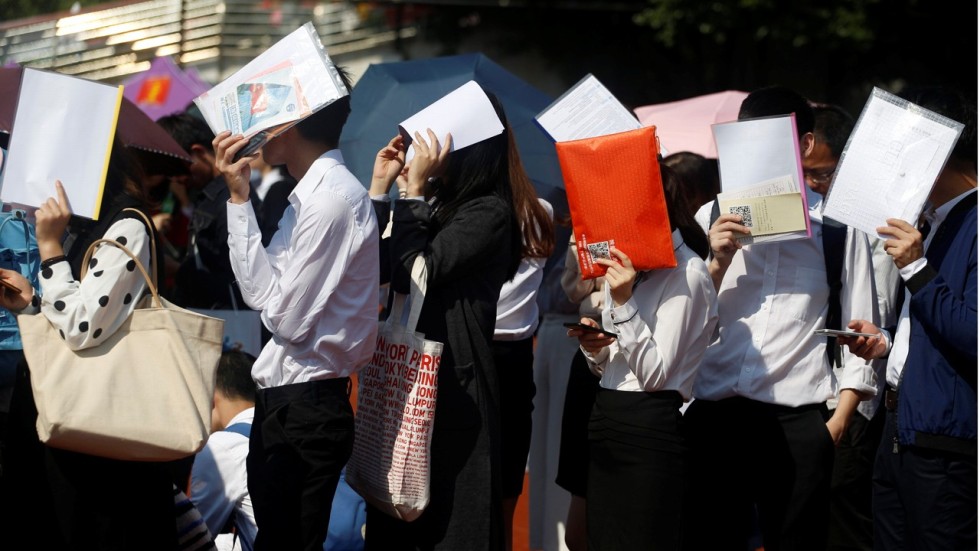
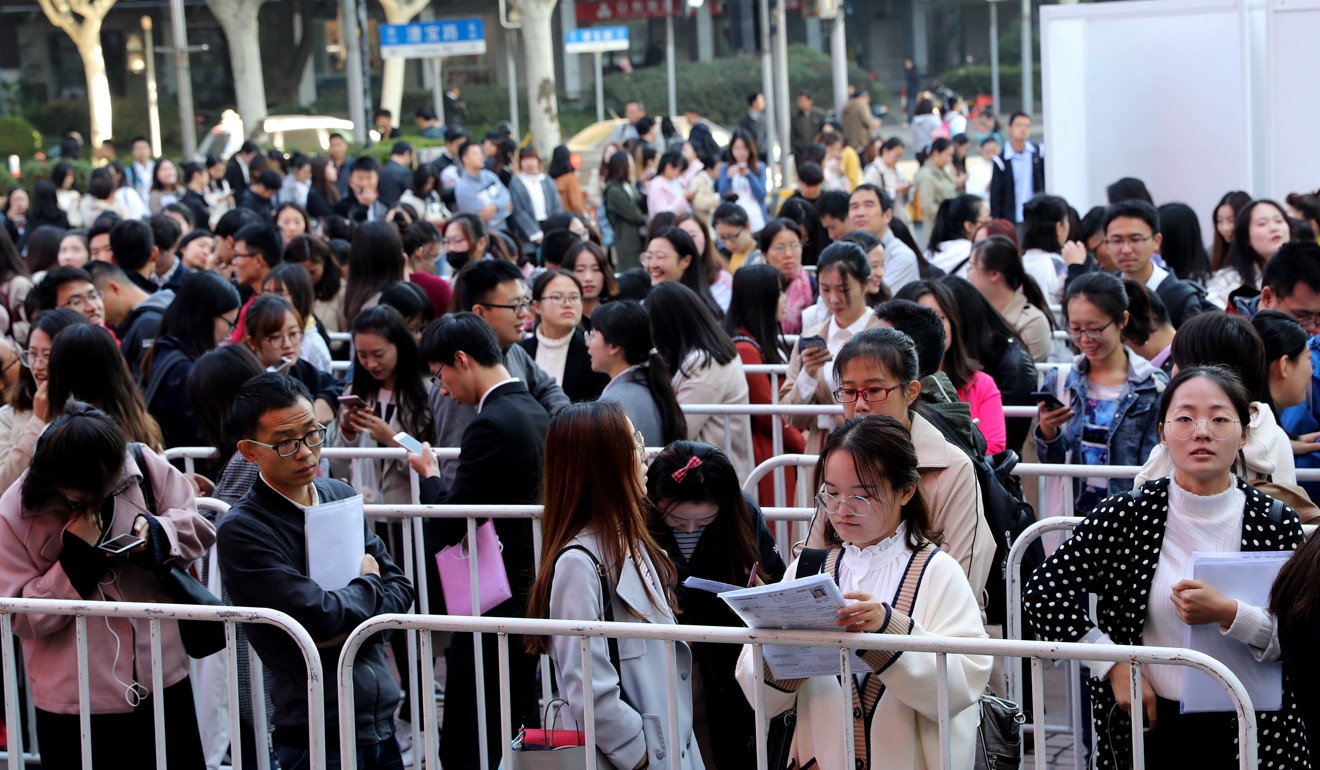
China takes steps to support jobs as trade war starts to hit employment

  • Cabinet unveils measures including unemployment insurance refunds for firms that do not lay off staff and subsidies for all jobless young people aged 16 to 24
PUBLISHED : Wednesday, 05 December, 2018, 4:15pm
UPDATED : Wednesday, 05 December, 2018, 4:17pm


Beijing is now officially worried about unemployment, as the US-China trade war continues to weigh on the world’s second largest economy.

On Wednesday, the State Council unveiled policies ranging from refunding unemployment insurance payments to companies that do not lay off staff to giving subsidies to jobless young people aged 16 to 24 rather than only to college graduates without jobs, according to a document on the government’s website.

The cabinet’s policy paper, which was drafted on November 16 but only made public this week, had already been passed down to local governments last month. The local governments were told to draft their own versions, taking account of local conditions, within 30 days.

Beijing has prioritised employment stability over other economic targets in various meetings, but the document offers the first sign of unease within the central government leadership over whether it can fight off unemployment pressure, as the trade war continues to reduce corporate hiring demand, particularly from export manufacturers.

While the official survey-based unemployment rate remained stable at 4.9 per cent in October compared to September, other indicators point to a weakening jobs market. The employment sub-index in both the official and Caixin purchasing managers’ index for the manufacturing sector showed factories have started to cut their workforces during the past few months because of weak overseas demand.

In the export sector, hiring demand fell by more than half in the third quarter, according to the China Institute for Employment Research, with the supply of new jobs declining even more in coastal cities such as Ningbo and Suzhou that rely heavily on international trade.

“Employment is facing new challenges this year, particularly since the start of the trade conflict,” Zhang Yizhen, vice-minister of human resources and social security, said at a press conference on Wednesday. “These [firms] operating mainly in import and export trade, particularly those exposed to and concentrating on US trade, are facing greater pressure [on employment].”

According the State Council policy paper, companies that do not lay off staff or only scale down their workforce mildly can get a 50 per cent refund of unemployment insurance payments made on behalf of their employees last year. And for firms that face temporary operational difficulties but have had few lay-offs, the refunds could be higher.

Companies in China are required to pay 2 per cent of their total payroll in unemployment insurance every month.

Beijing also called for local governments to increase their financial support for individual entrepreneurs and small private-sector enterprises, which are the main driver of urban employment in China. These entrepreneurs and firms should be offered government-guaranteed loans of between 150,000 yuan (US$21,900) and 3 million yuan (US$438,200).

Southern Guangdong province, a major hub of China’s export economy, is one of the first regions to heed Beijing’s call to lay out a detailed subsidy plan to stabilise employment, based on a notice dated last Friday but published on the government’s website on Monday this week.

In the Guangdong plan, third-party recruitment agencies will get a subsidy of up to 800 yuan from the provincial government for each rural worker they help find a job, through which the worker contributes to the social security fund for more than six months.

A small company that was registered within the last three years can get up to 30,000 yuan in total subsidies depending on the number of workers they hire. The government also offered subsidies – from hundreds to thousands of yuan – to encourage people who start new business in rural areas, college graduates who go to work for rural governments, and small enterprises that hire workers living below the poverty line.

At least for now, Beijing remains confident it can keep the job market under control.

“Even though key indicators have shown that employment remains stable, of course, we are concerned about the uncertainty surrounding the domestic economy and external markets,” Zhang said. “These new measures from the State Council will further stabilise and stimulate employment. We are confident [that they will do that].”

04/12/2018

Premier Li urges efforts to build up growth momentum

CHINA-JIANGSU-LI KEQIANG-ECONOMY-MEETING (CN)

Chinese Premier Li Keqiang presides over a meeting with leading officials of some provinces and Guangxi Zhuang Autonomous Region on current economic trends and development for next year in Nanjing, capital of east China’s Jiangsu Province, Nov. 30, 2018. (Xinhua/Pang Xinglei)

NANJING, Dec. 3 (Xinhua) — In the face of challenges at home and abroad, Premier Li Keqiang has called for firmer, bolder efforts to expand reform and opening-up, build up growth momentum and push forward high-quality development.

Li made the remarks at a meeting about current economic trends and development for next year, held recently in Nanjing, capital of east China’s Jiangsu Province. It was attended by a number of leading provincial-level officials.

China has taken multiple, targeted measures to ensure a stable economy, with major full-year targets expected to be fulfilled, Li said. However, he warned of rising downward pressures amid complicated circumstances at home and abroad.

China will maintain the continuity and stability of policies, with measures to “ensure the proper intensity and tempo and improve the fine-tuning, and guide the market to form stable expectations,” he said.

The supply-side structural reform will remain as a major task, and the government will step up support for manufacturing, services and other forms of the real economy, in particular small and private enterprises, according to Li.

China will moderately expand domestic demand and propel consumption upgrades, Li said.

He said China will improve the efficiency of government funds, grant private capital easier market access and accelerate building major projects.

He urged governments of all levels to give priority to employment and build a business environment that is convenient, stable, transparent and fair.

The premier also promised lower taxes and fees, and stressed the role of the labor force in sustainable development.

Li also called on governments to take differentiated measures and make use of the country’s economic advantages to ensure the economy will perform well.

04/12/2018

Red Cross Society of China moves to reform

BEIJING, Dec. 3 (Xinhua) — A reform plan of the Red Cross Society of China (RCSC), approved recently, is expected to make the organization more effective, an RCSC official told Xinhua Monday.

Under new circumstances, the mission and targets of the RCSC have undergone profound changes, and demand and approaches for humanitarian services are bound to transform, the official said.

The world also places more expectation on China to play a bigger role in global affairs, and building of a community with a shared future for humanity offers the RCSC a broader field to play a role in, and places higher demands on its capacity and vigor, according to the official.

Only through exploring mechanisms of more efficiency, transparency and standardization, as well as solving problems that affect the Red Cross work can the RCSC better perform its duties, the unidentified official said.

The reforms include pushing forward innovation in administrative organizations, human resources and operation of the RCSC, in order to led Red Cross societies at all levels become more closely linked to the public and have more transparency and credibility, the official said.

“All sectors of the society will be encouraged to take part in our activities,” said the official.

The official said the RCSC would stay people-focused as it worked on emergency rescue, humanitarian aid, voluntary blood donation and organ donation.

The RCSC has also agreed to improve its information disclosure by posting receipts and disbursements of funds and goods on a unified information platform, accepting public supervision.

03/12/2018

Air pollution: NGT slaps 25 crore fine on Delhi government

The green panel said that even after more than four-and-a-half years, the complaint of the aggrieved parties is that the pollution caused by the unregulated handling of plastic continues to remain unabated.

It had asked the chief secretary to hold a joint meeting with the persons considered responsible for compliance. (File photo: PTI)

The National Green Tribunal Monday asked the Delhi government to deposit Rs 25 crore with the Central Pollution Control Board (CPCB) for their failure to curb the problem of pollution in the city.

A bench headed by NGT Chairperson Justice Adarsh Kumar Goel also asked the AAP government to furnish a performance guarantee of Rs 25 crore with the apex pollution monitoring body to ensure that there is no further lapse in this regard.

It said despite its clear directions, there is hardly any action for compliance of orders of the tribunal and pollution continues unabated in blatant violation of law and under the nose of the authorities “who have hardly done anything concrete except furnishing excuses and helplessness”.

The green panel said that even after more than four-and-a-half years, the complaint of the aggrieved parties is that the pollution caused by the unregulated handling of plastic continues to remain unabated.

The tribunal was hearing pleas filed by Mundka village resident Satish Kumar and Tikri-Kalan native Mahavir Singh alleging pollution caused by burning of plastic, leather, rubber, motor engine oil and other waste materials and continuous operation of illegal industrial units dealing with such articles on agricultural lands in Mundka and Neelwal villages.

The tribunal had earlier directed the Delhi chief secretary to co-ordinate with the concerned municipal authorities, police authorities and other officers responsible for compliance of orders of this tribunal already passed referred to ensure compliance at the ground-level forthwith.

It had asked the chief secretary to hold a joint meeting with the persons considered responsible for compliance and till the orders remain un-complied, continue to hold such meetings at least once a month.

“It will be open to the chief secretary to seek feedback from concerned inhabitants about the ground situation,” the NGT had said.

Get live Stock Prices from BSE and NSE and latest NAV, portfolio of Mutual Funds, calculate your tax by Income Tax Calculator, know market’s Top GainersTop Losers & Best Equity Funds. Like us on Facebook and follow us on Twitter.

03/12/2018

Slowing Growth, Below Par GST Collections, Fiscal Deficit New Headache for Govt

Slowing Growth, Below Par GST Collections, Fiscal Deficit New Headache for Govt

(Image for representational purpose)
New Delhi: Three separate economic data points released last week could create a new headache for the government, which is still putting out the fires it ignited by releasing the GDP back series data in the same week.

Economic growth is a major worry particularly now, since there has already been intense politics over the rate of growth during the two terms of the UPA government (through the back series data) versus the present regime, very close to the 2019 Lok Sabha elections. And with the fate of the ruling BJP hanging in balance as crucial state polls are at various stages of completion, the narrative of robust economic growth during the current government’s last few months in office becomes even more crucial.

But this, a benign narrative about having ushered in robust economic growth, is not easy to craft. First, the November gross GST collections came in, showing that the anecdotal Rs 1 lakh crore monthly collection mark has been missed again. The Finance Ministry put out a statement which showed that collections totalled Rs 97,637 crore last month.

The second pain point emerged when it became known that GDP growth slowed down in the second quarter versus the April-June period and after galloping for four consecutive quarters. India remains among the fastest growing economies in the world and several external factors were to blame for this state of affairs but the data on Q2 growth has been used by analysts to predict that economic growth in the second half of the fiscal year – October to March – will be even slower than the first half.

And finally, the fiscal deficit number released by the government for April-October also proved worrisome, as the country has already breached the target set out for the entire fiscal in these seven months.

Of course, not every chance of things improving in the coming months can be ruled out. The Centre could dip into the states’ share in GST collections, it could postpone certain expenditure items, overall tax collections could surprise or there could be a last minute burst of activity on disinvestment.

Any or all of these actions could make the government remain within its fiscal deficit target. As ratings agency Care Ratings pointed out, the government meeting the fiscal deficit target of 3.3% for the year would be contingent on:

—Realisation of disinvestment target of Rs 80,000 crore (less than a sixth has been achieved till now)

—Higher GST collections. The collections so far have been lower than the target for 5 out of the total 7 months.

—The government has lowered gross borrowings by Rs 70,000 crore which will enable it to maintain the fiscal deficit target of 3.3%

But till all of the above happen, the narrative of robust growth under the present regime remains weak. The September quarter GDP growth stood at 7.1% versus 8.6% in the June quarter. The government described the numbers as “reasonable”, saying GDP growth in the first six months was at 7.6% and GVA (Gross value Added) at 7.4%.

“Growth in the second quarter is on higher base compared to the growth of the first quarter. Manufacturing growth on a base of 7.1% in Q2 2017-18 has been 7.4% in Q2 2018-19. Construction sector has grown by 7.8%. The Gross Fixed Capital Formation as a ratio of GDP has increased by almost 1.3 percentage points over Q2 of last year. Exports for Q2 have grown by 13.4%. The government consumption for the quarter has also significantly increased by 12.7%…. The Indian economy is on track to maintain a high growth rate in the current global environment.”

Ratings agency India Ratings noted that the Q2 GDP and GVA growth numbers were marginally lower than its expectations but “on the whole, second quarter GDP numbers do not ring in any alarm or indicate any serious deviation from the expected growth numbers. No doubt the sudden spurt in crude oil prices and depreciation in rupee had somewhat destabilising impact on the economy lately but over the past month they have corrected equally fast. India Ratings therefore believes that the FY19 may still end up with a GDP growth of 7.3%.”

And Care Ratings lowered growth forecast for the fiscal to 7.4% from 7.5% earlier due to “subdued pickup in economic activity in the second quarter and given the constraints in the financial system that would have a bearing on overall economic growth in the remainder of the financial year”.

As for GST collections, they tot up to Rs 7.76 lakh crore between April and November or a shortfall of about Rs 24,000 crore, averaging at about Rs 97,000 crore each month against Rs 1 lakh crore target. Achieving the revenue collection target is crucial as it has a direct bearing on the fiscal deficit. In the last eight months, tax mop-up has crossed Rs 1 lakh crore only twice — in April and October.

So with GDP growth cooling off, GST collections remaining below par and fiscal deficit remaining a worry, all eyes will be on the rabbits the Finance Minister produces from his hat in the interim Budget. If the ruling dispensation does not fare well in the state polls, perhaps a slew of fiscal sops cannot be ruled out. ​

(Author is a senior journalist. All views expressed are personal)

Law of Unintended Consequences

continuously updated blog about China & India

ChiaHou's Book Reviews

continuously updated blog about China & India

What's wrong with the world; and its economy

continuously updated blog about China & India