Archive for ‘Economics’

10/02/2017

Banyan: Is India a country or a continent? | The Economist

IN A speech to London’s Constitutional Club in 1931, Winston Churchill poured scorn on the idea of India. “India is a geographical term. It is no more a united nation than the equator,” he spat, a slur that invites such uniform disagreement from Indians as to disprove itself. Less well known, but more worthy of debate, is the previous line of Churchill’s speech: “India is no more a political personality than Europe,” he contended.
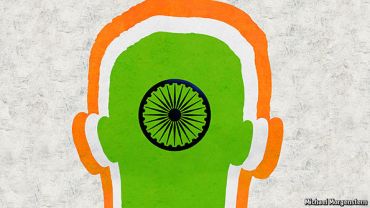
The personalities of both India and Europe have changed a great deal since 1931. But in explaining India to outsiders, Banyan often finds it helpful to compare it to the European Union (EU) rather than to the United States. Neither parallel does India justice, of course. The frequent comparisons to America can imbue India with a false cohesion. The less common comparison to the EU suggests a false disunity. But if the two parallels are judiciously combined, the falsities may help to cancel each other out.

One obvious example is Indian politics. This month voters took part in elections for the state legislatures of Punjab and Goa. As is often the case, turnout was higher than in India’s national election in 2014. In comparison with the United States, where races for national office, especially the presidency, overshadow state-level contests, that is a puzzle. In comparison with the EU, where elections in member states command far more attention than races for the European Parliament, it seems less strange.

The composition of India’s legislature also looks more like Strasbourg’s multicoloured mosaic than Washington’s two-tone Congress. The Lok Sabha, India’s lower house, seats as many as 35 parties. With the exception of the Bharatiya Janata Party and Congress, few of them have influence beyond one or two states. If America is the benchmark, the obvious question is why India’s voters have failed to coalesce around rival nationwide philosophies of government. But if the template is Europe, the fragmentation is easier to grasp. Few of Europe’s parties could appeal across national lines, however compelling their policies.

Another example is language. India’s constitution lists 22 “scheduled” languages. An American might wonder how it copes. But the EU, with 24 official languages, is even more polyglot. India’s national anthem had to be translated into Hindi from the original Bengali. But the EU’s anthem has no official lyrics, so as to leave open the question of what tongue to sing them in. Pick any two Indians at random, and the chance that they share the same mother tongue is less than 20%, according to data compiled by Romain Wacziarg of the University of California, Los Angeles, and his colleagues. But for the EU as a whole, according to Banyan’s calculations, the odds are less than 10%. Linguistically, then, India is neither as unified as the United States nor as divided as the EU.

National welding

The author of India’s anthem, Rabindranath Tagore, also saw value in comparing his country to both Europe and America. Like India, the United States faced the problem of “welding together into one body various races”. This challenge set both countries apart from Europe, which, Tagore felt, could take its racial unity for granted. Indeed, he saw Europe as one people divided into many states, unlike India’s many peoples “packed into one geographical receptacle”.

The gap between India’s many peoples remains large. The GDP per person of Bihar, India’s poorest state, is only a fifth of Haryana’s and little more than a tenth of Goa’s. That is a much bigger income gap than between Mississippi and Massachusetts, but comparable to the gulf between Bulgaria and Belgium.These gaps have motivated increasing numbers of Indians to move from one part of their geographical receptacle to another. The government’s latest economic survey, written by Arvind Subramanian, its chief economic adviser, calculates that interstate migration nearly doubled between the 1990s and the 2000s, yielding a migrant population of over 55m in 2011 (roughly 4.5% of India’s population). That may fall well short of American mobility, but compares favourably with the EU, where 13.6m citizens (2.7% of the total population) live in another member state.

The movement of goods tells a similar tale. In India, unlike America, state prerogatives often trump the imperatives of interstate commerce. Trade is distorted by a patchwork of local levies, which the central government is keen to replace with a new goods and services tax. The familiar sight of lorries queuing at state borders suggests an economy that is hopelessly fragmented. But again, the benchmark matters. Drawing on new data, Mr Subramanian shows that trade among India’s states is now equivalent to about 54% of GDP, rather higher than many suspected. That is low compared with America (78%), but impressive compared with the EU (20%).

Net trade is even more dramatic. India’s single market and currency allow some states to run enormous trade deficits with others. Four run deficits in excess of 20% of local output. That is far greater than the euro area has been able to sustain.

India’s divisions hamper it in its dealings with other nations. Its diplomacy has a reputation for parochialism and mal-coordination—an elephantine inability to “dance”. But perhaps it is not given enough slack. Compared with the EU, India’s foreign policy is positively twinkle-toed. India, lest it be forgotten, is as populous as 150 other countries combined. By encompassing all of these people in a single political entity, it dramatically reduces the complexity of global governance—even if it does not always feel like that. Had the republic not succeeded in refuting Churchill, had it disintegrated into multiple sovereign states, the world’s negotiating tables might have needed to accommodate dozens of additional quarrelling players. When the Americans want to talk to India, they know whom to call—however frustrating the conversation sometimes proves to be.

Source: Banyan: Is India a country or a continent? | The Economist
03/02/2017

In Punjab, jobless youth take a chance with anti-establishment party AAP | Reuters

Twenty seven-year-old Rupinder Kaur Ruby is a political novice but her message is clear: jobs for young people.

Grabbing the microphone, the law student tells a few hundred supporters in a dusty village square in the northwest Indian state of Punjab that the ruling parties have failed them.

“Punjab is not in a good place. And the youth are the most affected. They want to fight back,” she said, raising her fist to cheers, as the crowd covered her in garlands before heading off to canvass for votes in a state election on Saturday.

Ruby is one of several inexperienced candidates her Aam Aadmi (Common Man) Party is fielding to tap anger among an increasingly aspirational but frustrated youth, and to challenge Prime Minister Narendra Modi as his party heads into five state polls over the next month starting with Punjab.

A strong showing by AAP, which won a handful of seats in Punjab in the 2014 general election and governs the city-state of Delhi, would serve as a mid-term warning for the still-popular Modi as the economy fails to fulfil expectations.

The young in Punjab have been hit hardest by factory shutdowns, amid allegations that corruption has hastened the economic decline of a relatively rich state of 28 million people bordering Pakistan.

Unemployment tops voter concerns there, according to a recent poll, and young people are less and less willing to work their parents’ fields in the state known as India’s “bread basket”.

GENERATIONAL SHIFT

Most recent opinion polls show Congress, India’s main opposition party, in the lead in Punjab, ahead of AAP which has been criticised by rivals for failing to flesh out how it would boost employment were it to come to power.

But Ruby’s party is most popular among the young, reflecting a generational shift in India that poses a problem for Modi as newer parties seek to capitalise on the lack of jobs.

Nearly two-thirds of India’s 1.3 billion people are under 35 – a demographic “bulge” that will create the world’s largest working-age population before 2050.

Despite average annual economic growth of 6.5 percent between 1991 and 2013, India added less than half the jobs needed to absorb new entrants into the workforce.

The incumbent Shiromani Akali Dal (SAD) party that rules Punjab alongside Modi’s Bharatiya Janata Party, and Congress, have governed the state alternately for decades with a focus on Sikhism, the state’s dominant religion, and farm subsidies.

Those priorities resonate less among the young, and now all the main parties are promising free smartphones and 2,500 rupees ($37) a month for the unemployed.

“The other parties are all the same,” said 30-year-old Jaskaran Sharma, who works as a truck driver in the Middle East and was helping with Ruby’s campaign in between jobs.

“She is energetic, and young people understand the system,” he told Reuters in the village of Teona.

Punjab’s official unemployment rate in 2015/16, at 6 percent, was above the national average of 5 percent, according to the Labour Bureau, although economists say the figures do not reflect the true picture.

Levels of underemployment are higher; only 17 percent of Punjab’s population earns a regular wage.

VOLUNTEERSAAP, which scored surprise wins in local elections in Delhi in 2013 and 2015 on a broad anti-corruption platform, is led by 48-year-old Arvind Kejriwal, a former tax inspector who hopes to expand into other regions by channelling anger over unemployment.

AAP workers like Ruby, daughter of a local government retiree, have built young teams to fan out across villages and campaign door-to-door.

“We depend on our volunteers. This is a ground-up campaign,” she told Reuters over tea and biscuits, while young men snapped photos with her.

Ruby has the lowest declared wealth, at 175,000 rupees ($2,600), of any candidate in the state, according to reports. The 10 poorest candidates are from AAP, although the party has also chosen several well-off politicians as candidates.

“The youth are looking for change, and for that they are going to take a risk with AAP,” said Ashutosh Kumar, a professor of political science at Panjab University.

The ruling party, led by the wealthy Badal family, still commands support among older generations and better-off farmers, while Congress is attracting voters who see AAP as inexperienced.

Sitting outside the office of his SAD party in the Badal heartland of Lambi, landlord farmer Bagga Singh said Kejriwal was a “traitor” who had fooled people.

The protest vote boosting AAP would peter out, he predicted, because the Badals had established skill centres, curbed corruption and job creation would soon pick up.

Still, he acknowledged more needed to be done.

“Young people don’t want to work in agriculture. The margins are down and they don’t want the hard work,” the bearded 70-year-old said, wearing a pink Sikh turban. “They want to sit in an air conditioned office.”

($1 = 67.4900 Indian rupees)

Source: In Punjab, jobless youth take a chance with anti-establishment party AAP | Reuters

Tags:
03/02/2017

Apple Is Set to Make in India, State Official Says – India Real Time – WSJ

In a potential boost to Prime Minister Narendra Modi’s “Make in India” initiative, tech giant Apple Inc. is nearing a deal with Taiwanese contract manufacturer Wistron Corp. to start making products in the southern state of Karnataka, a senior state official said.

“The contractual agreement between the two companies is on the verge of being signed,” the Karnataka government official who has direct knowledge of the matter said.

The first phase of assembling iPhones will likely start as early as the end of March, and further expansion is expected over the next two to six months, the official said.An Apple spokeswoman said the company has nothing to share beyond a statement it made last week, which said: “We appreciate the constructive and open dialogue we’ve had with [the] government about further expanding our local operations.”

A Wistron spokeswoman declined to comment. The company has a factory in the southern Indian city of Bangalore where it makes smartphone components, and has sought permission from the state authorities to expand the facility with additional power supply and fire-fighting facilities, the official said.

“What we are given to understand is that Apple is awaiting a final word from the government of India regarding tax and tariff concessions sought by the company, before signing up the contractual agreement,” the official said.

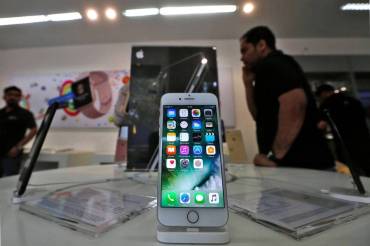
Making goods such as the iPhone locally may help the Cupertino, Calif., company to open its own stores in India, in turn building its brand in a country where it has less than a 5% share of a booming smartphone market.

Karnataka’s Information and Technology minister, Priyank Kharge, welcomed Apple’s proposal to consider Bangalore, also known as Bengaluru, as the location for potential manufacturing.

“Apple’s intentions to manufacture in Bengaluru will foster cutting edge technology ecosystem and supply chain development in the state, which are critical for India to compete globally,” Mr. Kharge said in a statement Thursday.Apple is looking to ramp up revenues in India as sales stagnate in China, long an engine of growth. India should soon overtake the U.S. as the world’s second-largest smartphone market after China. Smartphone shipments in India grew 18% last year, compared with just 3% globally, according to Counterpoint Research.

Apple Chief Executive Tim Cook in a call with analysts this week confirmed the company is “in discussions” to open retail stores in the country, and said Apple intends to “invest significantly in the country and believe it’s a great place to be.” (http://blogs.wsj.com/indiarealtime/2017/02/01/what-tim-cook-said-about-apples-big-plans-for-india/)

Last week, a team of executives led by Priya Balasubramaniam, an Apple vice president, met with senior Indian government officials in New Delhi as well as state officials in Karnataka to discuss the firm’s proposals. (https://www.wsj.com/articles/apple-nears-deal-to-manufacture-products-in-india-1485340934)

Under Mr. Modi, India has been eager to attract foreign investment and create the manufacturing facilities and jobs the country needs to sustain long-term growth.

Source: Apple Is Set to Make in India, State Official Says – India Real Time – WSJ

Tags:
01/02/2017

India Budget 2017: Promise to boost rural spending – BBC News

India’s government has unveiled its annual budget, with promises to boost rural spending and pull more people out of poverty.

It comes months after the controversial withdrawal of high value banknotes which caused chaos in the economy, hurting farmers and the poor most.

Finance Minister Arun Jaitley allocated funds to bring more irrigation, roads, electricity and sanitation to villages.

Farmers would also have more access to credit, he said.

The government also plans to spend a record $7.09bn (£5.69bn) on a scheme which guarantees every rural household 100 days of work each year.

Overall rural and farm spending would be increased by 24% as part of the government’s plan to double farm incomes over five years, Mr Jaitley added.

Tax plan

The finance minister also revealed plans to halve income tax rates for people earning between 250,000 rupees to 500,000 rupees ($3700; £2945 to $7,400; £5888) annually, which Mr Jaitley said should also encourage more people to pay tax.

“The present burden of taxation is mainly on the taxpayer and the salaried employees who are showing their income correctly,” he told parliament.

“Therefore post-demonetisation, there is a legitimate expectation of this class of people to reduce their burden of taxation. Also an argument is made that if nominal rate of taxation is kept at a lower slab, more people will prefer to come in the tax rate.”It is not clear how many people the move would impact, but India has a long-running problem of collecting income tax.

In 2013, the latest year for which data is available, only 2% of Indians completed a tax return and only 1% paid tax.

Other proposals announced in the budget speech included:Cutting tax rates on small and medium-sized companies

Banning cash transactions for sums above 300,000 rupees ($4440; £3533)

Political funding reforms including a cap on the cash donated to a political party by a single source

Nothing for foreign investors: Analysis by Shilpa Kannan, BBC News, Delhi

Arun Jaitley had to do a balancing act between the need to stimulate India’s growth and ensuring that the country’s spending is under control.

But I’ve been at an event run by one of India’s biggest business groups, the CII, and the mood is one of general disappointment.

The finance minister had promised to gradually bring down corporation tax from 30% to 25% – but he didn’t do it last year and it didn’t happen this year either.

Many here are saying there was nothing in for foreign or domestic investors. They fear a flee of money from India.

‘Bright spot’

India’s economy is expected to grow by 6.5% in the year to March 2017, down from 7.6% the previous financial year, a key economic report revealed ahead of the budget.

However, the country was a “bright spot” in the world economy, Mr Jaitley said, adding that the impact on growth from the government’s cash crackdown would wear off soon.

He said the currency ban was a “a bold and decisive measure” and would leaded to larger GDP, more tax revenues and a cleaner economy.

The dramatic move to scrap 500 ($7.60) and 1,000 rupee notes was intended to crack down on corruption and so-called black money or illegal cash holdings.

But the Economic Survey, released on Tuesday and written by the government’s chief economic adviser, admitted the rupee withdrawal had been bad for economy. in the short term.

Source: India Budget 2017: Promise to boost rural spending – BBC News

24/01/2017

Xi Jinping portrays China as a rock of stability | The Economist

DELEGATES at the World Economic Forum in the Swiss resort of Davos often treat politicians as rock stars. But the fawning reception given to China’s leader, Xi Jinping, on January 17th was extraordinary.

He was the first Chinese president to attend the annual gathering of the world’s business and political elite. Even an overflow room was packed when he delivered, in his usual dour manner, a speech laced with literary references—rendered through bulky headsets into equally monotone translations. Mr Xi said little that was new, but the audience lapped it up anyway. Here, at a time of global uncertainty and anxiety for capitalists, was the world’s most powerful communist presenting himself as a champion of globalisation and open markets.

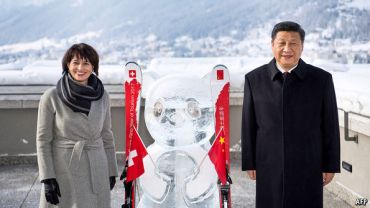
Mr Xi (pictured, next to a panda ice-sculpture) did not mention Donald Trump by name, nor even America, but his message was clear. “No one will emerge as a winner in a trade war,” he said, in a swipe at Mr Trump who has threatened, among other mercantilist acts, to slap heavy tariffs on Chinese goods. Mr Xi likened protectionism to “locking oneself in a dark room”, a phrase that delegates repeated with delight. His words seemed comforting to many of them after a year of political surprises, not least in America and Britain. Mr Xi quoted from Dickens to describe a “world of contradictions”, as he put it. “It was the best of times, it was the worst of times,” he said. Many foreign businesses complain about what they regard as a rise of protectionism in China, too—but no one could accuse Mr Xi of being out of tune with the Davos mood. China, Mr Xi assured delegates, “will keep its door wide open and not close it”.

The Chinese president also portrayed his country as a staunch defender of the environment. He said that sticking to the Paris agreement on climate change, which came into effect last year, was “a responsibility we must assume for future generations”. These, too, were welcome words to many listening: Mr Trump’s threat to reject the pact will make China’s commitment to it all the more crucial. The week of whose inauguration?

The timing of Mr Xi’s trip was fortuitous—according to the Financial Times his aides were working on it before Britain voted to leave the European Union and well before Mr Trump’s election victory. But he must have relished the points that those events enabled him to score at Davos. Mr Xi faces political battles of his own as he prepares for a five-yearly Communist Party congress in the autumn and a reshuffle right after it. He wants to install more of his allies in key positions. Standing tall on the world stage could help (and attending Davos will have reinforced the point to his colleagues that he is in charge of China’s economy, as he clearly is of every other main portfolio).

Mr Xi would have relished the occasion even had the predictions of many in the global elite a year ago proved accurate—that Britain would vote to stay in the EU and that Mr Trump would not win. The forum is one where embarrassing questions about China’s politics are seldom raised openly. Mr Xi could talk airily of China’s openness, with little fear of being asked why he is clamping down on dissent and tightening controls on the internet (last year this newspaper’s website joined the many foreign ones that are blocked). On January 14th China’s most senior judge condemned judicial independence as a “false Western ideal”.

Previously, the highest-ranking Chinese attendees had been prime ministers. In 2016 the vice-president, Li Yuanchao, who ranks lower than the prime minister in the party hierarchy, led the team. So why has Mr Xi waited until his fifth year as president to turn up? He may well have winced at the thought of doing so last year, when discussions were dominated by questions about China’s management of its slowing economy in the wake of a stockmarket crash and a sudden devaluation of the yuan. Many analysts still worry about China’s economy (not least its growing debt), but the West’s problems have loomed larger over the Swiss Alps this week.

And for all his uplifting talk, Mr Xi shows no signs of wanting to take over as the world’s chief troubleshooter, even if Mr Trump shuns that role. Mr Xi is preoccupied with managing affairs at home and asserting control in seas nearby (see article). “Nothing is perfect in the world,” the new Davos man sagely informed the delegates. But he is unlikely to take the lead in making the world a better place.

Source: Xi Jinping portrays China as a rock of stability | The Economist

Tags:
24/01/2017

5 Things Narendra Modi Will Be Listening For During His Chat with Donald Trump – Briefly – WSJ

Indian Prime Minister Narendra Modi is set to speak with U.S. President Donald Trump on Tuesday in a conversation that will set the tone for future relations.New Delhi hopes it can begin to decipher what the country’s top diplomat, S. Jaishankar, last week called a world in 2017 filled with “known and unknown unknowns”—a reflection on the rapidly-changing global landscape marked by Mr. Trump’s presidency in the U.S., turmoil in Europe and rising Chinese power.

Here are five things Mr. Modi will likely be listening for.

1 Pakistan

Mr. Trump has vowed to be tough on terror, a goal he shares with Mr. Modi. But it isn’t clear how that will shape the new U.S. administration’s views on Pakistan, India’s rival neighbor that Mr. Modi has called the epicenter of global terrorism.India’s security establishment will be watching to see if Mr. Trump puts greater pressure on Pakistan to stamp out terrorist groups on its soil and whether U.S. supply of aid and weapons to Islamabad, a long-standing thorn in India-U.S. ties, will diminish.Mr. Trump’s Pakistan policy will depend in large part on his approach to the conflict in Afghanistan, another big unknown Indians will be looking for more clarity on.

2 China

India is closely watching for clues on how Mr. Trump plans to tackle China, given the new U.S. president’s combative tone toward Beijing. A more-assertive China has in recent years driven closer U.S.-India collaboration on defense and security issues. In an address last week, Mr. Modi, without naming China, spoke about “rising ambitions and rivalries” in Asia as “visible stress points” and called for “predictable behavior rooted in international norms and respect for sovereignty.”But if U.S.-China differences spilled into a military confrontation, it is unclear how India, which is involved in territorial disputes with its more-powerful neighbor, will respond.

India will also be looking for signs of a different outcome analysts have predicted—a more inward-looking U.S. under Mr. Trump emboldening an ambitious Chinese leadership to expand the country’s power. Such a development could push India to play a bigger role in Asia and to further strengthen strategic ties with Japan, which is also wary of China’s rise.

3 H-1B visas

Indian officials are anxious to see if Mr. Trump moves to tighten visa rules that would affect the country’s outsourcing giants like Tata Consultancy Services Ltd., Infosys Ltd. and Wipro Ltd. that send programmers and engineers to the U.S. on high-skilled worker, or H-1B, visas. Mr. Trump at times during the campaign criticized the program for supplying “cheap labor.”

4 Russia

Among the biggest potential shifts under a Trump presidency is closer ties between the U.S. and Russia. India, which has long-standing ties with Moscow, would welcome such a development. Analysts in India believe U.S.-Russia tensions under President Barack Obama pushed Russia closer to China. New Delhi will keep an eye on whether Mr. Trump considers easing U.S. sanctions on Russia.

5 NSG membership

India is counting on U.S. backing to help it become a member of the Nuclear Suppliers Group that controls trade in nuclear fuel and technology. Mr. Modi has made a big push for New Delhi’s entry, but has repeatedly been stymied by China. He will hope Mr. Trump finds a way to override Beijing’s objections.

Source: 5 Things Narendra Modi Will Be Listening For During His Chat with Donald Trump – Briefly – WSJ

Tags:
19/01/2017

Parking in China Can Be a Long March – China Real Time Report – WSJ

After spending half an hour driving around the Olympic Park area of Beijing in search of a parking space near his home, a furious Xu Fei pulled over to the curb, ditched his car and walked the 10-minute journey home.

With no spaces near his apartment, parking illegally was his only option, risking a fine of 200 yuan ($30).  “I usually bargain with the grocery-store owners downstairs to rent their driveways for parking,” said the 24-year-old finance specialist who lives in a 1970s building that has no parking for any of its 30 apartments. “That evening they were all rented out.”

Once known as the land of the bicycle, China is now the world’s largest automotive market. While the rapid expansion of car ownership has created millions of jobs and helped drive the economy, with it has come congestion, pollution and a shortage of at least 50 million parking spaces in a country where 180 million vehicles ply the roads.

Beijing has 4.4 million private cars, Shanghai 2.1 million cars and the southwestern city of Chengdu 3.3 million cars. By contrast, New York City has 1.9 million cars, Chicago 1.1 million and San Francisco 408,000.

Some major cities have taken measures to restrict car purchases and created tens of thousands of parking spaces over the past years. A Shanghai Municipal Transportation Commission official told the city legislature this week that the agency is considering jacking up parking fees, state media reported.

These measures aren’t keeping pace with car ownership, and there is plenty of room for further growth—vehicle ownership in China is 1/7 that of the U.S.A 2002 residential complex, the Shanghai Grand Garden, comprises 20 high-rise blocks with 1,560 units. The property developer initially assigned 450 spots for cars. Now there are 1,500 resident vehicles.

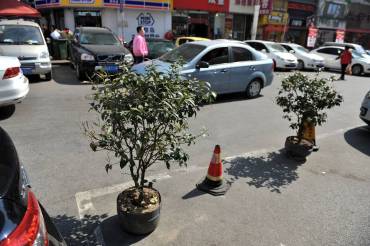
Cars occupy most of the nearby sidewalks, with some pulled into tiny spots between flower beds, squeezing out pedestrians. The situation gets much worse in the evening, said Tao Baosen, a doorman, pointing at a charcoal Volvo crossover that was pulled over onto the artificial turfs last night.

“Even though it’s very clear how bad the situation is, the number of cars is still growing,” Mr. Tao said.

Parking is a universal problem in densely populated cities. While many developed countries require new buildings to create a specific number of parking spaces, they also take measures to restrict parking. For example, New York City reduced 25,000 off-street parking spaces in Manhattan’s central business district from 1978 to 2010 to prod commuters to take public transportation. London levies costly congestion charges to drive a vehicle into the city center.

By contrast, China is “too lenient towards drivers,” said Liu Shaokun, a vice country director at The Institute for Transportation and Development Policy, a New York-based nonprofit outfit.China has encouraged government and private capital to build more parking spaces. The central government in 2015 required cities with a population of more than 500,000 to target a ratio of 1.3 parking spaces per car when planning residential and commercial developments.

By comparison, every 100 households in New York City’s Brooklyn borough share 40 parking spaces and in Queens, the ratio rises to 60 spaces per 100 households, according to the institute’s research.

“Increasing supply is unlikely to achieve the desired effect,” said Mr. Liu, noting high vacancy rates at many public and commercial parking lots and garages. “Many drivers go to cheaper off-street parking spaces, or just pull over onto the sidewalks since the costs of violating laws are low,” he said.

A variety of services and parking apps has sprung up to try to match cars and parking spaces for money. Edaibo, a Shanghai-based startup that provides valet parking services, has operated at 23 airports in China and last year received an investment from French tire maker Michelin Group to provide the service in major city centers.

D Parking, a Beijing startup, offers an app to connect drivers and parking spots. It aims to take advantage of commuting and business patterns. The company’s research found that more than 70% of the parking spaces in residential communities are idle in the daytime, while office buildings, shops and hospitals nearby face a dearth of spots. The opposite occurs in the evening.

Some efforts to increase supply have also upset drivers who complain they are now being charged to park in areas that were once free.

“We’re used to parking for free. When it comes to money, most of us will drive round and round for a free one,” said Fang Yi, a finance manager for a local hospital in Yiyang, a small city in the center of the country. He said he now spends 15 minutes searching for a free spot when going out

Source: Parking in China Can Be a Long March – China Real Time Report – WSJ

Tags:
18/01/2017

This Is Just How Unequal India Is – India Real Time – WSJ

New report from Oxfam highlights how the country’s wealth is concentrated in the hands of a few

Country Percentage of wealth top 1% has
Global

51

Australia

22

Belgium

18

Brazil

48

Canada

26

Denmark

31

France

25

Germany

31

India

58

Italy

25

Mexico

38

Netherlands

24

New Zealand

20

South Africa

42

Sweden

36

U.K.

24

U.S.

42

The richest 1% of Indians hold 58% of the country’s total wealth, according to Oxfam India.

The stark inequality in India is worse than the global data put out by the organization, which show that the richest 1% have more than 50% of the total world wealth, Oxfam said.

It said recently improved data on the distribution of wealth, particularly in countries like India and China, indicate that the poorest half of the world has less wealth was previously thought. Oxfam singled out India repeatedly in the report.

It said that companies are increasingly driven to pay higher returns to their shareholders. In India, the amount of profits corporations share with shareholders is as high as 50% and growing rapidly, the report said.

A family sits atop a pile of hay on a horse cart on a highway near Amritsar, India, Nov. 4, 2016.

The report said the annual share dividends paid by from Zara’s parent company to Amancio Ortega – the world’s second richest man – are equal to around 800,000 times the annual wage of a worker employed by a garment factory in India.

Oxfam said that the combined wealth of India’s 57 billionaires is equivalent to that of the country’s poorest 70%.“India is hitting the global headlines for many reasons, but one of them is for being one of the most unequal countries in the world with a very high and sharply rising concentration of income and wealth,” Nisha Agarwal, chief executive of Oxfam said in a statement.

Oxfam said India should introduce an inheritance tax and raise its wealth levies as well as increasing public spending on health and education. It said it should end the era of tax havens and crack down on rich people and corporations avoiding tax.

Source: This Is Just How Unequal India Is – India Real Time – WSJ

18/01/2017

Air India starts selling seats in female-only section – BBC Newsbeat

Air India has begun selling female-only seat sections.

The restriction will apply to the front row of six seats on economy flights and comes after reports some women were being groped by other passengers.

A general manager from Air India told The Hindu they wanted to reassure passengers who were travelling alone.Meenakshi Malik said: “We feel, as national carriers, it is our responsibility to enhance comfort level to female passengers.

“In cases of unruly behaviour, the airline crew are authorised to take action as per the law

Jitendra Bhargava Executive Director, Air IndiaThe airline will also now carry two pairs of restrainers to deal with disruptive passengers who can not be controlled.

From later this week, the six seats will be made available on the Airbus A320 aircraft on flights within India.

The women-only seats may be extended to other flights in the next few months.

Single passengers will be able to request the seats when they check in, without any extra cost.

The seats on the very front row will be made available at check-in

Not everybody connected to the airline is happy with the move though.

Former Air India Executive Jitendra Bhargava told The Hindu: “To my knowledge, this happens nowhere in the world. Planes are not unsafe for women passengers.”

In cases of unruly behaviour, the airline crew are authorised to take action as per the law.”The airline is no stranger to controversy.In 2015, bosses told some staff they were too fat to be air attendants and were costing the company a fortune in fuel.

Source: Air India starts selling seats in female-only section – BBC Newsbeat

17/01/2017

China Overtakes India as World’s Fastest-Growing Economy, IMF Says – China Real Time Report – WSJ

China took back in the crown in 2016 thanks ‘primarily’ to Modi’s cash cancellation

 China 6.7
India* 6.6
Asean-5 4.8
Mexico 2.2
U.K.  2
Eurozone 1.7
U.S. 1.6
Japan 0.9
South Africa 0.3
Russia -0.6
Nigeria -1.5
Brazil -3.5
*India estimate is for the year that ends March 31, 2017. The Asean-5 countries are Indonesia, Malaysia, Philippines, Thailand and Vietnam.

Source: China Overtakes India as World’s Fastest-Growing Economy, IMF Says – China Real Time Report – WSJ

Tags:
Law of Unintended Consequences

continuously updated blog about China & India

ChiaHou's Book Reviews

continuously updated blog about China & India

What's wrong with the world; and its economy

continuously updated blog about China & India