Archive for ‘Economics’

09/11/2016

5 Sectors Likely to Be Affected by India’s Surprise Move to Replace Large Rupee Notes – Briefly – WSJ

India’s move to curb corruption and counterfeiting by replacing high-denomination bank notes with new ones will likely have a significant impact on some sectors wrapped up in the cash economy.

Here are five industries likely to see change.

1 Real Estate

Many property transactions in India are made using cash. Builders often accept 10% to 20% of an asking price in cash to lower both the buyer’s and seller’s tax liability.“You may yourself have experienced when buying land or a house, that apart from the amount paid by check, a large amount is demanded in cash. This creates problems for an honest person in buying property,” Indian Prime Minister Narendra Modi said Tuesday.The use of counterfeit or undeclared earnings in this way has increased the price of real estate, Mr. Modi said. The move to scrap the current 500 and 1,000 rupee bills could reduce prices, analysts said.“This will clean up the real estate sector and bring down the cost of doing business,” says Dhiraj Relli, chief executive of HDFC Securities.

2 Gold

Investing in gold is another way some Indians keep money from the eyes of tax officials. The country is one of the world’s biggest consumers of the precious metal, along with China.According to various estimates, the current volume of gold in Indian households is above 20,000 tons. Analysts say if people are no longer able to use wads of 500- and 1,000-rupee notes to buy gold, they will have to put it into the formal banking system or invest it in stocks, mutual funds or bonds instead. This is also likely to slow down India’s gold imports and reduce foreign-currency outflows.

3 Two-Wheelers

India is one of the largest two-wheeler markets globally. In rural India, many farmers buy motorbikes and scooters with cash after they sell their their crops.The current measure may slow down two-wheeler sales as buyers are expected to postpone their purchases until they replace their existing bank notes with the new ones.No wonder, two-wheelers stocks are one of the biggest losers on India’s benchmark S&P BSE Sensex index today, falling between 4% and 6%.

4 Consumer Durables

rMany people in India also prefer to buy televisions, fridges or air-conditioners with cash. Some of those purchases involve money derived from corruption.Others are made by people who might not have a bank account and are purchasing the products as dowry items. As a result, the move to replace the existing high-denomination notes is expected to hurt sales in this segment.

5 Microfinance

rMicrofinance companies that disburse loans to poor people will likely face difficulty collecting or disbursing cash in the near term. In the worst case, they may have to postpone loan-repayment installments and disbursements may not happen in the next 10 days due to a shortage of currency notes, says broker Religare Capital Markets Ltd. However, things will likely stabilize after few weeks, it adds.

Source: 5 Sectors Likely to Be Affected by India’s Surprise Move to Replace Large Rupee Notes – Briefly – WSJ

04/11/2016

The Economist explains: Why Britain is wooing India | The Economist

WHEN Britain eventually leaves the European Union it will prosper by trading farther afield. So argues Theresa May, Britain’s prime minister, ahead of her first big bilateral trip abroad, a three-day visit to India, which begins on Sunday, November 6th. She talks of forging a “new global role” with this trade mission, hobnobbing with Indian leaders and championing free trade in general. The idea is to promote ties between small and medium businesses in the two countries. Yet creating a stronger economic relationship with India will prove much tougher than Mrs May and her colleagues expect.

On the face of it, the signs are good. India has nearly 1.3bn people. Many are emerging as middle-class consumers for the first time. The country is creating a single market for goods and services, reducing internal and external barriers to trade and tackling some corruption and bureaucracy. Its economy, worth over $2trn, is the fastest-growing large one in the world. It is likely to rattle along quickly for many years to come; by 2030, India could rank as the world’s third-largest. The prime minister, Narendra Modi, wants to make it less difficult for businesses to operate there, and to win more foreign investment and trade deals. British firms are already among the biggest investors. Now India is opening up for foreign activity in sectors that might suit British firms especially: notably in insurance, defence, railways and some retail. At the same time, large Indian firms—such as Tata, which owns Jaguar Land Rover, as well as Tata Steel—are in Britain. London has also become a base for Indian firms, for example in business consulting, that tap the wider EU market. A common language, shared cultural, historic, legal and sporting ties, plus the influence of the Indian diaspora in Britain, bode well for closer ties.

Mrs May is thus right to reach out. But anyone expecting quick gains will be disappointed. One of India’s priorities, for example, is avoiding complications over a long-stalled free trade agreement with the EU, which has been under negotiation since June 2007. After 12 rounds of talks, some consensus has been found on issues including trade in rice, sugar, textiles and pharmaceuticals. It is not clear that India’s overstretched trade negotiators will see much benefit in being diverted to work on a deal with Britain alone, especially if that makes it harder to complete one with the bigger EU market. Even if they do decide to talk biltaterally, among the sticking points has been India’s 150% tariff on imports of whisky from Scotland. Future British negotiators would struggle to be more effective than their European counterparts at getting that scrapped. The biggest concern, however, is about Britain’s ever colder shoulder towards Indians who want to travel and study there. Under the Conservatives, Britain has in the past six years become less welcoming to foreigners, notably from South Asia, who hope to attend university and then work. Eye-wateringly expensive visas, increasingly hostile rules to get them, official talk of cracking down on foreign students in Britain, and graduates who lose the right to work after finishing a degree in Britain all leave Indians feeling unwelcome. Anecdotes abound of bright Indian students who win places at the best British universities but are refused visas to travel. Perceptions of generally rising xenophobia in Britain are discouraging to Indians too.

For Mrs May to win a warm welcome in India she needs to offer a message that is not only about investment and trade, but also sets out that Britain—in particular its universities—will again become more open to Indian visitors, migrants, students and their families. America is proving far more successful at attracting the highest-skilled migrants, especially software and other engineers. Other countries, including some in Europe, are rolling out policies to attract more Indian students to their universities. Yet Britain appears more hostile to migrants than it has in many decades. Within a few years, it is worth remembering, India’s economy will be bigger than Britain’s. Welcoming more exchanges of people, as well as encouraging higher levels of trade and investment, would make sense for both sides.

Source: The Economist explains: Why Britain is wooing India | The Economist

02/11/2016

China’s Alibaba in ‘flying pig’ controversy – BBC News

A Chinese Muslim‘s call for e-commerce giant Alibaba to rename one of its services because it uses the word “pig” has sparked a backlash in China.

It all began when Alibaba changed the name of its popular travel booking app from Alitrip to one that means “Flying Pig” in Chinese. Its English name is Fliggy.

Over the weekend, Uighur businessman Adil Memettur criticised this decision on popular microblogging network Sina Weibo, where he has hundreds of thousands of followers.

He noted that the app is popular among minorities because it lets people whose names have unusual spellings make bookings.

“But now that Alitrip has changed its name to Flying Pig, I can only uninstall it, and maybe all my Muslim friends too, because the word “pig” is taboo to Muslims all over the world. Alibaba is an international corporation, could it take Muslim taboos into consideration?” he said.

Image copyrightSINA WEIBO / ADIL MEMETTUR. Mr Memettur is an Uighur Chinese who runs a cake business

His post quickly sparked condemnation and ridicule from other Chinese online, with some asking if this meant China had to expunge all references to pigs in popular culture and literature.

“We each have our own way of life; we do not force you to live according to our rules, but you cannot force us to change the law,” said Weibo user Fireflyinred.

Mr Memettur quickly took down the post and on Sunday night he posted an apology.

Alibaba told the BBC that they decided to rebrand the app to appeal to a younger demographic. “We embrace diversity and respect all creeds and religions. The name change is meant to reflect the demographic’s aspirations to pursue dreams, sit back and enjoy life,” said the spokesman.

The visceral pushback stems from the fact that the pig occupies an important place in Chinese culture.

Pork is not only a staple of Chinese cuisine – the government keeps a national reserve of pork in case of market shortages – but the pig is also celebrated in folklore and the Chinese zodiac.

Online, the reaction to Mr Memettur has been intense, often descending into derogatory comments and insulting jokes about Muslims and Uighur culture.

It has also highlighted how gaps in understanding between Muslim minorities and the Han Chinese majority can arise.

Image copyrightAFP/GETTY IMAGES – The Uighurs are one of China’s biggest Muslim minorities

Because of their relatively small numbers, concentrated mostly in the West, Muslims still do not figure largely in Chinese public discourse.

China’s 21 million Muslims, comprising minority ethnic groups such as the Huis and Uighurs, make up only 1.6% of the population, with the rest from the Han ethnic majority and they have mostly co-existed peacefully.

The western province of Xinjiang, home to many Chinese Uighurs, has seen unrest with residents saying they have been economically and culturally displaced by a growing influx of Han migrants. Violence there has been attributed by the authorities to Islamist militants and separatists – rights groups point to increasingly tight control by Beijing.

Image copyrightGETTY IMAGES- Xinjiang cities like Kashgar are home to Muslim minorities such as the Uighurs

In this instance some online, like blogger Han Dongyan, have called for respect and calm.”Don’t extend this to all Muslims… (Mr Memettur) has made a mistake and he can be criticised, but don’t respond to an extreme with another extreme and tar them all with the same brush, this is wrong too!” he wrote in one popular post.

Source: China’s Alibaba in ‘flying pig’ controversy – BBC News

02/11/2016

India to launch clean energy equity fund of up to $2 billion – sources | Reuters

The Indian government and three state-run firms will jointly set up an equity fund of up to $2 billion for renewable energy companies to tap into to help New Delhi meet its clean energy goals, two government sources told Reuters on Wednesday.

Private and public companies will be able to dip into an initial amount of more than $1 billion starting next fiscal year, said the sources with direct knowledge of the decision taken after a meeting of government officials more than a month ago. India’s government hopes the Clean Energy Equity Fund (CEEF) will attract pension and insurance funds from Canada and Europe.

Around $600 million of the initial pool will come from the National Investment and Infrastructure Fund, under the finance ministry, and the rest from state entities NTPC Ltd, Rural Electrification Corp and the Indian Renewable Energy Development Agency, according to one of the sources.

The sources declined to be named as they are not authorised to talk to the media. Officials at the finance ministry, new and renewable energy ministry, NTPC, Rural Electrification, and Indian Renewable Energy Development Agency did not immediately respond to requests for comment.

Prime Minister Narendra Modi has set a target of raising India’s renewable energy target to 175 gigawatts by 2022, more than five times current usage, as part of the fight against climate change by the world’s third-biggest greenhouse gas emitter and to supply power to all of the country’s 1.3 billion people.

The program will depend on getting as much as $175 billion in funding with 70 percent of that likely in bank loans and the rest as equity, the sources said.

The government reckons loans are not a problem but providing equity to investors may be difficult due to uncertainties over returns, one of the sources said.

“As we expand our clean energy capacity, there may be a shortage of equity next year,” said the source. “Private equity is seen as risky in India but if the government itself creates a fund, that gives a lot of confidence.”

India’s clean energy push was set back earlier this year when U.S. solar company SunEdison filed for bankruptcy. The company is now looking to secure partners to see through its planned India projects.

Nevertheless, companies are still keen to invest in clean energy.

Japan’s Softbank Corp, Taiwan’s Foxconn and India’s Bharti Enterprises have pledged to invest about $20 billion in India’s renewable sector. Global solar giants like First Solar Inc, Trina Solar Ltd and Fortum are also expanding their presence.

Source: India to launch clean energy equity fund of up to $2 billion – sources | Reuters

31/10/2016

The Economist explains: Why some Indians want to boycott Chinese goods | The Economist

ON OCTOBER 30th India celebrates Diwali, the most important festival in the Hindu calendar. Over five days, millions of lamps and candles will be placed on doorsteps and rooftops; prayers will be offered to Lakshmi, the goddess of prosperity; and fireworks will go off in the skies over the streets of nearly every town and village. A festival that celebrates the victory of light over darkness, Diwali has in recent years brightened the mood of Chinese exporters as well: many Indian households favour cheaper, electric decorations made in China over the traditional earthen diyas (pictured).

But this year’s edition could take a dark turn. The country’s noisy social media are cluttered with posts calling for Indians to shun Chinese goods. A fake letter championing the boycott, ostensibly signed Narendra Modi, the prime minister, has gone viral. Politicians from India’s ruling Hindu-nationalist Bharatiya Janata Party (BJP) have endorsed the cause. What is going on?

The economic roots of the boycott are not new. China is India’s largest trading partner, with $71bn worth of goods exchanged between them in the past financial year. But China is also the nation with which India has its largest trade deficit, an imbalance that rose 9% to $53bn in 2015-2016. In contrast, China’s trade surplus with America reached $367bn in 2015. What the deficit is made of matters most. China’s light-industry goods compete directly and with overwhelming success against India’s small industries, the lifeline of its manufacturing sector and a reservoir of jobs. So India exports mostly raw materials to its neighbour. That has the government worried: of the 572 anti-dumping measures India took between 1995 and 2015, 146 were aimed at Chinese-made goods. The “Make in India” campaign, which has been championed by Mr Modi and sees foreign investment as crucial to boosting his country’s manufacturing power, has been careful not to advocate protectionism. Yet in a country where economic boycotts were first popularised as a non-violent strategy to combat British rule, such appeals carry emotional and historical heft. Geopolitics provided the spark for the current call. India has long been trying to get Masood Azhar, the boss of Jaish-e-Mohammad (JeM), a Pakistan-based jihadist group, listed as a terrorist by the United Nations. India suspects JeM of carrying out the January attack on an air-force base in Punjab, which killed eight Indians, including one civilian. JeM is also the alleged perpetrator of last month’s massacre at the Kashmiri garrison of Uri, in which 19 soldiers were killed (though another group claimed responsiblity). Yet twice this year, China used its Security Council veto to block Mr Azhar’s addition to the UN sanctions list. The move underscored Beijing’s all-weather support for the Pakistani establishment, elements of which India suspects of harbouring Mr Azhar. Some Indians don’t understand why they should have to trade with a nation working against their interests. This perception of China was compounded by its decision in June to oppose India’s accession to the Nuclear Suppliers Group, a 48-nation body that governs the global nuclear trade.

Yet calls for a boycott of Chinese-made goods are unlikely to have much effect. Both India and China are members of the World Trade Organisation, which forbids arbitrary bans on foreign goods. India’s commerce minister, Nirmala Sitharaman, recognised as much earlier this month when she said blocking imports was not a feasible option. A BJP leader deleted his tweets, blaming staff for the text; the opposition is silent on the issue. Nor is the wider business community likely to embrace the cause. Traders and industrialists, who have come to rely heavily on Chinese-made merchandise and machinery, form powerful lobbies. Yet with Mr Modi’s government promoting an increasingly assertive brand of nationalism, anger over China’s snubs will not easily go away. Expect further diplomatic fireworks.

Source: The Economist explains: Why some Indians want to boycott Chinese goods | The Economist

14/10/2016

Stopping bridge collapses | The Economist

ON AUGUST 2nd a century-old bridge carrying the road from Mumbai to Goa over the Savitri river collapsed (see picture), killing at least 20 people.

The probable cause was that the river, swollen by monsoon rains, had scoured away the foundations of the bridge’s piers. Such erosion-induced collapses are not peculiar to India. In 2009 the Malahide viaduct, north of Dublin, failed similarly just after a train had crossed it. This was despite its having been inspected and pronounced safe a few days earlier. In America, meanwhile, foundation-scouring is reckoned to be the leading reason for bridge failure. Half of the 500 collapses that happened there between 1989 and 2000 were caused by it.

If detected early enough, foundation-scouring is easy to fix. Dumping rubble, known as riprap, into the water around a bridge’s piers stabilises the riverbed they are sunk into. But until now such detection has involved the deployment of teams of divers, which is expensive. Hence a search for technology which can substitute for the men and women in the wetsuits.

Stopping bridge collapses

Ken Loh of the University of California, San Diego, thinks he has an answer. He has created flexible rods that, when inserted into a riverbed, monitor erosion quite simply. The exposed portion of a rod undulates in the water. Piezoelectric polymers in the rod convert this motion into electricity, with the frequency of the undulation (and therefore of the electric current) indicating the length of the rod’s exposed part. As the bed erodes, this portion gets longer and the frequency drops. That tells the riprap tippers when to get busy.

Genda Chen of Missouri University of Science and Technology has a more unusual proposal: to throw magnetic “rocks” (artificial boulders with magnets embedded inside them) into the river. These rocks roll around in the riverbed until they settle in dips in the sediment, which are generally places where erosion is at its greatest. Sensors fitted to a bridge’s piers then estimate the amount of scouring, and where it is, from the strength and direction of the magnetic field they detect.Some researchers, like Luke Prendergast of Delft University of Technology in the Netherlands, think installing sensors below the waterline like this is too expensive—and is also unreliable. He worries that heavy storms will wash them away when they are needed most. He has focused instead on monitoring the part of the bridge above the water, using accelerometers of the sort found in most smartphones. All bridges vibrate, as traffic bumps over them or winds rattle their decks. If their foundations begin to erode, the pattern of these vibrations will change, much as the pitch of a tuning fork varies with its length. Accelerometers, Dr Prendergast suggests, could monitor such changes and forewarn of problems.

Accelerometers are not the only way to measure vibrations, though. David Mascareñas of Los Alamos National Laboratory videos them. He then uses a computer algorithm to analyse the resulting footage and determine a structure’s properties, even if the vibrations recorded have an amplitude of less than a millimetre.

Whether methods that study vibrations in these ways can detect problems early enough to prevent collapses remains to be seen. Branko Glisic of Princeton University, by contrast, thinks the best approach is to detect threatening cracks directly. He has created special sensor sheets, designed to be pasted onto the sides of a bridge. Wires within a sheet elongate if a crack opens underneath them. That changes their resistance. The arrangement of the wires means such changes in resistance give away precisely where the crack is.

If methods such as these can be made to work in practice, then it will, more often, be possible to send the rip rappers in at the appropriate moment to save a bridge that is otherwise sound. And, for those bridges that are not, timely warning will be provided that a crossing needs to be closed before someone is killed traversing it.

Source: Stopping bridge collapses | The Economist

14/10/2016

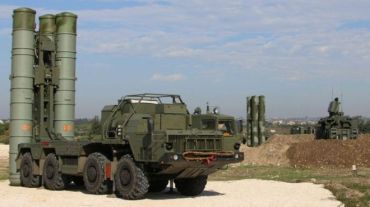
India and Russia to sign air defence deal – BBC News

Russia and India are expected to sign a deal on Saturday for the delivery of an advanced air defence system to Delhi, a Kremlin official has said.

The S-400 missiles are Moscow’s most sophisticated aircraft defence system.Yuri Ushakov said the agreement would be signed at a summit in Goa where President Vladimir Putin will hold talks with Indian PM Narendra Modi.

India is also hosting a Brics summit in Goa this weekend involving Brazil, Russia, India, China and South Africa.

“An agreement on the delivery of S-400 ‘Triumph’ anti-missile defence systems and other deals will be signed as a result of the talks,” Russian news agencies quoted Mr Ushakov as saying.

Russia’s missiles send robust signal

The Kremlin earlier this week said the talks with Mr Modi would focus on “a wide range of matters of bilateral relations, especially trade and economic ties”.

The S-400 surface-to-air missiles have been deployed to Syria, where Russian forces have been operating in support of the government of President Bashar al-Assad.Russia and India were close allies during the Cold War, but recently the relationship has become more complex.Talks have been held annually since 2000 and hosted alternately by Moscow and Delhi.

Source: India and Russia to sign air defence deal – BBC News

14/10/2016

Infosys cuts annual revenue target for 2nd time as U.S. election, Brexit weigh | Reuters

India’s second-largest software services exporter Infosys Ltd cut its fiscal-year revenue growth target for the second time in three months on an uncertain business outlook, sending its shares tumbling more than 5 percent.

Reporting a 6.1 percent rise in second-quarter net profit, Infosys said on Friday it now expected revenue to grow between 8 percent and 9 percent in constant currency terms in the fiscal year to March 31, 2017. Its previous revenue growth target, issued in July, was 10.5-12 percent, already lowered from the up to 13.5 percent it said it expected in April.India’s more-than-$150 billion software services sector depends on North America and Europe for the majority of its revenue. The impending U.S. presidential election and the implications of Britain’s ‘Brexit‘ move to exit the European Union have both weighed on spending by western clients.

Infosys had warned in August it was seeing some “softness” in business after the June Brexit vote in Britain.

Chief Executive Vishal Sikka said in a statement on Friday the revision took into consideration “our performance in first half of the year and the near-term uncertain business outlook”.

After falling as much as 5.3 percent after the guidance cut was announced, Infosys shares were trading 2.6 percent down at 0453 GMT in a Mumbai market that was little changed.

For its fiscal second quarter to Sept. 30, its consolidated net profit rose 6.1 percent from a year earlier to 36.06 billion rupees ($541.51 million), ahead of analysts’ estimates of 35.26 billion rupees. Revenue rose 10.7 percent to 173.1 billion rupees.The company said on Friday it added 78 clients during the three months to September, taking its total number of active clients to 1,136.

($1 = 66.5919 Indian rupees)

Source: Infosys cuts annual revenue target for 2nd time as U.S. election, Brexit weigh | Reuters

13/10/2016

China tops US in numbers of billionaires – BBC News

Property magnate Wang Jianlin of Dalian Wanda tops the list of 594 billionaires in the country, ahead of 535 billionaires in the US.

Alibaba‘s Jack Ma was second, with his wealth having risen 41% from last year.

The annual list is compiled by Shanghai publishers Hurun and often compared to the Forbes list in the US.The Hurun Report’s rich list is one of the most closely-watched and accurate assessments of wealth in China. The annual report has been published for the past 18 years.

Earlier this year, the publisher released a separate, global list, showing that the number of billionaires in China outnumbered those in the US for the first time.

However, none of China’s super-rich make it into the global top 20.

Global reach

At the top of the China rich list is Wang Jianlin, who sits on a personal fortune of $32.1bn (£26.4bn).

His company Dalian Wanda has made headlines throughout the year with a number of high profile forays into the US movie markets. It has taken over Legendary Pictures, as well as stepping into US and UK cinema chains and striking an alliance with Sony Pictures.

Alibaba’s Jack Ma is a close second with $30.6bn, and Pony Ma of internet and online gaming giant Tencent comes third with $24.6bn.

Image copyright REUTERS

The biggest increase came from Yao Zhengua of investment and real estate firm Baoneng Group, whose wealth jumped by 820% to $17.2bn, putting him in fourth position.

Hurun chairman Rupert Hoogewerf said Mr Yao’s rise illustrated a shift in China’s maturing economy.

“Yao’s financial investment model represents the new wave of wealth creation in China,” he explained. “The first money made in China 20 years ago came from trading, followed by manufacturing, real estate, IT, and today it is about using the capital markets for financial investments.

“Robin Li and Melissa Ma of search engine Baidu have a fortune of $14.7bn, ranked eighth while founder of smartphone makers Xiaomi, Lei Jun, dropped out of the top 10 to number 14 as competition in China’s smartphone market intensified.

Most of China’s billionaires live in Beijing, followed by Shenzhen, Shanghai and Hangzhou.

Globally, the Forbes rich list is topped by Microsoft founder Bill Gates with $75bn, followed by Amancio Ortega of Zara and legendary investor Warren Buffett.

Source: China tops US in numbers of billionaires – BBC News

12/10/2016

What’s a slum? In India, Dharavi’s thriving informal economy defies the label | Reuters

Malik Abdullah’s plastic recycling business in Dharavi, the sprawling slum in Mumbai that is among the largest in Asia, has survived fire, building collapses, and the criminal underworld for decades. Now, it is threatened by development.

For 35 years, Abdullah has carried on the business built by his father, pulverising used plastic cans and bottles into pellets, then selling them to factories to refashion.

Thousands of small businesses like his thrive in Dharavi, creating an informal economy with an annual turnover of $1 billion by some estimates.

Now, plans to replace the ramshackle workshops and decrepit homes with office blocks and high-rise apartments threaten the businesses that employ thousands of its 1 million residents.

“The city doesn’t care about the businesses here, which are our livelihood,” said Abdullah, 52, standing in an alley crammed with towering stacks of plastic containers.

“This is where we live, this is where we work. Where will we go if they only build flats and offices?” he said.

During the past two decades, there have been several attempts to develop Dharavi, which sprawls over 240 hectares (590 acres). However, residents have opposed many of them, saying they do not consider their interests.

Real estate in Mumbai, India‘s financial hub, is among the most expensive in the world. The contrast between rich and poor is stark, and about 60 percent of the city’s population of more than 18 million lives in slums.

Dharavi has always been a magnet for migrants from across India. Many have lived there for decades, their one-room tenements and low-rise homes dwarfed by the gleaming glass and chrome office towers and luxury hotels that dot the city.

Amid Dharavi’s narrow alleys, open drains and canopies of electric cables, migrants who came in search of better economic opportunities have created a community of schools, temples, mosques, restaurants, tailors and mobile phone shops.

Tens of thousands work as potters, leather tanners, weavers, soap makers, and in Dharavi’s massive recycling industry.

Most homes double up as work spaces, the whirr of sewing machines, the clang of metal and the pungent odour of spices mingling with the call for prayer and the putrid smell of trash.

“People think of slums as places of static despair as depicted in films such as ‘Slumdog Millionaire‘,” said Sanjeev Sanyal, an economist and writer, referring to the Academy Award-winning movie that exposed the gritty underbelly of Dharavi.

“If one looks past the open drains and plastic sheets, one will see that slums are ecosystems buzzing with activity… Creating neat low-income housing estates will not work unless they allow for many of the messy economic and social activities that thrive in slums,” he said.

ROOF TOPS

Once a small fishing village, Dharavi was notorious as a den of crime in the 1970s and ’80s. Following a massive crackdown, violent crime is rare and Dharavi has featured in movies, art projects and a Harvard Business School case study.

Fed by two suburban railway lines and perilously close to the Mumbai airport, Dharavi has lured developers, too.

Recent plans by city officials envisaged private developers clearing the area and building high-rise flats in which each eligible family gets a free 225 sq ft (21 sq metres) unit. The developer in turn gets rights to build commercial space to rent.

Dozens of such housing blocks have been built over the years, falling into disrepair as facilities were not upgraded.

What these buildings also lack is room for work. The squat tenements are perfectly suited for businesses, with living and sleeping spaces sitting atop work spaces, workers spilling into the alleys, and material stacked outside and on roof tops.

In Kumbharwada, the potter’s colony, where migrants from neighbouring Gujarat state make earthen water pots and lamps, potters’ wheels can be seen through open doorways, while ready pots are stacked in the alleys awaiting pickup.

The colony is abuzz ahead of the Dussehra and Diwali festivals, when decorated pots and lamps are in demand.

With small televisions turned on low, women sit cross-legged on the floor in their homes, painting motifs in red, yellow and green, and gluing on sequins and shiny bits of mica.

Down another alley, a group of women chat and braid leather strips for belts and bags on the stoop of a home.

“We want new flats, but they are small,” said Sharada Tape, who earns about 100 rupees ($1.50) a day.

“There are no spaces like this where we can all sit and work. It will be difficult, but we need the money,” she said.

RESIDENTS WANT MORE SAY

City officials last month submitted a new 250 billion rupee ($3.7 billion) redevelopment plan to Maharashtra state for approval after previous plans failed to attract bidders.

The new plan, a public-private partnership, has ample commercial space for businesses, but only for the “formal, legitimate” ones, said Debashish Chakrabarty, head of the Dharavi Redevelopment Authority.

“All the licensed businesses will have space under the plan. It will be better, cleaner than what they have now,” he said.

It is this narrow definition of what’s legal and permissible that is the biggest challenge, not just to recognising Dharavi’s businesses, but also determining Dharavi’s fate, said Rahul Srivastava, a founder of the Institute of Urbanology in Mumbai.

“The biggest impediment to the improvement of many of these settlements is the misconception that they are illegitimate, because residents don’t own the land they occupy,” he said.

“Can settlements which are home to fifth-generation migrants be called ‘informal’? We need to transform our perception of these neighbourhoods,” he said.

Across the country, plans to build modern Smart Cities will force tens of thousands of people from their slum homes as planners spruce up central business districts and build metro train lines, activists say.

Campaigners say until authorities give Dharavi residents more power and recognise the vital role of their businesses, any redevelopment plan is destined to fail.

“If we don’t have these small enterprises, it wouldn’t be Dharavi,” said Jockin Arputham, president of the National Slum Dwellers’ Federation in Mumbai.

“This is a people-sponsored economic zone, and the redevelopment should be around the economic zone. It is a township, not a slum, and it should be treated as one,” he said.

Abdullah, the plastic recycler, is reconciled to his fate.

“We want development. We also want to keep our businesses,” he said.

“But we have to be prepared for any eventuality. We are not owners of the land, so we may have to shut down,” he said.

($1 = 66.5075 Indian rupees)

Source: What’s a slum? In India, Dharavi’s thriving informal economy defies the label | Reuters

Law of Unintended Consequences

continuously updated blog about China & India

ChiaHou's Book Reviews

continuously updated blog about China & India

What's wrong with the world; and its economy

continuously updated blog about China & India