Chindia Alert: You’ll be Living in their World Very Soon
aims to alert you to the threats and opportunities that China and India present. China and India require serious attention; case of ‘hidden dragon and crouching tiger’.
Without this attention, governments, businesses and, indeed, individuals may find themselves at a great disadvantage sooner rather than later.
The POSTs (front webpages) are mainly 'cuttings' from reliable sources, updated continuously.
The PAGEs (see Tabs, above) attempt to make the information more meaningful by putting some structure to the information we have researched and assembled since 2006.
India Inc. is finally starting to report the kind of growth one would expect from companies in the world’s fastest-growing large economy.
India’s biggest companies have been stuck in a rut for the last two years even though the country surpassed even China in terms of gross domestic product growth and it voters picked a prime minister who pledged to boost business.
Last quarters’ earnings suggested things may at last be looking up.In the three months ended June, the net profit of companies in the benchmark index, the S&P BSE Sensex, rose 7% compared to a year earlier. While a few companies still haven’t announced results yet, so far it looks like the highest growth for Sensex companies in two years.
Take out the earnings at banks–which are being hurt as the Reserve Bank of India forced them to write off more soured loans–and the profit picture is even prettier. Profit at the non-financial Sensex companies jumped 15% during the quarter, according to data from broker Motilal Oswal Securities Ltd.
While the outlook on global demand is gloomy, hurting exporters and software companies, local demand is strong and getting stronger.
“The earnings growth mostly came from companies focused on domestic demand rather than companies relying on global markets,” said Vivek Mahajan, head of research at Aditya Birla Money.
Companies selling products to people in India can expect even more demand later this year as above-average monsoon rains bolster farmers’ incomes and government employees receive a massive wage hike, he said.
Sectors such as cement, consumer goods, and auto makers are going to be big beneficiaries of the rising consumer demand.
A hit Chinese TV drama that tells the story of three families who sent their young teens to study abroad has surfaced middle-class doubts about their future in the country.
“A Love for Separation,” based on a novel by Lu Yingong, started screening last week and grabbed the public’s attention despite competing with the Olympic games for viewers. Users on the cultural website douban.com gave the show an average score of 8.2 out of 10.
Some critics say it reflects a widespread anxiety among China’s middle class: they constantly feel insecure and believe that the only way for their children to get a better life is to leave China and pursue their dreams elsewhere. The story line has triggered discussions about the country’s test-based education system and about “tiger” mothers, fathers and teachers. Many scenes of domestic conflict in the show center around the children’s test scores.
In one clip circulating on social media, Fang Duoduo, a ninth-grader, yells at her father, “You want respect from me? You only treat me like an exam machine!”
In this still from the TV show “A Love for Separation,” the character Fang Duoduo’s mother helps with her homework late at night.
PHOTO: SCREENSHOT
Stress about the highly-competitive gaokao, or college entrance exam, is one of the reasons why some parents would rather send their kids abroad to study.
In the show, Duoduo’s mother tells her, “If you can’t make sure you in the top 100 right now, you won’t enter a key senior high school. If you can’t enter a key senior high, you won’t enter a key university. If you can’t enter a key university, you whole life is done.”
In China, college admission hinges on the gaokao, which can only be taken once annually. Competition is so intense that parents would do anything to make sure their kids’ sail through the exam without interruptions. Last summer, a Sichuan family made headlines when it emerged that a mother hid from her daughter news of her father’s death for nearly two weeks until she’d finished taking the test, for fear it would influence her results.
The show reflects a “collective anxiety” among the middle class, the writer Huang Tongtong said in an article on her public WeChat account.
“Do you sometimes feel like everything you own is so fragile? Is it merely a fluke that you have the kind of life you live? Do you have the confidence that your children can live a good life? These are the questions that each one of us has to face,” Ms. Huang wrote.
Frustrated with a rigid education system and a growing list of grievances, more and more well-off Chinese parents send their children away when the children are increasingly young. More than 520,000 people left China to study abroad last year, up nearly 14% from 2014, according to China’s education ministry.
In the U.S. alone, Chinese students make up about half of the 60,815 foreign pupils in high schools and 6,074 in primary schools.
“The show makes me so sad. I used to argue with my parents all because of my scores. Study is the most important issue in my family. Only study study hard, there was never love and care,” said one user on the Twitter-like Weibo platform in China.
WHEN the number of strikes plummets, something significant is usually going on. Strikes in China’s mining, iron and steel industries have fallen from more than 40 in January to four a month or fewer between May and August, according to China Labour Bulletin, an NGO based in Hong Kong. The explanation seems to be that China is backtracking on plans for the restructuring of state-owned firms in these sectors.
In February the government announced that it would redeploy 1.8m people, or 15% of the workforce, in the bloated and debt-laden coal, iron and steel industries. Just after that, a huge strike over unpaid wages by coal miners in the north-east dramatised the risks of trying to force through massive lay-offs and plant closures. So local officials have dragged their feet. According to the national planning authority, in the first seven months of the year provincial governments achieved only 38% of their full year’s targets for coal production cuts.
Fear of unrest is not the only explanation. Commodity prices have rebounded slightly this year, so local authorities are playing a game of chicken, keeping mines and factories open and hoping the neighbours will close theirs, so they themselves will be the ones to gain from higher prices. China itself is not benefiting.
It won’t be easy, but shifting to a productivity-led economy from one focused on investment could add trillions of dollars to the country’s growth by 2030.
After three decades of sizzling growth, China is now regarded by the World Bank as an upper-middle-income nation, and it’s on its way to being one of the world’s advanced economies. The investment-led growth model that underpinned this extraordinary progress has served China well. Yet some strains associated with that approach have become evident.In 2015, the country’s GDP growth dipped to a 25-year low, corporate debt soared, foreign reserves fell by $500 billion, and the stock market dropped by nearly 50 percent. A long tail of poorly performing companies pulls down the average, although top-performing Chinese companies often have returns comparable with those of top US companies in their industries. More than 80 percent of economic profit comes from financial services—a distorted economy. Speculation that China could be on track for a financial crisis has been on the rise.
The nation faces an important choice: whether to continue with its old model and raise the risk of a hard landing for the economy, or to shift gears. A new McKinsey Global Institute report, China’s choice: Capturing the $5 trillion productivity opportunity, finds that a new approach centered on productivity could generate 36 trillion renminbi ($5.6 trillion) of additional GDP by 2030, compared with continuing the investment-led path. Household income could rise by 33 trillion renminbi ($5.1 trillion), as the exhibit shows.
Pursuing a new economic model
China has the capacity to manage the decisive shift to a productivity-led model. Its government can pull fiscal and monetary levers, such as raising sovereign debt and securing additional financing on the basis of 123 trillion renminbi in state-owned assets. China has a vibrant private sector, earning three times the returns on assets of state-owned enterprises. There are now 116 million middle-class and affluent households (with annual disposable income of at least $21,000 per year), compared with just 2 million such households in 2000. And the country is ripe for a productivity revolution. Labor productivity is 15 to 30 percent of the average in countries that are part of the Organisation for Economic Co-operation and Development (OECD).
A new productivity-led model would enable China to create more sustainable jobs, reinforcing the rise of the consuming middle class and accelerating progress toward being a full-fledged advanced economy. Such a shift will require China to steer investment away from overbuilt industries to businesses that have the potential to raise productivity and create new jobs. Weak competitors would need to be allowed to fail rather than drag down profitability in major sectors. Consumers would have more access to services and opportunities to participate in the economy.
Making this transition is an urgent imperative. The longer China continues to accumulate debt to support near-term goals for GDP growth, the greater the risks of a hard landing. We estimate that the nonperforming-loan ratio in 2015 was already at about 7 percent, well above the reported 1.7 percent. If no visible progress is made to curb lending to poorly performing companies, and if the performance of Chinese companies overall continues to deteriorate, we estimate that the nonperforming-loan ratio could rise to 15 percent. This would trigger a substantial impairment of banks’ capital and require replenishing equity by as much as 8.2 trillion renminbi ($1.3 trillion) in 2019. In other words, every year of delay could raise the potential cost by more than 2 trillion renminbi ($310 billion). Although such an escalation would not lead to a systemic banking crisis, a liquidity crunch among corporate borrowers and waning confidence of investors and consumers during the recovery phase would have a significant negative impact on growth.
Our report identifies five major opportunities to raise productivity by 2030:
unleashing more than 39 trillion renminbi ($6 trillion) in consumption by serving middle-class consumers better
enabling new business processes through digitization
moving up the value chain through innovation, especially in R&D-intensive sectors, where profits are only about one-third of those of global leaders
improving business operations through lean techniques and higher energy efficiency, for instance, which could deliver a 15 to 30 percent productivity boost
strengthening competitiveness by deepening global connections, potentially raising productivity by 10 to 15 percent
Capturing these opportunities requires sweeping change to institutions. China needs to open up more sectors to competition, enable
corporate restructuring, and further develop its capital markets. It needs to raise the skills of the labor force to fill its talent gap and to sustain labor mobility. The government will need to manage conflicts among many stakeholders, as well as shift governance and incentives that rewarded a single-minded focus on rising GDP, even as it modernizes its own processes.
Exactly how can China’s economy become more productive? Go to Tableau Public to examine how six industry archetypes contribute to the country’s growth by province.
CLOSE your eyes and you could be in a farmyard: a docile heifer slurps a grassy lunch off your hand, mooing appreciatively. Now open your eyes to the relentless bustle of a huge city: the cow is tied to a lamp-post, cars swerve to avoid it and its keeper demands a few rupees for providing it with the snack.
Across Mumbai, an estimated 4,000 such cow-handlers, most of them women, offer passing Hindus a convenient way to please the gods. In a country where three-quarters of citizens hold cows to be sacred, they form part of an unusual bovine economy mixing business, politics and religion.India is home to some 200m cows and more than 100m water buffaloes. The distinction is crucial. India now rivals Brazil and Australia as the world’s biggest exporter of beef, earning around $4 billion a year. But the “beef” is nearly all buffalo; most of India’s 29 states now ban or restrict the slaughter of cows. With such strictures multiplying under the government of Narendra Modi, a Hindu nationalist, entrepreneurs have sought new ways to profit.
One promising line of business has been to become a gau rakshak, or cow protector. Some of these run charitably funded retirement homes for ageing cows, including rural, ranch-style facilities advertised on television. Other rakshaks have proven more concerned with punishing anyone suspected of harming cows or trading in their meat. Such vigilantes have gained notoriety in recent years as attacks on meat-eating Muslims or on lower-caste Hindus working in the leather trade have led to several deaths. A mob assaulted a group of Dalits (the castes formerly known as untouchables) last month in Mr Modi’s home state of Gujarat, thinking they had killed a cow. In fact they were skinning a carcass they had bought legitimately; Dalits traditionally dispose of dead cows.
More commonly, India’s less scrupulous cowboys simply demand protection money from people who handle cattle. An investigation by the Indian Express, a newspaper, found that cattle breeders in the northern state of Punjab were forced to pay some 200 rupees ($3) a cow to ensure that trucks transporting livestock could proceed unmolested. Under pressure from the rakshaks, the state government had also made it harder to get permits to transport cattle.
Earlier this month Mr Modi broke a long silence on the issue. Risking the ire of his Hindu-nationalist base, the prime minister blasted “fake” gau rakshaks for giving a good cause a bad name. If they really cared about cows, he said, they should stop attacking other people and instead stop cows that munch on rubbish from ingesting plastic, a leading cause of death.
In any case, vigilantism and the beef trade generate minuscule incomes compared with India’s $60 billion dairy industry. The country’s cows and buffaloes produce a fifth of all the world’s milk. As Indian incomes rise and consumers opt for costlier packaged brands, sales of dairy products are rising by 15% a year. But although a milk cow can generate anywhere from 400 to 1,100 rupees a day, this still leaves the question of what to do with male animals, as well as old and unproductive females.
Not all can be taken in by organised shelters. This makes the urban cow-petting business a useful retirement strategy. A good patch (outside a temple, say) can generate around 500 rupees a day from passers-by. Feed costs just 20 rupees a day, says Raju Gaaywala, a third-generation cow attendant whose surname, not coincidentally, translates as cow-handler.
He inherited his patch in Mulund, a northern suburb of Mumbai, when his father passed away in 1998. His latest cow, Lakshmi, cost him 4,000 rupees around three years ago and generates around 40 times that every year, enough to send his three children to English-language schools and, he hopes, to set them up in a different form of entrepreneurship.
The handlers fear their days may be limited. A nationwide cleanliness drive has targeted urban cow-handlers, who are in theory liable for fines of 10,000 rupees. In practice the resurgent Hindu sentiment under Mr Modi should help leave the cattle on the streets. It may kick up other opportunities, too. Shankar Lal, an ideological ally of the prime minister’s, in an interview with the Indian Express extolled the many health merits of cow dung. Spreading a bit on the back of a smartphone, as he does every week, apparently protects against harmful radiation. Usefully for Indian farmers, only local cows can be used, not Western breeds such as Holsteins or Jerseys, he warns: “Their dung and milk are nothing but poison.”
When workers are paid differently for little reason, even the higher-paid ones are less productive and happy, a new study suggests.
Economists at Columbia University and University of California, Berkeley, have shown that workers seem to be highly averse to pay inequality, just as primatologist Frans de Waal’s capuchin monkeys famously threw food at their keepers when they were rewarded differently.The new study reveals a sharp drop in output, attendance and social cohesion among groups of workers paid differently compared with groups where everyone was paid the same.
In a study the authors claims is the largest such experiment ever conducted, 378 Indian workers—with differing levels of productivity—were trained and hired into month-long seasonal contract jobs, working in factories that produced low-tech items such as ropes and brooms.
They were organized in teams of three workers. All 378 were paid either 240 rupees ($3.59) a day to turn up to work, or 5% more or 5% less than that amount.
In most of the teams, the three workers were paid the same amount. But, crucially, in some, workers’ pay differed according to the workers’ individual levels of productivity (which had been determined earlier). This clever design meant the economists could compare the performance of workers who earned the same amount—either high, middle or low—but differed according to whether they were members of equally or unequally paid teams.
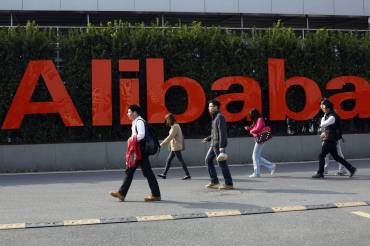
As its business matures at home, Chinese e-commerce giant Alibaba Group Holding Ltd. is looking to boost growth elsewhere in Asia — especially India, home to a nascent but fast-growing online shopping sector.
Here’s how — and why – it is targeting the world’s second-most-populous nation.
1.2 billion
The number of customers outside of China that Alibaba would like to reach, according to the company’s Chairman Jack Ma.
$127 billion
The projected value of India’s e-commerce market in 2025, up from $11.2 billion last year, according to Goldman Sachs Global Investment Research.
$500 million
The amount of money New Delhi, India-based e-commerce startup Snapdeal.com raised in a fundraising round led by Alibaba last year.
More than $500 million
The amount Alibaba and its affiliate Ant Financial Services Group last year paid for 40% of One97 Communications, the parent company of Noida, India-based online-payment and marketplace startup Paytm.
2 or more
Prominent executives Alibaba has hired in recent months who have experience in India’s e-commerce sector.
IF THERE is a modern gateway from the east to Africa, it is arguably Addis Ababa’s airport. Passengers passing through its dusty terminals on their way to some far-flung capital will be surprised to find that getting an Ethiopian meal is remarkably difficult. Asian dumplings, however, are available at two different cafés. Signs marking the gates are in English, Amharic and Chinese, as are announcements.
Dozing gently on the beige loungers are untold numbers of young Chinese workers waiting for flights. They are part of a growing army of labourers, businessmen and engineers who can be seen directing the construction of roads, railways and ports across much of east Africa.
Concerns about China’s involvement in Africa are often overplayed. Accusations that it is buying up vast tracts of farmland, factories and mines, for instance, are blown out of proportion. Even so, its growing influence on the continent has nettled India and Japan, who are both boosting their engagement in response.
As with previous rounds of rivalry in Africa, such as during the cold war, at least some of this activity relates to access to bases and ports to control the sea. China’s involvement in Africa now includes a growing military presence. Thousands of Chinese soldiers have donned the UN’s blue helmets in Mali and South Sudan, where several have been killed trying to keep an imaginary peace. Chinese warships regularly visit African ports.
China maintains a naval squadron that escorts mostly Chinese-flagged vessels through the Gulf of Aden. But some diplomats fret that China has been using these patrols to give its navy practice in operating far from home, including in offensive actions. “You wouldn’t normally use submarines for counter-piracy patrols,” says one.
Patrolling for pirates has also given China an excuse to set up its first overseas base in Djibouti, next door to an existing American one. Yet the more alarmist worries about China—that it is planning to build naval bases in a “string of pearls” stretching from China to the Red Sea and as far as Namibia’s Walvis Bay on the Atlantic coast—have not materialised. The Walvis Bay rumour seems to be a red herring. China has used its ships and soldiers to protect its own citizens in Africa and the Middle East: in 2011 it evacuated 35,000 of them from Libya and last year one of its ships rescued 600 from Yemen. But its main naval focus remains the South China Sea.
Wary does it
Still, India is deeply suspicious of China’s presence in the Indian Ocean. A wide network of some 32 Indian radar stations and listening posts is being developed in the Seychelles, Madagascar and Mauritius, among other countries. This will enable India to monitor shipping across expanses of the ocean. It is also improving its ability to project power in waters it considers its own, and is arming friendly countries such as Mauritius. Among other things, India is building a naval and air base on Assumption Island, north of Madagascar and within easy reach of many of east Africa’s newly discovered offshore gasfields. “It’s the Indian Ocean, stupid,” quips one seasoned commentator in mimicry of Indian diplomats on its power projection. “They say it’s ‘our near abroad’.”
Japan has also been flexing its naval muscle but in a more limited manner. This month it pledged $120m in aid to boost counter-terrorism efforts in Africa. It has been a stalwart contributor to the multinational naval force policing the seas off Somalia’s coast. Sino-Japanese rivalry is fiercest in diplomacy and trade. Two prizes are on offer: access to natural resources and markets, and the continent’s 54 votes at the UN. Much of the effort to win the former was pioneered by Japan in the 1990s, when it helped build ports and railways. Akihiko Tanaka of the University of Tokyo, a former president of the Japan International Co-operation Agency, says that for years Japan’s aid to Africa was “qualitatively different” from that of other rich nations in part because it focused on infrastructure rather than the direct alleviation of poverty. “We were criticised a lot,” he says. “Now there is an almost unanimous view that you need to invest in infrastructure.”
Japan’s latest spending spree on infrastructure will speed economic growth on the continent; but there is a degree of one-upmanship and duplication. Japan recently handed over the keys to a new cargo terminal at Kenya’s main port in Mombasa. Meanwhile, a short hop down the coast at Bagamoyo, Tanzania is building east Africa’s biggest port—with Chinese cash.
On the diplomatic front both Japan and India are trying to make common cause with African states that want to reform the UN Security Council. They argue that Africa deserves permanent seats on it, as do they. China favours a permanent seat for an African country, and it doesn’t mind India having one. But in return it expects endorsement of its stand against Japan getting a seat.
Both Japan and China back up such diplomatic efforts with aid and, at least in China’s case, this seems to have helped win it friends. Countries that vote with China in the UN (for instance over Taiwan) usually get more cash from it, according to AidData, a project based at the College of William and Mary in Virginia.
China also makes African friends by selling arms. In the five years to 2015 it nearly doubled its share of weapons supplied to sub-Saharan Africa, from little more than a tenth of the total to almost a quarter, according to the Stockholm International Peace Research Institute, a think-tank. It has sold tanks and jets to Tanzania, armoured vehicles to Burundi and Cameroon, and missile launchers to Morocco, to name but a few. It also wins friends among the continent’s war criminals through its policy of “non-interference” in the internal affairs of other countries, for instance by opposing the International Criminal Court (ICC).
Japan, which until 2014 was prohibited by its constitution from selling weapons, and supports the ICC, has had a harder time. It has concentrated on dispensing aid and using soft power, such as awarding scholarships for study in Japan and free classes in akido and karate at its embassy in Nairobi. But even in this sphere it is outclassed by China, which has established some 46 Confucius Institutes in Africa to teach Chinese language and culture. China also flies thousands of Africa’s ruling-party officials, civil servants and trade unionists to attend political-training schools in China. This has worked so well in South Africa that the ruling African National Congress last year published a foreign-policy discussion document suggesting that China’s Communist Party “should be a guiding lodestar of our own struggle.”
Yet apart from South Africa, which has slavishly aligned itself with China (for instance by voting with it against a UN resolution to protect the right of people to hold peaceful protests), most African countries are good at playing off rivals against each other, says Alex Vines of Chatham House, a London think-tank. Many have diversified their diplomatic links by opening new embassies, including ones that cross previous divisions between rival powers in Africa. Countries including Burundi, Mauritania and Togo, that used to fall firmly within France’s sphere of influence have opened embassies in Britain. “This is a really great time for clever African countries to get really good deals,” says Mr Vines.
U.S. and UK tech startups welcome in China – with a little supervision Martin Anderson. Editor, The Stack, Friday 12th August
On August 1st Travis Kalanick, CEO and co-founder of Uber, finally admitted defeat regarding the company’s three-year crusade to gain a foothold in China, with the ‘merging’ (most consider it a ‘sale’) of Uber’s Chinese operations with local incumbent Didi Chuxing. Whatever Kalanick may have recovered from the concession, it seems unlikely that Uber will recoup the billions it has already poured into its most distant territory. But there was no alternative – by January of this year, the Uber board was urging that the ride-sharing giant – such an indefatigable combatant in so many contested territories – throw in the towel.
Ultimately Didi was going to win this battle; despite cash and equity of $28 billion vs Uber’s $68 billion, Didi had reserved $10 billion to strengthen its grip on this fundamental societal change in China – almost on a par with what the better-financed Uber was willing to invest.
A headline-grabbing contest of this nature gives the false impression of China as isolationist in terms of cooperating with global tech startups – it isn’t. The country runs a UK-China tech incubator in Shenzhen, backed by Tencent and providing crucial advice on the peculiarities of the Chinese market to Brit startups. The deal even offers free office space, business counsel and pitch opportunities. Whilst willing to repel boarders on the scale of Uber, China has no problem in contributing to a post-Brexit UK brain drain.
Likewise Alibaba runs a similar scheme to increase tech migration from the United States – almost impossibly tempting for new companies dazzled by the economy-of-scale that Chinese success promises, and struggling for attention in saturated home markets. Perhaps the most useful aspect of these international schemes is the business advice from native sources – western entrepreneurs see huge opportunities in Chinese numbers, yet fail to take account of national psychology; either on an individual level (the Chinese consumer), or at the level of a state which is well aware of its riches – and needs only as much western genius to exploit them as serves its future interests in the post-sharing economy.
The country could create sustainable economic conditions in five ways, such as promoting acceptable living standards, improving the urban infrastructure, and unlocking the potential of women.
Twenty-five years ago, India embarked on a journey of economic liberalization, opening its doors to globalization and market forces. We, and the rest of the world, have watched as the investment and trade regime introduced in 1991 raised economic growth, increased consumer choice, and reduced poverty significantly.
Now, as uncertainties cloud the global economic picture, the International Monetary Fund has projected that India’s GDP will grow by 7.4 percent for 2016–17, making it the world’s fastest-growing large economy. India also compares favorably with other emerging markets in growth potential. (Exhibit 1).
The country offers an attractive long-term future powered largely by a consuming class that’s expected to more than triple, to 89 million households, by 2025.Exhibit 1
Liberalization has created new opportunities. The challenge for policy makers is to manage growth so that it creates the basis for sustainable economic performance. Although much work has been done, India’s transformation into a global economic force has yet to fully benefit all its citizens. There’s a massive unmet need for basic services, such as water and sanitation, energy, and health care, for example, while red tape makes it hard to do business. The government has begun to address many of these challenges, and the pace of change could accelerate in coming years as some initiatives gain scale.
From our vantage point, India has an exciting future. In the new McKinsey Global Institute report India’s ascent: Five opportunities for growth and transformation, we look at game-changing opportunities for the country’s economy and the implications for domestic businesses, multinational companies, and the government. The five areas we focus on by no means provide a comprehensive assessment of India’s prospects, but we believe they are among the most significant trends. Foreign and Indian businesses would do well to recognize these opportunities and reflect on how to exploit them.
1. From poverty to empowerment:
Acceptable living standards for allThe trickle-down effect of economic liberalization has lifted millions of Indians from indigence in the past two decades. The official poverty rate declined from 45 percent of the population in 1994 to 22 percent in 2012, but this statistic defines only the most dismal situations. By our broader measure of minimum acceptable living standards—spanning nutrition, water, sanitation, energy, housing, education, and healthcare—we find that 56 percent of Indians lacked the basics in 2012.
The country will need to address these gaps to achieve its potential. The task is certainly within India’s capacity, but policy makers will have to promote an agenda emphasizing job creation, growth-oriented investment, farm-sector productivity, and innovative social programs that help the people who actually need them. The private sector has a substantial role to play both in creating and providing effective basic services.
2. Sustainable urbanization:
Building India’s growth enginesBy 2025, MGI estimates, India will have 69 cities with a population of more than one million each. Economic growth will center on them, and the biggest infrastructure building will take place there. The output of Indian cities will come to resemble that of cities in middle-income nations (Exhibit 2).
In 2030, for example, Mumbai’s economy, a mammoth market of $245 billion in consumption, will be bigger than Malaysia’s today. The next four cities by market size will each have annual consumption of $80 billion to $175 billion by 2030.Exhibit 2To achieve sustainable growth, these cities will have to become more livable places, offering clean air and water, reliable utilities, and extensive green spaces. India’s urban transformation represents a huge opportunity for domestic and international businesses that can provide capital, technology, and planning know-how, as well as the goods and services urban consumers demand.
3. Manufacturing for India, in India
Although India’s manufacturing sector has lagged behind China’s, there will be substantial opportunities to invest in value-creating businesses and to create jobs. India’s appeal to potential investors will be more than just its low-cost labor: manufacturers there are building competitive businesses to tap into the large and growing local market. Further reforms and public infrastructure investments could make it easier for all types of manufacturing businesses—foreign and Indian alike—to achieve scale and efficiency.
4. Riding the digital wave:
Harnessing technology for India’s growthTwelve powerful technologies will benefit India, helping to raise productivity, improving efficiency across major sectors of the economy, and radically altering the provision of services such as education and healthcare. These technologies could add $550 billion to $1 trillion a year of economic value in 2025, according to our analysis, potentially creating millions of well-paying, productive jobs (including positions for people with moderate levels of formal education) and helping millions of Indians to enjoy a decent standard of living.
5. Unlocking the potential of Indian women: If not now, when?
Our research suggests that women now contribute only 17 percent of India’s GDP and make up just 24 percent of the workforce, compared with 40 percent globally. In the coming decade, they will represent one of the largest potential economic forces in the country. If it matched the progress toward gender parity of the region’s fastest-improving country, we estimate that it could add $700 billion to its GDP in 2025. Movement toward closing the gender gap in education and in financial and digital inclusion has begun, but there is scope for further progress.
Public-sector efforts to address the five areas are under way. The government is attempting to improve the investment climate and accelerate job creation—India’s ranking on the World Economic Forum’s Global Competitiveness Report climbed to 55 in 2015–16, from 71 a year earlier. Officials are moving to make the government more efficient, using technology that can leapfrog traditional bottlenecks of a weak infrastructure. One billion Indian citizens, for example, are now registered under Aadhaar, the world’s largest digital-identity program and a potent platform for delivering benefits directly to the poor.
Realizing India’s promise will require national, state, and local leaders to adopt new approaches to governance and the provision of services. To meet the people’s aspirations, these officials will also need new capabilities. The requirements include private sector–style procurement and supply-chain expertise, deep technical skills for planning portfolios of infrastructure investments, and strong project-management capabilities to ensure that large capital projects finish on time and on budget. Training will be needed to help staff members use digital technologies to automate and reengineer processes, manage big data and advanced analytics, and improve interactions among citizens through digitized touchpoints, online-access platforms, portals, and messaging and payment platforms. The government could acquire these capabilities by adopting quality-oriented procurement policies and taking advantage of secondments from the private sector. For businesses, India represents a sizable market but will require a granular strategy and a locally focused operating model.
No single report can capture all the changes taking place in the country, but we have tried here to identify the most significant trends. Foreign and Indian businesses should consider how their strategies will be influenced by them. Policy makers should focus on helping all stakeholders to capitalize on them. By any measure, the challenge is daunting, but success could give a historic boost to India’s economy.


 India’s biggest companies have been stuck in a rut for the last two years even though the country surpassed even China in terms of gross domestic product growth and it voters picked a prime minister who pledged to boost business.
 Workers at an IKEA carpet-making facility in Bhadohi, India, August 26, 2015. PHOTO: VIVEK SINGH FOR THE WALL STREET JOURNAL


 Pursuing a new economic model



 Liberalization has created new opportunities. The challenge for policy makers is to manage growth so that it creates the basis for sustainable economic performance. Although much work has been done, India’s transformation into a global economic force has yet to fully benefit all its citizens. There’s a massive unmet need for basic services, such as water and sanitation, energy, and health care, for example, while red tape makes it hard to do business. The government has begun to address many of these challenges, and the pace of change could accelerate in coming years as some initiatives gain scale.
 In 2030, for example, Mumbai’s economy, a mammoth market of $245 billion in consumption, will be bigger than Malaysia’s today. The next four cities by market size will each have annual consumption of $80 billion to $175 billion by 2030.Exhibit 2To achieve sustainable growth, these cities will have to become more livable places, offering clean air and water, reliable utilities, and extensive green spaces. India’s urban transformation represents a huge opportunity for domestic and international businesses that can provide capital, technology, and planning know-how, as well as the goods and services urban consumers demand.
 CHINDIA ALERT: You'll be living in their world, very soon