Archive for ‘Economics’

04/06/2016

Dam completion signifies growing Indian influence in Afghanistan | Reuters

Prime Minister Narendra Modi visited Afghanistan on Saturday to mark the completion of a nearly $300 million hydroelectric dam project, the latest symbol of Indian investment in its South Asian neighbour.

The dam, originally built in western Herat province in 1976 before being damaged during the civil wars of the 1990s, was rebuilt by some 1,500 Indian and Afghan engineers, according to the Indian Ministry of External Affairs.

“It is symbol of our friendship and would usher in hope, light up homes, nourish the fertile fields of Heart and bring prosperity to the people of the region,” Modi said in a social media post as he departed for Afghanistan, the first stop on a five-country trip.

Afghan President Ashraf Ghani has nurtured closer ties with India in the past year as relations with Pakistan have deteriorated in the face of continued insurgent attacks and border tensions.

Afghanistan has walked a fine line as it accepts Indian aid, with Pakistan historically wary of any Indian influence in Afghanistan.

Salma Dam is another big step in deepening and broadening the relationship between Afghanistan and India,” Ghani said in a post on Twitter.

At more than 100 metres (330 feet) high and 540 metres (1,770 feet) wide, the dam is designed to generate 42 megawatts of power and help irrigate 75,000 hectares of land, according to Modi.

India has poured more than $1 billion into Afghanistan reconstruction projects and humanitarian aid, making it one of the largest donors to the war-torn country.

A new national assembly building in Kabul and major power line and road construction have been among the main projects funded by India.

Source: Dam completion signifies growing Indian influence in Afghanistan | Reuters

04/06/2016

This Spanish Company Says It Holds the Key to Speed on India’s Crooked Railways – India Real Time – WSJ

India’s trains are notoriously slow and outdated, but a Spanish train maker says it can change that with coaches that can squeeze much more speed out of the country’s crooked railways.

Talgo S.A. has been wooing India for years as the South Asian nation has one of the largest railway networks in the world and big plans to upgrade its rail infrastructure.

The Madrid-based company got its breakthrough this year when it got the go-ahead to test its coaches on few routes in India to prove its trains can slash travel times for the 13 million people who use the state-owned Indian Railways every day. Talgo claims its coaches can cut travel time by up to 30%.

The existing average maximum speed of Indian passenger trains is 110 kilometers per hour, according to Vijay Kumar, executive director for infrastructure and mechanical engineering at Indian Railways.

One of Indian Railways’ current fastest trains–the Rajdhani Express–travels between Delhi and Mumbai in around 16 hours. Talgo says the same journey with its coaches will take less than 11 hours.

India has traditionally built its own trains and Talgo is the first foreign train-manufacturer to be given permission to conduct trials, said Mr. Kumar.

The tests of the trains began last weekend between Bareilly and Moradabad in northern Indian state of Uttar Pradesh and will be expanded to two other routes.

The main selling point of the Talgo coaches is that India won’t need to change the tracks for them.

“For any conventional train you need a lot of investment in the existing infrastructure but with Talgo train you don’t need any investment in the infrastructure and it can start going at higher speed,” said Subrat Nath, director for India and Asia-Pacific region at Talgo.

Despite India’s dependence on its railways, the system has become outdated and overburdened.

“India is unique and alone among the major countries of the world in not having a single high-speed rail corridor,” said a document presented to the Indian Parliament in 2009 titled “Indian Railways Vision 2020.”

The Congress party-led government back then said it would upgrade the current tracks and build “state-of-the-art high-speed corridors” for the trains to run up to 350 kilometers, or 217 miles, per hour.

In the latest step in that direction, India launched its first “semi-high speed” train in April–the Gatimaan Express– between Delhi and Agra, home of the Taj Mahal. The train has a maximum speed of 160 kilometers, or 99 miles, per hour, cutting the fastest travel time between the capital and Agra by more than 15 minutes.

One of the biggest factors slowing down Indian Railways’ 7,000 passenger trains is the country’s long and winding railroads. There are 495 speed-killing curves in the tracks between Delhi and Mumbai alone, said Mr. Kumar at Indian Railways.

Straightening out existing tracks or building straight ones from scratch is too expensive, said Mr. Kumar, so the trains from Talgo and others which offer more speed on curvy lines could be the best option.

Talgo coaches use a “natural tilting mechanism” which allows them to go up to 20% faster on curves than conventional coaches, Mr. Kumar said.

He said the trials will test whether the trains perform as promised. India has not committed to ordering from Talgo yet.

Talgo’s Mr. Nath says the company is ready to build the coaches in India if it can get the orders.“India can be a key market for us,” he said.

Source: This Spanish Company Says It Holds the Key to Speed on India’s Crooked Railways – India Real Time – WSJ

03/06/2016

The class ceiling | The Economist

NO CAR may honk nor lorry rumble near secondary schools on the two days next week when students are taking their university entrance exams, known as gaokao. Teenagers have been cramming for years for these tests, which they believe (with justification) will determine their entire future. Yet it is at an earlier stage of education that an individual’s life chances in China are usually mapped out, often in ways that are deeply unfair.

To give more students access to higher education, the government has increased its investment in the sector fivefold since 1997. The number of universities has nearly doubled. In 1998 46% of secondary-school graduates went on to university. Now 88% of them do. About 7m people—roughly one-third of those aged between 18 and 22—now gain entry to some form of higher institution each year.

China’s universities offer more opportunity for social mobility than those in many other countries, says James Lee of Hong Kong University of Science and Technology. But the social backgrounds of those admitted have been changing. Until 1993, more than 40% of students were the children of farmers or factory workers. Now universities are crammed with people from wealthy, urban backgrounds. That is partly because a far bigger share of young people are middle-class. But it is also because rural Chinese face bigger hurdles getting into them than they used to.

The problem lies with inequality of access to senior high schools, which take students for the final three years of their secondary education. Students from rural backgrounds who go to such schools perform as well in the university entrance exams as those from urban areas. But most never get there. Less than 10% of young people in the countryside go to senior high schools compared with 70% of their urban counterparts. The result is that a third of urban youngsters complete tertiary education, compared with only 8% of young rural adults.

One reason is that junior high schools in the countryside are far weaker academically than urban ones. Local governments invest less in them per student than they do in cities. Urban parents tend to be better educated and thus better able to help children with their studies. Rural pupils often suffer from a “poverty of expectations”, says Jean Wei-Jun Yeung of the National University of Singapore: they are not encouraged to think they can succeed, so they do not try to.

Expense is a huge deterrent for many. Governments cover the costs of schooling for the nine years of compulsory education up to the age of around 15. But at senior high schools, families must pay tuition and other expenses; these outlays are among the highest in the world (measured by purchasing-power parity). Many students drop out of junior high school—which is free—because rising wages in low-skilled industrial work make the prospect of staying at school even less attractive. Millions enter the workforce every year who are barely literate or numerate. Poor nutrition is also a handicap. Stanford University’s Rural Education Action Programme has found that a high incidence of anaemia and intestinal worms in rural areas affects educational performance.

Since the 1990s more than 200m people have moved from the countryside to work in cities. Many have left their children behind because of the difficulty of getting them into urban schools: the country’s system of hukou, or household registration, makes it hard for migrant children to enjoy subsidised education in places other than their parents’ birthplace.

But migrant children who do attend schools in cities usually get a worse education than their city-born counterparts. State schools that accept migrant pupils often operate what Pei-chia Lan of National Taiwan University refers to as “apartheid school models”. In these, migrant children are taught separately from urban ones in the same school, and are even kept apart from them in the playground. Since they are forced to take senior high-school exams in the hometown of their hukou, many have little choice but to return to the countryside to attend junior high school.

Source: The class ceiling | The Economist

03/06/2016

India May Have Won the Battle With Food Inflation Before the First Drop of Monsoon Rain – India Real Time – WSJ

Around this time every year, farmers and economists look to India’s skies, hoping for the arrival of the monsoon rains.

Late and less rain hurts crops and triggers inflation, goes the traditional worry, so every day of delay or deficit in downpours threatens to derail the country’s fragile growth.

The problem with this annual, rational worry, however, is that it’s just, plain wrong.

Good and bad monsoons in recent years have had limited effect on growth or even on food inflation, according to a report this week from Nomura. What is much more important in determining how fast food prices rise, the report says, is the minimum support prices New Delhi sets for certain crucial commodities.

So instead of looking to the skies, central bankers and other inflation fighters should be looking to New Delhi.

This year the monsoon is predicted to be above normal but much more importantly, the weather over the capital is looking promising. On Thursday, India’s weather department upheld its monsoon forecast and said it expects rainfall to be 106% of the long-term average.

On Wednesday the government announced the minimum support prices for the most basic Indian staples–dal and rice—and capped the increases at less than 10%. In some years when the government looked to help farmers it has ratcheted up the prices more than 15%, triggering inflation.

Source: India May Have Won the Battle With Food Inflation Before the First Drop of Monsoon Rain – India Real Time – WSJ

31/05/2016

ONGC Videsh, Azerbaijan’s SOCAR look to jointly sell oil | Reuters

ONGC Videsh has signed a preliminary agreement with the trading arm of Azerbaijan’s state energy company SOCAR to look at jointly marketing crude oil, the company said in a statement on Tuesday.

OVL, the overseas assets acquisition arm of the country’s biggest explorer, Oil and Natural Gas Corp (ONGC), wants to leverage the experience of SOCAR Trading SA in oil marketing, it said.

Reuters had reported about the deal on Monday.

Source: ONGC Videsh, Azerbaijan’s SOCAR look to jointly sell oil | Reuters

31/05/2016

China releases new action plan to tackle soil pollution | Reuters

China aims to curb worsening soil pollution by 2020 and stabilize and improve soil quality by 2030, the cabinet said in an action plan published on Tuesday.

The central government will set up a special fund to tackle soil pollution, as well as a separate fund to help upgrade technology and equipment in the heavy metal sector, the cabinet said in a statement on its website (www.gov.cn).

The government will also continue to eliminate outdated heavy metal capacity, the cabinet said.

Last year, the environment minister said 16 percent of China’s soil exceeded state pollution limits. Treatment costs for heavy metal or chemical contamination are high, and China has struggled to attract private funds for soil remediation.

According to Reuters calculations, the cost of making all of China’s contaminated land fit for crops or livestock would be around 5 trillion yuan ($760 billion), based on average industry estimates of the cost of treating one hectare.

Analysts have estimated the soil remediation market could be worth as much as 1 trillion yuan, but authorities have struggled to determine who should pay for rehabilitating contaminated land. Much of the responsibility for the costs now lies with impoverished local governments.

Researchers with Guohai Securities said earlier this year that there are currently 100 key soil remediation projects under way in China with an estimated total cost of 500 billion yuan. With no natural profit motive to encourage private companies to get involved, the clean-up programs have relied mostly on government funding.

China’s five-year plan published in March said the country would give priority to cleaning up contaminated soil used in agriculture. It promised also to strengthen soil pollution monitoring systems and promote new clean-up technologies.

Lawmakers said during the annual session of parliament in March that the country would introduce legislation to help tackle soil pollution by next year.

Companies involved in the sector include Beijing Orient Landscape and Ecology, Tus-Sound Environmental Resources, Beijing Originwater Technology and Guangxi Bossco Environmental Protection Technology.

($1 = 6.5836 Chinese yuan)

Source: China releases new action plan to tackle soil pollution | Reuters

27/05/2016

Southern comfort | The Economist

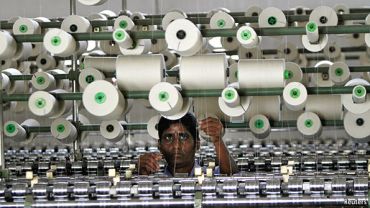
MAHATMA GANDHI would not have enjoyed Texfair 2016 in Coimbatore in the southern state of Tamil Nadu. The man hated machines and factories, and promoted Indian independence by urging every household to spin its own cotton yarn. But on display at the textile fair were bobbins, rollers, waste balers, quality-control sensors and much, much more.

Indeed, India is vying with China to be the world’s biggest producer of yarn, with over 45m spindles twirling around the clock. But what is striking about the trade fair is how so much of the modern wizardry on show is made not in better-known industrial centres around the world but in Coimbatore itself, a city of just 1.6m some 500 kilometres (310 miles) south-west of Chennai, the Tamil Nadu capital. In this section Pull the other one Taliban reshuffled Southern comfort Reprints Related topics Bharatiya Janata Party Tamil Nadu Kerala India

The fast-growing city is an inelegant sprawl stretching into groves of coconut palms. It teems with technical institutes, bustling factories and civic spirit. Earnest and ambitious, Coimbatore evokes the American Midwest of a century ago. A regional manufacturers’ group that was founded in 1933 during Gandhi’s homespun campaign has now designed, built and marketed a hand-held, battery-operated cotton picker that it claims is six times more efficient than human fingers.

Gandhi would have been appalled. But the gadget says something about the quiet success of parts of India’s deep south. Mill owners worry that with day wages in Tamil Nadu and neighbouring Kerala to the west now far higher than those in northern India, local cotton may grow uncompetitive. Tea planters in the hills west of Coimbatore are already squeezed. One landowner, in Kerala’s Wayanad region, where silver oaks shade trim ranks of tea bushes, says that his pickers get 300 rupees (about $4.50) a day, nearly three times the wage in Darjeeling in India’s north.

It may not sound like much, but it is also more than the average Indian earns. And as a whole, GDP per person in Tamil Nadu and Kerala is 68% and 41% higher respectively than the national average of $1,390 a year. With the south’s booming new industries, better education and higher wages contrasted with declining industries in the north and east, India is undergoing a shift a bit like the American one from the rustbelt to the sunbelt in the 1980s. Kerala shares in this new industrialisation less than Tamil Nadu, but that is balanced by another source of prosperity: remittances from abroad. As many as one in ten of Kerala’s 35m people work in the rich Arab countries of the Persian Gulf. Their remittances boost local incomes, property prices and demand for better schools. Kerala, under leftist governments for the past six decades, already has India’s best state education and its highest literacy rate. Its school district has again topped nationwide exams for 17-year-olds, followed by Chennai region, covering the rest of southern India.

Yet India’s deep south has not transmuted growing prosperity into greater political clout. It remains largely aloof from broader political trends, including a slugging match between the Bharatiya Janata Party (BJP), in office nationally under Narendra Modi, the prime minister, and Congress, the once-dominant centre-left party that worships Gandhi. In elections across four Indian states that wrapped up on May 19th, attention elsewhere focused largely on the fortunes of those two parties. The BJP’s capture from Congress of Assam in the north-east was seen as a big boost for Mr Modi. Congress’s failure to take any state was seen as a sign of decay.

Source: Southern comfort | The Economist

27/05/2016

India Inc shows growth spreading by end of Modi’s sophomore year | Reuters

Indian companies are posting their best earnings results since Prime Minister Narendra Modi swept to power two years ago, giving the clearest sign yet that India’s fast, but patchy, economic growth is becoming more broad-based.

Though headline growth figures make India one of the world’s fastest growing economies, weak private investment and low capacity utilization rates have painted a less rosy picture.

Going by India Inc’s surge in profit growth in the first three months of the year, however, the outlook really does seem to be brightening, as benefits feed through from lower interest rates and government spending in infrastructure and defense.

On Tuesday, India will release gross domestic product data for the January-March quarter. Year-on-year growth of 7.5 percent is forecast by a Reuters survey economists, slightly faster than the previous quarter’s 7.3 percent.

“Macro indicators are suggesting that at the ground level the economy is gaining momentum,” said Dhiraj Sachdev, a fund manager at HSBC Asset Management in Mumbai.

“That has also been validated in terms of better corporate earnings in many of the sectors.”

Operating profits for 289 companies that have reported results so far leapt 25.5 percent year-on-year in the March quarter, compared with 1.7 percent growth in the previous quarter, according to Thomson Reuters data.

It is Indian firms’ best showing since the April-June quarter in 2014.

Put alongside the 6.8 percent decline in earnings that data provider Factset reckons companies in the S&P 500 suffered during the same quarter, India’s corporates have some things going in their favor.

India’s broader National Stock Exchange share index .NSEI has surged around 17 percent from a near 2-year low on Feb. 29, outperforming a 7 percent gain by the Asia-Pacific MSCI index excluding Japan .MIAPJ0000PUS.

This week, Morgan Stanley upgraded Indian equities to “overweight” from “equalweight” citing rising dividends, and prospects of a simpler country-wide sales tax, lower interest rates and benign monsoon among its reasons.

Source: India Inc shows growth spreading by end of Modi’s sophomore year | Reuters

27/05/2016

Why It Could Be a While Before Apple Can Open Stores in India – India Real Time – WSJ

India’s finance ministry has rejected a government-panel recommendation to exempt Apple Inc. from local sourcing requirements, two government officials said, in a decision that could effectively block the technology company’s plan to open its own retail stores in the country.

“We are sticking to the old policy,“ said one of the officials. “We want local sourcing for job creation. You can’t have a situation where people view India only as a market. Let them start doing some manufacturing here.”

An Apple spokeswoman didn’t immediately respond to a request for comment.

India is a crucial market for Apple as it holds huge sales potential. Like China, which for years fueled the Cupertino, Calif., company’s growth, India is a large, developing economy in which more people can afford its high-end gadgets every year.

India wants to use the company’s interest in its market to attract investment and create the manufacturing facilities and jobs the country needs to sustain long-term growth.

Source: Why It Could Be a While Before Apple Can Open Stores in India – India Real Time – WSJ

27/05/2016

What Can Be Learned From China’s Monetary Past – China Real Time Report – WSJ

China’s decline as a great power in the 19th century wasn’t the fault of imperialism and opium. It was bad monetary policy, after all.

English: Qing emperor Jiaqing

English: Qing emperor Jiaqing (Photo credit: Wikipedia)

So says Werner Burger, a numismatic historian and Sinologist who has published a detailed history of money in the Qing Dynasty, entitled “Ch’ing Cash.” Mr. Burger has spent his professional life tracking down details of nearly every coin minted in China over three centuries. After three decades of making official requests, it wasn’t until 1996 that Beijing granted him access to the previous century’s imperial mint reports, the modern equivalent to central bank money supply statistics.

His conclusion: The Jiaqing Emperor, By letting the fakes infiltrate the economy, the Jiaqing emperor and his successors allowed the effective exchange rate for standard brass Chinese coins to swell from the official rate of 1000 per unit of silver to as high as 2500. Soldiers wages were effectively halved, giving them little incentive to fight the various battles against Western colonizers.

Mr. Burger refutes the notion that China’s trade with the United Kingdom, which for a time involved China sending silver to the U.K. in exchange for opium, was responsible for the debasement. He said the amount of silver sent abroad didn’t affect the exchange rate, noting a mid-century period of three decades when China actually experienced silver inflows.

Amid such currency instability, “all attempts at economic reforms and progress were bound to fail. China had no chance to catch up with the rest of the world and so lost a whole century to corruption and greedy officials,” says Mr. Burger.

For investors who want to learn from China’s past mistakes, the two volume history will cost a pretty penny: $800.

Source: What Can Be Learned From China’s Monetary Past – China Real Time Report – WSJ

Law of Unintended Consequences

continuously updated blog about China & India

ChiaHou's Book Reviews

continuously updated blog about China & India

What's wrong with the world; and its economy

continuously updated blog about China & India