Archive for ‘Economics’

04/11/2015

Prepare for Takeoff: China Rolls Out First Large Passenger Jet – China Real Time Report – WSJ

China’s first large passenger jet rolled off the assembly line on Monday after years of delays, bringing Beijing’s dream of developing a rival to Boeing Co. and Airbus Group SE closer to reality.

As WSJ’s Chun Han Wong reports: Still, the single-aisle C919 airliner won’t be delivered to airlines for at least another three years, highlighting the difficulties

China has faced in becoming a global player in aviation. Developed by the state-run Commercial Aircraft Corp. of China Ltd. (Comac), the twin-engine jet was initially set for its first flight in 2014, ahead of commercial deliveries starting in 2016. Production setbacks forced Comac to extend its deadlines repeatedly. Company executives say flight testing should start next year, with deliveries expected in 2018 or 2019 at the earliest.

Thousands of guests, including government officials and aerospace executives, witnessed the C919’s rollout at an assembly plant near Shanghai’s Pudong International Airport, according to Chinese state media.

Source: Prepare for Takeoff: China Rolls Out First Large Passenger Jet – China Real Time Report – WSJ

02/11/2015

The power of parity: Advancing women’s equality in India | McKinsey & Company

India has a larger relative economic value at stake from advancing gender equality than any of the ten regions analyzed in a recent McKinsey Global Institute report, The power of parity: How advancing women’s equality can add $12 trillion to global growth.

If all countries were to match the momentum toward gender parity of the fastest-improving countries in their region, $12 trillion a year could be added to global GDP. What’s more, India could add $700 billion of additional GDP in 2025, upping the country’s annual GDP growth by 1.4 percentage points (exhibit).

Our new report, The power of parity: Advancing women’s equality in India, reveals that about 70 percent of this “best in region” potential would come from raising women’s participation in India’s labor force by ten percentage points between now and 2025, bringing 68 million more women into the labor force—70 percent of them in just nine states. This will require bridging both economic and social gender gaps. To determine this, we have created a measure of gender equality for Indian states: the India Female Empowerment Index, or Femdex. Our analysis shows that scores vary widely, and India’s challenge is that the five states with the lowest gender inequality account for just 4 percent of the female working-age population; the five states with the highest inequality account for 32 percent.

Eight priority actions can help accelerate progress, including education and skill-building, job creation in key sectors, corporate policies to promote diversity, and programs to address deep-rooted mind-sets about the role of women in work.

Source: The power of parity: Advancing women’s equality in India | McKinsey & Company

02/11/2015

What Will the Two-Child Policy Mean for China’s Property Market? – China Real Time Report – WSJ

China’s latest move to scrap its one-child policy buoyed property developer stocks Friday on hopes it could provide a boost to housing demand.

All Chinese couples will be allowed to have two children, Chinese official media said Thursday, after a meeting of top officials. While a timetable hasn’t been established, there are prospects that an increase in the size of Chinese households could raise demand for larger homes.

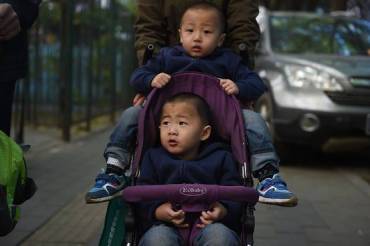
Shanghai housewife Tracy Li said she and her husband will be looking for a larger home once their two sons, one aged four and one who is almost a year, get older. They currently live in a two-bedroom apartment in Shanghai’s Minhang district. Like many Chinese parents, she doesn’t think it’s necessary for each child to have their own room but want to be able to accommodate grandparents, who in China are frequently deeply involved in childcare.

“When the children are older, it’s not too good for them to share a bedroom with their grandparents when they come over,” said the 34-year-old Ms. Li, who asked to be referred to by her English, rather than her Chinese, name. Finding a home in a good school district will take some time, said Ms. Li, who wants to move before her oldest son reaches school age.

Source: What Will the Two-Child Policy Mean for China’s Property Market? – China Real Time Report – WSJ

01/11/2015

Japan, China and South Korea ‘restore’ fraught ties – BBC News

The leaders of Japan, China and South Korea say they have “completely restored” trade and security ties, at their first meeting in three years.

Japanese Prime Minister Shinzo Abe, South Korean President Park Geun-hye and Chinese Premier Li Keqiang meet for trilateral meeting in Seoul - 1 November

They said in a statement they had agreed to resume regular trilateral meetings, not held since 2012. They also agreed more economic co-operation.

The talks in the South Korean capital Seoul were an attempt to ease ill-feeling fuelled by territorial disputes and historical disagreements. China and South Korea say Japan has not done enough to atone for its troops’ brutality in World War Two.

The BBC’s Stephen Evans in Seoul says the real significance of the talks is that they happened. They were held regularly until three-and-a-half years ago, when they were called off as bad feeling towards Japan intensified. “We shared the view that trilateral cooperation has been completely restored on the occasion of this summit,” South Korean President Park Geun-hye, Chinese Premier Li Keqiang and Japanese Prime Minister Shinzo Abe said in a joint statement, quoted by AFP.

Ms Park said the three leaders had agreed to work together to conclude the Regional Comprehensive Economic Partnership (RCEP), a 16-nation free trade area favoured by Beijing. She said they maintained their goal of “denuclearising” North Korea, AFP reported.

Our correspondent says that South Korea and Japan are torn between their allegiance to the US and their need to get on economically with Beijing. Mr Li met Ms Park on Saturday and the two agreed to try to increase trade, particularly through more Korean exports of food to China and co-operation on research into robotics. The two leaders were joined by Mr Abe on Sunday.

Source: Japan, China and South Korea ‘restore’ fraught ties – BBC News

01/11/2015

Gauging the strength of Chinese innovation | McKinsey & Company

The events of 2015 have shown that China is passing through a challenging transition: the labor-force expansion and surging investment that propelled three decades of growth are now weakening.

Gauging the strength of Chinese innovation

This is a natural stage in the country’s economic development. Yet it raises questions such as how drastically the expansion of GDP will slow down and whether the country can tap new sources of growth.

New research1 by the McKinsey Global Institute (MGI) suggests that to realize consensus growth forecasts—5.5 to 6.5 percent a year—during the coming decade, China must generate two to three percentage points of annual GDP growth through innovation, broadly defined. If it does, innovation could contribute much of the $3 trillion to $5 trillion a year to GDP by 2025.2 China will have evolved from an “innovation sponge,” absorbing and adapting existing technology and knowledge from around the world, into a global innovation leader. Our analysis suggests that this transformation is possible, though far from inevitable.

To date, when we have evaluated how well Chinese companies commercialize new ideas and use them to raise market share and profits and to compete around the world, the picture has been decidedly mixed. China has become a strong innovator in areas such as consumer electronics and construction equipment. Yet in others—creating new drugs or designing automobile engines, for example—the country still isn’t globally competitive. That’s true even though every year it spends more than $200 billion on research (second only to the United States), turns out close to 30,000 PhDs in science and engineering, and leads the world in patent applications (more than 820,000 in 2013). Video   McKinsey director Kevin Sneader discusses global innovation trends at a recent World Economic Forum event.

When we look ahead, though, we see broad swaths of opportunity. Our analysis suggests that by 2025, such new innovation opportunities could contribute $1.0 trillion to $2.2 trillion a year to the Chinese economy—or equivalent to up to 24 percent of total GDP growth. To achieve this goal, China must continue to transform the manufacturing sector, particularly through digitization, and the service sector, through rising connectivity and Internet enablement. Additional productivity gains would come from progress in science- and engineering-based innovation and improvements in the operations of companies as they adopt modern business methods.

To develop a clearer view of this potential, we identified four innovation archetypes: customer focused, efficiency driven, engineering based, and science based. We then compared the actual global revenues of individual industries with what we would expect them to generate given China’s share of global GDP (12 percent in 2013). As the exhibit shows, Chinese companies that rely on customer-focused and efficiency-driven innovation—in industries such as household appliances, Internet software and services, solar panels, and construction machinery—perform relatively well. Exhibit Enlarge However, Chinese companies are not yet global leaders in any of the science-based industries (such as branded pharmaceuticals) that we analyzed. In engineering-based industries, the results are inconsistent: China excels in high-speed trains but gets less than its GDP-based share from auto manufacturing. In this article, we’ll describe the state of play and the outlook in these four categories, starting with the two outperformers.

Source: Gauging the strength of Chinese innovation | McKinsey & Company

01/11/2015

China Pessimism Is Overblown, IMF Says, Citing Booming Services Sector – China Real Time Report – WSJ

Recent Chinese economic data is stoking fear the world’s second largest economy is decelerating at pace that could pull the global economy into a recession. But the International Monetary Fund’s top Asia economist, Changyong Rhee, says such pessimism may be unwarranted.

A booming services sector—such as shipping and retail—is offsetting the collapse in manufacturing, he argues. Advertisement “We don’t think there’s enough evidence based on the manufacturing sector that there will be a hard landing,” Mr. Rhee said in an interview. “They definitely have a manufacturing slowdown, an overcapacity problem. But other parts of China are actually growing faster.” If Beijing relies too much on monetary policy to stimulate growth, it could fuel China’s economic problems rather than fix them, the IMF official cautioned. His warning came as the People’s Bank of China on Friday cut interest rates again in a bid to revive growth.

Old ways of measuring China’s economy—such as looking at electricity consumption—are outdated because they don’t accurately reflect the changing nature of growth, Mr. Rhee said. Services now account for more than 50% of the country’s economy and there is a good chance their contributions are being underestimated, he said. On first glance, China’s trade data appears to support worries about the economy. But digging a little deeper into the numbers may actually show the country’s move towards a growth model more reliant on consumer demand is already bearing fruit.

Although the value of imports has fallen, volumes tell a different story. By adjusting for the fall in commodity prices and the appreciation in the yuan, the IMF calculates imports actually grew in July by 2%. And while the amount of goods imported has declined, imports of services are in double digits.

China’s real-estate sector has also fomented concerns. But Mr. Rhee said there are signs property prices are stabilizing. That is not to say the IMF believes there is no cause for apprehension. Beijing fueled its stellar growth rate over the last two decades through cheap credit. Souring global growth prospects revealed a country vastly overinvested in manufacturing capacity, particularly by state-owned enterprises. The IMF estimates overinvestment totals nearly 25% of the country’s growth domestic product. That means government-owned firms will struggle to pay their loans on mountains of credit. “If they mismanage the financial market, then they could have a hard landing,” Mr. Rhee said.

Beijing is facing a daunting task. Winding down the amount of credit in the system too quickly could stall growth. But failure to cut corporate debt levels and deal with bad loans quickly could create a bigger credit crisis over the next couple of years. “One question is whether China can manage this transition with the current governance system,” the senior IMF official said. “That is a critical issue.” Beijing will need to ensure government agencies take greater responsibility for their respective areas of oversight and state-owned companies will need to have stronger budget constraints, he said. China’s recent market turmoil revealed a weak regulatory structure. And overhauling a political system that relied on state-owned firms to boost growth and enrich regions is also expected to be a challenge.

That’s why, even though the IMF is backing more stimulus by Beijing to prevent too much deceleration in the economy, fund officials are concerned the government may depend too much on the old system of juicing the economy through credit. Counting on monetary policy, rather than using the budget to stimulate the economy, could exacerbate the problem of overcapacity.

“If they rely on monetary policy too much, then they would continue the classic credit expansion,” Mr. Rhee said. Besides fueling bad investments by state-owned enterprises, it could also “drag on necessary structural and governance reforms.”

Source: China Pessimism Is Overblown, IMF Says, Citing Booming Services Sector – China Real Time Report – WSJ

01/11/2015

China Abandons the One-Child Policy – China Real Time Report – WSJ

China on Thursday said it would formally end its notorious one-child policy, which was intended to curb a surging population but has since been blamed for looming demographic problems in the world’s No. 2 economy.

As WSJ’s Carlos Tejada reports: In a brief statement on Thursday, China’s official Xinhua News Agency said all Chinese would be allowed to have two children. It didn’t provide a time frame or any other details. China effectively hobbled the one-child policy two years ago, when it allowed couples to have two children if one parent came from a household without other siblings. It has also long allowed exceptions in some parts of the country. Advertisement

Still, Thursday’s move marked a symbolic shift as well as an acknowledgment that China now faces a looming worker-shortage in coming decades. China’s fertility rate, or the number of births per woman, was below the replacement level at 1.17 in 2013, according to the most recent data from the World Bank. Demographers have been urging Beijing to do more to thwart a predicted labor shortage, arguing that they should lift birth restrictions entirely. Read the full story on WSJ.com. Sign up for CRT’s daily newsletter to get the latest headlines by email.

Source: China Abandons the One-Child Policy – China Real Time Report – WSJ

21/10/2015

Time to end China’s one-child policy urgently: government advisers warn of demographic crisis ahead | South China Morning Post

Government advisers have strengthened calls for China to further ease its stringent one-child policy urgently, ahead of a meeting this month during which the Communist Party’s decision-making body will set the tone for national economic and social development for the next five years.

Newborns receive vaccines in a hospital in China. Photo: Reuters

In a report recently submitted to the authorities, China’s top think tanks urged Beijing to immediately relax restrictions on the number of children couples are allowed to have, according to an academic with knowledge of the matter.

The report was based on a survey jointly conducted by several institutes including the Chinese Academy of Social Sciences, Renmin University and a think tank under the national family planning office, said the academic, who did not want to be named.

“There is already a consensus among China’s demographers that the limits should be relaxed,” said Wang Feng, a demographer with the University of California, Irvine, and a guest professor at Fudan University. “It’s … already too late to be doing so.”

While the survey’s contents were not made public, an earlier report by the China Business Network, a consultancy group, said it included predictions of the population trend and when it would peak. The survey had been commissioned by the decision-making authorities, highlighting the likelihood of a revision in the policy, the group said.

Source: Time to end China’s one-child policy urgently: government advisers warn of demographic crisis ahead | South China Morning Post

21/10/2015

British royal welcome for Chinese president highlights China-UK partnership – Xinhua | English.news.cn

Few national leaders has had the honor of meeting so many British royals in one day, but with Chinese President Xi Jinping, all efforts have been made to ensure the distinguished guest receives a full set of British hospitality.

BRITAIN-CHINA-XI JINPING-VISIT-ROYAL WELCOME Addressing the State Banquet for Xi at Buckingham Palace on Tuesday evening, British Queen Elizabeth II said the United Kingdom and China have “truly a global partnership” and the president’s state visit to Britain is a “defining moment” for the future of Sino-UK relations.

Britain and China have achieved success not only in economic cooperation but also in jointly addressing pressing international challenges, and are now ready to take bilateral relations to “ambitious new heights,” the Queen said.

The 89-year-old Queen recalled her visit to China with the Duke of Edinburgh in 1986 as with “great fondness,” and applauded China’s work over the past decades in “lifting hundreds of millions of people out of poverty.”

Echoing the queen, Xi said China and Britain, with their outstanding civilizations, have been influencing each other for centuries though far away from each other geographically.

Both as founding members of the United Nations (UN) and permanent members of the UN Security Council, the two countries share a “sacred” obligation to promote world peace and development, Xi said.

Throughout Tuesday, the royal family have spent quite some quality time with Xi and his wife Peng Liyuan.

A traditional ceremonial welcome was held by the Queen for the Chinese president at noon Tuesday in central London with the presence of senior royal family members and political leaders.

Earlier, the president and his wife had been greeted by Prince Charles on behalf of the Queen at their hotel and traveled with the Prince of Wales and the Duchess of Cornwall to Horse Guards Parade for the ceremony.

With 41 rounds of gun salute fired from Green Park and 62 from the Tower of London, the Queen and the Duke of Edinburgh, bathed in rare London sunshine, formally welcomed Xi and Peng at the Royal pavilion on Horse Guards Parade.

Xi, accompanied by the Duke of Edinburgh, inspected the Guard of Honor and later joined the Queen and the Duke for a state carriage procession along The Mall to Buckingham Palace, with Chinese National Anthem being played.

Thousands of people have lined around the Buckingham Palace and surrounding routes since early morning to welcome the president, who is the first Chinese head of state to visit Britain in 10 years, initiating a “golden era” for bilateral ties.

After riding through cheering crowds in the golden and black Diamond Jubilee Coach, Xi enjoyed a private lunch at Buckingham Palace with the Queen. He then viewed an exhibition of China-related items from the Royal Collection in the picture gallery of the palace and exchanged gifts with the Queen.

The enthusiastic welcome from the British side for the Chinese president is a “step forward for bilateral ties” and represents “the West and the East warmly embracing each other for a better future,” said Fu Xiaolan, professor of technology and international development at Oxford University.

Closer cooperation between China and Britain could “raise the living standards of ordinary people” and “send more kids to school,” she said, adding that Britain’s “knowledge and creativity” will also help China in its future development.

In the afternoon, Xi and Peng enjoyed tea time and Welsh music with Charles and his wife Camilla at Clarence House, after a visit to the parliament.

Source: British royal welcome for Chinese president highlights China-UK partnership – Xinhua | English.news.cn

21/10/2015

India’s Bharat Petroleum Wants to Use Gas Stations to Bring E-Commerce to Rural India – India Real Time – WSJ

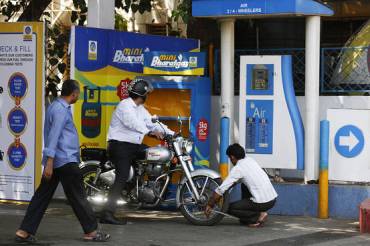
Bharat Petroleum Corp. Ltd., India’s lumbering state-run fuel company, is planning use its nationwide network of 12,800 gas stations to deliver online retail to rural India.

The oil refiner and retailer is hoping it can leverage its outlets and logistical staff across India to succeed as a latecomer to India’s ongoing online retail boom. It is upgrading its technology and logistics network to be able to sell farmers everything from fertilizer to smartphones.

The e-commerce push will begin December, with BPCL’s rural gas and cooking gas distributors starting to accept orders and payments online, said BPCL Chairman and Managing Director S. Varadarajan.  As early as next year, the company is also considering using its urban branches to sell and distribute groceries.

While the early movers in e-commerce in India such as Flipkart Internet Pvt. Ltd.’s flipkart.com, Jasper Infotech Pvt. Ltd.’s snapdeal.com and Amazon Seller Services Pvt. Ltd.’s amazon.in are still struggling to find cost-effective ways to reach the hundreds of millions of Indians who live outside the biggest cities, BPCL already has employees and properties throughout the country.

“About 30% of our retail outlets are in rural India,” Mr. Varadarajan said. Rural customers can shop online then “pick up stuff when they fill fuel at their local gas station.”

India’s state-run oil refiners are desperate to find new sources of revenues as the fall in oil price as well as increased competition from the private sector weigh on their sales.

BPCL’s retail ambitions are “a response to competition by improving margins,” said Deepak Mahurkar, head of PwC’s Oil & Gas Industry practice in India.

Analysts say that while BPCL does theoretically have unique access to much of India’s middle class, which uses its stations to refuel their cars and motorcycles, whether this traditionally slow-moving company can capture a corner of the rapidly-evolving online retail business remains to be seen.

BPCL has prime properties on the main streets and highways across the country, but few of its gas stations have the facilities or the staff to do more than pump gas. Many don’t even have running water in their bathrooms, much less the Internet connections, storage facilities and delivery technology a vibrant e-commerce company would require.

Diving into e-commerce would necessitate a big change in mindset for BPCL which is not used to worrying much about competition or consumers, said Anand Kumar Jaiswal, who heads the Centre for Retailing at IIM Ahmedabad, an Indian management school.

“I am really skeptical about it,” said Vishnu Kumar, an assistant vice president for research at Chennai-based broker Spark Capital Advisors (India) Pvt. Ltd.  “If I am a consumer I am not going to check with BPCL for a microwave.”

Even people within BPCL’s own network doubt the company can pull it off.

Sachin Shah, the manager of a company that delivers BPCL cooking gas cylinders to more than 20,000 customers in the southern city of Hyderabad, said the company will have to radically improve its logistics system to guaranteed delivery if it wants to sell more than gas cylinders and gas stoves

“If Bharat Petroleum doesn’t deliver, I will lose face,” he said.

BPCL’s Mr. Varadarajan said the company is confident it can deliver because it will use its best dealers and a new distribution system to get products to customers.

Source: India’s Bharat Petroleum Wants to Use Gas Stations to Bring E-Commerce to Rural India – India Real Time – WSJ

Law of Unintended Consequences

continuously updated blog about China & India

ChiaHou's Book Reviews

continuously updated blog about China & India

What's wrong with the world; and its economy

continuously updated blog about China & India