Archive for ‘reform’

24/05/2020

Xi Focus: “What is people first?” Xi points to how China saves lives at all costs

Chinese President Xi Jinping, also general secretary of the Communist Party of China Central Committee and chairman of the Central Military Commission, takes part in a deliberation with his fellow deputies from the delegation of Inner Mongolia Autonomous Region at the third session of the 13th National People’s Congress (NPC) in Beijing, capital of China, May 22, 2020. (Xinhua/Ju Peng)

BEIJING, May 23 (Xinhua) — “What is people first?” Chinese President Xi Jinping asked, before offering his own answer when he was talking with lawmakers at the ongoing national legislative session.

“So many people worked together to save a single patient. This, in essence, embodies doing whatever it takes (to save lives),” he said.

Xi, also general secretary of the Communist Party of China Central Committee and chairman of the Central Military Commission, is a deputy to the 13th National People’s Congress.

During his deliberations with fellow deputies from Inner Mongolia Autonomous Region on Friday, “people” was a keyword.

Xi referred to a story told by another deputy that morning. Luo Jie, from the COVID-19 hard-hit province of Hubei, told reporters at the session how medical workers in his hospital spent 47 days saving an 87-year-old COVID-19 patient.

“About 10 medical workers meticulously took care of the patient for dozens of days, and finally saved the patient’s life,” Xi said. “I am really impressed.”

In the COVID-19 pandemic, health workers around the world got to know the elderly are the most difficult to treat and require the most sophisticated medical resources. China has given every patient equal treatment irrespective of their age or wealth.

Chinese President Xi Jinping, also general secretary of the Communist Party of China Central Committee and chairman of the Central Military Commission, takes part in a deliberation with his fellow deputies from the delegation of Inner Mongolia Autonomous Region at the third session of the 13th National People’s Congress (NPC) in Beijing, capital of China, May 22, 2020. (Xinhua/Huang Jingwen)

In Hubei alone, more than 3,600 COVID-19 patients over the age of 80 have been cured. In the provincial capital Wuhan, seven centenarian patients have been cured.

“We mobilized from around the nation the best doctors, the most advanced equipment and the most needed resources to Hubei and Wuhan, going all out to save lives,” Xi said during the deliberations, adding that the eldest patient cured is 108 years old.

“We are willing to save lives at all costs. No matter how old the patients are and how serious their conditions have become, we never give up,” Xi said.

Xi joined political advisors and lawmakers on Thursday and Friday in paying silent tribute to the lives lost to COVID-19 as the top political advisory body and the national legislature opened their annual sessions.

This year’s government work report said China’s economy posted negative growth in the first quarter of this year, but it was “a price worth paying” to contain COVID-19 as life is invaluable.

“As a developing country with 1.4 billion people, it is only by overcoming enormous difficulties that China has been able to contain COVID-19 in such a short time while also ensuring our people’s basic needs,” the report said.

Epidemic response is a reflection of China’s governing philosophy.

The fundamental goal for the Party to unite and lead the people in revolution, development and reform is “to ensure a better life for them,” Xi said.

The nation’s average life expectancy reached 77 years in 2018, more than double that in 1949, when the people’s republic was founded.

Chinese people are not just living longer but better lives, with more material wealth and broader choices to pursue individual dreams. All rural poor will bid farewell to poverty this year as part of the goal of building a moderately prosperous society in all respects.

The Party’s long-term governance, Xi said, rests on “always maintaining close bond with the people.”

“We must always remain true to the people’s aspiration and work in concert with them through thick and thin,” Xi said.

Source: Xinhua

23/05/2020

Xi Focus: Xi stresses “people first” on first day of annual legislative session

(TWO SESSIONS)CHINA-BEIJING-XI JINPING-NPC-DELIBERATION (CN)

Chinese President Xi Jinping, also general secretary of the Communist Party of China Central Committee and chairman of the Central Military Commission, takes part in a deliberation with his fellow deputies from the delegation of Inner Mongolia Autonomous Region at the third session of the 13th National People’s Congress (NPC) in Beijing, capital of China, May 22, 2020. (Xinhua/Huang Jingwen)

BEIJING, May 22 (Xinhua) — President Xi Jinping stressed acting on the people-centered philosophy in every aspect of work when he participated in a deliberation on the first day of the annual session of the National People’s Congress (NPC), China’s national legislature.

Xi, also general secretary of the Communist Party of China (CPC) Central Committee and chairman of the Central Military Commission, made the remarks Friday when joining in discussions with fellow lawmakers from north China’s Inner Mongolia Autonomous Region.

Xi, an NPC deputy himself, exchanged views with other deputies on a wide range of topics including poverty eradication, grassland ecological conservation, and ethnic unity.

The fundamental goal for the Party to unite and lead the people in revolution, development and reform is to ensure a better life for them, Xi said, adding that the CPC will never waver in pursuing such a goal.

He particularly stressed adhering to “people first” in coordinating epidemic control and economic and social development.

In the face of the spread of COVID-19, the CPC has, from the very beginning, stated clearly that people’s life and health should be considered as the top priority. “We are willing to protect people’s life and health at all costs,” he said.

Xi stressed improving the regular epidemic response mechanisms to prevent a resurgence of the outbreak.

Commending the people as the main source of confidence for the Party, Xi said the masses have been the fundamental strength in the country’s epidemic response.

China’s socialist democracy is the broadest, most genuine, and most effective democracy to safeguard the fundamental interests of the people, he said.

Noting that the epidemic has brought relatively huge impact to China’s economic and social development, the president said it has also led to new opportunities for development.

He urged targeted efforts in mapping out major plans, reforms and policies that will serve as locomotives in the country’s high-quality development and high-efficiency governance.

Authorities must make working for the people their primary political achievements, Xi said.

He also highlighted efforts to consolidate and expand the progress in using industrial development and employment as poverty-alleviation methods, and doing a good job in facilitating employment for graduating college students, migrant workers, and demobilized military personnel.

Xi voiced his complete support for a government work report submitted to the NPC deputies for deliberation. He also expressed full acknowledgment of the work of Inner Mongolia over the past year, stressing the importance of upholding and improving the system of regional ethnic autonomy.

He called for maintaining the strategic resolve of building an ecological civilization, noting that the green ecological barrier in Inner Mongolia should be further fortified.

Xi also called for firm efforts to combat corruption and oppose the practice of formalities for formalities’ sake and bureaucratism.

Source: Xinhua

03/05/2020

China’s military budget will still rise despite coronavirus, experts predict

  • Defence spending could show the effect of economic headwinds but is still expected to increase
  • PLA’s modernisation and strategic priorities demand spending is maintained even after GDP’s first contraction since records began, observers say
China has made modernising its military and expanding its weaponry a priority. Photo: Xinhua
China’s upcoming defence budget will be only slightly hit by the economic downturn that followed the coronavirus outbreak, and a modest increase is still expected as it continues to develop its military capability, analysts said.
The government’s military budget is expected to be revealed, as is the norm, at this year’s session of the National People’s Congress (NPC), China’s legislative body. Delayed by over two months because of the pandemic, it will finally be convened on May 22.
Last year the defence expenditure announced at the NPC session was 

China has said its military expenditure has always been kept below 2 per cent of its GDP over the past 30 years, although its official figures have long been described by Western observers as opaque, with significant omissions of important items.

The South China Sea dispute explained
In a report earlier this week, the Stockholm International Peace Research Institute estimated that China’s actual military spending in 2019 was US$261 billion, the world’s second highest, after the United States’ US$732 billion.

John Lee, adjunct professor at the University of Sydney and senior fellow at the Hudson Institute in Washington, estimated that this year the Chinese defence budget would remain roughly the same or increase modestly, in line with growth levels of recent years.

“In the current environment, Beijing is keen to emphasise that China has recovered substantially from Covid-19 and that its power trajectory is unaffected by recent events,” Lee said. “At the same time, it would be aware of the anger towards the Communist Party for allowing the virus to become a pandemic.

“Regardless of what the reality might be, I would be surprised if there were a dramatic increase or a significant cut.”

First made-in-China aircraft carrier, the Shandong, enters service
China’s GDP suffered a 6.8 per cent decline in the first quarter, the first contraction since quarterly records began in 1992, after an extensive shutdown while it contained its coronavirus outbreak. However, the official increases in the military budget have since 2011 always exceeded overall GDP growth.

The Chinese government may focus more on job creation, social welfare and poverty alleviation, but not at the expense of military investment, according to Collin Koh, research fellow from the S Rajaratnam School of International Studies at Singapore’s Nanyang Technological University in Singapore.

“I tend to think it will be more or less the same,” Koh said. “To reduce [the budget] may send the wrong signal to would-be adversaries, both domestic and external: that Beijing has lost the will to keep up its military modernisation to assert core national interests.”

PLA flexes military muscle near Taiwan ‘in show of Covid-19 control’

15 Apr 2020

The People’s Liberation Army (PLA) began a massive – and costly – reform in 2015, with a personnel reshuffle, change in structure, upgraded equipment and enhanced training to better resemble battle scenarios. That was supposed to be complete this year.

Given the deteriorating relationship with the United States and rising tensions in the Taiwan Strait and South China Sea, the PLA faces challenges requiring a steady increase in investment, according to Hong Kong-based military commentator Song Zhongping.

Taiwan shows off its military power after presidential election
Macau-based military expert Antony Wong Dong predicted there would still be about 6-7 per cent growth in the budget “no matter what”.
“The PLA played an important role in the fight against the contagion, so a decrease in spending would not be accepted,” Wong said.
That role included the deployment of more than 4,000 military medics to help treat Covid-19 patients, and helping to transport medical supplies.
Wong said it would be a crucial year for the PLA in completing its preparation for potential military action against Taiwan, which would be so strategically important that “[President] Xi Jinping himself would never allow it to be affected by a shortage of funding”.
China’s military draws on 6G dream to modernise its fighting forces
18 Apr 2020

But a slight increase in budget would be sufficient to meet defence needs and maintain a deterrence against potential threats, including preventing self-ruled Taiwan taking the opportunity to declare independence, naval expert Li Jie said.

Beijing views Taiwan as a breakaway province to be reunified with the mainland, by force if necessary. Its relationship with Taipei has been strained, and dialogue halted, since Tsai Ing-wen, of the pro-independence Democratic Progressive Party, was elected the island’s president in 2016. Tsai was re-elected for a second term in January.

Li estimated that the budget would probably be kept at the same level or show a “slight” increase from last year.

“It would feed the ‘China threat’ theory and raise international concerns if the Chinese government expands military spending too much,” he said.

Source: SCMP

20/09/2019

China’s border region expedites reform to build a financial gateway for ASEAN

NANNING, Sept. 19 (Xinhua) — Pham Thi Nguyet Hoa, a vendor living in Vietnam’s Mong Cai, comes to Dongxing, a southern Chinese port city, to sell Vietnam fruits every day. When night falls, she often ends up with thousands of yuan in her pocket, much more than what she can earn at home.

“Most of my customers are Chinese, and it is very convenient to exchange Chinese yuan to Vietnamese Dong as many banks in Dongxing have this currency exchange service,” said Pham.

Tourism has been a pillar industry in the border city of southern China’s Guangxi Zhuang Autonomous Region. Dongxing port saw 12 million people, of which half were tourists, pass through last year, ranking first among all land ports in China.

In the first six months this year, tourism consumption at the port exceeded 6.2 billion yuan (874 million U.S. dollars), up 40.4 percent from the year before.

The flourishing border tourism has brought a huge demand for currency exchange, with a slew of financial reforms rolled out in recent years.

In 2014, the ABC China (Dongxing Experimental Zone) ASEAN Currency business center was established in Dongxing, allowing direct convertibility of Chinese yuan and Vietnamese Dong.

In February 2018, a total of 8 million yuan was transferred in cash from Vietnam to China, marking the first cross-border cash transfer in Guangxi between China and Vietnam.

Fan Zuojun, vice president of Guangxi University, said the cross-border cash transfer will further promote the financial cooperation between China and Members of the Association of Southeast Asian Nations (ASEAN) as well as deepen reform and push forward the internationalization of the Chinese currency in the region.

China and ASEAN countries have always maintained close relations in trade.

In January 2010, the China-ASEAN Free Trade Area was set up, which has significantly boosted bilateral trade. China has maintained its position as the largest trading partner of ASEAN for 10 consecutive years, and trade between China and ASEAN has skyrocketed tenfold from 16 years ago to 587.8 billion U.S. dollars in 2018.

In the first half of 2019, ASEAN became China’s second-largest trading partner, with bilateral trade volume reaching 291.85 billion U.S. dollars, up 4.2 percent year on year.

Guangxi’s geographical advantages have also given it huge development dividends over the past decades. ASEAN has been Guangxi’s largest trade partner for 19 consecutive years, and trade volume between Guangxi and ASEAN in the first seven months of this year topped 128 billion yuan, accounting for 48.7 percent of Guangxi’s total foreign trade.

Now with the launch of the Guangxi Pilot Free Trade Zone (FTZ) in August, bilateral trade exchanges are expected to embrace another golden opportunity.

The pilot FTZ, with a total area of nearly 120 square km, will focus on modern financial services, smart logistics, digital economy, port shipping logistics, international trade and cross-border tourism, among others.

Guangxi vows to make greater efforts to consolidate its financial strength and build itself into an ASEAN-oriented financial portal, with over 90 financial reform measures being rolled out to further facilitate trade and investment and promote innovation in financial services with ASEAN countries.

Source: Xinhua
13/09/2019

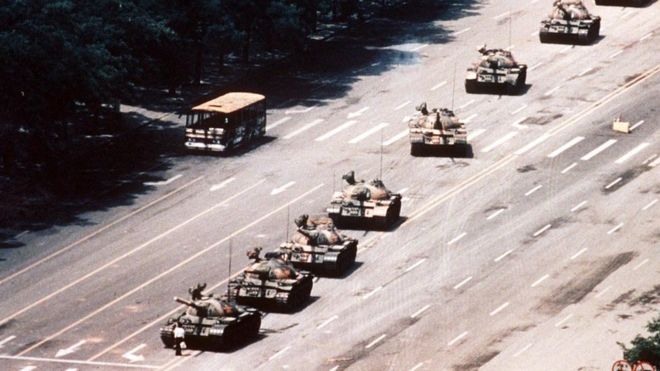
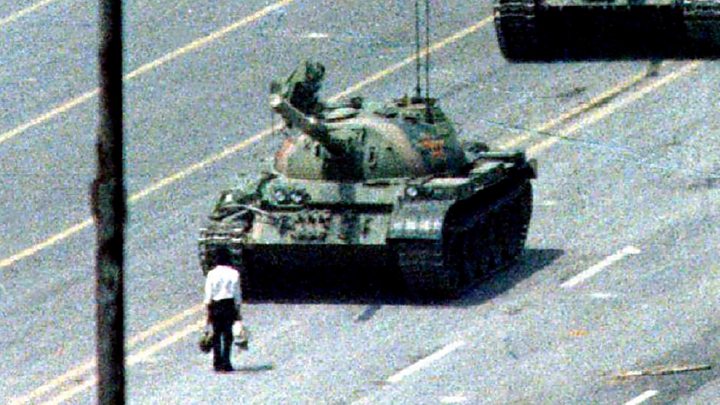
Tiananmen Square Tank Man photographer Charlie Cole dies

The Tiananmen Tank ManImage copyright SIPA/SHUTTERSTOCK
Image caption The photographs of the Tiananmen Tank Man became some of the world’s most famous

Charlie Cole, one of the photographers who captured the famous Tank Man on film during the Tiananmen Square protests, has died.

The image of one man standing in the way of a column of tanks, a day after hundreds possibly thousands of people died, has become a defining image of the 1989 pro-democracy protests.

Cole won the 1990 World Press Photo award for his picture.

He had been living in Bali, Indonesia, where he died last week, aged 64.

Cole was one of four photographers that captured the scene on 5 June 1989.

He took his picture for Newsweek with a telephoto lens from the balcony of a hotel, framing it so the man was only just in the bottom left corner.

Cole later described how he had expected the man would be killed, and felt it was his responsibility to record what was happening.

But the unidentified protester was eventually pulled away from the scene by two men. What happened to him remains unknown.

A symbol of peaceful resistance

Cole knew he would be searched later by Chinese security so hid the undeveloped film roll in the bathroom.

Shortly after he took it, officials broke through the door and searched the hotel room, but they did not discover the film.

The scene as shot by him and the other three photographers went on to become an iconic symbol of peaceful resistance across the world.

Media caption Tiananmen’s tank man: The image that China forgot

Thirty years ago, Beijing’s Tiananmen Square became the focus for large-scale protests, calling for reform and democracy.

Demonstrators had been camped for weeks in the square, but late on 3 June, the military moved in and troops opened fire.

China has only ever said that 200 civilians and security personnel died, but there has been no publicly released record of deaths. Witnesses and foreign journalists have said the figure could be up to 3,000.

Tiananmen is still a heavily censored topic in modern China, and the Tank Man pictures are banned.

Source: The BBC

19/12/2018

China marks 40th anniversary of reform and opening-up

CHINA-BEIJING-40TH ANNIVERSARY OF REFORM AND OPENING-UP-CELEBRATION (CN)

Chinese President Xi Jinping, also general secretary of the Communist Party of China (CPC) Central Committee and chairman of the Central Military Commission, addresses a grand gathering to celebrate the 40th anniversary of China’s reform and opening-up at the Great Hall of the People in Beijing, capital of China, on Dec. 18, 2018. (Xinhua/Yao Dawei)

BEIJING, Dec. 18 (Xinhua) — China held a grand gathering Tuesday to celebrate the 40th anniversary of the country’s reform and opening-up, a great revolution that has changed the destiny of the Chinese nation and also influenced the world.

President Xi Jinping and other Chinese leaders attended the event which began at around 10 a.m. at the Great Hall of the People in Beijing.

Premier Li Keqiang presided over the meeting.

The celebration started with all participants rising to sing the national anthem.

Wang Huning, a member of the Standing Committee of the Political Bureau of the Communist Party of China (CPC) Central Committee, read a decision to award the personnel who have made outstanding contributions to the country’s reform and opening-up.

The people are “the creators of the great wonder of reform and opening-up” and “the source of power” to drive the campaign started 40 years ago, Wang said.

According to the decision made by the CPC Central Committee and the State Council, 100 Chinese were awarded the medals of reform pioneers and 10 foreigners were honored with China reform friendship medals.

Chinese leaders presented the medals to the prize winners.

18/12/2018

Xi Jinping: The man who leads China’s reform into a new era

BEIJING, Dec. 17 (Xinhua) — Wang Jun is a deputy editor and main author of the book “A Study of Xi Jinping Thought on Reform and Opening-Up.”

Paper and documents pile up in his office. These are what his team has collected for research in writing the book.

“Xi Jinping is a man whole-heartedly devoted to reform and opening-up,” said Wang, president of the Guangdong Academy of Social Sciences.

In 2018, China celebrates the 40th anniversary of the reform and opening-up, a cause started by Deng Xiaoping and is now being carried forward by Xi.

In late October, Xi came to Guangdong Province. He visited a reform-themed exhibition at the foot of the Lotus Mountain in Shenzhen, spending more than an hour inside the museum halls.

Xi paused in front of a large painting.

It was a morning rush hour scene of the city in the 1980s. A giant poster stood tall before the Shekou industrial zone to constantly remind the city’s early builders to seize the moment and strive for economic miracles.

It was not the first time Xi visited Shenzhen, a prominent test-bed of China’s reform and opening-up.

“Coming to Shenzhen, Guangdong again (because) we want to declare to the world that China will never drag its feet on reform and opening-up! China is certain to show the world impressive new achievements in the next 40 years!” Xi said.

Six years ago, when Xi was elected general secretary of the Communist Party of China (CPC) Central Committee, reform entered what many people call a “deep-water” zone. The CPC faced arduous challenges in reform, some foreign media claimed.

Xi has withstood the pressure and led China to achieve so much, Wang said.

The Chinese economy is being transformed from fast growth to high-quality development. In 2017, the growth picked up for the first time in six years, reaching 6.9 percent, way above the 3.7-percent global economic growth.

Over the past six years, more than 70 million new jobs have been created, more than the population of Britain. The size of the Chinese middle-income group has swelled to 400 million, constituting a huge consumer market in the world.

Overseas media called Xi “a far-sighted reformer” and “a serious reformer who built a unique path for China’s future” whose clear vision for reform “has inspired the nation.”

DETERMINED TO REFORM

When China began the reform and opening-up in 1978, Xi was studying chemical engineering at Tsinghua University. His father, Xi Zhongxun, was then the Party chief of Guangdong Province.

The elder Xi had high hopes for reform. He sought Deng’s permission for “taking the first step” to set up a special economic zone that would break the new ground for reform.

The father’s courage and sense of mission left a deep impression on the son.

In the early 1980s, as Xi senior was promoted to Beijing, Xi Jinping was sent down to work in the county of Zhengding, Hebei Province. He began his reform experiments there, starting with the rural land contract trial, being the first in Hebei to adopt this practice already tested in southern provinces.

As the county Party chief, Xi already knew how hard it was to press ahead with reforms. He was critical of the “middle-level obstruction” issue and solved it by appointing willing and competent cadres to push forward reforms.

Xi’s reputation as a reformer was reinforced as he advanced his political career. In Ningde, Xiamen and Fuzhou of Fujian Province, Zhejiang Province and Shanghai Municipality, he kick-started innovative reform strategies to tackle different sorts of challenges.

“In a real sense, Xi comes from a reformer family. More important, Xi is deeply committed to reform,” said Robert Kuhn, a leading U.S. expert on China and chairman of the Kuhn Foundation, adding that when they met in 2005 and 2006, Xi spoke a lot on the importance of “reform in all facets.”

“Xi’s reform is derived from his experience,” said Shi Zhihong, a former deputy director of the Policy Research Office of the CPC Central Committee. “He knew that the rigid old paths would lead nowhere, and reform was a must.”

In 2012, reflecting on China’s reform cause, Xi spoke highly of Deng. “If there were no Deng who guided our Party to make the historic decision to reform and open up, we couldn’t have achieved this much,” Xi said.

“The reform and opening-up is a great awakening of our Party, and it gave rise to great theoretical and practical innovations,” he added.

Xi’s thinking and practices of reform in provinces have been compiled into books, from which observers say one can trace the roots of China’s comprehensive deepening reform that is being rolled out in the new era.

“FIFTH MODERNIZATION”

On Nov. 15, 2012, Xi met the press right after being elected general secretary of the CPC Central Committee. He spoke of the need to adhere to reform and opening-up to continue liberating social productive forces, resolve people’s difficulties in life and work and stay committed to the path of common prosperity.

At the moment, Xi’s resolve to carry on the reform could not be more obvious. But Xi knew how hard it would be. All low-lying fruits have been picked, what is left are hard bones, he said.

People following Xi in his reforms need to be brave enough to cross hurdles in thinking and break through the blockade of vested interest.

Xi came to Guangdong in his first domestic inspection tour after assuming the Party’s top post. It was not by coincidence that in 1992 Deng visited Guangdong in his now well-known “southern tour.” Deng’s talks during the tour were instrumental in advancing the reform and opening-up.

In his 2012 visit, Xi paid tribute to Deng’s bronze statue. “Reform and opening-up is a make-or-break move that decides China’s destiny,” Xi said. “There is no pause or backtrack.”

The Financial Times said, “Mr. Xi is hardly the first Chinese leader to talk about the need for reform. But the tone of the pronouncements emerging from his weekend trip has been more forceful than those employed by past leaders.”

For Xi, reform must be carried on along the path of socialism with Chinese characteristics. Neither the old path nor the detour could work.

Xi insisted that reform shall suit China’s own needs for change, and China would not reform to make others happy. “Only the wearer knows whether the shoes fit or not,” he said.

The overall goal of deepening reform is to improve and develop the system of socialism with Chinese characteristics and modernize China’s system and capacity for governance.

This overarching objective is described by observers as China’s “Fifth Modernization” drive.

According to Xi, the reform must balance several pairs of relations: between mind emancipation and truth-seeking; overall advancement and breakthroughs in key areas; top-level design and crossing the river by feeling the stones.

He Yiting, vice president of the Party School of the CPC Central Committee, said Xi’s thought on reform has enriched and developed the theory of socialism with Chinese characteristics.

Zheng Yongnian, director of the East Asian Institute at the National University of Singapore, said Xi answered the questions related to what to change, how to change in the new round of reform and who will implement it.

In November 2013, Xi presided over the third plenary session of the 18th CPC Central Committee that issued an extensive reform plan and a seven-year implementation timetable.

China’s deepening reform in all areas has caught the world’s attention. Some overseas media said the reform gave a big impetus to China’s lasting and inspiring rise.

Since then, the succeeding Party plenums have all stressed deepening reform, which constitutes a prominent fixture in Xi Jinping Thought on Socialism with Chinese Characteristics for a New Era.

Xi has become the leader in China’s new round of reform and opening-up.

LEAD BY ACTION

After the third plenary session of the 18th CPC Central Committee, Xi served as the head of a leading group on deepening overall reform. When it was changed to a committee, he remained as the chair.

In the meantime, he also chairs a number of high-level committees and commissions on areas such as law-based governance, foreign affairs, cyber-security and informatization.

By heading these groups, Xi can have face-to-face discussions with people working in different areas and better learn about actual situations.

Xi went through each version of major reform documents, added his personal insights and pushed for major progress.

Take the market’s role as an example. In 2013, the Party decided to let the market play a “decisive” role in allocating resources. It sent a strong signal of policy adjustment as the original wording — “basic” — had remained unchanged since 1992.

When drafting the change, some people said it was still too early to make such a big leap. It was Xi who decided to make the change.

“Many of the major reforms would not have been possible if it weren’t Xi,” said an academic who was involved in drafting the document.

Xi led reform on multiple fronts to achieve breakthroughs: the gaps between urban and rural populations have been narrowed, the two-child policy initiated and pushed to yield results, splurge on government bills curbed, and vested interests broken up.

He constantly called on officials to have the perseverance to hammer away at obstacles until a task is done and make concrete, meticulous and effective efforts in reform.

Between late 2012 and late 2017, Xi took 50 domestic inspection tours, in which he researched and pushed for reform.

The reform progress encompasses an expansive scope of fields.

In the economy, he made the judgment of new normal, initiated the supply-side structural reform and drew a clear line between the government and the market.

In science, he set the goal of turning China into one of the world’s science centers and an innovation high ground.

He led the anti-corruption fight to form a crushing tide and has won a sweeping victory.

He launched a major institutional reform to reshape Party and state organs, including the establishment of the National Supervisory Commission and the Commission for Law-based Governance of the CPC Central Committee.

Reform progress is reported on other fronts: people have stronger cultural confidence and sense of fulfillment; environmental protection systems are improved; and the armed forces have been reshaped.

In the five years since late 2012, more than 1,500 reform measures were issued. Reform picked up pace after the 19th CPC National Congress in late 2017.

In his 2018 New Year speech, Xi called on the Chinese people to “cut paths through mountains and build bridges across rivers” to advance reform.

Wang, the book author, said Xi has made breakthroughs in a number of tough and stalemated issues.

“Xi has been and is a remarkably comprehensive reformer, whose reforms are broader in scope than those of prior generations,” Kuhn said.

FOR THE PEOPLE

In April, Xi told visiting UN Secretary-General Antonio Guterres that “everything we do is for people’s happiness and national rejuvenation and to seek common ground for the world.”

Xi has been stressing that reform should focus on what the people care about and expect the most. The aim, he says, is to give the people a stronger sense of fulfillment.

That may be felt more directly from the rise of earnings. The average income of Chinese grew by 7.4 percent annually over the past six years, eclipsing the GDP growth.

In October, wage-earners hailed a personal income tax reform which exempts those who earn less than 5,000 yuan (725 U.S. dollars) a month.

Many migrant workers also made it to the country’s expanding middle-income group.

Zou Bin is one of them who benefit from the reform. He rose from laying bricks at construction sites to heading a team in the Fortune 500 firm China Construction Group as a project manager.

This year, Zou started serving as a deputy to the National People’s Congress, the top legislature. His first legislative proposal was, not surprisingly, about deepening construction labor reforms.

Poverty reduction is another milestone. In the past six years, about 70 million rural people had been lifted over the poverty line.

William Jones, Washington bureau chief of the Executive Intelligence Review news magazine, said ending poverty had long been regarded a major task for humanity but until recently, was seen as a Utopian dream.

“With China, that dream is now becoming a reality,” he said.

Under Xi’s lead, China’s social security network has expanded, with the basic medical insurance covering 1.3 billion people and the social old-age insurance covering more than 900 million.

This summer, a domestic film shot up to box office stardom. “Dying to Survive” tells a fictional story of a shopkeeper who illegally imports cheap Indian drugs and sells them to cancer patients in China.

The blockbuster touched a public sore point of costly drugs. But fortunately, the issue is being addressed.

Policies have been introduced to exempt import tariffs on many cancer drugs, and efforts are on-going to bring more life-saving medicines into the medical insurance program.

Xi’s reform also aims to nurture a great environment to conduct business.

The World Bank Group said in its annual “Doing Business Report” that China advanced to a global ranking of the 46th this year, up from the 78th last year, as the country implemented the largest number of reforms in the East Asia and Pacific region.

The “2018 China Business Report” by the American Chamber of Commerce in Shanghai also found that 83 percent of respondents in manufacturing sector and 81 percent in retail achieved profit, while 61.6 percent of companies expected to increase their China investment in 2018.

Private sectors in China have entered a new phase of development.

In 2018, a total of 28 Chinese private companies were enlisted in the Fortune 500, compared with a lone company in 2010.

CONNECTING THE WORLD

China’s reform has benefited the world. China contributed to global growth by an annual average of 18.4 percent in the past 40 years, second only to the United States, according to the National Bureau of Statistics.

In 2017, China accounted for 27.8 percent of global economic growth, more than that of the United States and Japan combined.

CRRC Corporation Limited (CRRC), the world’s leading supplier of rail transit equipment, has improved infrastructure and brought jobs to more than 100 countries and regions since it was founded three years ago.

“President Xi visited our workshop in 2015, asking us to speed up innovation and create a brand for ‘made-in-China’ products, which has promoted our modern enterprise system reform and CRRC’s integration with the global economy,” said a CRRC executive.

Facing mounting protectionism and a stagnant world economy, Xi proposed to foster a new type of international relations featuring win-win cooperation and follow the principle of achieving shared growth through discussion and collaboration in engaging in global governance.

An important feature of Xi’s reform is the integration of promoting domestic reform with the participation of global governance reform, said Shi.

Xi’s proposition of building a community with a shared future for humanity reflects the pursuit of common values, Shi added.

When Xi was governor of east China’s Fujian Province 18 years ago, he pushed for a demonstration project to help the Eastern Highland Province of Papua New Guinea with Juncao and dry-land rice planting.

The Juncao technology cultivates edible and medicinal mushroom from special wild grass so that trees do not need to be cut for mushroom growing. The technology has brought the hope of poverty eradication across the globe.

The success of Juncao is an epitome of the advancement of the Belt and Road Initiative, proposed by Xi to promote a shared prosperity of humanity by cooperation on trade and infrastructure. So far, more than 140 countries and international organizations have signed agreements with China to jointly build the Belt and Road.

Ecological degradation is a key global challenge. Xi attended the UN Climate Change Conference in Paris in November 2015. China is one of the first countries to sign the Paris Agreement on climate change. Xi personally handed over China’s instruments of joining the Paris Agreement to then UN Secretary-General Ban Ki-moon in September 2016.

In the past six years, China has kept its promise to protect the Earth through deepening domestic reforms, including the implementation of 10 air pollution prevention and control measures, the promotion of a river chief system and introduction of a national park mechanism. Many of the reforms were initiated by Xi.

Xi brought China’s opening up to a new level. He designed and pushed forward the opening of the world’s first import-themed national-level expo. At the China International Import Expo, he reiterated opposition to trade protectionism and commitment to an open world economy.

The expo, held in Shanghai in November this year, was attended by over 3,600 companies, including nearly 180 American companies. Agreements on intended one-year purchases of goods and services were valued at 57.83 billion U.S. dollars.

China announced a series of measures to further open up its economy, including broadening market access, easing foreign equity restrictions, lowering automobile import tariffs and increasing imports. The number of free trade zones has risen to 12 in five years.

“Openness brings progress while seclusion leads to backwardness,” Xi said.

Xi led China to be more involved in international economic cooperation, turning the country into a more mature modern market economy, said Wang.

ON THE WAY

“Xi has transformed China at an astonishing pace,” Geoff Raby said in his column in the Australian Financial Review. “At over 8,000 U.S. dollars per capita, China is now at the higher end of the World Bank’s middle-income economy range, and some 40 percent of that was added during Xi’s tenure.”

“This is the new order in Asia. It is no longer emerging, it has arrived,” he said.

The People’s Republic of China will celebrate its 70th anniversary next year. The Chinese nation with a history of humiliation has stood up, grown rich and is becoming strong.

Xi’s reform has laid a firm foundation for the Chinese nation’s rejuvenation. It will be the first time in human history that a country of more than 1 billion people march into modernization as a whole.

China’s reform has inspired the world: developing countries can walk a new path to modernization that is different from the West. It breaks the “end of history” and “Western-centered” mentalities.

The year 2018 also marks the 200th anniversary of Karl Marx’s birth. China’s successful practice has injected new vitality into the classic theory named after him.

What Xi aims to develop is a model of how a rising country can avoid confrontation with an established one. It will show that different civilizations can enrich exchanges and co-exist peacefully.

The reform is still on the way. It is no easy task to change the world’s biggest developing country. China’s per capita GDP has surpassed 8,000 U.S. dollars, yet far from 57,000 dollars of the United States.

China is still facing an unbalanced industrial structure, weak innovation and financial risks.

Xi has many challenges ahead. With great courage, he is ready to lead the Party and the country to forge ahead with the reform.

“A lot of progress has been made over the past few years,” Xi said. “But much can still be achieved as we embark on the new journey.”

15/12/2018

China holds gala for 40th anniversary of reform, opening up

CHINA-BEIJING-REFORM-OPENING UP-ANNIVERSARY-GALA (CN)“Our 40 Years,” a grand gala in celebration of the 40th anniversary of China’s reform and opening up, is held in Beijing, capital of China, Dec. 14, 2018. Xi Jinping, Li Keqiang, Li Zhanshu, Wang Yang, Wang Huning, Han Zheng and Wang Qishan were among the Communist Party of China (CPC) and state leaders who joined more than 3,000 people to watch the gala at the Great Hall of the People. (Xinhua/Xie Huanchi)

BEIJING, Dec. 14 (Xinhua) — A grand gala was held in Beijing on Friday evening in celebration of the 40th anniversary of China’s reform and opening up.

Xi Jinping, Li Keqiang, Li Zhanshu, Wang Yang, Wang Huning, Han Zheng and Wang Qishan were among the Communist Party of China (CPC) and state leaders who joined more than 3,000 people to watch the gala at the Great Hall of the People.

On the balcony of the 2nd floor of the hall hung a banner, which read “rally closely around the CPC Central Committee with Comrade Xi Jinping at the core, hold high the banner of socialism with Chinese characteristics, follow the guidance of Deng Xiaoping Theory, the Theory of Three Represents, the Scientific Outlook on Development and Xi Jinping Thought on Socialism with Chinese Characteristics for a New Era, and unceasingly advance reform and opening up in the new era”.

At 7:55 p.m., Xi and other senior leaders walked into the hall, shook hands with representatives of people awarded for their outstanding contributions to reform and opening up, amid warm applause throughout the venue.

Named “Our 40 Years,” the gala was divided into Overture, Part One, Part Two and Epilogue. Part One replayed the grand changes that have taken place in China since the beginning of reform and opening up.

The part culminated with a poetry recital titled “The Great Awakening,” which expressed Chinese people’s gratitude and admiration for reform and opening up.

Part Two comprehensively showed how socialism with Chinese characteristics entered the new era under the guidance of Xi Jinping Thought on Socialism with Chinese Characteristics for a New Era.

The gala ended with a song expressing the promising future for reform and opening up.

Through art forms such as singing, dancing, plays and poetry recitals, the gala gave full expression of the determination and confidence of the Chinese people to carry out reform and opening up all the way under the strong leadership of the CPC Central Committee with Xi Jinping at the core.

12/12/2018

China issues white paper on human rights progress over 40 years of reform, opening up

BEIJING, Dec. 12 (Xinhua) — China on Wednesday issued a white paper on progress in human rights since its reform and opening up drive.

The white paper, titled “Progress in Human Rights over the 40 Years of Reform and Opening Up in China,” said reform and opening up has helped liberate and develop social productive forces, opened up a path of socialism with Chinese characteristics, and ushered in a new chapter in the development of human rights.

Over the four decades, the Chinese people have worked hard as one under the strong and coherent leadership of the Communist Party of China (CPC), the white paper said. Huge changes have taken place, and living standards have significantly improved.

The CPC has always prioritized the people’s interests, ensuring that reform is conducted for the people and by the people, and that its benefits are shared by the people, it added.

China has showed respect for, protected and promoted human rights in the course of reform and opening up, blazing a trail of human rights development that conforms to the national conditions, and created new experiences and made progress in safeguarding human rights, it said.

China has summed up its historical experience, drawn on the achievements of human civilization, combined the universal principles of human rights with the realities of the country, and generated a series of innovative ideas on human rights, it said.

China has brought into being basic rights that center on the people and prioritize their rights to subsistence and development, and proposed that China should follow a path of comprehensive and coordinated human rights development under the rule of law.

The white paper said China has carried out extensive exchanges and cooperation in the field of human rights and earnestly fulfilled its international human rights obligations.

04/12/2018

Red Cross Society of China moves to reform

BEIJING, Dec. 3 (Xinhua) — A reform plan of the Red Cross Society of China (RCSC), approved recently, is expected to make the organization more effective, an RCSC official told Xinhua Monday.

Under new circumstances, the mission and targets of the RCSC have undergone profound changes, and demand and approaches for humanitarian services are bound to transform, the official said.

The world also places more expectation on China to play a bigger role in global affairs, and building of a community with a shared future for humanity offers the RCSC a broader field to play a role in, and places higher demands on its capacity and vigor, according to the official.

Only through exploring mechanisms of more efficiency, transparency and standardization, as well as solving problems that affect the Red Cross work can the RCSC better perform its duties, the unidentified official said.

The reforms include pushing forward innovation in administrative organizations, human resources and operation of the RCSC, in order to led Red Cross societies at all levels become more closely linked to the public and have more transparency and credibility, the official said.

“All sectors of the society will be encouraged to take part in our activities,” said the official.

The official said the RCSC would stay people-focused as it worked on emergency rescue, humanitarian aid, voluntary blood donation and organ donation.

The RCSC has also agreed to improve its information disclosure by posting receipts and disbursements of funds and goods on a unified information platform, accepting public supervision.

Law of Unintended Consequences

continuously updated blog about China & India

ChiaHou's Book Reviews

continuously updated blog about China & India

What's wrong with the world; and its economy

continuously updated blog about China & India