China’s steel industry is a test case for the nation’s ability to restructure overbuilt parts of the economy, and so far it’s not going very well.
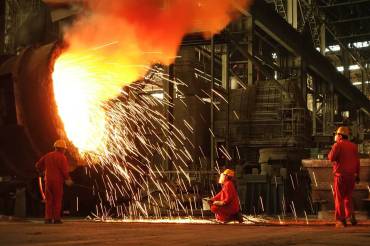
Seven months into 2016, China has cut just 30% of the 45 million tons of steel capacity it has pledged to pare this year. And a Renmin University study found that more than half of China’s steel companies are “zombies.
”They define zombie firms as companies that have received below-market interest rates for two years running — a sign that they are being artificially propped up by their local governments or other government financing. Essentially, they are dependent on cheap financing to stay alive.Steel firms led the list, with 51.4% zombies in the sector, followed by the property sector, with 44.5% zombies and construction with 31.2%.
Renmin economists said local governments long nurtured sectors such as steel with the central government’s blessing. Now that the pressure is on to scale back, they tend to resist central government calls for cuts, given the impact on jobs, local economic growth and officials’ promotions, economists say.
An indication of that resistance is seen in recent data. Despite calls from Prime Minister Li Keqiang on down to turn off blast furnaces and shutter steel production lines, the industry posted record daily crude steel production in June, driven by easy money policies and a speculation-fueled upturn in the property market — which is itself suffering from overcapacity. Industry Vice Minister Fei Feng told reporters this week he didn’t expect a recent rebound in steel prices to last.
“For the purpose of political performance and maintaining stability, local governments continued to give blood to those zombie firms in various forms that were on the brink of bankruptcy,” the Renmin report said, adding that governments should interfere less in how companies operate and accelerate reform of state companies.
Officials have blamed this year’s slow progress on capacity trim on the lengthy negotiations required to allocate those cuts among China’s 28 provincial governments.
China, which accounts for half of global steel production, remains confident it will fulfill capacity cut targets for 2016, industry Vice Minister Feng told reporters, adding that the reductions so far this year are in line with expectations.
In all, China has vowed to cut up to 150 million tons of extraneous steel production over the next five years. Even that goal targets only 10% of the nation’s excess steel capacity, which is currently around 30%, according to industry analysts. This comes as rising exports fuel tension with overseas companies and labor groups alleging that China is selling steel at prices below its cost of production.
Beijing’s counter argument is a bit of a circular one: The problem isn’t that China is making too much steel, but that global demand is inadequate.
A disproportionate number of steelmakers are state-owned enterprises, a group that accounts for some 55% of China’s corporate debt but only produces 22% of economic output, according to International Monetary Fund data. China’s corporate debt hit approximately 145% of gross domestic product in 2015, up from less than 100% in 2007, according to the International Monetary Fund, a level it characterized as “high by any measure.
”Across all sectors, zombie firms make up 7.5% of the 800,000 industrial companies between 2005 and 2013 that Renmin studied, down from a peak of about 30% in 2000 shortly before China embarked on its last serious reform of the state sector. President Xi Jinping has called for state companies to remain a core part of China’s economy.
As companies age, they are increasingly likely to become zombies. About 30% of firms founded more than three decades ago qualify as zombie firms, according to Renmin’s research, compared with just 3% among firms with less than five years’ history.
Source: China Steels Its Resolve, But ‘Zombies’ Abound – China Real Time Report – WSJ


 CHINDIA ALERT: You'll be living in their world, very soon