Archive for ‘Tourism’

26/03/2015

Hainan Airlines to buy 30 Boeing 787-9 jets, worth $7.7 billion by list price | Reuters

Hainan Airlines Co Ltd (600221.SS), China’s fourth-largest carrier, said on Wednesday it plans to order 30 Boeing Co (BA.N) B787-9 jets as it seeks to expand international routes to tap into growing demand for overseas travel from China.

The Boeing logo is seen at their headquarters in Chicago, April 24, 2013.  REUTERS/Jim Young

The order would be the biggest this year for the jet, worth $7.7 billion (5 billion pounds) according to list prices. It would also boost the aircraft maker’s 787 programme backlog to 855 planes.

China’s airline passengers are increasingly looking beyond the mainland for travel opportunities. In 2014, Chinese travellers made more than 100 million trips overseas in a year for the first time, up sharply from 8.4 million in 1998, official data show.

Hainan Airlines added two long-haul routes to North America and Western Europe last year and plans major international expansion this year, Cai Zhiquan, a brand manager told Reuters. On Thursday. it reported net profit jumped 20 percent in 2014 to 2.59 billion yuan ($417 million).

“We’ll be flying from major hubs in China to second- or third-tier cities overseas,” said Cai. “At the same time, we’ll also open up more routes from inland Chinese cities to major hub cities elsewhere.”

via Hainan Airlines to buy 30 Boeing 787-9 jets, worth $7.7 billion by list price | Reuters.

06/03/2015

China’s Fosun buys 5 percent stake in British travel group Thomas Cook | Reuters

China’s Fosun International (0656.HK) has bought a 5 percent stake in Thomas Cook Group (TCG.L), deepening its foray into Europe’s tourism sector and potentially helping the British company to compete with travel leviathan TUI Group (TUIT.L)

Fosun paid 92 million pounds ($140 million) for the Thomas Cook stake and will seek to double its holding in the world’s oldest travel group to 10 percent, it said in a filing to the Hong Kong stock exchange on Friday.

News of the investment, which the companies said came after two years of talks, sent Thomas Cook shares soaring by as much as 22 percent in morning trade. At 6.20 a.m. ET the shares were up 18.8 percent at 143 pence.

Thomas Cook said that it expects the tie-up to enhance earnings in the financial year to Sept. 30, 2016, assuming plans under the partnership are implemented in 2015.

One of the plans is to explore collaboration opportunities with Club Mediterranee (CMIP.PA), the French holiday company Fosun bought last month, where it is seeking to turn around a business that is struggling in Europe and move more aggressively into fast-growing markets such as China.

via China’s Fosun buys 5 percent stake in British travel group Thomas Cook | Reuters.

04/03/2015

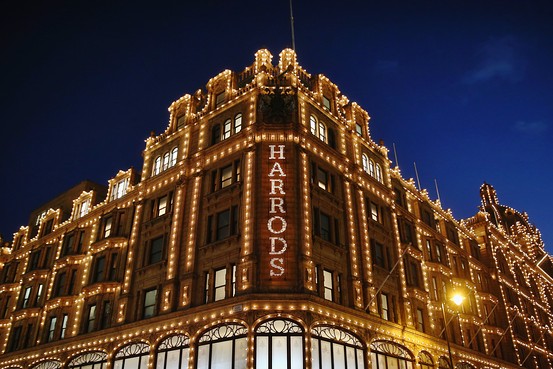
Harrods Hopes Prince William Hoopla in China Will Bring a Boost – China Real Time Report – WSJ

For every five pounds spent by a Chinese tourist in the United Kingdom, just over one quid is spent at upscale department store Harrods.

No wonder, then, that company managing director Michael Ward is in Shanghai this week, hoping the hoopla around Britain’s Prince William’s four-day visit to China will bring even more Chinese shoppers through Harrods’ doors.

“It’s a hugely important part of our business,” Mr. Ward told China Real Time Tuesday. He said such tourists would become increasingly important as outbound tourism from China takes off.

Hong Kong brokerage firm CLSA expects the total number of Chinese outbound travelers to hit 200 million annually in 2020—that’s around double last year’s figures.

Mr. Ward declined to share specific figures for Chinese tourists, but he said by nationality, they top the league of store visitors in terms of spending.

By contrast, Americans barely scraped into the top ten—far behind shoppers from countries such as Nigeria and Thailand, he said.

While Chinese tourists may top the list of spenders at high-end Harrods, a report issued last year by British bank Barclays saBCS -2.61%id Chinese tourists ranked tenth in terms of tourist spending in the U.K, spending around £550 million in 2013 (around $850 million),. Barclay’s forecasted that by 2017, Chinese tourists would have moved up to fifth place with annual total spending in the U.K. in excess of £1 billion.

Still, the chilling effects of China’s current economic woes are being felt in faraway Harrods of London. “This year we’ve seen a much slower takeup,” said Mr. Ward.

via Harrods Hopes Prince William Hoopla in China Will Bring a Boost – China Real Time Report – WSJ.

25/02/2015

Tourist Spots Across Asia Learn to Say ‘Nihao’ for Lunar New Year – China Real Time Report – WSJ

“Nihao, huzhao dai le ma?”

At a number of the Tokyo stores of Japanese clothing retailer Uniqlo over the last week, the words coming out of cashiers’ lips are not Japanese, but Chinese.

The occasion was the Lunar New Year, a celebration in China that is supposed to be all about family and spending time at home. But increasingly, Chinese tourists have been flocking overseas – mostly to Asian destinations – to spend their yuan in a migration of an annual rite that has been dubbed China’s Golden Week.

Bolstered by a strong currency and greater wealth, more Chinese than ever before are traveling abroad for their not-so-Chinese New Year compared to those staying home, with South Korea, Thailand and Japan leading the top picks this year, according to the China National Tourism Administration.

In the case of Japan, staff at big shopping destinations like Uniqlo said they brought over Chinese-speaking staff to deal with Chinese tourists during the period. The question in Chinese that the cashier was asking China Real Time translates as: “Hello, do you have your passport?” Some Japanese stores offer tax-free shopping for tourists – lopping a generous 8% off the tab – if they can produce a foreign passport. Uniqlo didn’t immediately respond to a message for comment.

For this week at least, destinations like Japan have rolled out the welcome mat for visitors who raid foreign stores for everything from luxury handbags to sophisticated toiletry. Staff in even the most traditional of Japanese restaurants have learned to say “xiexie!” – Chinese for thank you.

Some 5.2 million Chinese are estimated to be spending 140 billion yuan ($22.4 billion) this year, up from 4.73 million last year, the Chinese tourism administration says. While nearly 40% went to the top three destinations, the balance of the mainlanders also made beelines for Australia, Singapore, Malaysia, Indonesia and the Philippines.

via Tourist Spots Across Asia Learn to Say ‘Nihao’ for Lunar New Year – China Real Time Report – WSJ.

20/02/2015

Don’t Wear Pig T-Shirts in Dubai: Xinhua’s Official Online Guide for Chinese Tourists – China Real Time Report – WSJ

China’s numerous fans of the novel “Cloud Atlas” will be familiar with author David Mitchell’s adage: There ain’t no journey what don’t you change you some.

As many in the world’s most populous country pack their bags this week and leave on jet planes for horizons far, authorities here are hoping that Chinese travelers, too, will transform – specifically by becoming more mannerly international travelers.

After a series of embarrassing recent incidents, China’s state-run media Xinhua recently did its part to help citizens discern good behavior from bad by publishing an online guide to overseas etiquette. “Who wants to be labeled uncivilized by foreigners?” asks the Xinhua article, published a few days ahead of this year’s Spring Festival Holiday.

To avoid that, the piece offers advice to travelers, including items tailored to specific destinations.

Doing Dubai? Don’t talk about pigs. And don’t wear items of clothing that have images of pigs on them. (Thanks for the fashion tip Xinhua.)

On Safari in Kenya? Please, get permission before posing and saying “cheese!” next to Masai warriors. And keep your hands off that ivory.

The same applies to coral: It belongs in Fiji and not on auntie’s shelf in Fujian province.

Vacationers from the People’s Republic have acquired a reputation for being unruly at times, and have lately made global headlines by attacking flight attendants, fighting in airplane aisles and opening emergency doors in non-emergency situations. Recent incidents have led China to consider establishing an air-passenger blacklist that would ban travelers who continually misbehave.

A relative newcomer to overseas vacations, China has been quick to catch the travel bug. According to the China National Tourism Administration, more than 100 million Chinese ventured abroad in the eleven month period ending November last year. By contrast, in 1998 that number was just 8.4 million. In a recent report, Hong Kong brokerage CLSA said it expects the total number of Chinese outbound travelers to hit 200 million in 2020.

via Don’t Wear Pig T-Shirts in Dubai: Xinhua’s Official Online Guide for Chinese Tourists – China Real Time Report – WSJ.

06/02/2015

Record spending spurs race by governments for Chinese tourist dollars | Reuters

Embassies are re-writing visa rules and governments are hammering out aviation pacts as record spending by Chinese travelers sets off a race around the world for a share of the Chinese tourist dollar.

Chinese spending on international travel in 2014 rose to $165 billion from $129 billion in 2013, the biggest percentage increase in two years, according to data released by the State Administration of Foreign Exchange last week.

Chinese disposable incomes have been steadily rising and would-be travelers got an additional boost in the past year from favorable foreign exchange rates, with the yuan appreciating more than 10 percent against the yen and the Australian dollar. The gains versus the euro have been even greater, at more than 14 percent, and the yuan set a record against the single currency last month.

Governments near and far are keen to get their countries onto Chinese itineraries. In November, the United States signed a landmark deal with China extending one-year visas issued to Chinese travelers to up to a decade. This year Malaysia and Indonesia are planning visa exemptions, while Thailand is considering exempting visa fees, which were briefly suspended last year. Australia in January signed an agreement with China allowing more passenger flights from Beijing, Shanghai and Guangzhou with immediate effect.

Air traffic data for China’s big airlines confirms a rising preference for overseas travel in the world’s most populous nation. Air China’s international routes recorded 14.6 percent growth in 2014 in revenue passenger kilometers (RPKs), a gauge of traffic, versus 6.1 percent for domestic routes, Reuters calculations show. China Southern Airlines‘ international RPK growth was 20.2 percent versus 10.0 percent domestically. China Eastern Airlines posted international RPK growth of 4.4 percent.

via Record spending spurs race by governments for Chinese tourist dollars | Reuters.

03/01/2015

How Chinese leader Xi Jinping turned Tasmanian toy into a bear essential | South China Morning Post

When Chinese President Xi Jinping stepped on to the airport tarmac in Australia‘s smallest state Tasmania, he was handed a purple fluffy toy called Bobbie.

President Xi Jinping receives the purple bear in Tasmania. Photo: AFP

Stuffed with lavender and wheat, the teddy bear has since captured the hearts – and wallets – of Chinese consumers.

Bobbie has become an overwhelming success in China with a remarkable following – helping creator Robert Ravens, owner of the lavender farm in the state’s northeast, secure an inaugural Australia-China business award for entrepreneurship.

Tasmania has long had the nation’s weakest economy, but is hoping to boost its fortunes by using its natural resources to attract an affluent Asian market looking for quality products.

When Ravens bought the Bridestowe Lavender Estate in 2007, his first goal was to return it to the peak farming condition it was in several decades ago.

He was also keen to boost the tourism potential of the farm. “We looked to create new products which would attract young visitors, and that came through food,” Ravens said.

An early product, lavender ice cream, started to attract Chinese tourists to the 105-hectare farm, an hour’s drive from Tasmania’s second-largest city Launceston.

But it was through the bear that Ravens, a former chief executive of a leading chemicals firm, struck a winning formula.

“We were experimenting with various shapes and colours. One day, five years ago or more, we showed a bear to a young Chinese girl in a shop,” he said.

“She said ‘so cute’ and she was carrying it like a baby, and you could see the bond form. As soon as we saw that, the light went on and we knew that was the right configuration.”

Even the name was designed to attract Chinese consumers, Ravens said, adding: “You can say Bobbie phonetically in Cantonese and Mandarin.”

Ravens courted the celebrity market and when a Chinese model posted a picture of herself with the bear online last year, demand for the furry creature – which doubles as a heat pack – reached stratospheric levels.

The farm had to limit sales to one per customer, temporarily halt online shopping and even contend with fake toys piggy-backing on Bobbie’s fame.

Visitor numbers have soared from 23,000 in 2007 to more than 65,000 last year, and it now produces 40,000 bears annually.

“In Australia, you become successful and you have 26 million potential customers. In China, you have a billion. The scale is so phenomenal,” said Ravens. “The answer is to be authentic and to target the market as acutely as you can. We are aiming always to be a boutique market, not a mass market.”

via How Chinese leader Xi Jinping turned Tasmanian toy into a bear essential | South China Morning Post.

07/12/2014

They’re Coming! Chinese Tourists Will Make 100 Million Trips Abroad This Year – Businessweek

In the first 11 months of this year, mainland Chinese tourists made more than 100 million international trips—already topping the travel total for 2013, according to new data from the China National Tourism Administration.

People hail the arrival of Asia's largest luxury cruise liner, Voyager of the Seas, in Tianjin, China, in 2012

Fifteen years ago, Chinese tourists made less than 10 million trips abroad. Since then, however, rising incomes have led to rapid growth in domestic and international travel.

Many of those trips—more than 60 percent—are within Greater China, including Hong Kong, Macao, and Taiwan. Almost 90 percent of destinations are within Asia.

China UnionPay—the country’s Visa (V) card—now offers several promotions hoping to encourage overseas tourists to spend more. Cardholders visiting Paris, Rome, and Sydney can get 15 percent off hotels, restaurants, and major tourist attractions. Those touring in Bali, Phuket, and the Maldives can get 10 percent off.

Meanwhile, national tourism authorities for Switzerland and Iceland recently put up booths at Beijing’s “Ski & Style” industry event in late November, hoping to lure more affluent Chinese skiers to European slopes.

via They’re Coming! Chinese Tourists Will Make 100 Million Trips Abroad This Year – Businessweek.

04/12/2014

Visas for travel: Common sense comes to India | The Economist

RED TAPE is the bane of frequent business travellers. Many places in the world require arduous and expensive visa applications for even the most routine travel. I have two passports just so I can juggle concurrent applications when necessary. But the best policy, for business travellers and tourists alike, is a less-restrictive visa regime. The Schengen Area has proven a huge boon to European travellers; this blog has long supported making it easier for people to travel abroad.

Now there’s some good news. India, a nation notorious for bureaucracy and red tape—not to mention the long queues outside its diplomatic missions of people hoping to visit the country (see picture above of India House in London)—has dramatically loosened its visa policies. Travellers from 43 nations, including Germany, Japan, Russia and America, will now be able to receive visas upon arrival. There are, unfortunately, some restrictions:

You have to apply online four days in advance, pay a $60 fee, and upload a passport photo and a scan of your passport.

It only works for the international airports in nine cities: Delhi, Mumbai, Chennai, Kolkata, Hyderabad, Bengaluru, Thiruvananthapuram, Kochi and Goa.

It is valid for 30 days, and you can only get two per year.

Narendra Modi‘s government has referred to the changes as being for a “tourist visa”. But the announcement makes clear the visa can be used for a “casual business visit”, and many Gulliver readers may decide that’s good enough for them.

The new policy is far from perfect, but it’s a step in the right direction and one that travellers should applaud. It will “send out a clear message that India is serious about making travel to the country easy,” Mahesh Sharma, the country’s tourism minister, said in a statement. That’s an encouraging attitude. If Mr Modi’s government can pull off more changes along these lines, travellers—and the Indian economy—should benefit greatly.

via Visas for travel: Common sense comes to India | The Economist.

19/10/2014

China’s Jet Set Spends Overseas While Luxury Sales Rise in U.S. – Businessweek

For the first time since Boston consultancy Bain & Co. began tracking the global luxury market, overall sales of luxury goods declined in mainland China over the first eight months of 2014. The dip was small—sales dropped 1 percent—but significant because of the outsize hopes brands from Prada (1913:HK) to Rolls-Royce (RL/:LN) have placed on wooing China’s socially ambitious spenders.

The fully-booked Nanatsuboshi (Seven Stars) luxury sleeper cruise train in Kagoshima, Japan

In the past year, the number of billionaires in China jumped by more than a fifth (from 157 to 190), according to Switzerland’s UBS (UBSN:VX) and Singapore research firm Wealth-X. But spending on luxury goods within mainland China has been squeezed by two significant trends: the continuing austerity and anticorruption drive led by President Xi Jinping and the growing preference for China’s jet set to snatch up expensive handbags and watches while on overseas trips (in part to avoid pricey import taxes at home).

Bain forecasts that overall global luxury sales will rise 5 percent in 2014, with the largest increases expected in the U.S. and Japan (at 5 percent and 10 percent, respectively). Some portion of that spending comes from Chinese tourists in New York, Los Angeles, and Tokyo, but the report doesn’t attempt to estimate how much. Bloomberg Businessweek has previously reported on the growing market for luxury train service in Japan, where household wealth is rising more quickly than at any time in the past five years and seniors want to enjoy their golden years.

via China’s Jet Set Spends Overseas While Luxury Sales Rise in U.S. – Businessweek.

Law of Unintended Consequences

continuously updated blog about China & India

ChiaHou's Book Reviews

continuously updated blog about China & India

What's wrong with the world; and its economy

continuously updated blog about China & India